MYOPATHIES
•

Primary muscle disease resulting in
chronic muscle weakness
• 3 broad grps –
1. Hereditary ( muscular dystrophies)
2. Inflammatory –
polymyositis, dermatomyositis
3. Toxic myopathies –
thyrotoxic, ethanol, drug induced
Muscular dystrophies
• Grp of genetically inherited primary muscle
disease, progressive muscular weakness
Duchenne muscular dystrophy
• Commonest, most serious
Clinical features – muscle weakness in early
childhood, death by late teens
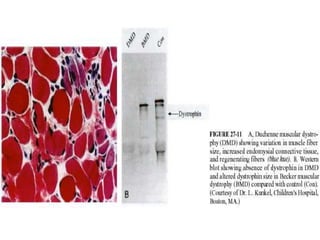
Morphology – muscle fibre necrosis,
regeneration
• Fibres atrophic, fibrosis, fatty replacement
Etiology – X linked recessive, boys
• Dystrophin gene lies on the short arm of
chromosome X
• Lack of dystrophin leads to muscle cell
degeneration
• Biopsy in early stages show lack of
dystrophin using immunostaining
• Becker type – milder form caused by
mutation in dystrophin gene resulting in
decreased levels of protein
• Other muscular dystrophies – facio
scapulohumoral, limb girdle, myotonic
Polymyositis – any age & sex, muscle
pain, weakness, proximal muscle
grps, deterioration rapid / slow
Dermotomyositis – similar with skin lesions
on face & hands
• In adults may herald malignancy –
bronchial CA, CT disorder - RA
Pathology
• Muscle fibres show atrophy to necrosis
• Few hypertrophied
• Lymphocytic infiltrate
• Autoimmune etiology
Toxic myopathy
• Myopathy seen in
acromegaly, hyperthyroidism, hypothyroidi
sm &
hyperaldosteronism, hyperparathyroidism
& corticosteroid excess
• In alcoholics & drug induced - eg
chlroquine, vincristine & vit D def.
Diagnosis
- few condition curative therapy is available
• General clinical findings – family
history, age of onset, distribution of muscle
weakness & rate of progress
- neurological assesment
• Special investigation of neuromuscular
electrical activity
- rate of motor & sensory nerve conduction
measured electrically
- electromyogram records activity of grp /
individual muscle fibre activity
• Lab test
muscle biopsy –
routine, EM, histochemistry
serum enzymes
muscle fibre destruction – CK & aldolase
Poliomyeltis
• Poliovirus member of picorna grp of
enteroviruses
• Paralytic poliomyelitis has been effectively
controlled by immunization in many parts
of the world
• Non immunized – infection subclinical /
mild gastroenteritis
• Secondarily invades nervous system
CNS infection – initially meningeal irritation
• Progresses to spinal cord
• Attacks ant.horn with loss of motor
neurons produces flaccid paralysis with
wasting & hyporeflexia in affected spinal
segment
Acute disease – death may occur due to
paralysis of resp muscles or myocarditis
Morphology
• Acute – mononuclear perivascular cuffs &
neuronophagia of ant horn motor neurons
of spinal cord
• Inflammation can extend to post horns
• Post polio syndrome – 25 -35yrs after
resolution of initial illness, progressive
weakness ass.with muscle bulk & pain
Volkmann’s contracture
• Young, muscles of forearm
• Ass.with pressure of splints / tourniquet /
with h’ge resulting from #
• Within few hrs after injury pain develops in
hands / forearm -> contractures of fingers
which becomes fixed in flexed position
Morphology
• Muscle – hard, homogenous, yellowish
• Nuclei & cross striations are lost
• Inflammatory cells & macrophages at the
margins -> fibrosis
• Cause arterial spasm resulting from injury
to vessel wall

Myopathies

  • 1.
  • 2.
    • Primary muscle diseaseresulting in chronic muscle weakness • 3 broad grps – 1. Hereditary ( muscular dystrophies) 2. Inflammatory – polymyositis, dermatomyositis 3. Toxic myopathies – thyrotoxic, ethanol, drug induced
  • 3.
    Muscular dystrophies • Grpof genetically inherited primary muscle disease, progressive muscular weakness
  • 4.
    Duchenne muscular dystrophy •Commonest, most serious Clinical features – muscle weakness in early childhood, death by late teens Morphology – muscle fibre necrosis, regeneration • Fibres atrophic, fibrosis, fatty replacement
  • 5.
    Etiology – Xlinked recessive, boys • Dystrophin gene lies on the short arm of chromosome X • Lack of dystrophin leads to muscle cell degeneration
  • 6.
    • Biopsy inearly stages show lack of dystrophin using immunostaining • Becker type – milder form caused by mutation in dystrophin gene resulting in decreased levels of protein • Other muscular dystrophies – facio scapulohumoral, limb girdle, myotonic
  • 8.
    Polymyositis – anyage & sex, muscle pain, weakness, proximal muscle grps, deterioration rapid / slow Dermotomyositis – similar with skin lesions on face & hands • In adults may herald malignancy – bronchial CA, CT disorder - RA
  • 9.
    Pathology • Muscle fibresshow atrophy to necrosis • Few hypertrophied • Lymphocytic infiltrate • Autoimmune etiology
  • 10.
    Toxic myopathy • Myopathyseen in acromegaly, hyperthyroidism, hypothyroidi sm & hyperaldosteronism, hyperparathyroidism & corticosteroid excess
  • 11.
    • In alcoholics& drug induced - eg chlroquine, vincristine & vit D def.
  • 12.
    Diagnosis - few conditioncurative therapy is available • General clinical findings – family history, age of onset, distribution of muscle weakness & rate of progress - neurological assesment
  • 13.
    • Special investigationof neuromuscular electrical activity - rate of motor & sensory nerve conduction measured electrically - electromyogram records activity of grp / individual muscle fibre activity
  • 14.
    • Lab test musclebiopsy – routine, EM, histochemistry serum enzymes muscle fibre destruction – CK & aldolase
  • 15.
    Poliomyeltis • Poliovirus memberof picorna grp of enteroviruses • Paralytic poliomyelitis has been effectively controlled by immunization in many parts of the world • Non immunized – infection subclinical / mild gastroenteritis • Secondarily invades nervous system
  • 16.
    CNS infection –initially meningeal irritation • Progresses to spinal cord • Attacks ant.horn with loss of motor neurons produces flaccid paralysis with wasting & hyporeflexia in affected spinal segment
  • 17.
    Acute disease –death may occur due to paralysis of resp muscles or myocarditis Morphology • Acute – mononuclear perivascular cuffs & neuronophagia of ant horn motor neurons of spinal cord • Inflammation can extend to post horns
  • 18.
    • Post poliosyndrome – 25 -35yrs after resolution of initial illness, progressive weakness ass.with muscle bulk & pain
  • 19.
    Volkmann’s contracture • Young,muscles of forearm • Ass.with pressure of splints / tourniquet / with h’ge resulting from # • Within few hrs after injury pain develops in hands / forearm -> contractures of fingers which becomes fixed in flexed position
  • 20.
    Morphology • Muscle –hard, homogenous, yellowish • Nuclei & cross striations are lost • Inflammatory cells & macrophages at the margins -> fibrosis • Cause arterial spasm resulting from injury to vessel wall