Muscle disorders
Dr Anu Priya J
Muscle disorders
 Diseases affecting neuromuscular junction
• Myasthenia gravis
• Lambert-Eaton syndrome
 Effects of denervation of muscle
• Fibrillation
• Fasciculation
• Muscle atrophy
• Denervation hypersensitivity
 Muscle dystrophies
 Muscle hypertrophy
 Metabolic myopathies
 Muscle paralysis
Myasthenia gravis
• Myo=muscle; asthenia=weakness; gravis= serious
Pathogenesis
• Autoimmune disease
• Formation of circulating antibodies which destroy
the nicotinic Ach(acetylcholine) receptors on the
postsynaptic membrane of neuromuscular junction
Clinical features
• Skeletal muscles are weak & fatigued
• Rare, serious & sometimes fatal
Myasthenia gravis
Investigations
• Radioimmunoassay – Ach receptor antibodies
detected in 90% of patients
• Histology – decreased number of subneural
clefts, widening of the synaptic cleft,
hyperplasia of thymus gland.
Myasthenia gravis
Treatment
• Neostigmine – drug of choice – reversible
AchE inhibitor
• Immunosuppression – suppress antibody
production – steroid - high dose of cortisol
• Thymectomy – as excessive synthesis of
thymic hormone is one of the contributing
factors
• Plasmapheresis
Lambert-Eaton syndrome
• Autoimmune disease
• Autoantibodies against one of the voltage
gated calcium channels in the nerve ending at
neuromuscular junction
• Decreased calcium influx at the synaptic knob
that causes Ach release, leading to decreased
acetylcholine release
• Muscle weakness
Fibrillation
• In the intact body, skeletal muscle contracts
only if its motor nerve supply is stimulated
• Destruction of this nerve supply leads to
abnormal excitability of the muscle &
fine, irregular contractions of the individual
fibres called fibrillation
Fibrillation
• Fibrillation is seen for several weeks after
injury, and then ceases as the muscle cells
atrophy.
• Fibrillation also ceases if the motor nerve
regenerates.
Fibrillation
• Due to denervation hypersensitivity
• Classical picture of LMN lesion
• Such contractions are not visible grossly, but
fibrillation potentials can be recorded by EMG
using needle electrodes.
Fasciculations
• Jerky, visible contractions (twitching) of
groups of muscle fibres
• As a result of pathological, spontaneous
discharge of spinal motor neurons
• Seen in diseases affecting the anterior horn
cells
• Example : Poliomyelitis
Muscle atrophy
• Atrophy/ Muscle wasting
• When there is permanent loss of nerve supply
to a muscle, the muscle shows flaccid paralysis
& atrophy.
Muscular dystrophy
• Term used to denote a group of degenerative diseases
that cause progressive weakness of skeletal muscle.
• Mild or severe or fatal depending on the type of
muscular dystrophy
• Causes – depends on the type of muscular dystrophy;
mostly genetic - mostly mutations in the genes coding
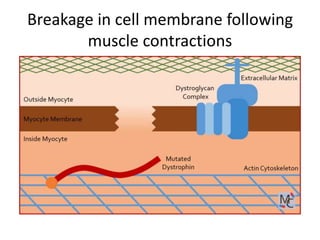
for the various components of the dystrophin-
glycoprotein complex.
• Dystrophin gene is one of the largest in the body, &
mutations can occur at many different sites in it.
Muscular dystrophy
Duchenne muscular dystrophy
• X linked recessive disease; males affected
• Mutation in the gene coding for dystrophin-
glycoprotein complex
• Serious form of muscular dystrophy; usually
fatal by the age of 30
• Dystrophin protein is absent from the muscle
Muscular dystrophy
Duchenne muscular dystrophy
• Typical feature – the child uses his hands to
climb up, while getting up from the floor.
• Wheelchair by age 12
• Fatal by age 30
Muscular dystrophy
Duchenne muscular dystrophy
• Progressive muscle weakness, that becomes
apparent by age 4
• Muscle hypertrophy especially calf &
pelvifemoral muscles
• Cardiomegaly
Muscular dystrophy
Duchenne muscular dystrophy
• Enlargement occurs due to gradual
degeneration & necrosis of muscle fibers that
are replaced by more fibrous & fatty tissue.
Muscular dystrophy
Becker muscular dystrophy
• X linked genetic disease
• Mutation in the gene coding for dystrophin-
glycoprotein complex
• Milder form of muscular dystrophy; not very
fatal
• Dystrophin protein is present in the muscle
but altered or reduced in amount
Muscular dystrophy
Other muscular dystrophies
• Mutations in the gene coding for titin, desmin,
sarcoglycans & other components of the
dystrophin-glycoprotein complex, etc.,
Normal protein
Mutation
Breakage in cell membrane following
muscle contractions
Entry/leakage of calcium
from ECF to ICF
Calcium activates proteases that
breakdown proteins in the muscle
Action of proteases in normal levels
When protease conc inc
Leakage of CK – inc CK
Males affected
Metabolic myopathies
• Mutations in genes that code for enzymes
involved in the metabolism of carbohydrates,
fats, and proteins to CO2 and H2O in the
muscle and production of ATP
• Exercise intolerance and possibility of muscle
breakdown due to accumulation of toxic
metabolites
• Ex: McArdle’s disease
Muscle channelopathies
• Calcium release channels – RYR – malignant
hyperthermia
Muscle sprain
• Due to overstretching or forced extension of an
active muscle.
• Often during sports activity or physical labor
• Injury at the myotendinous junction or separation
of the fibers
• Pain, soreness, weakness & swelling
• Treat – ice packs, rest, immobility
• Drugs for pain relief
• Surgery – if required, to correct the damage
Muscle cramp
• Generation of nerve action potential at a very
high rate
• Painful condition
• Involuntary tetanic contraction of the skeletal
muscle
• Mechanism: Electrolyte imbalances in the ECF
surrounding both the muscle and nerve fibers
• Excessive exercise or persistent dehydration
• Other causes of electrolyte disturbances
EMG
• The process of recording the electrical activity of
muscle
• Electromyography
• Surface or needle electrodes
• Study the activation of motor units
Uses:
• Diagnosis of certain muscle disorders. Example:
Fibrillation potentials – can be recorded using
EMG; not visible grossly over the muscle.
• Research
Thank you
Denervation hypersensitivity
• Seen following nerve injury
• Increased number and sensitivity of receptors
in the postsynaptic membrane following
denervation
• The muscle becomes hypersensitive to the
neurotransmitter substance that is released by
its nerve terminals
• Muscle rigor gan ebk pg 122
• Myotonia

Muscle disorders

  • 1.
  • 2.
    Muscle disorders  Diseasesaffecting neuromuscular junction • Myasthenia gravis • Lambert-Eaton syndrome  Effects of denervation of muscle • Fibrillation • Fasciculation • Muscle atrophy • Denervation hypersensitivity  Muscle dystrophies  Muscle hypertrophy  Metabolic myopathies  Muscle paralysis
  • 3.
    Myasthenia gravis • Myo=muscle;asthenia=weakness; gravis= serious Pathogenesis • Autoimmune disease • Formation of circulating antibodies which destroy the nicotinic Ach(acetylcholine) receptors on the postsynaptic membrane of neuromuscular junction Clinical features • Skeletal muscles are weak & fatigued • Rare, serious & sometimes fatal
  • 4.
    Myasthenia gravis Investigations • Radioimmunoassay– Ach receptor antibodies detected in 90% of patients • Histology – decreased number of subneural clefts, widening of the synaptic cleft, hyperplasia of thymus gland.
  • 5.
    Myasthenia gravis Treatment • Neostigmine– drug of choice – reversible AchE inhibitor • Immunosuppression – suppress antibody production – steroid - high dose of cortisol • Thymectomy – as excessive synthesis of thymic hormone is one of the contributing factors • Plasmapheresis
  • 6.
    Lambert-Eaton syndrome • Autoimmunedisease • Autoantibodies against one of the voltage gated calcium channels in the nerve ending at neuromuscular junction • Decreased calcium influx at the synaptic knob that causes Ach release, leading to decreased acetylcholine release • Muscle weakness
  • 7.
    Fibrillation • In theintact body, skeletal muscle contracts only if its motor nerve supply is stimulated • Destruction of this nerve supply leads to abnormal excitability of the muscle & fine, irregular contractions of the individual fibres called fibrillation
  • 8.
    Fibrillation • Fibrillation isseen for several weeks after injury, and then ceases as the muscle cells atrophy. • Fibrillation also ceases if the motor nerve regenerates.
  • 9.
    Fibrillation • Due todenervation hypersensitivity • Classical picture of LMN lesion • Such contractions are not visible grossly, but fibrillation potentials can be recorded by EMG using needle electrodes.
  • 10.
    Fasciculations • Jerky, visiblecontractions (twitching) of groups of muscle fibres • As a result of pathological, spontaneous discharge of spinal motor neurons • Seen in diseases affecting the anterior horn cells • Example : Poliomyelitis
  • 11.
    Muscle atrophy • Atrophy/Muscle wasting • When there is permanent loss of nerve supply to a muscle, the muscle shows flaccid paralysis & atrophy.
  • 12.
    Muscular dystrophy • Termused to denote a group of degenerative diseases that cause progressive weakness of skeletal muscle. • Mild or severe or fatal depending on the type of muscular dystrophy • Causes – depends on the type of muscular dystrophy; mostly genetic - mostly mutations in the genes coding for the various components of the dystrophin- glycoprotein complex. • Dystrophin gene is one of the largest in the body, & mutations can occur at many different sites in it.
  • 13.
    Muscular dystrophy Duchenne musculardystrophy • X linked recessive disease; males affected • Mutation in the gene coding for dystrophin- glycoprotein complex • Serious form of muscular dystrophy; usually fatal by the age of 30 • Dystrophin protein is absent from the muscle
  • 14.
    Muscular dystrophy Duchenne musculardystrophy • Typical feature – the child uses his hands to climb up, while getting up from the floor. • Wheelchair by age 12 • Fatal by age 30
  • 15.
    Muscular dystrophy Duchenne musculardystrophy • Progressive muscle weakness, that becomes apparent by age 4 • Muscle hypertrophy especially calf & pelvifemoral muscles • Cardiomegaly
  • 16.
    Muscular dystrophy Duchenne musculardystrophy • Enlargement occurs due to gradual degeneration & necrosis of muscle fibers that are replaced by more fibrous & fatty tissue.
  • 17.
    Muscular dystrophy Becker musculardystrophy • X linked genetic disease • Mutation in the gene coding for dystrophin- glycoprotein complex • Milder form of muscular dystrophy; not very fatal • Dystrophin protein is present in the muscle but altered or reduced in amount
  • 18.
    Muscular dystrophy Other musculardystrophies • Mutations in the gene coding for titin, desmin, sarcoglycans & other components of the dystrophin-glycoprotein complex, etc.,
  • 20.
  • 21.
  • 22.
    Breakage in cellmembrane following muscle contractions
  • 23.
  • 24.
    Calcium activates proteasesthat breakdown proteins in the muscle
  • 25.
    Action of proteasesin normal levels
  • 26.
  • 27.
    Leakage of CK– inc CK
  • 36.
  • 37.
    Metabolic myopathies • Mutationsin genes that code for enzymes involved in the metabolism of carbohydrates, fats, and proteins to CO2 and H2O in the muscle and production of ATP • Exercise intolerance and possibility of muscle breakdown due to accumulation of toxic metabolites • Ex: McArdle’s disease
  • 38.
    Muscle channelopathies • Calciumrelease channels – RYR – malignant hyperthermia
  • 39.
    Muscle sprain • Dueto overstretching or forced extension of an active muscle. • Often during sports activity or physical labor • Injury at the myotendinous junction or separation of the fibers • Pain, soreness, weakness & swelling • Treat – ice packs, rest, immobility • Drugs for pain relief • Surgery – if required, to correct the damage
  • 40.
    Muscle cramp • Generationof nerve action potential at a very high rate • Painful condition • Involuntary tetanic contraction of the skeletal muscle • Mechanism: Electrolyte imbalances in the ECF surrounding both the muscle and nerve fibers • Excessive exercise or persistent dehydration • Other causes of electrolyte disturbances
  • 41.
    EMG • The processof recording the electrical activity of muscle • Electromyography • Surface or needle electrodes • Study the activation of motor units Uses: • Diagnosis of certain muscle disorders. Example: Fibrillation potentials – can be recorded using EMG; not visible grossly over the muscle. • Research
  • 42.
  • 43.
    Denervation hypersensitivity • Seenfollowing nerve injury • Increased number and sensitivity of receptors in the postsynaptic membrane following denervation • The muscle becomes hypersensitive to the neurotransmitter substance that is released by its nerve terminals
  • 44.
    • Muscle rigorgan ebk pg 122 • Myotonia

Editor's Notes

  • #11 Example : In poliomyelitis, the anterior horn cell is destroyed & there will be spontaneous discharge of impulses, causing fasciculation
  • #13 About 50 such diseases have been described
  • #40 Ultrastructural damage to the contractile elements especially at the Z lines
  • #44 After injury – nerve cut – neurotransmitter not released until regeneration of nerve; endogenous ???? Exogenous neurotransmitter – enhanced response/contraction.