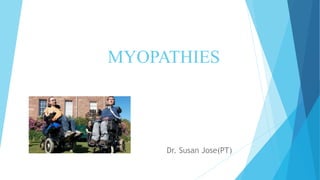








MYOPATHIES
Dr. Susan Jose(PT)
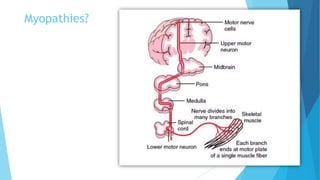
Myopathies?
WHAT TO LOOK FOR WHEN ASSESING?
 ONSET- sudden/ gradual, adult/childhood
 RATE OF PROGRESSION
 DISTRIBUTION
 ANY OTHER SYSTEM INVOLVEMENT- Cardiac, pulmonary, CNS, Speech, hearing
Common Clinical features
 Proximal more than distal muscle weakness
 Contractures may occur
 Cardiomyopathy
 Respiratory complications
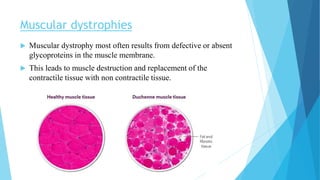
Muscular dystrophies
 Muscular dystrophy most often results from defective or absent
glycoproteins in the muscle membrane.
 This leads to muscle destruction and replacement of the
contractile tissue with non contractile tissue.
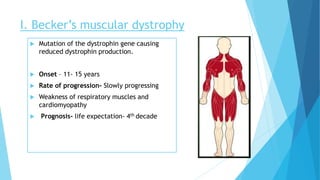
I. Becker’s muscular dystrophy
 Mutation of the dystrophin gene causing
reduced dystrophin production.
 Onset – 11- 15 years
 Rate of progression- Slowly progressing
 Weakness of respiratory muscles and
cardiomyopathy
 Prognosis- life expectation- 4th decade
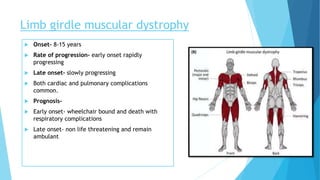
Limb girdle muscular dystrophy
 Onset- 8-15 years
 Rate of progression- early onset rapidly
progressing
 Late onset- slowly progressing
 Both cardiac and pulmonary complications
common.
 Prognosis-
 Early onset- wheelchair bound and death with
respiratory complications
 Late onset- non life threatening and remain
ambulant
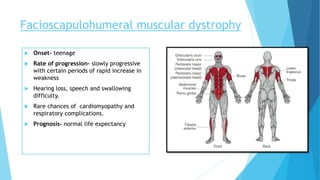
Facioscapulohumeral muscular dystrophy
 Onset- teenage
 Rate of progression- slowly progressive
with certain periods of rapid increase in
weakness
 Hearing loss, speech and swallowing
difficulty.
 Rare chances of cardiomyopathy and
respiratory complications.
 Prognosis- normal life expectancy
Metabolic myopathies
 People with metabolic myopathies lack certain enzymes
involved in providing energy that helps muscles contract.
 They can be classified as:
1. mitochondrial myopathies
2. glycogen storage disease(GSD)
3. Fatty acid oxidation defects (FAODs)
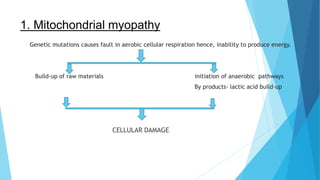
1. Mitochondrial myopathy
Genetic mutations causes fault in aerobic cellular respiration hence, inability to produce energy.
Build-up of raw materials initiation of anaerobic pathways
By products- lactic acid build-up
CELLULAR DAMAGE
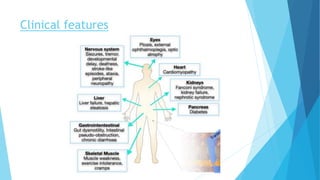
Clinical features
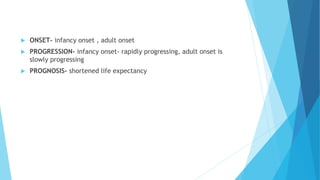
 ONSET- infancy onset , adult onset
 PROGRESSION- infancy onset- rapidly progressing, adult onset is
slowly progressing
 PROGNOSIS- shortened life expectancy
ICF
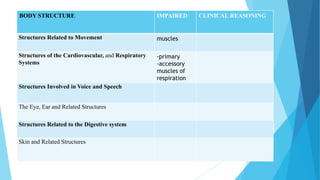
BODY STRUCTURE IMPAIRED CLINICAL REASONING
Structures Related to Movement muscles
Structures of the Cardiovascular, and Respiratory
Systems
-primary
-accessory
muscles of
respiration
Structures Involved in Voice and Speech
The Eye, Ear and Related Structures
Structures Related to the Digestive system
Skin and Related Structures
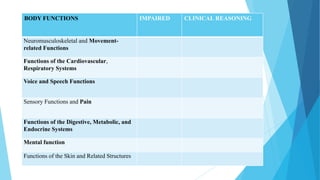
BODY FUNCTIONS IMPAIRED CLINICAL REASONING
Neuromusculoskeletal and Movement-
related Functions
Functions of the Cardiovascular,
Respiratory Systems
Voice and Speech Functions
Sensory Functions and Pain
Functions of the Digestive, Metabolic, and
Endocrine Systems
Mental function
Functions of the Skin and Related Structures
MANAGEMENT
CREATE PROBLEM LIST
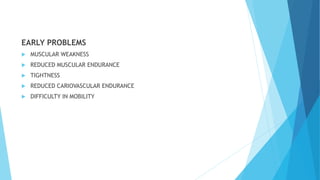
EARLY PROBLEMS
 MUSCULAR WEAKNESS
 REDUCED MUSCULAR ENDURANCE
 TIGHTNESS
 REDUCED CARIOVASCULAR ENDURANCE
 DIFFICULTY IN MOBILITY
MUSCULAR WEAKNESS and REDUCED MUSCULAR ENDURANCE
 SUBMAXIMAL EXERCISE TRAINING
 F – 3-4 DAYS PER WEEK
 I- 50% 1 RM
 D- 30 MINS
 T- Circuit training, avoid eccentric exercises
 RATIONALE: MUSCULAR ADAPTATIONS TO EXERCISE TRAINING HELPS REDUCE THE
RATE OF MUSCLE LOSS
 TIGHTNESS
Sustained stretching – positioning and stretching exercises
REDUCED CARIOVASCULAR ENDURANCE
 ACSM guidelines:
 F
 I
 D
 T
 RATIONALE:
DIFFICULTY IN MOBILITY
 USE OF APPROPRIATE OTHOSIS AND WALKING AIDS
 GAIT TRAINING WITH THE ASSITIVE DEVICES
Gait video
LATE PROBLEMS
 REDUCED RESPIRATORY VOLUMES AND RESPIRATORY MUSCLE STRENGHT
 INEFFICIENT COUGH
 OBESITY
 DIFFICULTY IN ADLs
 DIFFICULTY IN MOBILITY
 ANXIETY AND STRESS
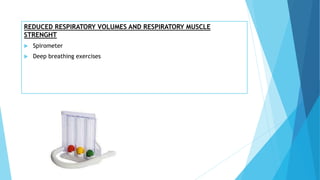
REDUCED RESPIRATORY VOLUMES AND RESPIRATORY MUSCLE
STRENGHT
 Spirometer
 Deep breathing exercises
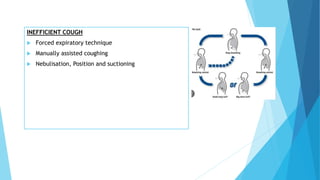
INEFFICIENT COUGH
 Forced expiratory technique
 Manually assisted coughing
 Nebulisation, Position and suctioning
OBESITY
 Dietary management- refer to dietician
 General advise-
 more fiber and proteins,
 Less fats
DIFFICULTY IN MOBILITY
DIFFICULTY IN ADLs
ANXIETY AND STRESS
 Patient and care giver education
THANKYOU
ANY QUERIES?

Myopathies Classification and physiotherapy management.pptx

  • 1.
  • 2.
  • 3.
    WHAT TO LOOKFOR WHEN ASSESING?  ONSET- sudden/ gradual, adult/childhood  RATE OF PROGRESSION  DISTRIBUTION  ANY OTHER SYSTEM INVOLVEMENT- Cardiac, pulmonary, CNS, Speech, hearing
  • 5.
    Common Clinical features Proximal more than distal muscle weakness  Contractures may occur  Cardiomyopathy  Respiratory complications
  • 6.
    Muscular dystrophies  Musculardystrophy most often results from defective or absent glycoproteins in the muscle membrane.  This leads to muscle destruction and replacement of the contractile tissue with non contractile tissue.
  • 7.
    I. Becker’s musculardystrophy  Mutation of the dystrophin gene causing reduced dystrophin production.  Onset – 11- 15 years  Rate of progression- Slowly progressing  Weakness of respiratory muscles and cardiomyopathy  Prognosis- life expectation- 4th decade
  • 8.
    Limb girdle musculardystrophy  Onset- 8-15 years  Rate of progression- early onset rapidly progressing  Late onset- slowly progressing  Both cardiac and pulmonary complications common.  Prognosis-  Early onset- wheelchair bound and death with respiratory complications  Late onset- non life threatening and remain ambulant
  • 9.
    Facioscapulohumeral muscular dystrophy Onset- teenage  Rate of progression- slowly progressive with certain periods of rapid increase in weakness  Hearing loss, speech and swallowing difficulty.  Rare chances of cardiomyopathy and respiratory complications.  Prognosis- normal life expectancy
  • 10.
    Metabolic myopathies  Peoplewith metabolic myopathies lack certain enzymes involved in providing energy that helps muscles contract.  They can be classified as: 1. mitochondrial myopathies 2. glycogen storage disease(GSD) 3. Fatty acid oxidation defects (FAODs)
  • 11.
    1. Mitochondrial myopathy Geneticmutations causes fault in aerobic cellular respiration hence, inability to produce energy. Build-up of raw materials initiation of anaerobic pathways By products- lactic acid build-up CELLULAR DAMAGE
  • 12.
  • 13.
     ONSET- infancyonset , adult onset  PROGRESSION- infancy onset- rapidly progressing, adult onset is slowly progressing  PROGNOSIS- shortened life expectancy
  • 14.
  • 15.
    BODY STRUCTURE IMPAIREDCLINICAL REASONING Structures Related to Movement muscles Structures of the Cardiovascular, and Respiratory Systems -primary -accessory muscles of respiration Structures Involved in Voice and Speech The Eye, Ear and Related Structures Structures Related to the Digestive system Skin and Related Structures
  • 16.
    BODY FUNCTIONS IMPAIREDCLINICAL REASONING Neuromusculoskeletal and Movement- related Functions Functions of the Cardiovascular, Respiratory Systems Voice and Speech Functions Sensory Functions and Pain Functions of the Digestive, Metabolic, and Endocrine Systems Mental function Functions of the Skin and Related Structures
  • 17.
  • 18.
    EARLY PROBLEMS  MUSCULARWEAKNESS  REDUCED MUSCULAR ENDURANCE  TIGHTNESS  REDUCED CARIOVASCULAR ENDURANCE  DIFFICULTY IN MOBILITY
  • 19.
    MUSCULAR WEAKNESS andREDUCED MUSCULAR ENDURANCE  SUBMAXIMAL EXERCISE TRAINING  F – 3-4 DAYS PER WEEK  I- 50% 1 RM  D- 30 MINS  T- Circuit training, avoid eccentric exercises  RATIONALE: MUSCULAR ADAPTATIONS TO EXERCISE TRAINING HELPS REDUCE THE RATE OF MUSCLE LOSS
  • 20.
     TIGHTNESS Sustained stretching– positioning and stretching exercises
  • 21.
    REDUCED CARIOVASCULAR ENDURANCE ACSM guidelines:  F  I  D  T  RATIONALE:
  • 22.
    DIFFICULTY IN MOBILITY USE OF APPROPRIATE OTHOSIS AND WALKING AIDS  GAIT TRAINING WITH THE ASSITIVE DEVICES Gait video
  • 23.
    LATE PROBLEMS  REDUCEDRESPIRATORY VOLUMES AND RESPIRATORY MUSCLE STRENGHT  INEFFICIENT COUGH  OBESITY  DIFFICULTY IN ADLs  DIFFICULTY IN MOBILITY  ANXIETY AND STRESS
  • 24.
    REDUCED RESPIRATORY VOLUMESAND RESPIRATORY MUSCLE STRENGHT  Spirometer  Deep breathing exercises
  • 25.
    INEFFICIENT COUGH  Forcedexpiratory technique  Manually assisted coughing  Nebulisation, Position and suctioning
  • 26.
    OBESITY  Dietary management-refer to dietician  General advise-  more fiber and proteins,  Less fats
  • 27.
  • 28.
  • 29.
    ANXIETY AND STRESS Patient and care giver education
  • 30.
  • 31.