Myasthenia gravis
Myasthenia Gravis
• It is an autoimmune disorder affecting the
myoneural junction, is characterized by
varying degrees of weakness of the
voluntary muscles.
• A disorder of neuromuscular function
thought to be due to the presence of
antibodies to acetylcholine receptors at
the neuromuscular junction (NMJ).
Incidence
• MG occurs in all ethnic groups and both
genders.
• It most commonly affects young adult
women (<40 years) & older men (>60
years), but it can occur at any age.
Prevalence
• Today there are an estimated 50,000
cases in the US.
• MG can be found in anyone, but it is “most
common in females around the third
decade of life.
Etiology
• The Unknown cause.
• Defect in the transmission of nerve
impulses to muscles.
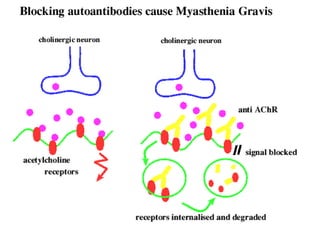
• Antibodies against acetyl choline
receptors at the NMJ.
• Thymic abnormalities.
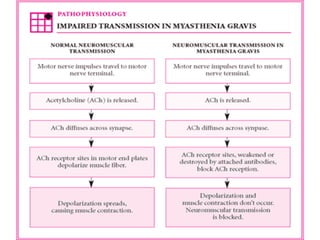
Pathophysiology
• Autoantibodies against acetylcholine
receptor sites.
• Impaired transmission of impulses across
the myoneural junction.
• Availability of fewer receptors for
stimulation.
• Volunatary muscle weakness that
escalates with continued activity.
Clinical Manifestations
• Ocular symptoms- Diplopia, ptosis.
• Bulbar symptoms- Weakness of the
muscles of the face & throat, and
generalized weakness, and
expressionless face.
• Weakness of the jaw muscles allaws the
mouth to open.
• Dysphonia.
•

The generalised weakness of all the
extremities and the intercostal muscles,
resulting in decreasing vital capacity and
respiratory failure.
• Weakness of neck muscles may result in
lolling of the head.
• Laryngeal involvement produces
dysphonia and increases the patients risk
for choking, dysphagia and aspiration.
Diagnosis
•
•
•
•

History
Physical examination
Anticholinesterase test
Acetylcholine receptor antibody titers
Medical management
• Anticholinesterase drugs. (pyridostigmine
bromide)
• Immunosuppressive therapy.
(prednisolone)
• Plasmapharesis.
• Intravenous immunoglobulin (IVIG)
therapy.
• Thymectomy.
Complications
Myasthenic crisis
A myasthenic crisis is an exacerbation of
the myasthenia gravis process
characterised by severe generalised
muscle weakness and respiratory and
bulbar weakness that may result in
respiratory failure.
Treatment of myasthenic
crisis
• Neostigmine methylsulfate -IM/IV
• Plasmapharesis and IVIG
• Endotracheal intubation and mechanical
ventilation
Cholinergic crisis
Anticholinergic overmedication leads to
cholinergic crisis. The symptoms are
similar to myasthenic crisis.
• Treatment- Withdraw the anticholinergic
medication and administer Atropine
sulfate (antidote to anticholinesterase
drugs)
• Endotracheal intubation and mechanical
ventilation
Thank you

Myasthenia gravis new

  • 1.
  • 2.
    Myasthenia Gravis • Itis an autoimmune disorder affecting the myoneural junction, is characterized by varying degrees of weakness of the voluntary muscles. • A disorder of neuromuscular function thought to be due to the presence of antibodies to acetylcholine receptors at the neuromuscular junction (NMJ).
  • 3.
    Incidence • MG occursin all ethnic groups and both genders. • It most commonly affects young adult women (<40 years) & older men (>60 years), but it can occur at any age.
  • 4.
    Prevalence • Today thereare an estimated 50,000 cases in the US. • MG can be found in anyone, but it is “most common in females around the third decade of life.
  • 5.
    Etiology • The Unknowncause. • Defect in the transmission of nerve impulses to muscles. • Antibodies against acetyl choline receptors at the NMJ. • Thymic abnormalities.
  • 7.
    Pathophysiology • Autoantibodies againstacetylcholine receptor sites. • Impaired transmission of impulses across the myoneural junction. • Availability of fewer receptors for stimulation. • Volunatary muscle weakness that escalates with continued activity.
  • 9.
    Clinical Manifestations • Ocularsymptoms- Diplopia, ptosis. • Bulbar symptoms- Weakness of the muscles of the face & throat, and generalized weakness, and expressionless face. • Weakness of the jaw muscles allaws the mouth to open. • Dysphonia.
  • 10.
    • The generalised weaknessof all the extremities and the intercostal muscles, resulting in decreasing vital capacity and respiratory failure. • Weakness of neck muscles may result in lolling of the head. • Laryngeal involvement produces dysphonia and increases the patients risk for choking, dysphagia and aspiration.
  • 11.
  • 12.
    Medical management • Anticholinesterasedrugs. (pyridostigmine bromide) • Immunosuppressive therapy. (prednisolone) • Plasmapharesis. • Intravenous immunoglobulin (IVIG) therapy. • Thymectomy.
  • 13.
    Complications Myasthenic crisis A myastheniccrisis is an exacerbation of the myasthenia gravis process characterised by severe generalised muscle weakness and respiratory and bulbar weakness that may result in respiratory failure.
  • 14.
    Treatment of myasthenic crisis •Neostigmine methylsulfate -IM/IV • Plasmapharesis and IVIG • Endotracheal intubation and mechanical ventilation
  • 15.
    Cholinergic crisis Anticholinergic overmedicationleads to cholinergic crisis. The symptoms are similar to myasthenic crisis. • Treatment- Withdraw the anticholinergic medication and administer Atropine sulfate (antidote to anticholinesterase drugs) • Endotracheal intubation and mechanical ventilation
  • 16.