Multiple Sclerosis
Learning objectives
Describe multiple sclerosis in terms of:PathophysiologyClinical manifestationsMedical management Nursing management .Use the nursing process as a framework for care of patients with multiple sclerosis.
Overview
Multiple SclerosisA chronic, frequently progressive neurologic disease of the CNSCaused by progressive demyelination of the white matter of the brain and spinal cordUnknown etiologyCharacterized by the occurrence of small patches of demyelination of the white matter of the optic nerve, brain, and spinal cordCauses disruption of electrical messages from the brain to the peripheral nervous system
Characterized by exacerbations and remissions of symptoms over the course of the illnessMay progress rapidly, causing death within months or disability by early adulthoodMost common CNS disease among young adults A major cause of chronic disability in young adults (20-40 y.o.)Prognosis variesAbout 70% of patients lead active, productive lives with prolonged remissions
Incidence:Highest in females High among people in northern urban areas and higher socioeconomic groupsLow Incidence in JapanIncreased risk:Family history of MS Living in a cold, damp climate
Pathophysiology and etiology
DemyelinationDestruction of the myelin (fatty and protein material that covers certain nerve fibers in the brain and spinal cord)Results in disordered transmission of nerve impulsesInflammatory changes lead to scarring of the affected nerve fibersCause: UnknownPossibly related to:autoimmune dysfunctionallergic responsegenetic susceptibilityinfectious process
Other possible factors: (may help destroy axons and the myelin sheath)TraumaAnoxiaToxinsNutritional deficienciesVascular lesionsAnorexia nervosaEmotional stress, overwork, fatigue, pregnancy, or acute respiratory tract infections may precede the onset of this illnessMore prevalent in the northern latitudes and among Caucasians
classification
Four Clinical Forms of MS (National Multiple Sclerosis Advisory Committee)Relapsing remitting (RR)Clearly defined acute attacks evolve over days to weeksPartial recovery of function occurs over weeks to monthsAverage frequency of attacks is once every 2 years and neurologic stability remains between attacks without disease progressionAt the time of onset, 90% of cases of MS are diagnosed as RR
Secondary progressive (SP)Always begins as RR but clinical course changes with declining attack rate, with a steady deterioration in neurologic function unrelated to the original attackFifty percent of those with RR will progress to SP within 10 years90% will progress within 25 yearsPrimary progressive (PP)characterized by steady progression of disability from onset without exacerbations and remissions
More prevalent among males and older individualsWorst prognosis for neurologic disabilityTen percent of cases of MS are diagnosed as PPProgressive relapsing (PR)the same as PP except that patients experience acute exacerbations along with a steadily progressive courseRarest form
Clinical manifestations
Lesions can occur anywhere within the white matter of the CNSSymptoms reflect the location of the area of demyelinationFatigue and weaknessAbnormal reflexes: absent or exaggeratedVision disturbances: impaired and double vision, nystagmusMotor dysfunction: weakness, tremor, incoordination
Sensory disturbances: paresthesias, impaired deep sensation, impaired vibratory and position senseImpaired speech: slurring, scanning (dysarthria)Urinary dysfunction: hesitancy, frequency, urgency, retention, incontinence; upper UTIUrinary dysfunction affects about 90% of patients with MS and may exacerbate relapse of MSNeurobehavioral syndromes: depression, cognitive impairment, emotional labilitySymptoms of MS are often unpredictable, varying from person to person and from time to time in the same person
Diagnostic evaluation
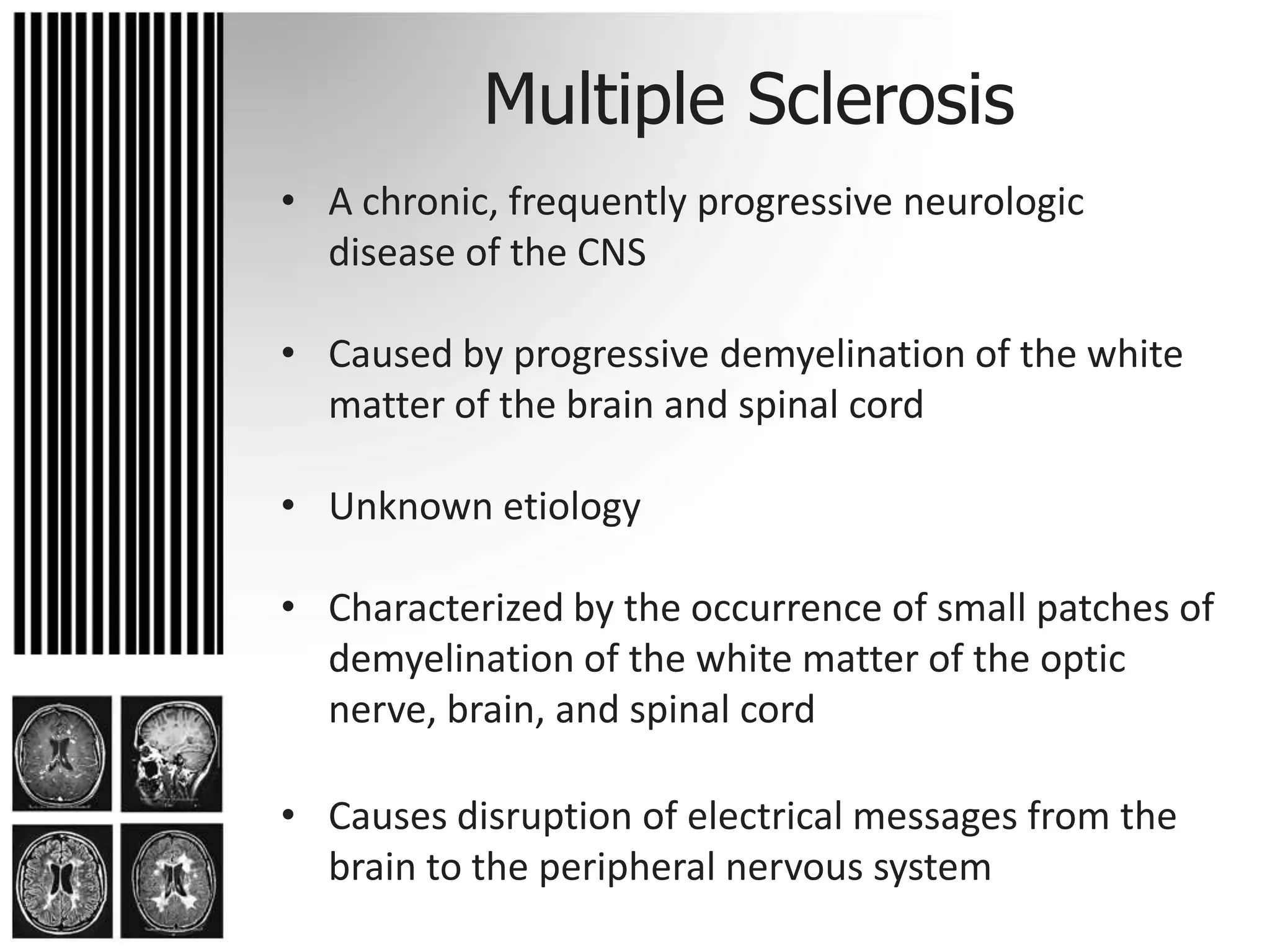
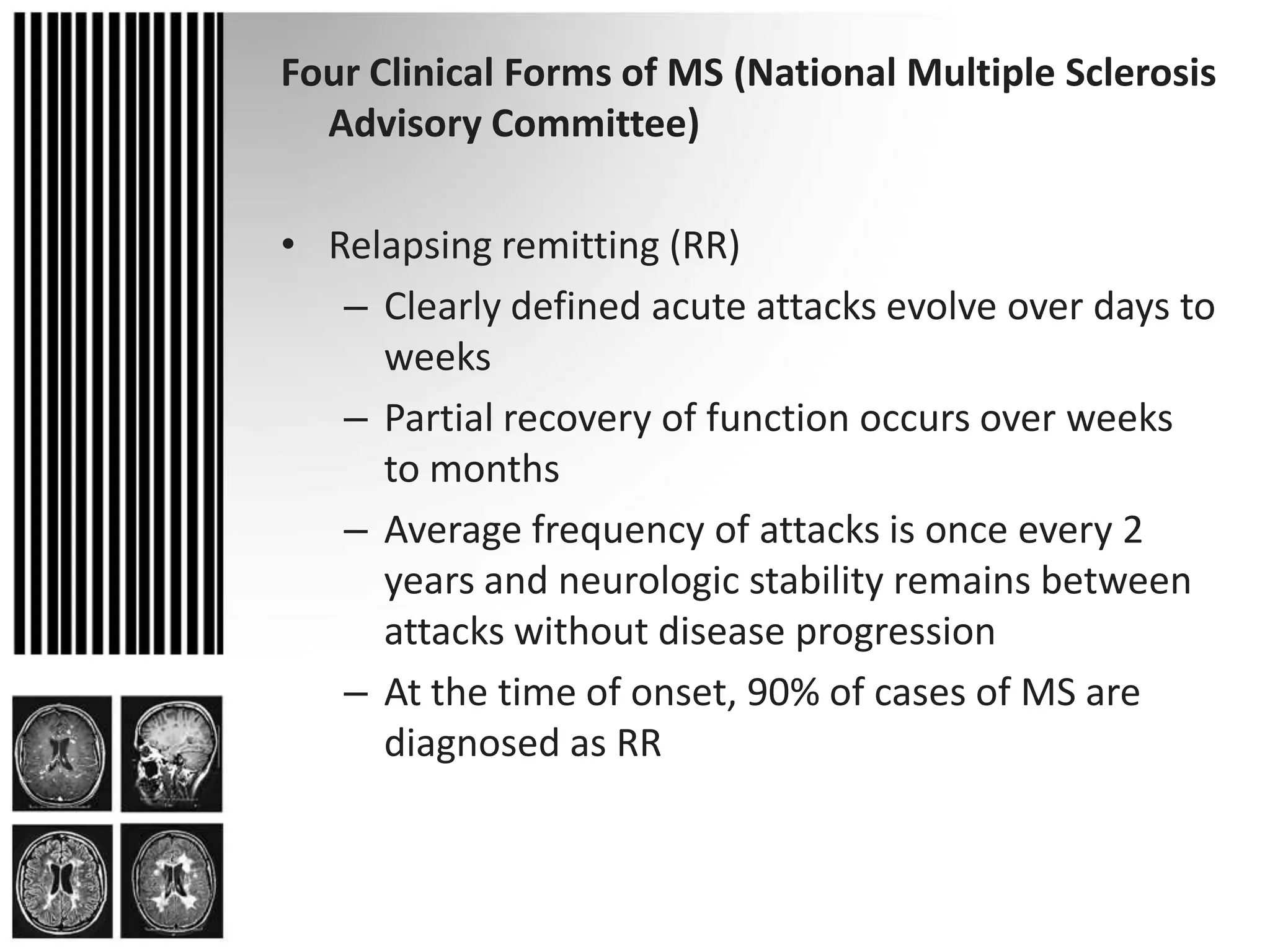
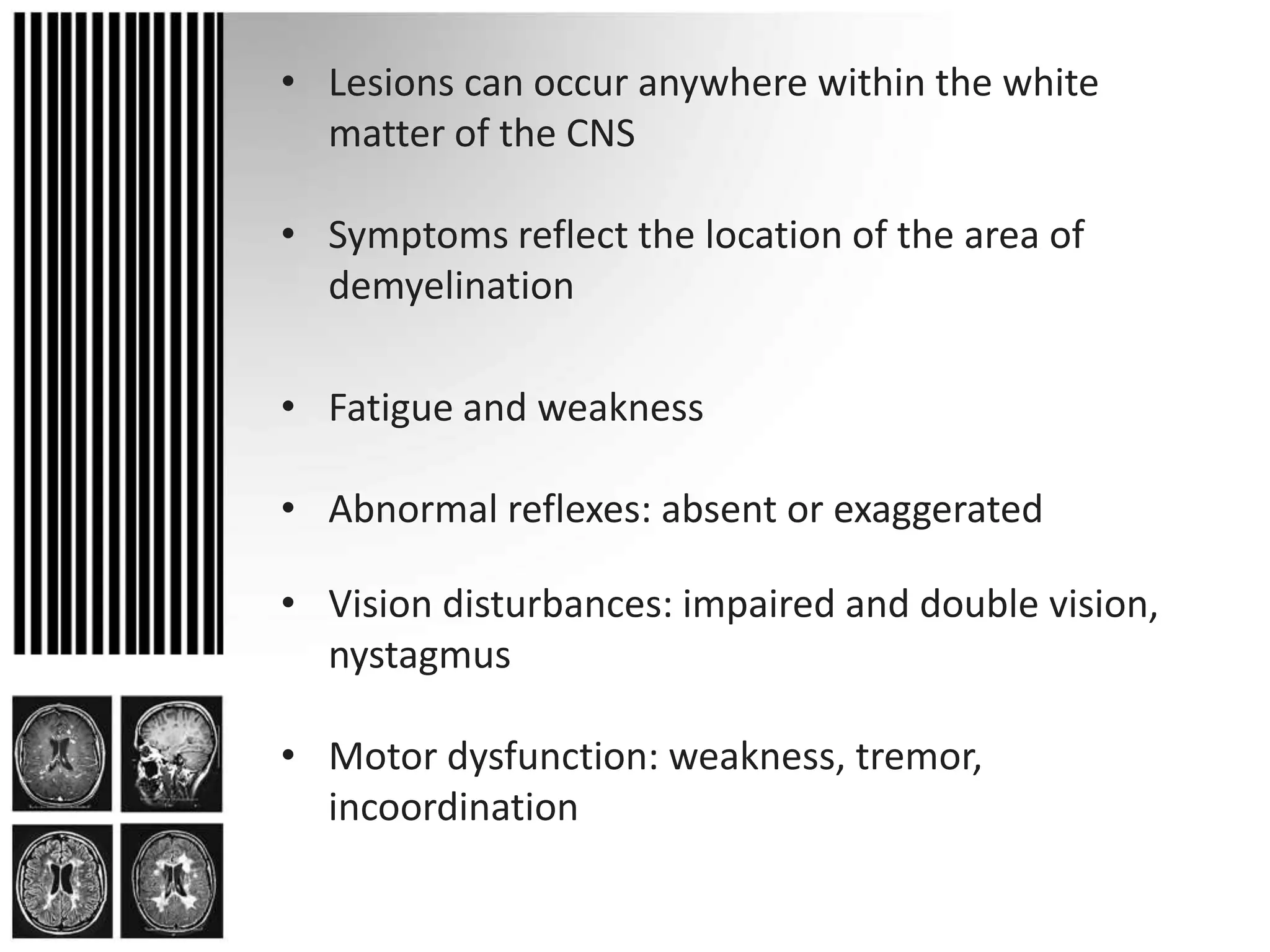
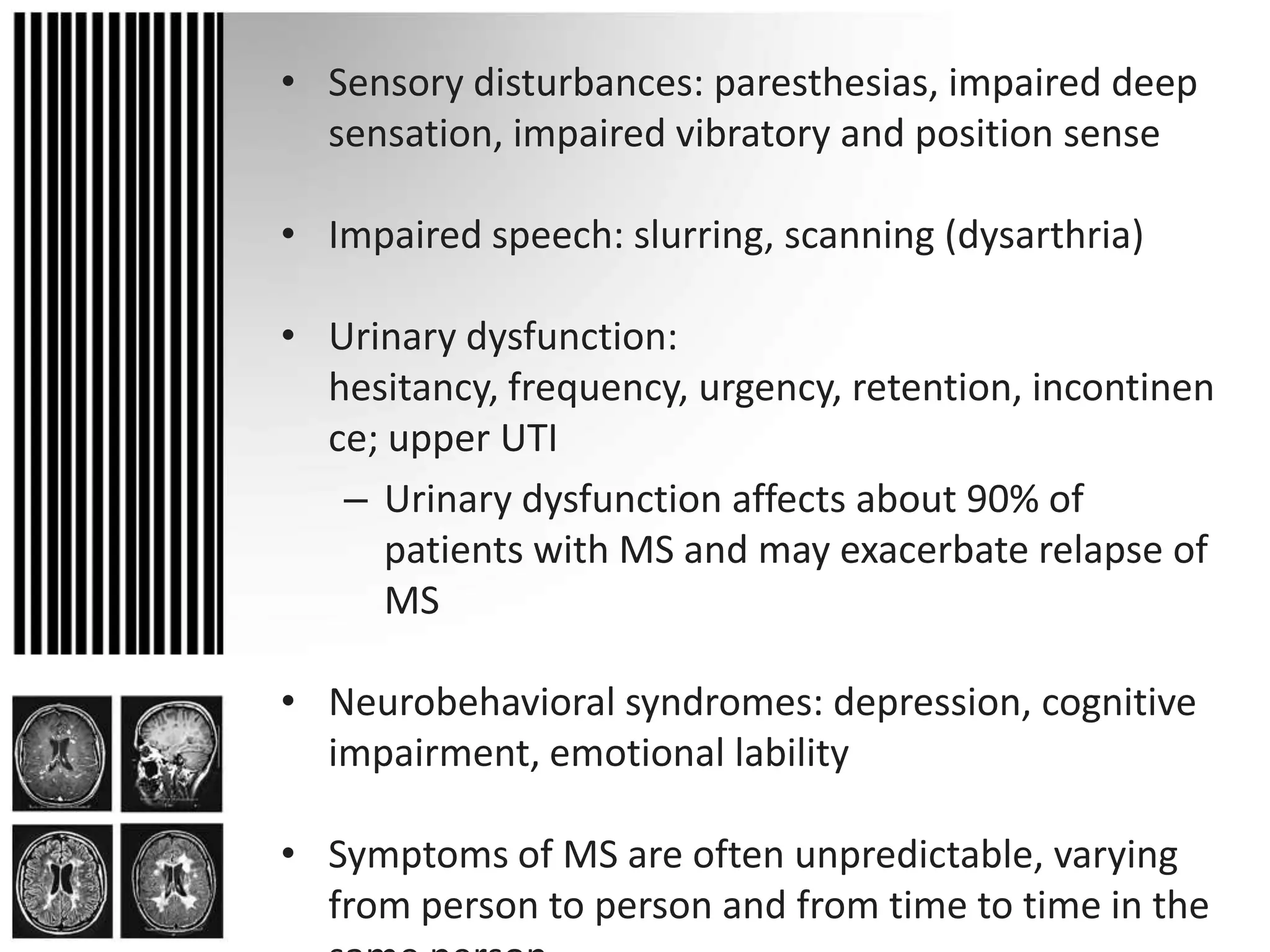
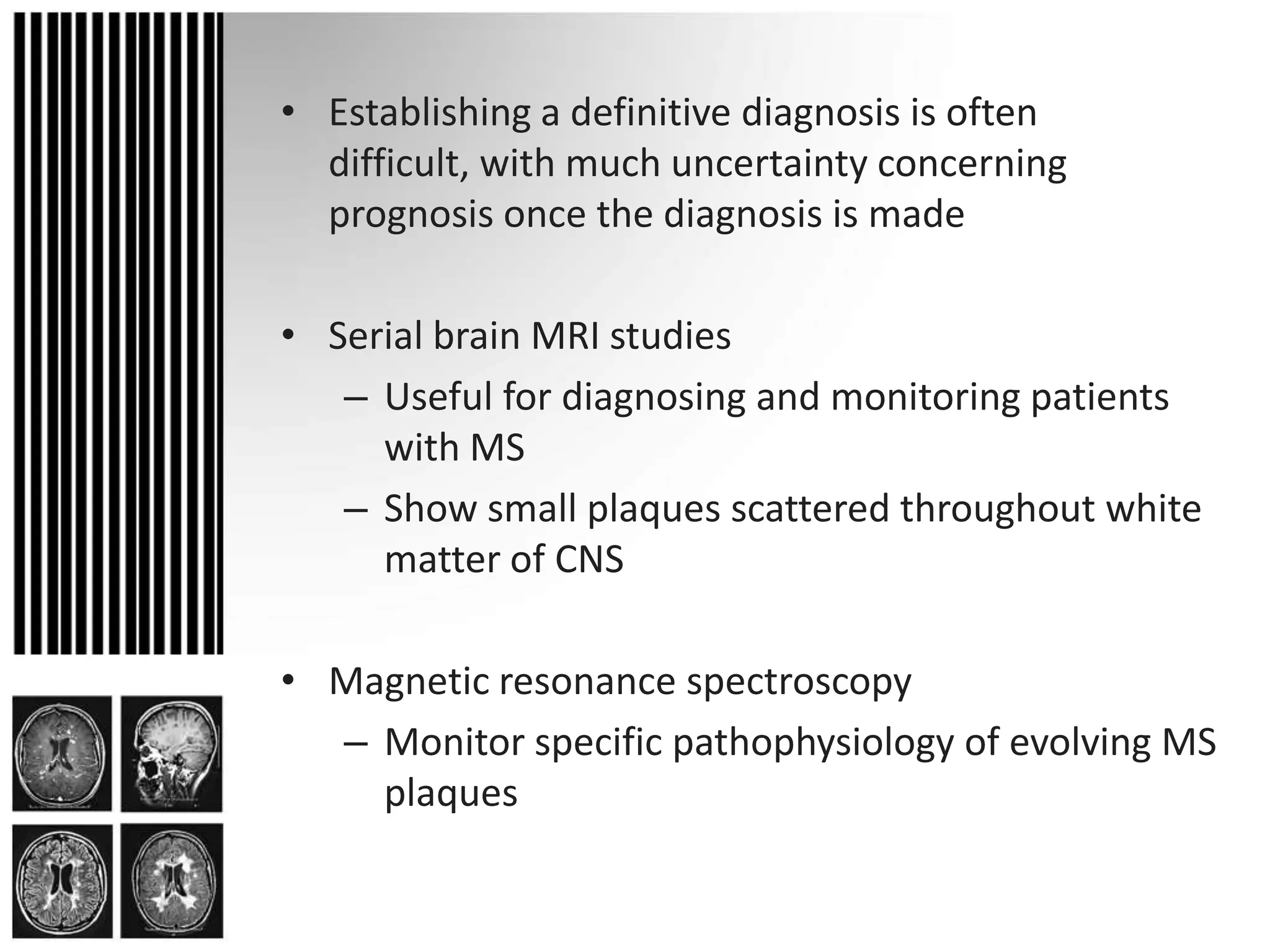
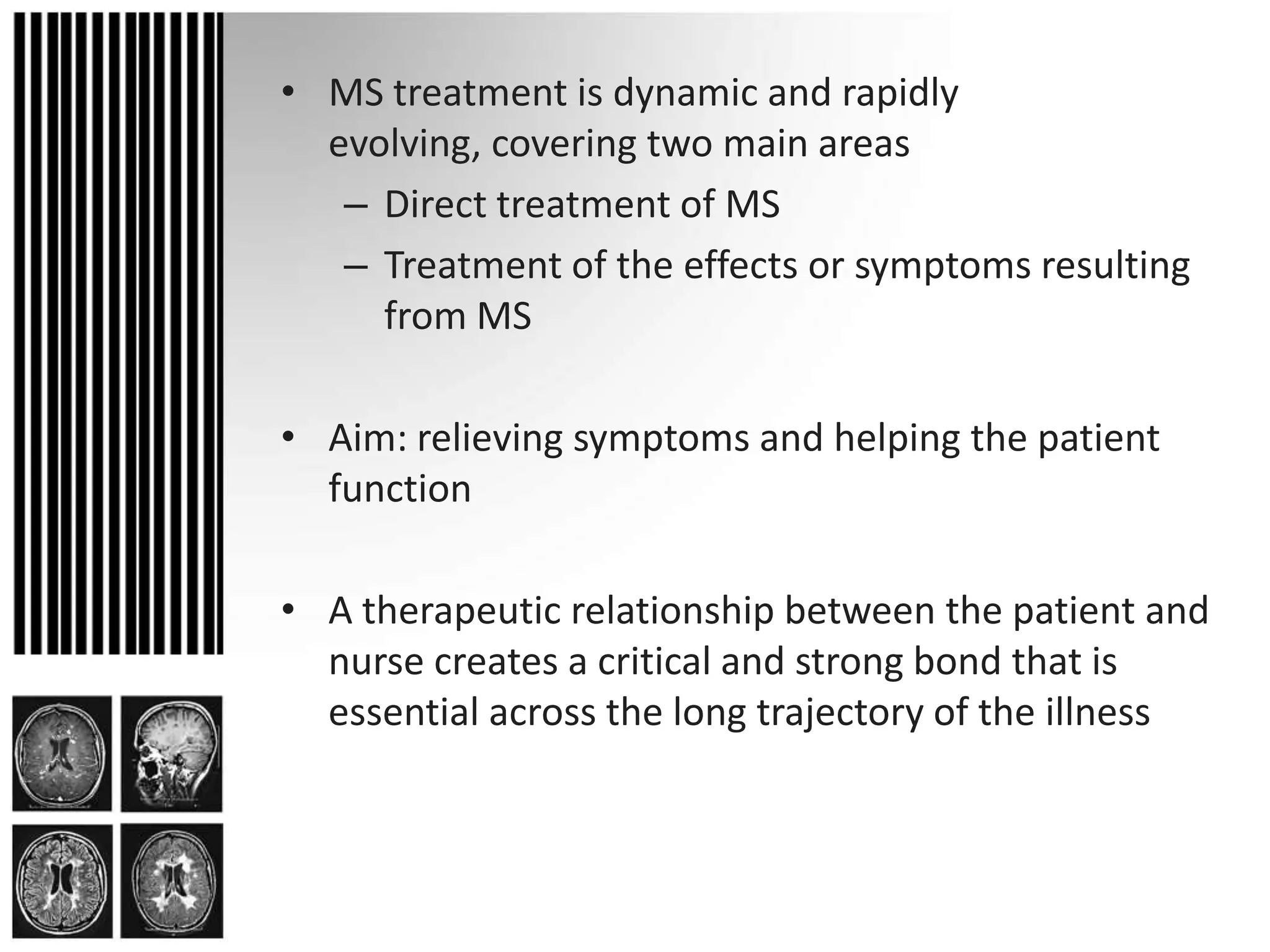
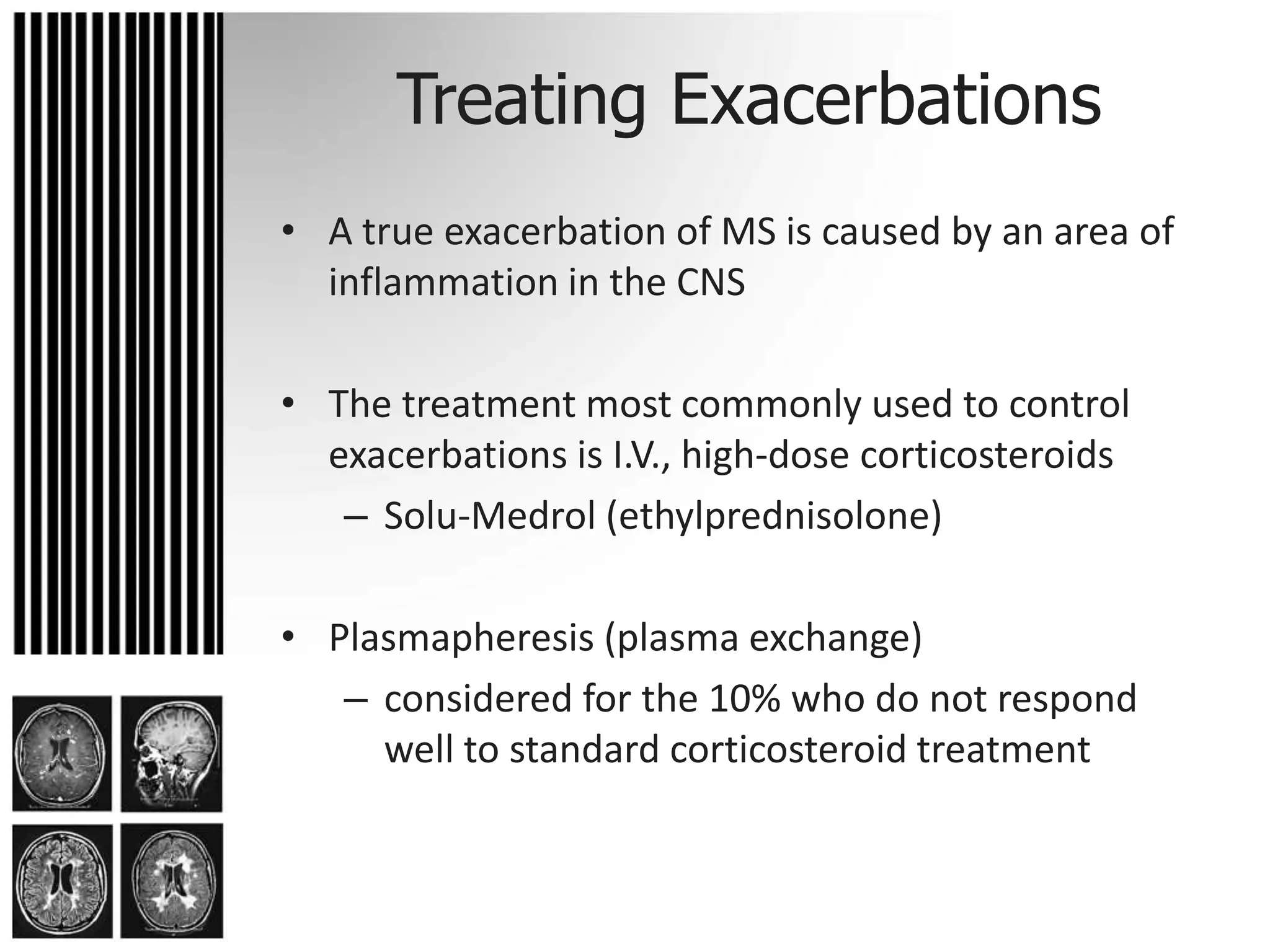
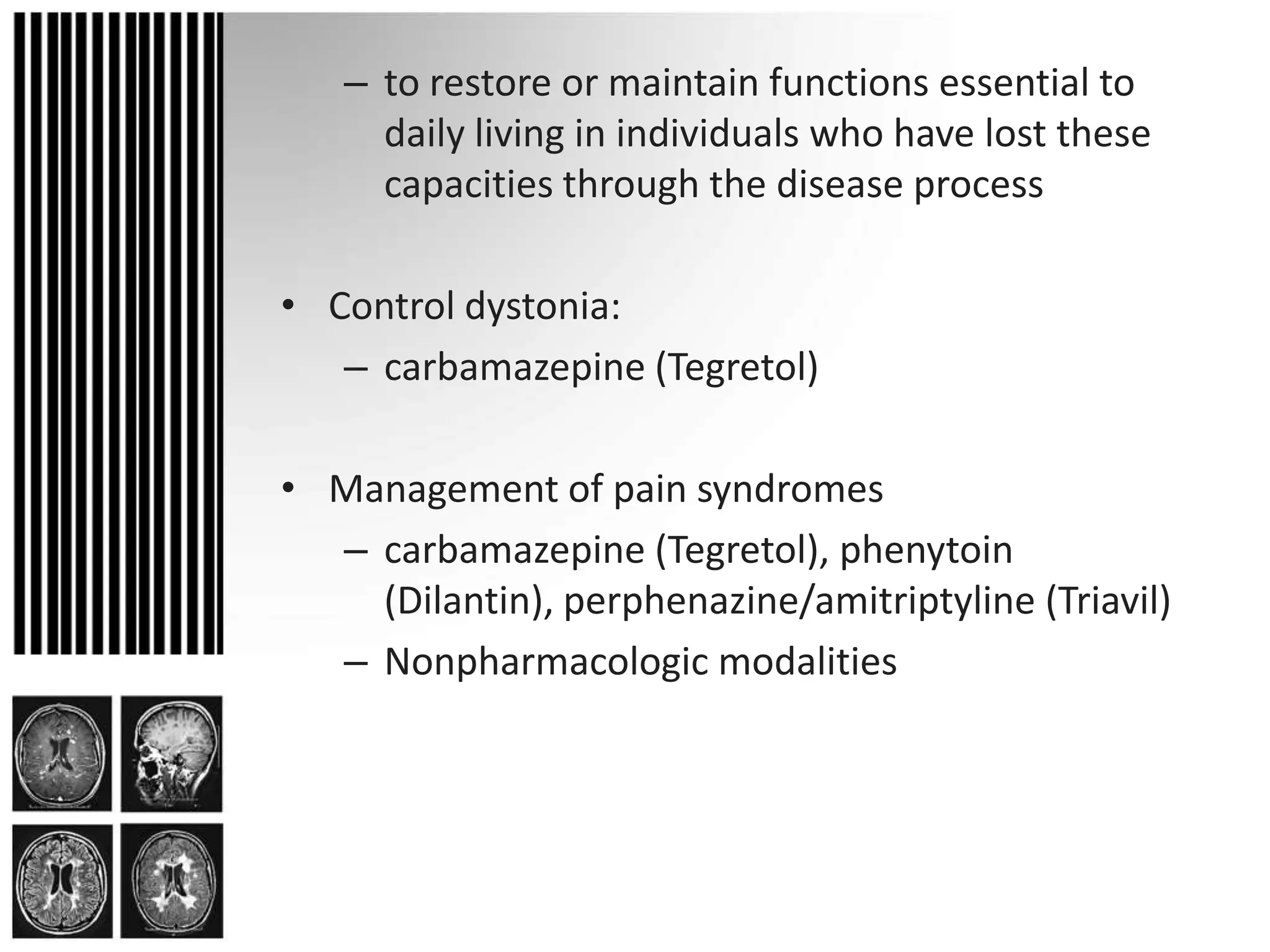
Establishing a definitive diagnosis is often difficult, with much uncertainty concerning prognosis once the diagnosis is madeSerial brain MRI studiesUseful for diagnosing and monitoring patients with MSShow small plaques scattered throughout white matter of CNSMagnetic resonance spectroscopy Monitor specific pathophysiology of evolving MS plaques
Electrophoresis study of CSFshows abnormal IgG antibodyVisual, auditory, and somatosensory evoked potentialsslowed conduction is evidence of demyelination
complications
Respiratory dysfunctionInfectionsBladderRespiratorySepsisComplications from immobilitySpeech, voice, and language disordersdysarthria
management
MS treatment is dynamic and rapidly evolving, covering two main areasDirect treatment of MSTreatment of the effects or symptoms resulting from MSAim: relieving symptoms and helping the patient functionA therapeutic relationship between the patient and nurse creates a critical and strong bond that is essential across the long trajectory of the illness
Current Disease-Modifying DrugsCorticosteroids or adrenocorticotropic hormoneTo decrease inflammationshorten duration of relapse or exacerbationImmunosuppressive agentsStabilize the courseInterferon beta-1a (Rebif, Avonex) and interferon beta-1b (Betaseron) Used for treatment of rapidly progressing symptoms in some patients
Copolymer-1A mixture of synthetic polypeptides composed of four amino acidsEffective in reducing relapse rates and disability in patients with relapsing-remitting MSGlatiramer (Copaxone)An immunomodulator,Used in relapsing-remitting diseaseMitoxantrone (Novantrone)Chemotherapeutic agent used for the treatment of secondary (chronic) progressive, progressive relapsing, or worsening relapsing-remitting MSTo reduce neurologic disability and frequency of clinical relapses
Treating ExacerbationsA true exacerbation of MS is caused by an area of inflammation in the CNSThe treatment most commonly used to control exacerbations is I.V., high-dose corticosteroidsSolu-Medrol (ethylprednisolone)Plasmapheresis (plasma exchange)considered for the 10% who do not respond well to standard corticosteroid treatment
Chronic Symptom ManagementTreatment of spasticity withAgents: baclofen (Lioresal), dantrolene (Dantrium), diazepam (Valium)Physical therapyNerve blocksSsurgical interventionControl of fatigue:Amantadine (Symmetrel)Lifestyle changesTreatment of depression:Antidepressant drugs
CounsellingBladder management:AnticholinergicsIntermittent catheterization for drainageProphylactic antibioticsBowel management:stool softeners, bulk laxative, suppositoriesMultidisciplinary rehabilitation managementphysical therapy, occupational therapy, speech therapy, cognitive therapy, vocational rehabilitation, and complementary and alternative medicine
to restore or maintain functions essential to daily living in individuals who have lost these capacities through the disease processControl dystonia:carbamazepine (Tegretol)Management of pain syndromescarbamazepine (Tegretol), phenytoin (Dilantin), perphenazine/amitriptyline (Triavil)Nonpharmacologic modalities
Nursing assessment
Observe motor strength, coordination, and gaitPerform cranial nerve assessmentEvaluate elimination functionExplore coping, effect on activity and sexual function, emotional adjustmentAssess patient and family coping, support systems, available resources
Nursing diagnoses
Activity intoleranceAcute painChronic low self-esteemConstipationDisabled family copingDisturbed thought processesFatigueImbalanced nutrition: Less than body requirements Impaired physical mobility Impaired urinary elimination Ineffective coping Ineffective role performance Interrupted family processes Risk for infection Risk for injury
Key outcomes
The patient will:Perform activities of daily living within the confines of the diseaseVerbalize feelings of comfort and reduced painVoice feelings relating to self-esteemMaintain a normal bowel elimination pattern(Family members will) use support systems and coping mechanismsRemain oriented to person, place, time, and situationExpress feelings of increased energy and decreased fatigue
The patient will:Show no signs of malnutritionMaintain joint mobility and range of motionDevelop regular bladder habitsUse support systems and coping mechanismsResume regular roles and responsibilities to the fullest extent possible(Family members will) discuss the impact of the patient's condition on the family unitRemain free from signs and symptoms of infectionRemain free from injury
Nursing interventions
Provide emotional and psychological support for the patient and his family, and answer their questions honestlyStay with them during crisis periodsEncourage the patient by suggesting ways to help her cope with this diseaseAssist with physical therapyIncrease patient comfort with massages and relaxing bathsMake sure the water isn't too hot because it may temporarily intensify otherwise subtle symptoms
Assist with active, resistive, and stretching exercises to maintain muscle tone and joint mobility, decrease spasticity, improve coordination, and boost moraleProvide rest periods between exercises because fatigue may contribute to exacerbationsPromote emotional stabilityHelp the patient establish a daily routine to maintain optimal functioningHer tolerance level regulates her activity levelEncourage regular rest periods to prevent fatigue and daily physical exercise
Keep the bedpan or urinal readily accessible because the need to void is immediateEvaluate the need for bowel and bladder training during hospitalizationEncourage adequate fluid intake and regular urinationEventually, the patient may require urinary drainage by self-catheterization or, in men, condom catheterWatch for adverse reactions to drug therapy
Patient teaching
Review the disease process, emphasizing the need for optimizing the patient's potential and avoiding exacerbations as possibleInform the patient about potential adverse effects of drug therapy and the medication regimenEmphasize the need to avoid stress, infections, and fatigue and to maintain independence by developing new ways of performing daily activitiesBe sure to tell the patient to avoid exposure to bacterial and viral infectionsStress the importance of eating a nutritious, well-balanced diet that contains sufficient fiber to prevent constipation
Encourage adequate fluid intake and regular urinationPromote emotional stabilityHelp the patient establish a daily routine to maintain optimal functioningInform the patient that exacerbations are unpredictable, necessitating physical and emotional adjustments in his lifestyleRefer the patient to the social service department when appropriate and to a local chapter of the National Multiple Sclerosis Society
Avoiding exacerbation of MS
Educate the patient and her family about multiple sclerosis (MS)Emphasize the need to avoid stress, infections, and fatigueStress the need to maintain independence by developing new ways of performing daily activitiesBe sure to tell the patient to avoid exposure to bacterial and viral infectionsEmphasize the importance of exercise and inform the patient that walking may improve gaitIf her motor dysfunction causes coordination or balance problems, teach walking with a wide base of support
If the patient has trouble with position sense, tell her to watch her feet while walkingIf she's still in danger of falling, a walker or a wheelchair may be requiredStress the importance of taking rest periods, preferably lying downTeach the importance of eating a nutritious, well-balanced diet that contains sufficient roughage to prevent constipationEncourage adequate fluid intake and regular urination
Provide bowel and bladder training if necessaryTeach the patient how to use suppositories to establish a regular bowel elimination scheduleInform the patient that exacerbations are unpredictable, necessitating physical and emotional adjustments in lifestyleHelp the patient and her family establish a routine to maintain optimal functions
Learning activity
A 28-year-old woman raised in Minnesota complains of weakness and tingling in the right arm and leg for 2 days. She reports an episode of right eye pain and blurred vision, which resolved over one mo that occurred 2 years ago. She also recalls a 2-week episode of intermittent blurred vision 1 year ago. What disease process could be present?Multiple sclerosis (MS). She could be experiencing optic neuritis, a symptom of MS.
What is MS (multiple sclerosis)?MS is a progressive neurologic disease that is not infectious, and is caused by destruction, injury, or malformation of the myelin sheaths that cover nerves; these areas of demyelination are called plaques and are most common on the white matter of the brain and spinal cord; symptoms of MS may be transient, variable, and bizarre. The first symptoms are usually sensory and visual problems. Fatigue is usually the most debilitating symptom. Diagnosis is by MRI and other techniques. There is no cure, although medical treatment does help symptoms, including steroids, glatiramer acetate, and others.
What purpose would the drug baclofen (Lioresal) serve when administered to a patient with multiple sclerosis?It is a muscle relaxant used to help relieve muscle spasms common with MS.
http://nurseRD.blogspot.comwww.authorstream.com/reynel89/Nursingwww.slideshare.net/reynel89/slideshowsTHANK  YOU!Have a nice day  :  )- RDG

Multiple sclerosis: Medical and Nursing Managements

  • 1.
  • 2.
  • 3.
    Describe multiple sclerosisin terms of:PathophysiologyClinical manifestationsMedical management Nursing management .Use the nursing process as a framework for care of patients with multiple sclerosis.
  • 4.
  • 5.
    Multiple SclerosisA chronic,frequently progressive neurologic disease of the CNSCaused by progressive demyelination of the white matter of the brain and spinal cordUnknown etiologyCharacterized by the occurrence of small patches of demyelination of the white matter of the optic nerve, brain, and spinal cordCauses disruption of electrical messages from the brain to the peripheral nervous system
  • 7.
    Characterized by exacerbationsand remissions of symptoms over the course of the illnessMay progress rapidly, causing death within months or disability by early adulthoodMost common CNS disease among young adults A major cause of chronic disability in young adults (20-40 y.o.)Prognosis variesAbout 70% of patients lead active, productive lives with prolonged remissions
  • 8.
    Incidence:Highest in femalesHigh among people in northern urban areas and higher socioeconomic groupsLow Incidence in JapanIncreased risk:Family history of MS Living in a cold, damp climate
  • 9.
  • 10.
    DemyelinationDestruction of themyelin (fatty and protein material that covers certain nerve fibers in the brain and spinal cord)Results in disordered transmission of nerve impulsesInflammatory changes lead to scarring of the affected nerve fibersCause: UnknownPossibly related to:autoimmune dysfunctionallergic responsegenetic susceptibilityinfectious process
  • 12.
    Other possible factors:(may help destroy axons and the myelin sheath)TraumaAnoxiaToxinsNutritional deficienciesVascular lesionsAnorexia nervosaEmotional stress, overwork, fatigue, pregnancy, or acute respiratory tract infections may precede the onset of this illnessMore prevalent in the northern latitudes and among Caucasians
  • 13.
  • 14.
    Four Clinical Formsof MS (National Multiple Sclerosis Advisory Committee)Relapsing remitting (RR)Clearly defined acute attacks evolve over days to weeksPartial recovery of function occurs over weeks to monthsAverage frequency of attacks is once every 2 years and neurologic stability remains between attacks without disease progressionAt the time of onset, 90% of cases of MS are diagnosed as RR
  • 15.
    Secondary progressive (SP)Alwaysbegins as RR but clinical course changes with declining attack rate, with a steady deterioration in neurologic function unrelated to the original attackFifty percent of those with RR will progress to SP within 10 years90% will progress within 25 yearsPrimary progressive (PP)characterized by steady progression of disability from onset without exacerbations and remissions
  • 16.
    More prevalent amongmales and older individualsWorst prognosis for neurologic disabilityTen percent of cases of MS are diagnosed as PPProgressive relapsing (PR)the same as PP except that patients experience acute exacerbations along with a steadily progressive courseRarest form
  • 18.
  • 19.
    Lesions can occuranywhere within the white matter of the CNSSymptoms reflect the location of the area of demyelinationFatigue and weaknessAbnormal reflexes: absent or exaggeratedVision disturbances: impaired and double vision, nystagmusMotor dysfunction: weakness, tremor, incoordination
  • 20.
    Sensory disturbances: paresthesias,impaired deep sensation, impaired vibratory and position senseImpaired speech: slurring, scanning (dysarthria)Urinary dysfunction: hesitancy, frequency, urgency, retention, incontinence; upper UTIUrinary dysfunction affects about 90% of patients with MS and may exacerbate relapse of MSNeurobehavioral syndromes: depression, cognitive impairment, emotional labilitySymptoms of MS are often unpredictable, varying from person to person and from time to time in the same person
  • 22.
  • 23.
    Establishing a definitivediagnosis is often difficult, with much uncertainty concerning prognosis once the diagnosis is madeSerial brain MRI studiesUseful for diagnosing and monitoring patients with MSShow small plaques scattered throughout white matter of CNSMagnetic resonance spectroscopy Monitor specific pathophysiology of evolving MS plaques
  • 25.
    Electrophoresis study ofCSFshows abnormal IgG antibodyVisual, auditory, and somatosensory evoked potentialsslowed conduction is evidence of demyelination
  • 26.
  • 27.
    Respiratory dysfunctionInfectionsBladderRespiratorySepsisComplications fromimmobilitySpeech, voice, and language disordersdysarthria
  • 28.
  • 29.
    MS treatment isdynamic and rapidly evolving, covering two main areasDirect treatment of MSTreatment of the effects or symptoms resulting from MSAim: relieving symptoms and helping the patient functionA therapeutic relationship between the patient and nurse creates a critical and strong bond that is essential across the long trajectory of the illness
  • 31.
    Current Disease-Modifying DrugsCorticosteroidsor adrenocorticotropic hormoneTo decrease inflammationshorten duration of relapse or exacerbationImmunosuppressive agentsStabilize the courseInterferon beta-1a (Rebif, Avonex) and interferon beta-1b (Betaseron) Used for treatment of rapidly progressing symptoms in some patients
  • 32.
    Copolymer-1A mixture ofsynthetic polypeptides composed of four amino acidsEffective in reducing relapse rates and disability in patients with relapsing-remitting MSGlatiramer (Copaxone)An immunomodulator,Used in relapsing-remitting diseaseMitoxantrone (Novantrone)Chemotherapeutic agent used for the treatment of secondary (chronic) progressive, progressive relapsing, or worsening relapsing-remitting MSTo reduce neurologic disability and frequency of clinical relapses
  • 33.
    Treating ExacerbationsA trueexacerbation of MS is caused by an area of inflammation in the CNSThe treatment most commonly used to control exacerbations is I.V., high-dose corticosteroidsSolu-Medrol (ethylprednisolone)Plasmapheresis (plasma exchange)considered for the 10% who do not respond well to standard corticosteroid treatment
  • 34.
    Chronic Symptom ManagementTreatmentof spasticity withAgents: baclofen (Lioresal), dantrolene (Dantrium), diazepam (Valium)Physical therapyNerve blocksSsurgical interventionControl of fatigue:Amantadine (Symmetrel)Lifestyle changesTreatment of depression:Antidepressant drugs
  • 36.
    CounsellingBladder management:AnticholinergicsIntermittent catheterizationfor drainageProphylactic antibioticsBowel management:stool softeners, bulk laxative, suppositoriesMultidisciplinary rehabilitation managementphysical therapy, occupational therapy, speech therapy, cognitive therapy, vocational rehabilitation, and complementary and alternative medicine
  • 37.
    to restore ormaintain functions essential to daily living in individuals who have lost these capacities through the disease processControl dystonia:carbamazepine (Tegretol)Management of pain syndromescarbamazepine (Tegretol), phenytoin (Dilantin), perphenazine/amitriptyline (Triavil)Nonpharmacologic modalities
  • 38.
  • 39.
    Observe motor strength,coordination, and gaitPerform cranial nerve assessmentEvaluate elimination functionExplore coping, effect on activity and sexual function, emotional adjustmentAssess patient and family coping, support systems, available resources
  • 40.
  • 41.
    Activity intoleranceAcute painChroniclow self-esteemConstipationDisabled family copingDisturbed thought processesFatigueImbalanced nutrition: Less than body requirements Impaired physical mobility Impaired urinary elimination Ineffective coping Ineffective role performance Interrupted family processes Risk for infection Risk for injury
  • 42.
  • 43.
    The patient will:Performactivities of daily living within the confines of the diseaseVerbalize feelings of comfort and reduced painVoice feelings relating to self-esteemMaintain a normal bowel elimination pattern(Family members will) use support systems and coping mechanismsRemain oriented to person, place, time, and situationExpress feelings of increased energy and decreased fatigue
  • 44.
    The patient will:Showno signs of malnutritionMaintain joint mobility and range of motionDevelop regular bladder habitsUse support systems and coping mechanismsResume regular roles and responsibilities to the fullest extent possible(Family members will) discuss the impact of the patient's condition on the family unitRemain free from signs and symptoms of infectionRemain free from injury
  • 45.
  • 46.
    Provide emotional andpsychological support for the patient and his family, and answer their questions honestlyStay with them during crisis periodsEncourage the patient by suggesting ways to help her cope with this diseaseAssist with physical therapyIncrease patient comfort with massages and relaxing bathsMake sure the water isn't too hot because it may temporarily intensify otherwise subtle symptoms
  • 47.
    Assist with active,resistive, and stretching exercises to maintain muscle tone and joint mobility, decrease spasticity, improve coordination, and boost moraleProvide rest periods between exercises because fatigue may contribute to exacerbationsPromote emotional stabilityHelp the patient establish a daily routine to maintain optimal functioningHer tolerance level regulates her activity levelEncourage regular rest periods to prevent fatigue and daily physical exercise
  • 48.
    Keep the bedpanor urinal readily accessible because the need to void is immediateEvaluate the need for bowel and bladder training during hospitalizationEncourage adequate fluid intake and regular urinationEventually, the patient may require urinary drainage by self-catheterization or, in men, condom catheterWatch for adverse reactions to drug therapy
  • 49.
  • 50.
    Review the diseaseprocess, emphasizing the need for optimizing the patient's potential and avoiding exacerbations as possibleInform the patient about potential adverse effects of drug therapy and the medication regimenEmphasize the need to avoid stress, infections, and fatigue and to maintain independence by developing new ways of performing daily activitiesBe sure to tell the patient to avoid exposure to bacterial and viral infectionsStress the importance of eating a nutritious, well-balanced diet that contains sufficient fiber to prevent constipation
  • 51.
    Encourage adequate fluidintake and regular urinationPromote emotional stabilityHelp the patient establish a daily routine to maintain optimal functioningInform the patient that exacerbations are unpredictable, necessitating physical and emotional adjustments in his lifestyleRefer the patient to the social service department when appropriate and to a local chapter of the National Multiple Sclerosis Society
  • 52.
  • 53.
    Educate the patientand her family about multiple sclerosis (MS)Emphasize the need to avoid stress, infections, and fatigueStress the need to maintain independence by developing new ways of performing daily activitiesBe sure to tell the patient to avoid exposure to bacterial and viral infectionsEmphasize the importance of exercise and inform the patient that walking may improve gaitIf her motor dysfunction causes coordination or balance problems, teach walking with a wide base of support
  • 54.
    If the patienthas trouble with position sense, tell her to watch her feet while walkingIf she's still in danger of falling, a walker or a wheelchair may be requiredStress the importance of taking rest periods, preferably lying downTeach the importance of eating a nutritious, well-balanced diet that contains sufficient roughage to prevent constipationEncourage adequate fluid intake and regular urination
  • 55.
    Provide bowel andbladder training if necessaryTeach the patient how to use suppositories to establish a regular bowel elimination scheduleInform the patient that exacerbations are unpredictable, necessitating physical and emotional adjustments in lifestyleHelp the patient and her family establish a routine to maintain optimal functions
  • 56.
  • 57.
    A 28-year-old womanraised in Minnesota complains of weakness and tingling in the right arm and leg for 2 days. She reports an episode of right eye pain and blurred vision, which resolved over one mo that occurred 2 years ago. She also recalls a 2-week episode of intermittent blurred vision 1 year ago. What disease process could be present?Multiple sclerosis (MS). She could be experiencing optic neuritis, a symptom of MS.
  • 58.
    What is MS(multiple sclerosis)?MS is a progressive neurologic disease that is not infectious, and is caused by destruction, injury, or malformation of the myelin sheaths that cover nerves; these areas of demyelination are called plaques and are most common on the white matter of the brain and spinal cord; symptoms of MS may be transient, variable, and bizarre. The first symptoms are usually sensory and visual problems. Fatigue is usually the most debilitating symptom. Diagnosis is by MRI and other techniques. There is no cure, although medical treatment does help symptoms, including steroids, glatiramer acetate, and others.
  • 59.
    What purpose wouldthe drug baclofen (Lioresal) serve when administered to a patient with multiple sclerosis?It is a muscle relaxant used to help relieve muscle spasms common with MS.
  • 61.