1
 PRESENTER-
DR.CHARAN SINGH
JILOWA
 UNDER GUIDANCE OF–
DR.LALIT BATRA
What we will cover
2
1. What is delirium ?
2. History.
3. Characteristics
4. Synonyms.
5. Epidemiology.
6. Risk factors
7. Causes .
8. Pathophysiology
9. Clinical features.
10. Diagnosis.
11. D.D.
12. Course and prognosis.
13. Treatment.
14. Preventions .
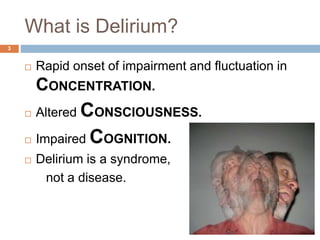
What is Delirium?
 Rapid onset of impairment and fluctuation in
CONCENTRATION.
 Altered CONSCIOUSNESS.
 Impaired COGNITION.
 Delirium is a syndrome,
not a disease.
3
HISTORY
 The Word delirium exist in medical litrature since
last 2500 years.
 Almost 50 years ago, George L. Engel and John
Romano postulated that delirium was a reversible
cerebral insufficiency due to decreased brain
metabolic activity, based on
electroencephalogram (EEG) slowing in patients
with delirium.
 In 1980, the third edition of the Diagnostic and
Statistical Manual of Mental Disorders (DSM-III)
was the first attempt to standardize delirium
nomenclature.
4
Clinical characteristics of
delirium
 Acute onset of mental status change with
fluctuating course .
 Attentional deficits .
 Disorganized thinking .
 Altered level of consciousness .
 Perceptual disturbances .
 Disturbed sleep-wake cycle .
 Altered psychomotor activity
 Disorientation and memory impairment .
 Other cognitive deficits behavioral and
emotional abnormalities .
5
Delirium - Synonyms
1 Intensive care unit psychosis.
2 Acute confusional state.
3 Acute brain failure
4 Toxic metabolic state.
5 Central nervous system toxicity.
6 Paraneoplastic limbic encephalitis.
7 Sundowning.
8 Cerebral insufficiency.
9 Organic brain syndrome.
6
Epidemiology
 According to DSM-IV-TR, the point prevalence of
delirium in the general population is 0.4 percent for
people 18 years of age and older and 1.1 percent
for people 55 and older.
 Approximately 10 to 30 percent of medically ill
patients who are hospitalized exhibit delirium.
 Approximately 30 percent of patients in surgical
intensive care units and cardiac intensive care
units and 40 to 50 percent of patients who are
recovering from surgery for hip fractures have an
episode of delirium.
7
Epidemiology
 The highest rate of delirium is found in
postcardiotomy patients, more than 90 percent
in some studies.
 An estimated 20 percent of patients with
severe burns and 30 to 40 percent of patients
with AIDS have episodes of delirium while they
are hospitalized.
 Delirium develops in 80 percent of terminally ill
patients.
8
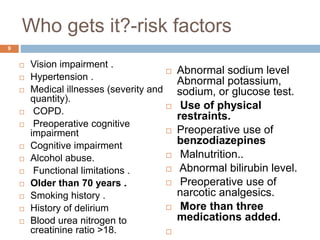
Who gets it?-risk factors
 Vision impairment .
 Hypertension .
 Medical illnesses (severity and
quantity).
 COPD.
 Preoperative cognitive
impairment
 Cognitive impairment
 Alcohol abuse.
 Functional limitations .
 Older than 70 years .
 Smoking history .
 History of delirium
 Blood urea nitrogen to
creatinine ratio >18.
 Abnormal sodium level
Abnormal potassium,
sodium, or glucose test.
 Use of physical
restraints.
 Preoperative use of
benzodiazepines
 Malnutrition..
 Abnormal bilirubin level.
 Preoperative use of
narcotic analgesics.
 More than three
medications added.

9
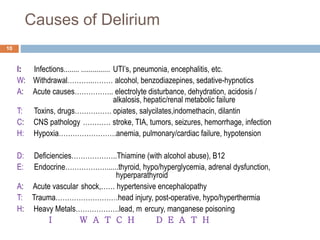
Causes of Delirium
I: Infections........ ............... UTI’s, pneumonia, encephalitis, etc.
W: Withdrawal………..……… alcohol, benzodiazepines, sedative-hypnotics
A: Acute causes…………….. electrolyte disturbance, dehydration, acidosis /
alkalosis, hepatic/renal metabolic failure
T: Toxins, drugs……………. opiates, salycilates,indomethacin, dilantin
C: CNS pathology ………… stroke, TIA, tumors, seizures, hemorrhage, infection
H: Hypoxia…………………….anemia, pulmonary/cardiac failure, hypotension
D: Deficiencies………………..Thiamine (with alcohol abuse), B12
E: Endocrine………………......thyroid, hypo/hyperglycemia, adrenal dysfunction,
hyperparathyroid
A: Acute vascular shock,…… hypertensive encephalopathy
T: Trauma………………………head injury, post-operative, hypo/hyperthermia
H: Heavy Metals……………….lead, m ercury, manganese poisoning
I W A T C H D E A T H
10
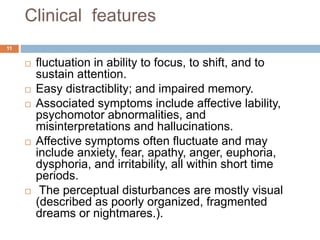
Clinical features
 fluctuation in ability to focus, to shift, and to
sustain attention.
 Easy distractiblity; and impaired memory.
 Associated symptoms include affective lability,
psychomotor abnormalities, and
misinterpretations and hallucinations.
 Affective symptoms often fluctuate and may
include anxiety, fear, apathy, anger, euphoria,
dysphoria, and irritability, all within short time
periods.
 The perceptual disturbances are mostly visual
(described as poorly organized, fragmented
dreams or nightmares.).
11
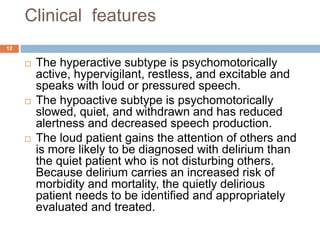
Clinical features
 The hyperactive subtype is psychomotorically
active, hypervigilant, restless, and excitable and
speaks with loud or pressured speech.
 The hypoactive subtype is psychomotorically
slowed, quiet, and withdrawn and has reduced
alertness and decreased speech production.
 The loud patient gains the attention of others and
is more likely to be diagnosed with delirium than
the quiet patient who is not disturbing others.
Because delirium carries an increased risk of
morbidity and mortality, the quietly delirious
patient needs to be identified and appropriately
evaluated and treated.
12
Delirium- Pathophysiology
 The proposed theories for delirium
pathophysiology involve -
 Neurochemical abnormalities,
 Alterations in metabolism,
 Involvement of cytokines and acute phase
reactants, and
 Changes in the permeability of the blood–brain
barrier.
13
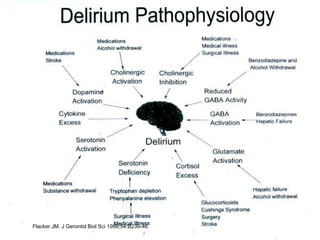
14 Flacker JM. J Gerontol Biol Sci 1999;54:B239-46
Hypotheses about Delirium
Pathophysiology
 Poorly understood
 ACETYLCHOLINE
 The cholinergic system is involved with rapid eye
movement (REM) sleep, attention, arousal, and
memory.
 Anticholinergic agents have been found to cause
delirium in humans and behavioral and EEG
changes in animals.
 The serum anticholinergic levels are increased in
delirious patients and decline as delirium resolves.
 cholinergic agents, such as physostigmine, have
demonstrated benefit in treating anticholinergic
delirium.
15
Cont..
 DOPAMINE
 Dopamine is involved in maintaining and shifting
attention via modulation of the frontal cortex.
 Antipsychotic agents that block dopamine receptors
provide symptomatic relief for delirious patients and
may result in a relative decrease in dopamine levels.
 Substances that increase dopamine, such as
psychostimulants, carbidopa and levodopa , bupropion
or amantadine may cause delirium.
 As dopamine levels increase, cholinergic levels
decline, possibly contributing to delirium through the
interaction of the two neurotransmitter systems.
 Reduction in dopaminergic function is associated with
alterations in oxidative metabolism.
16
Cont..
 Glutamate
 Glutamate abnormalities are inferred in the
pathophysiology of delirium. Glutamate excitatory
neurotoxicity via the N-methyl-D-aspartate (NMDA)
receptor may cause apoptosis and neuronal death and
has been associated with alcohol intoxication and
withdrawal, conditions that are associated with
delirium.
 GABA and Amonia-
 In patients with hepatic encephalopathy, increased
inhibitory GABA levels are observed.
 An increase in ammonia levels occurs in patients with
hepatic encephalopathy, which causes an increase in
the amino acids glutamate and glutamine, which are
precursors to GABA.
17
Cont..
 SEROTONIN
 Excess and attenuated serotonin has been
implicated in delirium.
 Oxidative Metabolism
 Alterations in oxidative metabolism may result in
delirium.
 Blood–Brain Barrier Alterations
 Delirium may be related to capillary endothelial
changes that result in the disruption of the blood–
brain barrier.
18
Cont…
 Cytokines
 Rodent models suggest that IL-1
(proinflammatory substance) administration
decreases extracellular Ach in the hippocampus
and increases NE in the hypothalamus.
 Cytokines may change the endothelial
permeability of the blood–brain barrier.
19
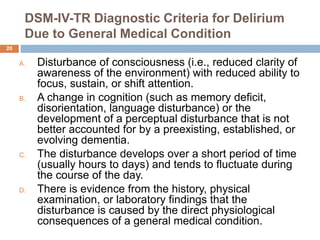
DSM-IV-TR Diagnostic Criteria for Delirium
Due to General Medical Condition
A. Disturbance of consciousness (i.e., reduced clarity of
awareness of the environment) with reduced ability to
focus, sustain, or shift attention.
B. A change in cognition (such as memory deficit,
disorientation, language disturbance) or the
development of a perceptual disturbance that is not
better accounted for by a preexisting, established, or
evolving dementia.
C. The disturbance develops over a short period of time
(usually hours to days) and tends to fluctuate during
the course of the day.
D. There is evidence from the history, physical
examination, or laboratory findings that the
disturbance is caused by the direct physiological
consequences of a general medical condition.
20
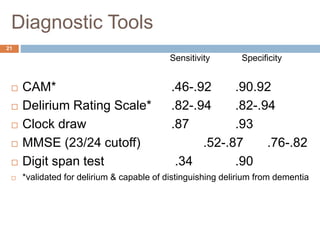
Diagnostic Tools
Sensitivity Specificity
 CAM* .46-.92 .90.92
 Delirium Rating Scale* .82-.94 .82-.94
 Clock draw .87 .93
 MMSE (23/24 cutoff) .52-.87 .76-.82
 Digit span test .34 .90
 *validated for delirium & capable of distinguishing delirium from dementia
21
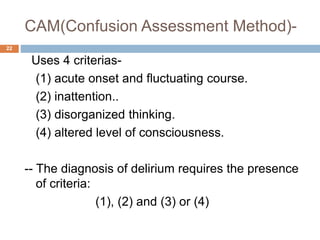
CAM(Confusion Assessment Method)-
22
Uses 4 criterias-
(1) acute onset and fluctuating course.
(2) inattention..
(3) disorganized thinking.
(4) altered level of consciousness.
-- The diagnosis of delirium requires the presence
of criteria:
(1), (2) and (3) or (4)
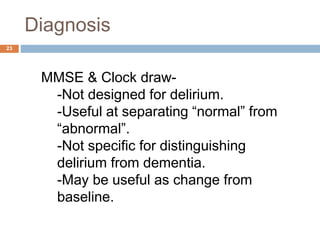
Diagnosis
MMSE & Clock draw-
-Not designed for delirium.
-Useful at separating “normal” from
“abnormal”.
-Not specific for distinguishing
delirium from dementia.
-May be useful as change from
baseline.
23
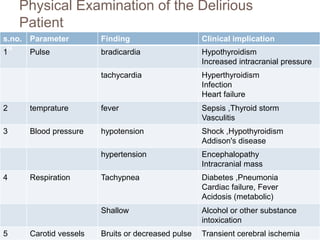
Physical Examination of the Delirious
Patient
s.no. Parameter Finding Clinical implication
1 Pulse bradicardia Hypothyroidism
Increased intracranial pressure
tachycardia Hyperthyroidism
Infection
Heart failure
2 temprature fever Sepsis ,Thyroid storm
Vasculitis
3 Blood pressure hypotension Shock ,Hypothyroidism
Addison's disease
hypertension Encephalopathy
Intracranial mass
4 Respiration Tachypnea Diabetes ,Pneumonia
Cardiac failure, Fever
Acidosis (metabolic)
Shallow Alcohol or other substance
intoxication
5 Carotid vessels Bruits or decreased pulse Transient cerebral ischemia
24
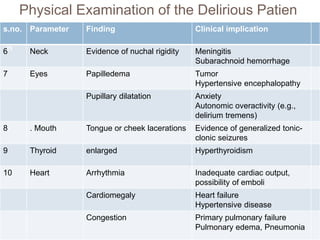
Physical Examination of the Delirious Patien
s.no. Parameter Finding Clinical implication
6 Neck Evidence of nuchal rigidity Meningitis
Subarachnoid hemorrhage
7 Eyes Papilledema Tumor
Hypertensive encephalopathy
Pupillary dilatation Anxiety
Autonomic overactivity (e.g.,
delirium tremens)
8 . Mouth Tongue or cheek lacerations Evidence of generalized tonic-
clonic seizures
9 Thyroid enlarged Hyperthyroidism
10 Heart Arrhythmia Inadequate cardiac output,
possibility of emboli
Cardiomegaly Heart failure
Hypertensive disease
Congestion Primary pulmonary failure
Pulmonary edema, Pneumonia
25
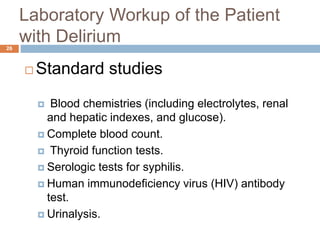
Laboratory Workup of the Patient
with Delirium
 Standard studies
 Blood chemistries (including electrolytes, renal
and hepatic indexes, and glucose).
 Complete blood count.
 Thyroid function tests.
 Serologic tests for syphilis.
 Human immunodeficiency virus (HIV) antibody
test.
 Urinalysis.
26
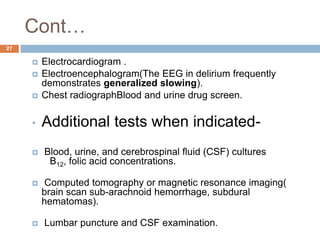
Cont…
 Electrocardiogram .
 Electroencephalogram(The EEG in delirium frequently
demonstrates generalized slowing).
 Chest radiographBlood and urine drug screen.
• Additional tests when indicated-
 Blood, urine, and cerebrospinal fluid (CSF) cultures
B12, folic acid concentrations.
 Computed tomography or magnetic resonance imaging(
brain scan sub-arachnoid hemorrhage, subdural
hematomas).
 Lumbar puncture and CSF examination.
27
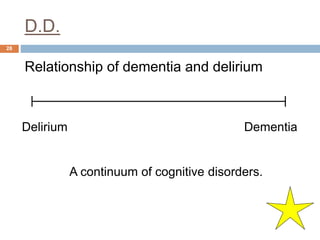
D.D.
28
Relationship of dementia and delirium
Delirium Dementia
A continuum of cognitive disorders.
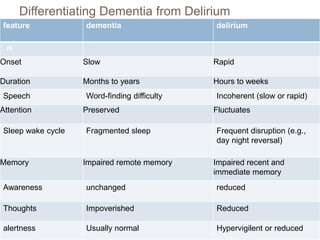
Differentiating Dementia from Delirium
feature dementia delirium
Onset Slow Rapid
Duration Months to years Hours to weeks
Speech Word-finding difficulty Incoherent (slow or rapid)
Attention Preserved Fluctuates
Sleep wake cycle Fragmented sleep Frequent disruption (e.g.,
day night reversal)
Memory Impaired remote memory Impaired recent and
immediate memory
Awareness unchanged reduced
Thoughts Impoverished Reduced
alertness Usually normal Hypervigilent or reduced
29
Cont…
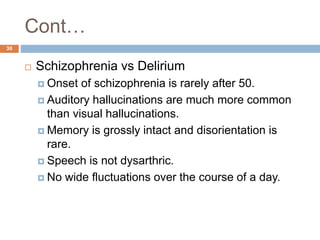
 Schizophrenia vs Delirium
 Onset of schizophrenia is rarely after 50.
 Auditory hallucinations are much more common
than visual hallucinations.
 Memory is grossly intact and disorientation is
rare.
 Speech is not dysarthric.
 No wide fluctuations over the course of a day.
30
Cont…
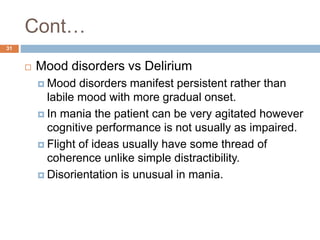
 Mood disorders vs Delirium
 Mood disorders manifest persistent rather than
labile mood with more gradual onset.
 In mania the patient can be very agitated however
cognitive performance is not usually as impaired.
 Flight of ideas usually have some thread of
coherence unlike simple distractibility.
 Disorientation is unusual in mania.
31
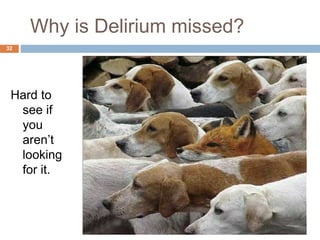
Why is Delirium missed?
Hard to
see if
you
aren’t
looking
for it.
32
Why is Delirium Missed:
Atypical Presentations of Delirium
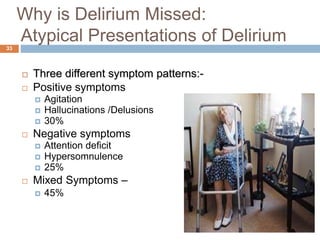
 Three different symptom patterns:-
 Positive symptoms
 Agitation
 Hallucinations /Delusions
 30%
 Negative symptoms
 Attention deficit
 Hypersomnulence
 25%
 Mixed Symptoms –
 45%
33
Course and prognosis
 Although the onset of delirium is usually sudden,
prodromal symptoms (e.g., restlessness and
fearfulness) can occur in the days preceding the
onset of florid symptoms.
 The symptoms of delirium usually persist as long
as the causally relevant factors are present,
although delirium generally lasts less than a
week.
 After identification and removal of the causative
factors, the symptoms of delirium usually recede
over a 3- to 7-day period, although some
symptoms may take up to 2 weeks to resolve
completely.
34
Course and prognosis
 Recall of what transpired during a delirium,
once it is over, is characteristically spotty; a
patient may refer to the episode as a bad
dream or a nightmare only vaguely
remembered.
 Delirium may progresses to dementia.
 The older the patient and the longer the
patient has been delirious, the longer the
delirium takes to resolve.
35
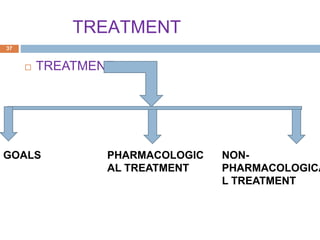
TREATMENT
36
TREATMENT
 TREATMENT
GOALS PHARMACOLOGIC
AL TREATMENT
NON-
PHARMACOLOGICA
L TREATMENT
37
TREATMENT
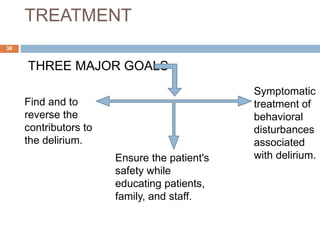
THREE MAJOR GOALS -
Find and to
reverse the
contributors to
the delirium.
Ensure the patient's
safety while
educating patients,
family, and staff.
Symptomatic
treatment of
behavioral
disturbances
associated
with delirium.
38
PHARMACOLOGICAL
TREATMENT
 In general, it is wise not to add additional
medications to the patient's regimen, unless
there is a significant reason to do so. Clinical
situations that might require additional
medications include agitation or psychosis.
 Antipsychotics may be considered if
psychosis, severely disorganized thought
process, or extreme physical or verbal
agitation places the patient or others at risk of
harm.
39
Typical Antipsychotics
HALOPERIDOL:-
 try to only use for SEVERE agitation.
 lowest anticholinergic activity of all major neuroleptics
 high potency.
 can be used IM/IV.
 start with 0.5 - 1 mg initial dose, gradually titrating to a
maximum of 4 mg/day.
 Repeat dose q 2-4 h.
 Taper the dose as soon as possible.
 Avoid in individuals with
Parkinson’s Disease.
40
Atypical Antipsychotics
Risperidone, Olanzepine, quetiapine
 low dose Risperidone starting at
.25 mg BID
 Olanzapine - 2.5 mg/d as starting
dose
 Quetiapine - 12.5 mg/d starting
dose
41
Benzodiazepines
1. It May increase agitation.
2. Best reserved for Delirium 2o to alcohol/
Benzodiazepine withdrawal.
3. Relatively contraindicated in Delirium from
Hepatic Encephalopathy.
42
Electroconvulsive Therapy
 ECT is also a treatment for
delirium when other
approaches have failed.
 It has been used as a last
resort for delirious patients
with severe agitation who are
not responsive to
pharmacotherapy.
43
Restore Sleep–Wake Cycle
 Delirium is frequently complicated by changes
in the sleep–wake cycle. Attempts to restore
sleep integrity may include moving the
schedule of existing sedating medications
to the hour of sleep or reducing or moving
activating medications and stimulants such as
caffeine to the morning.
 Brief, judicious use of sedating agents, such
as zolpidem or trazodone to reset the sleep–
wake cycle may be appropriate.
44
NON PHARMACOLOGICAL
TREATMENT
45
Nonpharmacological treatment
 The focus is on safety and orientation with
provision of the appropriate level of stimulation
and education toward the patient and family.
 Nursing care should follow vital sign
measurements and fluid intake and output.
 Care should be given when feeding to reduce or
to prevent aspiration. If possible, feeding should
be done in the lucid intervals, with several small
feedings being desirable in some cases compared
to few large feedings.
46
Nonpharmacological treatment
 Explanations and reassurance that the medical
team is working together to find the cause of the
delirium may also be helpful. Providing sufficient
and consistent staffing for the delirious patient
also assists in orienting, educating, and protecting
the patient.
 Education about delirium management empowers
staff with an approach to take with patients who
have delirium and their families.
 The psychosocial interventions deepen rapport
with the patient and family and move the
treatment goals forward by improving adherence
and satisfaction.
47
Environment
 Attention should be paid to providing the appropriate
level of stimulation and orienting cues.
 Orienting cues include a large clock, calendar, well-
lit room, and provision of eyeglasses and hearing
aides if they are required.
 Darkening the room at night to help with the sleep–
wake cycle is also important. Objects from a
patient's residence may also assist with orienting
and soothing the patient.
 If friends and family are available to assist with
orienting the patient, every effort should be made to
involve them in the treatment.
48
Family or Companions
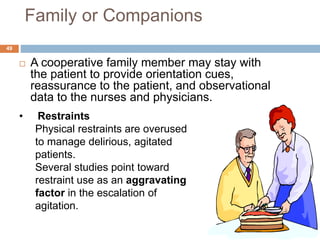
 A cooperative family member may stay with
the patient to provide orientation cues,
reassurance to the patient, and observational
data to the nurses and physicians.
• Restraints
Physical restraints are overused
to manage delirious, agitated
patients.
Several studies point toward
restraint use as an aggravating
factor in the escalation of
agitation.
49
Patient and Family Education
 During the delirious episode, families can be
educated as to appropriate ways to be supportive
to the patient, as well as to what information is
important to convey to the medical team.
 As the delirium symptoms resolve, the patient and
family should be educated about the long-term
prognosis.
 The knowledge about delirium's risk of increased
mortality and functional and cognitive decline may
be shared with the patient and family as clinically
appropriate.
50
Treatment of Specific Etiologies of
Delirium
 Anticholinergic Intoxication
 Anticholinergic poisoning almost always results in
delirium and is often accompanied by physical
agitation and visual hallucinations.
 Use of cholinesterase inhibitor, such as
physostigmine, has been shown to reduce the
severity of the delirium but requires repeated dosing
because of a short half-life.
 In a comparison study of physostigmine and
benzodiazepines for anticholinergic poisoning, the
physostigmine was effective.
51
Cont…..
 Substance Intoxication
 Substance intoxication with alcohol, benzodiazepines,
opiates, or mixed compounds requires attention to the
acute management of the airway and vital organ
functioning.
 The primary concern in managing a patient with
substance intoxication is supportive.
 For benzodiazepine ingestions, the benzodiazepine
receptor antagonist flumazenil may be helpful; however,
repeated administrations might be required
 Opiate intoxication may cause respiratory suppression in
addition to delirium. Reversal with naloxone ,naltrexone
may be considered with adequate support and
monitoring of the cardiovascular and respiratory status.
52
Cont…..
 Substance Withdrawal
 Alcohol and benzodiazepine withdrawal are treated by
replacing the offending agent with a benzodiazepine
and gradually reducing the dosage of the medication.
 Benzodiazepine detoxification is often performed at a
slower rate than alcohol detoxification owing to the
longer half-life of most benzodiazepines compared to
alcohol.
 In addition to delirium, opioid withdrawal has a
significant risk of physical discomfort to patients.
Symptomatic treatment with medications such as
clonidine is aimed at targeting GI distress, autonomic
changes, and craving.
53
How do we prevent it?
 Identify high risk patients
 Do cognitive assessment as routine
 reduce bad drugs
 maintain adequate analgesia
 maintain Oxygenation, etc
 try not to move patients
 use the same nurse if possible
 familiar things - pictures from home, clothes,
books
54
Is it really that bad?
 Increased nursing care.
 Increased length of stay.
 Increased risk of cognitive decline .
 Increased risk of functional decline
 Increased mortality Delay in postoperative
mobilization Prevention of early rehabilitation.
 Increased need for home care services .
 Increased distress to caregivers Barrier to
psychosocial closure in terminally ill patient.
55
What we need to remember about
delirium
 Confusion with altered Concentration +
Consciousness.
 Lots of Risk factors – dementia and blindness.
 Look for and treat underlying causes.
 Get history from family/friends..
 Avoid iv lines, catheters, changing rooms.
 Try familiar items, companions.
 Undetectable in 30 to 60 percent cases.
 Remember sedatives can make it worse!
56
Add life to years, not years to life.
THANK YOU.
57

delirium

  • 1.
    1  PRESENTER- DR.CHARAN SINGH JILOWA UNDER GUIDANCE OF– DR.LALIT BATRA
  • 2.
    What we willcover 2 1. What is delirium ? 2. History. 3. Characteristics 4. Synonyms. 5. Epidemiology. 6. Risk factors 7. Causes . 8. Pathophysiology 9. Clinical features. 10. Diagnosis. 11. D.D. 12. Course and prognosis. 13. Treatment. 14. Preventions .
  • 3.
    What is Delirium? Rapid onset of impairment and fluctuation in CONCENTRATION.  Altered CONSCIOUSNESS.  Impaired COGNITION.  Delirium is a syndrome, not a disease. 3
  • 4.
    HISTORY  The Worddelirium exist in medical litrature since last 2500 years.  Almost 50 years ago, George L. Engel and John Romano postulated that delirium was a reversible cerebral insufficiency due to decreased brain metabolic activity, based on electroencephalogram (EEG) slowing in patients with delirium.  In 1980, the third edition of the Diagnostic and Statistical Manual of Mental Disorders (DSM-III) was the first attempt to standardize delirium nomenclature. 4
  • 5.
    Clinical characteristics of delirium Acute onset of mental status change with fluctuating course .  Attentional deficits .  Disorganized thinking .  Altered level of consciousness .  Perceptual disturbances .  Disturbed sleep-wake cycle .  Altered psychomotor activity  Disorientation and memory impairment .  Other cognitive deficits behavioral and emotional abnormalities . 5
  • 6.
    Delirium - Synonyms 1Intensive care unit psychosis. 2 Acute confusional state. 3 Acute brain failure 4 Toxic metabolic state. 5 Central nervous system toxicity. 6 Paraneoplastic limbic encephalitis. 7 Sundowning. 8 Cerebral insufficiency. 9 Organic brain syndrome. 6
  • 7.
    Epidemiology  According toDSM-IV-TR, the point prevalence of delirium in the general population is 0.4 percent for people 18 years of age and older and 1.1 percent for people 55 and older.  Approximately 10 to 30 percent of medically ill patients who are hospitalized exhibit delirium.  Approximately 30 percent of patients in surgical intensive care units and cardiac intensive care units and 40 to 50 percent of patients who are recovering from surgery for hip fractures have an episode of delirium. 7
  • 8.
    Epidemiology  The highestrate of delirium is found in postcardiotomy patients, more than 90 percent in some studies.  An estimated 20 percent of patients with severe burns and 30 to 40 percent of patients with AIDS have episodes of delirium while they are hospitalized.  Delirium develops in 80 percent of terminally ill patients. 8
  • 9.
    Who gets it?-riskfactors  Vision impairment .  Hypertension .  Medical illnesses (severity and quantity).  COPD.  Preoperative cognitive impairment  Cognitive impairment  Alcohol abuse.  Functional limitations .  Older than 70 years .  Smoking history .  History of delirium  Blood urea nitrogen to creatinine ratio >18.  Abnormal sodium level Abnormal potassium, sodium, or glucose test.  Use of physical restraints.  Preoperative use of benzodiazepines  Malnutrition..  Abnormal bilirubin level.  Preoperative use of narcotic analgesics.  More than three medications added.  9
  • 10.
    Causes of Delirium I:Infections........ ............... UTI’s, pneumonia, encephalitis, etc. W: Withdrawal………..……… alcohol, benzodiazepines, sedative-hypnotics A: Acute causes…………….. electrolyte disturbance, dehydration, acidosis / alkalosis, hepatic/renal metabolic failure T: Toxins, drugs……………. opiates, salycilates,indomethacin, dilantin C: CNS pathology ………… stroke, TIA, tumors, seizures, hemorrhage, infection H: Hypoxia…………………….anemia, pulmonary/cardiac failure, hypotension D: Deficiencies………………..Thiamine (with alcohol abuse), B12 E: Endocrine………………......thyroid, hypo/hyperglycemia, adrenal dysfunction, hyperparathyroid A: Acute vascular shock,…… hypertensive encephalopathy T: Trauma………………………head injury, post-operative, hypo/hyperthermia H: Heavy Metals……………….lead, m ercury, manganese poisoning I W A T C H D E A T H 10
  • 11.
    Clinical features  fluctuationin ability to focus, to shift, and to sustain attention.  Easy distractiblity; and impaired memory.  Associated symptoms include affective lability, psychomotor abnormalities, and misinterpretations and hallucinations.  Affective symptoms often fluctuate and may include anxiety, fear, apathy, anger, euphoria, dysphoria, and irritability, all within short time periods.  The perceptual disturbances are mostly visual (described as poorly organized, fragmented dreams or nightmares.). 11
  • 12.
    Clinical features  Thehyperactive subtype is psychomotorically active, hypervigilant, restless, and excitable and speaks with loud or pressured speech.  The hypoactive subtype is psychomotorically slowed, quiet, and withdrawn and has reduced alertness and decreased speech production.  The loud patient gains the attention of others and is more likely to be diagnosed with delirium than the quiet patient who is not disturbing others. Because delirium carries an increased risk of morbidity and mortality, the quietly delirious patient needs to be identified and appropriately evaluated and treated. 12
  • 13.
    Delirium- Pathophysiology  Theproposed theories for delirium pathophysiology involve -  Neurochemical abnormalities,  Alterations in metabolism,  Involvement of cytokines and acute phase reactants, and  Changes in the permeability of the blood–brain barrier. 13
  • 14.
    14 Flacker JM.J Gerontol Biol Sci 1999;54:B239-46
  • 15.
    Hypotheses about Delirium Pathophysiology Poorly understood  ACETYLCHOLINE  The cholinergic system is involved with rapid eye movement (REM) sleep, attention, arousal, and memory.  Anticholinergic agents have been found to cause delirium in humans and behavioral and EEG changes in animals.  The serum anticholinergic levels are increased in delirious patients and decline as delirium resolves.  cholinergic agents, such as physostigmine, have demonstrated benefit in treating anticholinergic delirium. 15
  • 16.
    Cont..  DOPAMINE  Dopamineis involved in maintaining and shifting attention via modulation of the frontal cortex.  Antipsychotic agents that block dopamine receptors provide symptomatic relief for delirious patients and may result in a relative decrease in dopamine levels.  Substances that increase dopamine, such as psychostimulants, carbidopa and levodopa , bupropion or amantadine may cause delirium.  As dopamine levels increase, cholinergic levels decline, possibly contributing to delirium through the interaction of the two neurotransmitter systems.  Reduction in dopaminergic function is associated with alterations in oxidative metabolism. 16
  • 17.
    Cont..  Glutamate  Glutamateabnormalities are inferred in the pathophysiology of delirium. Glutamate excitatory neurotoxicity via the N-methyl-D-aspartate (NMDA) receptor may cause apoptosis and neuronal death and has been associated with alcohol intoxication and withdrawal, conditions that are associated with delirium.  GABA and Amonia-  In patients with hepatic encephalopathy, increased inhibitory GABA levels are observed.  An increase in ammonia levels occurs in patients with hepatic encephalopathy, which causes an increase in the amino acids glutamate and glutamine, which are precursors to GABA. 17
  • 18.
    Cont..  SEROTONIN  Excessand attenuated serotonin has been implicated in delirium.  Oxidative Metabolism  Alterations in oxidative metabolism may result in delirium.  Blood–Brain Barrier Alterations  Delirium may be related to capillary endothelial changes that result in the disruption of the blood– brain barrier. 18
  • 19.
    Cont…  Cytokines  Rodentmodels suggest that IL-1 (proinflammatory substance) administration decreases extracellular Ach in the hippocampus and increases NE in the hypothalamus.  Cytokines may change the endothelial permeability of the blood–brain barrier. 19
  • 20.
    DSM-IV-TR Diagnostic Criteriafor Delirium Due to General Medical Condition A. Disturbance of consciousness (i.e., reduced clarity of awareness of the environment) with reduced ability to focus, sustain, or shift attention. B. A change in cognition (such as memory deficit, disorientation, language disturbance) or the development of a perceptual disturbance that is not better accounted for by a preexisting, established, or evolving dementia. C. The disturbance develops over a short period of time (usually hours to days) and tends to fluctuate during the course of the day. D. There is evidence from the history, physical examination, or laboratory findings that the disturbance is caused by the direct physiological consequences of a general medical condition. 20
  • 21.
    Diagnostic Tools Sensitivity Specificity CAM* .46-.92 .90.92  Delirium Rating Scale* .82-.94 .82-.94  Clock draw .87 .93  MMSE (23/24 cutoff) .52-.87 .76-.82  Digit span test .34 .90  *validated for delirium & capable of distinguishing delirium from dementia 21
  • 22.
    CAM(Confusion Assessment Method)- 22 Uses4 criterias- (1) acute onset and fluctuating course. (2) inattention.. (3) disorganized thinking. (4) altered level of consciousness. -- The diagnosis of delirium requires the presence of criteria: (1), (2) and (3) or (4)
  • 23.
    Diagnosis MMSE & Clockdraw- -Not designed for delirium. -Useful at separating “normal” from “abnormal”. -Not specific for distinguishing delirium from dementia. -May be useful as change from baseline. 23
  • 24.
    Physical Examination ofthe Delirious Patient s.no. Parameter Finding Clinical implication 1 Pulse bradicardia Hypothyroidism Increased intracranial pressure tachycardia Hyperthyroidism Infection Heart failure 2 temprature fever Sepsis ,Thyroid storm Vasculitis 3 Blood pressure hypotension Shock ,Hypothyroidism Addison's disease hypertension Encephalopathy Intracranial mass 4 Respiration Tachypnea Diabetes ,Pneumonia Cardiac failure, Fever Acidosis (metabolic) Shallow Alcohol or other substance intoxication 5 Carotid vessels Bruits or decreased pulse Transient cerebral ischemia 24
  • 25.
    Physical Examination ofthe Delirious Patien s.no. Parameter Finding Clinical implication 6 Neck Evidence of nuchal rigidity Meningitis Subarachnoid hemorrhage 7 Eyes Papilledema Tumor Hypertensive encephalopathy Pupillary dilatation Anxiety Autonomic overactivity (e.g., delirium tremens) 8 . Mouth Tongue or cheek lacerations Evidence of generalized tonic- clonic seizures 9 Thyroid enlarged Hyperthyroidism 10 Heart Arrhythmia Inadequate cardiac output, possibility of emboli Cardiomegaly Heart failure Hypertensive disease Congestion Primary pulmonary failure Pulmonary edema, Pneumonia 25
  • 26.
    Laboratory Workup ofthe Patient with Delirium  Standard studies  Blood chemistries (including electrolytes, renal and hepatic indexes, and glucose).  Complete blood count.  Thyroid function tests.  Serologic tests for syphilis.  Human immunodeficiency virus (HIV) antibody test.  Urinalysis. 26
  • 27.
    Cont…  Electrocardiogram . Electroencephalogram(The EEG in delirium frequently demonstrates generalized slowing).  Chest radiographBlood and urine drug screen. • Additional tests when indicated-  Blood, urine, and cerebrospinal fluid (CSF) cultures B12, folic acid concentrations.  Computed tomography or magnetic resonance imaging( brain scan sub-arachnoid hemorrhage, subdural hematomas).  Lumbar puncture and CSF examination. 27
  • 28.
    D.D. 28 Relationship of dementiaand delirium Delirium Dementia A continuum of cognitive disorders.
  • 29.
    Differentiating Dementia fromDelirium feature dementia delirium Onset Slow Rapid Duration Months to years Hours to weeks Speech Word-finding difficulty Incoherent (slow or rapid) Attention Preserved Fluctuates Sleep wake cycle Fragmented sleep Frequent disruption (e.g., day night reversal) Memory Impaired remote memory Impaired recent and immediate memory Awareness unchanged reduced Thoughts Impoverished Reduced alertness Usually normal Hypervigilent or reduced 29
  • 30.
    Cont…  Schizophrenia vsDelirium  Onset of schizophrenia is rarely after 50.  Auditory hallucinations are much more common than visual hallucinations.  Memory is grossly intact and disorientation is rare.  Speech is not dysarthric.  No wide fluctuations over the course of a day. 30
  • 31.
    Cont…  Mood disordersvs Delirium  Mood disorders manifest persistent rather than labile mood with more gradual onset.  In mania the patient can be very agitated however cognitive performance is not usually as impaired.  Flight of ideas usually have some thread of coherence unlike simple distractibility.  Disorientation is unusual in mania. 31
  • 32.
    Why is Deliriummissed? Hard to see if you aren’t looking for it. 32
  • 33.
    Why is DeliriumMissed: Atypical Presentations of Delirium  Three different symptom patterns:-  Positive symptoms  Agitation  Hallucinations /Delusions  30%  Negative symptoms  Attention deficit  Hypersomnulence  25%  Mixed Symptoms –  45% 33
  • 34.
    Course and prognosis Although the onset of delirium is usually sudden, prodromal symptoms (e.g., restlessness and fearfulness) can occur in the days preceding the onset of florid symptoms.  The symptoms of delirium usually persist as long as the causally relevant factors are present, although delirium generally lasts less than a week.  After identification and removal of the causative factors, the symptoms of delirium usually recede over a 3- to 7-day period, although some symptoms may take up to 2 weeks to resolve completely. 34
  • 35.
    Course and prognosis Recall of what transpired during a delirium, once it is over, is characteristically spotty; a patient may refer to the episode as a bad dream or a nightmare only vaguely remembered.  Delirium may progresses to dementia.  The older the patient and the longer the patient has been delirious, the longer the delirium takes to resolve. 35
  • 36.
  • 37.
    TREATMENT  TREATMENT GOALS PHARMACOLOGIC ALTREATMENT NON- PHARMACOLOGICA L TREATMENT 37
  • 38.
    TREATMENT THREE MAJOR GOALS- Find and to reverse the contributors to the delirium. Ensure the patient's safety while educating patients, family, and staff. Symptomatic treatment of behavioral disturbances associated with delirium. 38
  • 39.
    PHARMACOLOGICAL TREATMENT  In general,it is wise not to add additional medications to the patient's regimen, unless there is a significant reason to do so. Clinical situations that might require additional medications include agitation or psychosis.  Antipsychotics may be considered if psychosis, severely disorganized thought process, or extreme physical or verbal agitation places the patient or others at risk of harm. 39
  • 40.
    Typical Antipsychotics HALOPERIDOL:-  tryto only use for SEVERE agitation.  lowest anticholinergic activity of all major neuroleptics  high potency.  can be used IM/IV.  start with 0.5 - 1 mg initial dose, gradually titrating to a maximum of 4 mg/day.  Repeat dose q 2-4 h.  Taper the dose as soon as possible.  Avoid in individuals with Parkinson’s Disease. 40
  • 41.
    Atypical Antipsychotics Risperidone, Olanzepine,quetiapine  low dose Risperidone starting at .25 mg BID  Olanzapine - 2.5 mg/d as starting dose  Quetiapine - 12.5 mg/d starting dose 41
  • 42.
    Benzodiazepines 1. It Mayincrease agitation. 2. Best reserved for Delirium 2o to alcohol/ Benzodiazepine withdrawal. 3. Relatively contraindicated in Delirium from Hepatic Encephalopathy. 42
  • 43.
    Electroconvulsive Therapy  ECTis also a treatment for delirium when other approaches have failed.  It has been used as a last resort for delirious patients with severe agitation who are not responsive to pharmacotherapy. 43
  • 44.
    Restore Sleep–Wake Cycle Delirium is frequently complicated by changes in the sleep–wake cycle. Attempts to restore sleep integrity may include moving the schedule of existing sedating medications to the hour of sleep or reducing or moving activating medications and stimulants such as caffeine to the morning.  Brief, judicious use of sedating agents, such as zolpidem or trazodone to reset the sleep– wake cycle may be appropriate. 44
  • 45.
  • 46.
    Nonpharmacological treatment  Thefocus is on safety and orientation with provision of the appropriate level of stimulation and education toward the patient and family.  Nursing care should follow vital sign measurements and fluid intake and output.  Care should be given when feeding to reduce or to prevent aspiration. If possible, feeding should be done in the lucid intervals, with several small feedings being desirable in some cases compared to few large feedings. 46
  • 47.
    Nonpharmacological treatment  Explanationsand reassurance that the medical team is working together to find the cause of the delirium may also be helpful. Providing sufficient and consistent staffing for the delirious patient also assists in orienting, educating, and protecting the patient.  Education about delirium management empowers staff with an approach to take with patients who have delirium and their families.  The psychosocial interventions deepen rapport with the patient and family and move the treatment goals forward by improving adherence and satisfaction. 47
  • 48.
    Environment  Attention shouldbe paid to providing the appropriate level of stimulation and orienting cues.  Orienting cues include a large clock, calendar, well- lit room, and provision of eyeglasses and hearing aides if they are required.  Darkening the room at night to help with the sleep– wake cycle is also important. Objects from a patient's residence may also assist with orienting and soothing the patient.  If friends and family are available to assist with orienting the patient, every effort should be made to involve them in the treatment. 48
  • 49.
    Family or Companions A cooperative family member may stay with the patient to provide orientation cues, reassurance to the patient, and observational data to the nurses and physicians. • Restraints Physical restraints are overused to manage delirious, agitated patients. Several studies point toward restraint use as an aggravating factor in the escalation of agitation. 49
  • 50.
    Patient and FamilyEducation  During the delirious episode, families can be educated as to appropriate ways to be supportive to the patient, as well as to what information is important to convey to the medical team.  As the delirium symptoms resolve, the patient and family should be educated about the long-term prognosis.  The knowledge about delirium's risk of increased mortality and functional and cognitive decline may be shared with the patient and family as clinically appropriate. 50
  • 51.
    Treatment of SpecificEtiologies of Delirium  Anticholinergic Intoxication  Anticholinergic poisoning almost always results in delirium and is often accompanied by physical agitation and visual hallucinations.  Use of cholinesterase inhibitor, such as physostigmine, has been shown to reduce the severity of the delirium but requires repeated dosing because of a short half-life.  In a comparison study of physostigmine and benzodiazepines for anticholinergic poisoning, the physostigmine was effective. 51
  • 52.
    Cont…..  Substance Intoxication Substance intoxication with alcohol, benzodiazepines, opiates, or mixed compounds requires attention to the acute management of the airway and vital organ functioning.  The primary concern in managing a patient with substance intoxication is supportive.  For benzodiazepine ingestions, the benzodiazepine receptor antagonist flumazenil may be helpful; however, repeated administrations might be required  Opiate intoxication may cause respiratory suppression in addition to delirium. Reversal with naloxone ,naltrexone may be considered with adequate support and monitoring of the cardiovascular and respiratory status. 52
  • 53.
    Cont…..  Substance Withdrawal Alcohol and benzodiazepine withdrawal are treated by replacing the offending agent with a benzodiazepine and gradually reducing the dosage of the medication.  Benzodiazepine detoxification is often performed at a slower rate than alcohol detoxification owing to the longer half-life of most benzodiazepines compared to alcohol.  In addition to delirium, opioid withdrawal has a significant risk of physical discomfort to patients. Symptomatic treatment with medications such as clonidine is aimed at targeting GI distress, autonomic changes, and craving. 53
  • 54.
    How do weprevent it?  Identify high risk patients  Do cognitive assessment as routine  reduce bad drugs  maintain adequate analgesia  maintain Oxygenation, etc  try not to move patients  use the same nurse if possible  familiar things - pictures from home, clothes, books 54
  • 55.
    Is it reallythat bad?  Increased nursing care.  Increased length of stay.  Increased risk of cognitive decline .  Increased risk of functional decline  Increased mortality Delay in postoperative mobilization Prevention of early rehabilitation.  Increased need for home care services .  Increased distress to caregivers Barrier to psychosocial closure in terminally ill patient. 55
  • 56.
    What we needto remember about delirium  Confusion with altered Concentration + Consciousness.  Lots of Risk factors – dementia and blindness.  Look for and treat underlying causes.  Get history from family/friends..  Avoid iv lines, catheters, changing rooms.  Try familiar items, companions.  Undetectable in 30 to 60 percent cases.  Remember sedatives can make it worse! 56
  • 57.
    Add life toyears, not years to life. THANK YOU. 57