


Reynel Dan L. Galicinao
HD Nurse Trainee
Nephrology Center of St.
Alexius
Renal Failure
• Kideny Failure, Renal Insufficiency
• Loss of kidney function
• Retention of wastes
• Retention of fluids
• Inability of the kidneys to regulate
electrolytes
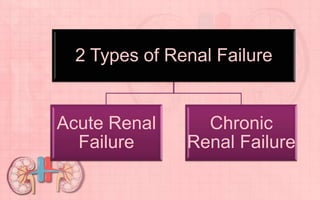
2 Types of Renal Failure
Acute Renal
Failure
Chronic
Renal Failure
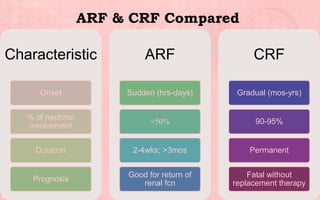
Characteristic
Onset
% of nephron
involvement
Duration
Prognosis
ARF
Sudden (hrs-days)
≈50%
2-4wks; >3mos
Good for return of
renal fcn
CRF
Gradual (mos-yrs)
90-95%
Permanent
Fatal without
replacement therapy
ARF & CRF Compared
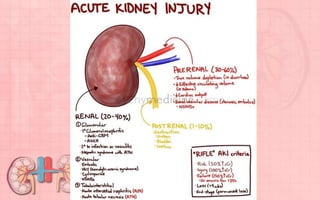
CAUSES OF RENAL FAILURE
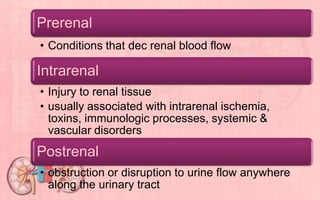
Prerenal
• Conditions that dec renal blood flow
Intrarenal
• Injury to renal tissue
• usually associated with intrarenal ischemia,
toxins, immunologic processes, systemic &
vascular disorders
Postrenal
• obstruction or disruption to urine flow anywhere
along the urinary tract
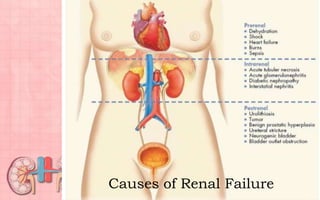
Causes of Renal Failure
ARF/AKI
• Sudden loss of kidney fcn
• Caused by renal cell damage from ischemia or toxic
substances
• Occurs abruptly, can be reversible
• Leads to hypoperfusion, cell death, decompensation in
renal fcn
• Near-N or N kidney fcn may resume gradually
Causes of ARF
• Infection
• Renal artery occlusion
• Obstruction
• Acute kidney disease
• Dehydration
• Diuretic therapy
• Ischemia
o From hypovolemia,
heart failure, septic
shock, blood loss
• Toxic substances
o Medications,
antibiotics
PHASES OF ARF
Oliguric
Phase
• Duration: 8-15 days
o Longer duration, less chance of
recovery
• Sudden drop in urine output
o UO > 400mL/day
• Dec. urine specific gravity
Oliguric Phase S/sx
• Anorexia, N&V
• HPN
• Dec. skin turgor
• Pruritus
• Tingling of the etremities
• Drowsiness → disorientation
→ coma
• Edema
• Dysrhythmias
• Signs of CHF & pulmonary
edema, pericarditis, acidosis
• UO rises slowly, then diuresis occurs
o 4-5L/day
• Excessive UO indicates recovery of
damaged nephrons
• Hypotension
• Tachycardia
• LOC improves
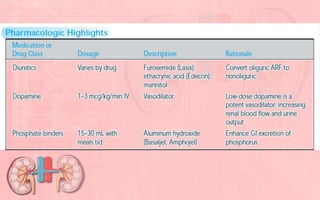
Diuretic
Phase
• Recovery is a slow process
• N urine volume
• Inc in strength
• LOC improves
• BUN: stable, N
• Pt can develop CRF
Recovery Phase
(Convalescent)
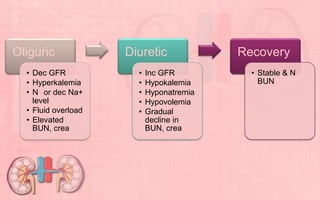
Oliguric
• Dec GFR
• Hyperkalemia
• N or dec Na+
level
• Fluid overload
• Elevated
BUN, crea
Diuretic
• Inc GFR
• Hypokalemia
• Hyponatremia
• Hypovolemia
• Gradual
decline in
BUN, crea
Recovery
• Stable & N
BUN
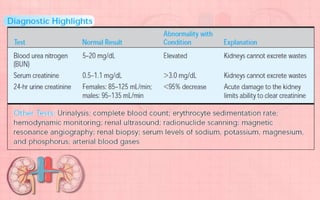
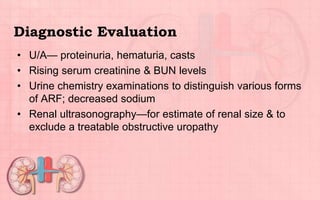
Diagnostic Evaluation
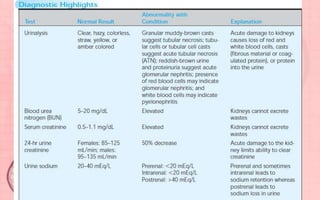
• U/A— proteinuria, hematuria, casts
• Rising serum creatinine & BUN levels
• Urine chemistry examinations to distinguish various forms
of ARF; decreased sodium
• Renal ultrasonography—for estimate of renal size & to
exclude a treatable obstructive uropathy
MANAGEMENT
Preventive Measures
• Identify pts with preexisting renal disease.
• Initiate adequate hydration before, during, & after any
procedure requiring NPO status.
• Avoid exposure to nephrotoxins.
• Majority of drugs or their metabolites are excreted by the
kidneys.
• Monitor chronic analgesic use—some drugs may cause
interstitial nephritis & papillary necrosis.
• Prevent & treat shock with blood & fluid replacement
• Prevent prolonged periods of hypotension
• Monitor UO & CVP hourly in critically ill pts to detect onset
of renal failure at the earliest moment
• Schedule diagnostic studies requiring dehydration so there
are “rest days,” especially in elderly pts who may not have
adequate renal reserve
• Pay special attention to draining wounds, burns, which can
lead to dehydration, sepsis & progressive renal damage.
• Avoid infection; give meticulous care to pts with indwelling
catheters & I.V. lines.
• Take every precaution to make sure that the right person
receives the right blood to avoid severe transfusion
reactions, which can precipitate renal complications.
DRUG ALERT!
Nonsteroidal anti-inflammatory
drugs (NSAIDs) may reduce
GFR in people at risk for renal
insufficiency, causing renal
failure.
Corrective & Supportive Measures
• Correct reversible cause of ARF (eg, improve renal
perfusion, maximize cardiac output, surgical relief of
obstruction).
• Correct underlying fluid excesses or deficits.
• Correct & control biochemical imbalances—tx of
hyperkalemia.
• Restore & maintain BP.
• Maintain nutrition.
• Initiate HD, PD, or CRRT for pts with progressive renal
failure & other life-threatening complications.
Other Therapy
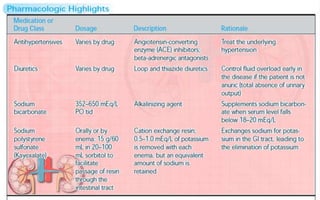
• Sodium polystyrene sulfonate (Kayexelate) can be
administered PO or PR to reduce potassium.
• Sodium bicarbonate may be ordered to correct metabolic
acidosis.
• HD pts need water-soluble vitamins supplements because
they are removed during dialysis
• Antihypertensives to control BP
• Antibiotics to manage secondary infections
• Diphenhydramine (Benadryl) to manage itching
• Recombinant human erythropoietin to inc RBC production.
Complications
• Infection
• Arrhythmias due to hyperkalemia
• Electrolyte abnormalities
o sodium, potassium, calcium, phosphorus
• GI bleeding due to stress ulcers
• Multiple organ systems failure
NURSING MANAGEMENT
Nursing Assessment
• Assess hx of cardiac disease, malignancy, sepsis,
intercurrent illness
• Determine if pt has been exposed to potentially nephrotoxic
drugs (antibiotics, NSAIDs, contrast agents, solvents)
• Physical examination for tissue turgor, pallor, alteration in
mucous membranes, BP, HR changes, pulmonary edema,
peripheral edema.
• Monitor I&O.
Nursing Diagnoses
• Excess Fluid Volume r/t decreased GFR & sodium
retention
• Risk for Infection r/t alterations in the immune system &
host defenses
• Imbalanced Nutrition: Less Than Body Requirements r/t
catabolic state, anorexia, & malnutrition associated with
ARF
• Risk for Injury r/t GI bleeding
NURSING INTERVENTIONS
Nursing Interventions
• Achieving Fluid and Electrolyte Balance
• Preventing Infection
• Maintaining Adequate Nutrition
• Preventing GI Bleeding
• Preserving Neurologic Function
Achieving Fluid & Electrolyte Balance
• Monitor for s/sx of hypo/hypervolemia
• Monitor UO & urine sp. gr.
• Measure & record I&O including urine, gastric suction,
stools, wound drainage, perspiration (estimate).
• Monitor serum & urine electrolyte concentrations.
• Weigh pt daily to provide an index of fluid balance;
expected wt loss is ½ to 1 lb (0.25 to 0.5 kg) daily.
• Adjust fluid intake to avoid volume overload & dehydration.
• Fluid restriction is not usually initiated until renal fcnis quite
low.
• During oliguric-anuric phase, give only enough fluids to
replace losses (usually 400 to 500 mL/24 hours plus
measured fluid losses).
• Fluid allowance should be distributed throughout the day.
• Avoid restricting fluids for prolonged periods for laboratory &
radiologic examinations because dehydrating procedures
are hazardous to pts who cannot produce concentrated
urine.
• Restrict salt & water intake if there is evidence of
• Regular BP with pt in supine, sitting, standing
• Auscultate lung fields for rales
• Inspect neck veins for engorgement & extremities,
abdomen, sacrum, & eyelids for edema.
• Evaluate for s/sx of hyperkalemia, monitor serum potassium
levels
• Notify health care provider of value above 5.5 mg/L.
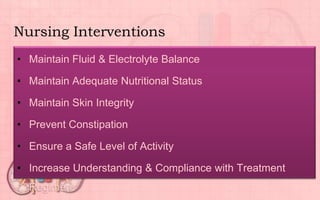
• Watch for ECG changes—tall, tented T waves;
depressed ST segment; wide QRS complex.
• .
• Administer sodium bicarbonate or glucose & insulin to shift
potassium into the cells.
• Administer cation exchange resin (sodium polystyrene
sulfonate [Kayexalate]) PO/PR to provide more prolonged
correction of elevated potassium.
• Watch for cardiac arrhythmia & heart failure from
hyperkalemia, electrolyte imbalance, or fluid overload.
• Resuscitation equipment on hand in case of cardiac arrest.
• Instruct on importance of following prescribed diet; avoid
foods high in potassium.
• Prepare for dialysis when rapid lowering of potassium is
needed.
• Administer BT during dialysis to prevent hyperkalemia from
stored blood.
• Monitor acid-base balance.
• Monitor ABG
• Ventilator therapy for severe acidosis
• Administer sodium bicarbonate for symptomatic acidosis
(bicarbonate deficit).
• Be prepared to implement dialysis for uncontrolled
acidosis
Preventing Infection
• Monitor for all signs of infection. Renal failure pts do not
always demonstrate fever & leukocytosis.
• Remove bladder catheter as soon as possible; monitor for
UTI.
• Use intensive pulmonary hygiene—high incidence of lung
edema & infection.
• Carry out meticulous wound care.
• If antibiotics are administered, care must be taken to adjust
the dosage for renal impairment.
Maintaining Adequate Nutrition
• Work collaboratively with dietitian to regulate protein intake
according to impaired renal fcn
• High biologic value protein—rich in essential amino
acids (dairy products, eggs, meat)
• Low-protein diet may be supplemented with essential
amino acids & vitamins.
• As renal fcn declines, protein intake may be restricted
proportionately.
• Pt on dialysis: inc. protein to allow for the loss of amino
acids occurring during dialysis
• Offer high-carbohydrate feedings because carbohydrates
have a greater protein-sparing power & provide additional
calories.
• Weigh pt daily.
• Monitor BUN, creatinine, electrolytes, serum albumin,
prealbumin, total protein, transferrin.
• Be aware that food & fluids containing large amounts of Na,
K, and Ph may need to be restricted.
Preventing GI Bleeding
• Examine all stools & emesis for gross & occult blood.
• Administer H2-receptor antagonist (or PPI) or nonaluminum
or magnesium antacids as prophylaxis for gastric stress
ulcers. If H2-receptor antagonist is used, care must be taken
to adjust the dose for the degree of renal impairment.
• Prepare for endoscopy when GI bleeding occurs.
Preserving Neurologic Function
• Speak to the pt in simple orienting statements, use
repetition when necessary
• Maintain predictable routine, keep change to a minimum.
• Watch for & report mental status changes
• Somnolence, lassitude, lethargy, fatigue progressing to
irritability, disorientation, twitching, seizures.
• Correct cognitive distortions.
• Use seizure precautions—padded side rails, airway, suction
equipment at bedside.
• Encourage & assist pt to turn & move because drowsiness
& lethargy may prevent activity.
• Use music tapes to promote relaxation.
• Prepare for dialysis, which may help prevent neurologic
complications.
Patient Education & Health
Maintenance
• Explain that the pt may experience residual defects in
kidney fcnfor long period after acute illness.
• Routine U/A; follow-up examinations.
• Avoid any medications unless specifically prescribed.
• Resume activity gradually because muscle weakness will
be present from excessive catabolism.
Evaluation: Expected Outcomes
• BP stable, no edema or SOB
• No signs of infection
• Food intake adequate, maintaining wt
• Stools heme negative
• Appears more alert, sleeps less during the day
CRF/CKD
• Progressive loss & ongoing deterioration in kidney
function
• Occurs slowly over a period of time
• Irreversible
• Results in uremia or ESRD
• Affects all major body systems
PATHOPHYSIOLOGY &
ETIOLOGY
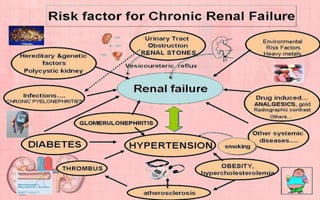
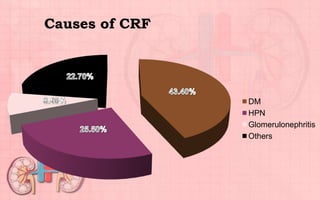
Causes of CRF
DM
HPN
Glomerulonephritis
Others
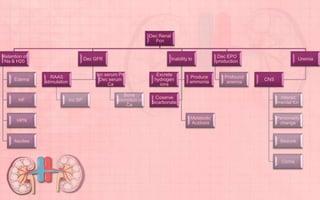
Dec Renal
Fcn
Retention of
Na & H20
Edema
HF
HPN
Ascites
Dec GFR
RAAS
stimulation
Inc BP
Inc serum Ph
Dec serum
Ca
Bone
resorption of
Ca
Inability to
Metabolic
Acidosis
Excrete
hydrogen
ions
Produce
ammonia
Coserve
bicarbonate
Dec EPO
production
Profound
anemia
Uremia
CNS
Altered
mental fcn
Personality
change
Seizure
Coma
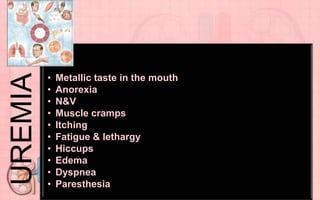
UREMIA
• Metallic taste in the mouth
• Anorexia
• N&V
• Muscle cramps
• Itching
• Fatigue & lethargy
• Hiccups
• Edema
• Dyspnea
• Paresthesia
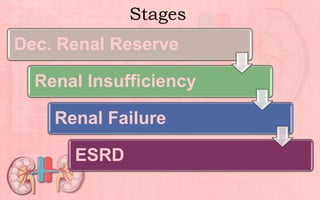
Dec. Renal Reserve
Renal Insufficiency
Renal Failure
ESRD
Stages
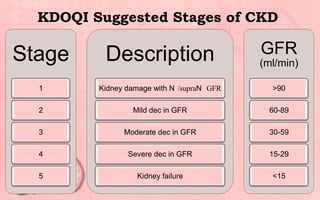
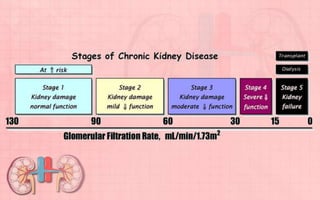
Stage
1
2
3
4
5
Description
Kidney damage with N /supraN GFR
Mild dec in GFR
Moderate dec in GFR
Severe dec in GFR
Kidney failure
GFR
(ml/min)
>90
60-89
30-59
15-29
<15
KDOQI Suggested Stages of CKD
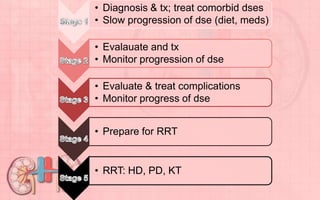
• Diagnosis & tx; treat comorbid dses
• Slow progression of dse (diet, meds)
• Evalauate and tx
• Monitor progression of dse
• Evaluate & treat complications
• Monitor progress of dse
• Prepare for RRT
• RRT: HD, PD, KT
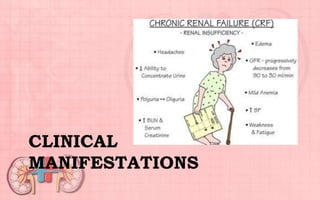
CLINICAL
MANIFESTATIONS
• GI
• anorexia, N&V, hiccups, ulceration of GI
tract, hemorrhage
• CV
• hyperkalemic ECG
changes, HPN, pericarditis, pericardial
effusion, pericardial tamponade
• Respi
• pulmonary edema, pleural effusions, pleural rub
• Neuromuscular
• fatigue, sleep disorders, headache, lethargy, muscular
irritability, peripheral neuropathy, seizures, coma
• Metabolic & endocrine
• glucose intolerance, hyperlipidemia, sex hormone
disturbances (dec libido, impotence, amenorrhea)
• F&E, acid-base disturbances
• usually salt & H20 retention but may be Na loss with
DHN, acidosis, hyperkalemia, hypermagnesemia, hypoc
alcemia
• Dermatologic
• pallor, hyperpigmentation, pruritus, ecchymoses, uremic
frost
• Skeletal abnormalities
• renal osteodystrophy resulting in osteomalacia
• Hematologic
• anemia, defect in quality of platelets, inc bleeding
tendencies
• Psychosocial fcns
• personality & behavior changes, alteration in cognitive
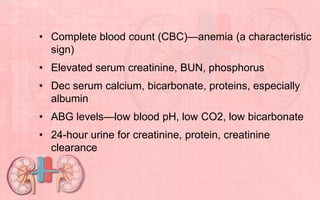
DIAGNOSTIC EVALUATION
• Complete blood count (CBC)—anemia (a characteristic
sign)
• Elevated serum creatinine, BUN, phosphorus
• Dec serum calcium, bicarbonate, proteins, especially
albumin
• ABG levels—low blood pH, low CO2, low bicarbonate
• 24-hour urine for creatinine, protein, creatinine
clearance
MANAGEMENT
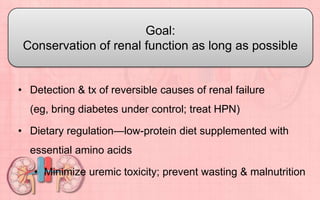
• Detection & tx of reversible causes of renal failure
(eg, bring diabetes under control; treat HPN)
• Dietary regulation—low-protein diet supplemented with
essential amino acids
• Minimize uremic toxicity; prevent wasting & malnutrition
Goal:
Conservation of renal function as long as possible
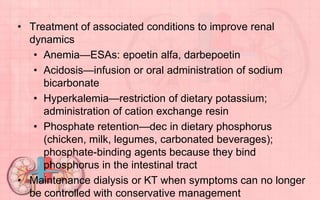
• Treatment of associated conditions to improve renal
dynamics
• Anemia—ESAs: epoetin alfa, darbepoetin
• Acidosis—infusion or oral administration of sodium
bicarbonate
• Hyperkalemia—restriction of dietary potassium;
administration of cation exchange resin
• Phosphate retention—dec in dietary phosphorus
(chicken, milk, legumes, carbonated beverages);
phosphate-binding agents because they bind
phosphorus in the intestinal tract
• Maintenance dialysis or KT when symptoms can no longer
be controlled with conservative management
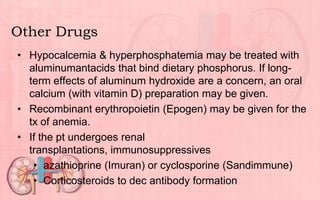
Other Drugs
• Hypocalcemia & hyperphosphatemia may be treated with
aluminumantacids that bind dietary phosphorus. If long-
term effects of aluminum hydroxide are a concern, an oral
calcium (with vitamin D) preparation may be given.
• Recombinant erythropoietin (Epogen) may be given for the
tx of anemia.
• If the pt undergoes renal
transplantations, immunosuppressives
• azathioprine (Imuran) or cyclosporine (Sandimmune)
• Corticosteroids to dec antibody formation
Complication
• Death
NURSING MANAGEMENT
Nursing Assessment
• Obtain hx of chronic disorders & underlying health status
• Assess degree of renal impairment & involvement of other
body systems; obtain a ROS, review lab results
• Perform thorough PE, including
VS, cardiovascular, pulmonary, GI, neurologic, dermatolog
ic, musculoskeletal systems.
• Assess psychosocial response to disease
process, availability of resources, support network.
Nursing Diagnoses
• Excess Fluid Volume r/t disease process
• Imbalanced Nutrition: Less Than Body Requirements r/t
anorexia, nausea, vomiting, restricted diet
• Impaired Skin Integrity r/t uremic frost & changes in oil &
sweat glands
• Constipation r/t fluid restriction & ingestion of phosphate-
binding agents
• Risk for Injury while ambulating r/t potential fractures &
muscle cramps due to calcium deficiency
• Ineffective Therapeutic Regimen Management r/t
restrictions imposed by CRF & its treatment
NURSING
INTERVENTIONS
Nursing Interventions
• Maintain Fluid & Electrolyte Balance
• Maintain Adequate Nutritional Status
• Maintain Skin Integrity
• Prevent Constipation
• Ensure a Safe Level of Activity
• Increase Understanding & Compliance with Treatment
Regimen
Maintaining Skin Integrity
• Keep skin clean while relieving itching & dryness.
• Soap for sensitive skin, such as basis soap
• Sodium bicarbonate added to bath water
• Oatmeal baths
• Bath oil added to bath water
• Ointments or creams to relieve itching.
• Keep nails short & trimmed to prevent excoriation.
• Keep hair clean & moisturized.
• Antihistamines for relief of itching; discourage pt from taking
OTC drugs without discussing with health care provider
Preventing Constipation
• Phosphate binders cause constipation that cannot be
managed with usual interventions.
• High-fiber diet; bear in mind the potassium content of some
fruits & vegetables.
• Commercial fiber supplements (Fiberall, Fiber-Med)
• Stool softeners as prescribed.
• Avoid laxatives & cathartics that cause electrolyte
toxicities (compounds containing magnesium or
phosphorus).
Ensuring a Safe Level of Activity
• Monitor serum Ca & phosphate levels; watch for signs of
hypo/hypercalcemia
• Inspect pt's gait, ROM, muscle strength.
• Administer analgesics, as ordered
• Provide massage for severe muscle cramps.
• Monitor X-rays & bone scan results for fractures, bone
demineralization, joint deposits.
• Inc activity as tolerated—avoid immobilization because it
increases bone demineralization.
• Administer medications as ordered:
• Phosphate-binding medications, such as sevelamer
(Renagel) or calcium carbonate (Os-Cal), with meals &
snacks to lower serum phosphorus
• Calcium supplements between meals to inc serum
calcium
• Vitamin D to inc absorption & utilization of calcium
Increasing Understanding of &
Compliance with Treatment Regimen
• Prepare pt for dialysis or KT
• Offer hope tempered by reality.
• Assess understanding of tx regimen, concerns, fears
• Explore alternatives that may reduce or eliminate adverse
effects of tx.
• Adjust schedule so rest can be achieved after dialysis.
• Offer smaller, more frequent meals to reduce nausea &
facilitate taking medication.
• Encourage strengthening of social support system & coping
mechanisms to lessen the impact of the stress of CKD
• Social work referral
• Contract with pt for behavioral changes if noncompliant with
therapy or control of underlying condition
• Supportive psychotherapy for depression
• Promote decision making by pt
• Refer pts & family members to renal support agencies
Patient Education & Health
Maintenance
• Weigh self every morning to avoid fluid overload
• Drink limited amounts of fluids only when thirsty
• Measure allotted fluids, save some for ice cubes; sucking
on ice is thirst quenching
• Eat food before drinking fluids to alleviate dry mouth
• Use hard candy or chewing gum to moisten mouth
• Encourage all people with the following risk factors to obtain
screening for CKD:
• elderly people
• native Americans
• Blacks
• Latinos
• Diabetics
• people with HPN, autoimmune disease, with family hx of
kidney disease
Evaluation: Expected Outcomes
• BP stable, no excessive wt gain
• Tolerates small feedings of low-protein, high-carbohydrate
diet
• No skin excoriation; reports some relief of itching
• Passes small, firm stool daily
• Ambulates without falls
• Asks questions & reads education materials about dialysis
Understanding renal failure

Understanding renal failure

  • 1.
    Reynel Dan L.Galicinao HD Nurse Trainee Nephrology Center of St. Alexius
  • 2.
    Renal Failure • KidenyFailure, Renal Insufficiency • Loss of kidney function • Retention of wastes • Retention of fluids • Inability of the kidneys to regulate electrolytes
  • 3.
    2 Types ofRenal Failure Acute Renal Failure Chronic Renal Failure
  • 4.
    Characteristic Onset % of nephron involvement Duration Prognosis ARF Sudden(hrs-days) ≈50% 2-4wks; >3mos Good for return of renal fcn CRF Gradual (mos-yrs) 90-95% Permanent Fatal without replacement therapy ARF & CRF Compared
  • 5.
  • 6.
    Prerenal • Conditions thatdec renal blood flow Intrarenal • Injury to renal tissue • usually associated with intrarenal ischemia, toxins, immunologic processes, systemic & vascular disorders Postrenal • obstruction or disruption to urine flow anywhere along the urinary tract
  • 7.
  • 9.
    ARF/AKI • Sudden lossof kidney fcn • Caused by renal cell damage from ischemia or toxic substances • Occurs abruptly, can be reversible • Leads to hypoperfusion, cell death, decompensation in renal fcn • Near-N or N kidney fcn may resume gradually
  • 10.
    Causes of ARF •Infection • Renal artery occlusion • Obstruction • Acute kidney disease • Dehydration • Diuretic therapy • Ischemia o From hypovolemia, heart failure, septic shock, blood loss • Toxic substances o Medications, antibiotics
  • 12.
  • 13.
    Oliguric Phase • Duration: 8-15days o Longer duration, less chance of recovery • Sudden drop in urine output o UO > 400mL/day • Dec. urine specific gravity
  • 14.
    Oliguric Phase S/sx •Anorexia, N&V • HPN • Dec. skin turgor • Pruritus • Tingling of the etremities • Drowsiness → disorientation → coma • Edema • Dysrhythmias • Signs of CHF & pulmonary edema, pericarditis, acidosis
  • 15.
    • UO risesslowly, then diuresis occurs o 4-5L/day • Excessive UO indicates recovery of damaged nephrons • Hypotension • Tachycardia • LOC improves Diuretic Phase
  • 16.
    • Recovery isa slow process • N urine volume • Inc in strength • LOC improves • BUN: stable, N • Pt can develop CRF Recovery Phase (Convalescent)
  • 17.
    Oliguric • Dec GFR •Hyperkalemia • N or dec Na+ level • Fluid overload • Elevated BUN, crea Diuretic • Inc GFR • Hypokalemia • Hyponatremia • Hypovolemia • Gradual decline in BUN, crea Recovery • Stable & N BUN
  • 18.
    Diagnostic Evaluation • U/A—proteinuria, hematuria, casts • Rising serum creatinine & BUN levels • Urine chemistry examinations to distinguish various forms of ARF; decreased sodium • Renal ultrasonography—for estimate of renal size & to exclude a treatable obstructive uropathy
  • 20.
  • 21.
    Preventive Measures • Identifypts with preexisting renal disease. • Initiate adequate hydration before, during, & after any procedure requiring NPO status. • Avoid exposure to nephrotoxins. • Majority of drugs or their metabolites are excreted by the kidneys. • Monitor chronic analgesic use—some drugs may cause interstitial nephritis & papillary necrosis.
  • 22.
    • Prevent &treat shock with blood & fluid replacement • Prevent prolonged periods of hypotension • Monitor UO & CVP hourly in critically ill pts to detect onset of renal failure at the earliest moment • Schedule diagnostic studies requiring dehydration so there are “rest days,” especially in elderly pts who may not have adequate renal reserve
  • 23.
    • Pay specialattention to draining wounds, burns, which can lead to dehydration, sepsis & progressive renal damage. • Avoid infection; give meticulous care to pts with indwelling catheters & I.V. lines. • Take every precaution to make sure that the right person receives the right blood to avoid severe transfusion reactions, which can precipitate renal complications.
  • 24.
    DRUG ALERT! Nonsteroidal anti-inflammatory drugs(NSAIDs) may reduce GFR in people at risk for renal insufficiency, causing renal failure.
  • 25.
    Corrective & SupportiveMeasures • Correct reversible cause of ARF (eg, improve renal perfusion, maximize cardiac output, surgical relief of obstruction). • Correct underlying fluid excesses or deficits. • Correct & control biochemical imbalances—tx of hyperkalemia. • Restore & maintain BP. • Maintain nutrition. • Initiate HD, PD, or CRRT for pts with progressive renal failure & other life-threatening complications.
  • 27.
    Other Therapy • Sodiumpolystyrene sulfonate (Kayexelate) can be administered PO or PR to reduce potassium. • Sodium bicarbonate may be ordered to correct metabolic acidosis. • HD pts need water-soluble vitamins supplements because they are removed during dialysis • Antihypertensives to control BP • Antibiotics to manage secondary infections • Diphenhydramine (Benadryl) to manage itching • Recombinant human erythropoietin to inc RBC production.
  • 28.
    Complications • Infection • Arrhythmiasdue to hyperkalemia • Electrolyte abnormalities o sodium, potassium, calcium, phosphorus • GI bleeding due to stress ulcers • Multiple organ systems failure
  • 29.
  • 30.
    Nursing Assessment • Assesshx of cardiac disease, malignancy, sepsis, intercurrent illness • Determine if pt has been exposed to potentially nephrotoxic drugs (antibiotics, NSAIDs, contrast agents, solvents) • Physical examination for tissue turgor, pallor, alteration in mucous membranes, BP, HR changes, pulmonary edema, peripheral edema. • Monitor I&O.
  • 31.
    Nursing Diagnoses • ExcessFluid Volume r/t decreased GFR & sodium retention • Risk for Infection r/t alterations in the immune system & host defenses • Imbalanced Nutrition: Less Than Body Requirements r/t catabolic state, anorexia, & malnutrition associated with ARF • Risk for Injury r/t GI bleeding
  • 32.
  • 33.
    Nursing Interventions • AchievingFluid and Electrolyte Balance • Preventing Infection • Maintaining Adequate Nutrition • Preventing GI Bleeding • Preserving Neurologic Function
  • 34.
    Achieving Fluid &Electrolyte Balance • Monitor for s/sx of hypo/hypervolemia • Monitor UO & urine sp. gr. • Measure & record I&O including urine, gastric suction, stools, wound drainage, perspiration (estimate). • Monitor serum & urine electrolyte concentrations. • Weigh pt daily to provide an index of fluid balance; expected wt loss is ½ to 1 lb (0.25 to 0.5 kg) daily.
  • 35.
    • Adjust fluidintake to avoid volume overload & dehydration. • Fluid restriction is not usually initiated until renal fcnis quite low. • During oliguric-anuric phase, give only enough fluids to replace losses (usually 400 to 500 mL/24 hours plus measured fluid losses). • Fluid allowance should be distributed throughout the day. • Avoid restricting fluids for prolonged periods for laboratory & radiologic examinations because dehydrating procedures are hazardous to pts who cannot produce concentrated urine. • Restrict salt & water intake if there is evidence of
  • 36.
    • Regular BPwith pt in supine, sitting, standing • Auscultate lung fields for rales • Inspect neck veins for engorgement & extremities, abdomen, sacrum, & eyelids for edema. • Evaluate for s/sx of hyperkalemia, monitor serum potassium levels • Notify health care provider of value above 5.5 mg/L. • Watch for ECG changes—tall, tented T waves; depressed ST segment; wide QRS complex. • .
  • 37.
    • Administer sodiumbicarbonate or glucose & insulin to shift potassium into the cells. • Administer cation exchange resin (sodium polystyrene sulfonate [Kayexalate]) PO/PR to provide more prolonged correction of elevated potassium. • Watch for cardiac arrhythmia & heart failure from hyperkalemia, electrolyte imbalance, or fluid overload. • Resuscitation equipment on hand in case of cardiac arrest. • Instruct on importance of following prescribed diet; avoid foods high in potassium.
  • 38.
    • Prepare fordialysis when rapid lowering of potassium is needed. • Administer BT during dialysis to prevent hyperkalemia from stored blood. • Monitor acid-base balance. • Monitor ABG • Ventilator therapy for severe acidosis • Administer sodium bicarbonate for symptomatic acidosis (bicarbonate deficit). • Be prepared to implement dialysis for uncontrolled acidosis
  • 39.
    Preventing Infection • Monitorfor all signs of infection. Renal failure pts do not always demonstrate fever & leukocytosis. • Remove bladder catheter as soon as possible; monitor for UTI. • Use intensive pulmonary hygiene—high incidence of lung edema & infection. • Carry out meticulous wound care. • If antibiotics are administered, care must be taken to adjust the dosage for renal impairment.
  • 40.
    Maintaining Adequate Nutrition •Work collaboratively with dietitian to regulate protein intake according to impaired renal fcn • High biologic value protein—rich in essential amino acids (dairy products, eggs, meat) • Low-protein diet may be supplemented with essential amino acids & vitamins. • As renal fcn declines, protein intake may be restricted proportionately. • Pt on dialysis: inc. protein to allow for the loss of amino acids occurring during dialysis
  • 41.
    • Offer high-carbohydratefeedings because carbohydrates have a greater protein-sparing power & provide additional calories. • Weigh pt daily. • Monitor BUN, creatinine, electrolytes, serum albumin, prealbumin, total protein, transferrin. • Be aware that food & fluids containing large amounts of Na, K, and Ph may need to be restricted.
  • 42.
    Preventing GI Bleeding •Examine all stools & emesis for gross & occult blood. • Administer H2-receptor antagonist (or PPI) or nonaluminum or magnesium antacids as prophylaxis for gastric stress ulcers. If H2-receptor antagonist is used, care must be taken to adjust the dose for the degree of renal impairment. • Prepare for endoscopy when GI bleeding occurs.
  • 43.
    Preserving Neurologic Function •Speak to the pt in simple orienting statements, use repetition when necessary • Maintain predictable routine, keep change to a minimum. • Watch for & report mental status changes • Somnolence, lassitude, lethargy, fatigue progressing to irritability, disorientation, twitching, seizures. • Correct cognitive distortions.
  • 44.
    • Use seizureprecautions—padded side rails, airway, suction equipment at bedside. • Encourage & assist pt to turn & move because drowsiness & lethargy may prevent activity. • Use music tapes to promote relaxation. • Prepare for dialysis, which may help prevent neurologic complications.
  • 45.
    Patient Education &Health Maintenance • Explain that the pt may experience residual defects in kidney fcnfor long period after acute illness. • Routine U/A; follow-up examinations. • Avoid any medications unless specifically prescribed. • Resume activity gradually because muscle weakness will be present from excessive catabolism.
  • 46.
    Evaluation: Expected Outcomes •BP stable, no edema or SOB • No signs of infection • Food intake adequate, maintaining wt • Stools heme negative • Appears more alert, sleeps less during the day
  • 48.
    CRF/CKD • Progressive loss& ongoing deterioration in kidney function • Occurs slowly over a period of time • Irreversible • Results in uremia or ESRD • Affects all major body systems
  • 49.
  • 51.
  • 53.
    Dec Renal Fcn Retention of Na& H20 Edema HF HPN Ascites Dec GFR RAAS stimulation Inc BP Inc serum Ph Dec serum Ca Bone resorption of Ca Inability to Metabolic Acidosis Excrete hydrogen ions Produce ammonia Coserve bicarbonate Dec EPO production Profound anemia Uremia CNS Altered mental fcn Personality change Seizure Coma
  • 54.
    UREMIA • Metallic tastein the mouth • Anorexia • N&V • Muscle cramps • Itching • Fatigue & lethargy • Hiccups • Edema • Dyspnea • Paresthesia
  • 55.
    Dec. Renal Reserve RenalInsufficiency Renal Failure ESRD Stages
  • 56.
    Stage 1 2 3 4 5 Description Kidney damage withN /supraN GFR Mild dec in GFR Moderate dec in GFR Severe dec in GFR Kidney failure GFR (ml/min) >90 60-89 30-59 15-29 <15 KDOQI Suggested Stages of CKD
  • 58.
    • Diagnosis &tx; treat comorbid dses • Slow progression of dse (diet, meds) • Evalauate and tx • Monitor progression of dse • Evaluate & treat complications • Monitor progress of dse • Prepare for RRT • RRT: HD, PD, KT
  • 59.
  • 60.
    • GI • anorexia,N&V, hiccups, ulceration of GI tract, hemorrhage • CV • hyperkalemic ECG changes, HPN, pericarditis, pericardial effusion, pericardial tamponade • Respi • pulmonary edema, pleural effusions, pleural rub
  • 61.
    • Neuromuscular • fatigue,sleep disorders, headache, lethargy, muscular irritability, peripheral neuropathy, seizures, coma • Metabolic & endocrine • glucose intolerance, hyperlipidemia, sex hormone disturbances (dec libido, impotence, amenorrhea) • F&E, acid-base disturbances • usually salt & H20 retention but may be Na loss with DHN, acidosis, hyperkalemia, hypermagnesemia, hypoc alcemia
  • 62.
    • Dermatologic • pallor,hyperpigmentation, pruritus, ecchymoses, uremic frost • Skeletal abnormalities • renal osteodystrophy resulting in osteomalacia • Hematologic • anemia, defect in quality of platelets, inc bleeding tendencies • Psychosocial fcns • personality & behavior changes, alteration in cognitive
  • 63.
  • 64.
    • Complete bloodcount (CBC)—anemia (a characteristic sign) • Elevated serum creatinine, BUN, phosphorus • Dec serum calcium, bicarbonate, proteins, especially albumin • ABG levels—low blood pH, low CO2, low bicarbonate • 24-hour urine for creatinine, protein, creatinine clearance
  • 66.
  • 67.
    • Detection &tx of reversible causes of renal failure (eg, bring diabetes under control; treat HPN) • Dietary regulation—low-protein diet supplemented with essential amino acids • Minimize uremic toxicity; prevent wasting & malnutrition Goal: Conservation of renal function as long as possible
  • 68.
    • Treatment ofassociated conditions to improve renal dynamics • Anemia—ESAs: epoetin alfa, darbepoetin • Acidosis—infusion or oral administration of sodium bicarbonate • Hyperkalemia—restriction of dietary potassium; administration of cation exchange resin • Phosphate retention—dec in dietary phosphorus (chicken, milk, legumes, carbonated beverages); phosphate-binding agents because they bind phosphorus in the intestinal tract • Maintenance dialysis or KT when symptoms can no longer be controlled with conservative management
  • 70.
    Other Drugs • Hypocalcemia& hyperphosphatemia may be treated with aluminumantacids that bind dietary phosphorus. If long- term effects of aluminum hydroxide are a concern, an oral calcium (with vitamin D) preparation may be given. • Recombinant erythropoietin (Epogen) may be given for the tx of anemia. • If the pt undergoes renal transplantations, immunosuppressives • azathioprine (Imuran) or cyclosporine (Sandimmune) • Corticosteroids to dec antibody formation
  • 71.
  • 72.
  • 73.
    Nursing Assessment • Obtainhx of chronic disorders & underlying health status • Assess degree of renal impairment & involvement of other body systems; obtain a ROS, review lab results • Perform thorough PE, including VS, cardiovascular, pulmonary, GI, neurologic, dermatolog ic, musculoskeletal systems. • Assess psychosocial response to disease process, availability of resources, support network.
  • 74.
    Nursing Diagnoses • ExcessFluid Volume r/t disease process • Imbalanced Nutrition: Less Than Body Requirements r/t anorexia, nausea, vomiting, restricted diet • Impaired Skin Integrity r/t uremic frost & changes in oil & sweat glands • Constipation r/t fluid restriction & ingestion of phosphate- binding agents • Risk for Injury while ambulating r/t potential fractures & muscle cramps due to calcium deficiency • Ineffective Therapeutic Regimen Management r/t restrictions imposed by CRF & its treatment
  • 75.
  • 76.
    Nursing Interventions • MaintainFluid & Electrolyte Balance • Maintain Adequate Nutritional Status • Maintain Skin Integrity • Prevent Constipation • Ensure a Safe Level of Activity • Increase Understanding & Compliance with Treatment Regimen
  • 77.
    Maintaining Skin Integrity •Keep skin clean while relieving itching & dryness. • Soap for sensitive skin, such as basis soap • Sodium bicarbonate added to bath water • Oatmeal baths • Bath oil added to bath water • Ointments or creams to relieve itching. • Keep nails short & trimmed to prevent excoriation. • Keep hair clean & moisturized. • Antihistamines for relief of itching; discourage pt from taking OTC drugs without discussing with health care provider
  • 78.
    Preventing Constipation • Phosphatebinders cause constipation that cannot be managed with usual interventions. • High-fiber diet; bear in mind the potassium content of some fruits & vegetables. • Commercial fiber supplements (Fiberall, Fiber-Med) • Stool softeners as prescribed. • Avoid laxatives & cathartics that cause electrolyte toxicities (compounds containing magnesium or phosphorus).
  • 79.
    Ensuring a SafeLevel of Activity • Monitor serum Ca & phosphate levels; watch for signs of hypo/hypercalcemia • Inspect pt's gait, ROM, muscle strength. • Administer analgesics, as ordered • Provide massage for severe muscle cramps. • Monitor X-rays & bone scan results for fractures, bone demineralization, joint deposits.
  • 80.
    • Inc activityas tolerated—avoid immobilization because it increases bone demineralization. • Administer medications as ordered: • Phosphate-binding medications, such as sevelamer (Renagel) or calcium carbonate (Os-Cal), with meals & snacks to lower serum phosphorus • Calcium supplements between meals to inc serum calcium • Vitamin D to inc absorption & utilization of calcium
  • 81.
    Increasing Understanding of& Compliance with Treatment Regimen • Prepare pt for dialysis or KT • Offer hope tempered by reality. • Assess understanding of tx regimen, concerns, fears • Explore alternatives that may reduce or eliminate adverse effects of tx. • Adjust schedule so rest can be achieved after dialysis. • Offer smaller, more frequent meals to reduce nausea & facilitate taking medication.
  • 82.
    • Encourage strengtheningof social support system & coping mechanisms to lessen the impact of the stress of CKD • Social work referral • Contract with pt for behavioral changes if noncompliant with therapy or control of underlying condition • Supportive psychotherapy for depression • Promote decision making by pt • Refer pts & family members to renal support agencies
  • 83.
    Patient Education &Health Maintenance • Weigh self every morning to avoid fluid overload • Drink limited amounts of fluids only when thirsty • Measure allotted fluids, save some for ice cubes; sucking on ice is thirst quenching • Eat food before drinking fluids to alleviate dry mouth • Use hard candy or chewing gum to moisten mouth
  • 84.
    • Encourage allpeople with the following risk factors to obtain screening for CKD: • elderly people • native Americans • Blacks • Latinos • Diabetics • people with HPN, autoimmune disease, with family hx of kidney disease
  • 86.
    Evaluation: Expected Outcomes •BP stable, no excessive wt gain • Tolerates small feedings of low-protein, high-carbohydrate diet • No skin excoriation; reports some relief of itching • Passes small, firm stool daily • Ambulates without falls • Asks questions & reads education materials about dialysis