OCD
Presenter
Nandini Bhumij
M.Sc. Nursing 1st
yr.
History
 14th
& 15th
century thought people were
possessed by the devil and treated by
exorcism
 17th
century thought people were cleansing
their guilt
 18th
century finally considered medical
issue
 20th
century began treating with behavioral
techniques
WHAT IS OCD?
 It is an anxiety disorder.
 The person has recurring thoughts or
images(obsessions) and/or repetitive,
ritualistic-type behaviors that the individual is
unable to keep from doing(compulsions).
 The person may try to suppress these
thoughts or behaviors but is unable to do so.
 The individual knows that the thoughts or
behaviors are irrational but feels powerless to
stop.
Definition
The DSM-IV-TR describes obsessive-
compulsive disorder (OCD) as recurrent
obsessions or compulsions that are severe
enough to be time consuming or to cause
marked distress or significant impairment
(APA,2000).
Obsessions
 It is defined as unwanted, intrusive, persistent
ideas, thoughts, impulses or images that
cause marked distress.
Compulsions
 It denote unwanted repetitive behavior
patterns or mental acts that are
intended to reduce anxiety, not to
provide pleasure or gratification.
Obsessive-Compulsive Disorder
 Affects almost 3% of world’s population
 Start anytime from preschool to
adulthood
 Typically between 20-24
 many different forms of OCD – differ
from person to person
 cause of OCD is still unknown
 Better when diagnosed early
Classification ICD 9
 F42 OCD
 F42.0 Predominantly obsessive thoughts
or ruminations.
 F42.1 Predominantly compulsive acts.
 F42.2 Mixed obsessional thoughts and act.
 F42.8 Other obsessive-compulsive
disorder.
 F42.9 Obsessive compulsive disorder,
unsetisfied.
Etiological factors
Psychoanalytical Theory
Learning Theory
Biological Aspects
Neuroanatomy
Physiology
Biochemical Factors
Etiological factors
Psychoanalytical Theory
OCD pts have:
 weak, underdeveloped egos.
(Reasons: unsatisfactory parent-child
relationship, conditional love etc.).
Psychoanalytical Theory cont…
 Regression to the pre-Oedipal anal-sadistic
phase, combined with use of specific ego
defence mechanisms (isolation, undoing,
displacement, reaction formation), produces
the clinical symptoms of obsessions and
compulsions
Etiological factors
 Learning Theory
 It explains- OCD pts. as a conditioned
response to a traumatic event.
 Traumatic event produces anxiety and
discomfort.
 passive avoidance(staying away from the
source)
 active avoidance(staying with the source)
Etiological factors
 Biological Aspects
Neuroanatomy: Neuroimaging techniques
have shown abnormal metabolic rates in the
basal ganglia and orbital frontal cortex of
individuals with the disorder(Hollander &
Simeon, 2008).
Etiological factors
 Physiology. Electrophysiological studies,
sleep electroencephalogram studies, and
neuroendocrine studies have suggested that
there are commonalities between depressive
disorders and OCD (Sadock & Sadock,
2007). Neuroendocrine commonalities were
suggested in studies in which about one third
of OCD clients show nonsuppression on the
dexamethasone-suppression test and
decreased growth hormone secretion with
clonidine infusions.
Etiological factors
 Biochemical Factors. The neurotransmitter
serotonin as influential in the etiology of
obsessive-compulsive behaviors.
 Drugs that have been used successfully in
alleviating the symptoms of OCD are
clomipramine and the selective serotonin
reuptake inhibitors (SSRIs), all of which are
believed to block the neuronal reuptake of
serotonin, thereby potentiating serotoninergic
activity in the central nervous system.
Diagnostic criteria
 Specific criteria to be clinically diagnosed
 Anxiety disorder with presence of obsessions
or compulsions
 ego dystonic – realize thoughts and actions
are irrational or excessive
 Must take up more than 1 hour a day
 Must disrupt daily routine
 Symptoms can’t result from effects of other
medical conditions or substances
Symptoms of Obsessions
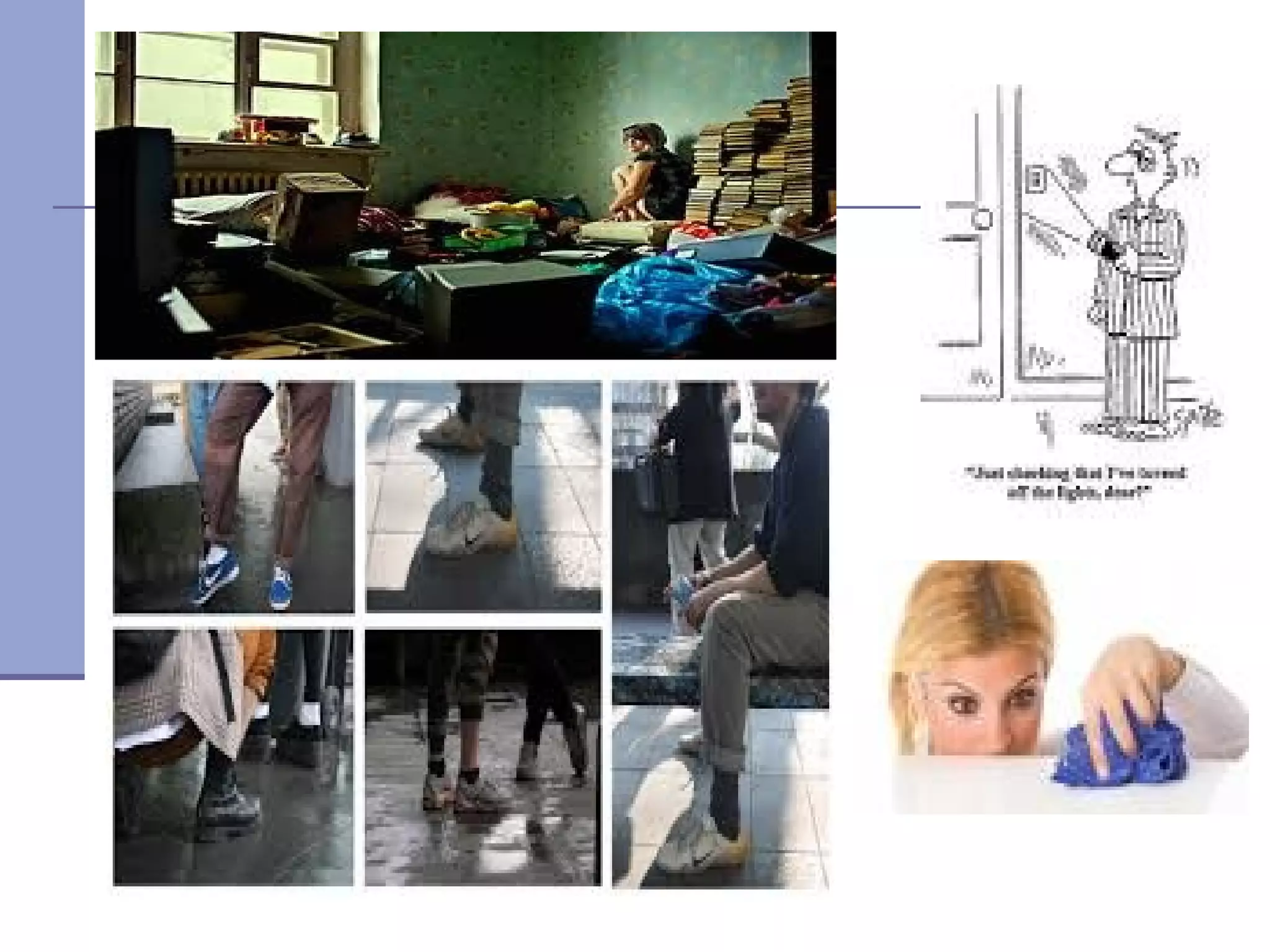
 Repeated thoughts about
contamination(e.g. may lead to
fear of shaking hands or touching
objects).
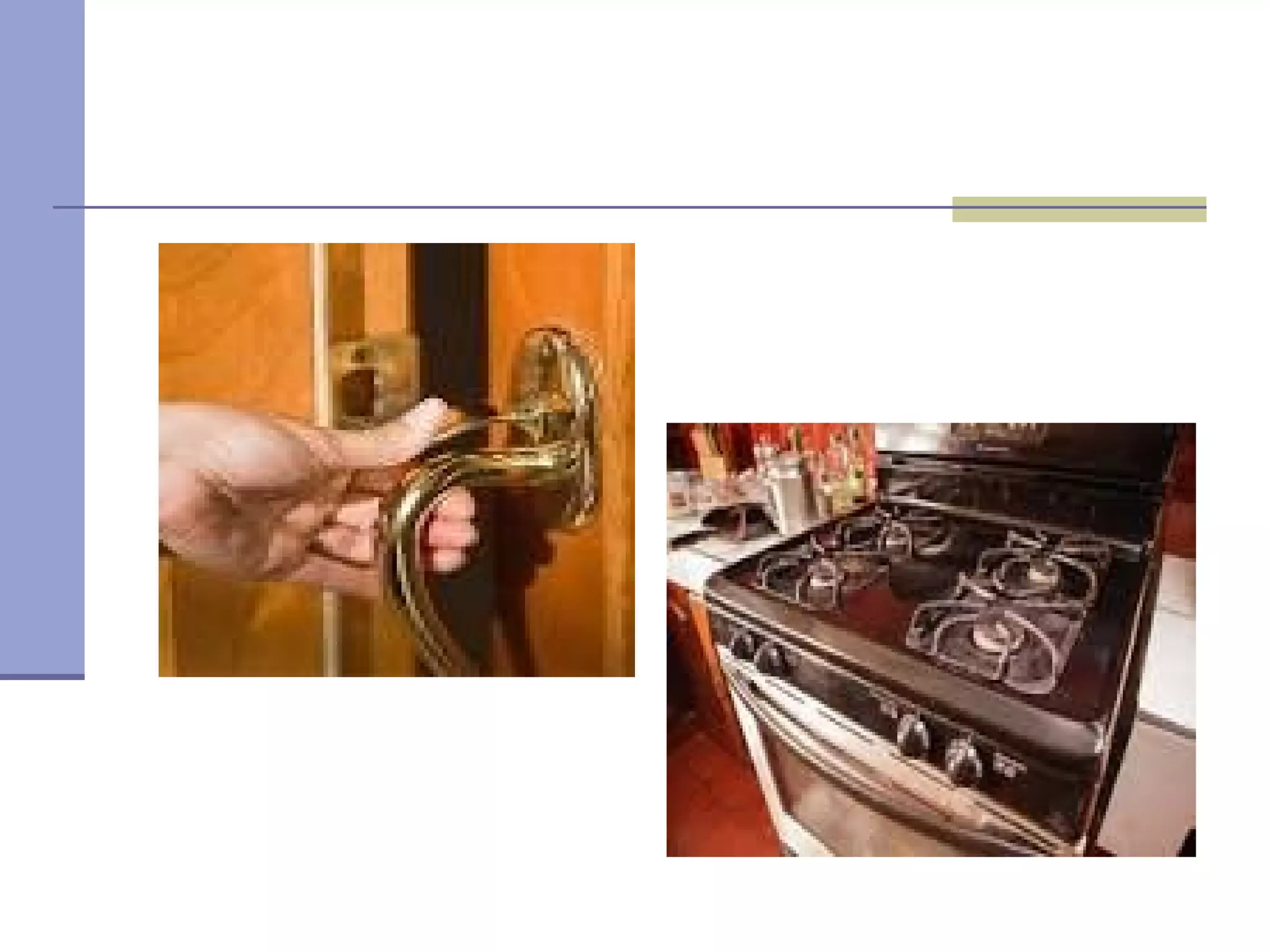
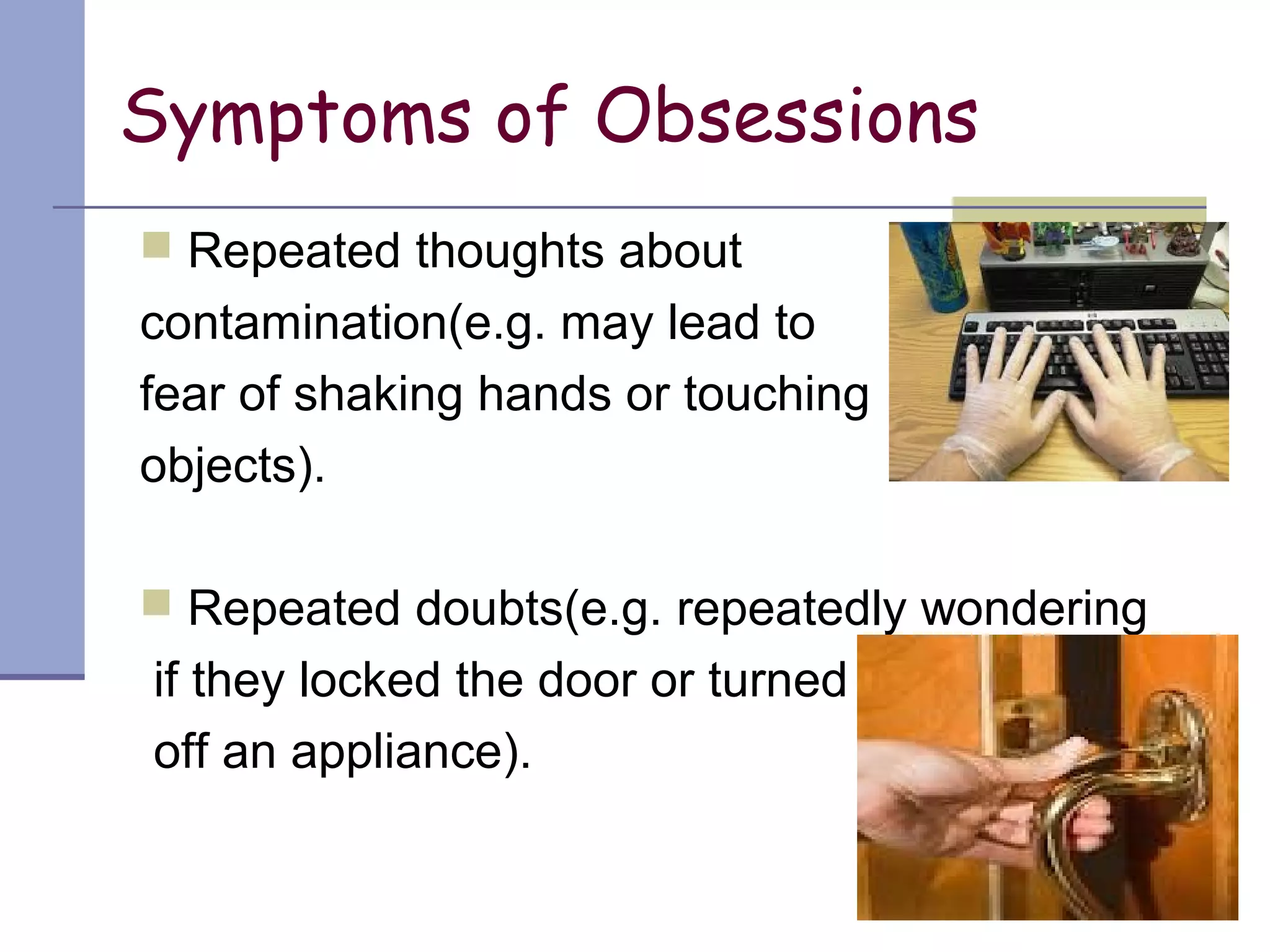
 Repeated doubts(e.g. repeatedly wondering
if they locked the door or turned
off an appliance).
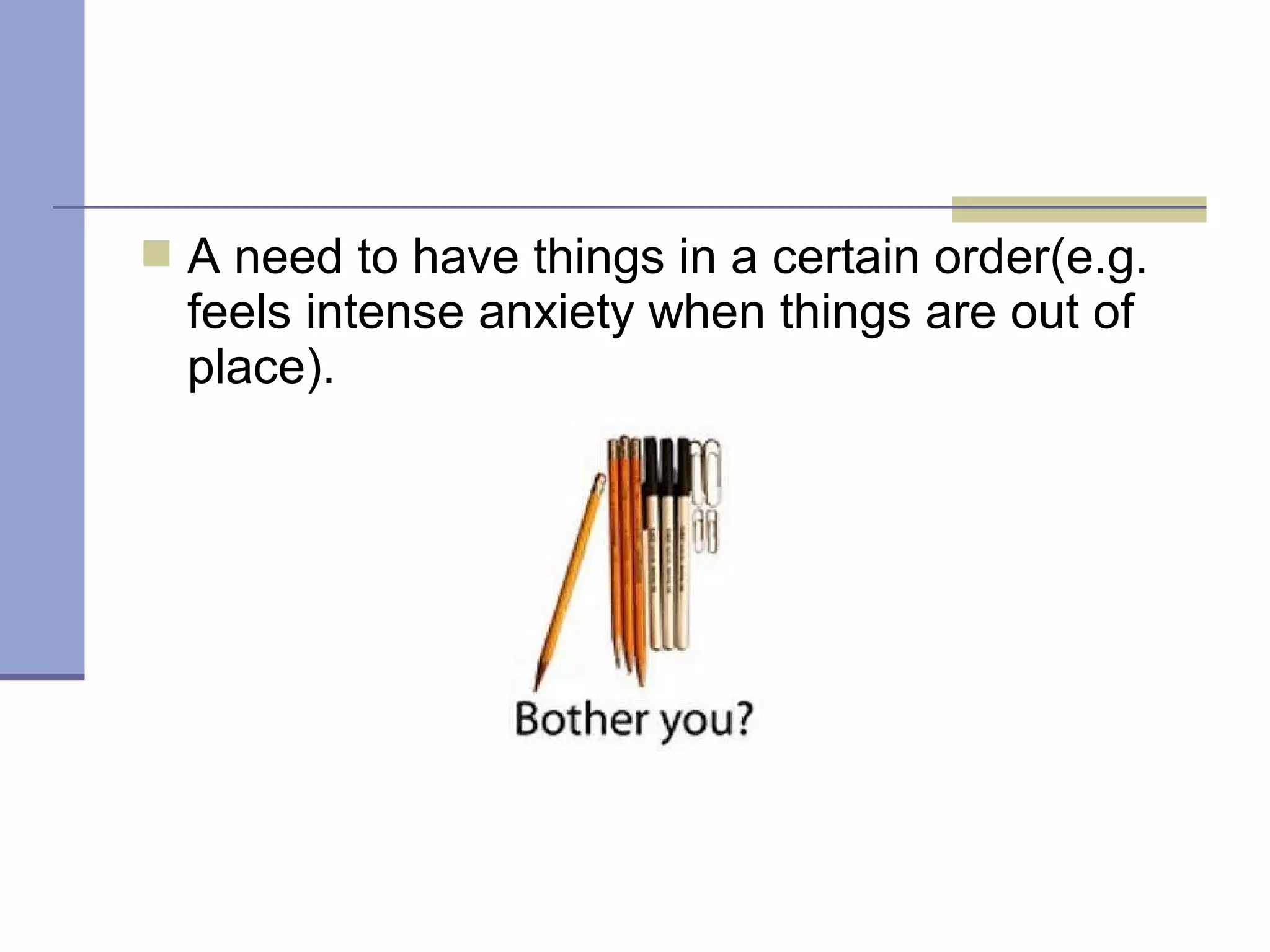
 A need to have things in a certain order(e.g.
feels intense anxiety when things are out of
place).
Obsessions cont…
 Thought of aggression (e.g. to hurt a loved
one).
 Sexual imagery.
Symptoms of Compulsion
 Washing and cleaning(e.g. excessive hand
washing or house cleaning).
 Counting (e.g. counting number of times that
something is done).
 Checking (e.g. checking something that one
has done, over and over).
 Requesting or demanding assurances from
others.
Compulsion cont…
 Repeating actions(e.g. going in and out of
door or up and down from a chair).
 Ordering(e.g. arranging and rearranging
cloths or other items).

 Note : the obsessions and compulsions seem
to be worse in the face of emotional stress.
Clinical Features
 Obsessional thought
 Obsessional ruminations
 Obsessional doubts
 Obsessional impulses
 Obsessional rituals
 Obsessional slowness
Diagnosis
 Suggested by demonstration of ritualistic
behavior that is irrational or excessive.
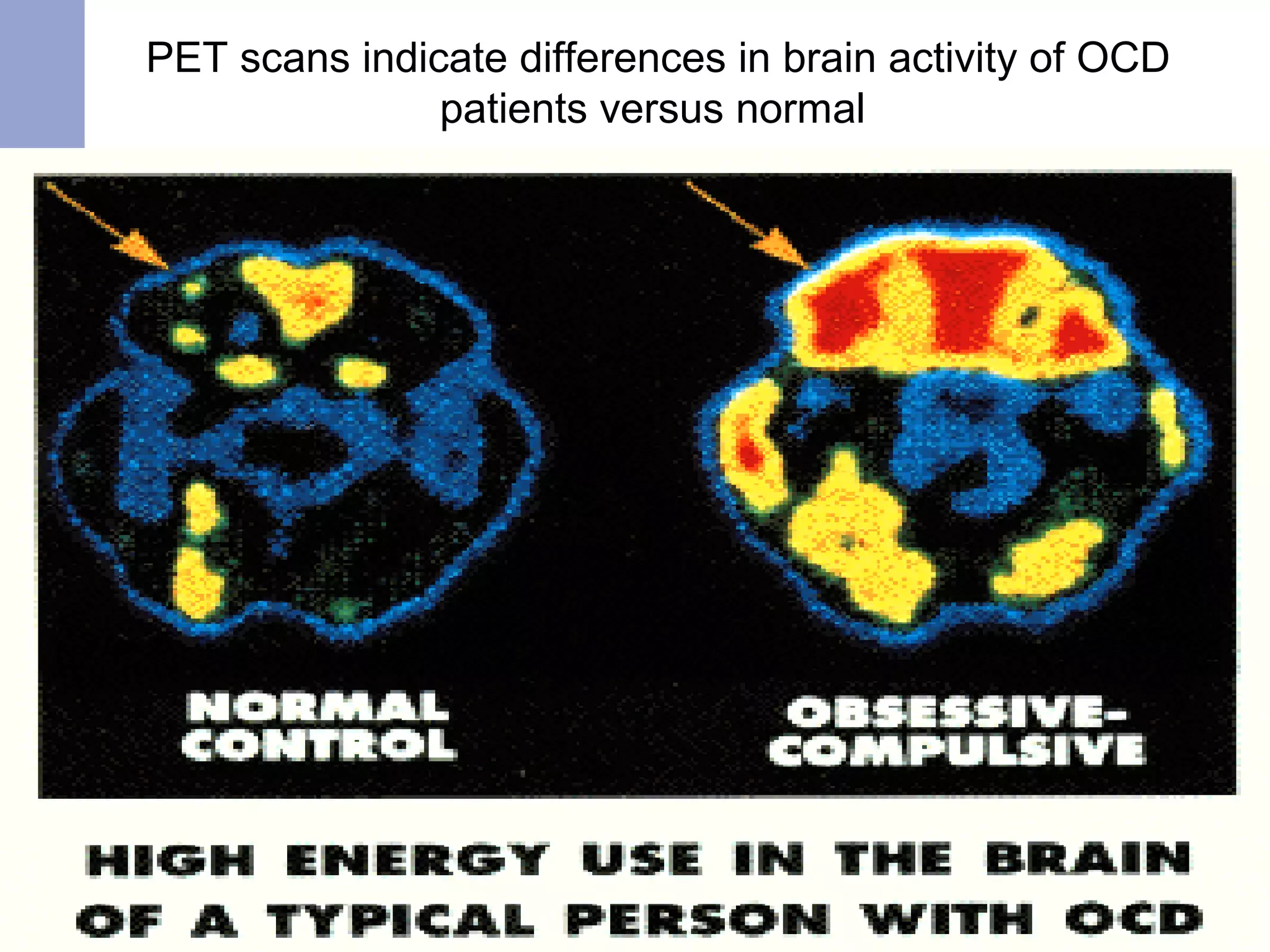
 MRI and CT shows enlarged basal ganglia in
some patients.
 PET scanning shows increased glucose
metabolism in part of basal ganglia.
PET scans indicate differences in brain activity of OCD
patients versus normal
 OCD found excessive with other diseases
 Common diseases: Depression, Schizophrenia…
 Depression is the most common
 Many people with OCD suffered from depression first
 2/3 of OCD patients develop depression  makes
OCD symptoms worse and more difficult to treat
 People with OCD common diagnosed as
Schizophrenic  hard to separate obsessions from
delusions
Treatment
 Only completely curable in rare cases
 Most people have some symptom relief with
treatment
 Treatment choices depend on the problem
and patients preferences
 Most common treatments:
 Behavioral Therapy
 Cognitive Therapy
 Medication
Cognitive-Behavioral Therapy
 Cognitive: change the way they think to deal with
their fears
 Behavioral: change the way they react to “anxiety-
provoking” situations
 Exposure and Response Prevention
 Slowly learning to tolerate anxiety associated with
not performing ritual behavior
 Psychotherapy
 Talking with therapist to discover what causes the
anxiety and how to deal with symptoms
 Systematic Desensitization
 Learning cognitive strategies to deal with anxiety
then gradual exposure to feared object
Cognitive-Behavioral Therapy
 Should be done when people are ready for it
 Must be customized for each person’s specific form
of OCD and their needs
 No side affects except increased anxiety with
exposure to fear
 Often lasts about 12 weeks
 Positive effects off CBT last longer than those of
medication
 If OCD returns can successfully treat again with
same therapy
 Best treatment approach for most is CBT combined
with medication
Medication
 Anxiolytic benzodiazepine such as chloradiazepoxide or
diazepam  give temporary relief from anxiety but not
really effective on obsessions and compulsions
 Antidepressants because of common depression
 Selective Serotonin Reuptake Inhibitors (SSRIs): alter the
levels of neurotransmitter serotonin in the brain which
helps brain cells communicate with one another
 Prevents excess serotonin from being pumped back
into original neuron that released it
 Then can bind to receptor sites of nearby neurons and
send chemical message that can help regulate anxiety
and obsessive compulsive thoughts
 Most effective drug treatment helping about 60% of
patients
 Ex: Prozac, Zoloft, Lexapro, Paxil
Nursing Management
Nursing assessment
 Assessment should focus on the collection of
physical, psychological and social data.
 The nurse should be particularly aware of the
impact of obsessions and compulsions on
physical functioning, mood, self-esteem and
normal coping ability.
Nursing assessment
 Nurse should also note: the defence
mechanism used thought content or process
potential for suicide, ability to function and
social support systems.
The following criteria may be used to measure outcomes in the
care of the client with OCD.
The Client:
● Is able to maintain anxiety at a manageable level without
resorting to the use of ritualistic behavior.
● Is able to perform activities of daily living independently.
● Verbalizes understanding of relationship between anxiety and
ritualistic behavior.
● Verbalizes specific situations that in the past have provoked
anxiety and resulted in seeking relief through rituals.
● Demonstrates more adaptive coping strategies to deal with
stress, such as thought stopping, relaxation techniques, and
physical exercise.
● Is able to resume role-related responsibilities because of
decreased need for ritualistic behaviors.
Nursing diagnosis1
 Ineffective coping
 Related to under developed ego,
 Punitive superego; avoidance learning;
possible biochemical changes evidence by
ritualistic behavior and or obsessive thoughts.
Nursing management cont…
 Objective : client will demonstrate ability to
cope effectively without restoring to obsessive
compulsive behaviors or increased
dependency.
Nursing diagnosis 2
 Ineffective role performance
 Related to: need to perform rituals.
 Evidence by: inability to fulfill usual pattern of
responcibility.
Nursing management cont…
 Objective: Client will be able to resume role-
related responsibilities.
Evaluation
Reassessment is conducted in order to determine if the nursing
actions have been successful in achieving the objectives of
care. Evaluation of the nursing actions for the client with OCD
may be facilitated by gathering information using the following
types of questions:
● Can the client refrain from performing rituals when anxiety level
rises?
● Can the client demonstrate substitute behaviors to maintain
anxiety at a manageable level?
Cont…
● Does the client recognize the relationship between
escalating anxiety and the dependence on ritualistic
behaviors for relief?
● Can the client verbalize situations that occurred in the past
during which this strategy was used?
● Can the client verbalize a plan of action for dealing with
these stressful situations in the future?
● Can the client perform self-care activities independently?
● Can the client demonstrate an ability to fulfill role related
responsibilities?
● Can the client verbalize resources from which he or she
can seek assistance during times of extreme stress?
Summarization
 Definition of OCD
 Diagnostic criteria
 Etiology
 Clinical features
 Sign and symptoms
 Diagnosis
 Treatment
 Nursing management
 Evaluation
Conclusion
 OCD is a complicated issue
 Most cases are incurable
 Best form of treatment is CBT in combination
with medication
 Most important thing that can be done to
discover more about OCD and its treatments
is to research the brain
Bibliography
1. Townsend Mary.C. psychyiatric mental health nursing concepts of
care. 4th
edition. F. a. davis company publishers. Philadelphia USA. P
526-530.
2. Townsend Mary.C. psychyiatric mental health nursing concepts of
care. 5th
edition. F. a. davis company publishers. Philadelphia USA. P
449-454.
3. R. sreevani. A guide to mental health and psychiatric nursing. 3rd
edition.jaypee brother medical publishers(p) ltd.new delhi. P179-182
4. Clinical correlates of functional impairment in children and adolescents with obsessive
Joshua M. Nadeau | Adam B. Lewin | ...
5. www.google.com
Obsessive compulsive disorder

Obsessive compulsive disorder

  • 2.
  • 4.
    History  14th & 15th centurythought people were possessed by the devil and treated by exorcism  17th century thought people were cleansing their guilt  18th century finally considered medical issue  20th century began treating with behavioral techniques
  • 5.
    WHAT IS OCD? It is an anxiety disorder.  The person has recurring thoughts or images(obsessions) and/or repetitive, ritualistic-type behaviors that the individual is unable to keep from doing(compulsions).  The person may try to suppress these thoughts or behaviors but is unable to do so.  The individual knows that the thoughts or behaviors are irrational but feels powerless to stop.
  • 6.
    Definition The DSM-IV-TR describesobsessive- compulsive disorder (OCD) as recurrent obsessions or compulsions that are severe enough to be time consuming or to cause marked distress or significant impairment (APA,2000).
  • 7.
    Obsessions  It isdefined as unwanted, intrusive, persistent ideas, thoughts, impulses or images that cause marked distress.
  • 8.
    Compulsions  It denoteunwanted repetitive behavior patterns or mental acts that are intended to reduce anxiety, not to provide pleasure or gratification.
  • 10.
    Obsessive-Compulsive Disorder  Affectsalmost 3% of world’s population  Start anytime from preschool to adulthood  Typically between 20-24  many different forms of OCD – differ from person to person  cause of OCD is still unknown  Better when diagnosed early
  • 11.
    Classification ICD 9 F42 OCD  F42.0 Predominantly obsessive thoughts or ruminations.  F42.1 Predominantly compulsive acts.  F42.2 Mixed obsessional thoughts and act.  F42.8 Other obsessive-compulsive disorder.  F42.9 Obsessive compulsive disorder, unsetisfied.
  • 12.
    Etiological factors Psychoanalytical Theory LearningTheory Biological Aspects Neuroanatomy Physiology Biochemical Factors
  • 13.
    Etiological factors Psychoanalytical Theory OCDpts have:  weak, underdeveloped egos. (Reasons: unsatisfactory parent-child relationship, conditional love etc.).
  • 14.
    Psychoanalytical Theory cont… Regression to the pre-Oedipal anal-sadistic phase, combined with use of specific ego defence mechanisms (isolation, undoing, displacement, reaction formation), produces the clinical symptoms of obsessions and compulsions
  • 15.
    Etiological factors  LearningTheory  It explains- OCD pts. as a conditioned response to a traumatic event.  Traumatic event produces anxiety and discomfort.  passive avoidance(staying away from the source)  active avoidance(staying with the source)
  • 16.
    Etiological factors  BiologicalAspects Neuroanatomy: Neuroimaging techniques have shown abnormal metabolic rates in the basal ganglia and orbital frontal cortex of individuals with the disorder(Hollander & Simeon, 2008).
  • 17.
    Etiological factors  Physiology.Electrophysiological studies, sleep electroencephalogram studies, and neuroendocrine studies have suggested that there are commonalities between depressive disorders and OCD (Sadock & Sadock, 2007). Neuroendocrine commonalities were suggested in studies in which about one third of OCD clients show nonsuppression on the dexamethasone-suppression test and decreased growth hormone secretion with clonidine infusions.
  • 18.
    Etiological factors  BiochemicalFactors. The neurotransmitter serotonin as influential in the etiology of obsessive-compulsive behaviors.  Drugs that have been used successfully in alleviating the symptoms of OCD are clomipramine and the selective serotonin reuptake inhibitors (SSRIs), all of which are believed to block the neuronal reuptake of serotonin, thereby potentiating serotoninergic activity in the central nervous system.
  • 19.
    Diagnostic criteria  Specificcriteria to be clinically diagnosed  Anxiety disorder with presence of obsessions or compulsions  ego dystonic – realize thoughts and actions are irrational or excessive  Must take up more than 1 hour a day  Must disrupt daily routine  Symptoms can’t result from effects of other medical conditions or substances
  • 20.
    Symptoms of Obsessions Repeated thoughts about contamination(e.g. may lead to fear of shaking hands or touching objects).  Repeated doubts(e.g. repeatedly wondering if they locked the door or turned off an appliance).
  • 21.
     A needto have things in a certain order(e.g. feels intense anxiety when things are out of place).
  • 22.
    Obsessions cont…  Thoughtof aggression (e.g. to hurt a loved one).  Sexual imagery.
  • 24.
    Symptoms of Compulsion Washing and cleaning(e.g. excessive hand washing or house cleaning).  Counting (e.g. counting number of times that something is done).
  • 25.
     Checking (e.g.checking something that one has done, over and over).  Requesting or demanding assurances from others.
  • 26.
    Compulsion cont…  Repeatingactions(e.g. going in and out of door or up and down from a chair).  Ordering(e.g. arranging and rearranging cloths or other items). 
  • 27.
     Note :the obsessions and compulsions seem to be worse in the face of emotional stress.
  • 28.
    Clinical Features  Obsessionalthought  Obsessional ruminations  Obsessional doubts  Obsessional impulses  Obsessional rituals  Obsessional slowness
  • 29.
    Diagnosis  Suggested bydemonstration of ritualistic behavior that is irrational or excessive.  MRI and CT shows enlarged basal ganglia in some patients.  PET scanning shows increased glucose metabolism in part of basal ganglia.
  • 30.
    PET scans indicatedifferences in brain activity of OCD patients versus normal
  • 31.
     OCD foundexcessive with other diseases  Common diseases: Depression, Schizophrenia…  Depression is the most common  Many people with OCD suffered from depression first  2/3 of OCD patients develop depression  makes OCD symptoms worse and more difficult to treat  People with OCD common diagnosed as Schizophrenic  hard to separate obsessions from delusions
  • 32.
    Treatment  Only completelycurable in rare cases  Most people have some symptom relief with treatment  Treatment choices depend on the problem and patients preferences  Most common treatments:  Behavioral Therapy  Cognitive Therapy  Medication
  • 33.
    Cognitive-Behavioral Therapy  Cognitive:change the way they think to deal with their fears  Behavioral: change the way they react to “anxiety- provoking” situations  Exposure and Response Prevention  Slowly learning to tolerate anxiety associated with not performing ritual behavior  Psychotherapy  Talking with therapist to discover what causes the anxiety and how to deal with symptoms  Systematic Desensitization  Learning cognitive strategies to deal with anxiety then gradual exposure to feared object
  • 34.
    Cognitive-Behavioral Therapy  Shouldbe done when people are ready for it  Must be customized for each person’s specific form of OCD and their needs  No side affects except increased anxiety with exposure to fear  Often lasts about 12 weeks  Positive effects off CBT last longer than those of medication  If OCD returns can successfully treat again with same therapy  Best treatment approach for most is CBT combined with medication
  • 35.
    Medication  Anxiolytic benzodiazepinesuch as chloradiazepoxide or diazepam  give temporary relief from anxiety but not really effective on obsessions and compulsions  Antidepressants because of common depression  Selective Serotonin Reuptake Inhibitors (SSRIs): alter the levels of neurotransmitter serotonin in the brain which helps brain cells communicate with one another  Prevents excess serotonin from being pumped back into original neuron that released it  Then can bind to receptor sites of nearby neurons and send chemical message that can help regulate anxiety and obsessive compulsive thoughts  Most effective drug treatment helping about 60% of patients  Ex: Prozac, Zoloft, Lexapro, Paxil
  • 37.
  • 38.
    Nursing assessment  Assessmentshould focus on the collection of physical, psychological and social data.  The nurse should be particularly aware of the impact of obsessions and compulsions on physical functioning, mood, self-esteem and normal coping ability.
  • 39.
    Nursing assessment  Nurseshould also note: the defence mechanism used thought content or process potential for suicide, ability to function and social support systems.
  • 40.
    The following criteriamay be used to measure outcomes in the care of the client with OCD. The Client: ● Is able to maintain anxiety at a manageable level without resorting to the use of ritualistic behavior. ● Is able to perform activities of daily living independently. ● Verbalizes understanding of relationship between anxiety and ritualistic behavior. ● Verbalizes specific situations that in the past have provoked anxiety and resulted in seeking relief through rituals. ● Demonstrates more adaptive coping strategies to deal with stress, such as thought stopping, relaxation techniques, and physical exercise. ● Is able to resume role-related responsibilities because of decreased need for ritualistic behaviors.
  • 41.
    Nursing diagnosis1  Ineffectivecoping  Related to under developed ego,  Punitive superego; avoidance learning; possible biochemical changes evidence by ritualistic behavior and or obsessive thoughts.
  • 42.
    Nursing management cont… Objective : client will demonstrate ability to cope effectively without restoring to obsessive compulsive behaviors or increased dependency.
  • 43.
    Nursing diagnosis 2 Ineffective role performance  Related to: need to perform rituals.  Evidence by: inability to fulfill usual pattern of responcibility.
  • 44.
    Nursing management cont… Objective: Client will be able to resume role- related responsibilities.
  • 45.
    Evaluation Reassessment is conductedin order to determine if the nursing actions have been successful in achieving the objectives of care. Evaluation of the nursing actions for the client with OCD may be facilitated by gathering information using the following types of questions: ● Can the client refrain from performing rituals when anxiety level rises? ● Can the client demonstrate substitute behaviors to maintain anxiety at a manageable level?
  • 46.
    Cont… ● Does theclient recognize the relationship between escalating anxiety and the dependence on ritualistic behaviors for relief? ● Can the client verbalize situations that occurred in the past during which this strategy was used? ● Can the client verbalize a plan of action for dealing with these stressful situations in the future? ● Can the client perform self-care activities independently? ● Can the client demonstrate an ability to fulfill role related responsibilities? ● Can the client verbalize resources from which he or she can seek assistance during times of extreme stress?
  • 47.
    Summarization  Definition ofOCD  Diagnostic criteria  Etiology  Clinical features  Sign and symptoms  Diagnosis  Treatment  Nursing management  Evaluation
  • 49.
    Conclusion  OCD isa complicated issue  Most cases are incurable  Best form of treatment is CBT in combination with medication  Most important thing that can be done to discover more about OCD and its treatments is to research the brain
  • 50.
    Bibliography 1. Townsend Mary.C.psychyiatric mental health nursing concepts of care. 4th edition. F. a. davis company publishers. Philadelphia USA. P 526-530. 2. Townsend Mary.C. psychyiatric mental health nursing concepts of care. 5th edition. F. a. davis company publishers. Philadelphia USA. P 449-454. 3. R. sreevani. A guide to mental health and psychiatric nursing. 3rd edition.jaypee brother medical publishers(p) ltd.new delhi. P179-182 4. Clinical correlates of functional impairment in children and adolescents with obsessive Joshua M. Nadeau | Adam B. Lewin | ... 5. www.google.com