By:
Pooja Khanpara
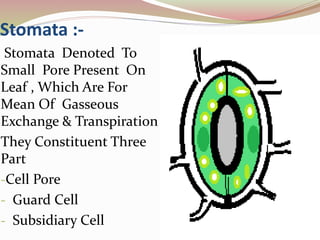
Stomata :-
Stomata Denoted To
Small Pore Present On
Leaf , Which Are For
Mean Of Gasseous
Exchange & Transpiration
They Constituent Three
Part
-Cell Pore
- Guard Cell
- Subsidiary Cell
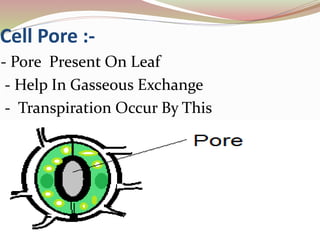
Cell Pore :-
- Pore Present On Leaf
- Help In Gasseous Exchange
- Transpiration Occur By This
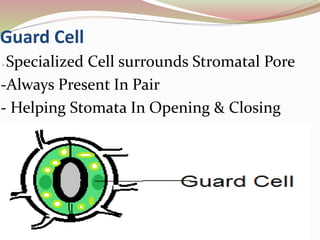
Guard Cell
- Specialized Cell surrounds Stromatal Pore
-Always Present In Pair
- Helping Stomata In Opening & Closing
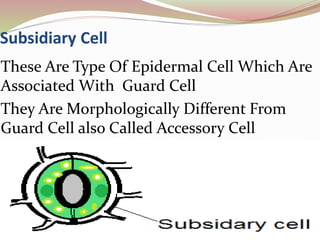
Subsidiary Cell
These Are Type Of Epidermal Cell Which Are
Associated With Guard Cell
They Are Morphologically Different From
Guard Cell also Called Accessory Cell
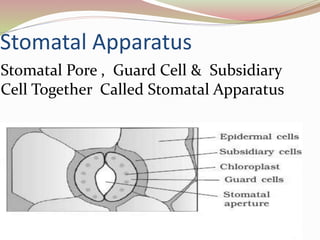
Stomatal Apparatus
Stomatal Pore , Guard Cell & Subsidiary
Cell Together Called Stomatal Apparatus
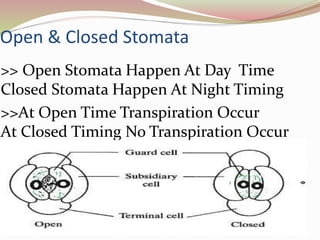
Open & Closed Stomata
>> Open Stomata Happen At Day Time
Closed Stomata Happen At Night Timing
>>At Open Time Transpiration Occur
At Closed Timing No Transpiration Occur
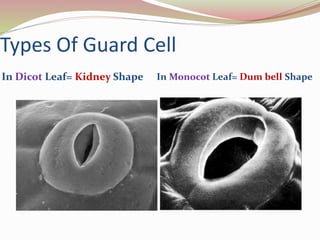
Types Of Guard Cell
In Dicot Leaf= Kidney Shape In Monocot Leaf= Dum bell Shape
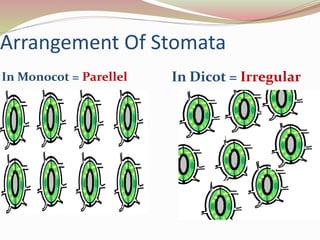
Arrangement Of Stomata
In Monocot = Parellel In Dicot = Irregular
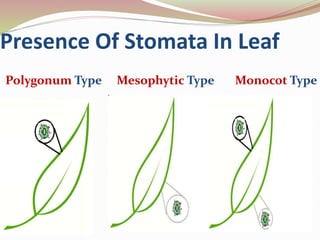
Presence Of Stomata In Leaf
Polygonum Type Mesophytic Type Monocot Type
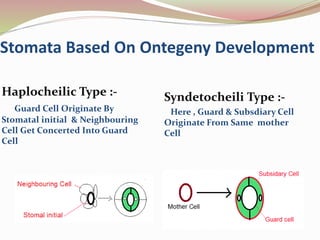
Stomata Based On Ontegeny Development
Haplocheilic Type :-
Guard Cell Originate By
Stomatal initial & Neighbouring
Cell Get Concerted Into Guard
Cell
Syndetocheili Type :-
Here , Guard & Subsdiary Cell
Originate From Same mother
Cell
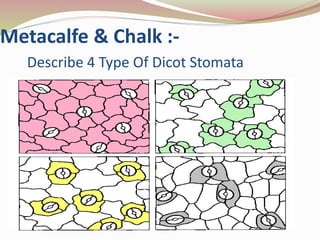
Metacalfe & Chalk :-
Describe 4 Type Of Dicot Stomata
 There are 4 basic types of stomata among the
dicotyledons, these types are distinguished on the
basis of the subsidiary cells surrounding the stomata
& their arrangements,
 The four types are as the following
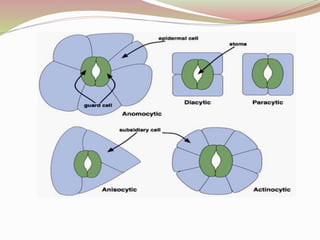
A) Anomocytic type, Ranunculaceae
B) Anisocytic type, Curciferae
C) Paracytic type, Rubiceae
D) Diacytic type, Caryophyllaceae
Types of stomata
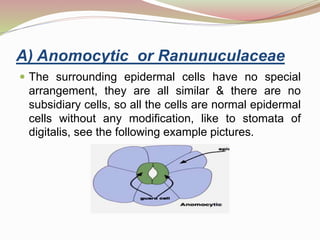
 The surrounding epidermal cells have no special
arrangement, they are all similar & there are no
subsidiary cells, so all the cells are normal epidermal
cells without any modification, like to stomata of
digitalis, see the following example pictures.
A) Anomocytic or Ranunuculaceae
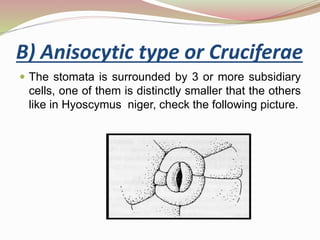
 The stomata is surrounded by 3 or more subsidiary
cells, one of them is distinctly smaller that the others
like in Hyoscymus niger, check the following picture.
B) Anisocytic type or Cruciferae
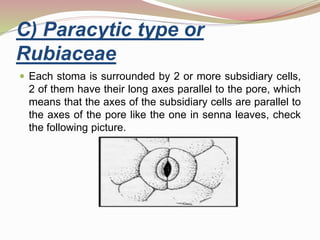
 Each stoma is surrounded by 2 or more subsidiary cells,
2 of them have their long axes parallel to the pore, which
means that the axes of the subsidiary cells are parallel to
the axes of the pore like the one in senna leaves, check
the following picture.
C) Paracytic type or
Rubiaceae
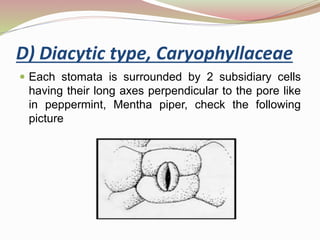
 Each stomata is surrounded by 2 subsidiary cells
having their long axes perpendicular to the pore like
in peppermint, Mentha piper, check the following
picture
D) Diacytic type, Caryophyllaceae
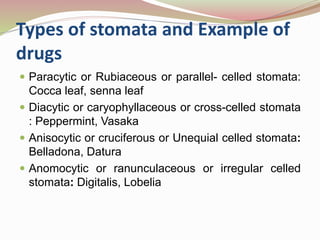
 Paracytic or Rubiaceous or parallel- celled stomata:
Cocca leaf, senna leaf
 Diacytic or caryophyllaceous or cross-celled stomata
: Peppermint, Vasaka
 Anisocytic or cruciferous or Unequial celled stomata:
Belladona, Datura
 Anomocytic or ranunculaceous or irregular celled
stomata: Digitalis, Lobelia
Types of stomata and Example of
drugs
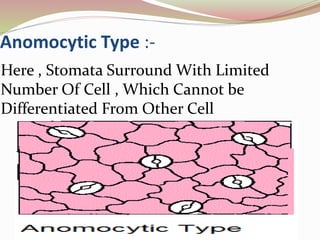
Anomocytic Type :-
Here , Stomata Surround With Limited
Number Of Cell , Which Cannot be
Differentiated From Other Cell
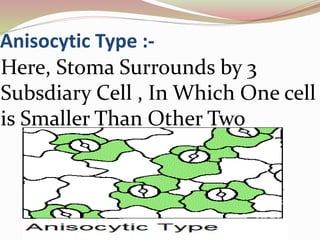
Anisocytic Type :-
Here, Stoma Surrounds by 3
Subsdiary Cell , In Which One cell
is Smaller Than Other Two
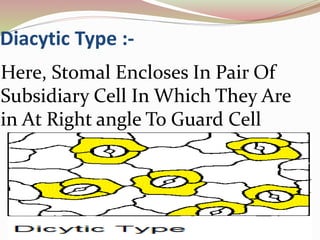
Diacytic Type :-
Here, Stomal Encloses In Pair Of
Subsidiary Cell In Which They Are
in At Right angle To Guard Cell
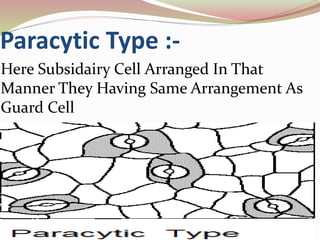
Paracytic Type :-
Here Subsidairy Cell Arranged In That
Manner They Having Same Arrangement As
Guard Cell
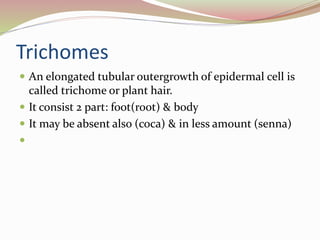
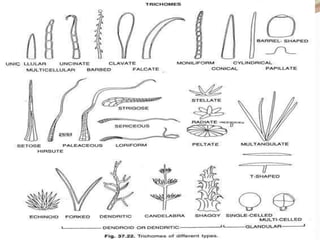
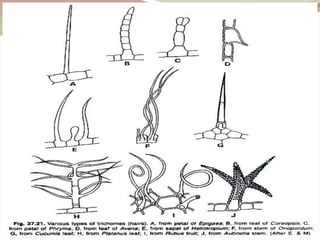
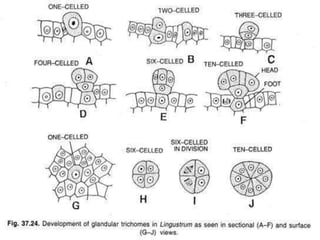
Trichomes
 An elongated tubular outergrowth of epidermal cell is
called trichome or plant hair.
 It consist 2 part: foot(root) & body
 It may be absent also (coca) & in less amount (senna)

Stomata & trichome  by pooja

Stomata & trichome by pooja

  • 1.
  • 2.
    Stomata :- Stomata DenotedTo Small Pore Present On Leaf , Which Are For Mean Of Gasseous Exchange & Transpiration They Constituent Three Part -Cell Pore - Guard Cell - Subsidiary Cell
  • 3.
    Cell Pore :- -Pore Present On Leaf - Help In Gasseous Exchange - Transpiration Occur By This
  • 4.
    Guard Cell - SpecializedCell surrounds Stromatal Pore -Always Present In Pair - Helping Stomata In Opening & Closing
  • 5.
    Subsidiary Cell These AreType Of Epidermal Cell Which Are Associated With Guard Cell They Are Morphologically Different From Guard Cell also Called Accessory Cell
  • 6.
    Stomatal Apparatus Stomatal Pore, Guard Cell & Subsidiary Cell Together Called Stomatal Apparatus
  • 7.
    Open & ClosedStomata >> Open Stomata Happen At Day Time Closed Stomata Happen At Night Timing >>At Open Time Transpiration Occur At Closed Timing No Transpiration Occur
  • 8.
    Types Of GuardCell In Dicot Leaf= Kidney Shape In Monocot Leaf= Dum bell Shape
  • 9.
    Arrangement Of Stomata InMonocot = Parellel In Dicot = Irregular
  • 10.
    Presence Of StomataIn Leaf Polygonum Type Mesophytic Type Monocot Type
  • 11.
    Stomata Based OnOntegeny Development Haplocheilic Type :- Guard Cell Originate By Stomatal initial & Neighbouring Cell Get Concerted Into Guard Cell Syndetocheili Type :- Here , Guard & Subsdiary Cell Originate From Same mother Cell
  • 12.
    Metacalfe & Chalk:- Describe 4 Type Of Dicot Stomata
  • 13.
     There are4 basic types of stomata among the dicotyledons, these types are distinguished on the basis of the subsidiary cells surrounding the stomata & their arrangements,  The four types are as the following A) Anomocytic type, Ranunculaceae B) Anisocytic type, Curciferae C) Paracytic type, Rubiceae D) Diacytic type, Caryophyllaceae Types of stomata
  • 14.
     The surroundingepidermal cells have no special arrangement, they are all similar & there are no subsidiary cells, so all the cells are normal epidermal cells without any modification, like to stomata of digitalis, see the following example pictures. A) Anomocytic or Ranunuculaceae
  • 15.
     The stomatais surrounded by 3 or more subsidiary cells, one of them is distinctly smaller that the others like in Hyoscymus niger, check the following picture. B) Anisocytic type or Cruciferae
  • 16.
     Each stomais surrounded by 2 or more subsidiary cells, 2 of them have their long axes parallel to the pore, which means that the axes of the subsidiary cells are parallel to the axes of the pore like the one in senna leaves, check the following picture. C) Paracytic type or Rubiaceae
  • 17.
     Each stomatais surrounded by 2 subsidiary cells having their long axes perpendicular to the pore like in peppermint, Mentha piper, check the following picture D) Diacytic type, Caryophyllaceae
  • 19.
     Paracytic orRubiaceous or parallel- celled stomata: Cocca leaf, senna leaf  Diacytic or caryophyllaceous or cross-celled stomata : Peppermint, Vasaka  Anisocytic or cruciferous or Unequial celled stomata: Belladona, Datura  Anomocytic or ranunculaceous or irregular celled stomata: Digitalis, Lobelia Types of stomata and Example of drugs
  • 20.
    Anomocytic Type :- Here, Stomata Surround With Limited Number Of Cell , Which Cannot be Differentiated From Other Cell
  • 21.
    Anisocytic Type :- Here,Stoma Surrounds by 3 Subsdiary Cell , In Which One cell is Smaller Than Other Two
  • 22.
    Diacytic Type :- Here,Stomal Encloses In Pair Of Subsidiary Cell In Which They Are in At Right angle To Guard Cell
  • 23.
    Paracytic Type :- HereSubsidairy Cell Arranged In That Manner They Having Same Arrangement As Guard Cell
  • 24.
    Trichomes  An elongatedtubular outergrowth of epidermal cell is called trichome or plant hair.  It consist 2 part: foot(root) & body  It may be absent also (coca) & in less amount (senna) 