Mass Media
Jason Nix
Journalism Instructor and
Program Director
JOURN 110
Spokane Falls Community College
Chapter 15
Media Ethics: Understanding Media
Morality
Chapter Outline
• History
• Ethical Principles
• Controversies
A Brief History of Media Ethics
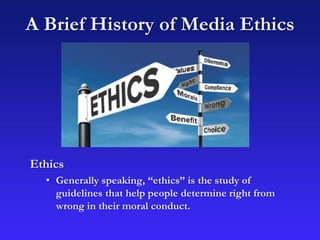
Ethics
• Generally speaking, “ethics” is the study of
guidelines that help people determine right from
wrong in their moral conduct.
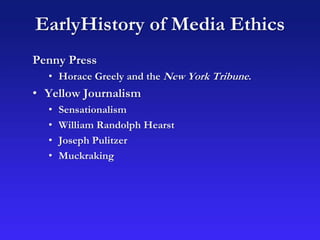
EarlyHistory of Media Ethics
Penny Press
• Horace Greely and the New York Tribune.
• Yellow Journalism
• Sensationalism
• William Randolph Hearst
• Joseph Pulitzer
• Muckraking
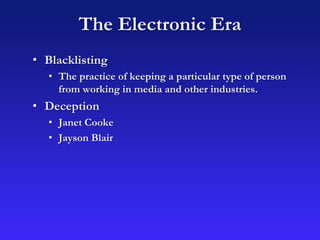
The Electronic Era
• Blacklisting
• The practice of keeping a particular type of person
from working in media and other industries.
• Deception
• Janet Cooke
• Jayson Blair
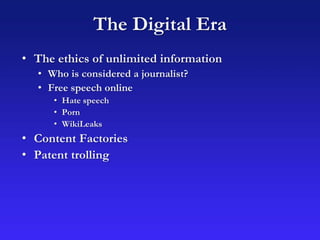
The Digital Era
• The ethics of unlimited information
• Who is considered a journalist?
• Free speech online
• Hate speech
• Porn
• WikiLeaks
• Content Factories
• Patent trolling
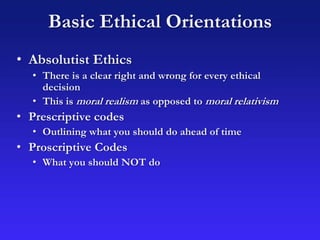
Basic Ethical Orientations
• Absolutist Ethics
• There is a clear right and wrong for every ethical
decision
• This is moral realism as opposed to moral relativism
• Prescriptive codes
• Outlining what you should do ahead of time
• Proscriptive Codes
• What you should NOT do
Basic Ethical Orientations
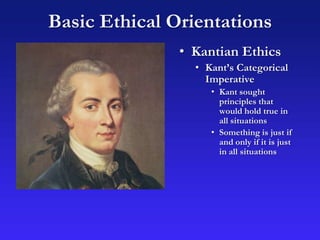
• Kantian Ethics
• Kant’s Categorical
Imperative
• Kant sought
principles that
would hold true in
all situations
• Something is just if
and only if it is just
in all situations
Basic Ethical Orientations
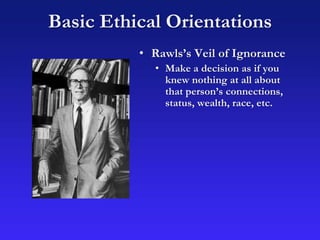
• Rawls’s Veil of Ignorance
• Make a decision as if you
knew nothing at all about
that person’s connections,
status, wealth, race, etc.
Basic Ethical Orientations
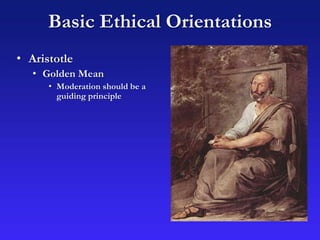
• Aristotle
• Golden Mean
• Moderation should be a
guiding principle
Basic Ethical Orientations
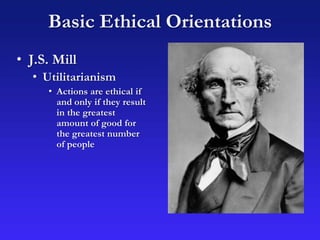
• J.S. Mill
• Utilitarianism
• Actions are ethical if
and only if they result
in the greatest
amount of good for
the greatest number
of people
Basic Ethical Orientations
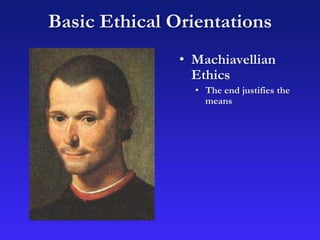
• Machiavellian
Ethics
• The end justifies the
means
Basic Ethical Orientations
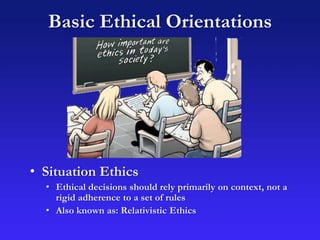
• Situation Ethics
• Ethical decisions should rely primarily on context, not a
rigid adherence to a set of rules
• Also known as: Relativistic Ethics
Conflicting Loyalties
• Duty to personal conscience
• Duty to organization, firm, employer
• Duty to one’s profession
• Duty to society
• Duty to God
Conflicts of Interest
• Friends and family
• Financial links
• Professional aspirations
• Publication rights
• Checkbook journalism
Accountability
• Corporate Ownership
• Corporate Censorship
• Ombudsman
• News Councils
• Professional Publications
• Citizen’s Groups
Chapter 15
Media Ethics: Understanding Media
Morality
Chapter Outline
• History
• Ethical Principles
• Controversies
Mass Media
Jason Nix
Journalism Instructor and
Program Director
JOURN 110
Spokane Falls Community College

Mm ch 15 ethics

  • 1.
    Mass Media Jason Nix JournalismInstructor and Program Director JOURN 110 Spokane Falls Community College
  • 2.
    Chapter 15 Media Ethics:Understanding Media Morality Chapter Outline • History • Ethical Principles • Controversies
  • 3.
    A Brief Historyof Media Ethics Ethics • Generally speaking, “ethics” is the study of guidelines that help people determine right from wrong in their moral conduct.
  • 4.
    EarlyHistory of MediaEthics Penny Press • Horace Greely and the New York Tribune. • Yellow Journalism • Sensationalism • William Randolph Hearst • Joseph Pulitzer • Muckraking
  • 5.
    The Electronic Era •Blacklisting • The practice of keeping a particular type of person from working in media and other industries. • Deception • Janet Cooke • Jayson Blair
  • 6.
    The Digital Era •The ethics of unlimited information • Who is considered a journalist? • Free speech online • Hate speech • Porn • WikiLeaks • Content Factories • Patent trolling
  • 7.
    Basic Ethical Orientations •Absolutist Ethics • There is a clear right and wrong for every ethical decision • This is moral realism as opposed to moral relativism • Prescriptive codes • Outlining what you should do ahead of time • Proscriptive Codes • What you should NOT do
  • 8.
    Basic Ethical Orientations •Kantian Ethics • Kant’s Categorical Imperative • Kant sought principles that would hold true in all situations • Something is just if and only if it is just in all situations
  • 9.
    Basic Ethical Orientations •Rawls’s Veil of Ignorance • Make a decision as if you knew nothing at all about that person’s connections, status, wealth, race, etc.
  • 10.
    Basic Ethical Orientations •Aristotle • Golden Mean • Moderation should be a guiding principle
  • 11.
    Basic Ethical Orientations •J.S. Mill • Utilitarianism • Actions are ethical if and only if they result in the greatest amount of good for the greatest number of people
  • 12.
    Basic Ethical Orientations •Machiavellian Ethics • The end justifies the means
  • 13.
    Basic Ethical Orientations •Situation Ethics • Ethical decisions should rely primarily on context, not a rigid adherence to a set of rules • Also known as: Relativistic Ethics
  • 14.
    Conflicting Loyalties • Dutyto personal conscience • Duty to organization, firm, employer • Duty to one’s profession • Duty to society • Duty to God
  • 15.
    Conflicts of Interest •Friends and family • Financial links • Professional aspirations • Publication rights • Checkbook journalism
  • 16.
    Accountability • Corporate Ownership •Corporate Censorship • Ombudsman • News Councils • Professional Publications • Citizen’s Groups
  • 17.
    Chapter 15 Media Ethics:Understanding Media Morality Chapter Outline • History • Ethical Principles • Controversies
  • 18.
    Mass Media Jason Nix JournalismInstructor and Program Director JOURN 110 Spokane Falls Community College