Broadcasting Ethics & Morals
Broadcasting
• A medium that disseminates via telecommunications,
• It is the act of transmitting speech, music, visual
images, etc., as by radio or television.
Ethics is about what is good and how we should think
about good:
 Logic is about truth
 Aesthetics about beauty
 Ethics is about goodness (universal Reality)
Ethics
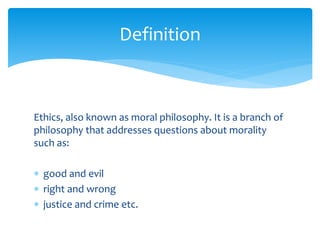
Ethics, also known as moral philosophy. It is a branch of
philosophy that addresses questions about morality
such as:
 good and evil
 right and wrong
 justice and crime etc.
Definition
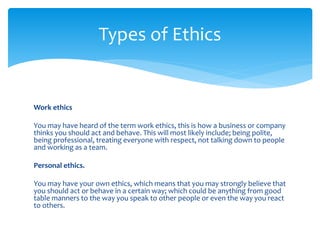
Work ethics
You may have heard of the term work ethics, this is how a business or company
thinks you should act and behave. This will most likely include; being polite,
being professional, treating everyone with respect, not talking down to people
and working as a team.
Personal ethics.
You may have your own ethics, which means that you may strongly believe that
you should act or behave in a certain way; which could be anything from good
table manners to the way you speak to other people or even the way you react
to others.
Types of Ethics
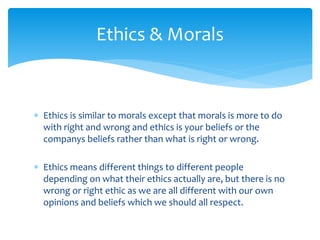
 Ethics is similar to morals except that morals is more to do
with right and wrong and ethics is your beliefs or the
companys beliefs rather than what is right or wrong.
 Ethics means different things to different people
depending on what their ethics actually are, but there is no
wrong or right ethic as we are all different with our own
opinions and beliefs which we should all respect.
Ethics & Morals
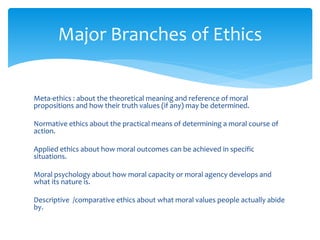
Meta-ethics : about the theoretical meaning and reference of moral
propositions and how their truth values (if any) may be determined.
Normative ethics about the practical means of determining a moral course of
action.
Applied ethics about how moral outcomes can be achieved in specific
situations.
Moral psychology about how moral capacity or moral agency develops and
what its nature is.
Descriptive /comparative ethics about what moral values people actually abide
by.
Major Branches of Ethics
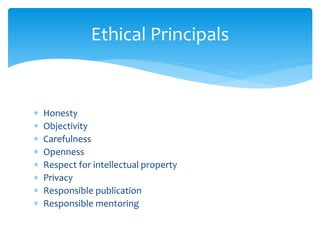
 Honesty
 Objectivity
 Carefulness
 Openness
 Respect for intellectual property
 Privacy
 Responsible publication
 Responsible mentoring
Ethical Principals
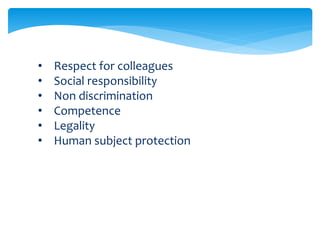
• Respect for colleagues
• Social responsibility
• Non discrimination
• Competence
• Legality
• Human subject protection
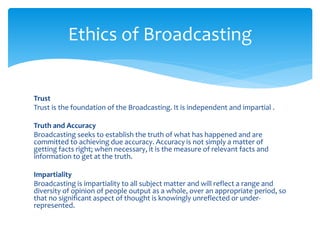
Trust
Trust is the foundation of the Broadcasting. It is independent and impartial .
Truth and Accuracy
Broadcasting seeks to establish the truth of what has happened and are
committed to achieving due accuracy. Accuracy is not simply a matter of
getting facts right; when necessary, it is the measure of relevant facts and
information to get at the truth.
Impartiality
Broadcasting is impartiality to all subject matter and will reflect a range and
diversity of opinion of people output as a whole, over an appropriate period, so
that no significant aspect of thought is knowingly unreflected or under-
represented.
Ethics of Broadcasting
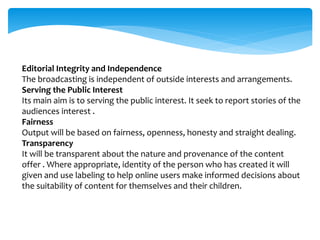
Editorial Integrity and Independence
The broadcasting is independent of outside interests and arrangements.
Serving the Public Interest
Its main aim is to serving the public interest. It seek to report stories of the
audiences interest .
Fairness
Output will be based on fairness, openness, honesty and straight dealing.
Transparency
It will be transparent about the nature and provenance of the content
offer . Where appropriate, identity of the person who has created it will
given and use labeling to help online users make informed decisions about
the suitability of content for themselves and their children.
 Stealing copyright and credit for intellectual property
 Intercepting private e-mail
 Deliberate public wrong information
 Misuse of research material
 Improper commercial/ personal use of network
 Stealing credit / glory information.
Unethical / Illegal Behavior
Broadcasting Ethics & Morals

Broadcasting Ethics & Morals

  • 1.
  • 2.
    Broadcasting • A mediumthat disseminates via telecommunications, • It is the act of transmitting speech, music, visual images, etc., as by radio or television.
  • 3.
    Ethics is aboutwhat is good and how we should think about good:  Logic is about truth  Aesthetics about beauty  Ethics is about goodness (universal Reality) Ethics
  • 4.
    Ethics, also knownas moral philosophy. It is a branch of philosophy that addresses questions about morality such as:  good and evil  right and wrong  justice and crime etc. Definition
  • 5.
    Work ethics You mayhave heard of the term work ethics, this is how a business or company thinks you should act and behave. This will most likely include; being polite, being professional, treating everyone with respect, not talking down to people and working as a team. Personal ethics. You may have your own ethics, which means that you may strongly believe that you should act or behave in a certain way; which could be anything from good table manners to the way you speak to other people or even the way you react to others. Types of Ethics
  • 6.
     Ethics issimilar to morals except that morals is more to do with right and wrong and ethics is your beliefs or the companys beliefs rather than what is right or wrong.  Ethics means different things to different people depending on what their ethics actually are, but there is no wrong or right ethic as we are all different with our own opinions and beliefs which we should all respect. Ethics & Morals
  • 7.
    Meta-ethics : aboutthe theoretical meaning and reference of moral propositions and how their truth values (if any) may be determined. Normative ethics about the practical means of determining a moral course of action. Applied ethics about how moral outcomes can be achieved in specific situations. Moral psychology about how moral capacity or moral agency develops and what its nature is. Descriptive /comparative ethics about what moral values people actually abide by. Major Branches of Ethics
  • 8.
     Honesty  Objectivity Carefulness  Openness  Respect for intellectual property  Privacy  Responsible publication  Responsible mentoring Ethical Principals
  • 9.
    • Respect forcolleagues • Social responsibility • Non discrimination • Competence • Legality • Human subject protection
  • 10.
    Trust Trust is thefoundation of the Broadcasting. It is independent and impartial . Truth and Accuracy Broadcasting seeks to establish the truth of what has happened and are committed to achieving due accuracy. Accuracy is not simply a matter of getting facts right; when necessary, it is the measure of relevant facts and information to get at the truth. Impartiality Broadcasting is impartiality to all subject matter and will reflect a range and diversity of opinion of people output as a whole, over an appropriate period, so that no significant aspect of thought is knowingly unreflected or under- represented. Ethics of Broadcasting
  • 11.
    Editorial Integrity andIndependence The broadcasting is independent of outside interests and arrangements. Serving the Public Interest Its main aim is to serving the public interest. It seek to report stories of the audiences interest . Fairness Output will be based on fairness, openness, honesty and straight dealing. Transparency It will be transparent about the nature and provenance of the content offer . Where appropriate, identity of the person who has created it will given and use labeling to help online users make informed decisions about the suitability of content for themselves and their children.
  • 12.
     Stealing copyrightand credit for intellectual property  Intercepting private e-mail  Deliberate public wrong information  Misuse of research material  Improper commercial/ personal use of network  Stealing credit / glory information. Unethical / Illegal Behavior