Download to read offline
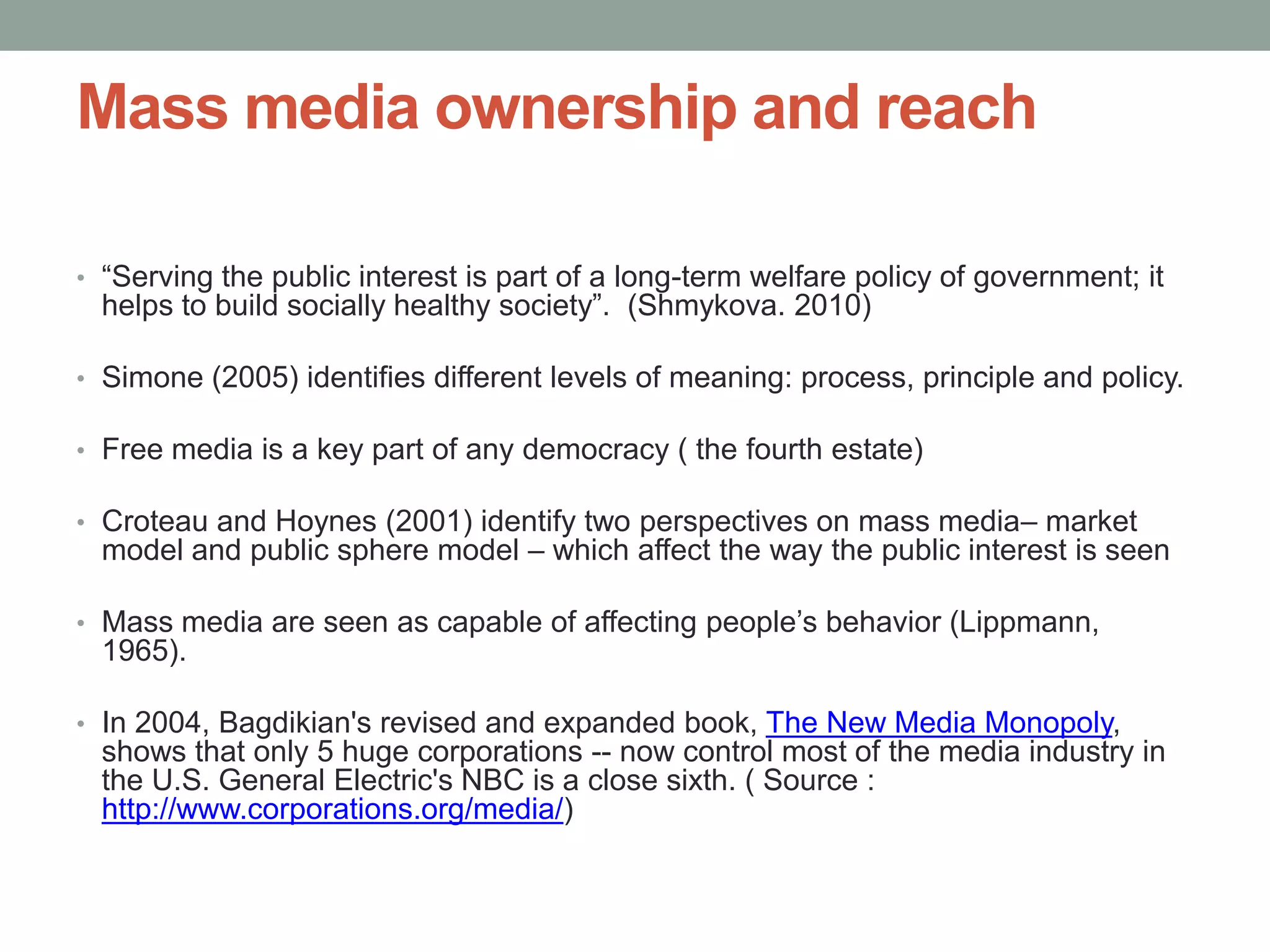
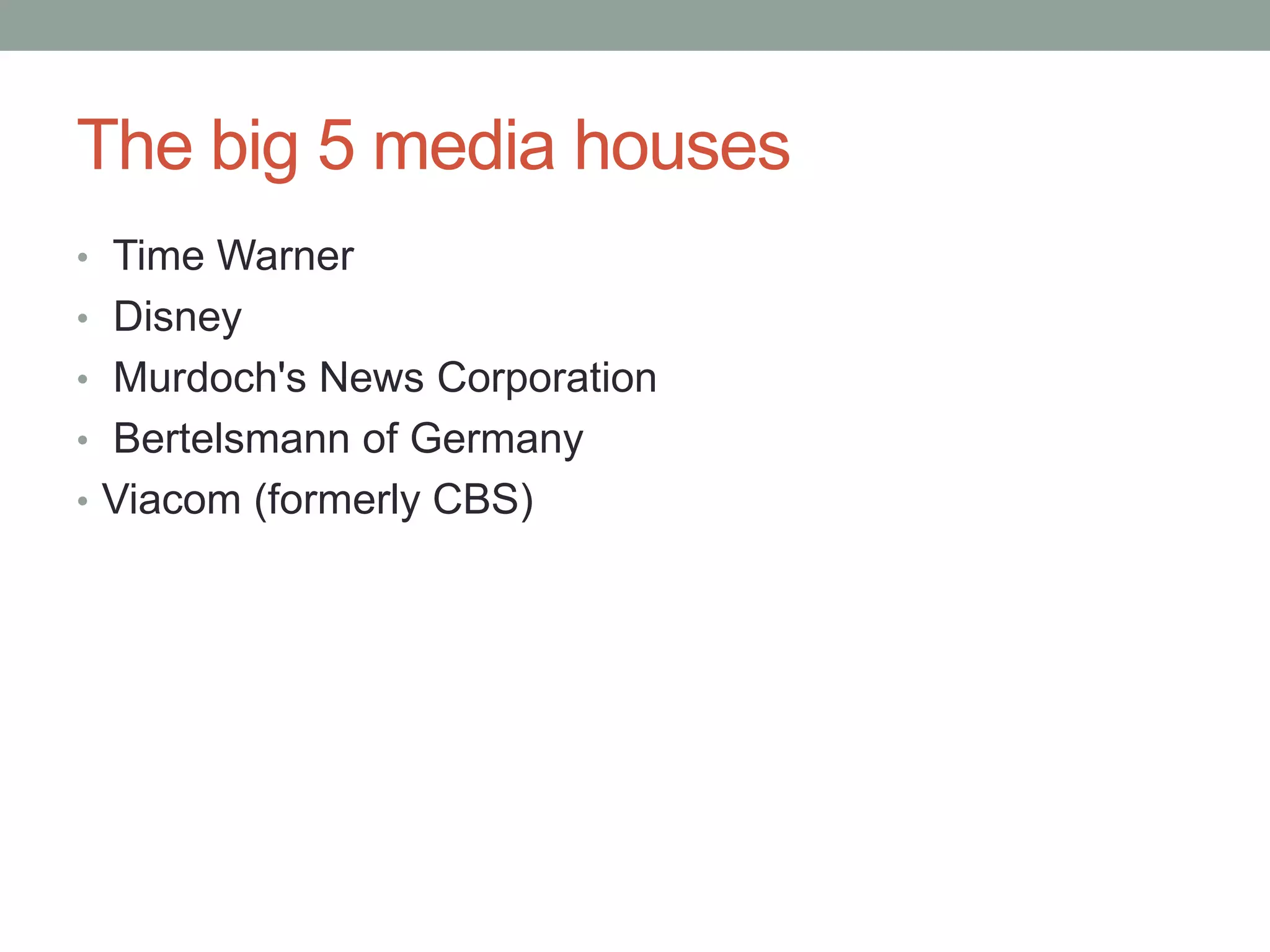
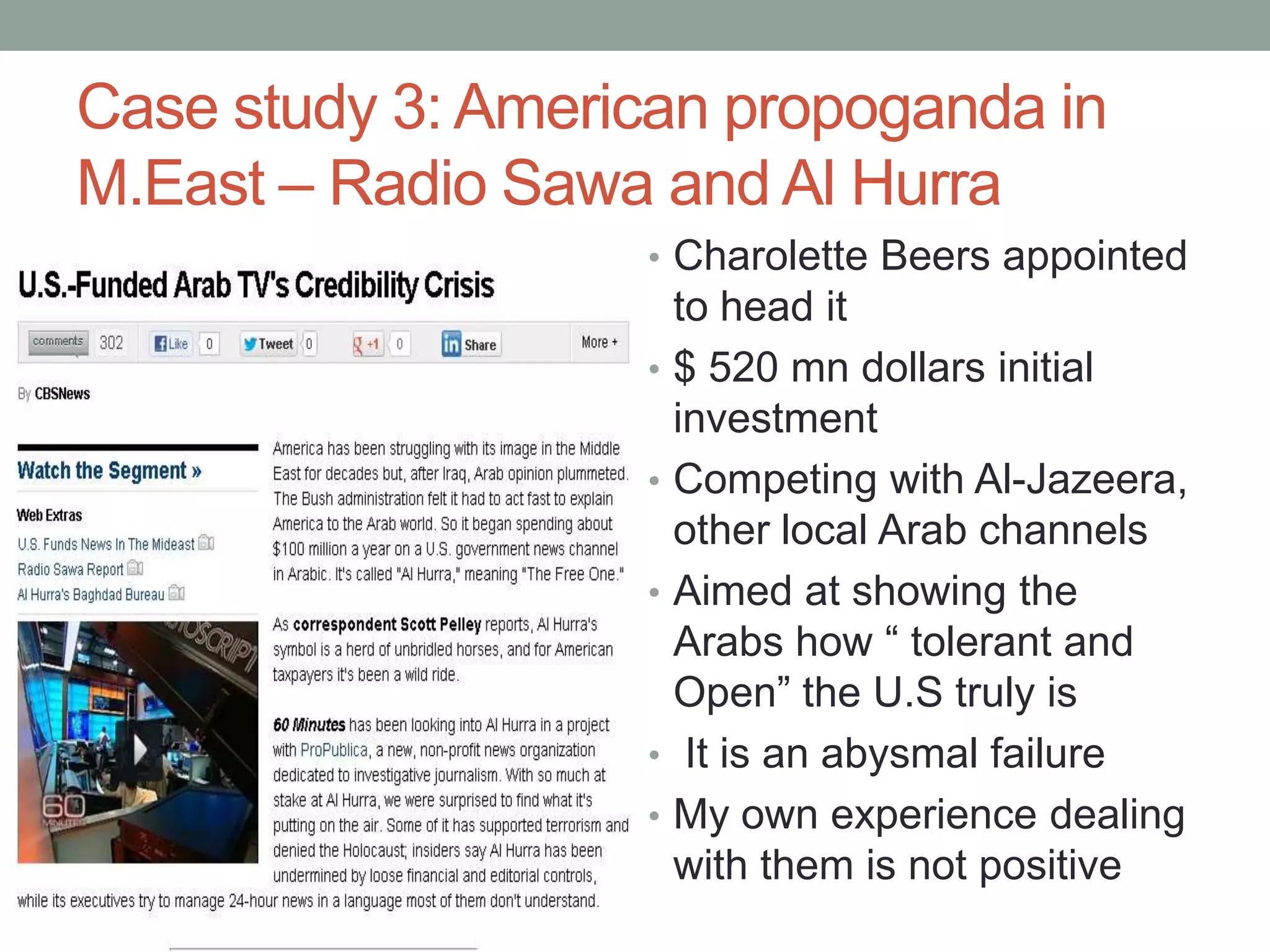
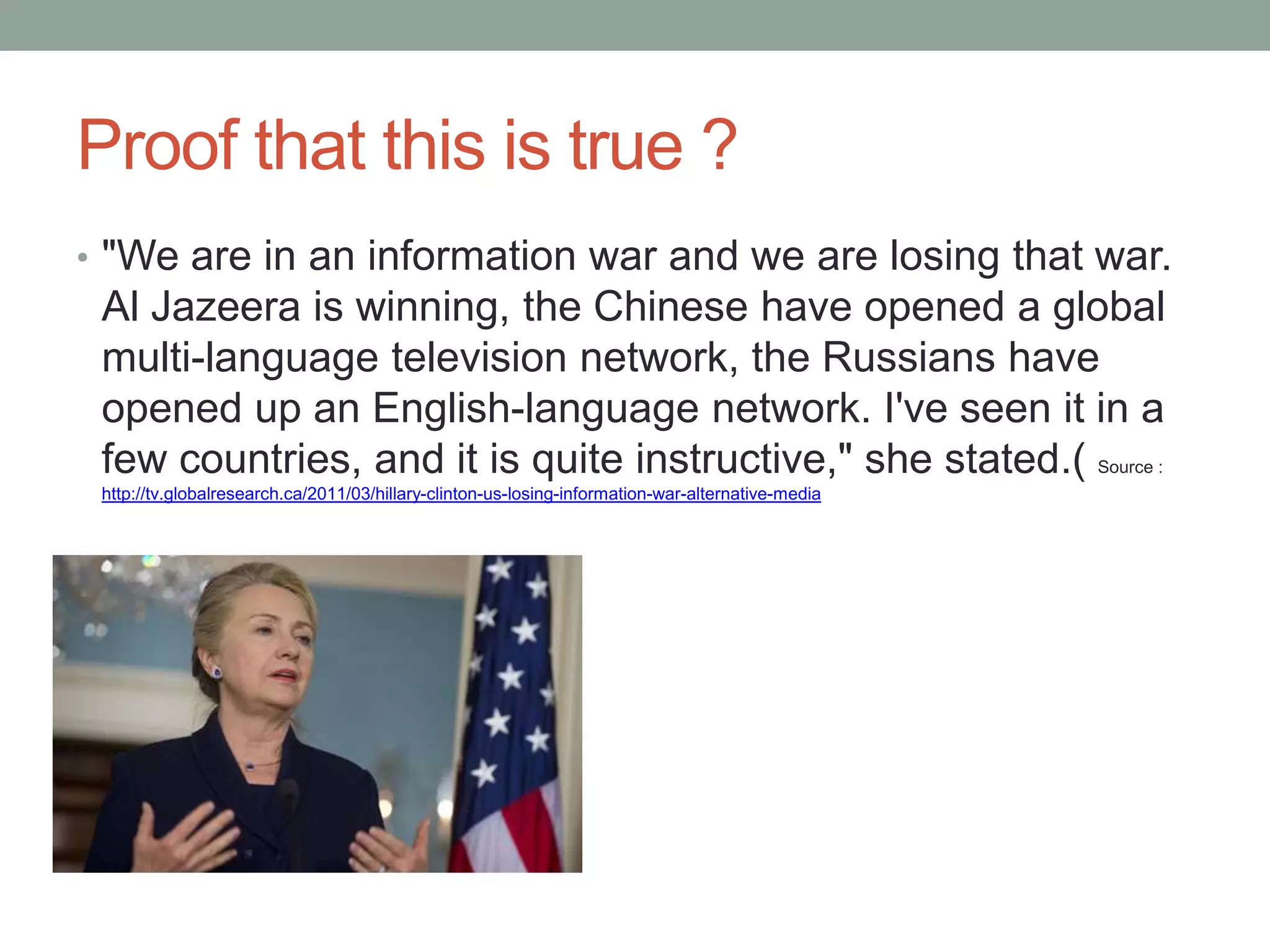

This document discusses mass media ownership and its effects on society. It addresses the following key points: 1) A small number of huge corporations, like Time Warner and Disney, own most of the major media outlets in the U.S. This level of consolidation can have negative effects on the diversity of viewpoints and agenda-setting. 2) The propaganda model suggests that corporate media serve the interests of owners and advertisers rather than ordinary citizens. Reporting is framed and filtered in ways that maintain the status quo and limit debate. 3) Case studies of the Gulf War and East Timor coverage show how national media sometimes downplay atrocities committed by allies while exaggerating those of enemies, for political and


