Ethics and balanced
(political) reporting
Journalism in Society
•Journalism helps people understand their
“imagined community”
•Modern community is complex and requires
translating
•Journalism as the “fourth estate”
•Communication comes with power (and
responsibility)
The Fourth Estate
• Traditionally in Europe, the other three estates were the nobility,
the clergy and the laity
• In the US sometimes thought of as the three branches of
government – Executive (President), Legislative (House and
Senate) and Courts
• Journalism deemed to have a “watchdog” role on the other
branches
• Some argue that it is often more lapdog than watchdog
• Why?
Ties between the estates
• Media rely on government sources for
much of their output
• PR must die!
• Media are now central to entire act of
governance. Governments spend vast
amounts on communications activity
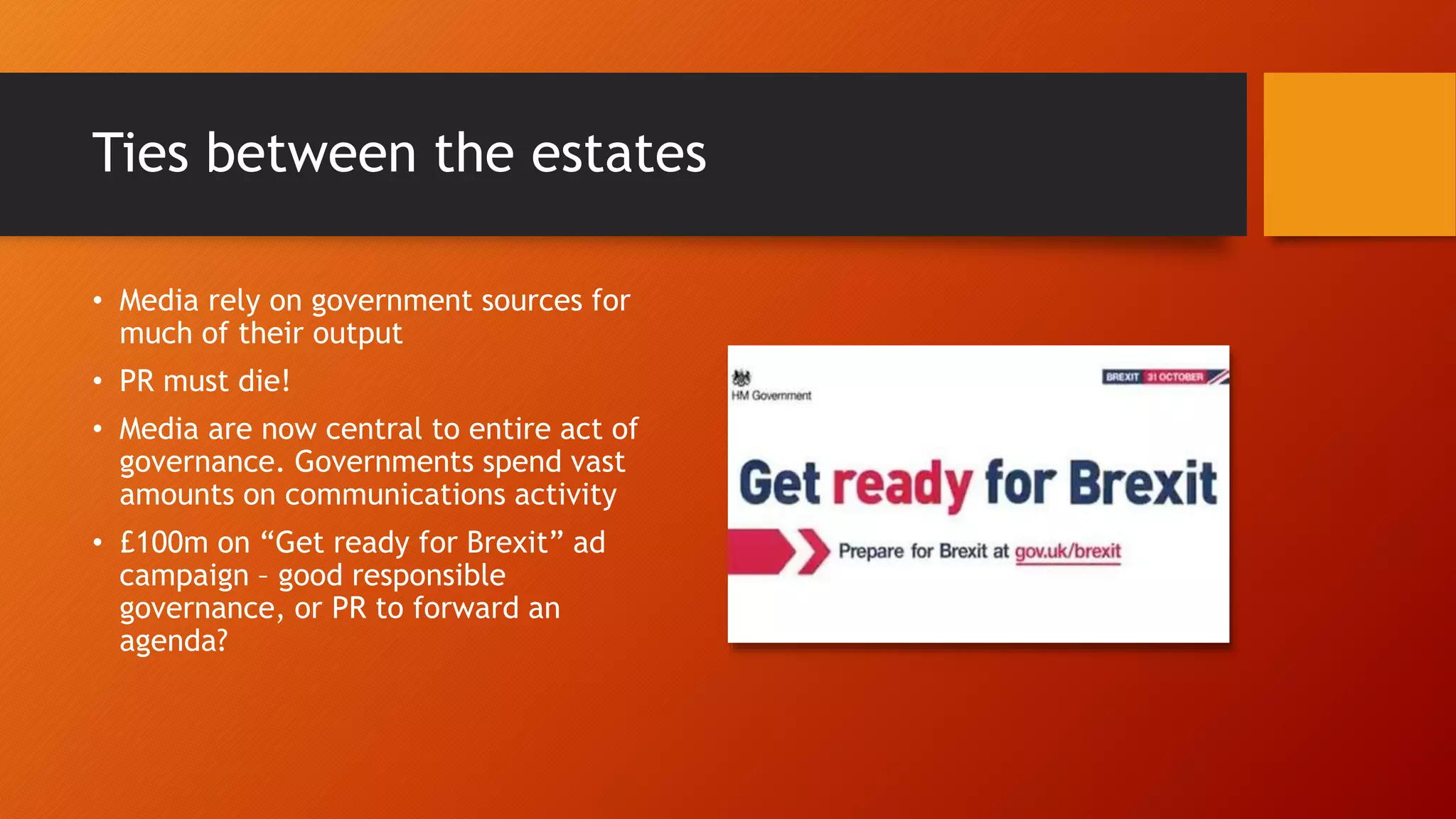
• £100m on “Get ready for Brexit” ad
campaign – good responsible
governance, or PR to forward an
agenda?
Journalism’s dirty secret
• Much of current media content originates from public
communications from government and business
• But this form of plagiarism is rarely acknowledged (Lewis et al.)
• Sometimes called “information subsidies” (Gandy, 1982)
• Brandenburg (2002) recorded the extent to which UK political
parties produce these subsidies
• Why do you think they are called “information subsidies?”
Agenda-setting
• A lot of work has been done examining who sets the agenda in
political campaigns. Is it the press, the public, the parties?
• It depends
• Brandenburg found strong evidence that party press releases had a
strong impact on the agenda
• What do we mean by setting the agenda?
• It is the things that people say are important to them
What is the most
important issue for
you in this election?
Hmm, I’m kind of
worried about
immigration
Hmm, and not a big
fan of the EU – think
they’re to blame for
the immigrants
Here’s some of my research
• It’s the EU immigrants stupid! – UKIP’s core-issue and populist
rhetoric on the road to Brexit
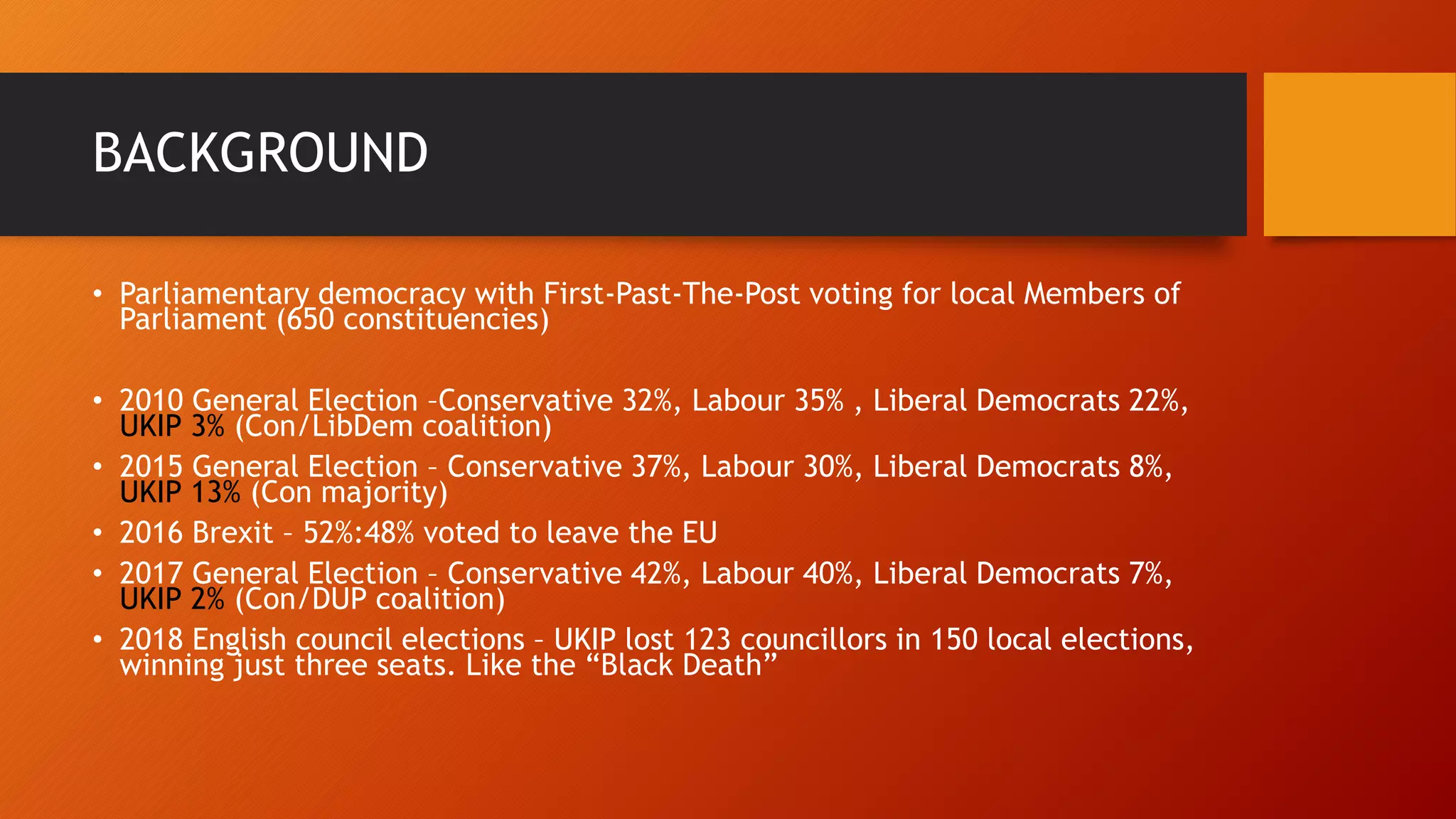
BACKGROUND
• Parliamentary democracy with First-Past-The-Post voting for local Members of
Parliament (650 constituencies)
• 2010 General Election –Conservative 32%, Labour 35% , Liberal Democrats 22%,
UKIP 3% (Con/LibDem coalition)
• 2015 General Election – Conservative 37%, Labour 30%, Liberal Democrats 8%,
UKIP 13% (Con majority)
• 2016 Brexit – 52%:48% voted to leave the EU
• 2017 General Election – Conservative 42%, Labour 40%, Liberal Democrats 7%,
UKIP 2% (Con/DUP coalition)
• 2018 English council elections – UKIP lost 123 councillors in 150 local elections,
winning just three seats. Like the “Black Death”
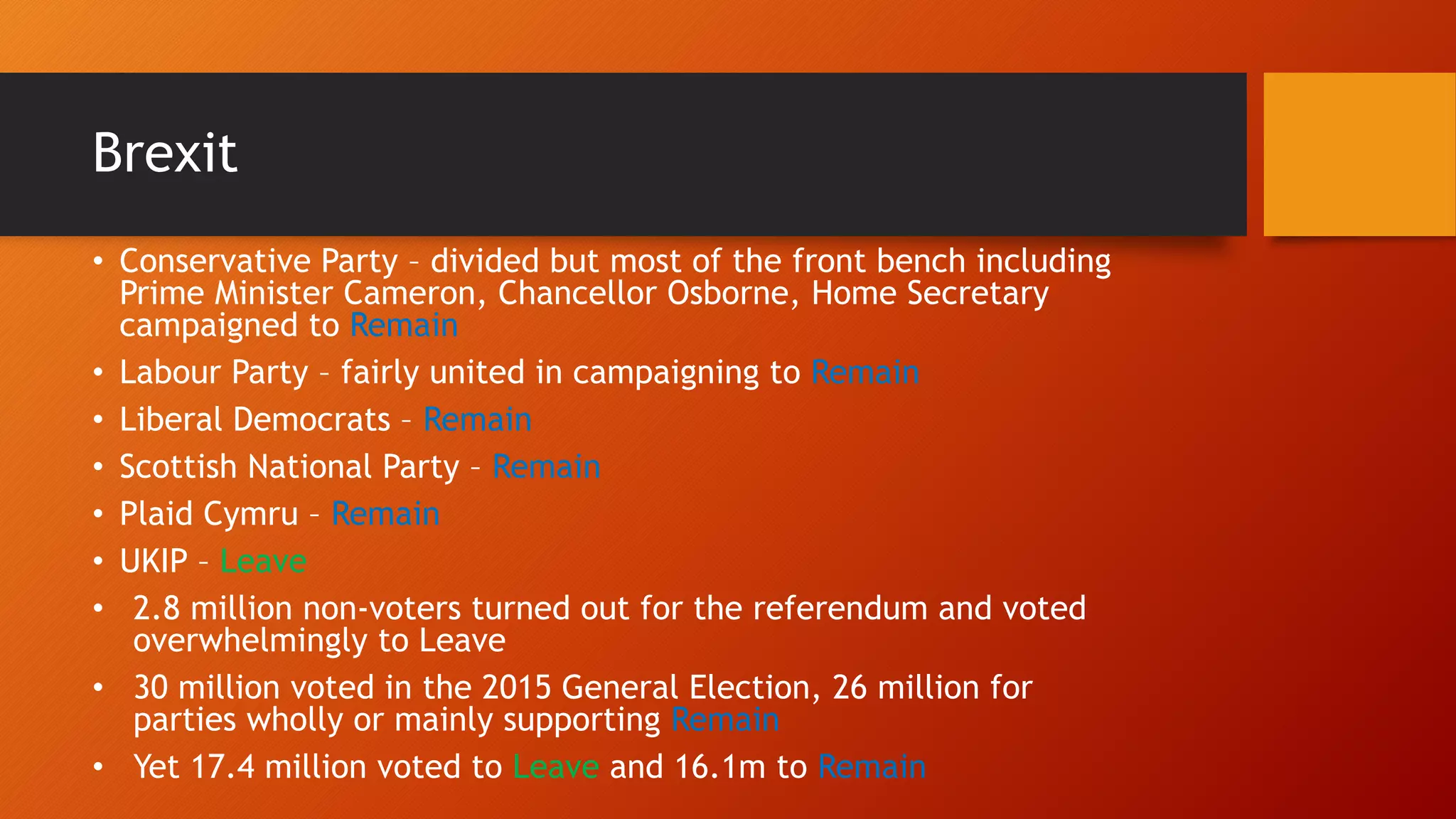
Brexit
• Conservative Party – divided but most of the front bench including
Prime Minister Cameron, Chancellor Osborne, Home Secretary
campaigned to Remain
• Labour Party – fairly united in campaigning to Remain
• Liberal Democrats – Remain
• Scottish National Party – Remain
• Plaid Cymru – Remain
• UKIP – Leave
• 2.8 million non-voters turned out for the referendum and voted
overwhelmingly to Leave
• 30 million voted in the 2015 General Election, 26 million for
parties wholly or mainly supporting Remain
• Yet 17.4 million voted to Leave and 16.1m to Remain
QUESTION
• Why did the public not respond to the relatively homogenous
message from the political establishment?
• What was being said by UKIP and what was being said about UKIP?
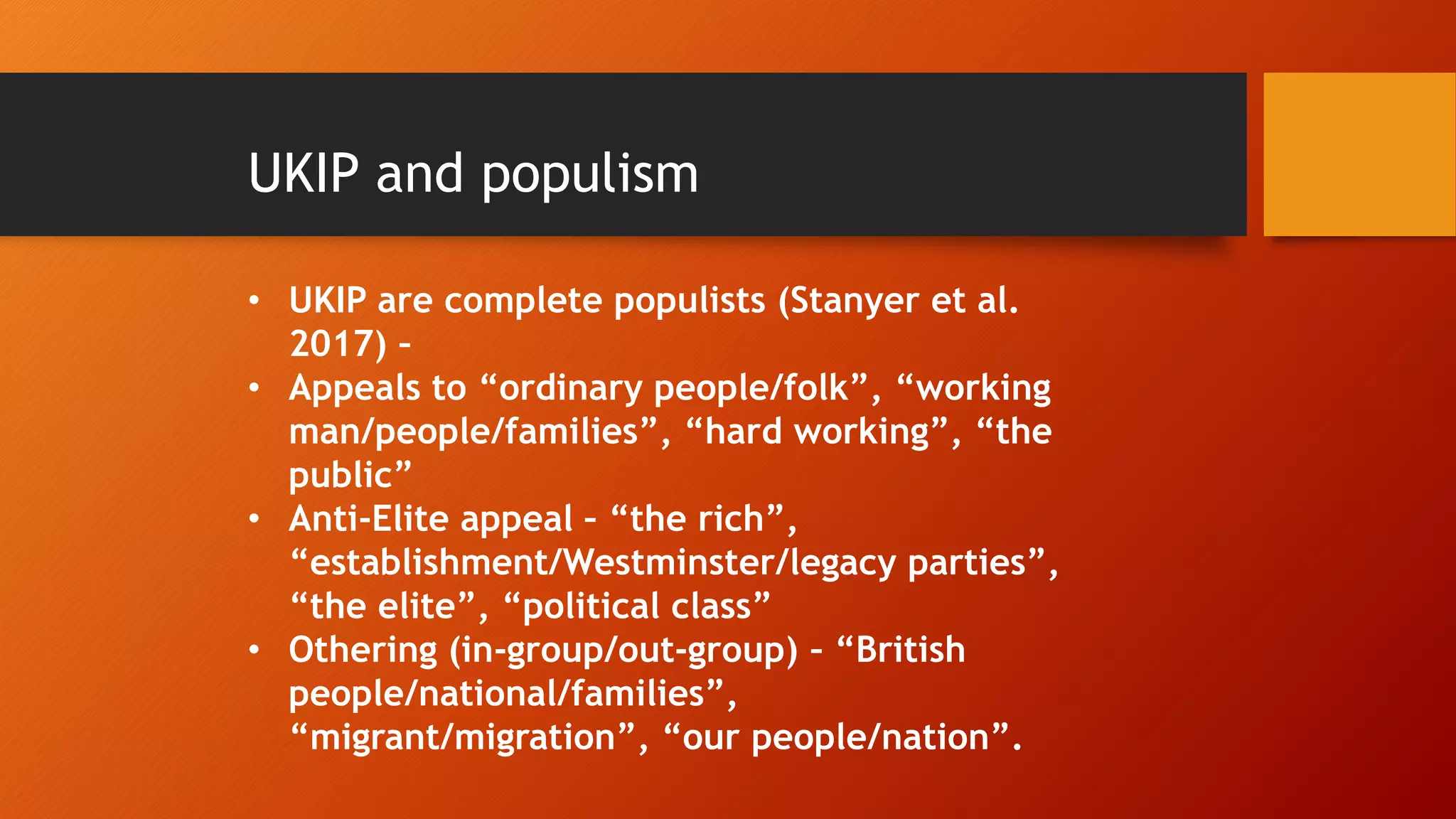
UKIP and populism
• UKIP are complete populists (Stanyer et al.
2017) –
• Appeals to “ordinary people/folk”, “working
man/people/families”, “hard working”, “the
public”
• Anti-Elite appeal – “the rich”,
“establishment/Westminster/legacy parties”,
“the elite”, “political class”
• Othering (in-group/out-group) – “British
people/national/families”,
“migrant/migration”, “our people/nation”.
Methods
• UKIP News Releases 2009-2016 collected (n=2,390)
• Twelve UK newspapers - story KWIC extracts surrounding “UKIP”
(n= 43,000)
• Iterative coding scheme developed to code for n-grams associated
with populist rhetoric, the EU, and six common areas of political
policy (e.g. health, education, economy)
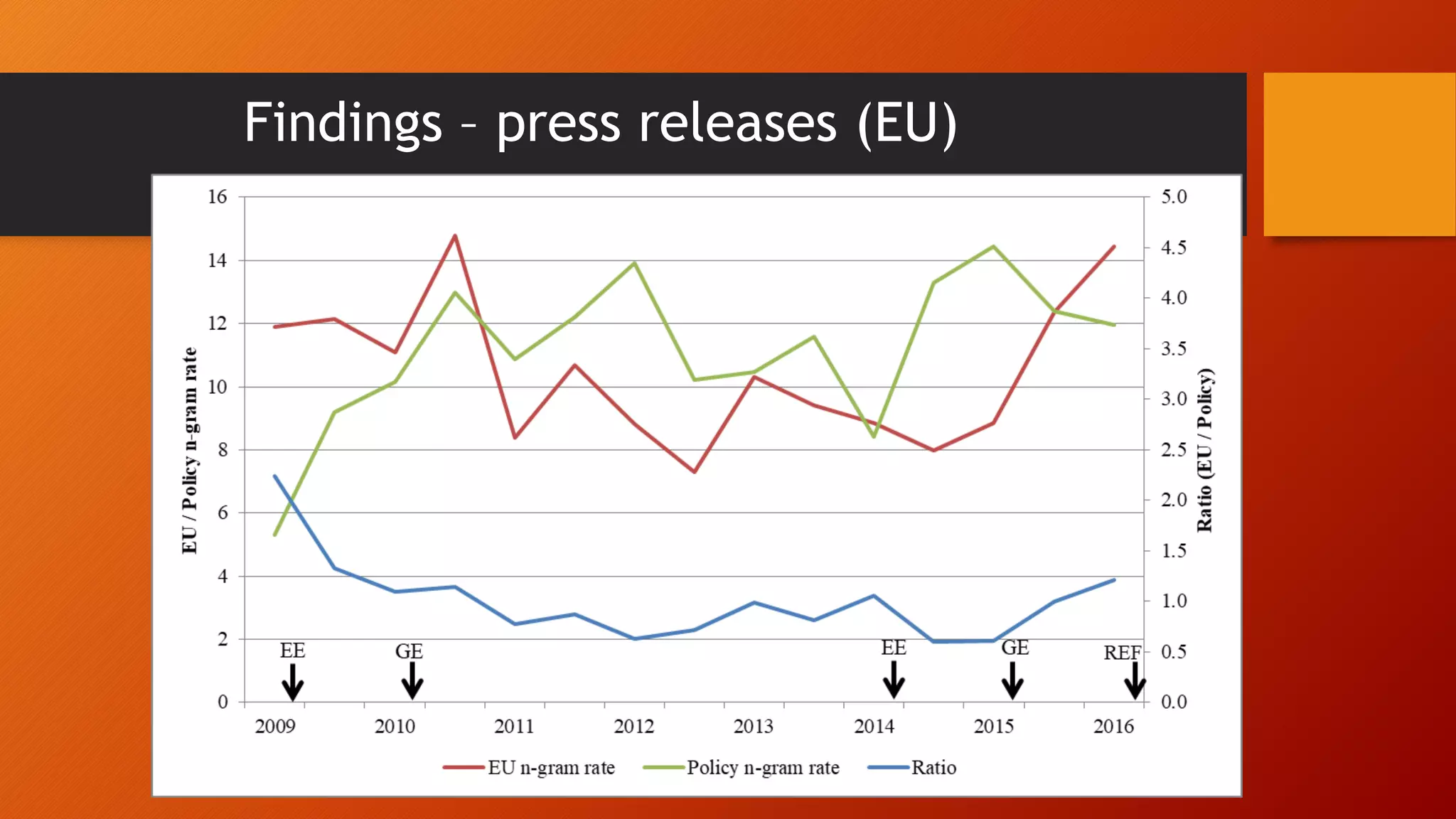
Findings – press releases (EU)
Press releases and populism
Newspaper reporting
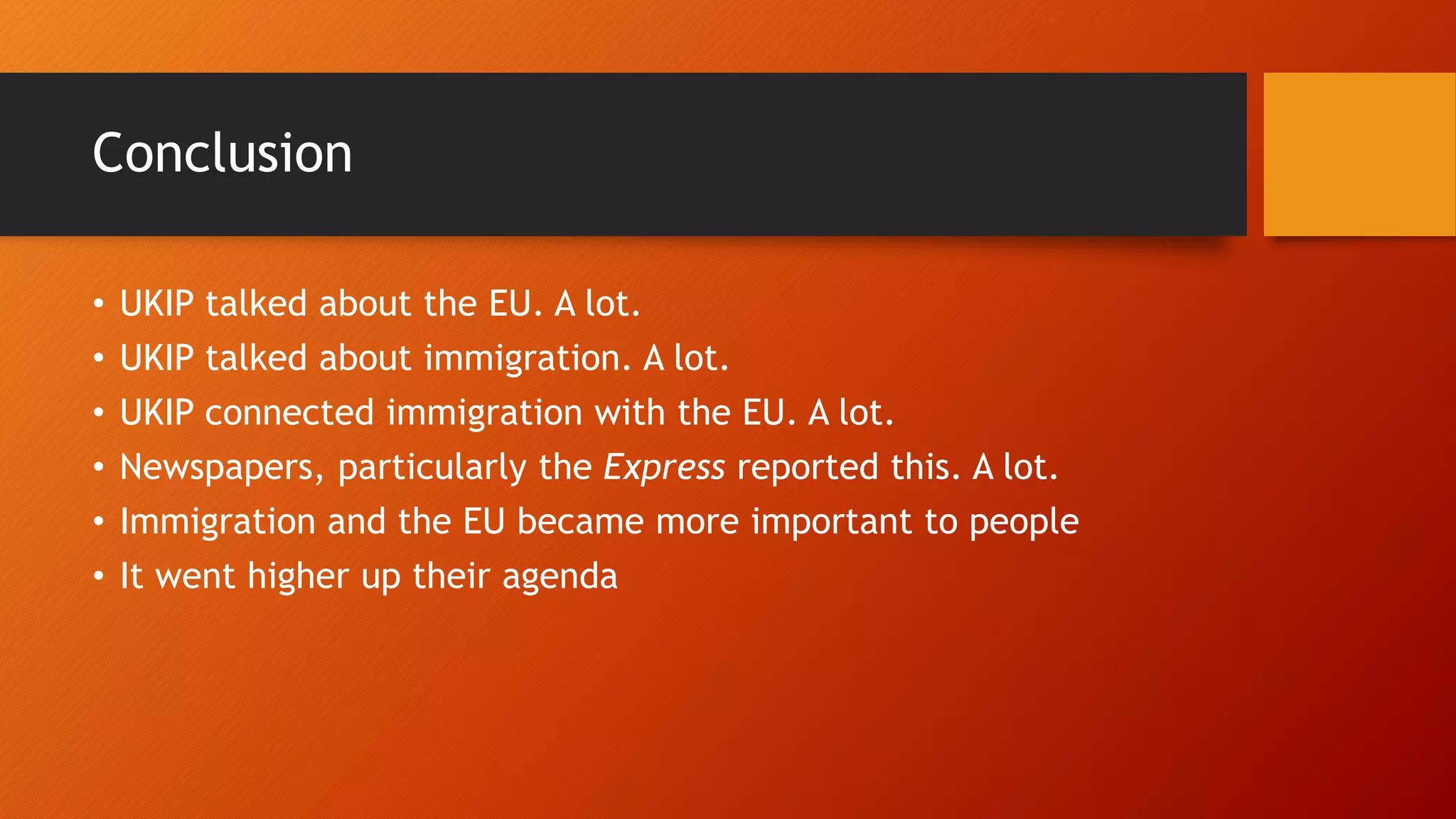
Conclusion
• UKIP talked about the EU. A lot.
• UKIP talked about immigration. A lot.
• UKIP connected immigration with the EU. A lot.
• Newspapers, particularly the Express reported this. A lot.
• Immigration and the EU became more important to people
• It went higher up their agenda
And another one of mine
• Debatable sphere: major party hegemony, minor party
marginalization in the UK Leaders’ debate
General Election debates 2015
• Televised debates are new to the UK electoral scene
• The first one only happened in 2010
• This time, seven leaders were on the stage
• It was supposed to be an equal opportunity for all seven to
present their views and plans to the electorate
• It was supposed to look like this:
A normative debate
DEBATE WITHIN DEBATE
The actual debate
But it can depend on the question
Why does this happen?
•And what are the implications?
Journalism and Democracy
Democracy
assumes (or hopes
for) an informed
electorate
What role do
journalists play in
this?
Journalism and Democracy
• Media role (in part) is to inform the public
• “Uses and gratification” model – Katz
• One of the uses we have for media is to tell us about what is
happening out there
• In political terms, it is who is doing what and why
• This should help answer the question, “who should I vote for?”
• Quick aside…
REGISTER TO
VOTE!
• AND VOTE!
• EVERY TIME YOU
HAVE AN
OPPORTUNITY
• IT IS IMPORTANT
• IT DOES MATTER
Balanced political reporting
What is
balance?
How can
balance be
achieved?
Media models
• Inter-media balance (UK for print, US for
broadcast – Fox and MSNBC)
• Intra-medium balance (multi-author blog sites,
comment pages)
•Intra-story balance (US for print,
US/UK for broadcast – ABC, NBC, BBC)
Was it the
“Sun wot
won it?”
What is balanced?
• A balanced political story tells _____ sides of the
story
Both sides of the story
• But what about if there are more than two sides?
• What if there is another alternative the public should know about?
• “Strategic ritual of objectivity” – argued that it has often come to
mean “she said, he said”. No space for a third view.
Green New Deal
What is this?
Who
developed it?
How would
you report
on it?
Reporting on third/minor parties
• 2016 email from Jill Stein (Green Party)
campaign: “our campaign received 3 seconds of
coverage on corporate media for every 1,700
minutes for Trump and every 1,000+ minutes for
Clinton.”
• Is that fair?
• What would be a reasonable amount?
• Why should reporters waste time on a party
which only got 1% of votes?
Climate Change / Global Warming / Climate
Crisis / Global Heating
• 98%+ of climate scientists agree on it
• Around 70% of US population believe it is happening
• (but only 55% of Republicans and 26% of Conservative Republicans)
• How much coverage should you, as a journalist, give to climate
change denial?
• Should a story about climate change get the opinion of “flat-
earthers?”
• How do you decide?
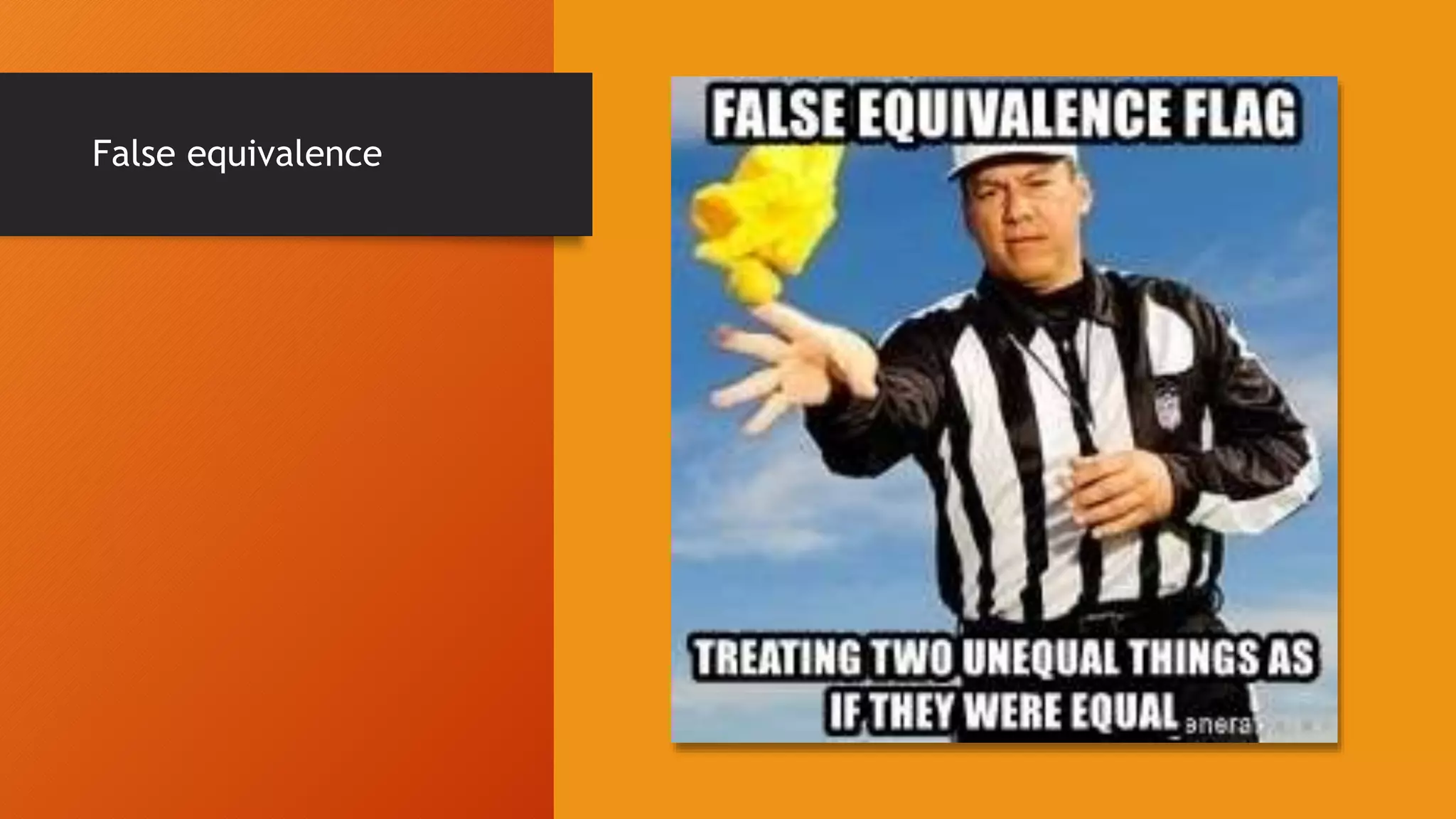
False equivalence
And the “truth” can also change over time
• 1950 – Smoking is good for you!
• 1970 – Well it’s not bad for you
• 1980 – Well it’s probably not great
• 1985 – Okay, so it’s bad, but just for you
• 2000 – Um, and everyone around you
• 2015 – Vaping though is fine. Yipee!
• 2017 – Well actually, not so much…
• 2018 – Juuling though, definitely fine
• 2019 – Well…
Summary
• Journalists have potential power to change public
opinion on an issue
• Journalists have potential power to change the
result of an election
• Balance can be aimed for (achieved) in different
ways
• Good journalists consider alternative viewpoints
• Not all opinions should be treated equally
• How would you use this power?
Media, Politics, and Ethics
What are the pros of political
advertising?
• Allows candidates to be known, as
well as their platforms
• Allows for direct contact with the
voter
• It is a facet of open democratic
exchange
Media, Politics, and Ethics: A
Primer
What are the cons of political
advertising?
• The cost: $2.6 billion in 2012,$6.8
billion in 2016
• Can you argue that that figure
alone is unethical?
• The content: What about when ads
are created to mislead people?
John Kerry attack ad
• Swift Boat Veterans for
Truth
• Group of veterans who
attacked Kerry’s war record
and his testimony about
Vietnam
• Veterans who had little or
no experience of Kerry’s
service in Vietnam
• Veterans who served
supported Kerry’s version of
events
• “Swiftboating” now used as
a term for unfair attack ad
And more recently…
What are the ethical issues here?
And online
Political ads fail at fulfilling their
duty, for the most part
There is also limited recourse for the
public
The inevitable outgrowth of all these
political ads on TV is….political ads on
the Internet
Online v TV
One third of campaign spending was
on online ads in 2016
What are the pros of online ads v
television ads?
Better targeting
Online politics
What is microtargeting?
• Take for example, DSPolitical
• They have aggregated 600 million
cookies- what do you think they do
with them?
• They tag and track online
movements, then translate them
into potential candidate support
More of my stuff
What is microtargeting?
• This way they can create and target
ads specifically for you
• Use the same techniques as
companies like Amazon – predict
your likelihood of voting and for
whom
What is microtargeting?
• This way they can create and target
ads specifically for you
• They can place the ads strategically
or repeatedly
Microtargeting
What is microtargeting?
• This way they can create and target
ads specifically for you
• They can place the ads strategically
or repeatedly
What are the potential problems
here?
Microtargeting
Microtargeting
Cons of microtargeting:
• 86% of people said they don’t want
tailored ads
• People don’t want to be stereotyped- and
they don’t want to feel pandered to for
the sake of a vote
• Some allege that it is a form of redlining-
in other words, some people are
essentially made more valuable than
others
• They can also target in a way to
decrease people’s likelihood of voting
Microtargeting
Cons of microtargeting:
• Some people are left out
completely, which is antithetical to
democracy
Cons of microtargeting:
• Some people are left out
completely, which is antithetical to
democracy
• Like traditional ads, its difficult to
fact- or quality-check
Microtargeting
Cons of microtargeting:
• Some people are left out
completely, which is antithetical to
democracy
• Like traditional ads, its difficult to
fact- or quality-check
• There is no opt-out, at this stage
Microtargeting
Microtargeting
Cons of microtargeting:
• Some people are left out
completely, which is antithetical to
democracy
• Like traditional ads, its difficult to
fact- or quality-check
• There is no opt-out, at this stage
• It feels, like a lot of things online,
like stalking
Microtargeting
Pros of microtargeting?
• We have had tailored speeches and
letters, and this is a natural
extension
• People might actually become
interested in politics if its about a
certain issue you are concerned with
• Its natural for campaigns to take
advantage of the technology- if
Amazon can do it, they should too
What about the trolls n bots?
Then there are the fake accounts, the
trolls, the bots
My study intended to examine
microtargeting ended up being a study
of the level of ads directed at US
citizens which came from bots and troll
armies
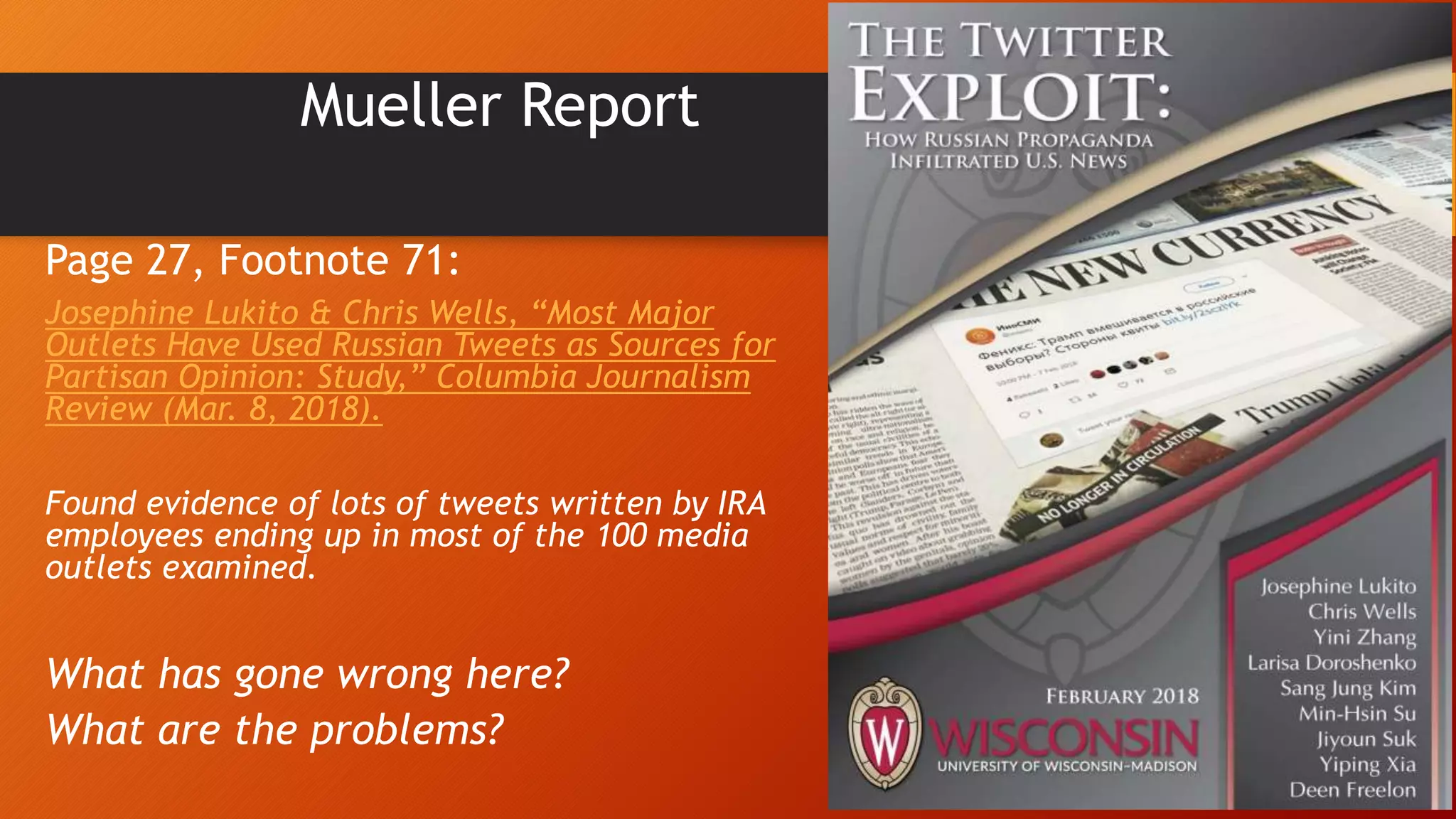
Mueller Report
Page 27, Footnote 71:
Josephine Lukito & Chris Wells, “Most Major
Outlets Have Used Russian Tweets as Sources for
Partisan Opinion: Study,” Columbia Journalism
Review (Mar. 8, 2018).
Found evidence of lots of tweets written by IRA
employees ending up in most of the 100 media
outlets examined.
What has gone wrong here?
What are the problems?
Internet Research Agency
Then there are the bots and actors
deliberately using social media
We have never seen wide-scale
interference or fake news like this,
ever
To what extent are the companies
responsible?
Luktio - Coordinating a Multi-Platform Disinformation
Campaign: Internet Research Agency Activity on
Three U.S. Social Media Platforms, 2015 to 2017
• Found evidence of extensive IRA activity on
Reddit, Facebook and Twitter
• Reddit activity often preceded Twitter – used
Reddit to test out different messages
• BlackToLive – IRA account pretending to be
BLM. Had accounts on Twitter, Reddit,
Tumblr, Medium, YouTube, Gmail and a
website
Social media, politics and ethics
The Internet and social media has the
power to transform politics
• By allowing for an increase in
information (like the printing press)
• Lowering costs of coordination (Shirky)
• By creating a more open public sphere
(Habermas)
• But – it can also be weaponized and
used to subvert this promise

Ethics and political reporting

  • 1.
  • 2.
    Journalism in Society •Journalismhelps people understand their “imagined community” •Modern community is complex and requires translating •Journalism as the “fourth estate” •Communication comes with power (and responsibility)
  • 3.
    The Fourth Estate •Traditionally in Europe, the other three estates were the nobility, the clergy and the laity • In the US sometimes thought of as the three branches of government – Executive (President), Legislative (House and Senate) and Courts • Journalism deemed to have a “watchdog” role on the other branches • Some argue that it is often more lapdog than watchdog • Why?
  • 4.
    Ties between theestates • Media rely on government sources for much of their output • PR must die! • Media are now central to entire act of governance. Governments spend vast amounts on communications activity • £100m on “Get ready for Brexit” ad campaign – good responsible governance, or PR to forward an agenda?
  • 5.
    Journalism’s dirty secret •Much of current media content originates from public communications from government and business • But this form of plagiarism is rarely acknowledged (Lewis et al.) • Sometimes called “information subsidies” (Gandy, 1982) • Brandenburg (2002) recorded the extent to which UK political parties produce these subsidies • Why do you think they are called “information subsidies?”
  • 6.
    Agenda-setting • A lotof work has been done examining who sets the agenda in political campaigns. Is it the press, the public, the parties? • It depends • Brandenburg found strong evidence that party press releases had a strong impact on the agenda • What do we mean by setting the agenda? • It is the things that people say are important to them
  • 7.
    What is themost important issue for you in this election?
  • 9.
    Hmm, I’m kindof worried about immigration
  • 11.
    Hmm, and nota big fan of the EU – think they’re to blame for the immigrants
  • 12.
    Here’s some ofmy research • It’s the EU immigrants stupid! – UKIP’s core-issue and populist rhetoric on the road to Brexit
  • 13.
    BACKGROUND • Parliamentary democracywith First-Past-The-Post voting for local Members of Parliament (650 constituencies) • 2010 General Election –Conservative 32%, Labour 35% , Liberal Democrats 22%, UKIP 3% (Con/LibDem coalition) • 2015 General Election – Conservative 37%, Labour 30%, Liberal Democrats 8%, UKIP 13% (Con majority) • 2016 Brexit – 52%:48% voted to leave the EU • 2017 General Election – Conservative 42%, Labour 40%, Liberal Democrats 7%, UKIP 2% (Con/DUP coalition) • 2018 English council elections – UKIP lost 123 councillors in 150 local elections, winning just three seats. Like the “Black Death”
  • 14.
    Brexit • Conservative Party– divided but most of the front bench including Prime Minister Cameron, Chancellor Osborne, Home Secretary campaigned to Remain • Labour Party – fairly united in campaigning to Remain • Liberal Democrats – Remain • Scottish National Party – Remain • Plaid Cymru – Remain • UKIP – Leave • 2.8 million non-voters turned out for the referendum and voted overwhelmingly to Leave • 30 million voted in the 2015 General Election, 26 million for parties wholly or mainly supporting Remain • Yet 17.4 million voted to Leave and 16.1m to Remain
  • 15.
    QUESTION • Why didthe public not respond to the relatively homogenous message from the political establishment? • What was being said by UKIP and what was being said about UKIP?
  • 16.
    UKIP and populism •UKIP are complete populists (Stanyer et al. 2017) – • Appeals to “ordinary people/folk”, “working man/people/families”, “hard working”, “the public” • Anti-Elite appeal – “the rich”, “establishment/Westminster/legacy parties”, “the elite”, “political class” • Othering (in-group/out-group) – “British people/national/families”, “migrant/migration”, “our people/nation”.
  • 17.
    Methods • UKIP NewsReleases 2009-2016 collected (n=2,390) • Twelve UK newspapers - story KWIC extracts surrounding “UKIP” (n= 43,000) • Iterative coding scheme developed to code for n-grams associated with populist rhetoric, the EU, and six common areas of political policy (e.g. health, education, economy)
  • 18.
    Findings – pressreleases (EU)
  • 19.
  • 20.
  • 21.
    Conclusion • UKIP talkedabout the EU. A lot. • UKIP talked about immigration. A lot. • UKIP connected immigration with the EU. A lot. • Newspapers, particularly the Express reported this. A lot. • Immigration and the EU became more important to people • It went higher up their agenda
  • 22.
    And another oneof mine • Debatable sphere: major party hegemony, minor party marginalization in the UK Leaders’ debate
  • 23.
    General Election debates2015 • Televised debates are new to the UK electoral scene • The first one only happened in 2010 • This time, seven leaders were on the stage • It was supposed to be an equal opportunity for all seven to present their views and plans to the electorate • It was supposed to look like this:
  • 24.
  • 25.
  • 26.
  • 27.
    But it candepend on the question
  • 28.
    Why does thishappen? •And what are the implications?
  • 29.
    Journalism and Democracy Democracy assumes(or hopes for) an informed electorate What role do journalists play in this?
  • 30.
    Journalism and Democracy •Media role (in part) is to inform the public • “Uses and gratification” model – Katz • One of the uses we have for media is to tell us about what is happening out there • In political terms, it is who is doing what and why • This should help answer the question, “who should I vote for?” • Quick aside…
  • 31.
    REGISTER TO VOTE! • ANDVOTE! • EVERY TIME YOU HAVE AN OPPORTUNITY • IT IS IMPORTANT • IT DOES MATTER
  • 32.
    Balanced political reporting Whatis balance? How can balance be achieved?
  • 33.
    Media models • Inter-mediabalance (UK for print, US for broadcast – Fox and MSNBC) • Intra-medium balance (multi-author blog sites, comment pages) •Intra-story balance (US for print, US/UK for broadcast – ABC, NBC, BBC)
  • 34.
    Was it the “Sunwot won it?”
  • 35.
    What is balanced? •A balanced political story tells _____ sides of the story
  • 36.
    Both sides ofthe story • But what about if there are more than two sides? • What if there is another alternative the public should know about? • “Strategic ritual of objectivity” – argued that it has often come to mean “she said, he said”. No space for a third view.
  • 37.
    Green New Deal Whatis this? Who developed it? How would you report on it?
  • 38.
    Reporting on third/minorparties • 2016 email from Jill Stein (Green Party) campaign: “our campaign received 3 seconds of coverage on corporate media for every 1,700 minutes for Trump and every 1,000+ minutes for Clinton.” • Is that fair? • What would be a reasonable amount? • Why should reporters waste time on a party which only got 1% of votes?
  • 39.
    Climate Change /Global Warming / Climate Crisis / Global Heating • 98%+ of climate scientists agree on it • Around 70% of US population believe it is happening • (but only 55% of Republicans and 26% of Conservative Republicans) • How much coverage should you, as a journalist, give to climate change denial? • Should a story about climate change get the opinion of “flat- earthers?” • How do you decide?
  • 40.
  • 41.
    And the “truth”can also change over time • 1950 – Smoking is good for you! • 1970 – Well it’s not bad for you • 1980 – Well it’s probably not great • 1985 – Okay, so it’s bad, but just for you • 2000 – Um, and everyone around you • 2015 – Vaping though is fine. Yipee! • 2017 – Well actually, not so much… • 2018 – Juuling though, definitely fine • 2019 – Well…
  • 42.
    Summary • Journalists havepotential power to change public opinion on an issue • Journalists have potential power to change the result of an election • Balance can be aimed for (achieved) in different ways • Good journalists consider alternative viewpoints • Not all opinions should be treated equally • How would you use this power?
  • 43.
    Media, Politics, andEthics What are the pros of political advertising? • Allows candidates to be known, as well as their platforms • Allows for direct contact with the voter • It is a facet of open democratic exchange
  • 44.
    Media, Politics, andEthics: A Primer What are the cons of political advertising? • The cost: $2.6 billion in 2012,$6.8 billion in 2016 • Can you argue that that figure alone is unethical? • The content: What about when ads are created to mislead people?
  • 45.
    John Kerry attackad • Swift Boat Veterans for Truth • Group of veterans who attacked Kerry’s war record and his testimony about Vietnam • Veterans who had little or no experience of Kerry’s service in Vietnam • Veterans who served supported Kerry’s version of events • “Swiftboating” now used as a term for unfair attack ad
  • 46.
  • 47.
    What are theethical issues here?
  • 48.
    And online Political adsfail at fulfilling their duty, for the most part There is also limited recourse for the public The inevitable outgrowth of all these political ads on TV is….political ads on the Internet
  • 49.
    Online v TV Onethird of campaign spending was on online ads in 2016 What are the pros of online ads v television ads? Better targeting
  • 50.
    Online politics What ismicrotargeting? • Take for example, DSPolitical • They have aggregated 600 million cookies- what do you think they do with them? • They tag and track online movements, then translate them into potential candidate support
  • 51.
    More of mystuff What is microtargeting? • This way they can create and target ads specifically for you • Use the same techniques as companies like Amazon – predict your likelihood of voting and for whom
  • 52.
    What is microtargeting? •This way they can create and target ads specifically for you • They can place the ads strategically or repeatedly Microtargeting
  • 53.
    What is microtargeting? •This way they can create and target ads specifically for you • They can place the ads strategically or repeatedly What are the potential problems here? Microtargeting
  • 54.
    Microtargeting Cons of microtargeting: •86% of people said they don’t want tailored ads • People don’t want to be stereotyped- and they don’t want to feel pandered to for the sake of a vote • Some allege that it is a form of redlining- in other words, some people are essentially made more valuable than others • They can also target in a way to decrease people’s likelihood of voting
  • 55.
    Microtargeting Cons of microtargeting: •Some people are left out completely, which is antithetical to democracy
  • 56.
    Cons of microtargeting: •Some people are left out completely, which is antithetical to democracy • Like traditional ads, its difficult to fact- or quality-check Microtargeting
  • 57.
    Cons of microtargeting: •Some people are left out completely, which is antithetical to democracy • Like traditional ads, its difficult to fact- or quality-check • There is no opt-out, at this stage Microtargeting
  • 58.
    Microtargeting Cons of microtargeting: •Some people are left out completely, which is antithetical to democracy • Like traditional ads, its difficult to fact- or quality-check • There is no opt-out, at this stage • It feels, like a lot of things online, like stalking
  • 59.
    Microtargeting Pros of microtargeting? •We have had tailored speeches and letters, and this is a natural extension • People might actually become interested in politics if its about a certain issue you are concerned with • Its natural for campaigns to take advantage of the technology- if Amazon can do it, they should too
  • 60.
    What about thetrolls n bots? Then there are the fake accounts, the trolls, the bots My study intended to examine microtargeting ended up being a study of the level of ads directed at US citizens which came from bots and troll armies
  • 61.
    Mueller Report Page 27,Footnote 71: Josephine Lukito & Chris Wells, “Most Major Outlets Have Used Russian Tweets as Sources for Partisan Opinion: Study,” Columbia Journalism Review (Mar. 8, 2018). Found evidence of lots of tweets written by IRA employees ending up in most of the 100 media outlets examined. What has gone wrong here? What are the problems?
  • 62.
    Internet Research Agency Thenthere are the bots and actors deliberately using social media We have never seen wide-scale interference or fake news like this, ever To what extent are the companies responsible?
  • 63.
    Luktio - Coordinatinga Multi-Platform Disinformation Campaign: Internet Research Agency Activity on Three U.S. Social Media Platforms, 2015 to 2017 • Found evidence of extensive IRA activity on Reddit, Facebook and Twitter • Reddit activity often preceded Twitter – used Reddit to test out different messages • BlackToLive – IRA account pretending to be BLM. Had accounts on Twitter, Reddit, Tumblr, Medium, YouTube, Gmail and a website
  • 64.
    Social media, politicsand ethics The Internet and social media has the power to transform politics • By allowing for an increase in information (like the printing press) • Lowering costs of coordination (Shirky) • By creating a more open public sphere (Habermas) • But – it can also be weaponized and used to subvert this promise

Editor's Notes

  • #3 The first three estates (originally clergy, nobility and commoners, now more commonly legislative, executive and judicial branches of government). NYT has only room for 6 or less stories on its frontpage – signals what is important, what we should pay attention to.
  • #14 “UKIP is like the Black Death” Paul Oakley – UKIP General Secretary. United Kingdom Independence (from Europe) Party
  • #16 Why did they side with the still pretty minor political voice of UKIP?
  • #17  Stanyer, James, Cristina Archetti, and Lone Sorensen (2017) ‘The United Kingdom. Hybrid populisms, mixed fortunes and unstable support.’ pp. 165-180 in T. Aalberg, F. Esser, C. Reinemann, J. Stromback and C. de Vreese (eds) Populist Political Communication in Europe. New York, NY: Routledge.
  • #18 Six national daily papers and Sunday sister publications Close read of a selection of texts with indicator words for areas of coding checked against the full corpus for reliability (e.g. “Europe” was rejected, “Lisbon” included as indicator of EU-talk) Petrocik et al. (2003) – indicator words a reliable method for establishing presence or absence of topics, particularly when trends or comparisons across media are required rather than absolute numbers of presence or absence. 740,000 words in the news releases. Franklin and Richardson (2002) – common policy areas found in news release sample: health, economy, education, defense, law and order, environment
  • #19 Shows the level that they do mention the EU – about the same amount as all the other policy areas combined! Rate of mentioning EU does trend down 2009-2015. Tried to not be a single-issue party. Leader Farage on record during this time stating that. but once Brexit referendum is on the horizon it ramps up (which one would expect, but it does help increase confidence in the method). The secondary y-axis with the blue line also shows that they are talking more about other policies proportionally until 2015 and then it increases again. If the data is divided into election (first six month periods in years when elections were held) and non-election, populist rhetoric increases in election periods and policy rhetoric decreases.
  • #25 So this is the perfect public sphere – an agora of which to be proud. All leaders linked equally, positioned equally and ostensibly set-up to allow argument and not status determine outcomes But this is what happened… DEBATE VIDEO NEXT
  • #26 LOOK More Systematically NODE size in-degree Vertice size – number of links Arrow-heads – direction of links
  • #27 Look at DC node and all the large arrowheads coming into him. Bennett and Wood have an in-degree of 23 and 6 respectively. For Cameron it is 207, for Miliband 138 Farage has a relatively high in-degree, immigration NEXT SLIDES show some more examples of themes I took from the debate. How the imbalance happened. The first illustrates how minor party leaders were often ignored and the top hierarchy leaders simply segwayed into attacking the other guy. Minor leaders are unable to dictate the extent of debate or set the terms of how to discuss an issue.
  • #30 Informing people about government actions, and opposition reactions to those. At election times specifically relay and translate policy positions of parties
  • #33 In some countries there are legal obligations of impartiality and balanced reporting There are often company guidelines Journalist code of ethics
  • #34 Also important to note that the US/UK have liberal media models (Hallin & Mancini) – generally meaning commercial companies profiting from the product, but BBC… Guardian… Democratic Corporatist model – higher state intervention Polarized pluralist model – high state intervention, high political parallelism
  • #35 (research suggests probably not) But research suggests that it may be true for the 2010 election…
  • #38 Do you know the origin of the GND? Do you know the origin of the New Deal? Extra discussion – does AOC deserve the level of coverage? GND is dismissed by most of the Democratic Party officials
  • #39 So Clinton got 20,000* the amount of coverage and Trump ~35,000*
  • #40 Some terms in the title may not be familiar but been adopted by outlets such as the Guardian to stress the seriousness of the situation Yale Center on Climate Change Communication - https://climatecommunication.yale.edu/visualizations-data/a-majority-of-registered-voters-think-global-warming-is-caused-mostly-by-human-activities/