
By; mohammed karamyounus
ENZYME and coenzym
Co-factor
 A cofactor is a non-
protein chemical
compound that is required for
the protein's biological
activity. These proteins are
commonly enzymes, and
cofactors can be considered
"helper molecules" that assist
in biochemical
transformations.
 Cofactors can be divided into
two broad groups: organic
cofactors, such
as flavin or heme,
and inorganic cofactors,
such as the metal ions Mg2+,
+ 2+
Coenzyme
 loosely bound cofactors termed coenzymes
 Any of a number of freely diffusing organic
compounds that function as cofactors with
enzymes in promoting a variety of metabolic
reactions.
 Coenzymes are a type of cofactor and they are
bound to enzyme’s active sites to aid with their
proper functioning.
 Coenzymes which are directly involved and
altered in the course of chemical reactions are
considered to be a type of secondary substrate.
Coenzymes as vitamins
 Many coenzymes are closely related to
vitamins. Some of them are important growth
factors.
 Coenzymes are the precursors of vitamins.
 A vitamin is a main component of an
coenzyme endowed with bio catalytic
functions.
 Coenzymes involved in transfer of hydrogens
are called hydrogen transferring enzymes
and those which transfer a specific group are
known as group transferring coenzymes.
Role of coenzyme
 The function of coenzymes is to transport groups
between enzymes.
 Chemical groups include hydride ions which are
carried by coenzymes such as NAD,
 phosphate groups which are carried by
coenzymes such as ATP
 acetyl groups which are carried by coenzymes
such as coenzyme A.
 Coenzymes which lose or gain these chemical
groups in the course of the reaction are often
reformed in the same metabolic pathway.
For example NAD+ used in glycolysis and the
citric acid cycle is replaced in the electron transport
Function of coenzyme
 The coenzyme is essential for the biological
activity of the enzyme.
 A coenzyme is a low molecular weight organic
substance, without which the enzyme cannot
exhibit any reaction.
 One molecule of the coenzyme is able to
convert a large number of substrate molecules
with the help of enzyme.
Important coenzyme
Alcohol dehydrogenase
Coenzyme A
Flavin adenine dinucleotide (FAD)
Nicotinamide adenine dinucleotide
(NAD)
Adenosine triphosphate (ATP)
The effect of enzyme inhibition
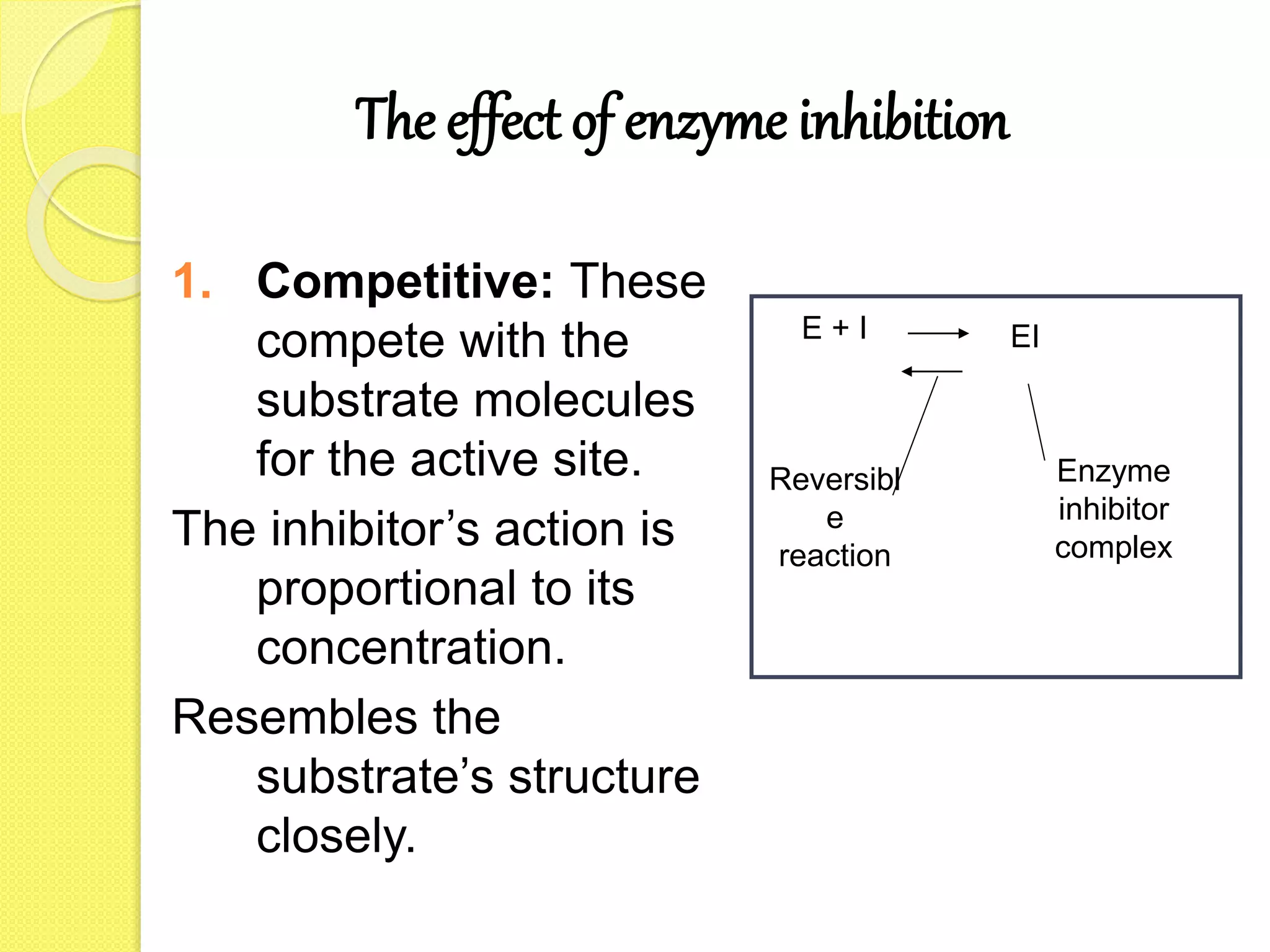
1. Competitive: These
compete with the
substrate molecules
for the active site.
The inhibitor’s action is
proportional to its
concentration.
Resembles the
substrate’s structure
closely.
Enzyme
inhibitor
complex
Reversibl
e
reaction
E + I EI
The effect of enzyme inhibition
2. Non-competitive: These are not influenced
by the concentration of the substrate. It
inhibits by binding irreversibly to the enzyme
but not at the active site.
Examples
 Cyanide combines with the Iron in the
enzymes cytochrome oxidase.
 Heavy metals, Ag or Hg, combine with –SH
groups.
These can be removed by using a chelating
agent such as EDTA.
Applications of inhibitors
 Negative feedback: end point or end
product inhibition
 Poisons snake bite, plant alkaloids and
nerve gases.
 Medicine antibiotics, sulphonamides,
sedatives and stimulants
Thank you for your
attention

enzyme and coenzym

  • 1.
  • 2.
    Co-factor  A cofactoris a non- protein chemical compound that is required for the protein's biological activity. These proteins are commonly enzymes, and cofactors can be considered "helper molecules" that assist in biochemical transformations.  Cofactors can be divided into two broad groups: organic cofactors, such as flavin or heme, and inorganic cofactors, such as the metal ions Mg2+, + 2+
  • 3.
    Coenzyme  loosely boundcofactors termed coenzymes  Any of a number of freely diffusing organic compounds that function as cofactors with enzymes in promoting a variety of metabolic reactions.  Coenzymes are a type of cofactor and they are bound to enzyme’s active sites to aid with their proper functioning.  Coenzymes which are directly involved and altered in the course of chemical reactions are considered to be a type of secondary substrate.
  • 4.
    Coenzymes as vitamins Many coenzymes are closely related to vitamins. Some of them are important growth factors.  Coenzymes are the precursors of vitamins.  A vitamin is a main component of an coenzyme endowed with bio catalytic functions.  Coenzymes involved in transfer of hydrogens are called hydrogen transferring enzymes and those which transfer a specific group are known as group transferring coenzymes.
  • 5.
    Role of coenzyme The function of coenzymes is to transport groups between enzymes.  Chemical groups include hydride ions which are carried by coenzymes such as NAD,  phosphate groups which are carried by coenzymes such as ATP  acetyl groups which are carried by coenzymes such as coenzyme A.  Coenzymes which lose or gain these chemical groups in the course of the reaction are often reformed in the same metabolic pathway. For example NAD+ used in glycolysis and the citric acid cycle is replaced in the electron transport
  • 6.
    Function of coenzyme The coenzyme is essential for the biological activity of the enzyme.  A coenzyme is a low molecular weight organic substance, without which the enzyme cannot exhibit any reaction.  One molecule of the coenzyme is able to convert a large number of substrate molecules with the help of enzyme.
  • 7.
    Important coenzyme Alcohol dehydrogenase CoenzymeA Flavin adenine dinucleotide (FAD) Nicotinamide adenine dinucleotide (NAD) Adenosine triphosphate (ATP)
  • 8.
    The effect ofenzyme inhibition 1. Competitive: These compete with the substrate molecules for the active site. The inhibitor’s action is proportional to its concentration. Resembles the substrate’s structure closely. Enzyme inhibitor complex Reversibl e reaction E + I EI
  • 9.
    The effect ofenzyme inhibition 2. Non-competitive: These are not influenced by the concentration of the substrate. It inhibits by binding irreversibly to the enzyme but not at the active site. Examples  Cyanide combines with the Iron in the enzymes cytochrome oxidase.  Heavy metals, Ag or Hg, combine with –SH groups. These can be removed by using a chelating agent such as EDTA.
  • 10.
    Applications of inhibitors Negative feedback: end point or end product inhibition  Poisons snake bite, plant alkaloids and nerve gases.  Medicine antibiotics, sulphonamides, sedatives and stimulants
  • 11.
    Thank you foryour attention