Introduction
• Enzymes areprotein molecules that are present in all living things.
• They speed up and target chemical reactions, in many cases increasing
the rate of reaction millions of times.
• For example, they aid digestion, metabolise and eliminate waste in
humans and animals, and play a crucial role in muscle contraction.
• Enzymes have been used unknowingly in food production, e.g. dough
making, for centuries. They can be obtained by extraction from plants or
animals or by fermentation from micro-organisms.
• Enzymes are the body’s labor force to perform every single
function required for our daily activities and are required to keep us alive
3.
Introduction
• Life dependson a well-orchestrated series of chemical reactions.
Many of these reactions, however, proceed too slowly on their own to
sustain life. Hence nature has designed catalysts, which we now refer
to as enzymes, to greatly accelerate the rates of these chemical
reactions.
• Today enzymes continue to play key roles in many manufacturing
processes and are ingredients in numerous consumer products.
• Enzymes are also fundamental interest in the health sciences, since
many disease processes can be linked to the aberrant activities of one
or a few enzymes.
• Hence, much of modern pharmaceutical research is based on the
search for potent and specific inhibitors of these enzymes as
therapeutic targets.
Introduction
• From DNAto Protein through transcription and translation.
• The genetic code is universal such that a gene from one organism can
be transcribed and translated in another organism.
6.
6
DNA holds allof the genetic information necessary
to build a cell’s proteins. The nucleotide sequence
of a gene is ultimately translated into amino acid
sequence of the gene’s corresponding
7.
7
• The DNAencoded sequence of amino acids gives
four different structure of proteins:
–Primary structure
–Secondary structure
–Tertiary structure
–Quaternary
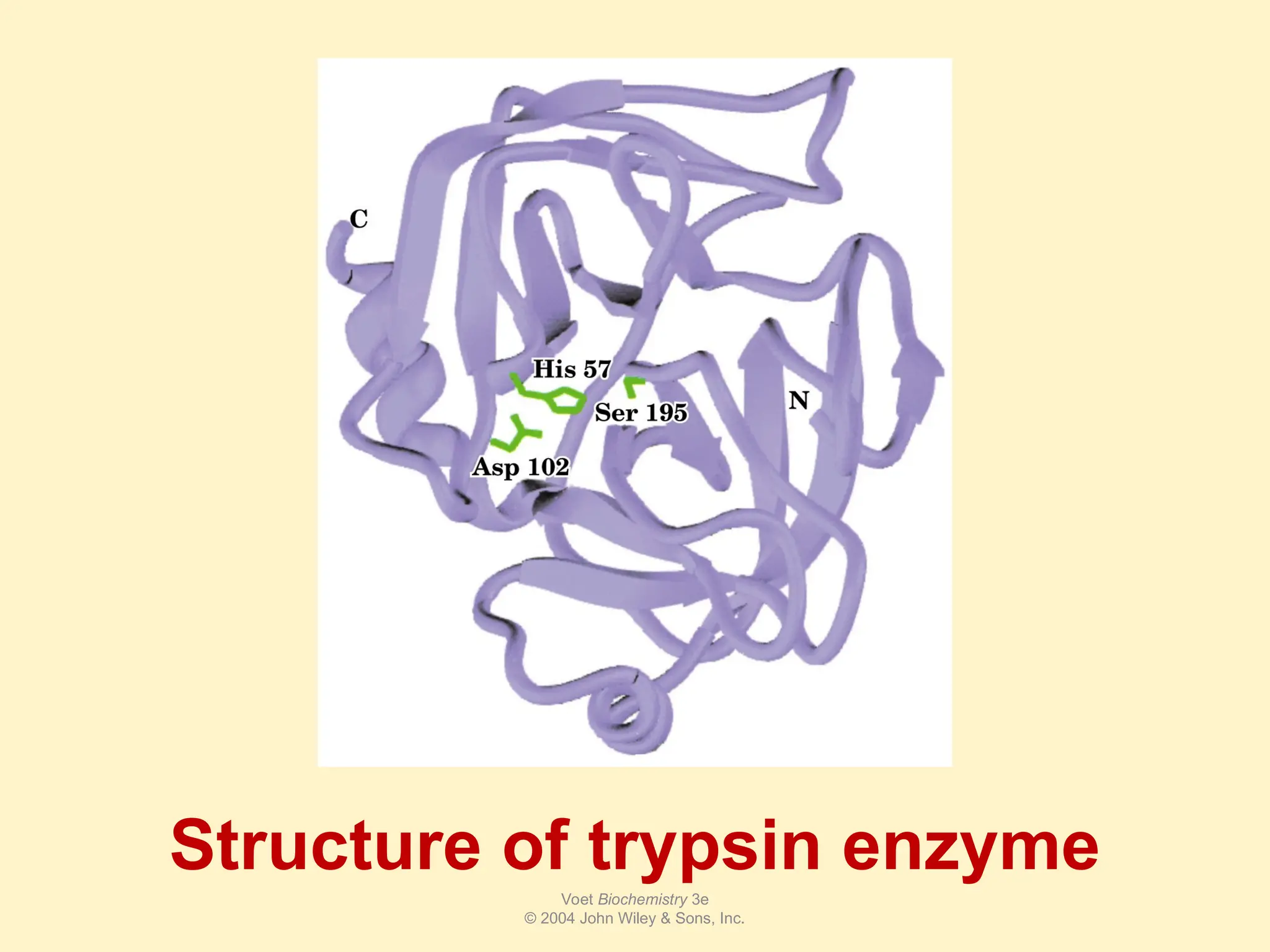
• Enzymes are proteins, they are at the quaternary level
of protein structure
• This is obtained through folding
Introduction
• Active site-
–The region of enzyme that binds with the
substrate and where catalysis occurs
– All enzymes have one or more active sites
• Specificity-
– Enzymes bind to their specific substrates
in the active site to convert them to
product(s)
• Regulation-
– Enzymes can be activated or inhibited so
that the rate of product formation
responds to the need of the cell
11.
1
1
• Ordinary chemicalreactions convert reactants to products but
enzyme catalyzed reactions convert a SUBSTRATE or SUBSTRATES
to products.
• Substrate is the substance that enzymes act on, and convert it into
products.
• Some enzymes require no chemical groups for activity other
than their amino acid residues in their active site.
– Such enzymes are referred to as simple enzymes because they
consists only of protein in their active form.
• Usually only a few of the 20 amino acid residues or side chains
participate directly in enzyme catalysis.
• The best examples of polar amino acids participants in catalysis
are Cys, His, Ser, Asp, Glu and Lys.
Introduction
12.
12
• Some enzymesmay require an additional chemical compound
called cofactor for proper function.
– such enzymes are active only when they combine with their
cofactors.
• A cofactor is a small non-protein molecules that is bound (either
tightly or loosely) to an enzyme and is required for catalysis.
• Cofactors are either
– inorganic ions or
– small organic molecules
• Therefore we can also define a cofactor as an inorganic ion or
a small organic molecule that aid in enzyme catalysis
Introduction
13.
• The commonmetal ions cofactors required for complete enzyme
activity include Mg2+, Cu2+, Fe2+, Fe3+, Ca2+, Zn2+, Mn2+, Ni2+ etc.
• Metal ions in the active site are attached to one or more amino
acid side-chains.
• The metal ions have various functions, such as electron exchange
and substrate stabilization.
Introduction
14.
12
• The metalions that are tightly bound to the enzyme molecule lead to
the formation of metalloenzymes.
– That is metalloenzymes contain firmly bound metal ions in their
active sites (examples: Fe, Zn, Cu, Co).
– The cations in metalloenzymes participate directly in catalysis
• Small organic molecules that serve as cofactors in enzymatic
reactions are called Coenzymes.
– Coenzymes are either loosely or tightly bound to the enzyme
molecule.
• Coenzymes preparethe active site for proper substrate binding
and/or participate in catalysis.
• They are required in small quantities and are not destroyed during the
reaction.
• A coenzyme or a metal ion that is covalently bound to the enzyme
protein is called a prosthetic group
Introduction
15.
• For example,a Zn2+ ion in the active site of carboxypeptidase A
promotes hydrolysis of a C-terminal amino acid from a
polypeptide by interacting with the carbonyl oxygen
• The Zn2+ activates the carbonyl in a similar way as an acid catalyst
16.
• Mg2+ andZn2+ ion in the active site of alkaline phosphatase
promotes catalysis
Active-site Schematics of E. coli Alkaline Phosphatase
18.
18
• The proteincomponent of an enzyme without its
necessary prosthetic group is called an APOENZYME or
apoprotein.
• Whereas the active enzyme with its needed prosthetic
group bound or covalently attached is called the
HOLOENZYME
– i.e. a completel catalytically active enzyme together with its
cofactor.
• Holoenzyme = Apoenzyme + Cofactor (active)
(inactive) (inactive)
• The functional unit of an enzyme is referred to as a
holoenzyme. It is often made up of an apoenzyme (the
protein part) and a coenzyme (the non-protein part).
• A zymogen or proenzyme is the precursor form of the
enzyme in an inactive form
• An activator is any substance that increases the rate of an
enzyme-catalyzed reaction.
20
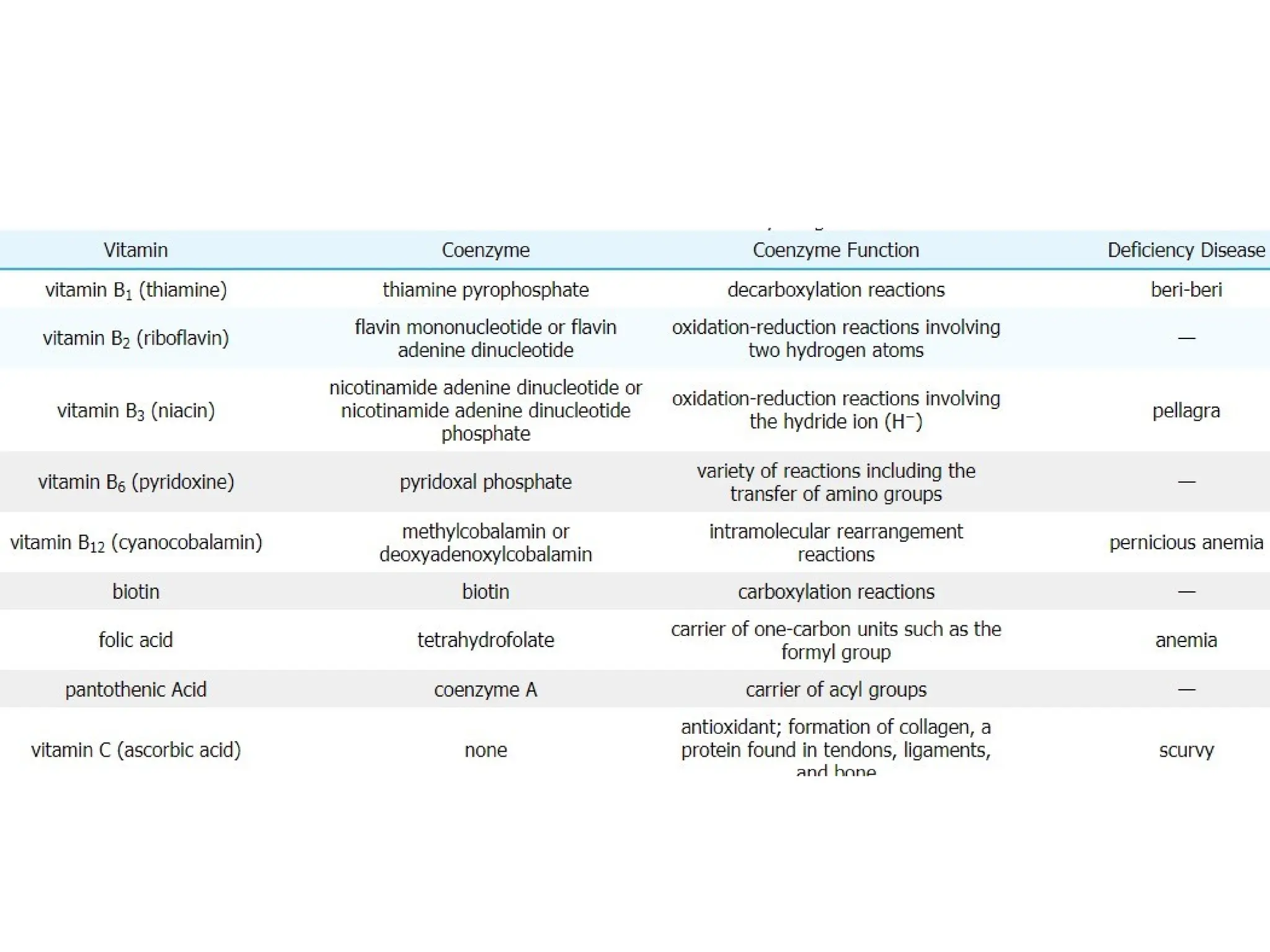
• Coenzymes usein enzyme catalyzed reactions are
metabolically active forms of vitamins.
• The wordvitamin comes from the
Greek word
“VITAMINE” which means vital for life
–vita = life
–amine = containing nitrogen (the first
vitamins discovered contained nitrogen)
• Vitamins are organic compounds or molecules
required in the diet in very small quantities for
metabolism, normal growth and maintenance
of health but cannot be synthesized in the
body either at all or in adequate quantities.
21.
VITAMIN
• Although thebody is able to produce part or even
all of its requirements for some of the vitamins
examples:
– vitamin D from cholesterol and
– niacin from tryptophan.
• However, vitamins must be provided in the diet.
• The areusually converted to the metabolically
active form called coenzyme which participate in
biochemical reactions i.e.
– many coenzymes are derived from water-soluble
vitamins
• All of the water-soluble vitamins and two of the
fat-soluble vitamins, A and K, function as
cofactors or coenzymes.
• Coenzymes participate in numerous
biochemical reactions involving energy release or
catabolism, as well as the accompanying anabolic
reactions.
25.
Thiamin
Thiamin is rapidlyconverted to its active form, thiamin
pyrophosphate
Thiamin pyrophosphate (TPP): coenzyme
• Thiamin is also known as vitamin B1 .
• It was the first B vitamin to be identified
• It is a derivative of substituted pyrimidine and a thiazole linked by
a methylene bridge.
26.
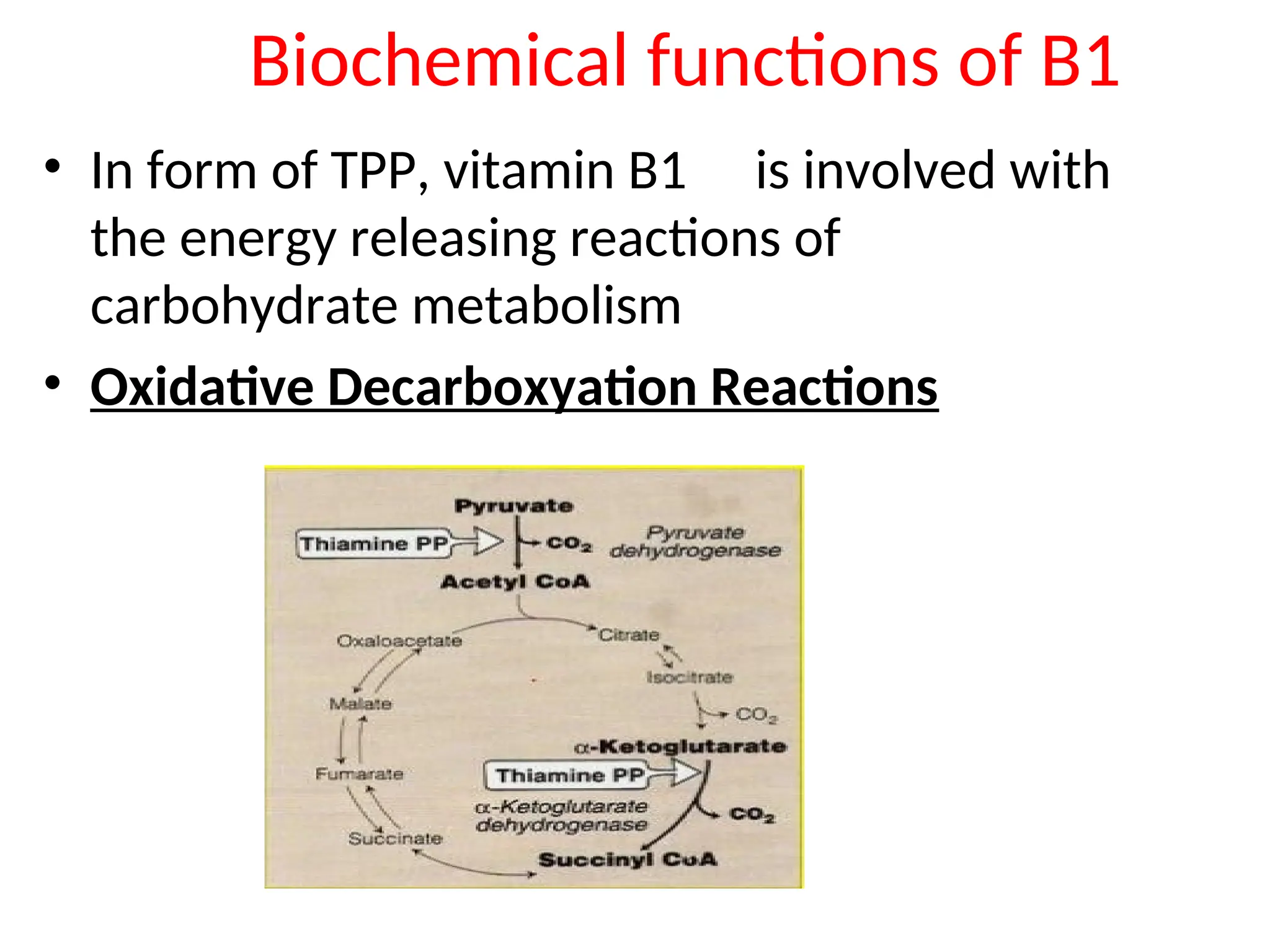
Biochemical functions ofB1
• In form of TPP, vitamin B1 is involved with
the energy releasing reactions of
carbohydrate metabolism
• Oxidative Decarboxyation Reactions
27.
RIBOFLAVIN
• The name"riboflavin" comes from
– Ribose (the sugar whose reduced form, ribitol,forms
part of its structure) and
– Flavin (the ring-moiety which imparts the yellow
colour to the oxidized molecule)
• Riboflavin is also known as vitamin B2
• It is a heterocyclic isoalloxazine ring
attached to a sugar alcohol, ribitol.
28.
RIBOFLAVIN
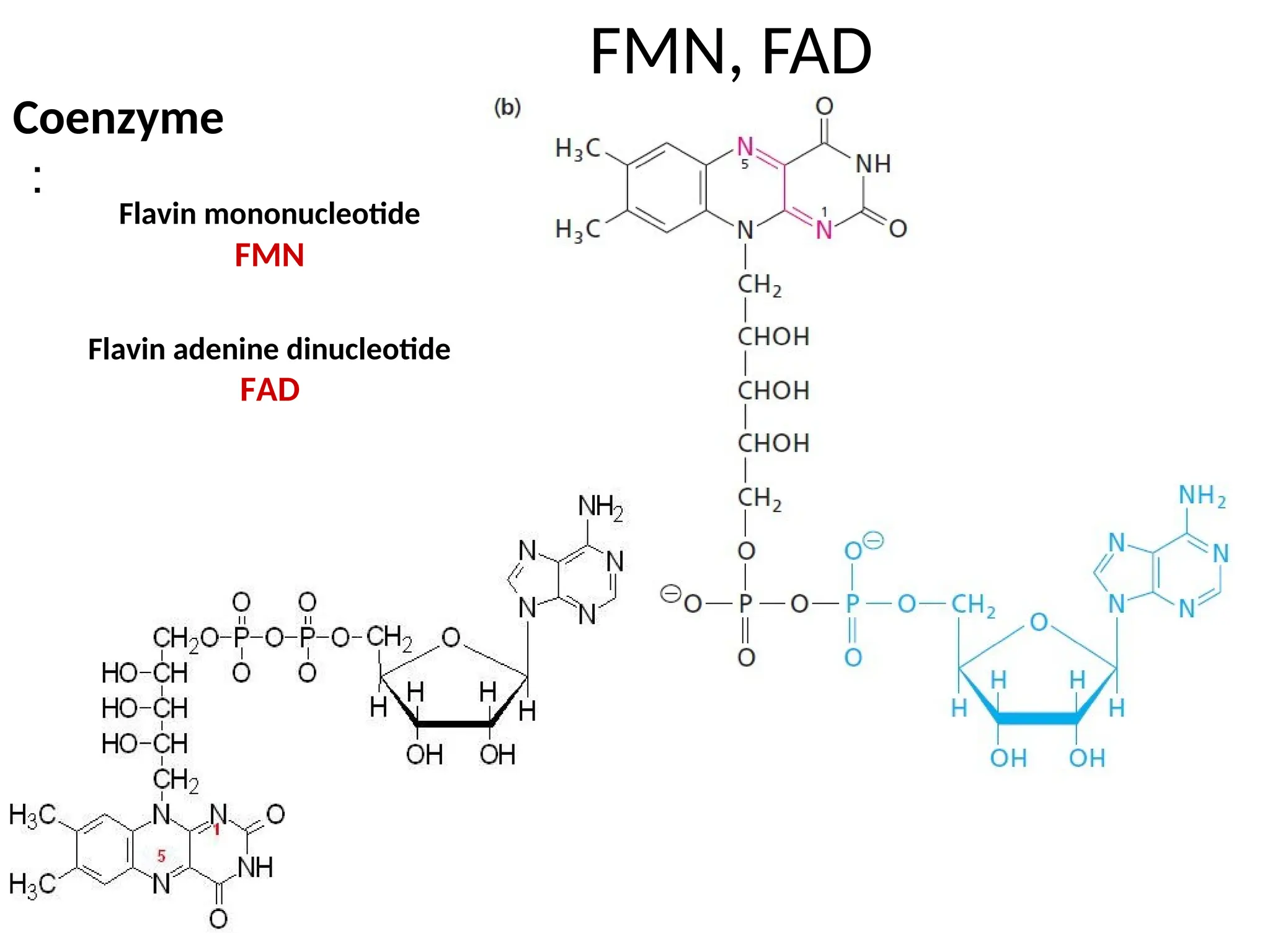
• The coenzymesforms of riboflavin are:
– flavin mononucleotide (FMN)
– Flavin adenine dinucleotide (FAD)
Both coenzymes are formed in the intestine and liver
• The reduced forms of FMN and FAD are
– FMNH2 and
– FADH2, respectively.
• The enzymes that require FMN or FAD as cofactors
are termed flavoproteins.
• Flavoproteins are involved in a wide range of redox
reactions, e.g. succinate dehydrogenase and xanthine
oxidase.
29.
CONVERSION TO THECOENZYME FORM
FMN → ATP-dependent phosphorylation of riboflavin
FAD → further reaction with ATP in which its AMP moiety
is transferred to FMN.
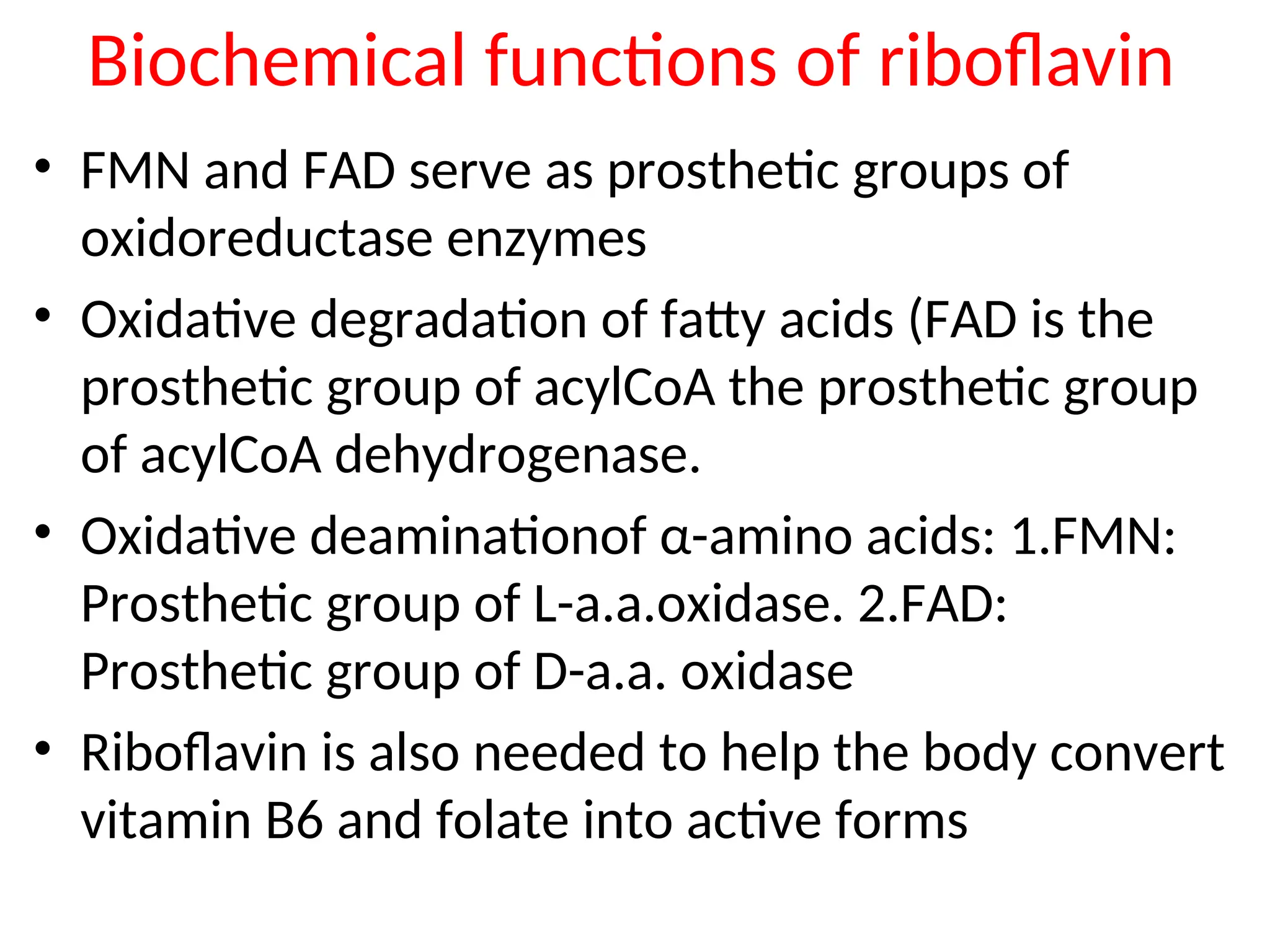
Biochemical functions ofriboflavin
• FMN and FAD serve as prosthetic groups of
oxidoreductase enzymes
• Oxidative degradation of fatty acids (FAD is the
prosthetic group of acylCoA the prosthetic group
of acylCoA dehydrogenase.
• Oxidative deaminationof α-amino acids: 1.FMN:
Prosthetic group of L-a.a.oxidase. 2.FAD:
Prosthetic group of D-a.a. oxidase
• Riboflavin is also needed to help the body convert
vitamin B6 and folate into active forms
32.
Niacin
• Niacin consistof two vitamers:
– nicotinic acid
– nicotinamide
• It is also known as vitamin B3
• It is unique among the B vitamins in that it can be
synthesized from Tryptophan in the body.
– So it is not strictly considered a vitamin.
• However, the conversion is inefficient and most
people required dietary sources of both tryptophan
and niacin.
33.
Niacin
• Both nicotinicacid and nicotinamide can serve as the
dietary source of vitamin B3.
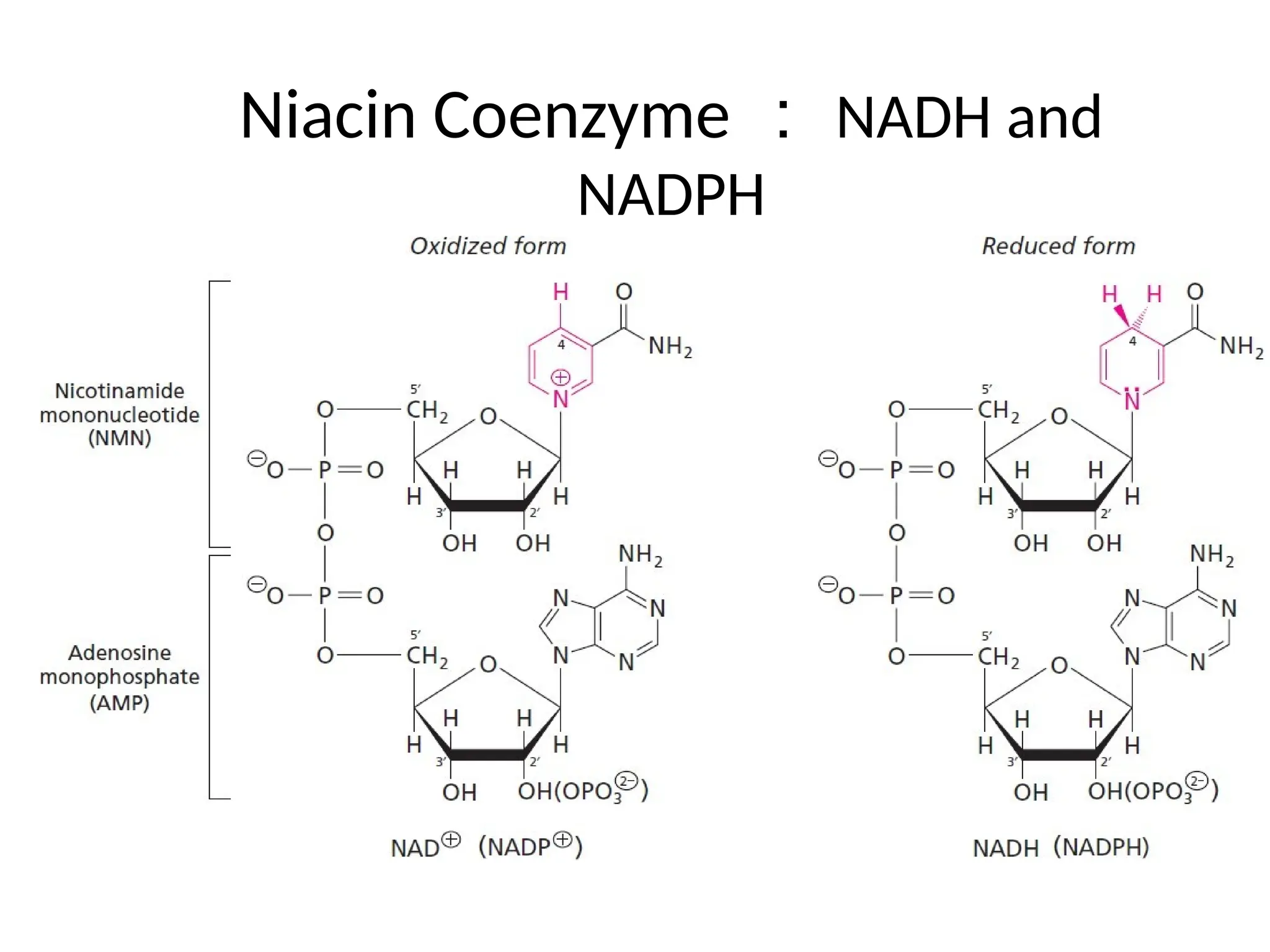
• Niacin is required for the synthesis of the active
forms of vitamin B3
– Nicotinamide adenine dinucleotide (NAD+)
– Nicotinamide adenine dinucleotide phosphate (NADP+).
• Both NAD+ and NADP+ function as cofactors for
numerous dehydrogenases
• In the structure of coenzymes, nitrogen atom of
nicotinamide carries a positive charge due to
formation of an extra bond
• Hence coenzymes are NAD+ & NADP+
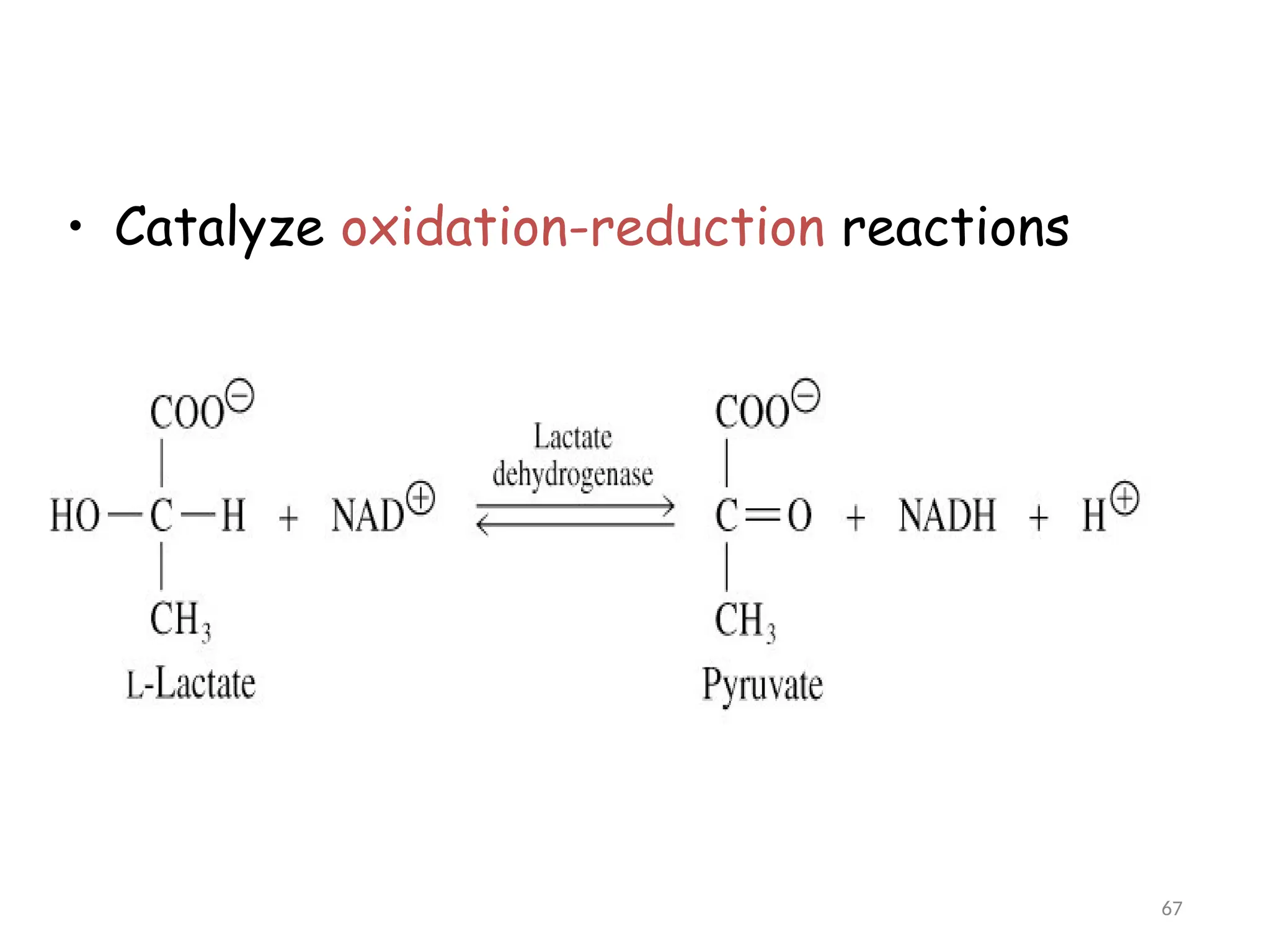
2. Lactate Dehydrogenase
Itcatalyses the interconversion of lactate to
pyruvate
It occurs in anaerobic conditions (pyruvate to lactate
in muscle and erythrocytes)
Gluconeogenesis (lactate to pyruvate in the liver)
38.
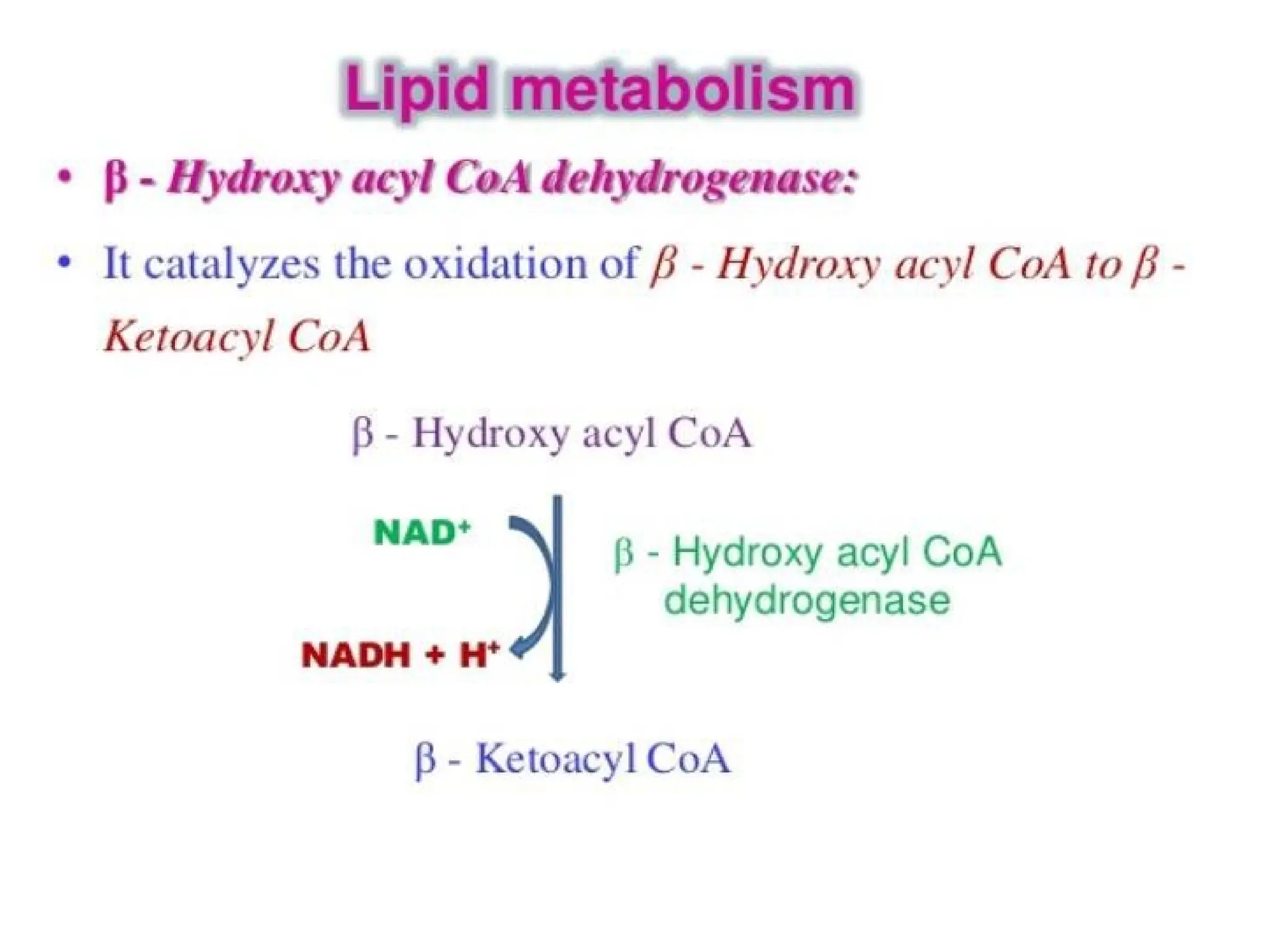
3. Pyruvate DehydrogenaseComplex
Pyruvate dehydrogenase catalyses the conversion of
pyruvate to acetyl CoA
It utilizes NAD which is reduced to form NADH + H+
42.
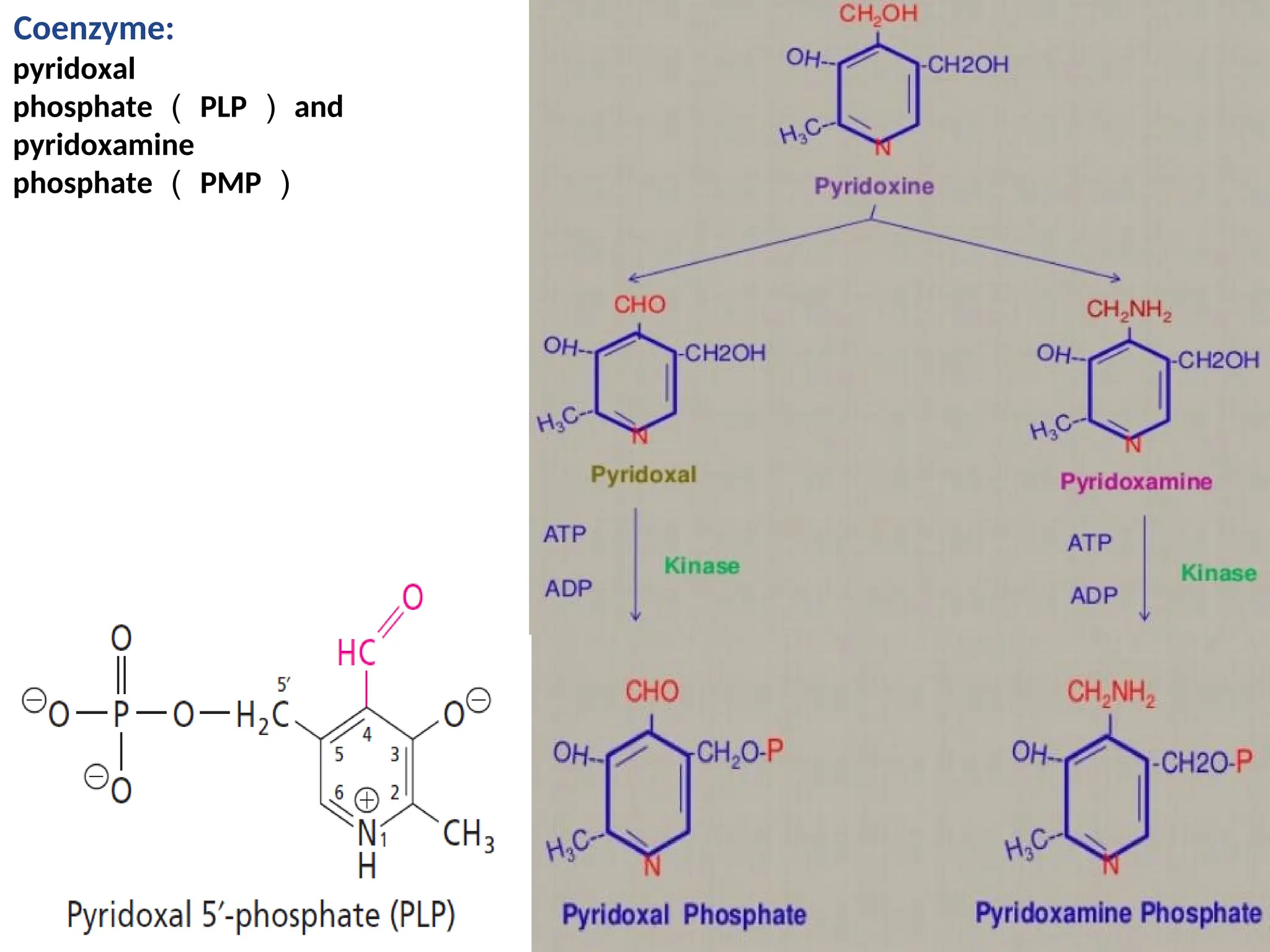
Vitamin B₆
• VitaminB₆ consists of 3 closely related
pyridine derivatives:
– Pyridoxine,
– Pyridoxal
– Pyridoxamine
• All the three compounds are efficiently converted to
the biologically active form of vitamin B₆ pyridoxal
phosphate in the intestine catalysed by pyridoxal
kinase
Nature and Propertiesof Enzymes
• All enzymes are proteins or protein in
nature (except for a small group of catalytic RNAs)
– RNA molecules with
enzymatic called ribozymes
– But not all proteins are enzymes
activity are
• They are present at extremely low
intercellular concentration (e.g. 10-7 molar)
• Small quantities are needed to catalyze reactions
• They are not altered or consumed during reaction
• They are reusable.
• They are not part of the reactants or products.
49.
Nature and Propertiesof Enzymes Cont…
• So any chemical reaction which proceeds in the
presence of an enzyme will also proceed in the
absence of the enzyme but at a much slower rate.
– Enzyme accelerate reaction rates several fold
compared to the rate of the same reaction in the
absence of the enzyme.
–Enzymes are highly specific
–Interact with only one or a few of the
substrates
–They catalyze only one type of reaction
50.
Chemical catalysts versusenzymes
• Regardless of their chemical nature, all catalysts
including enzymes, exhibit several common features:
• Both increase the rate of chemical reaction
• Both lower the activation energy needed to start a reaction.
• Both are not consumed or used up during the reaction i.e.
they remain unchanged.
• Both are needed in small or minute quantities.
• Both do not alter equilibrium of the reactions they catalyzed
– They simply decrease the amount of time required to achieve
equilibrium.
– They have no effect on the position of the equilibrium and
therefore do not change the amount of free energy released or the
direction in which the reaction will proceed.
• Both act by forming transient complexes with substrate
molecules, ordering them in a manner that facilitates their
interaction.
• Both are reusable
51.
Unique properties ofenzymes
•Enzymes exhibit several unique features that
distinguish them from chemical catalysts routinely
encountered in inorganic chemistry.
•These unique properties of enzymes relate to their:
•They have active site
•Denaturation
52.
Unique properties ofenzymes cont…
• Higher reaction rates
– The rates of enzyme catalysed reactions are typically several
fold greater than those of the corresponding uncatalyzed
reactions and several orders of magnitude than those of the
corresponding chemically catalysed reactions.
• Milder reaction conditions
– Enzyme catalysed reactions occurs under milder
conditions such as; temperature, atmospheric pressure and near
neutral pH. While chemical catalysts often require elevated
temperature and pressure.
• Greater reaction specificity
– Enzymes have greater degree of specificity with respect to the kind of
reaction they catalyze as well as the identity of substrates acted
upon than chemical catalysts.
• They have capacity for regulation
– Ability to activate or inhibit enzymes can control which reactions occur and
when.
– The catalytic activities of many enzyme vary in response to regulations by
substances other than their substrates and products.
53.
Active site
• Theactive site of an enzyme is the region on the surface
of an enzyme that binds the substrate and convert it into
products.
• Active site of an enzyme possesses a unique
geometric shape and chemical properties that allow the
enzyme to recognize a specific substrate and bind with it.
• The basic characteristics of the active sites include:
• Very small size compare to the entire enzyme molecule
i.e. the active site of an enzyme occupies only a very
small portion of the enzyme molecule.
• The active site is also called the binding site or catalytic
site. That is the substrate binds with the enzyme at the
active site.
54.
Active site
• Itssequences of amino acid fold to form three
dimensional structure which is found as a cleft or
a cervices on the enzyme molecule.
– Enzymes must be larger than their active sites so that the
site chains responsible for binding and for catalyzing
reactions can be juxtaposed appropriately into three
dimensions such that the active site is always found
in a cleft or crevice.
• The active site is also called the binding site or
catalytic site. That is the substrate binds with the
enzyme at the active site. It has two distinct
functions binding substrate(s) and catalysis.
55.
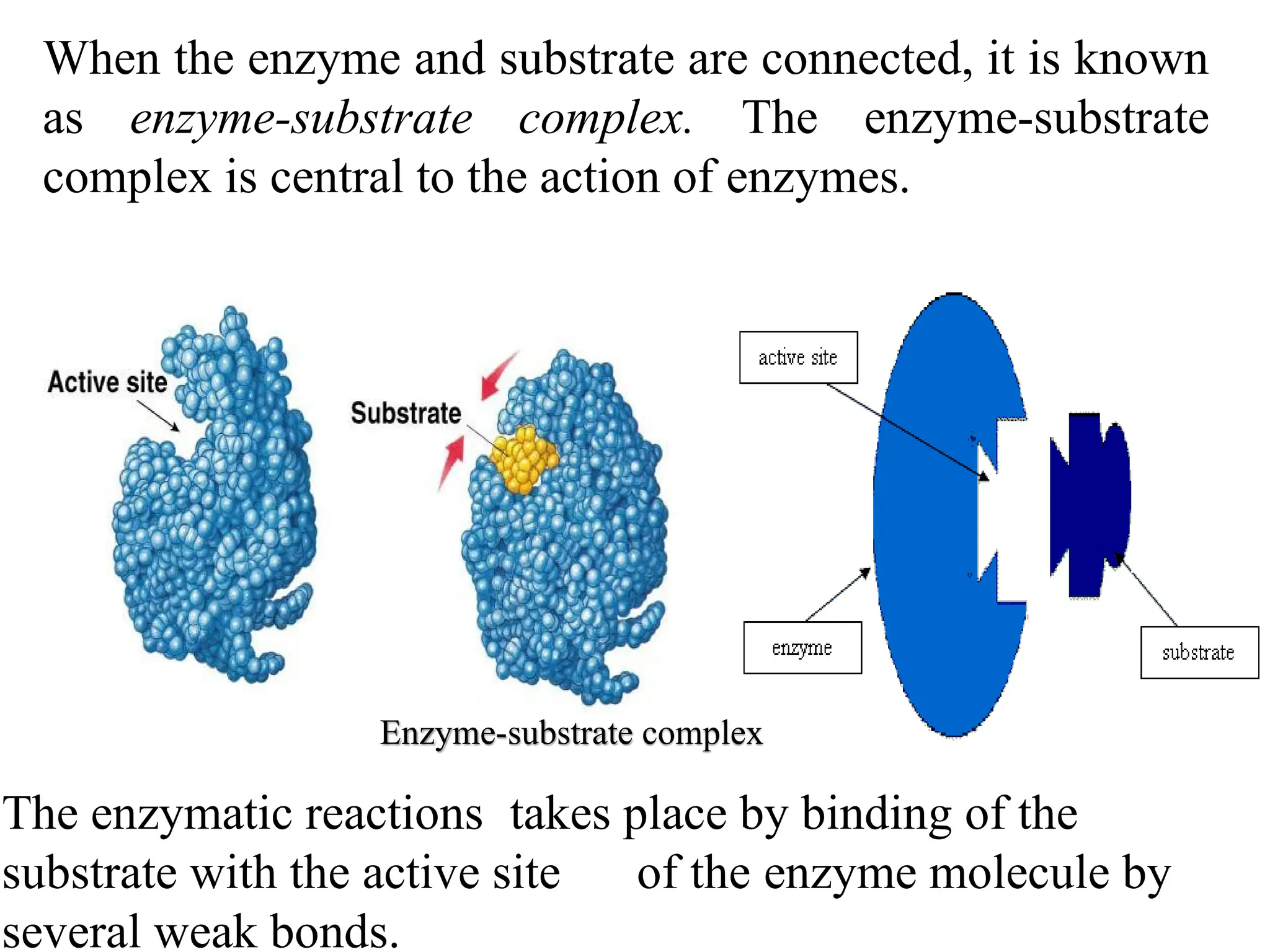
When the enzymeand substrate are connected, it is known
as enzyme-substrate complex. The enzyme-substrate
complex is central to the action of enzymes.
The enzymatic reactions takes place by binding of the
substrate with the active site of the enzyme molecule by
several weak bonds.
Enzyme-substrate complex
56.
Mechanisms of EnzymeCatalysis Cont…
• Acid-Base Catalysis
• Biochemical processes are promoted by proton
donors (acids) or proton acceptors (bases). That is
acid-base catalysis gives and take protons.
• The active sites of some enzymes contain amino acid
functional groups that can participate in the catalytic
process as proton donors or proton acceptors.
• General acid-base catalysis involves partial proton
transfer from a donor and partial proton abstraction
from an acceptor that lowers the activation energy of
the transition state.
• So, acid-base catalysts promote reactions by
increasing the strength of the nucleophile (proton
abstraction) and/or the stability of the leaving group
(proton donation).
57.
Mechanisms of EnzymeCatalysis Cont…
• Catalysis by Strain: Binding of enzyme to
substrates whose covalent bond are to be cleaved
in an unfavorable configuration thereby exerting
strain on the bonds ,stretching or distorting
bonds.
• Metal ion catalysis
• This involves a metal ion bound to the enzyme
interacts with substrate to facilitate binding,
stabilizes negative charges and participates in
oxidation reactions.
58.
Mechanisms of EnzymeCatalysis Cont…
• Covalent Catalysis
• Covalent catalysis accelerates reaction rates
through formation of transient covalent bond
between the enzyme and the substrate which
provides a reaction pathway with a lower
activation energy.
• Covalent
catalysis
involve
s
three stages:1)
nucleophilic reaction between enzyme and
substrate 2) electrophilic withdrawal of electrons
from substrate 3) elimination reaction (reverse of
stage 1)
•On completion of reaction, enzyme returns to its
original state. Cysteine, serine or histidine
residues on enzyme participate in covalent
59.
59
ENZYME NOMENCLATURE
• Nomenclatureis a system of names or terms, or
the rules for forming names.
• The principles of naming vary from discipline to
discipline.
• The act of assigning names to enzymes is called
enzyme nomenclature.
• The earliest enzymes discovered and studied were
few and were given trivial or nondescriptive
names as they were discovered
60.
60
Enzyme nomenclature cont…
•Example:
– Rennin- Curding of milk to start Cheese-making
processes
– Pepsin- hydrolyses protein at acidic pH.
– Trypsin- hydrolyses protein at mild alkaline pH
– Chymotrypsin
– Catalase etc
• These names are historical and gives no idea of
the source, function or reaction catalyzed by the
enzyme.
• No direct relationship to the substrate or reaction
type
61.
Enzyme nomenclature
• Enzymesare named
according to the
• type of reaction they
catalyze and/or their
substrate
• Substrate= the reactant
upon which the specific
enzyme acts
• –Enzyme physically binds
to the substrat
• Suffix of an enzyme- ase
–Lactase, amylase, lipase or protease
Denotes an enzyme
•Some digestive enzymes have the suffix –in
–Pepsin, trypsin& chymotrypsin
•Prefix denotes the type of reaction the enzyme
catalyzes
–Oxidase: redox reaction
–Hydrolase: Addition of water to break one
component into two parts
• Substrate identity is often used together with the
reaction type
–Pyruvate carboxylase, lactate
dehydrogenase
62.
62
Enzyme nomenclature cont…
•The nomenclature was later improved upon by
adding the suffix -ase to the name of the
substrate with which the enzyme functions i.e.
react with.
– In most cases, enzyme names end with –ase
• Example:
Substrate
•α-
amylose
•Lactose
•Maltose
•Lipid(fat)
•Urea
•Cellobios
e
Enzyme
α-amylase
Lactase
Maltase
Lipase
Urease
Cellobiase
Fumarase
63.
63
Enzyme nomenclature cont…
•In the 1950’s the increasing amounts of known
enzymes were causing confusion. No
official naming system for enzymes.
• The IUBMB created the International Commission
on Enzymes in 1956 to deal with enzyme
nomenclature
• Later replaced with the Nomenclature
Committee of the International Union of
Biochemistry and Molecular Biology (NC-IUBMB)
64.
Enzyme nomenclature cont…
IUBMBhas recommended system of nomenclature for enzymes &
according to them each enzyme is assigned with two names:
Trivial name (common name, recommended name).
Systemic name ( official name ).
Systemic name
Each enzyme is characterized by a code no.called Enzyme
Code no. or EC number and contain four Figure (digit)
separated by a dot. e.g. EC m. n. o. p
First digit represents the class; Second digit stands for
subclass ;
Third digit stands for the sub-sub class or subgroup; Fourth
digit gives the serial number of the particular enzyme in the
list.
e.g. EC 2.7.1.1 for hexokinase.
65.
107
ENZYME CLASSIFICATION
• Themost accepted classification of enzymes is based on
the types of reactions that they Catalyze.
• Enzymes are classified into six major classes according to
the reaction catalyzed (EC number Classification)
66.
EC 1. Oxidoreductases
•These groups of enzyme catalyse catalyze the
transfer of electrons between species i.e., oxidation
and reduction reaction.
• They act on many chemical groups to add or remove
hydrogen atoms. They are subdivided into:
• Dehydrogenases:
– which catalyse the removal of 2 atoms of hydrogen from
substrates and their transference to a co-acceptor. (They
remove 2H to form double bonds).
• Oxidases:
– They catalyse the direct reduction of oxygen (oxidation).
• Oxygenases:
– They catalyse the incorporation of oxygen into
substratemolecule.
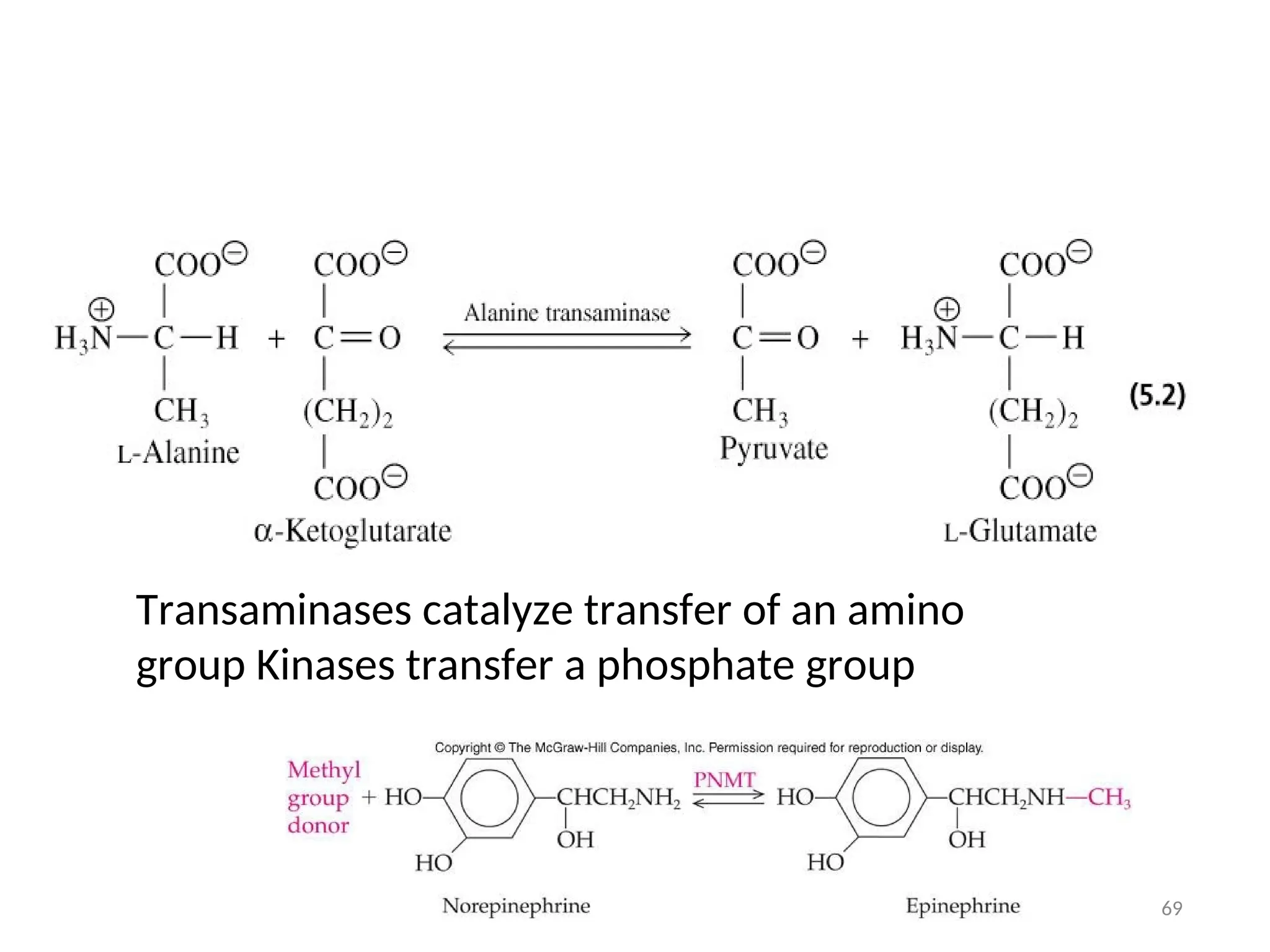
EC 2. Transferases
•These are enzymes that catalyze the transfer of a
functional group from one molecule to another.
– Transferases bring about the exchange of groups between
donor and acceptor molecules.
AB+CD →AC+BD
• They are subdivided into:
• Amino transferases:
– These bring about the exchange of amino and keto group
between an amino acid and a keto acid.
• Kinases:
– These bring about the transfer of a phosphate radical using
ATP as the donor or ADP acceptor.
• Phosphorylases:
– which are phosphorylytic analog of the hydrolytic enzymes.
They catalyse the splitting of the substrates with a molecule
of phosphoric acid instead of water.
EC 3. Hydrolases
•These groups of enzymes employ water to cleave
covalent bonds. They include the digestive enzymes.
They catalyze the hydrolytic cleavage of C-C, C-O, C-
N, P-O, and certain other bonds, including acid
anhydride bonds
• They catalyse this type of reaction.
• AB + H2O→ AOH +HB
• This group may be subdivided according to the type
of substrates acted on.
• Peptidases
– Enzymes (proteolytic enzymes or peptide hydrolase)
which catalyse the hydrolysis of the peptide bonds.
71.
EC 4. Lyases
•These enzymes catalyze non-hydrolytic cleavage of
various bonds
• Lyases catalyze removal of groups to form double
bonds or the reverse break double bonds
– Decarboxylases
– Synthases
– Add Water, Ammonia or Carbon dioxide across
double bonds, or remove these elements to
produce double bonds.
• Examples:
– Fumarase.
– Carbonic anhydrase.
72.
EC 5. Isomerases
•They are enzymes which catalyse internal
rearrangement within a molecule and
therefore do not involve the addition or
removal of group.
• They carry out many kinds of isomerization:
• L to D isomerizations.
• Mutase reactions (Shifts of chemical
groups).
• Examples:
– Isomerase.
– Mutase.
– Epimerases
73.
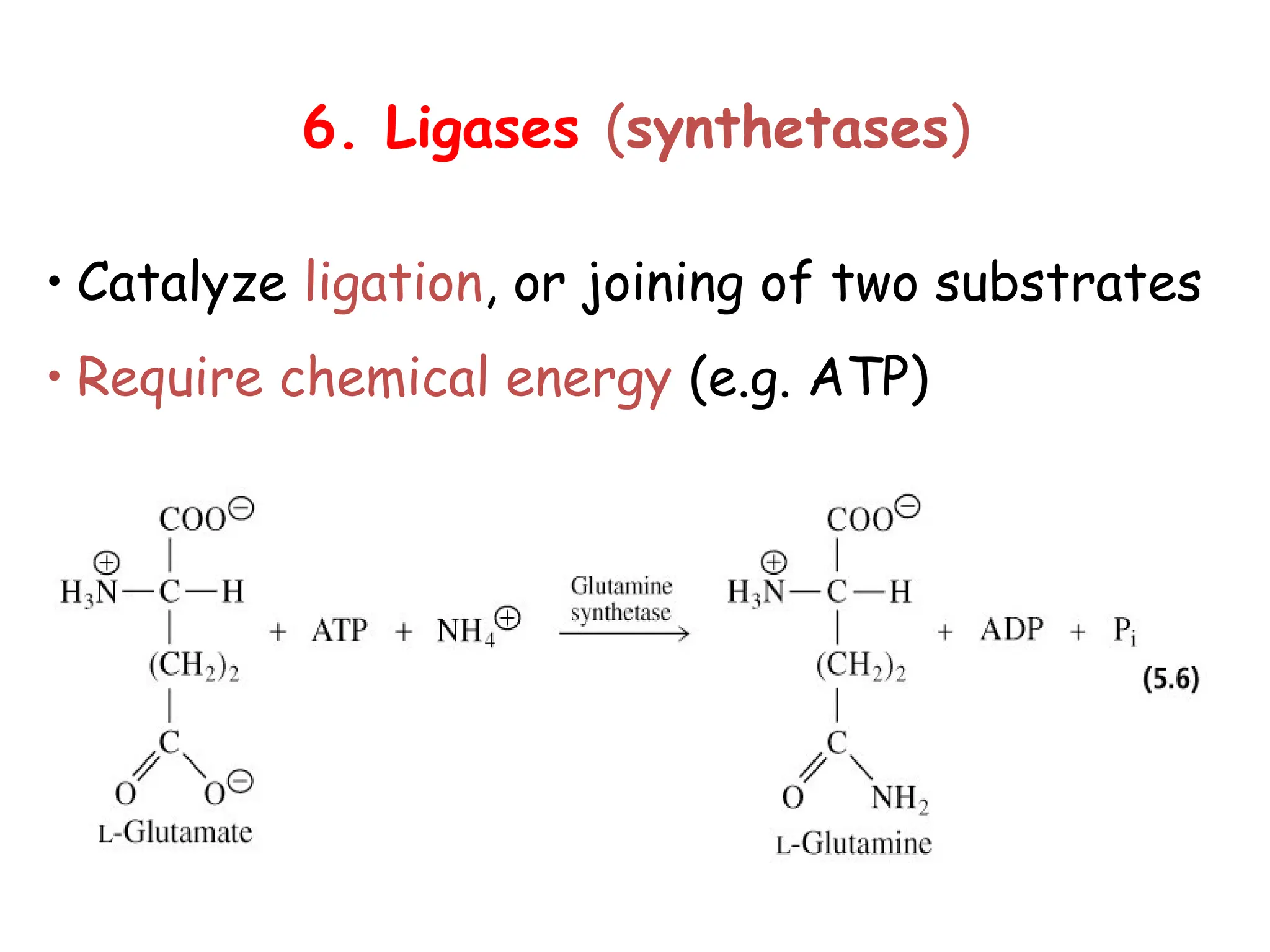
6. Ligases (synthetases)
•Catalyze ligation, or joining of two substrates
• Require chemical energy (e.g. ATP)
74.
Enzyme specificity
Enzyme specificity
•Enzymes are highly specific
• Interact with only one or a few of the substrates
• Specificity refers to the ability of an enzyme to discriminate
between two competing substrates.
• Enzymes are highly specific in their action compared with
chemical catalysts.
• Enzymes can distinguish between closely related
– chemical species
– D and L isomers
– cis and trans isomers
– Diastereomers (glucose and galactose)
75.
Enzyme Specificity Cont…
•Enzymes have a high degree of specificity for
their substrates and the type of reactions they
catalyze.
• The specificity of enzymes is determined by its
active site.
• The formation of the enzyme substrate complex
can occur only if the substrate possesses groups
which are in the correct three dimensional
arrangement to interact with the binding groups
of the active site.
76.
Types of EnzymeSpecificity
• Enzymes exhibit different types of specificity
• (a) Substrate specifity-this may be absolute, relative or
broad:
– Absolute specificity: Some enzymes act on only one substrate.
Such enzymes are said to exhibit absolute specificity.
For example, succinate dehydrogenase, a key enzyme of
TCA cycle catalyzes only the oxidation of succinate to
fumarate.
– Absolute group specificity: Some other enzymes act on a very
small group of substrates having the same functional group
but at different rates. Such enzymes are said to exhibit
absolute group specificity. For example, alcohol
dehydrogenase oxidizes both ethanol and methanol which
have common hydroxyl group. Similarly, hexokinase not only
phosphorylates glucose but also fructose and mannose.
– Relative group specificity: Some other enzymes exhibit
relative group specificity where a given enzyme can act upon
more than one group of substrates. For example,
catalyzes the hydrolysis of both ester and amide
77.
Models of EnzymeSpecificity
• Enzymes are so specific because the active site of
each enzyme has the proper
– shape,
– size and
– charge
to bind certain substrates only and to catalyze the
conversion of these substrates to specific
products.
• There are two models that explain enzyme
specificity:
– The Lock and Key model by Emil Fischer
– The induced-fit model by Daniel Koshland
78.
Enzyme-substrate binding
• Twomodels have been proposed
– Lock and key binding
The lock and key model of enzyme specificity
proposed by Emil Fischer in 1894 holds that the
active site of an unbound enzyme is
complementary in shape to that of the substrate.
– Induced fit binding
The induced fit model proposed by Daniel Koshland in
1968 holds that the active site of an enzyme has a
shape complementary to that of the substrate only
after the substrate is bound to the enzyme.
79.
Lock and keybinding
The enzyme has an active
site that fits the exact
dimensions of the
substrate
80.
Induced fit binding
•After the binding of substrate, the
enzyme changes its shape to fit more
perfectly with substrate
82.
Induced-fit model cont…
•In the induced fit model, substrate does not fit precisely
into a rigid active site.
• Instead noncovalent interactions between the enzyme and
the substrate changes the structure of the active site
conforming it to the shape of the substrate.
• The induced-fit model of enzyme action assumes that the
enzyme active site:
–is a flexible pocket
–changes conformation to accommodate the substrate molecule.
• The induced-fit model replaced the lock and key model
because it accounts for the flexible nature of proteins of
which enzymes are.
84
ENZYME CATALYSIS
• Thecatalytic action of an enzyme is referred to as its
activity, is measured by determining the increase in
the reaction rate under precisely defined conditions.
• The catalytic ability of an enzyme is determined by
the active site because it is the region on the enzyme
responsible for binding substrate (and the prosthetic
group if any).
• Every chemical reaction is characterized by an
equilibrium constant which is a reflection of the
difference in energy between reactants and products
• Generally, enzymes increase the rate or velocity, V,
of many physiological reactions in biological
systems by lowering the activation energy of the
reactions they catalyze.
85.
Enzymes decrease activationenergy of a reaction
Enzymes decrease activation energy of a reaction
•It is believed that enzymes bind to their substrates and
lower the energy required for activation of the reaction, the
reaction occurs and the enzyme is then released unchanged
to be used again.
•In every chemical reaction, the reactants pass through a
transition state that has greater energy than that of the
reactants or products alone
•The difference in energy between the reactants and the
transition state is called the activation energy
•If the activation energy is available then the reaction can
proceed forming products
86.
• The initialinteraction of the enzyme with the
substrate leads to the formation of enzyme–substrate
complex (ES).
• Enzymes lower the activation energy by forming ES
complex.
• ES is formed through the interactions between the enzyme
and substrate. Each interaction releases a small amount of
energy to stabilize the complex.
• These interactions combine to lower the activation energy of
the reaction.
• The uncatalyzed reaction has a large activation energy, Ea,
than the catalyzed reaction
• In the catalyzed reaction, the activation
energy has been
• Lowered significantly leading to increased rate of the
reaction.
• This provides a lower energy route for conversion of
substrate to product.
87.
• An enzymereduces the activation
energy required for a reaction
• It provides an alternative transition
state of lower energy called the
enzyme-substrate complex and thus
speeds up the reaction
• Enzymes decrease the activation
energy but they do not alter the change
in the free energy (∆G)
Enzyme Activity orVelocity
Enzyme Activity or Velocity
• Velocity is the rate of a reaction
catalyzed by an enzyme
• Enzyme activity is expressed as:
mmoles of product formed/min/mg
enzyme
90.
Factors that affectenzyme
Factors that affect enzyme
activity
activity
• Effect of temperature
– Every enzyme has an optimal temp. for
catalyzing a reaction
– The rate of an enzyme reaction initially
increases with rise in temperature
– At high temp. enzymes are denatured
and become inactive
– In humans most enzyme have an
optimal temp. of 37o
C
91.
Factors that affectenzyme
Factors that affect enzyme
activity
activity
• Effect of pH
–Effect of pH on the ionizable groups
in the active site of enzyme or in the
substrate affect catalysis
–Every enzyme has an optimal pH for
catalyzing a reaction
–Most enzymes have highest activity
between pH 6 and pH 8
–Pepsin has highest activity at pH 2
Factors that affectenzyme
Factors that affect enzyme
activity
activity
• Effect of [E] and [S]
– The reaction velocity increases initially
with increasing [S]
– At low [S], the reaction rate is proportional
to [S]
– Further addition of substrate has no effect
on enzyme velocity (v)
– The rate of an enzyme reaction is directly
proportional to the conc. of enzyme if the
substrate concentration [S] is higher than
enzyme
94.
Enzyme kinetics
Enzyme kinetics
•The model of enzyme kinetics was
first proposed by Michaelis and
Menten in 1913 and later modified by
Briggs and Haldane
• The Michaelis Menten equation
describes the relationship of initial
rate of an enzyme reaction to the [S]
95.
Enzyme Kinetic
• Enzymekinetics offers a wealth of information on the mechanisms of
enzyme catalysis and on the interactions of enzymes with ligands,
such as substrates and inhibitors.
• Enzyme kinetics is the study of the rates of enzyme-catalyzed
reactions.
• Each time vary or increase the concentration of substrate, we must
measure the reaction velocity of the enzyme.
• The reaction velocity describes the rate at which the enzyme
operates on the substrate.




































![Factors that affect enzyme
Factors that affect enzyme
activity
activity
• Effect of [E] and [S]
– The reaction velocity increases initially
with increasing [S]
– At low [S], the reaction rate is proportional
to [S]
– Further addition of substrate has no effect
on enzyme velocity (v)
– The rate of an enzyme reaction is directly
proportional to the conc. of enzyme if the
substrate concentration [S] is higher than
enzyme](https://image.slidesharecdn.com/bch3201enzymesandbiocatalysis-jeb1-250810230923-99a09410/75/BCH3201-Enzymes-and-biocatalysis-JEB-1-ppt-93-2048.jpg)
![Enzyme kinetics
Enzyme kinetics
• The model of enzyme kinetics was
first proposed by Michaelis and
Menten in 1913 and later modified by
Briggs and Haldane
• The Michaelis Menten equation
describes the relationship of initial
rate of an enzyme reaction to the [S]](https://image.slidesharecdn.com/bch3201enzymesandbiocatalysis-jeb1-250810230923-99a09410/75/BCH3201-Enzymes-and-biocatalysis-JEB-1-ppt-94-2048.jpg)


