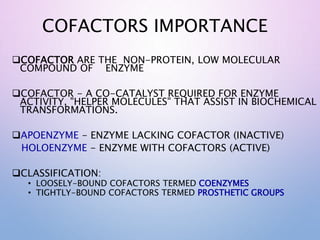
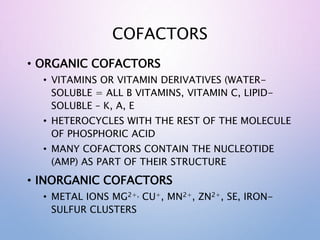
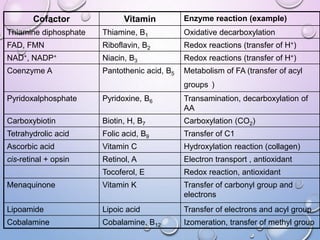
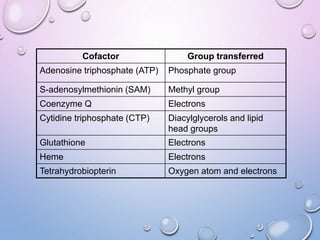
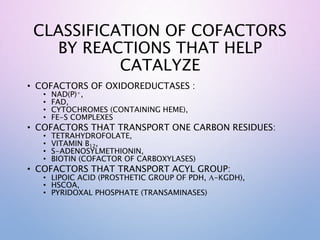
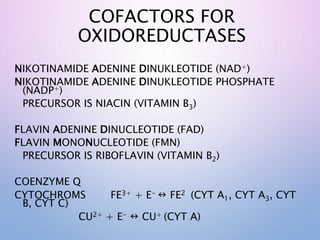
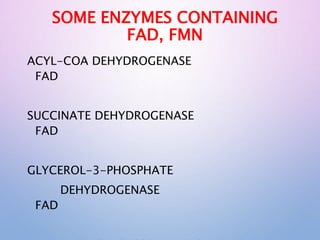
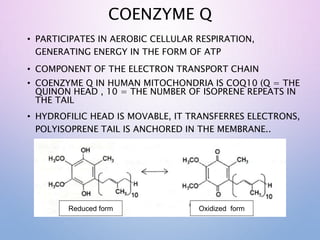
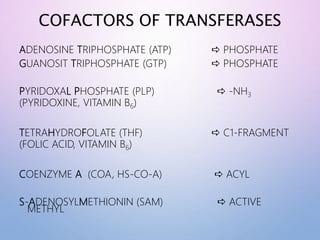
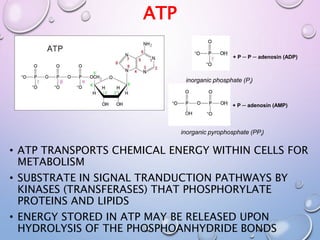
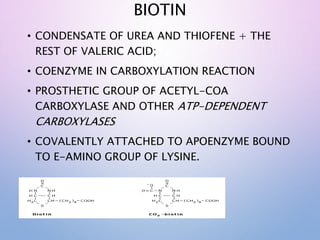
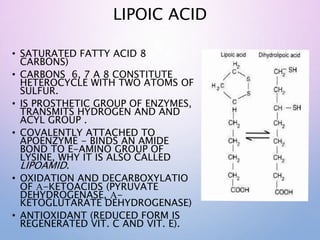
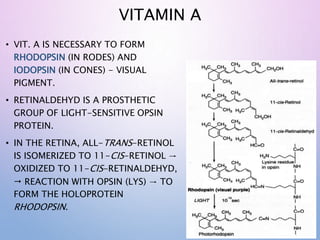
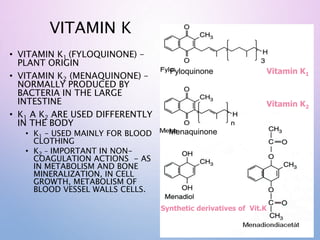
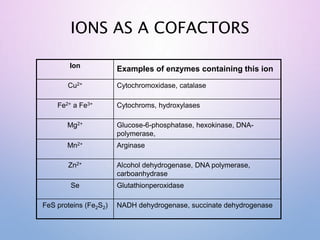
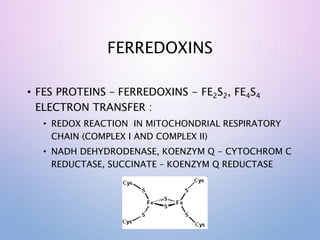
Enzyme cofactors are non-protein molecules required for enzyme activity. There are two main types - loosely bound coenzymes and tightly bound prosthetic groups. Cofactors include vitamins and derivatives, organic molecules like nucleotides, and inorganic ions. They help transfer atoms and groups between substrates in redox, group transfer, and other enzyme-catalyzed reactions. Examples are NAD+/NADP+, FAD, biotin, coenzyme A, thiamine pyrophosphate, and metal ions like iron, copper, and zinc in metalloproteins. Cofactors extend an enzyme's catalytic capability and allow it to function in many critical biochemical pathways.


![PERI-PROSTHETIC FRACTURE NAIL-PLATE CONSTRUCT [NPC].pptx](https://cdn.slidesharecdn.com/ss_thumbnails/drarunkumardrmohamedashrafperiprostheticfrasturenail-plateconstructnpc-260209164459-7e9d15a1-thumbnail.jpg?width=640&height=640&fit=bounds)
