Cholera is an infection in the small intestine caused by
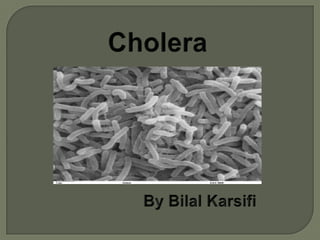
the bacterium Vibrio cholerae. The main symptoms are
profuse, watery diarrhea and vomiting. Transmission
occurs primarily by drinking water or eating food that has
been contaminated by the feces of an infected person,
including one with no apparent symptoms.
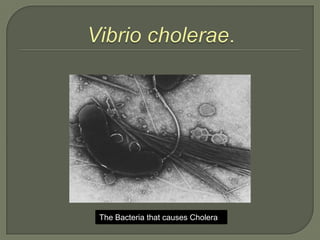
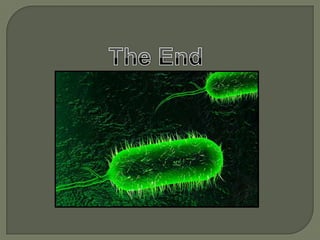
The Bacteria that causes Cholera
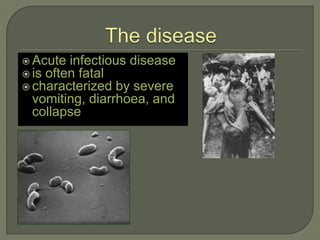
 Acute infectious disease
 is often fatal
 characterized by severe
 vomiting, diarrhoea, and
 collapse
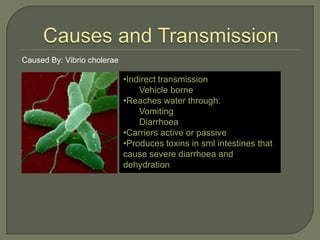
Caused By: Vibrio cholerae

                             •Indirect transmission
                                 Vehicle borne
                             •Reaches water through:
                                 Vomiting
                                 Diarrhoea
                             •Carriers active or passive
                             •Produces toxins in sml intestines that
                             cause severe diarrhoea and
                             dehydration
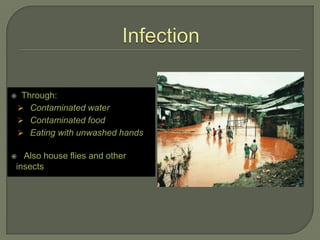
    Through:
     Contaminated water
     Contaminated food
     Eating with unwashed hands

 Also house flies and other
insects
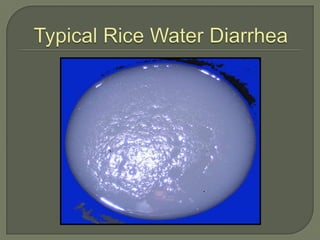
The primary symptoms of cholera are profuse, painless diarrhea
and vomiting of clear fluid. These symptoms usually start suddenly,
one to five days after ingestion of the bacteria. The diarrhea is
frequently described as "rice water" in nature and may have a fishy
odor.

An untreated person with cholera may produce 10 to 20 liters (3 to
5 US gal) of diarrhea a day with fatal results. For every symptomatic
person, 3 to 100 people get the infection but remain asymptomatic.


Cholera has been nicknamed the "blue death" due to a patient's
skin turning a bluish-gray hue from extreme loss of fluids.
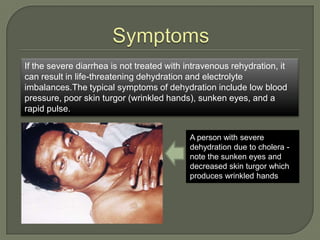
If the severe diarrhea is not treated with intravenous rehydration, it
can result in life-threatening dehydration and electrolyte
imbalances.The typical symptoms of dehydration include low blood
pressure, poor skin turgor (wrinkled hands), sunken eyes, and a
rapid pulse.


                                            A person with severe
                                            dehydration due to cholera -
                                            note the sunken eyes and
                                            decreased skin turgor which
                                            produces wrinkled hands
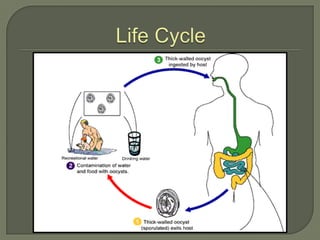
 Host  drinks water
 Bacteria moves through the stomach
 Reach the intestine & produce flagella
 Propel through mucus of the sm.
  intestine
 Produce toxin causing diarrhea
 Feces carry new bacteria into drinking
  water
When consumed, most bacteria do not survive the acidic conditions of
the human stomach. The few surviving bacteria conserve their energy
and stored nutrients during the passage through the stomach by
shutting down much protein production.

When the surviving bacteria exit the stomach and reach the small
intestine, they need to propel themselves through the thick mucus that
lines the small intestine to get to the intestinal walls where they can
thrive. V. cholerae bacteria start up production of the hollow cylindrical
protein flagellin to make flagella, the cork-screw helical fibers they
rotate to propel themselves through the mucus of the small intestine.
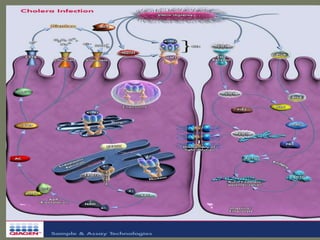
Once the cholera bacteria reach the intestinal wall they no longer
need the flagella to move. The bacteria stop producing the protein
flagellin to conserve energy and nutrients by changing the mix of
proteins which they express in response to the changed chemical
surroundings. On reaching the intestinal wall, V. cholerae start
producing the toxic proteins that give the infected person a watery
diarrhea.

This carries the multiplying new generations of V. cholerae bacteria
out into the drinking water of the next host if proper sanitation
measures are not in place.

              Advanced Mechanism Structure Next
Stage 1                                Stage 3
   Vomiting                              Start to recover
   Muscle cramps                         Mild to severe diarrhoea
   Sudden onset and watery,              Shock and dehydration
    painless diarrhea                     Loss of important minerals
   Stool has a characteristic “rice       and electrolytes
    water” appearance (gray,
    slightly cloudy with bits of          Intense thirst
    mucus, and a slightly sweaty          Reduced urination
    odor)                                 Muscle cramps/weakness
Stage 2
   Dehydration, Thirst and Shock
   Cold Skin, sunken Eyes, weak
    pulse and feint high-pitched
    voice
   Reduced urine
   Muscle cramps and Muscle
    weakness
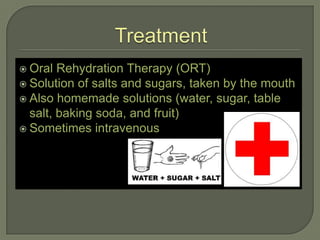
 Oral  Rehydration Therapy (ORT)
 Solution of salts and sugars, taken by the mouth
 Also homemade solutions (water, sugar, table
  salt, baking soda, and fruit)
 Sometimes intravenous
 Tetracycline
 Shortens the course of the disease
 Weaken the symptoms.
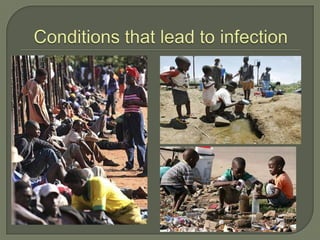
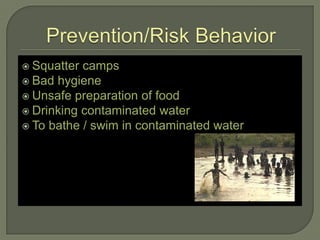
 Squatter camps
 Bad hygiene
 Unsafe preparation of food
 Drinking contaminated water
 To bathe / swim in contaminated water
   Immunization
   Boiling water, covering food
   Education
   Personal and domestic hygiene
   Prevention of contamination of water supplies
   Improvement of sewage systems
   Access to health care
Although cholera may be life-threatening, prevention of
the disease is normally straightforward if proper
sanitation practices are followed. In developed countries,
due to nearly universal advanced water treatment and
sanitation practices, cholera is no longer a major health
threat.
Cholera

Cholera

  • 2.
    Cholera is aninfection in the small intestine caused by the bacterium Vibrio cholerae. The main symptoms are profuse, watery diarrhea and vomiting. Transmission occurs primarily by drinking water or eating food that has been contaminated by the feces of an infected person, including one with no apparent symptoms.
  • 3.
    The Bacteria thatcauses Cholera
  • 4.
     Acute infectiousdisease  is often fatal  characterized by severe vomiting, diarrhoea, and collapse
  • 5.
    Caused By: Vibriocholerae •Indirect transmission Vehicle borne •Reaches water through: Vomiting Diarrhoea •Carriers active or passive •Produces toxins in sml intestines that cause severe diarrhoea and dehydration
  • 6.
    Through:  Contaminated water  Contaminated food  Eating with unwashed hands  Also house flies and other insects
  • 8.
    The primary symptomsof cholera are profuse, painless diarrhea and vomiting of clear fluid. These symptoms usually start suddenly, one to five days after ingestion of the bacteria. The diarrhea is frequently described as "rice water" in nature and may have a fishy odor. An untreated person with cholera may produce 10 to 20 liters (3 to 5 US gal) of diarrhea a day with fatal results. For every symptomatic person, 3 to 100 people get the infection but remain asymptomatic. Cholera has been nicknamed the "blue death" due to a patient's skin turning a bluish-gray hue from extreme loss of fluids.
  • 10.
    If the severediarrhea is not treated with intravenous rehydration, it can result in life-threatening dehydration and electrolyte imbalances.The typical symptoms of dehydration include low blood pressure, poor skin turgor (wrinkled hands), sunken eyes, and a rapid pulse. A person with severe dehydration due to cholera - note the sunken eyes and decreased skin turgor which produces wrinkled hands
  • 11.
     Host drinks water  Bacteria moves through the stomach  Reach the intestine & produce flagella  Propel through mucus of the sm. intestine  Produce toxin causing diarrhea  Feces carry new bacteria into drinking water
  • 13.
    When consumed, mostbacteria do not survive the acidic conditions of the human stomach. The few surviving bacteria conserve their energy and stored nutrients during the passage through the stomach by shutting down much protein production. When the surviving bacteria exit the stomach and reach the small intestine, they need to propel themselves through the thick mucus that lines the small intestine to get to the intestinal walls where they can thrive. V. cholerae bacteria start up production of the hollow cylindrical protein flagellin to make flagella, the cork-screw helical fibers they rotate to propel themselves through the mucus of the small intestine.
  • 14.
    Once the cholerabacteria reach the intestinal wall they no longer need the flagella to move. The bacteria stop producing the protein flagellin to conserve energy and nutrients by changing the mix of proteins which they express in response to the changed chemical surroundings. On reaching the intestinal wall, V. cholerae start producing the toxic proteins that give the infected person a watery diarrhea. This carries the multiplying new generations of V. cholerae bacteria out into the drinking water of the next host if proper sanitation measures are not in place. Advanced Mechanism Structure Next
  • 16.
    Stage 1 Stage 3  Vomiting  Start to recover  Muscle cramps  Mild to severe diarrhoea  Sudden onset and watery,  Shock and dehydration painless diarrhea  Loss of important minerals  Stool has a characteristic “rice and electrolytes water” appearance (gray, slightly cloudy with bits of  Intense thirst mucus, and a slightly sweaty  Reduced urination odor)  Muscle cramps/weakness Stage 2  Dehydration, Thirst and Shock  Cold Skin, sunken Eyes, weak pulse and feint high-pitched voice  Reduced urine  Muscle cramps and Muscle weakness
  • 17.
     Oral Rehydration Therapy (ORT)  Solution of salts and sugars, taken by the mouth  Also homemade solutions (water, sugar, table salt, baking soda, and fruit)  Sometimes intravenous
  • 18.
     Tetracycline  Shortensthe course of the disease  Weaken the symptoms.
  • 19.
     Squatter camps Bad hygiene  Unsafe preparation of food  Drinking contaminated water  To bathe / swim in contaminated water
  • 20.
    Immunization  Boiling water, covering food  Education  Personal and domestic hygiene  Prevention of contamination of water supplies  Improvement of sewage systems  Access to health care
  • 21.
    Although cholera maybe life-threatening, prevention of the disease is normally straightforward if proper sanitation practices are followed. In developed countries, due to nearly universal advanced water treatment and sanitation practices, cholera is no longer a major health threat.