Micro RNAs and Their

Regulatory Roles in Plants

                Ambika
Introduction


Micro RNAs (miRNAs) are endogenous, 22 nucleotide
RNAs.
Play important regulatory roles in animals and plants
by targeting mRNAs for cleavage or translational
repression.
Micro RNAs

• Micro RNAs - non-translated RNAs processed by Dicer
   from stem-loop regions of longer RNA precursors.
   Chemically and functionally similar to siRNAs –
   Mediate
    • RNA interference (RNAi)
    • Post Transcriptional gene Silencing (PTGS)
    • Transcriptional gene Silencing (TGS)
   siRNAs are processed from long, double-stranded
      precursors.
miRNAs and siRNAs

  miRNAs and siRNAs incorporated in silencing
  complexes contain Argonaute proteins, guide repression
  of target genes.

  Plant miRNAs are complementary to conserved target
  mRNAs.

• Arabidopsis - genetic pathways underlie miRNA
   mediated regulation and the phenotypic consequences
MicroRNA Gene Discovery:
                      Cloning

  Direct method to isolate and clone small RNAs

• First used to identify large numbers of animal miRNAs

• Some protocols used to enrich for Dicer cleavage products

• Cloning experiments in Arabidopsis identified 19 miRNAs,
   which fell into 15 families.
•Forward genetic screens in round worms.

• mi RNA involvement in plant mutant phenotypes was not
   inferred.

• early extra petals1 caused by a transposon insertion of
   MIR164c stem-loop and results in flowers with extra petals
                            Catherine et al., 2005.
Forward Genetics

  Mutagenesis coupled with redundancy.

  Family members have overlapping functions,
  buffering against loss at any single miRNA locus.

  Overexpression screens can circumvent redundancy
  limitations.

• At least three plant miRNAs, miR319 ,miR172 and
   miR166 were with developmental abnormalities
Micro RNA Gene Discovery:

                   Bioinformatics
• Cloning is biased toward RNAs that are expressed highly
   and broadly.

  Sequence-based biases in cloning procedures might also
  cause certain miRNAs to be missed.

  Bioinformatic approaches to identify miRNAs have provided
  a useful complement to cloning.
Bioinformatics


• Find homologs of known miRNAs, both within the same
   genome and in the genomes of other species.

  First accomplished for vertebrate, nematode, and fly
   miRNAs
  Numerous potential animal miRNAs - confirmed
  experimentally, not been directly useful in finding
  plant miRNAs.
Conserved Micro RNAs

• Cloning, genetics, and bioinformatics resulted in the
   annotation of 118 potential miRNA genes grouped into
  42 families.

  Each family composed of stem-loops with the potential
  to produce identical or highly similar mature miRNAs.

• miR-430 family represented by a cluster of 80 loci in
   zebrafish,43 loci in human
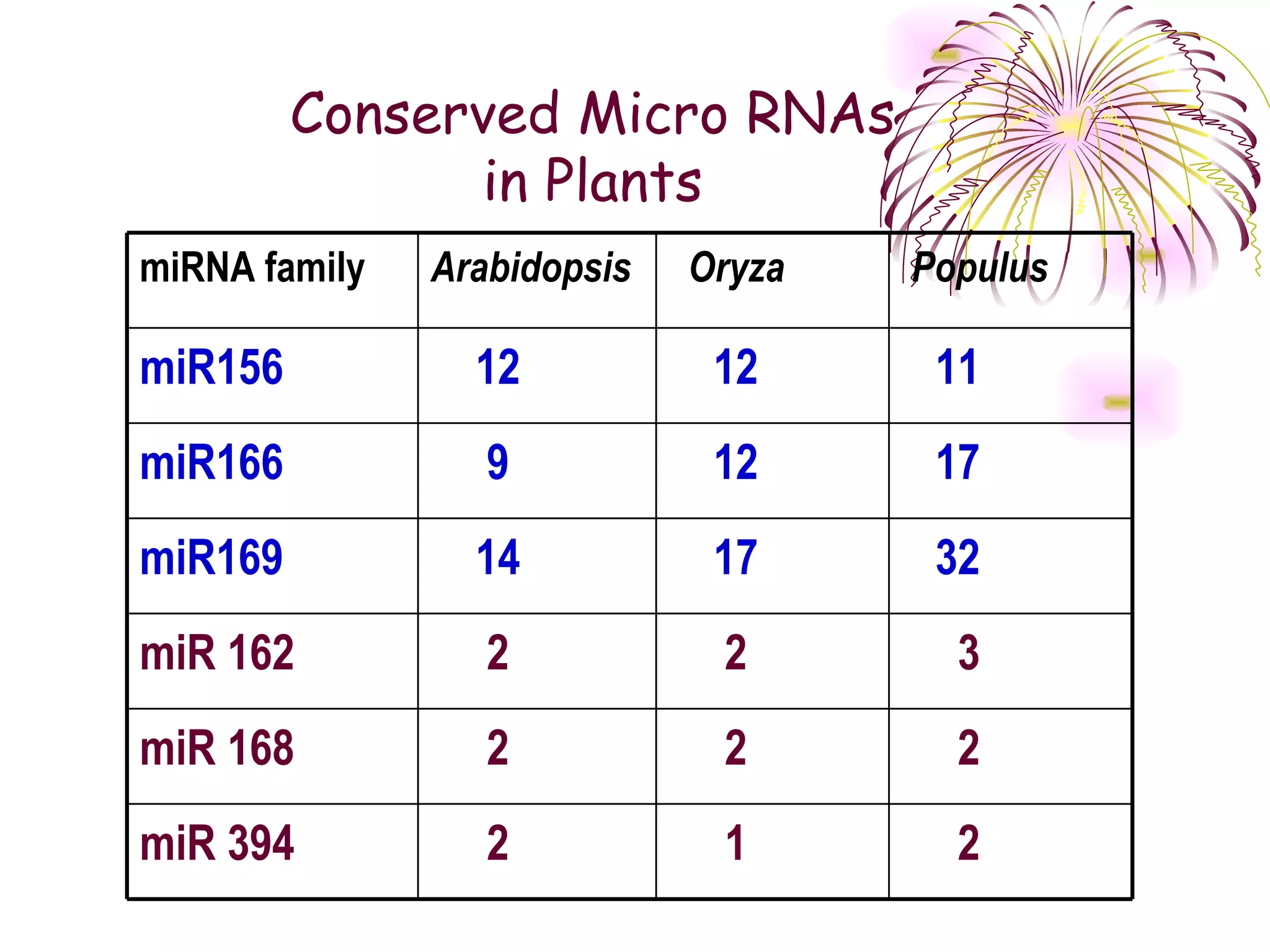
Conserved Micro RNAs
               in Plants
miRNA family   Arabidopsis   Oryza   Populus

miR156           12           12      11
miR166            9           12      17
miR169           14           17      32
miR 162           2           2        3
miR 168           2           2        2
miR 394           2           1        2
Conserved Micro RNAs
                in Plants

• Twenty miRNA families highly conserved between all
   the three sequenced plant genomes.
  Several additional miRNA families are conserved only
   within specific lineages
   • Eg.miR403
• Three families identified in Oryza are conserved in
   maize.
Conserved Micro RNAs in
                 Plants

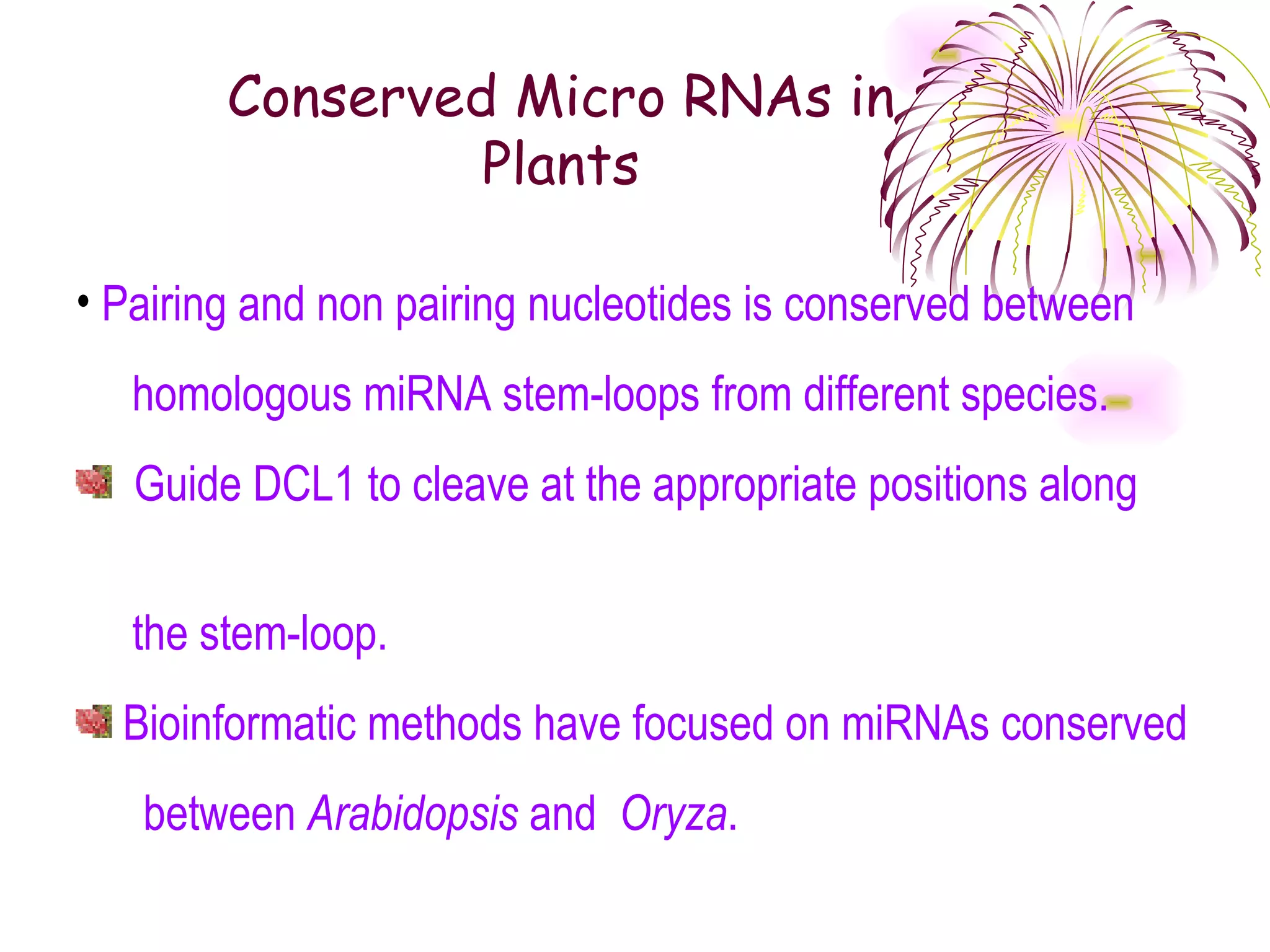
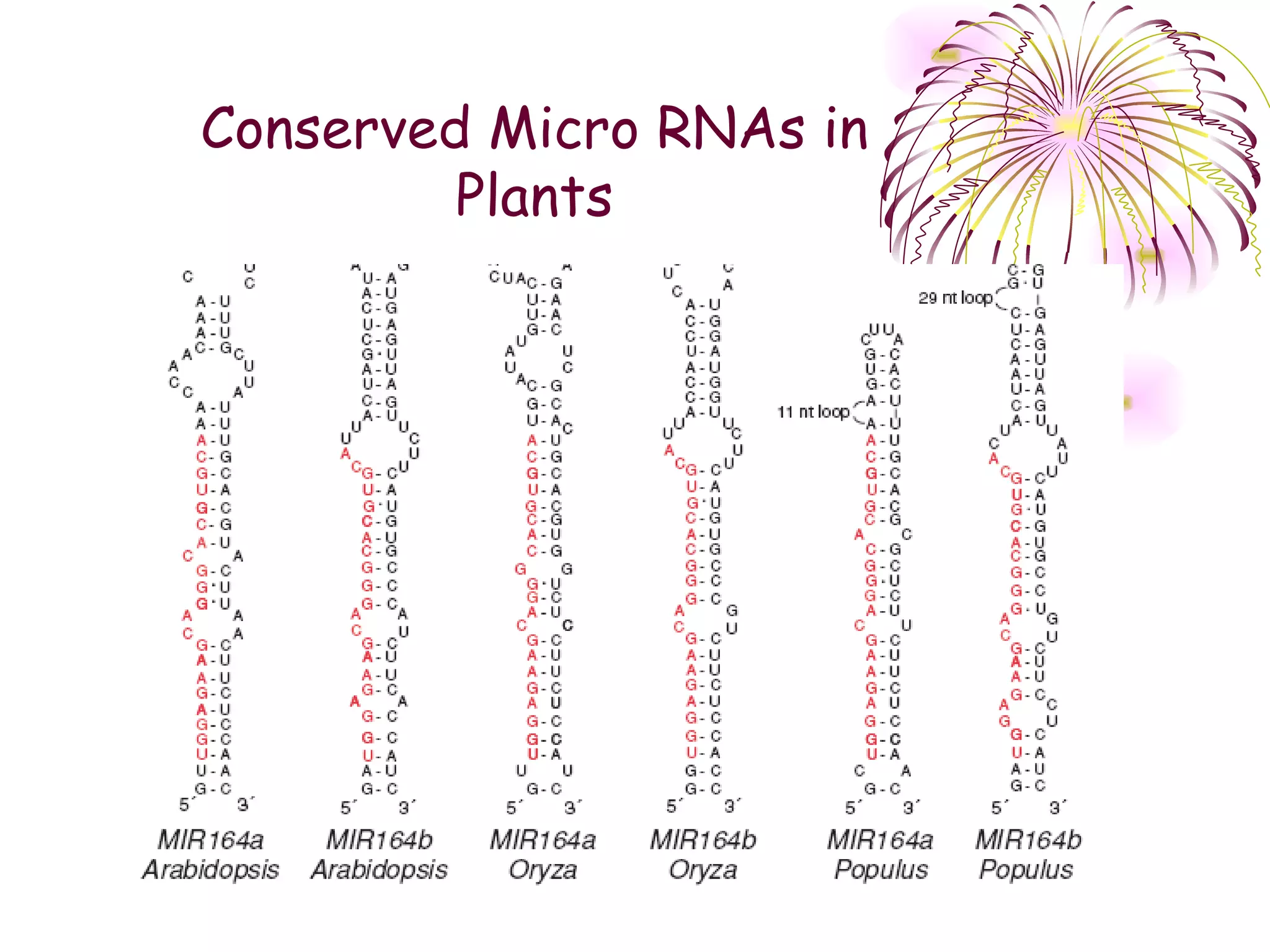
• Pairing and non pairing nucleotides is conserved between
   homologous miRNA stem-loops from different species.
   Guide DCL1 to cleave at the appropriate positions along


   the stem-loop.
  Bioinformatic methods have focused on miRNAs conserved
   between Arabidopsis and Oryza.
Conserved Micro RNAs in
         Plants
Conserved Micro RNAs
            in Plants
• Micro array technology - 11 miRNA families
    in gymnosperms, miR160 and miR390 in moss.

  Direct cloning of small RNAs from moss identified
   additional homologs of Arabidopsis miRNAs.

  Conserved miRNA families regulate development in
   Arabidopsis and proper specification of floral organ
   identity or leaf polarity.

  Regulate homologous mRNAs in basal plants –
  reproductive structures and leaf morphology.
Nonconserved
                  Micro RNAs

• Homology between some non-conserved miRNA precursors
  and target genes provides strong evidence potentially
  “young” miRNAs arose from duplications.
      Eg.miR161, miR163, miR173, miR447, miR475, and
   miR476, are known to direct cleavage of target transcripts
Non-conserved
                   Micro RNAs
• Minimal standard for miRNA annotation
   • “Small RNA with detectable expression and the potential
   to form a stem-loop when joined to flanking genomic
   sequence”


  Without conservation of both sequence and secondary
   structure, it is difficult to be confident that a given cloned
   RNA originated from a stem-loop.
Micro RNA
          BIOGENESIS


Transcription of Micro RNA Precursors.


Micro RNA Processing and Export.


Micro RNA Incorporation into the Silencing
Complex.
Transcription of Micro
      RNA Precursors

• Plant miRNAs are produced from their own transcriptional
   units.
  Animal miRNAs - processed from introns of protein coding
   genes.
  Plant miRNA genes are occasionally clustered - suggesting
   transcription of multiple miRNAs from a single primary
   transcript.
Transcription of Micro
     RNA Precursors

• Northern, EST, and mapping evidence indicate plant
    primary transcript are longer.

  Splicing is a prerequisite for Dicer recognition.

  Plant pri-miRNAs can be over 1 kb in length, undergo
  splicing, polyadenylation, and capping.

  Relatively little is known about the regulation of miRNA
   transcription.
P
R
O
C
E
S
S
I
N
G
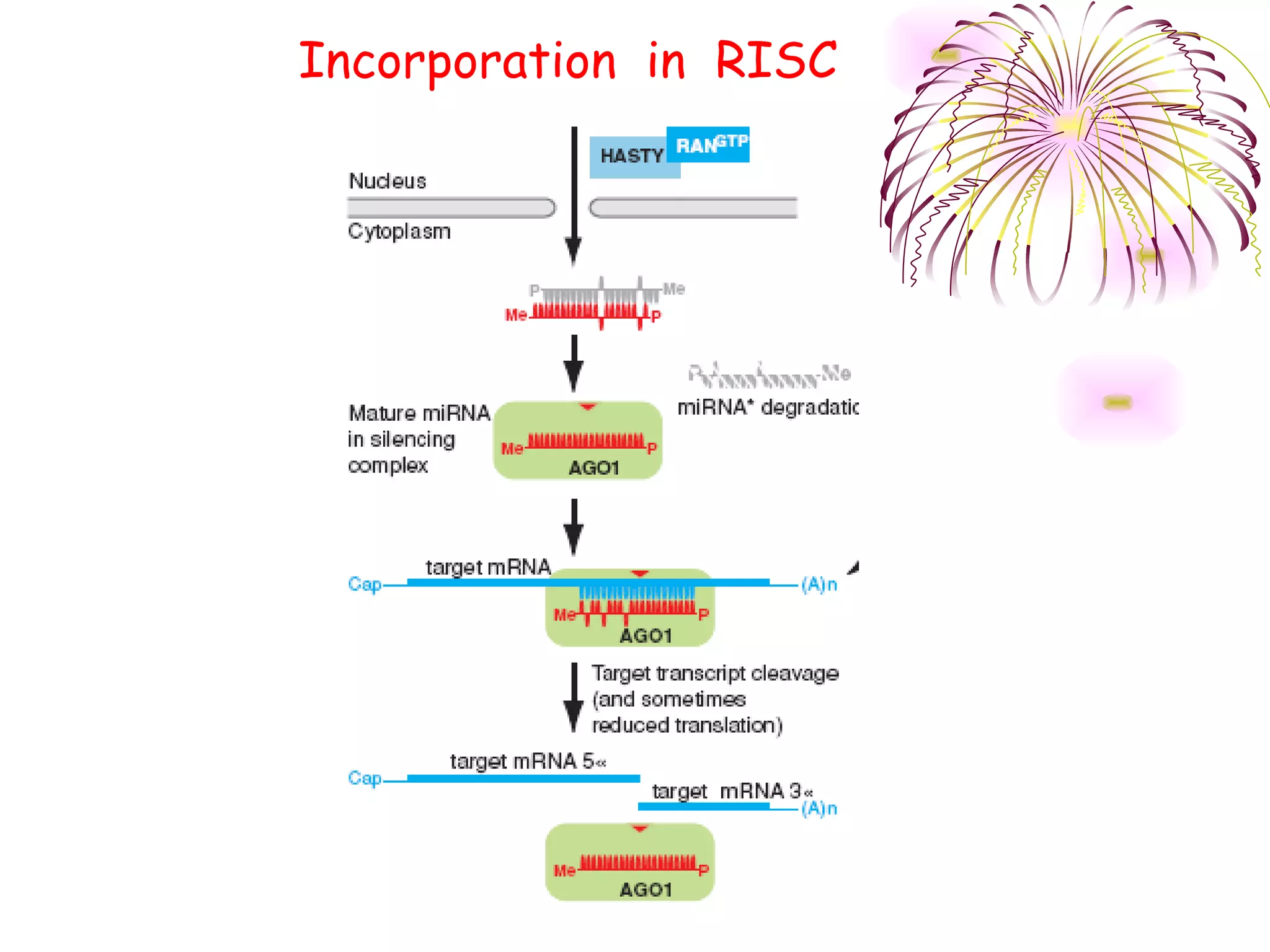
Incorporation in RISC
Plant Micro RNA
                    Expression


• Microarray technology adapted to rapidly survey expression
    profiles of plant miRNAs.

  Some are broadly expressed, others in particular organs or
   developmental stages.

  Expression patterns of miRNA promoter reporter constructs
   described for miR160 and miR171.
Plant Micro RNA
                    Expression

Responsive to phyto hormones or growth conditions;
   Eg.miR159 - gibberellins , miR164 - auxin treatments
   miR393 levels - stresses.

miR395 is undetectable in plants grown on standard
medium, but induced over 100-fold in sulfate-starved plants

miR399 is specifically induced in plants grown on low
 phosphate medium.
MECHANISMS OF MICRO RNA
         FUNCTION


• RNA cleavage

  Translational repression

  Transcriptional silencing
RNA cleavage


• Small silencing RNAs guide Argonaute component of
   RISC to cleave a single phosphodiester bond within
   complementary RNA molecules.
  The cleavage fragments are then released, freeing the
   RISC to recognize and cleave another transcript.
  Micro RNA-guided slicer activity is present in wheat germ
   and Arabidopsis lysates.
MicroRNA-Directed Repression


• First miRNAs identified, the lin-4 and let-7 RNAs,
    regulate the expression of heterochronic genes
• The original experiments with lin-4 RNA and two of its
    targets, lin-14 and lin-28, indicated that lin-4 RNA
    repressed the target proteins.
                                     Bagga et al., 2005.
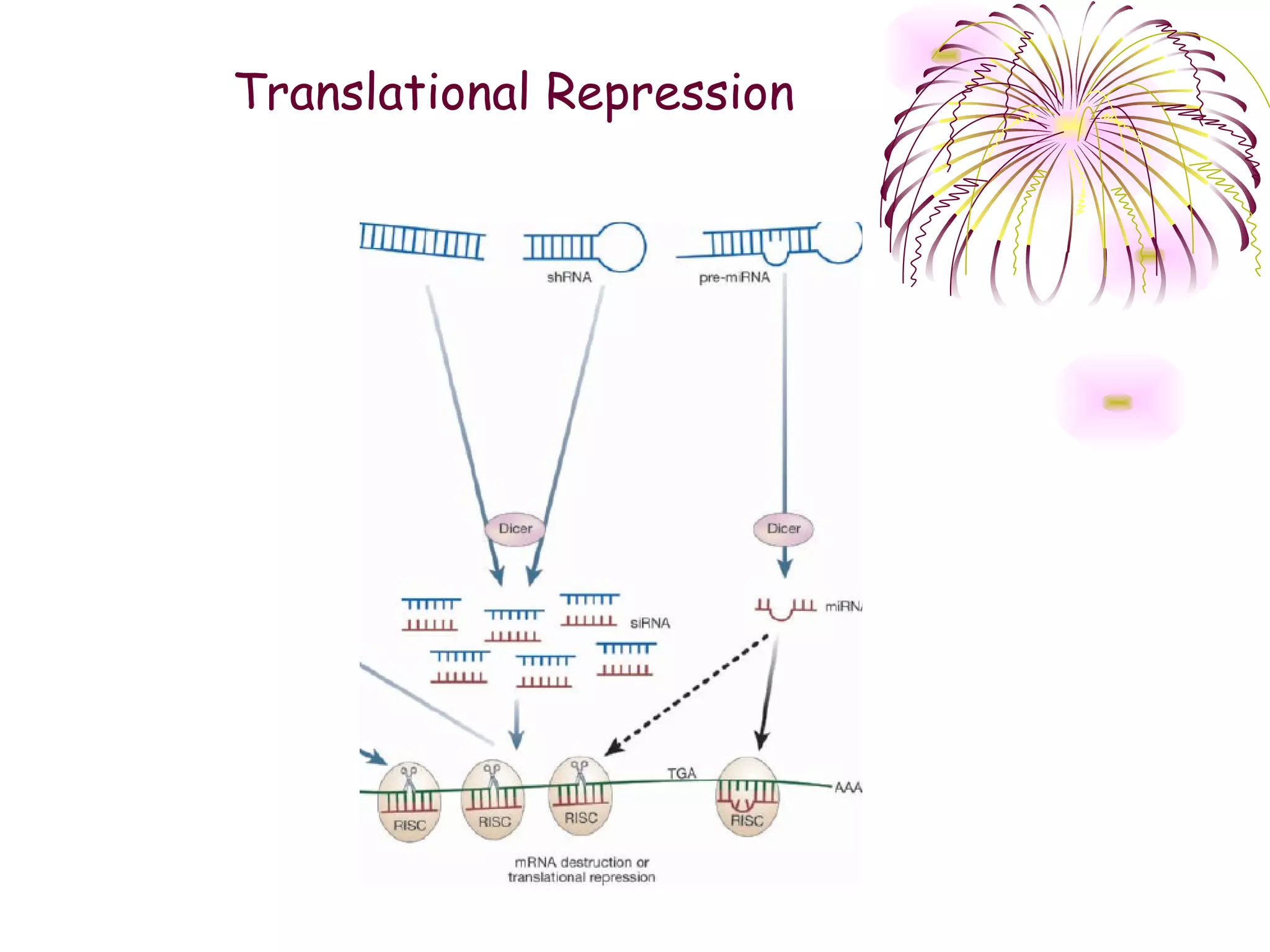
Translational Repression
Transcriptional
                Silencing


  Evidence from several organisms that small RNAs are
   important for establishing and/or maintaining these
   heterochromatic modifications.
       Eg. yeast, Dicer produces small RNAs corresponding to
heterochromatic repeats
REGULATORY ROLES OF
     PLANT Micro RNAs
Identification of Plant Micro RNA Targets
• High degree of complementarity between Arabidopsis
    miRNAs and their target mRNAs allowed the confident
    prediction of targets.

• First clue to the general paradigm for miRNA target
    recognition in plants came from mapping miR171 to the
    genome.
Identification of Plant Micro
            RNA Targets


• miRNA171 has four matches in the Arabidopsis genome: one
  is located between protein coding genes and has a predicted
  stem-loop structure,
• Other three are all anti-sense to SCARECROW-LIKE (SCL)
   genes and lack stem-loop structures
Identification of Plant Micro
           RNA Targets

  Genome-wide screen identified mRNAs containing
   ungapped, anti-sense alignments to miRNAs with 0–3
   mismatches.
• EST information to annotated genes yielded additional
   targets, ta-siRNA precursors.
• Expression arrays useful in identifying miRNA targets
   missed by bioinformatic approaches
Identification of Plant Micro
               RNA Targets

• Non-transcription factor targets (6%) encode F-box
   proteins ,indicating a role for miRNAs in regulating
   protein stability.
• DCL1 and AGO1 are also miRNA targets, suggesting
   that plant miRNAs play a role in tuning their own
   biogenesis and function.
Experimental Confirmation of
   Plant Micro RNA Targets

• Agrobacterium infiltration to observe miRNA – mediated
    cleavage of targets in Nicotiana.

  Most useful method of miRNA target validation uses
   5’RACE to detect in vivo products of miRNA mediated
   cleavage.

• 5’ RACE detection - a necessary prerequisite for biological
     relevance.
Transcription – factor
         targets

miR      Target A.thali oryza populus Con.
family   family ana                   method
miR156 SBP      11      9      16    5’RACE

miR160 ARF       3      5      9     5’RACE

miR171 SCL       3      5      9     5’RACE

miR396 GRF       7      9      9     5’RACE
REGULATORY ROLES


• Multiple groups isolated dcl1 mutants severe mutations
   result in early embryonic arrest, partial loss-of function
   mutants result in pleiotropic defects.

       Eg.ago1, hen1, hyl1, and hst mutants
Strategies
• Mutations that impair a fundamental step in miRNA
   biogenesis result in misregulation of numerous miRNA

     targets.
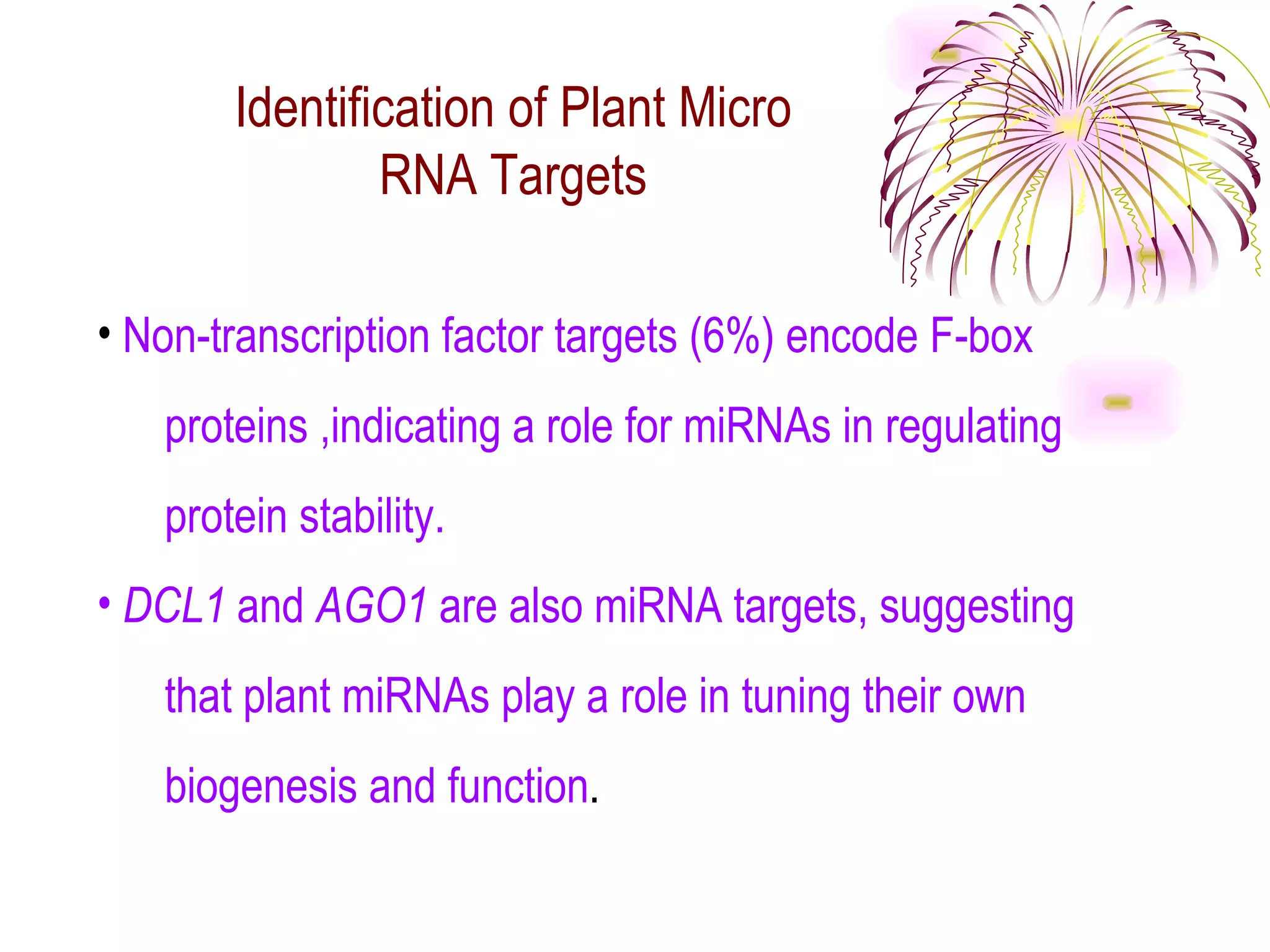
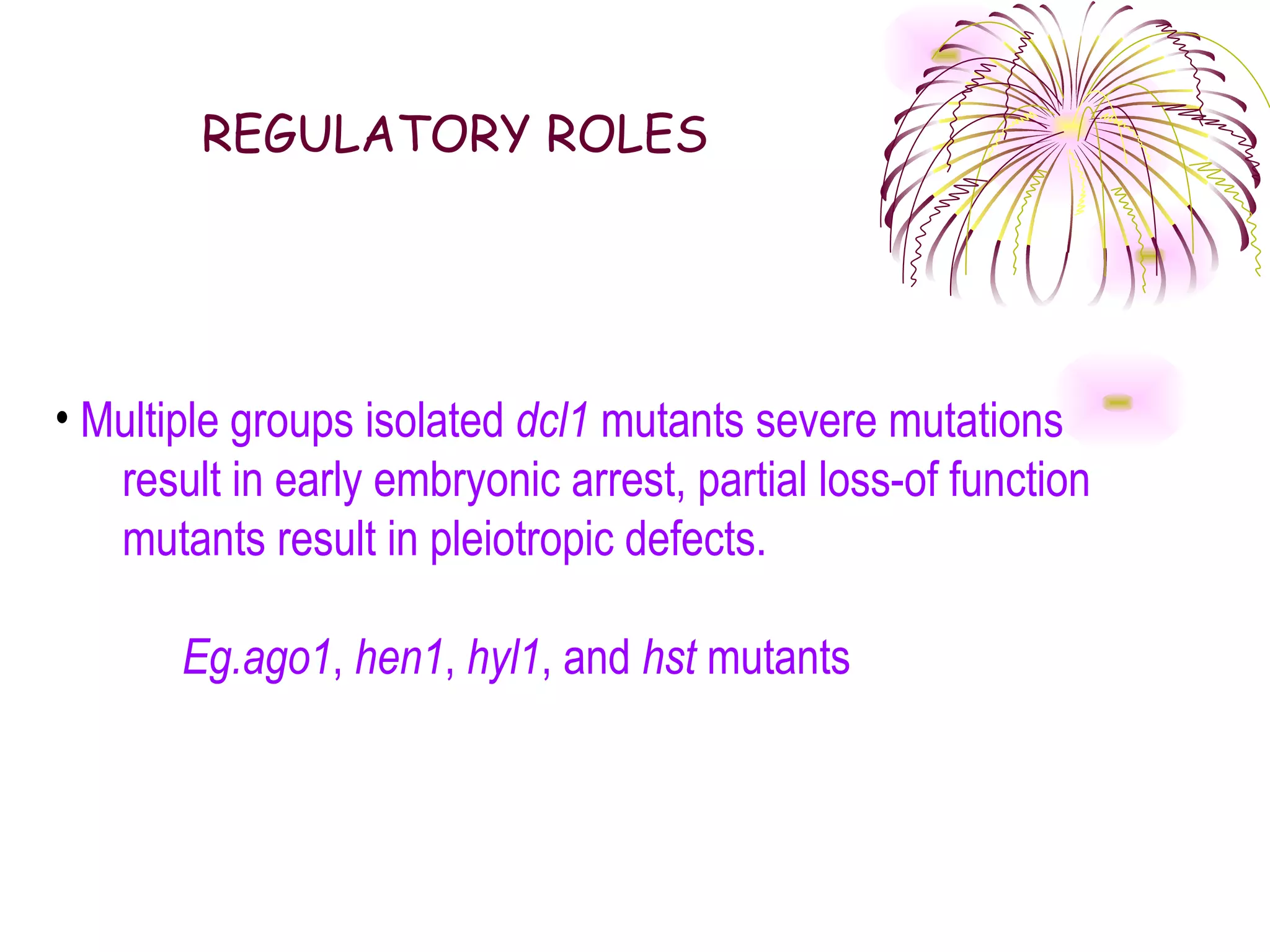
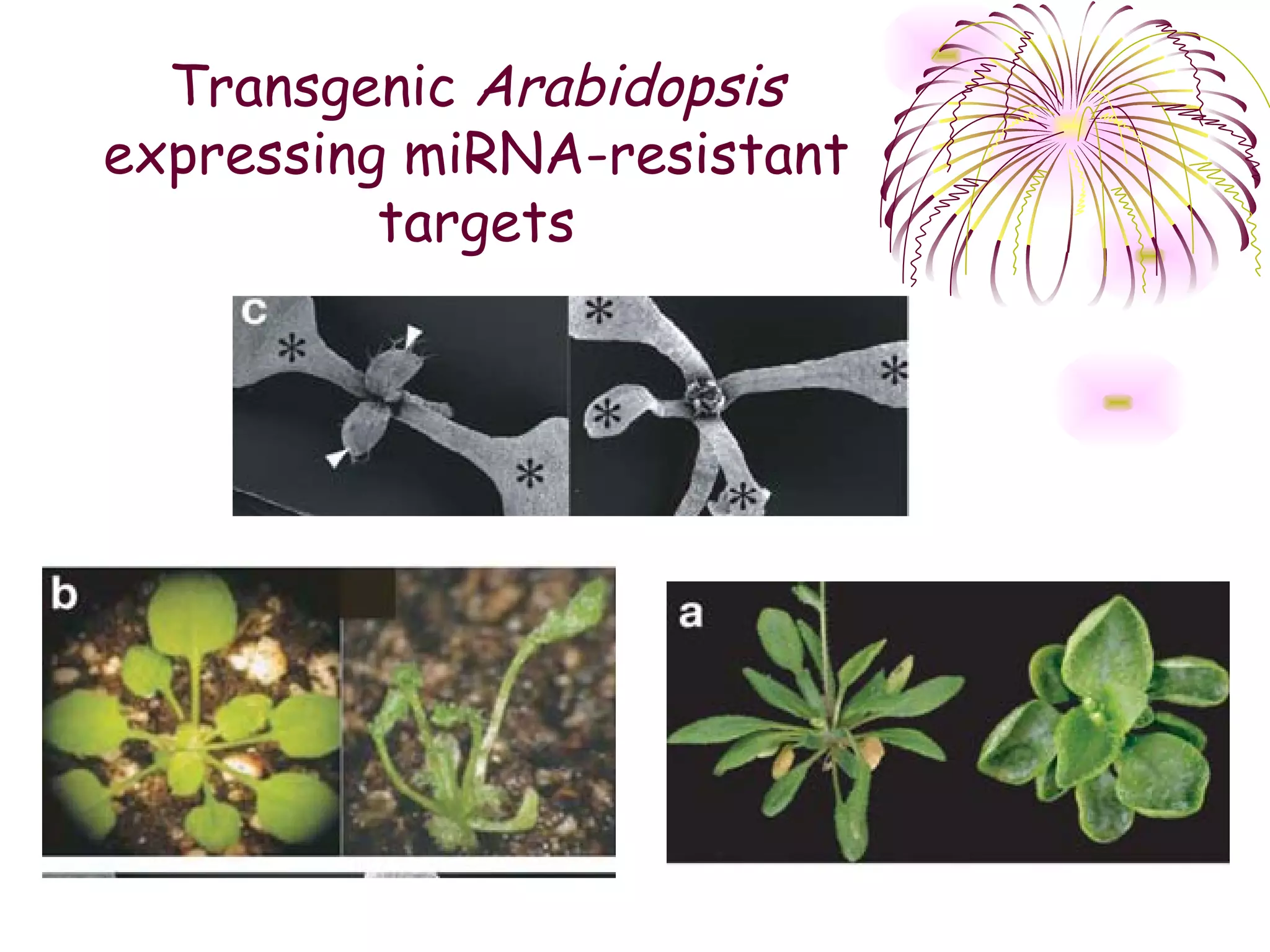
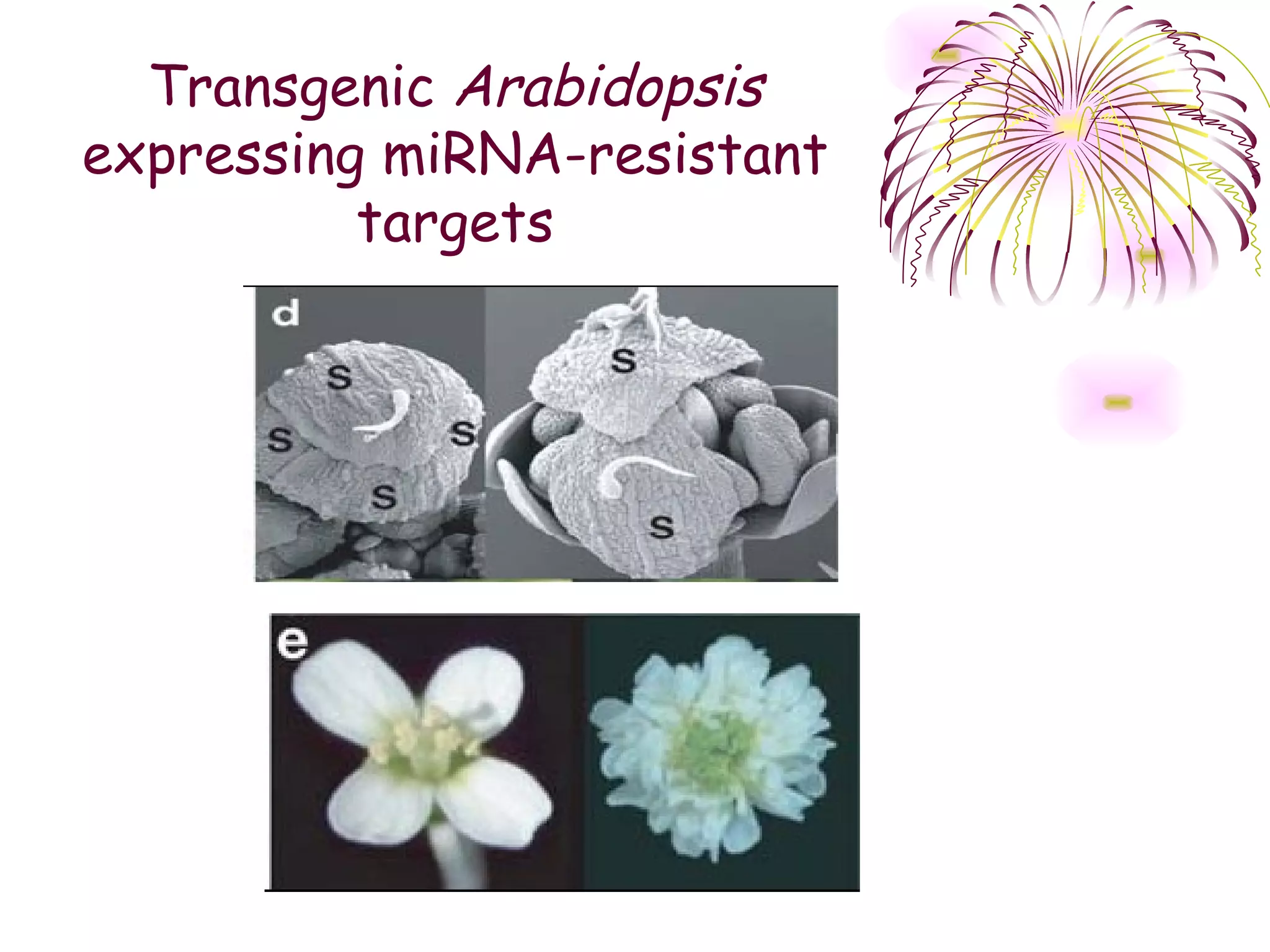
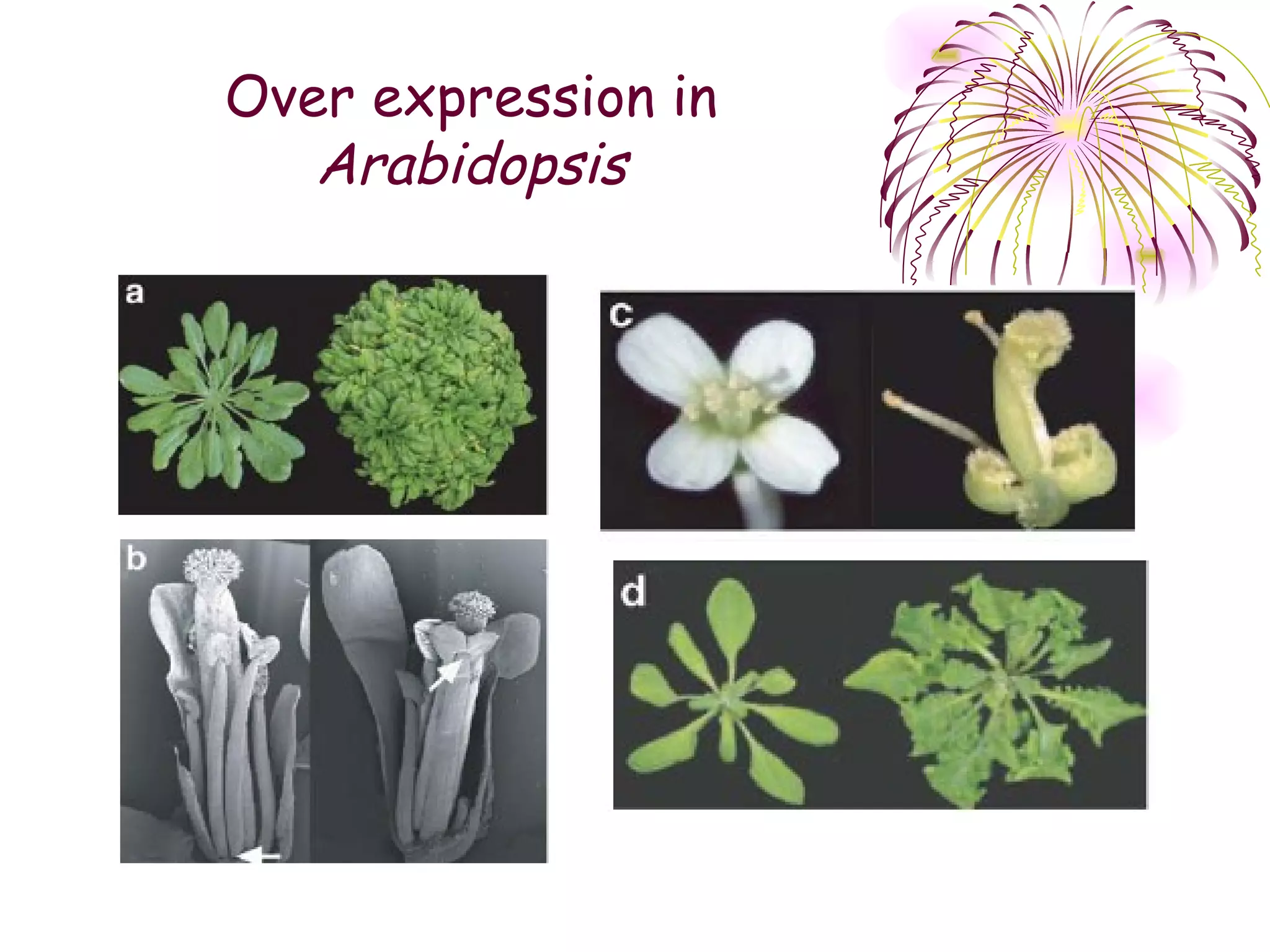
• Transgenic Arabidopsis can be generated for investigation
    of particular miRNA/target interactions through two reverse
    genetic strategies.

           Make transgenic plants that overexpress a miRNA.

           Make transgenic plants that express a miRNA-
           resistant version of a miRNA target
Over expression in
   Arabidopsis
Over expression in Arabidopsis
Transgenic Arabidopsis
expressing miRNA-resistant
          targets
Transgenic Arabidopsis
expressing miRNA-resistant
          targets
summary


• Bio-informatic approaches have identified targets for nearly
   all plant miRNAs.

  Several experimental methods have been used to confirm
   miRNA-target interactions and explore the biological
   significance of miRNA-mediated regulation.
A small but mighty
     that is
    RNA world


           Thank you

Micro RNAs

  • 1.
    Micro RNAs andTheir Regulatory Roles in Plants Ambika
  • 2.
    Introduction Micro RNAs (miRNAs)are endogenous, 22 nucleotide RNAs. Play important regulatory roles in animals and plants by targeting mRNAs for cleavage or translational repression.
  • 3.
    Micro RNAs • MicroRNAs - non-translated RNAs processed by Dicer from stem-loop regions of longer RNA precursors. Chemically and functionally similar to siRNAs – Mediate • RNA interference (RNAi) • Post Transcriptional gene Silencing (PTGS) • Transcriptional gene Silencing (TGS) siRNAs are processed from long, double-stranded precursors.
  • 4.
    miRNAs and siRNAs miRNAs and siRNAs incorporated in silencing complexes contain Argonaute proteins, guide repression of target genes. Plant miRNAs are complementary to conserved target mRNAs. • Arabidopsis - genetic pathways underlie miRNA mediated regulation and the phenotypic consequences
  • 5.
    MicroRNA Gene Discovery: Cloning Direct method to isolate and clone small RNAs • First used to identify large numbers of animal miRNAs • Some protocols used to enrich for Dicer cleavage products • Cloning experiments in Arabidopsis identified 19 miRNAs, which fell into 15 families.
  • 6.
    •Forward genetic screensin round worms. • mi RNA involvement in plant mutant phenotypes was not inferred. • early extra petals1 caused by a transposon insertion of MIR164c stem-loop and results in flowers with extra petals Catherine et al., 2005.
  • 7.
    Forward Genetics Mutagenesis coupled with redundancy. Family members have overlapping functions, buffering against loss at any single miRNA locus. Overexpression screens can circumvent redundancy limitations. • At least three plant miRNAs, miR319 ,miR172 and miR166 were with developmental abnormalities
  • 8.
    Micro RNA GeneDiscovery: Bioinformatics • Cloning is biased toward RNAs that are expressed highly and broadly. Sequence-based biases in cloning procedures might also cause certain miRNAs to be missed. Bioinformatic approaches to identify miRNAs have provided a useful complement to cloning.
  • 9.
    Bioinformatics • Find homologsof known miRNAs, both within the same genome and in the genomes of other species. First accomplished for vertebrate, nematode, and fly miRNAs Numerous potential animal miRNAs - confirmed experimentally, not been directly useful in finding plant miRNAs.
  • 10.
    Conserved Micro RNAs •Cloning, genetics, and bioinformatics resulted in the annotation of 118 potential miRNA genes grouped into 42 families. Each family composed of stem-loops with the potential to produce identical or highly similar mature miRNAs. • miR-430 family represented by a cluster of 80 loci in zebrafish,43 loci in human
  • 11.
    Conserved Micro RNAs in Plants miRNA family Arabidopsis Oryza Populus miR156 12 12 11 miR166 9 12 17 miR169 14 17 32 miR 162 2 2 3 miR 168 2 2 2 miR 394 2 1 2
  • 12.
    Conserved Micro RNAs in Plants • Twenty miRNA families highly conserved between all the three sequenced plant genomes. Several additional miRNA families are conserved only within specific lineages • Eg.miR403 • Three families identified in Oryza are conserved in maize.
  • 13.
    Conserved Micro RNAsin Plants • Pairing and non pairing nucleotides is conserved between homologous miRNA stem-loops from different species. Guide DCL1 to cleave at the appropriate positions along the stem-loop. Bioinformatic methods have focused on miRNAs conserved between Arabidopsis and Oryza.
  • 14.
  • 15.
    Conserved Micro RNAs in Plants • Micro array technology - 11 miRNA families in gymnosperms, miR160 and miR390 in moss. Direct cloning of small RNAs from moss identified additional homologs of Arabidopsis miRNAs. Conserved miRNA families regulate development in Arabidopsis and proper specification of floral organ identity or leaf polarity. Regulate homologous mRNAs in basal plants – reproductive structures and leaf morphology.
  • 16.
    Nonconserved Micro RNAs • Homology between some non-conserved miRNA precursors and target genes provides strong evidence potentially “young” miRNAs arose from duplications. Eg.miR161, miR163, miR173, miR447, miR475, and miR476, are known to direct cleavage of target transcripts
  • 17.
    Non-conserved Micro RNAs • Minimal standard for miRNA annotation • “Small RNA with detectable expression and the potential to form a stem-loop when joined to flanking genomic sequence” Without conservation of both sequence and secondary structure, it is difficult to be confident that a given cloned RNA originated from a stem-loop.
  • 18.
    Micro RNA BIOGENESIS Transcription of Micro RNA Precursors. Micro RNA Processing and Export. Micro RNA Incorporation into the Silencing Complex.
  • 19.
    Transcription of Micro RNA Precursors • Plant miRNAs are produced from their own transcriptional units. Animal miRNAs - processed from introns of protein coding genes. Plant miRNA genes are occasionally clustered - suggesting transcription of multiple miRNAs from a single primary transcript.
  • 20.
    Transcription of Micro RNA Precursors • Northern, EST, and mapping evidence indicate plant primary transcript are longer. Splicing is a prerequisite for Dicer recognition. Plant pri-miRNAs can be over 1 kb in length, undergo splicing, polyadenylation, and capping. Relatively little is known about the regulation of miRNA transcription.
  • 21.
  • 22.
  • 23.
    Plant Micro RNA Expression • Microarray technology adapted to rapidly survey expression profiles of plant miRNAs. Some are broadly expressed, others in particular organs or developmental stages. Expression patterns of miRNA promoter reporter constructs described for miR160 and miR171.
  • 24.
    Plant Micro RNA Expression Responsive to phyto hormones or growth conditions; Eg.miR159 - gibberellins , miR164 - auxin treatments miR393 levels - stresses. miR395 is undetectable in plants grown on standard medium, but induced over 100-fold in sulfate-starved plants miR399 is specifically induced in plants grown on low phosphate medium.
  • 25.
    MECHANISMS OF MICRORNA FUNCTION • RNA cleavage Translational repression Transcriptional silencing
  • 26.
    RNA cleavage • Smallsilencing RNAs guide Argonaute component of RISC to cleave a single phosphodiester bond within complementary RNA molecules. The cleavage fragments are then released, freeing the RISC to recognize and cleave another transcript. Micro RNA-guided slicer activity is present in wheat germ and Arabidopsis lysates.
  • 27.
    MicroRNA-Directed Repression • FirstmiRNAs identified, the lin-4 and let-7 RNAs, regulate the expression of heterochronic genes • The original experiments with lin-4 RNA and two of its targets, lin-14 and lin-28, indicated that lin-4 RNA repressed the target proteins. Bagga et al., 2005.
  • 28.
  • 29.
    Transcriptional Silencing Evidence from several organisms that small RNAs are important for establishing and/or maintaining these heterochromatic modifications. Eg. yeast, Dicer produces small RNAs corresponding to heterochromatic repeats
  • 30.
    REGULATORY ROLES OF PLANT Micro RNAs Identification of Plant Micro RNA Targets • High degree of complementarity between Arabidopsis miRNAs and their target mRNAs allowed the confident prediction of targets. • First clue to the general paradigm for miRNA target recognition in plants came from mapping miR171 to the genome.
  • 31.
    Identification of PlantMicro RNA Targets • miRNA171 has four matches in the Arabidopsis genome: one is located between protein coding genes and has a predicted stem-loop structure, • Other three are all anti-sense to SCARECROW-LIKE (SCL) genes and lack stem-loop structures
  • 32.
    Identification of PlantMicro RNA Targets Genome-wide screen identified mRNAs containing ungapped, anti-sense alignments to miRNAs with 0–3 mismatches. • EST information to annotated genes yielded additional targets, ta-siRNA precursors. • Expression arrays useful in identifying miRNA targets missed by bioinformatic approaches
  • 33.
    Identification of PlantMicro RNA Targets • Non-transcription factor targets (6%) encode F-box proteins ,indicating a role for miRNAs in regulating protein stability. • DCL1 and AGO1 are also miRNA targets, suggesting that plant miRNAs play a role in tuning their own biogenesis and function.
  • 34.
    Experimental Confirmation of Plant Micro RNA Targets • Agrobacterium infiltration to observe miRNA – mediated cleavage of targets in Nicotiana. Most useful method of miRNA target validation uses 5’RACE to detect in vivo products of miRNA mediated cleavage. • 5’ RACE detection - a necessary prerequisite for biological relevance.
  • 35.
    Transcription – factor targets miR Target A.thali oryza populus Con. family family ana method miR156 SBP 11 9 16 5’RACE miR160 ARF 3 5 9 5’RACE miR171 SCL 3 5 9 5’RACE miR396 GRF 7 9 9 5’RACE
  • 36.
    REGULATORY ROLES • Multiplegroups isolated dcl1 mutants severe mutations result in early embryonic arrest, partial loss-of function mutants result in pleiotropic defects. Eg.ago1, hen1, hyl1, and hst mutants
  • 37.
    Strategies • Mutations thatimpair a fundamental step in miRNA biogenesis result in misregulation of numerous miRNA targets. • Transgenic Arabidopsis can be generated for investigation of particular miRNA/target interactions through two reverse genetic strategies. Make transgenic plants that overexpress a miRNA. Make transgenic plants that express a miRNA- resistant version of a miRNA target
  • 38.
  • 39.
    Over expression inArabidopsis
  • 40.
  • 41.
  • 42.
    summary • Bio-informatic approacheshave identified targets for nearly all plant miRNAs. Several experimental methods have been used to confirm miRNA-target interactions and explore the biological significance of miRNA-mediated regulation.
  • 43.
    A small butmighty that is RNA world Thank you