
siRNA and miRNA
Presented by:-
Vivek kumar
M.Sc 2nd Sem
microbiology
Bangalore university
Introduction
Gene silencing is a technique that aims to reduce or
eliminate the production of a protein from its
corresponding genes.
It is generally describe the “switching off” of a gene
by a mechanism other than genetic modification.
It occurs when RNA is unable to make a protein
during translation.
Gene silencing is same as gene knock down but is
totally different from gene knock out.
There are so many approches for gene
silencing
Gene Knockout.
Gene knockdown.
Gene silencing and degradation of gene using RNA
technology.
1. Antisense RNA technology.
2. RNAi technology.
Genes are regulated at either the transcriptional level or
post transcriptional level
Transcriptional gene silencing
 Genomic Imprinting.
 Praramutation.
 Transposon silencing.
 Transgene silencing.
 Position effect.
 RNA-directed DNA
methylation.
Post transcriptional gene silencing
 Antisense RNA technology.
 RNAi technology.
miRNA.
shRNA.
siRNA.
RNAi
• RNAi is a mechanism that inhibits gene
expression at the stage of translation or by
hindering the transcription of specific genes
thus stopping production of protein.
• It was 1st discovered in 1988 by Andrew fire
and Craig Mello in the nematode worm
C.elegans and later found in a wide variety of
organisms including mammals.
Need for RNA interference.
1. Defense mechanism:-
a) Defense against infection by viruses etc.
b) As a defense mechanism to protect against
transposons and other insertional elements
2. Genome wide Regulation:-
a) RNAi plays a role in regulating development and
genome maintenance.
In interference:-
1. RNAi :-
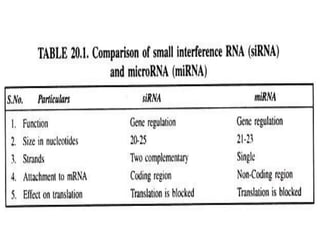
1. siRNA :- dsRNA 21-22nt.
2. miRNA:- ssRNA 19-25nt. Encoded by non- protein coding
genome.
2. RISC :-
1. RNA induced silencing complex, that cleaves mRNA.
3. ENZYMES:-
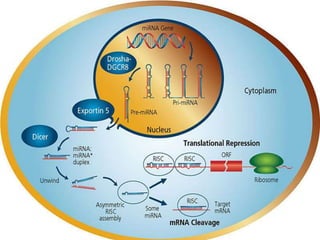
1. DICER:- Produces 20-21nt cleavages that initiate RNAi.
2. DROSHA:- Cleaves base hairpin in to form pre miRNA; Which
is later processed by Dicer.
miRNA
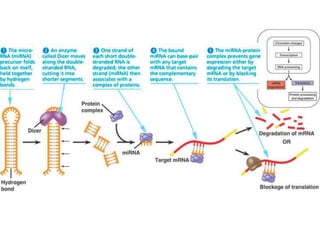
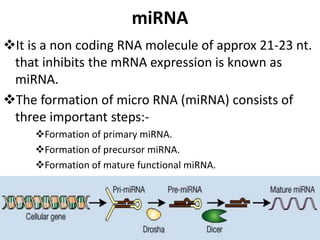
It is a non coding RNA molecule of approx 21-23 nt.
that inhibits the mRNA expression is known as
miRNA.
The formation of micro RNA (miRNA) consists of
three important steps:-
Formation of primary miRNA.
Formation of precursor miRNA.
Formation of mature functional miRNA.
siRNA
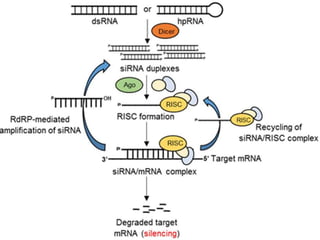
also as short interfering RNA or silencing RNA.
It is a class of double - stranded RNA molecules.
It is 20-25 bp in length.
It is similar to miRNA.
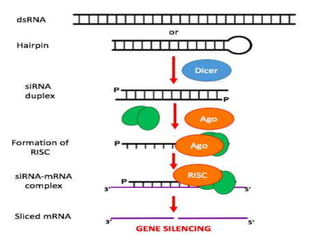
Operating withing the RNA interference RNAi
pathway by the enzyme Dicer.
It interferes with the expression of specific genes
with complementary nucleotide sequences by
degrading mRNA after transcription, resulting no
translation.
Significance of RNAi
RNAi protects against viral infection.
RNAi secures genome stability by keeping mobile
elements silent.
RNAi mechanisms repress protein synthesis and
regulate the development of organism.
RNAi offers a new experimental tool to repress gene
specifically.
RNAi might be a useful approach in future gene
therapy.
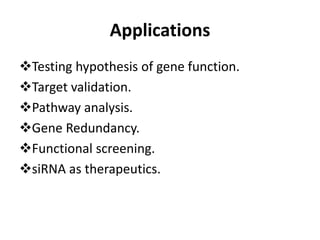
Applications
Testing hypothesis of gene function.
Target validation.
Pathway analysis.
Gene Redundancy.
Functional screening.
siRNA as therapeutics.
Reference
• Molecular Biology of the Gene , 5th edition by
Watson Baker Bell Gann Levine Losick ;
chapter-18 Pgno.- 567-570.
THANKYOU

mi RNA and siRNA

  • 1.
    siRNA and miRNA Presentedby:- Vivek kumar M.Sc 2nd Sem microbiology Bangalore university
  • 3.
    Introduction Gene silencing isa technique that aims to reduce or eliminate the production of a protein from its corresponding genes. It is generally describe the “switching off” of a gene by a mechanism other than genetic modification. It occurs when RNA is unable to make a protein during translation. Gene silencing is same as gene knock down but is totally different from gene knock out.
  • 4.
    There are somany approches for gene silencing Gene Knockout. Gene knockdown. Gene silencing and degradation of gene using RNA technology. 1. Antisense RNA technology. 2. RNAi technology.
  • 5.
    Genes are regulatedat either the transcriptional level or post transcriptional level Transcriptional gene silencing  Genomic Imprinting.  Praramutation.  Transposon silencing.  Transgene silencing.  Position effect.  RNA-directed DNA methylation. Post transcriptional gene silencing  Antisense RNA technology.  RNAi technology. miRNA. shRNA. siRNA.
  • 6.
    RNAi • RNAi isa mechanism that inhibits gene expression at the stage of translation or by hindering the transcription of specific genes thus stopping production of protein. • It was 1st discovered in 1988 by Andrew fire and Craig Mello in the nematode worm C.elegans and later found in a wide variety of organisms including mammals.
  • 7.
    Need for RNAinterference. 1. Defense mechanism:- a) Defense against infection by viruses etc. b) As a defense mechanism to protect against transposons and other insertional elements 2. Genome wide Regulation:- a) RNAi plays a role in regulating development and genome maintenance.
  • 8.
    In interference:- 1. RNAi:- 1. siRNA :- dsRNA 21-22nt. 2. miRNA:- ssRNA 19-25nt. Encoded by non- protein coding genome. 2. RISC :- 1. RNA induced silencing complex, that cleaves mRNA. 3. ENZYMES:- 1. DICER:- Produces 20-21nt cleavages that initiate RNAi. 2. DROSHA:- Cleaves base hairpin in to form pre miRNA; Which is later processed by Dicer.
  • 11.
    miRNA It is anon coding RNA molecule of approx 21-23 nt. that inhibits the mRNA expression is known as miRNA. The formation of micro RNA (miRNA) consists of three important steps:- Formation of primary miRNA. Formation of precursor miRNA. Formation of mature functional miRNA.
  • 13.
    siRNA also as shortinterfering RNA or silencing RNA. It is a class of double - stranded RNA molecules. It is 20-25 bp in length. It is similar to miRNA. Operating withing the RNA interference RNAi pathway by the enzyme Dicer. It interferes with the expression of specific genes with complementary nucleotide sequences by degrading mRNA after transcription, resulting no translation.
  • 16.
    Significance of RNAi RNAiprotects against viral infection. RNAi secures genome stability by keeping mobile elements silent. RNAi mechanisms repress protein synthesis and regulate the development of organism. RNAi offers a new experimental tool to repress gene specifically. RNAi might be a useful approach in future gene therapy.
  • 17.
    Applications Testing hypothesis ofgene function. Target validation. Pathway analysis. Gene Redundancy. Functional screening. siRNA as therapeutics.
  • 18.
    Reference • Molecular Biologyof the Gene , 5th edition by Watson Baker Bell Gann Levine Losick ; chapter-18 Pgno.- 567-570.
  • 19.