Introduction to Mechanical Ventilation Craig A. Hawkins BS RRT RCP Respiratory Therapy Supervisor Presbyterian Hospital
Indications for Mechanical Ventilation Impending Respiratory Failure Acute Respiratory Failure/Arrest Post-Operatively
Indications for Mechanical Ventilation Impending Respiratory Failure Progressively worsening clinical appearance. Worsening CXR. Hypoxemic Respiratory Failure. Hypercapnic Respiratory Failure.
Indications for Mechanical Ventilation Acute Respiratory Failure/Arrest Acute change in ABG results Respiratory Arrest/Status Post CPR Acute epiglottitis/anaphylaxis
Indications for Mechanical Ventilation Postoperatively Oversedation/paralytics Pain Control Proper Immobilization
Key Terms in Mechanical Ventilation Tidal Volume (Vt) The volume of air inhaled and exhaled from the lungs. Breaths per Minute (RR,  f) Also known as frequency. Positive End Expiratory Pressure (PEEP) Maintenance of above atmospheric pressure at the airway throughout exp. phase.
Key Terms in Mechanical Ventilation Minute Ventilation (VE) The total amount of volume moving in and out of the lung in one minute. Fractional Inspired Oxygen (FiO2) Correctly written with decimal place (21%-0.21; 100%-1.0) Inspiratory:Expiratory Ratio (I:E ratio) Normal I:E ratio 1:2-3
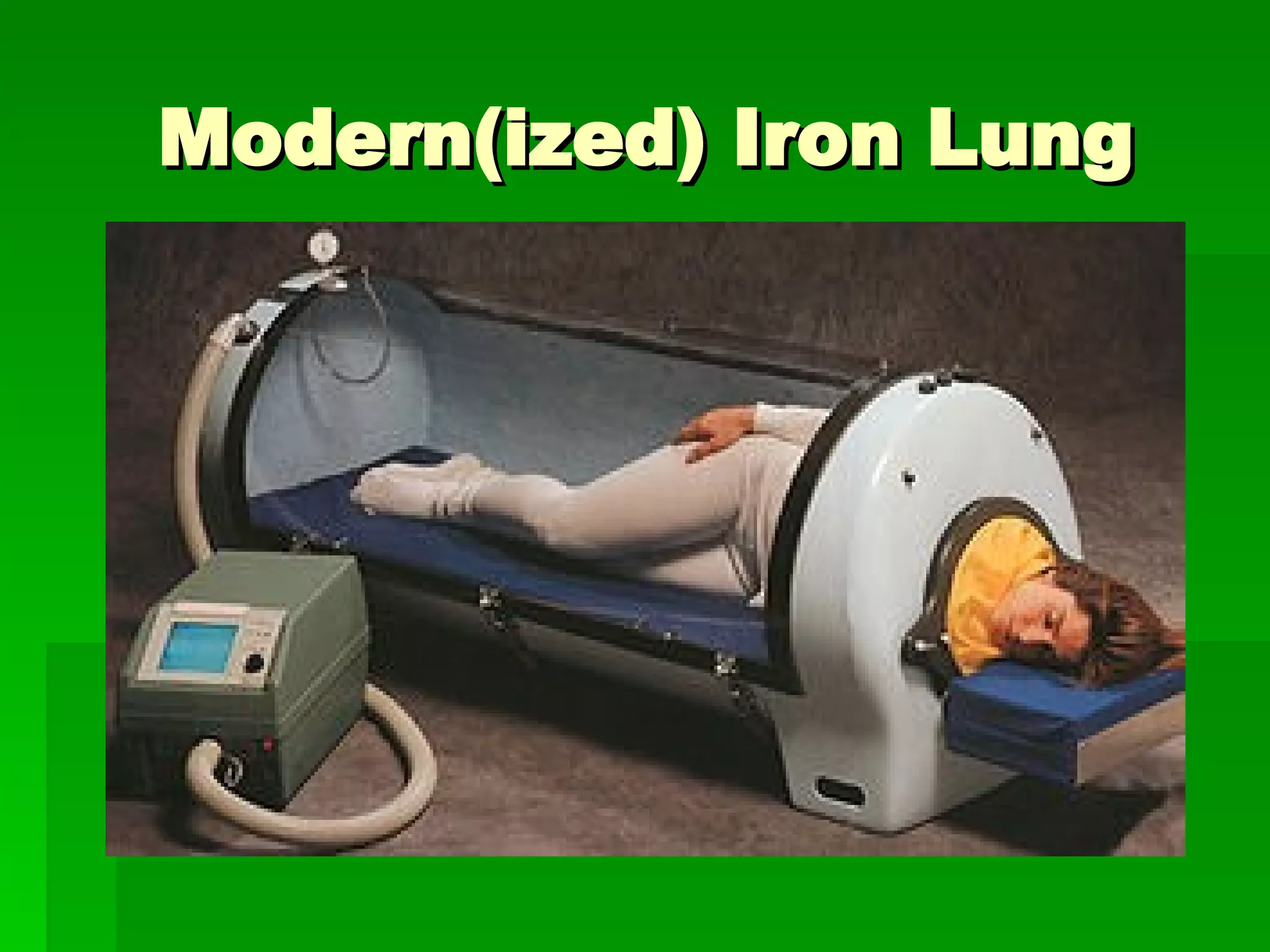
Negative Pressure Ventilation Rarely Used; Currently used for patients with neuromuscular diseases.  Thoracic cage is encased where negative pressure is applied across the chest wall.  Generates subatmospheric pressures creating a difference in pressure gradients. During exhalation, negative pressure is replace by atmospheric pressure allowing the lungs to deflate.
Negative Pressure Ventilation Types of Negative Pressure Ventilators
Iron Lung circa 1950’s
Modern(ized) Iron Lung
Chest Cuirass
Complications with Negative Pressure Ventilation Limited access for patient care. Inability to properly monitor pulmonary mechanics. Patient discomfort.
Positive Pressure Ventilation Defined as the application of pressure to the lungs in order to improve gas exchange. The Lungs are physically filled/ventilated with air using machinery. Multiple modes, methods, and theory.
Positive Pressure Ventilation Basically broken into two categories: Control Modes. Supportive Modes.
Control Modes of Ventilation Assist/Control (usually abbreviated A/C also known as Volume Control VC). Tidal Volume is set and remains constant. Respiratory Rate is set. Airway Pressure will vary according to lung compliance. Ventilator will deliver set volume whether patient triggers a breath or mandatory breath is being delivered.
Control Modes of Ventilation Pressure Control Ventilation (usually abbreviated PCV or sometimes PCIRV). Upper Airway Pressure Level is set and remains constant. Respiratory Rate is set. Tidal volumes will vary according to lung compliance. Ventilator will deliver set pressure level whether patient triggers a breath or mandatory breath is being delivered.
Control Modes of Ventilation Pressure Regulated Volume Control (usually abbreviated PRVC). Tidal Volume is set, however may or may not remain constant. Respiratory Rate is set. Ventilator will deliver volume however volume may decrease according to patient’s lung compliance. A lung protective mode.
Supportive Modes of Ventilation Synchronized Intermittent Mandatory Ventilation (usually abbreviated SIMV). Tidal Volume is set and delivered on each mandatory breath. Respiratory Rate is set. When a patient triggers the ventilator spontaneously , the patient receives a Pressure Supported breath.
Supportive Modes of Ventilation Pressure Support Ventilation (PSV) Is a strictly patient dependant mode; patient must be breathing spontaneously. An upper (inspiratory) pressure level is adjusted to provide adequate tidal volumes for each patient triggered breath. PEEP is also adjusted as an independent pressure from the upper pressure level and is active during expiration. PSV is a weaning mode.
Supportive Modes of Ventilation Volume Support (VS) Is a strictly patient dependant mode; patient must be breathing spontaneously. Tidal Volume is set. Each spontaneous breath is supported with dialed volume.
Supportive Modes of Ventilation Continuous (Constant) Positive Airway Pressure (CPAP) Is a strictly patient dependant mode; patient must be breathing spontaneously. Closely resembles Pressure Support, however CPAP is a constant set pressure that does not change during inspiration or expiration. CPAP is a weaning mode.
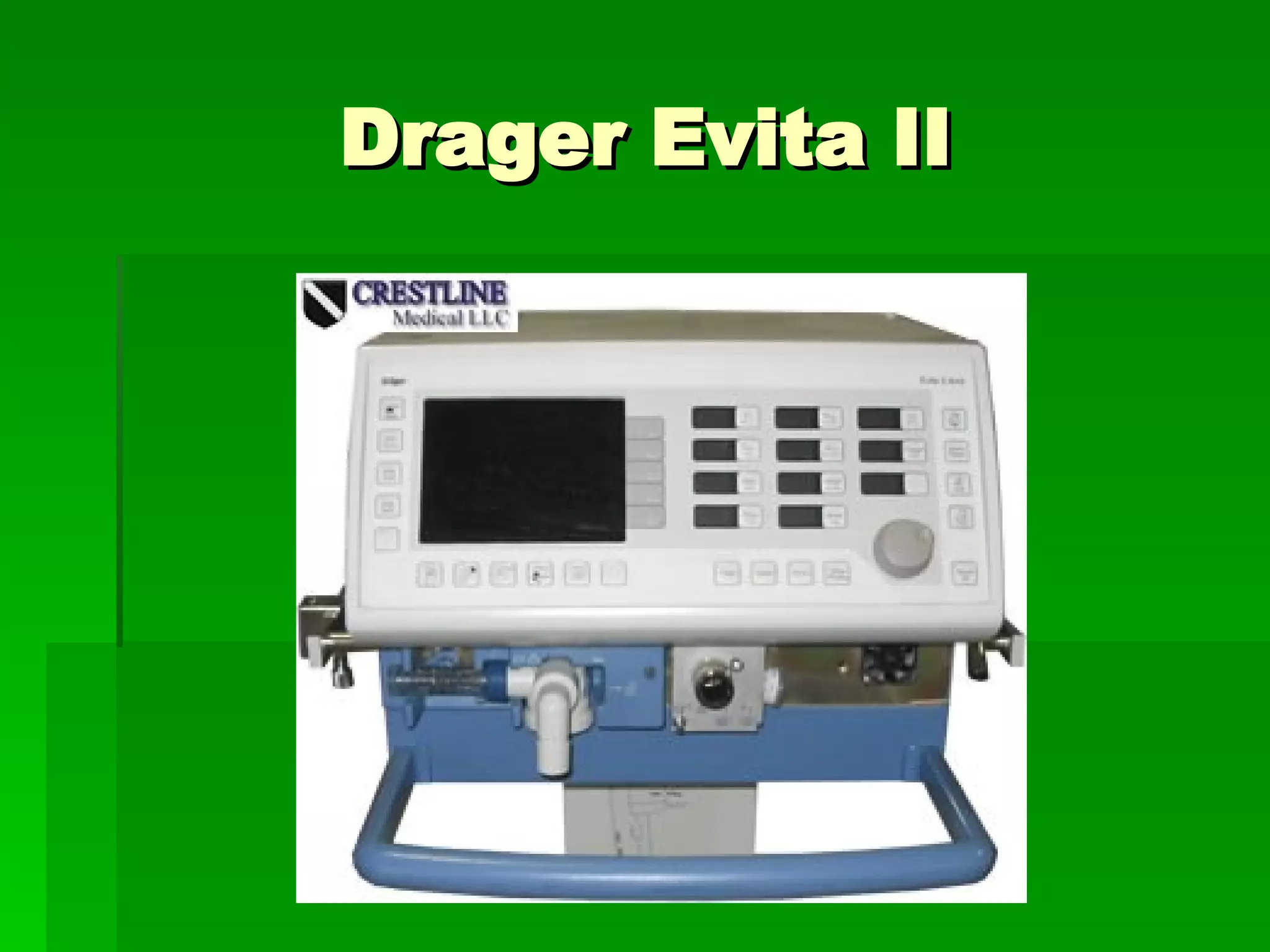
Drager Evita II
Puritan Bennett 840
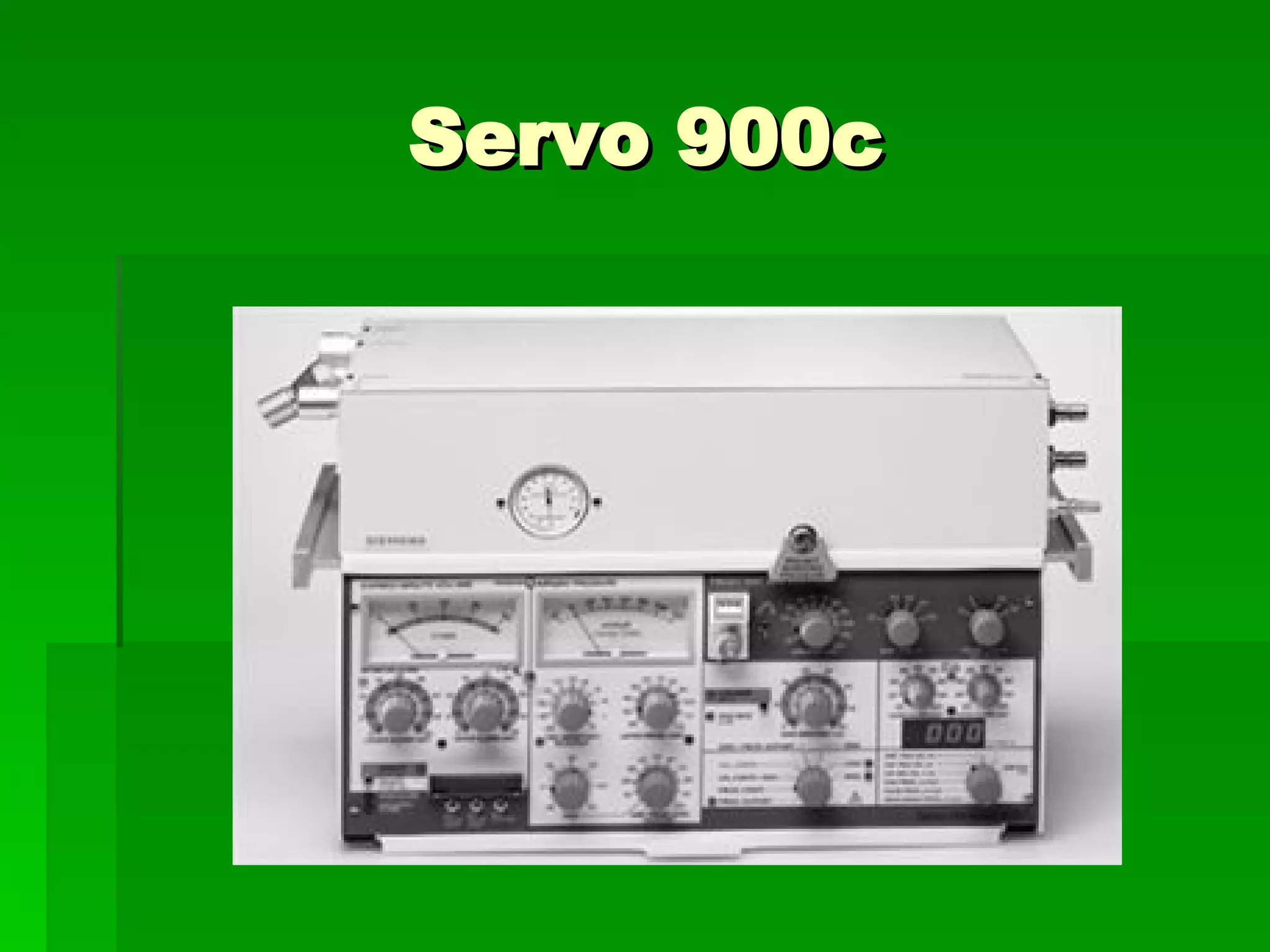
Servo 900c
Servo 300a
Servo  i
One of the Most Famous Ventilators
Complications to Mechanical Ventilation Ventilator Induced Lung Injury (VILI) Induced by excessive pressure  (barotrauma) Induced by excessive Volume  (volutrauma) Ventilator Associated Pneumonia (VAP) Most commonly  Pseudomonas,  Gram Negative Bacilli, and staphylococci.
Ventilatory Discontinuance Weaning Process of discontinuing ventilatory support, regardless of the time frame involved. Categories Quick removal; routine More gradual reduction in support (trach collar trials) Ventilator dependent patients
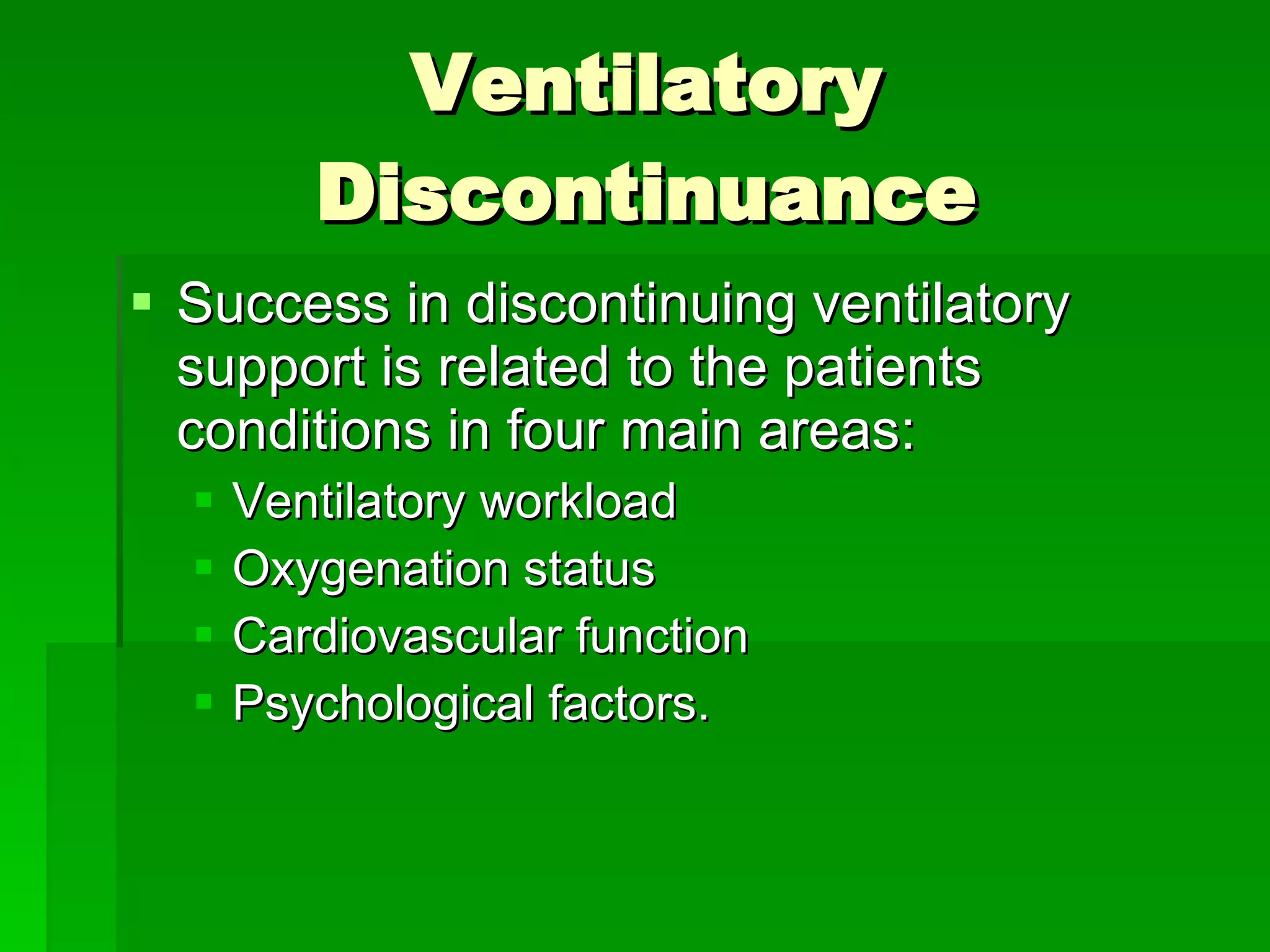
Ventilatory Discontinuance Success in discontinuing ventilatory support is related to the patients conditions in four main areas: Ventilatory workload  Oxygenation status Cardiovascular function Psychological factors.
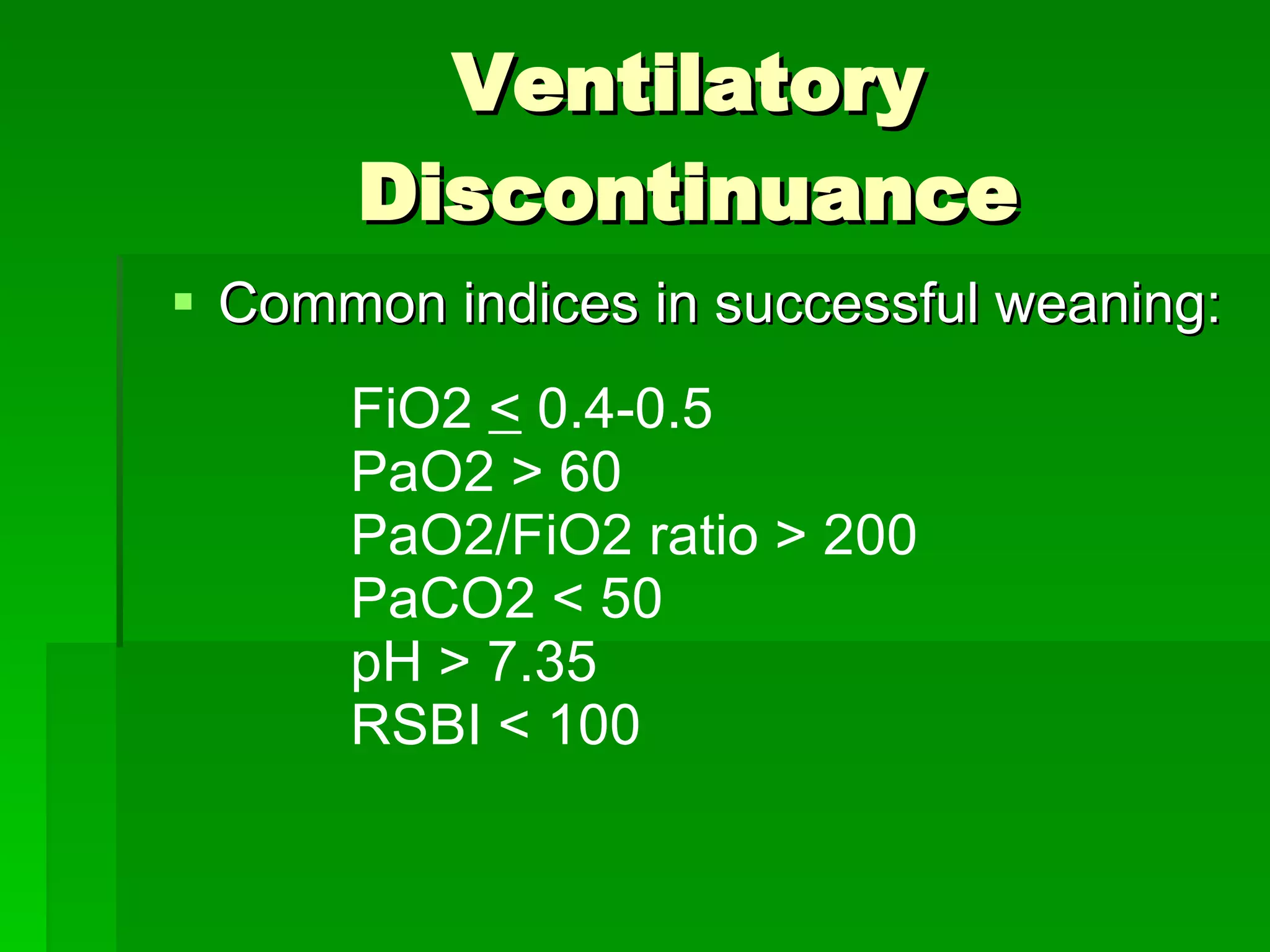
Ventilatory Discontinuance Common indices in successful weaning: FiO2  <  0.4-0.5 PaO2 > 60 PaO2/FiO2 ratio > 200 PaCO2 < 50 pH > 7.35 RSBI < 100
Questions?

NurseReview.Org - Introduction to Mechanical Ventilation

  • 1.
    Introduction to MechanicalVentilation Craig A. Hawkins BS RRT RCP Respiratory Therapy Supervisor Presbyterian Hospital
  • 2.
    Indications for MechanicalVentilation Impending Respiratory Failure Acute Respiratory Failure/Arrest Post-Operatively
  • 3.
    Indications for MechanicalVentilation Impending Respiratory Failure Progressively worsening clinical appearance. Worsening CXR. Hypoxemic Respiratory Failure. Hypercapnic Respiratory Failure.
  • 4.
    Indications for MechanicalVentilation Acute Respiratory Failure/Arrest Acute change in ABG results Respiratory Arrest/Status Post CPR Acute epiglottitis/anaphylaxis
  • 5.
    Indications for MechanicalVentilation Postoperatively Oversedation/paralytics Pain Control Proper Immobilization
  • 6.
    Key Terms inMechanical Ventilation Tidal Volume (Vt) The volume of air inhaled and exhaled from the lungs. Breaths per Minute (RR, f) Also known as frequency. Positive End Expiratory Pressure (PEEP) Maintenance of above atmospheric pressure at the airway throughout exp. phase.
  • 7.
    Key Terms inMechanical Ventilation Minute Ventilation (VE) The total amount of volume moving in and out of the lung in one minute. Fractional Inspired Oxygen (FiO2) Correctly written with decimal place (21%-0.21; 100%-1.0) Inspiratory:Expiratory Ratio (I:E ratio) Normal I:E ratio 1:2-3
  • 8.
    Negative Pressure VentilationRarely Used; Currently used for patients with neuromuscular diseases. Thoracic cage is encased where negative pressure is applied across the chest wall. Generates subatmospheric pressures creating a difference in pressure gradients. During exhalation, negative pressure is replace by atmospheric pressure allowing the lungs to deflate.
  • 9.
    Negative Pressure VentilationTypes of Negative Pressure Ventilators
  • 10.
  • 11.
  • 12.
  • 13.
    Complications with NegativePressure Ventilation Limited access for patient care. Inability to properly monitor pulmonary mechanics. Patient discomfort.
  • 14.
    Positive Pressure VentilationDefined as the application of pressure to the lungs in order to improve gas exchange. The Lungs are physically filled/ventilated with air using machinery. Multiple modes, methods, and theory.
  • 15.
    Positive Pressure VentilationBasically broken into two categories: Control Modes. Supportive Modes.
  • 16.
    Control Modes ofVentilation Assist/Control (usually abbreviated A/C also known as Volume Control VC). Tidal Volume is set and remains constant. Respiratory Rate is set. Airway Pressure will vary according to lung compliance. Ventilator will deliver set volume whether patient triggers a breath or mandatory breath is being delivered.
  • 17.
    Control Modes ofVentilation Pressure Control Ventilation (usually abbreviated PCV or sometimes PCIRV). Upper Airway Pressure Level is set and remains constant. Respiratory Rate is set. Tidal volumes will vary according to lung compliance. Ventilator will deliver set pressure level whether patient triggers a breath or mandatory breath is being delivered.
  • 18.
    Control Modes ofVentilation Pressure Regulated Volume Control (usually abbreviated PRVC). Tidal Volume is set, however may or may not remain constant. Respiratory Rate is set. Ventilator will deliver volume however volume may decrease according to patient’s lung compliance. A lung protective mode.
  • 19.
    Supportive Modes ofVentilation Synchronized Intermittent Mandatory Ventilation (usually abbreviated SIMV). Tidal Volume is set and delivered on each mandatory breath. Respiratory Rate is set. When a patient triggers the ventilator spontaneously , the patient receives a Pressure Supported breath.
  • 20.
    Supportive Modes ofVentilation Pressure Support Ventilation (PSV) Is a strictly patient dependant mode; patient must be breathing spontaneously. An upper (inspiratory) pressure level is adjusted to provide adequate tidal volumes for each patient triggered breath. PEEP is also adjusted as an independent pressure from the upper pressure level and is active during expiration. PSV is a weaning mode.
  • 21.
    Supportive Modes ofVentilation Volume Support (VS) Is a strictly patient dependant mode; patient must be breathing spontaneously. Tidal Volume is set. Each spontaneous breath is supported with dialed volume.
  • 22.
    Supportive Modes ofVentilation Continuous (Constant) Positive Airway Pressure (CPAP) Is a strictly patient dependant mode; patient must be breathing spontaneously. Closely resembles Pressure Support, however CPAP is a constant set pressure that does not change during inspiration or expiration. CPAP is a weaning mode.
  • 23.
  • 24.
  • 25.
  • 26.
  • 27.
  • 28.
    One of theMost Famous Ventilators
  • 29.
    Complications to MechanicalVentilation Ventilator Induced Lung Injury (VILI) Induced by excessive pressure (barotrauma) Induced by excessive Volume (volutrauma) Ventilator Associated Pneumonia (VAP) Most commonly Pseudomonas, Gram Negative Bacilli, and staphylococci.
  • 30.
    Ventilatory Discontinuance WeaningProcess of discontinuing ventilatory support, regardless of the time frame involved. Categories Quick removal; routine More gradual reduction in support (trach collar trials) Ventilator dependent patients
  • 31.
    Ventilatory Discontinuance Successin discontinuing ventilatory support is related to the patients conditions in four main areas: Ventilatory workload Oxygenation status Cardiovascular function Psychological factors.
  • 32.
    Ventilatory Discontinuance Commonindices in successful weaning: FiO2 < 0.4-0.5 PaO2 > 60 PaO2/FiO2 ratio > 200 PaCO2 < 50 pH > 7.35 RSBI < 100
  • 33.