John J. Marini Alain F. Broccard University of Minnesota Regions Hospital Minneapolis / St. Paul USA Advanced Mechanical Ventilation
Advanced Mechanical Ventilation Outline   Consequences of Elevated Alveolar Pressure Implications of Heterogeneous Lung Unit Inflation Adjuncts to Ventilation Prone Positioning Recruitment Maneuvers Difficult Management Problems Acute Lung Injury Severe Airflow Obstruction An Approach to Withdrawing Ventilator Support Advanced Modes for Implementing Ventilation Case Scenarios
Consequences of Elevated Alveolar Pressure--1   Mechanical ventilation expands the lungs and chest wall by pressurizing the airway during inflation. The stretched lungs and chest wall develop recoil tension that drives expiration. Positive pressure developed in the pleural space may have adverse effects on venous return, cardiac output and dead space creation. Stretching the lung refreshes the alveolar gas, but excessive stretch subjects the tissue to tensile stresses which may exceed the structural tolerance limits of this delicate membrane. Disrupted alveolar membranes allow gas to seep into the interstitial compartment, where it collects, and migrates toward regions with lower tissue pressures. Interstitial, mediastinal, and subcutaneous emphysema are frequently the consequences.  Less commonly, pneumoperitoneum, pneumothorax, and tension cysts may form. Rarely, a communication between the high pressure gas pocket and the pulmonary veins generates systemic gas emboli.
Partitioning of Alveolar Pressure is a Function  of Lung and Chest Wall Compliances Lungs are smaller and pleural pressures are higher when the chest wall is stiff.
Hemodynamic Effects of Lung Inflation   Lung inflation by positive pressure causes Increased pleural pressure and impeded venous return Increased pulmonary vascular resistance Compression of the inferior vena cava Retardation of heart rate increases These effects are much less obvious in the presence of Adequate circulating volume Adequate vascular tone Spontaneous breathing efforts Preserved adrenergic responsiveness
Hemodynamic Effects of Lung Inflation   With Low Lung Compliance, High Levels of  PEEP are Generally Well Tolerated.
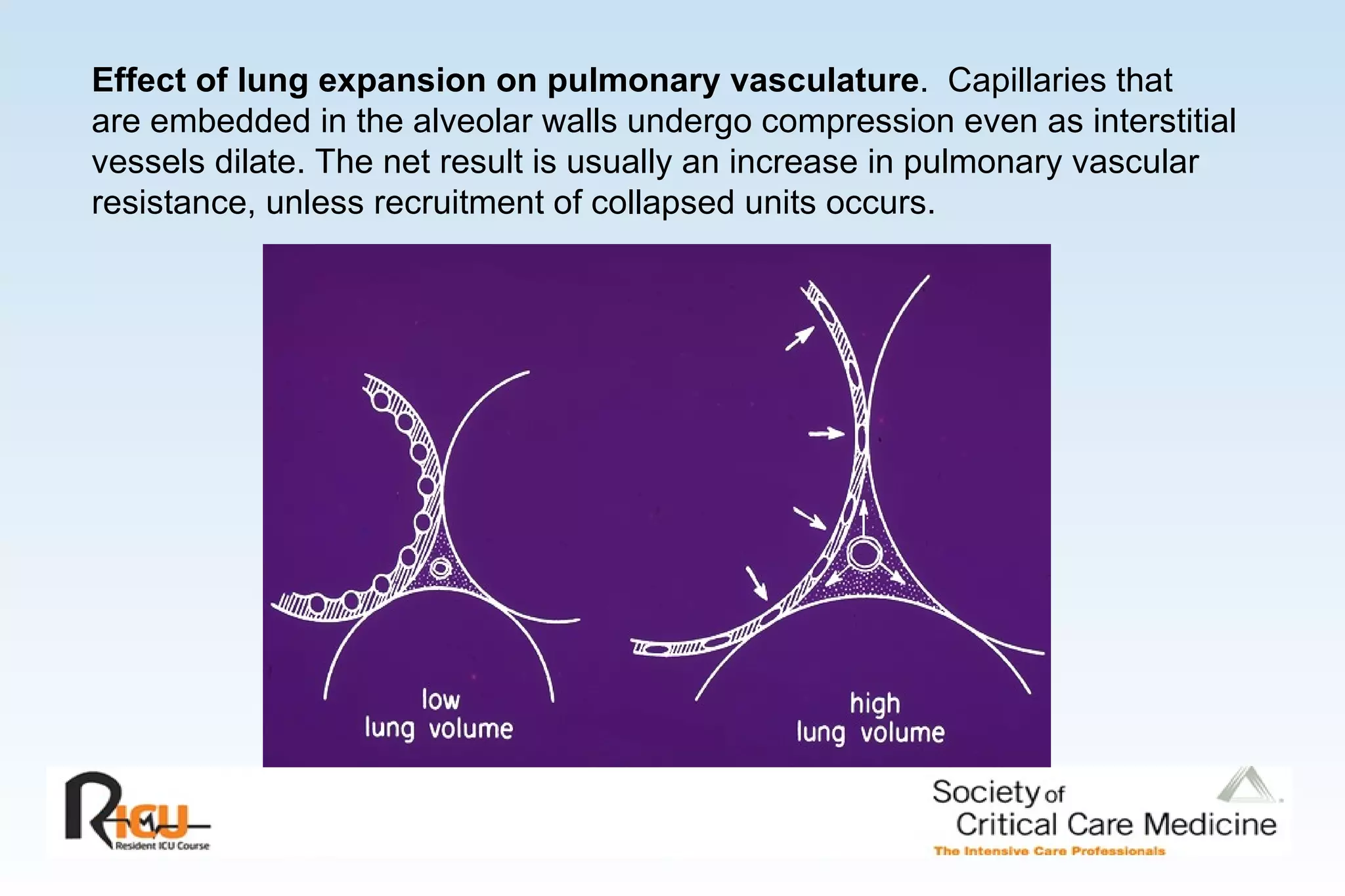
Effect of lung expansion on pulmonary vasculature .  Capillaries that are embedded in the alveolar walls undergo compression even as interstitial vessels dilate. The net result is usually an increase in pulmonary vascular resistance, unless recruitment of collapsed units occurs.
Conflicting Actions of Higher Airway Pressure   Lung Unit Recruitment and Maintenance of Aerated Volume Gas exchange Improved Oxygenation Distribution of Ventilation Lung protection Parenchymal Damage Airway trauma Increased Lung Distention Impaired Hemodynamics Increased Dead Space Potential to Increase Tissue Stress … Only If Plateau Pressure Rises
Gas Extravasation  Barotrauma
Diseased Lungs Do  Not Fully Collapse, Despite Tension Pneumothorax … and  They cannot always  be  fully  “opened” Dimensions of a fully  Collapsed  Normal  Lung
Tension Cysts
Tidally Phasic Systemic Gas Embolism   End-Expiration End-Inspiration
Consequences of Elevated Alveolar Pressure--2   In recent years there has been intense interest in another and perhaps common consequence of excessive inflation pressure--Ventilator-Induced Lung Injury (VILI). VILI appears to develop either as a result of structural breakdown of the tissue by mechanical forces or by mechano-signaling of inflammation due to repeated application of excessive tensile forces. Although still controversial, it is generally agreed  that damage can result from overstretching of lung units that are already open or from shearing forces generated at the junction of open and collapsed tissue. Tidally recurrent opening and closure of small airways under high pressure is thought to be important in the generation of VILI. Prevention of VILI is among the highest priorities of the ICU clinician caring for the ventilated patient and is the purpose motivating adoption of “Lung Protective” ventilation strategies.  Translocation of inflammatory products, bacteria, and even gas may contribute to remote damage in systemic organs and help explain why lung protective strategies are associated with lower risk for morbidity and death.
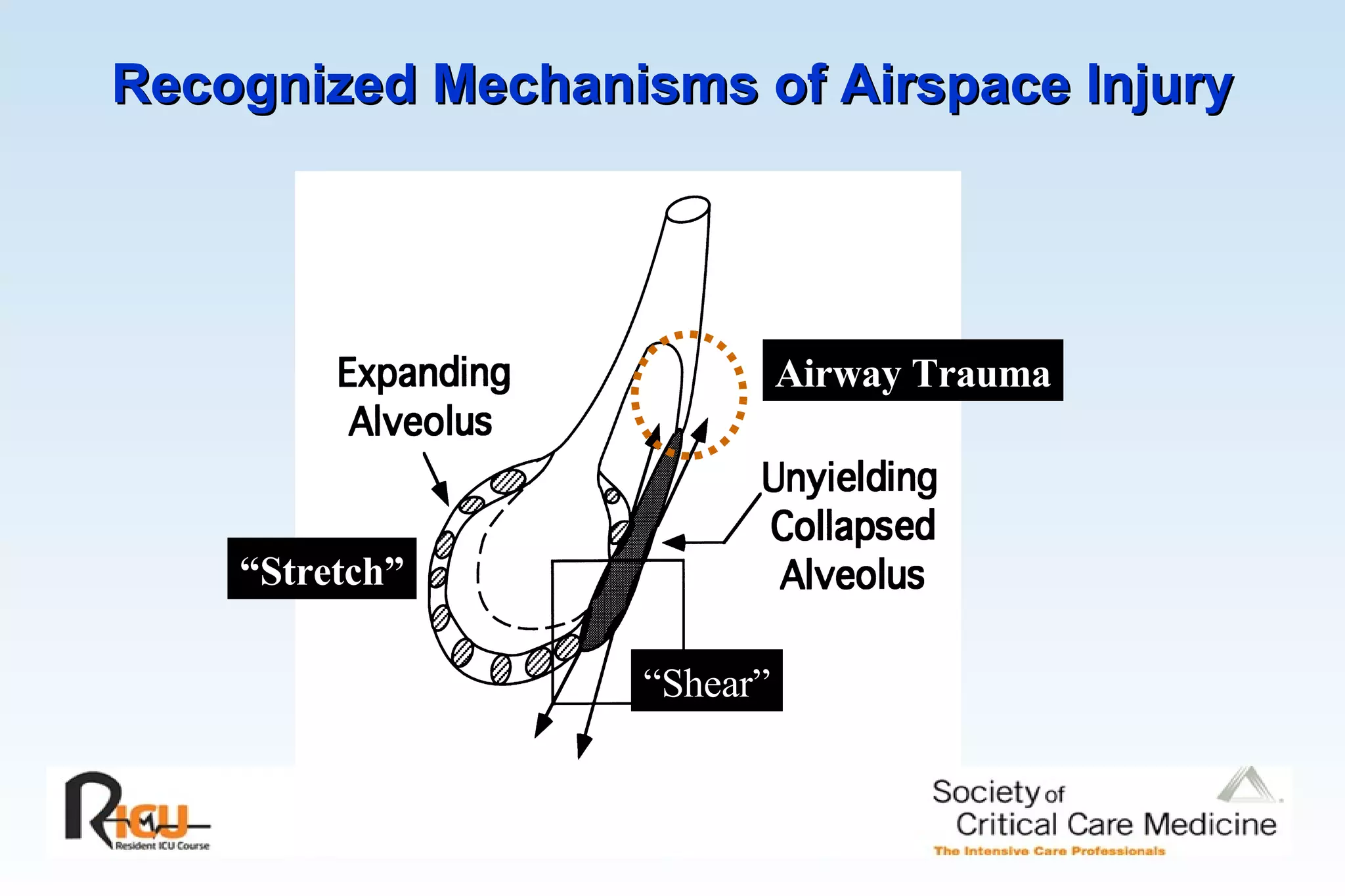
Recognized Mechanisms of Airspace Injury   “ Stretch” “ Shear” Airway Trauma
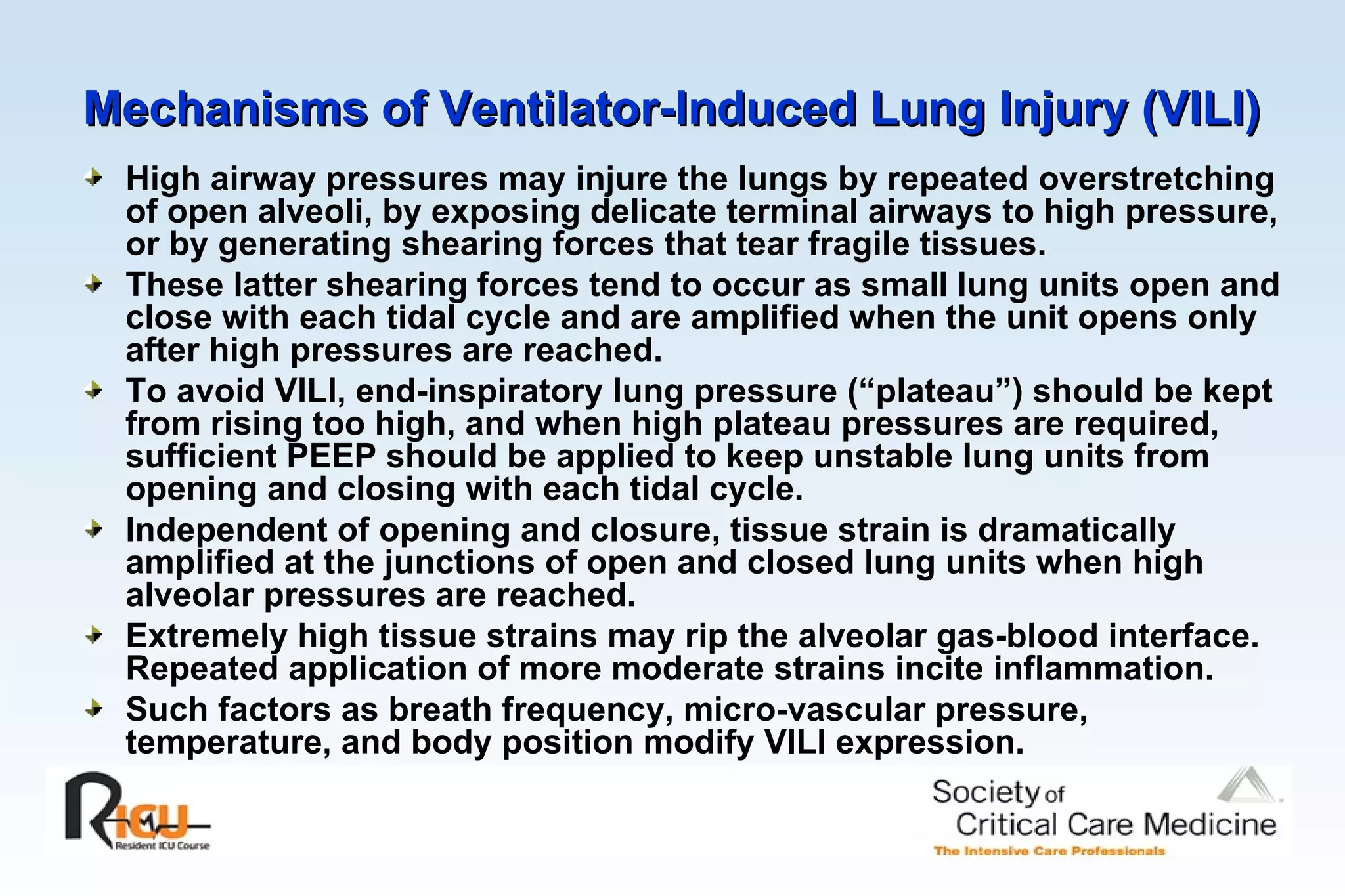
Mechanisms of Ventilator-Induced Lung Injury (VILI)   High airway pressures may injure the lungs by repeated overstretching of open alveoli, by exposing delicate terminal airways to high pressure, or by generating shearing forces that tear fragile tissues. These latter shearing forces tend to occur as small lung units open and close with each tidal cycle and are amplified when the unit opens only after high pressures are reached. To avoid VILI, end-inspiratory lung pressure (“plateau”) should be kept from rising too high, and when high plateau pressures are required, sufficient PEEP should be applied to keep unstable lung units from opening and closing with each tidal cycle. Independent of opening and closure, tissue strain is dramatically amplified at the junctions of open and closed lung units when high alveolar pressures are reached. Extremely high tissue strains may rip the alveolar gas-blood interface. Repeated application of more moderate strains incite inflammation. Such factors as breath frequency, micro-vascular pressure, temperature, and body position modify VILI expression.
End-Expiration Tidal Forces  (Transpulmonary and Microvascular Pressures) Extreme   Stress/Strain Moderate   Stress/Strain Mechano signaling via integrins, cytoskeleton, ion channels inflammatory cascade Cellular Infiltration   and  Inflammation Rupture Signaling Marini / Gattinoni CCM 2004 Pathways to VILI
Microvascular Fracture in ARDS A Portal for  Gas & Bacteria? Hotchkiss  et al Crit Care Med  2002; 1  
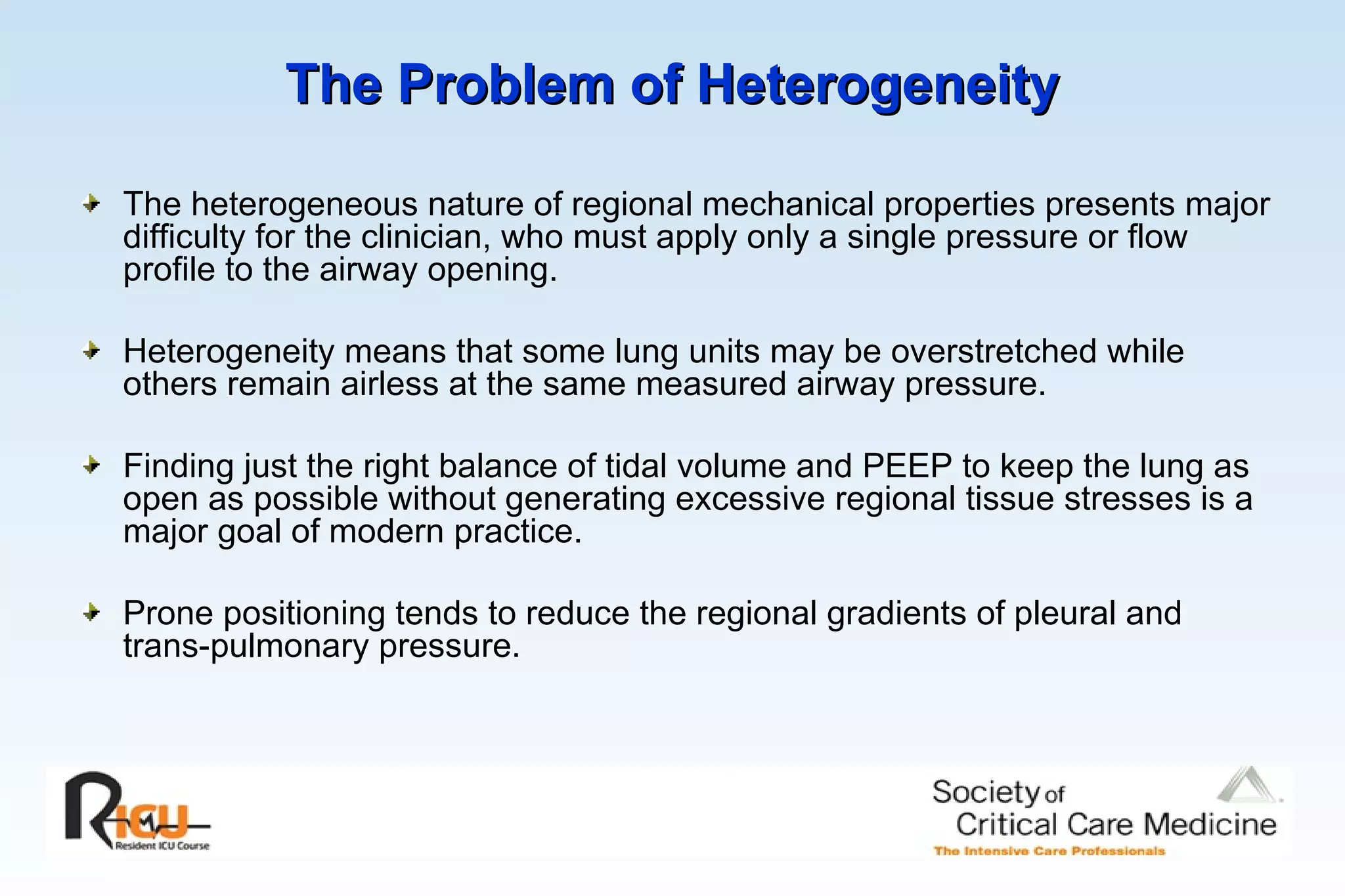
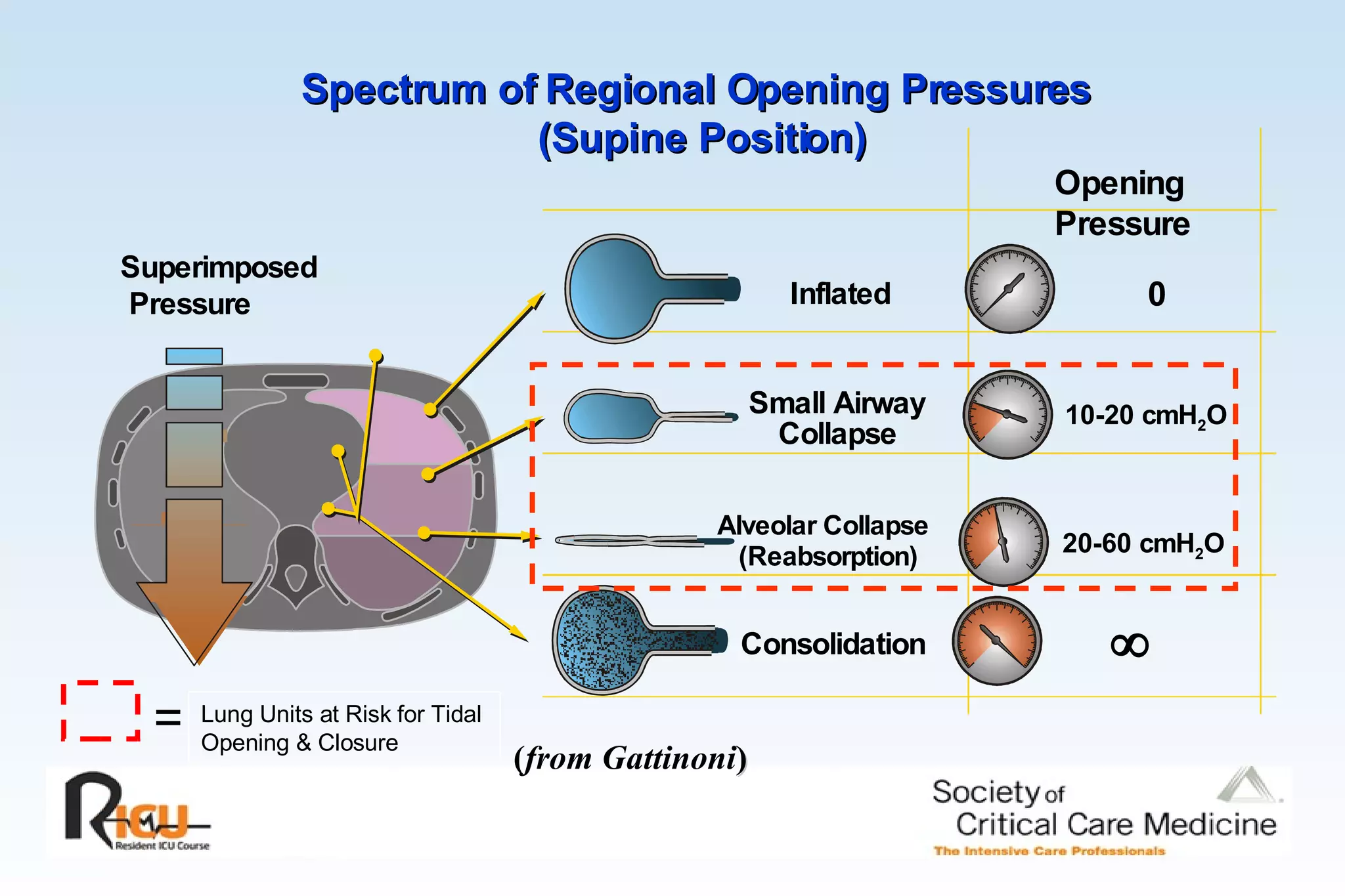
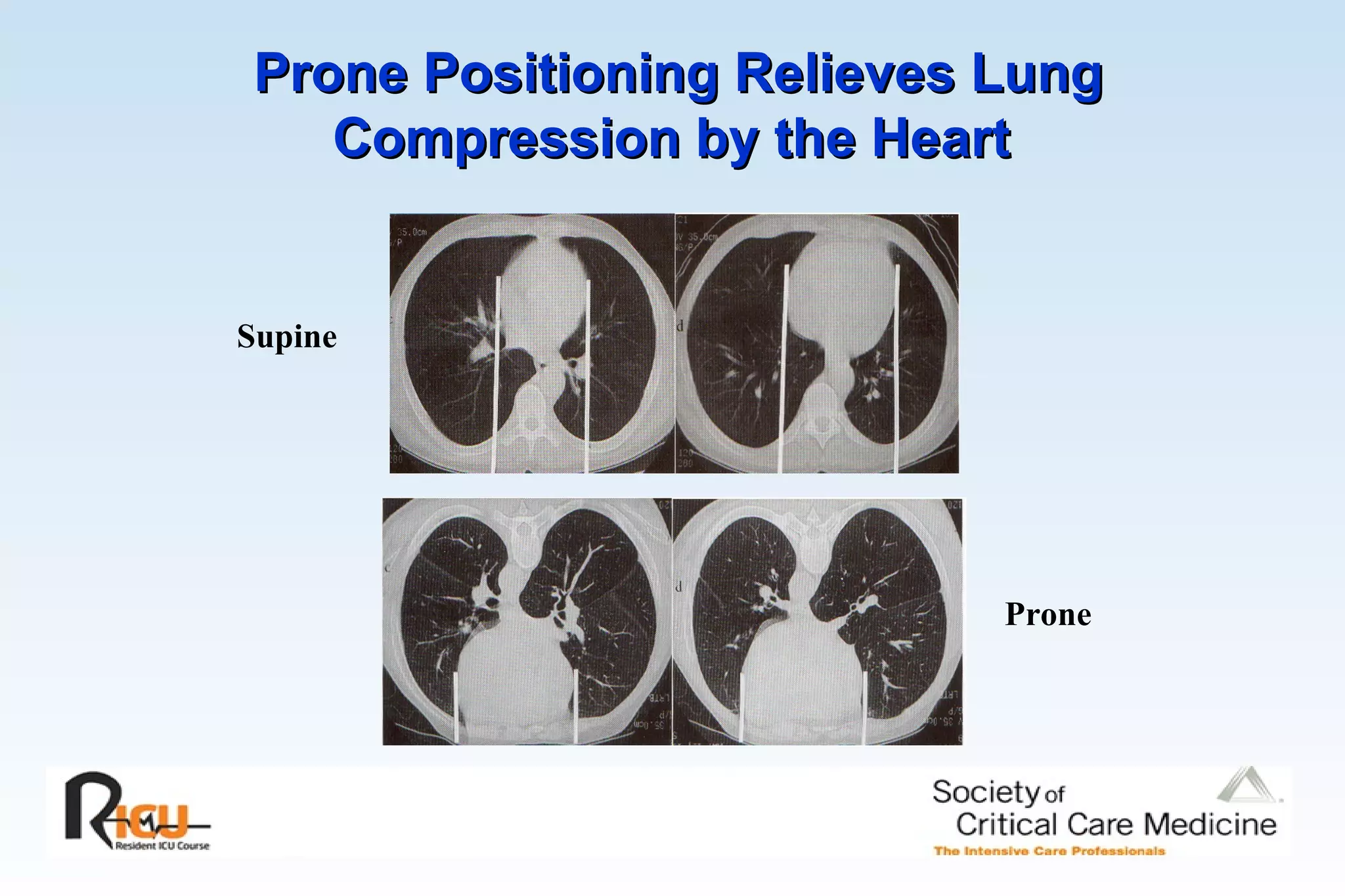
The Problem of Heterogeneity   The heterogeneous nature of regional mechanical properties presents major difficulty for the clinician, who must apply only a single pressure or flow profile to the airway opening. Heterogeneity means that some lung units may be overstretched while others remain airless at the same measured airway pressure. Finding just the right balance of tidal volume and PEEP to keep the lung as open as possible without generating excessive regional tissue stresses is a major goal of modern practice. Prone positioning tends to reduce the regional gradients of pleural and trans-pulmonary pressure.
Spectrum of Regional Opening Pressures  (Supine Position) Superimposed Pressure ( from Gattinoni ) Lung Units at Risk for Tidal  Opening & Closure = Inflated 0 Alveolar Collapse (Reabsorption) 20-60 cmH 2 O Small Airway Collapse 10-20 cmH 2 O Consolidation  Opening Pressure
Different lung regions may be overstretched or underinflated, even as measures of total lung mechanics appear within normal limits. Alveolar Pressure Lung Volume UPPER  LUNG TOTAL  LUNG LOWER  LUNG
Recruitment Parallels Volume As A  Function of Airway Pressure   Recruitment and  Inflation (%) Frequency Distribution of  Opening Pressures (%) Airway Pressure (cmH2O)
% Opening and Closing Pressures in ARDS 50 High pressures may be needed to open some lung units, but once open, many units stay open at lower pressure. Paw [cmH 2 O] 0 5 10 15 20 25 30 35 40 45 50 0 10 20 30 40 Opening pressure Closing  pressure From Crotti et al AJRCCM 2001.
Zone of ↑  Risk
Dependent to Non-dependent  Progression of Injury
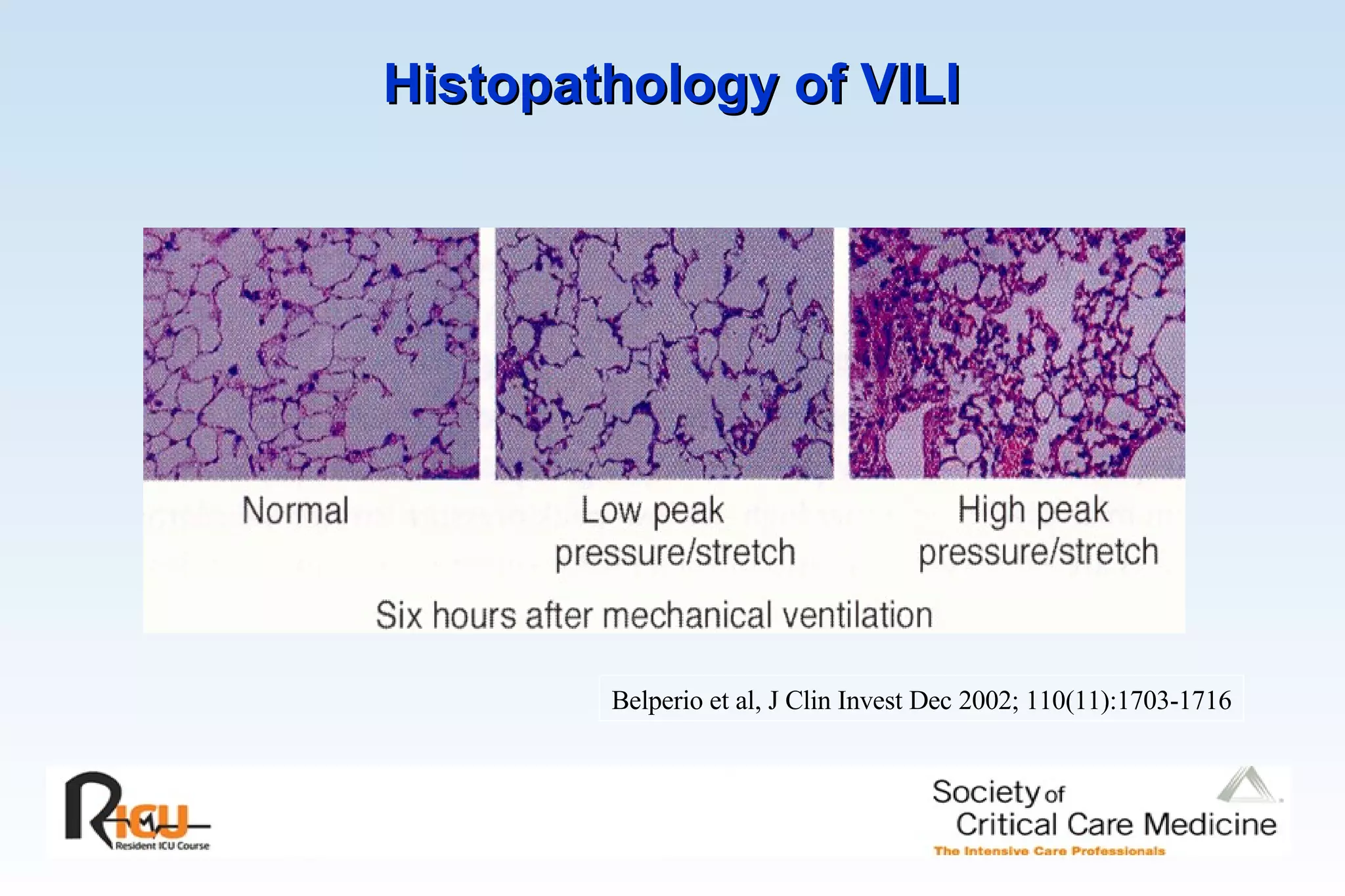
Histopathology of VILI   Belperio et al, J Clin Invest Dec 2002; 110(11):1703-1716
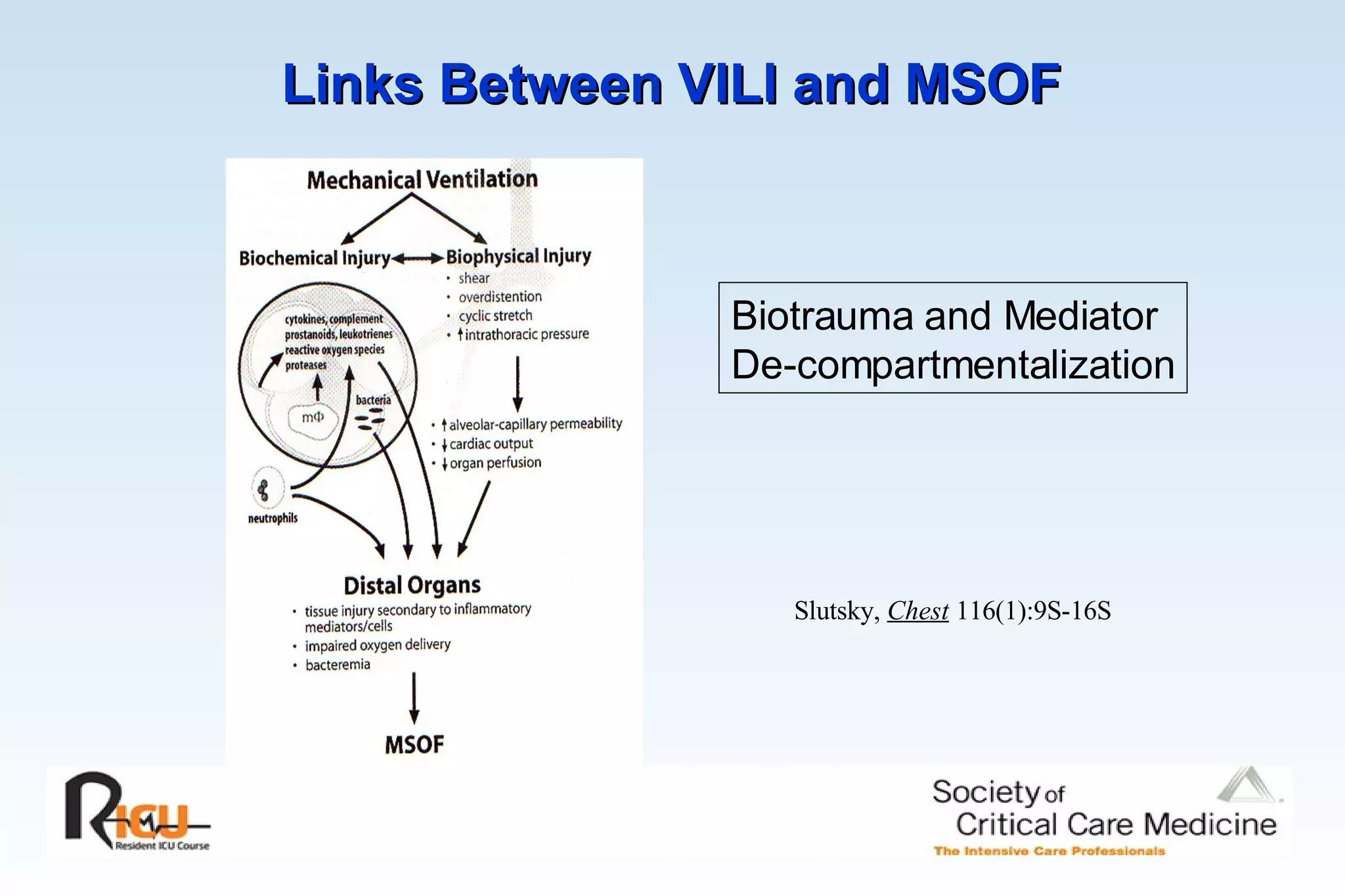
Links Between VILI and MSOF   Biotrauma and Mediator De-compartmentalization Slutsky,  Chest  116(1):9S-16S
Airway Orientation in Supine Position
 
Prone Positioning Evens The Distribution of Pleural & Transpulmonary Pressures
Prone Positioning Relieves Lung Compression by the Heart   Supine Prone
Proning May Benefit the Most Seriously Ill ARDS Subset SAPS II Mortality Rate > 49 40- 49 31- 40 0 - 31 0.0 0.1 0.2 0.3 0.4 0.5 Quartiles of SAPS II Supine * p<0.05 vs Supine Prone *
Proning Helped Most in High V T  Subgroup At Risk For VILI   V T /Kg < 8.2 8.2- 9.7 9.7- 12 > 12  0.0 0.1 0.2 0.3 0.4 0.5 Mortality Rate Quartiles of V T  /Predicted body weight Supine * p<0.05 vs Supine Prone *
How Much Collapse Is Dangerous Depends on the Plateau   R = 100% 20 60 100 Pressure [cmH 2 O] 20 40 60 Total Lung Capacity [%] R = 22% R = 81% R = 93% 0 0 R = 0% R = 59% From Pelosi et al AJRCCM 2001 Some potentially recruitable units open only at high pressure More Extensive  Collapse But  Lower P PLAT Less Extensive  Collapse But  Greater P PLAT
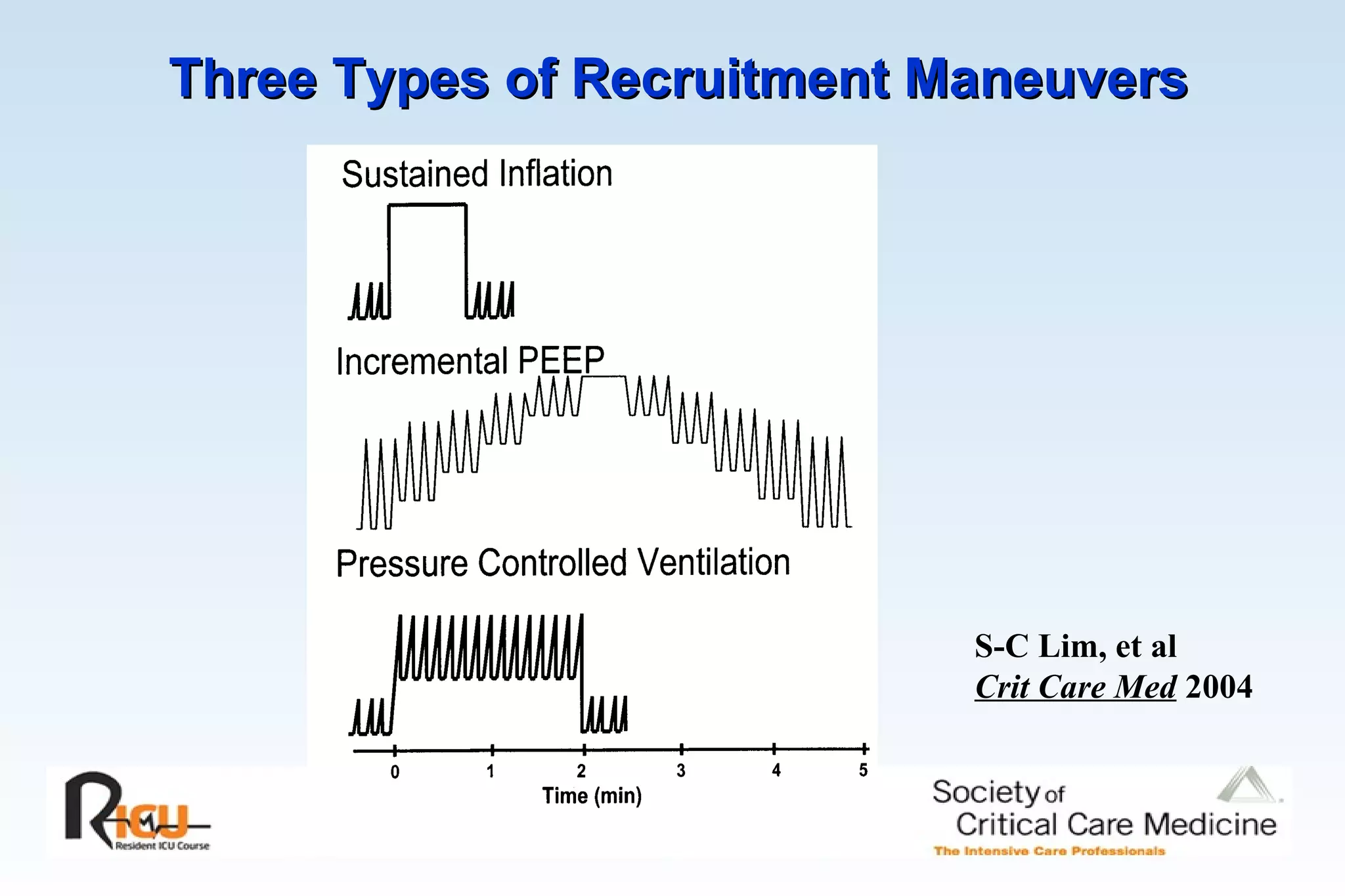
Recruiting Maneuvers in ARDS   The purpose of a recruiting maneuver is to open collapsed lung tissue so it can remain open during tidal ventilation with lower pressures and PEEP, thereby improving gas exchange and helping to eliminate high stress interfaces. Although applying high pressure is fundamental to recruitment, sustaining high pressure is also important. Methods of performing a recruiting maneuver include single sustained inflations and ventilation with high PEEP .
Theoretical   Effect of Sustained Inflation on Tidal Cycling   Rimensberger  ICM  2000 VOLUME (% TLC) Benefit from a recruiting maneuver is usually transient if PEEP remains   unchanged afterward.
Three Types of Recruitment Maneuvers S-C Lim, et al  Crit Care Med   2004
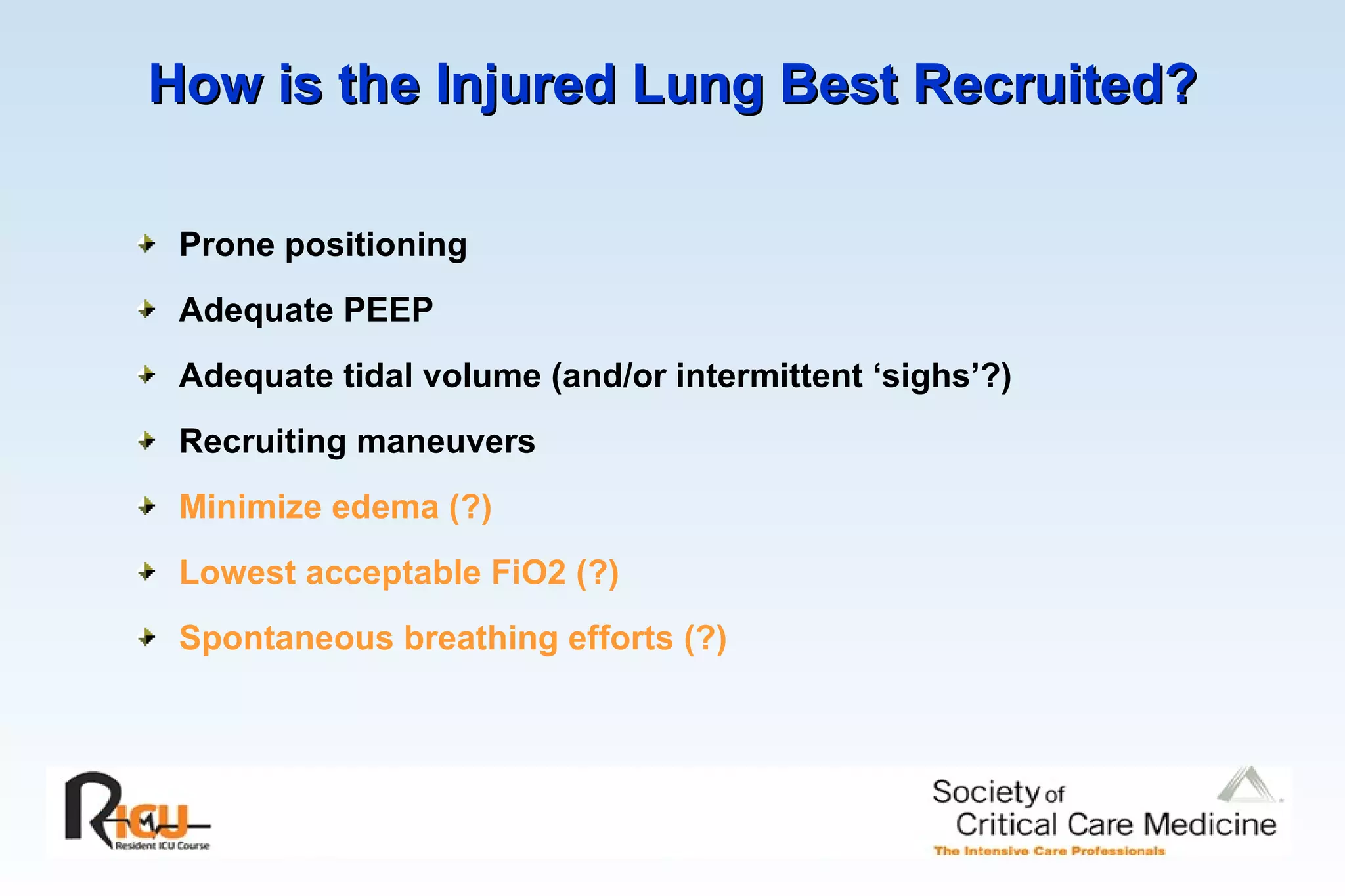
How is the Injured Lung Best Recruited?   Prone positioning Adequate PEEP Adequate tidal volume (and/or intermittent ‘sighs’?) Recruiting maneuvers Minimize edema (?) Lowest acceptable FiO2 (?) Spontaneous breathing efforts (?)
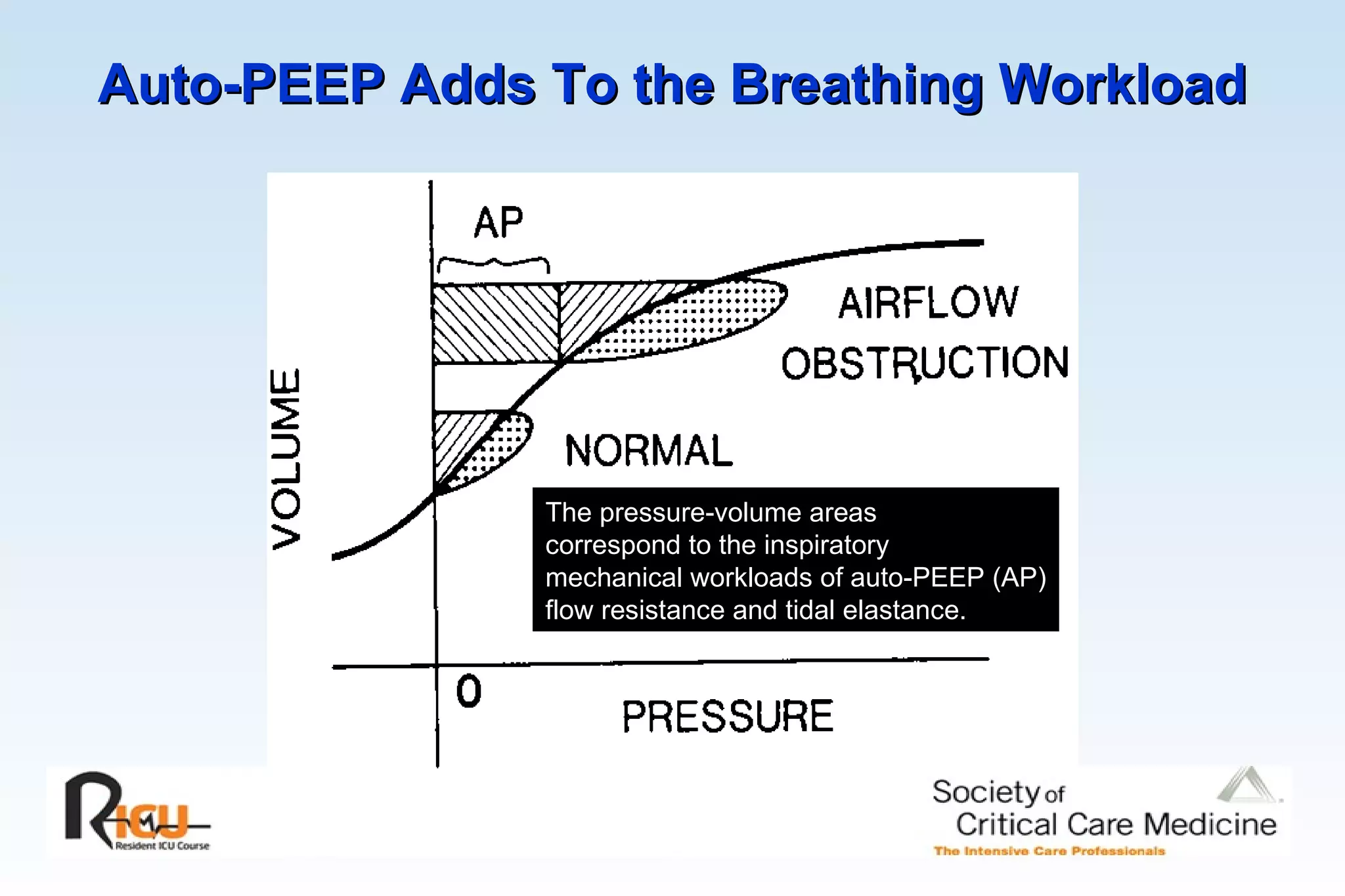
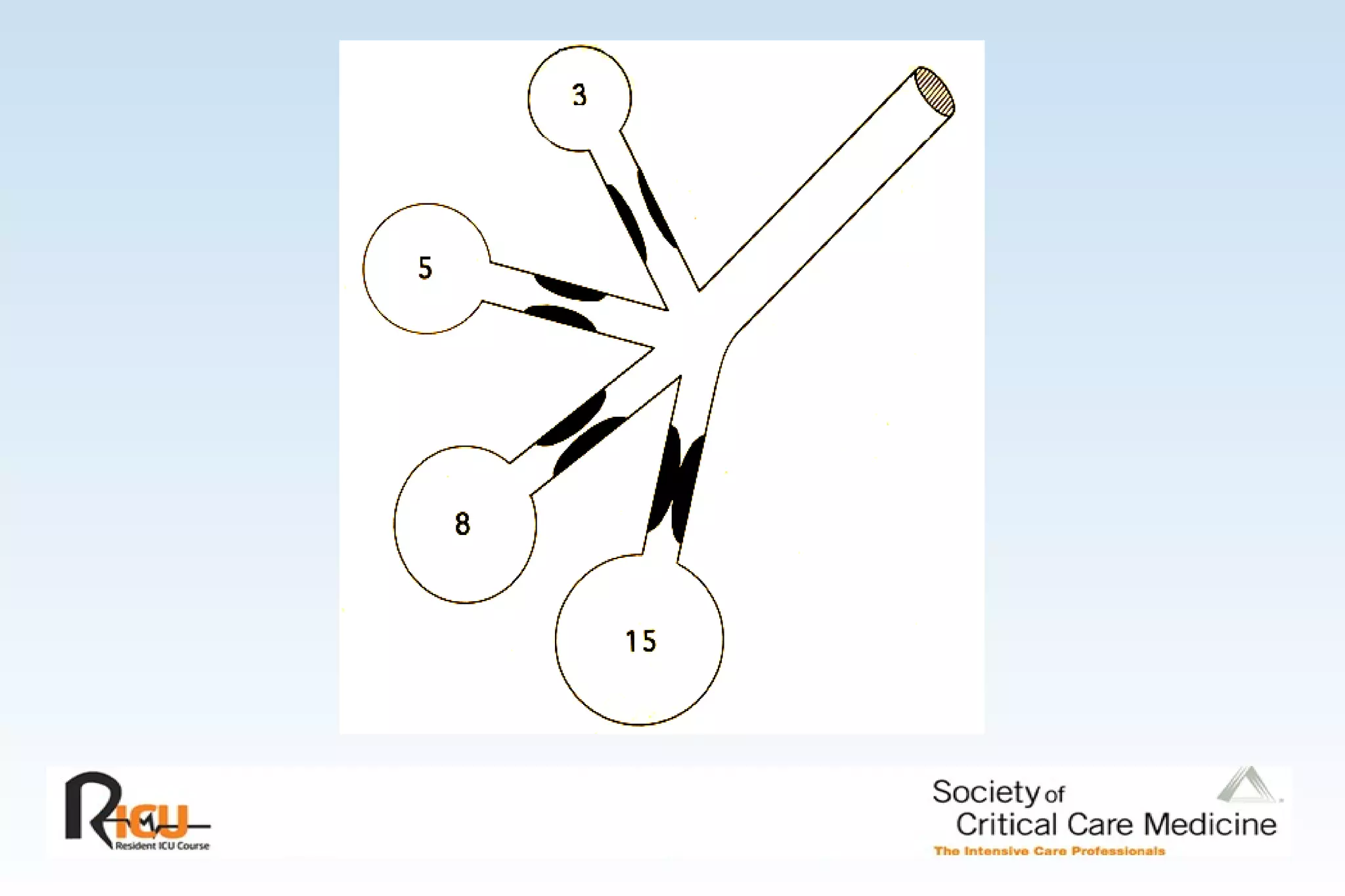
Severe Airflow Obstruction   A major objective of ventilating patients with severe airflow obstruction is to relieve the work of breathing and to minimize auto-PEEP. Reducing minute ventilation requirements will help impressively in reducing gas trapping. When auto-PEEP is present, it has important consequences for hemodynamics, triggering effort and work of breathing. In patients whose expiratory flows are flow limited during tidal breathing, offsetting auto-PEEP with external PEEP may even the gas distribution and reduce breathing effort.
Auto-PEEP Adds To the Breathing Workload   The pressure-volume areas correspond to the inspiratory mechanical workloads of auto-PEEP (AP) flow resistance and tidal elastance.
Gas Trapping in Severe Airflow Obstruction   Disadvantages the respiratory muscles and increases the work of tidal breathing Often causes hemodynamic compromise, especially during passive inflation Raises plateau and mean airway pressures, predisposing to barotrauma Varies with body position and from site to site within the lung
 
Volume Losses in Recumbent Positions   Note that COPD patients lose much less lung volume than normals do, due to gas trapping and need to keep the lungs more inflated to minimize the severity of obstruction. Orthopnea may result.
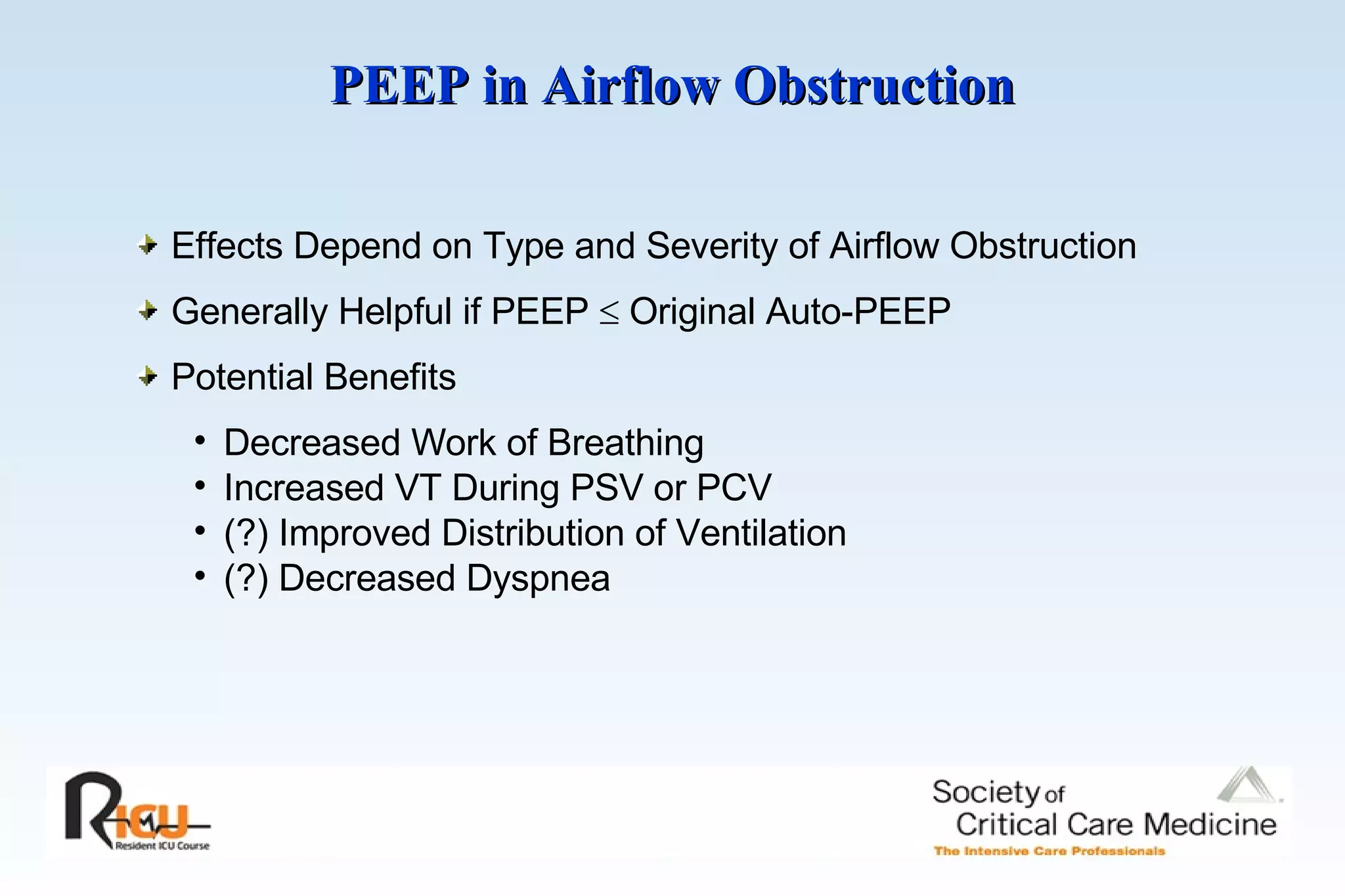
PEEP in Airflow Obstruction   Effects Depend on Type and Severity of Airflow Obstruction Generally Helpful if PEEP    Original Auto-PEEP Potential Benefits Decreased Work of Breathing Increased VT During PSV or PCV (?) Improved Distribution of Ventilation (?) Decreased Dyspnea
Inhalation Lung Scans in the Lateral Decubitus Position for a Normal Subject and COPD Patient   Normal COPD No PEEP  PEEP 10  Addition of 10 cm H 2 O PEEP re-opens dependent airways in COPD
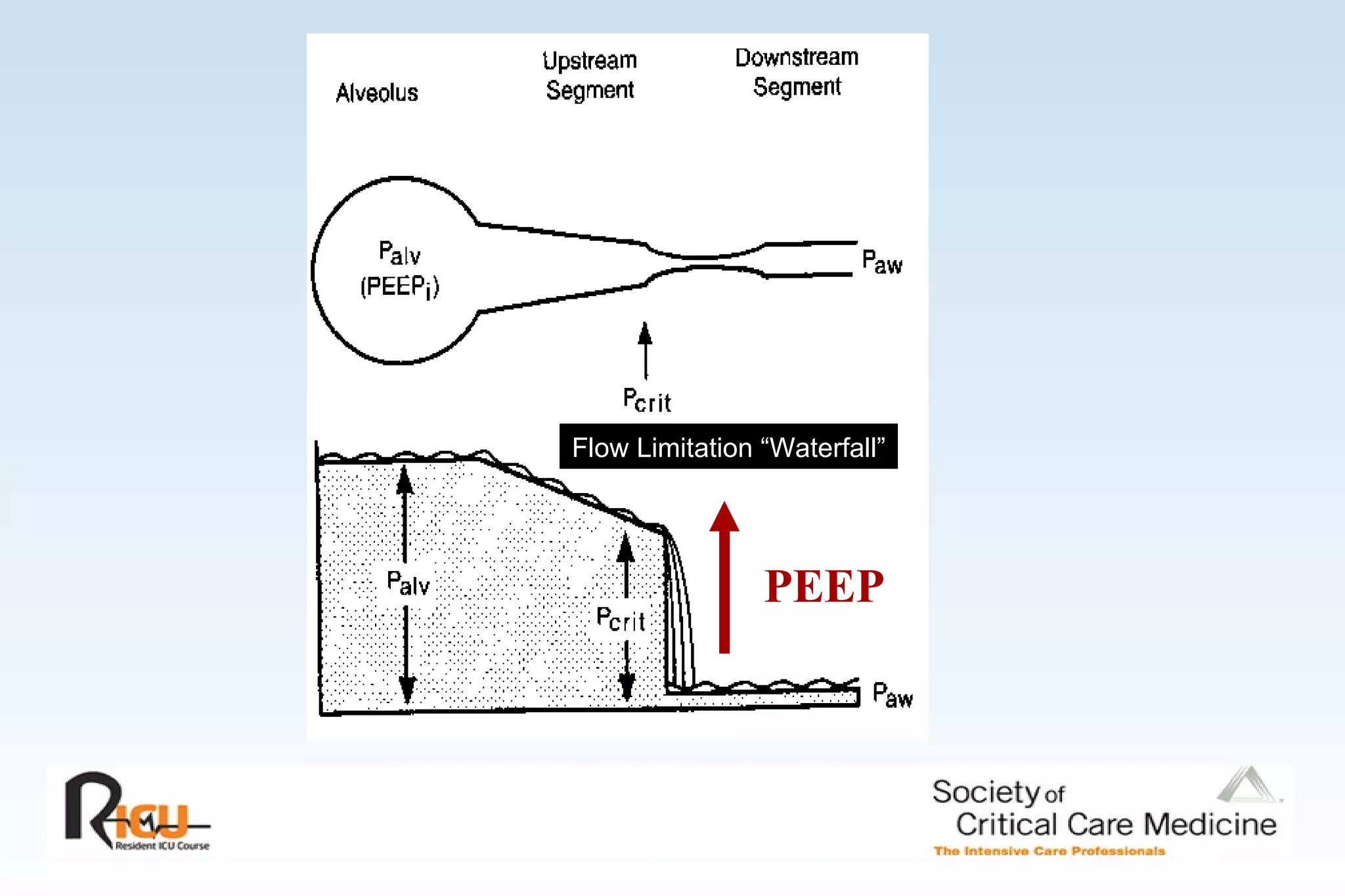
PEEP Flow Limitation “Waterfall”
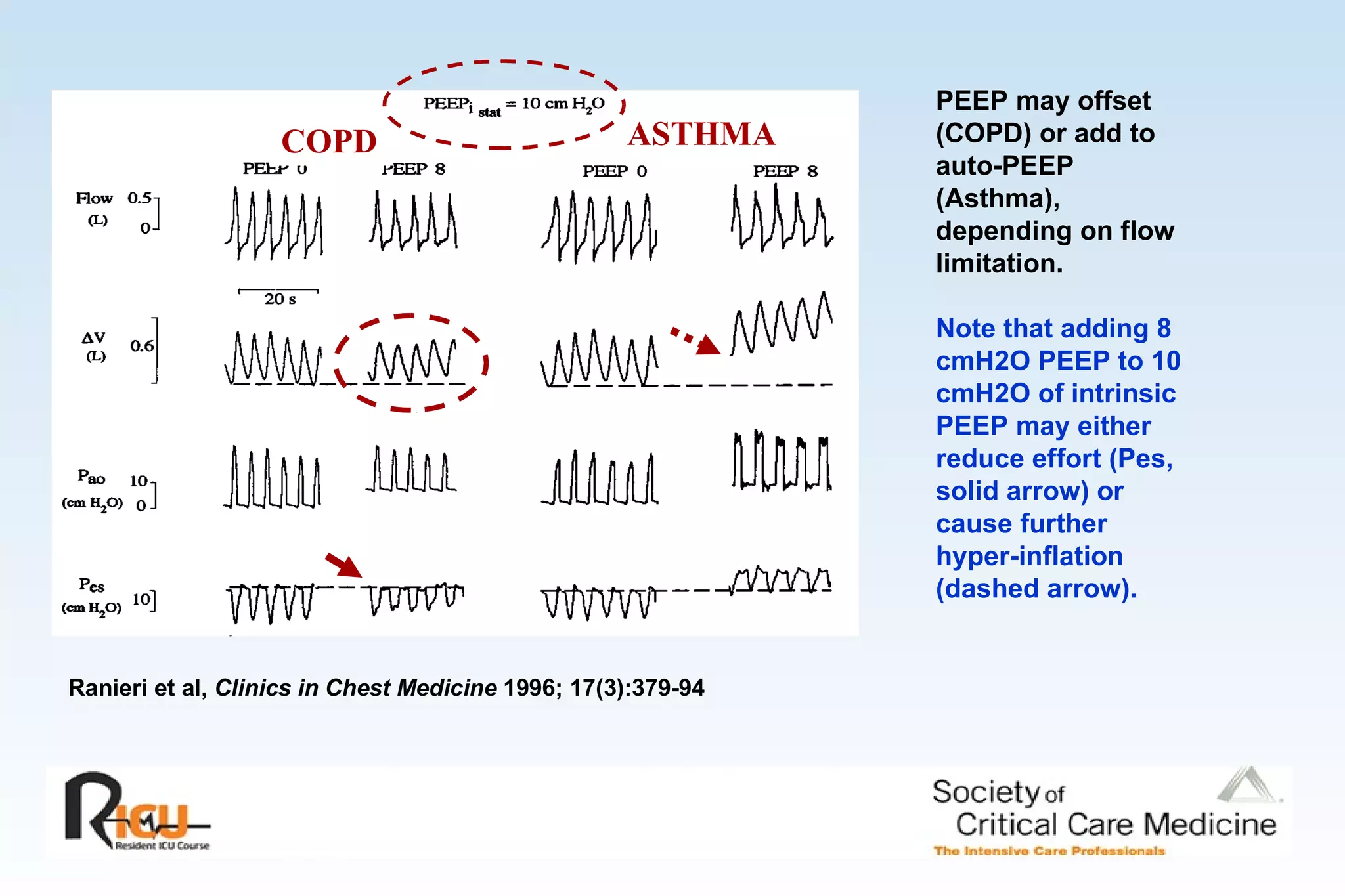
Adding PEEP that approximates auto-PEEP may reduce the difference in pressure between alveolus (Palv) and airway opening, thereby lowering the negative pleural   (Pes) pressure needed to begin inspiration and trigger ventilation.
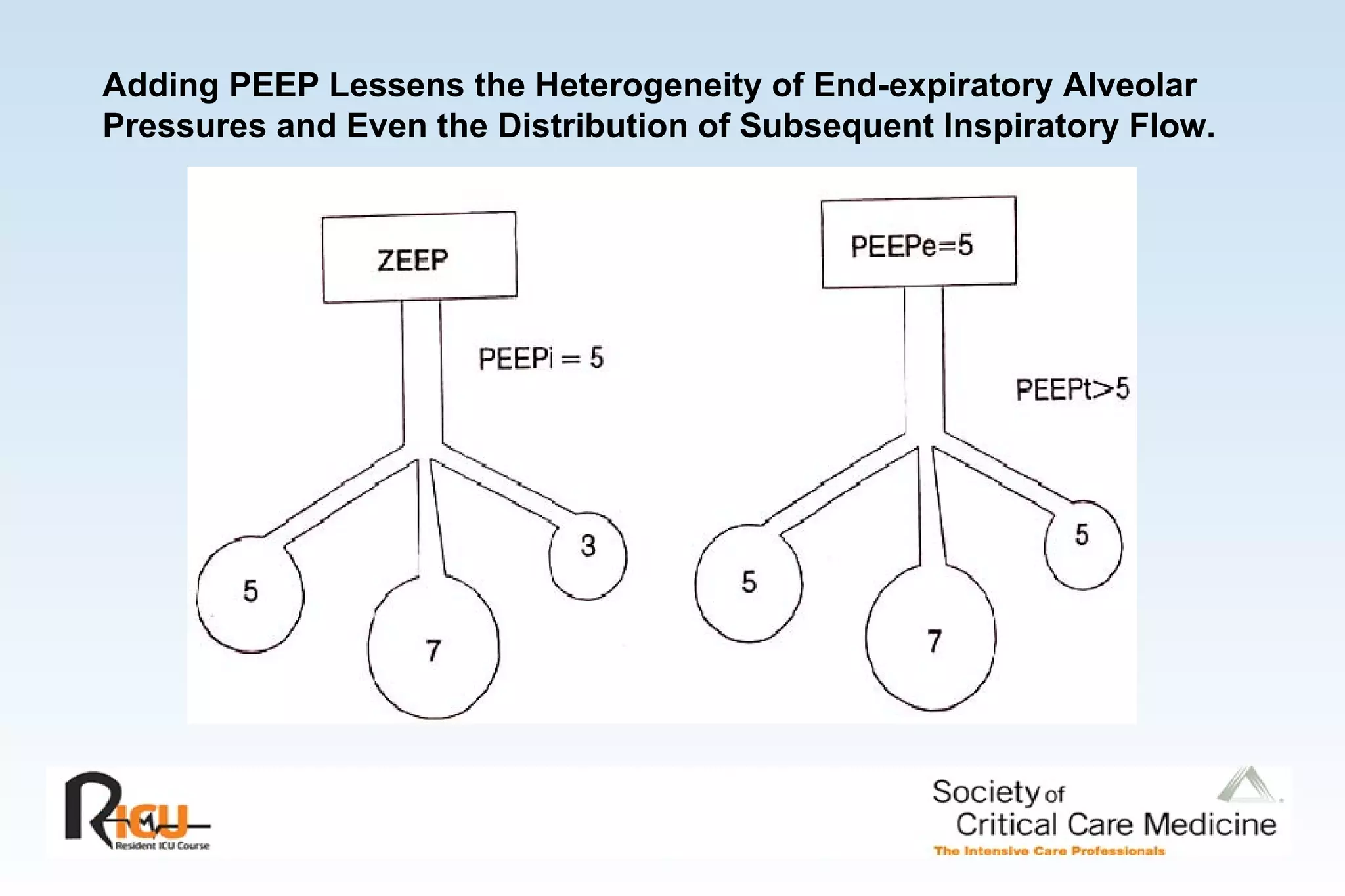
Adding PEEP Lessens the Heterogeneity of End-expiratory Alveolar Pressures and Even the Distribution of Subsequent Inspiratory Flow.
PEEP may offset  (COPD) or add to auto-PEEP (Asthma), depending on flow limitation. Note that adding 8 cmH2O PEEP to 10 cmH2O of intrinsic PEEP may either reduce effort (Pes, solid arrow) or cause further hyper-inflation (dashed arrow). Ranieri et al,  Clinics in Chest Medicine  1996; 17(3):379-94 ASTHMA COPD
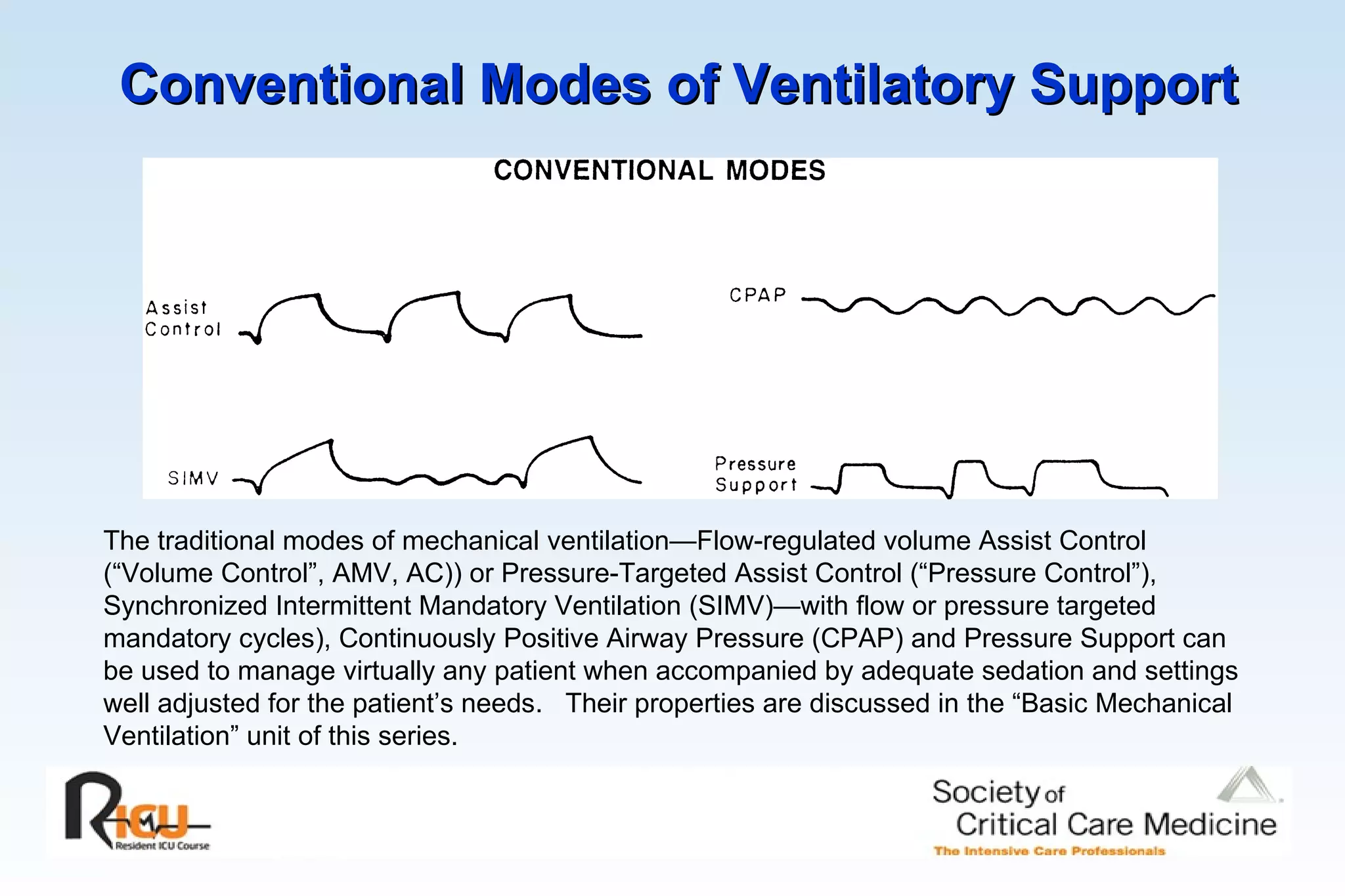
Conventional Modes of Ventilatory Support The traditional modes of mechanical ventilation—Flow-regulated volume Assist Control (“Volume Control”, AMV, AC)) or Pressure-Targeted Assist Control (“Pressure Control”), Synchronized Intermittent Mandatory Ventilation (SIMV)—with flow or pressure targeted mandatory cycles), Continuously Positive Airway Pressure (CPAP) and Pressure Support can be used to manage virtually any patient when accompanied by adequate sedation and settings well adjusted for the patient’s needs.  Their properties are discussed in the “Basic Mechanical Ventilation” unit of this series.
Positive Airway Pressure Can Be Either Pressure or Flow Controlled—But Not Both Simultaneously   Dependent Variable Dependent Variable Set Variable Set Variable
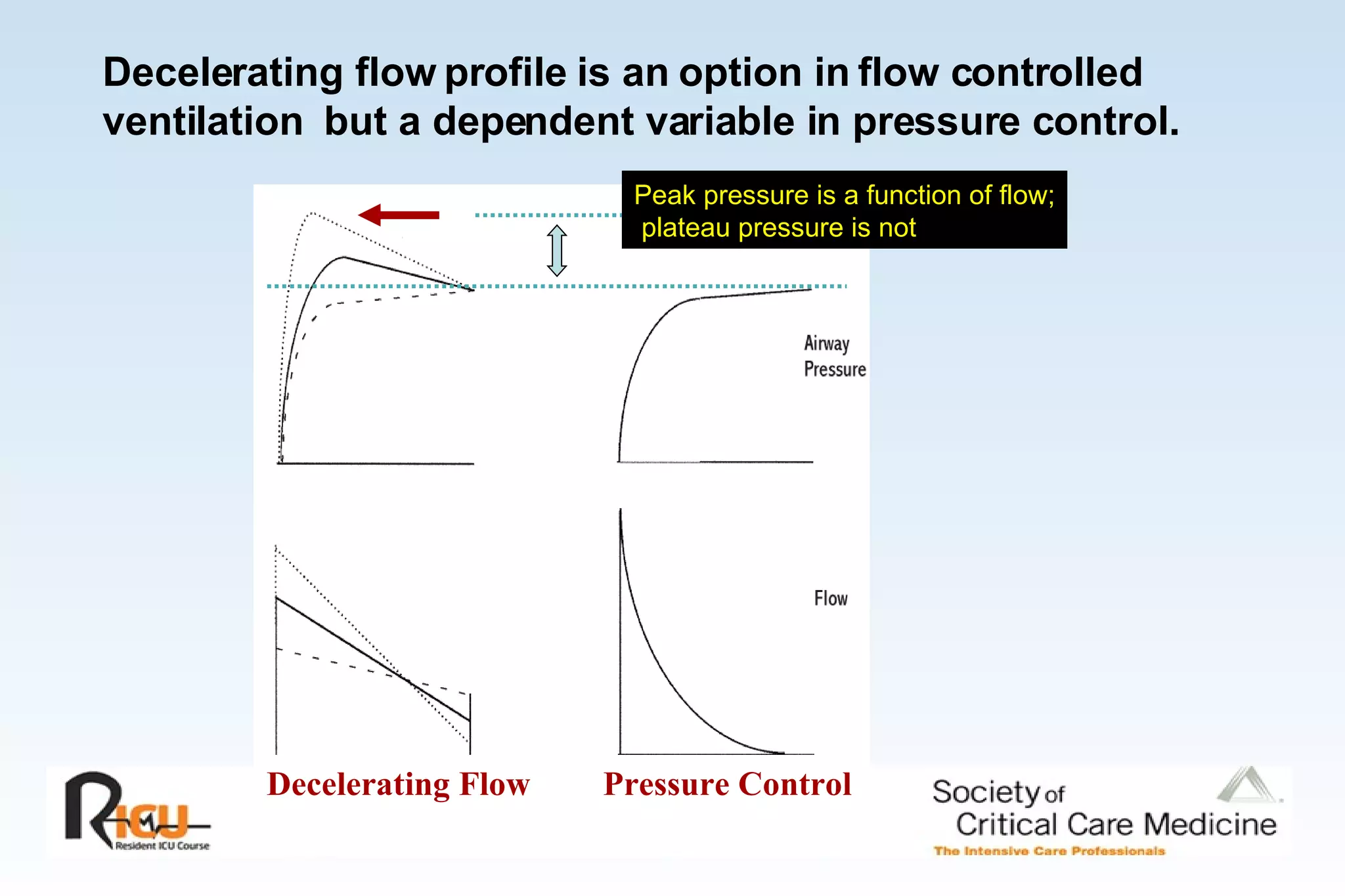
Decelerating flow profile is an option in flow controlled ventilation  but a dependent variable in pressure control. Decelerating Flow Pressure Control Peak pressure is a function of flow; plateau pressure is not
Patient-Ventilator Interactions   Coordination of the patient’s needs for flow, power, and cycle timing with outputs of the machine determine how well the ventilator simulates an auxiliary muscle under the patient’s control. Flow controlled, volume cycled ventilator modes offer almost unlimited power but specify the cycle timing and flow profile. Traditional pressure targeted modes (Pressure Control (PCV) and Pressure support (PSV)) provide no greater power amplitude than that set by the clinician but do not limit flow. PCV has a cycle time fixed by the clinician, and in that sense is as inflexible as VCV.  Pressure Support (PSV) allows the patient to determine both flow and, within certain limits, cycle length as well. Because flow is determined by respiratory mechanics as well as by effort, adjustments may be needed to the inspiratory flow offswitch  criterion of PSV so as to coordinate with the patient’s needs. Modification of the rate at which the pressure target is reached at the beginning of inspiration (the ramp or ‘attack’ rate) may be needed to help ensure comfort
Pressure Support ‘off-switch’ is a set flow value or a set % of  peak inspiratory flow. The patient with airflow obstruction may need  to put on the brake with muscular effort to slow flow quickly enough  to satisfy his intrinsic neural timing.
Tapered inspiratory ‘attack’ rate and a higher percentage of peak flow off switch criterion are often more appropriate in airflow obstruction than are the default values in PSV. Airflow Obstruction
Although early flows are adequate, mid-cycle efforts may not be matched by Decelerating Flow Control (VCV). Pressure Controlled breaths (PCV) do not restrict flow. Since the flow demands of severely obstructed patients may be nearly unchanging in severe airflow obstruction , decelerating VCV may not be the best choice.
Interactions Between Pressure Controlled Ventilation and Lung Mechanics The gradient of pressure that determines tidal volume is the difference between end-inspiratory (Plateau) and end-expiratory alveolar pressure (total PEEP). In PCV, tidal volume can be reduced if the inspiratory time or the expiratory time is too brief to allow the airway and alveolar pressures to equilibrate. The development of auto-PEEP reduces the gradient for inspiratory flow and curtails the potential tidal volume available with any given set inspiratory airway pressure. These conditions are most likely to arise in the setting of severe airflow obstruction. Therefore, modifications of the breathing frequency and inspiratory cycle period (‘duty cycle’) may powerfully impact ventilation efficiency.
Alveolar  Pressure Airway  Pressure Residual Flows
 
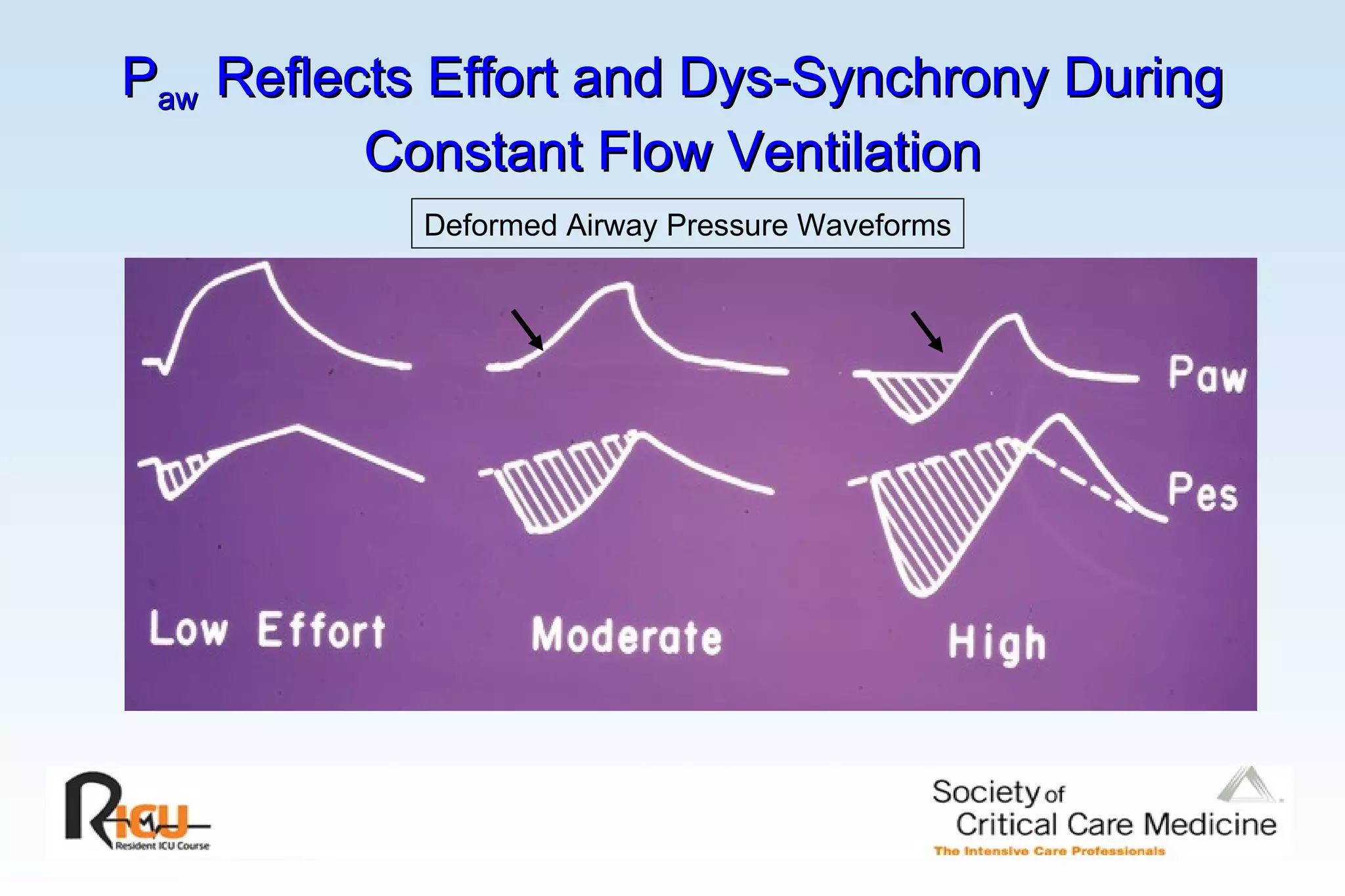
P aw  Reflects Effort and Dys-Synchrony During Constant Flow Ventilation Deformed Airway Pressure Waveforms
High Pressure Alarm Variable Tidal Volume or Pressure Limit Alarm During Pressure Control
What to Do When the Patent and Ventilator are “Out of Synch”?   Frequent pressure alarms during Volume Assist Control or Tidal Volume alarms during Pressure Control both mean that the patient is not receiving the desired tidal volume. If not explained by an important underlying change in the circuit properties (e.g., disconnection or plug) or in the impedance of the respiratory system, this often arises from a timing “collision” between the patient and ventilator’s cycling rhythms. To quickly regain smooth control without deep sedation, the patient must be given back some degree of control over cycle timing. This timing control is conferred by introducing flow off-switched cycles in the form of high level pressure support. Pressure Support alone, or SIMV at a relatively low mandated rate together with PSV, are the logical choices to provide adequate power, achieve flow synchrony and yield cycle timing to the patient. Pressure Controlled SIMV, where the inspiratory time of the PCV cycle is set to be a bit shorter than the observed PSV cycle, is a good strategy for this purpose.
Advanced Interactive Modes of  Mechanical Ventilation   Airway pressure release/BiPAP/Bi-Level Combination or “Dual control” modes Proportional assist ventilation Adaptive support ventilation Automatic ET tube compensation
Combination “Dual Control” Modes   Combination or “dual control” modes combine features of pressure and volume targeting to accomplish ventilatory objectives which might remain unmet by either used independently. Combination modes are pressure targeted Partial support is generally provided by  pressure support Full support is provided by Pressure Control
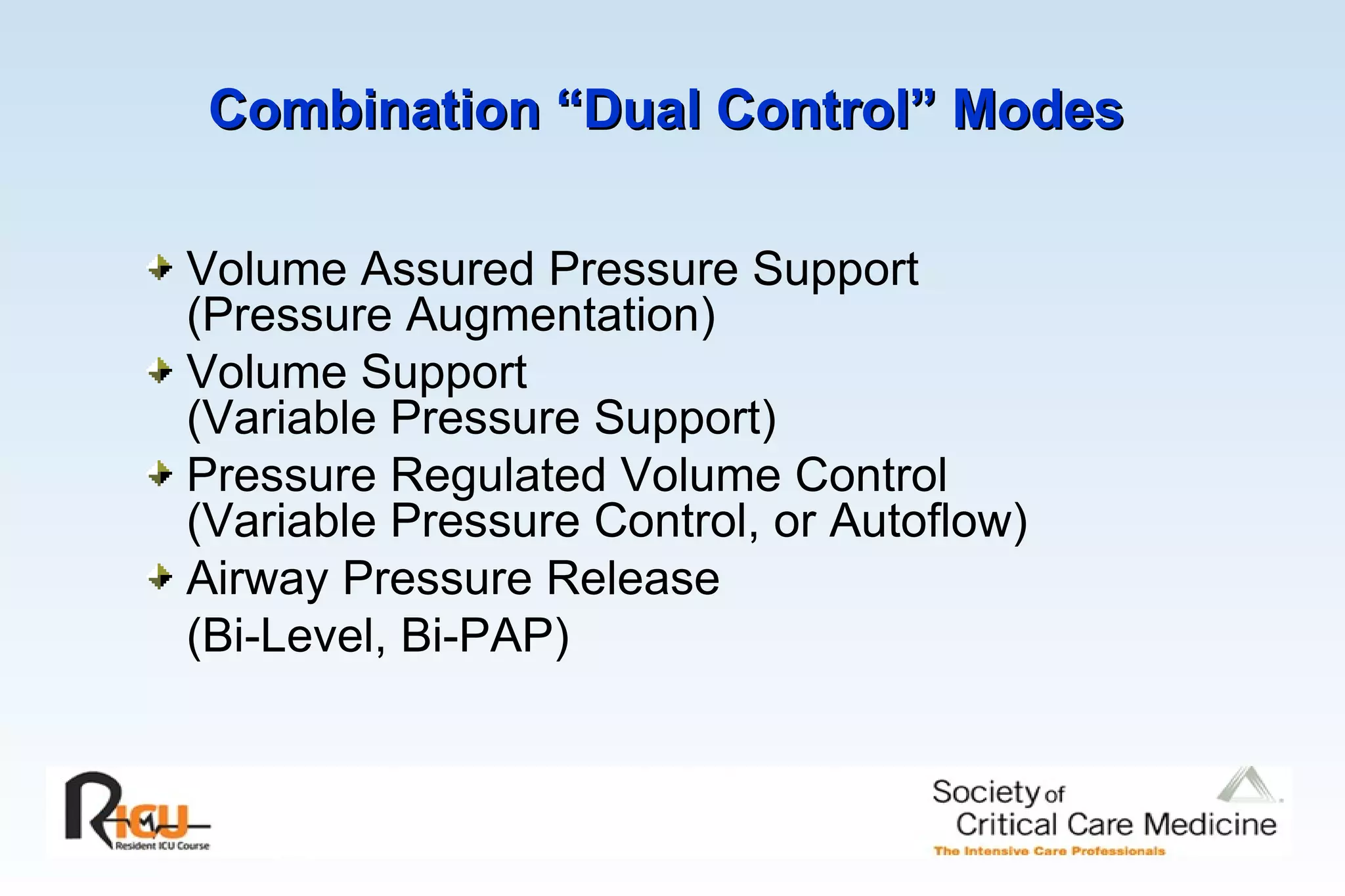
Combination “Dual Control” Modes   Volume Assured Pressure Support (Pressure Augmentation) Volume Support (Variable Pressure Support) Pressure Regulated Volume Control (Variable Pressure Control, or Autoflow) Airway Pressure Release (Bi-Level, Bi-PAP)
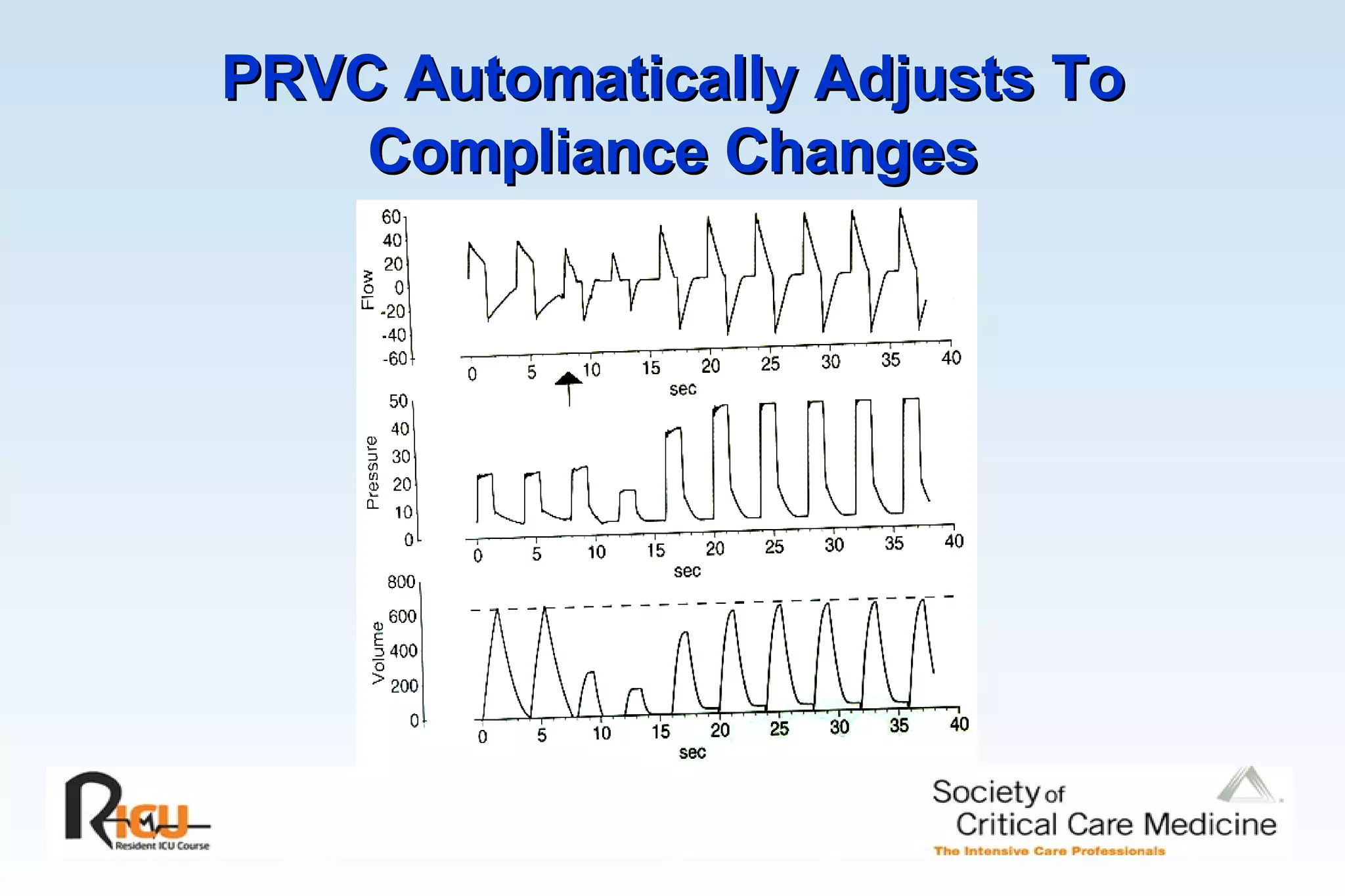
Pressure Regulated Volume Control Characteristics   Guaranteed tidal volume using “pressure control” waveform Pressure target is adjusted to least value that satisfies the targeted tidal volume minimum Settings : Minimum V E Minimum Frequency Inspiratory Time per Cycle
Compliance Changes During Pressure Controlled Ventilation
PRVC Automatically Adjusts To Compliance Changes
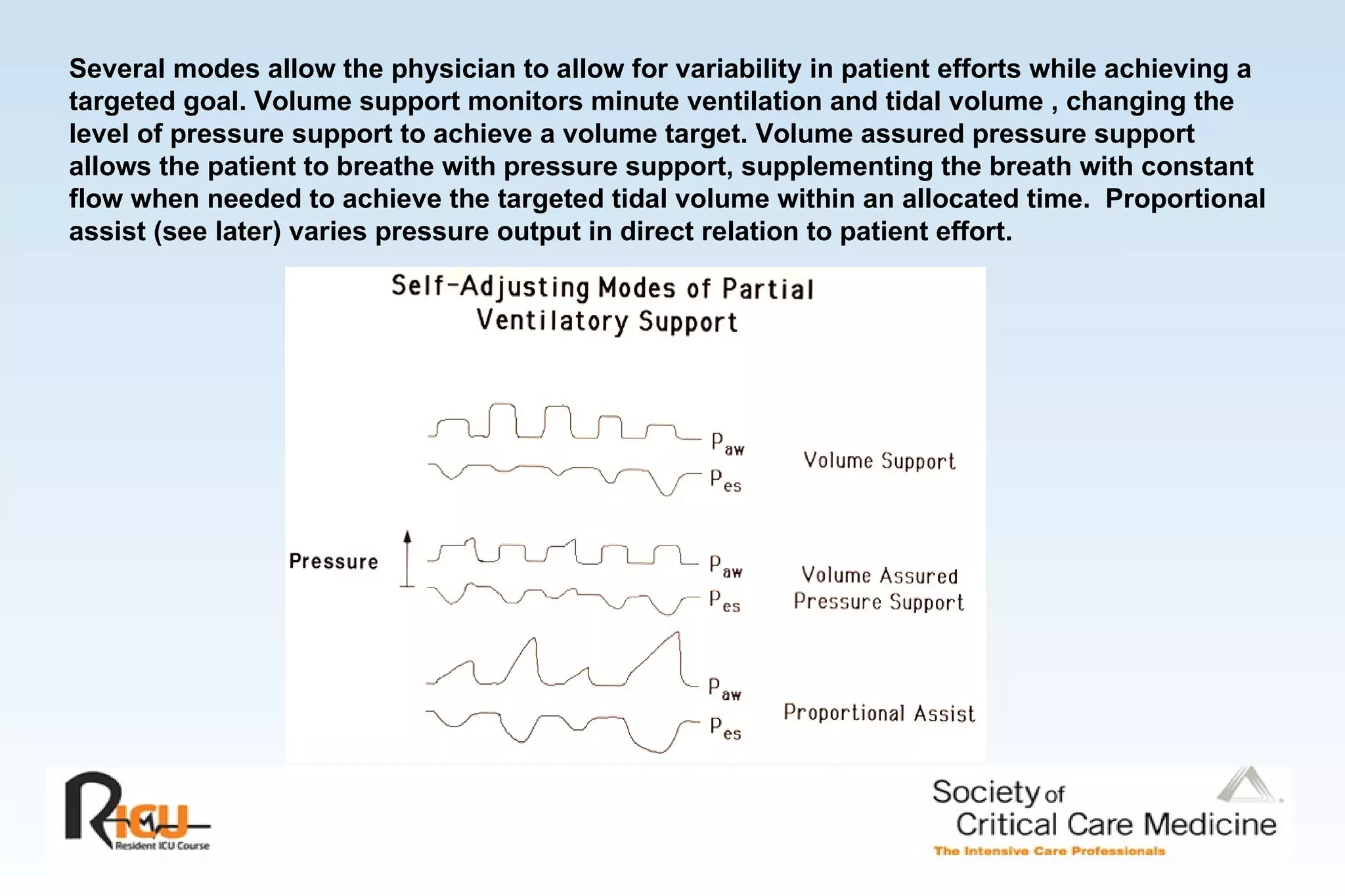
Several modes allow the physician to allow for variability in patient efforts while achieving a targeted goal. Volume support monitors minute ventilation and tidal volume , changing the level of pressure support to achieve a volume target. Volume assured pressure support allows the patient to breathe with pressure support, supplementing the breath with constant flow when needed to achieve the targeted tidal volume within an allocated time.  Proportional assist (see later) varies pressure output in direct relation to patient effort.
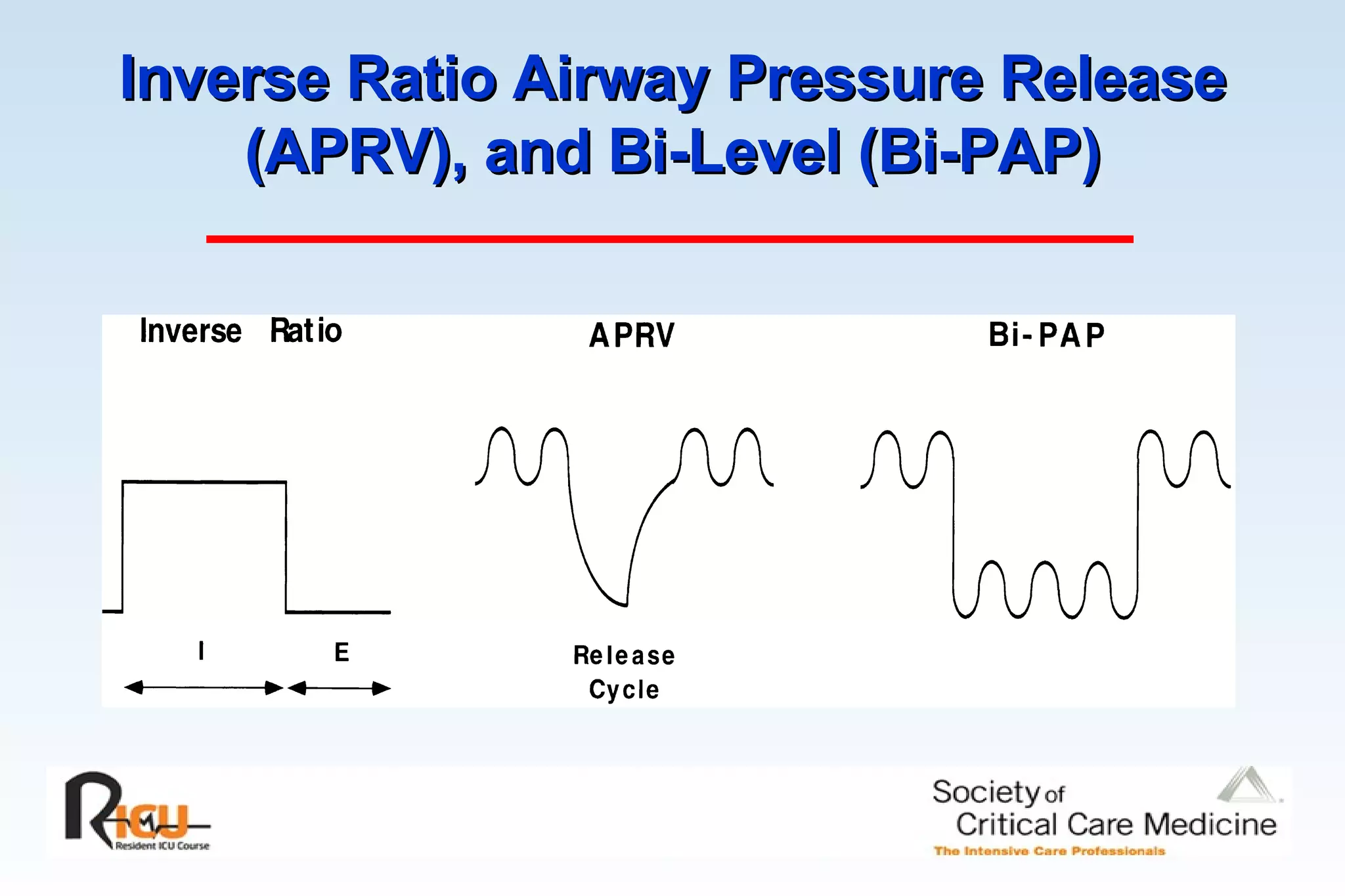
Airway Pressure Release and Bi-Level Airway Pressure Over the past 20 years, modes of ventilation that move the airway pressure baseline around which spontaneous breaths occur between two levels have been employed in a variety of clinical settings.  Although the machine’s contribution to ventilation may resemble inverse ratio ventilation, patient breathing cycles occur through an open (as opposed to closed) circuit, so that airway pressure never exceeds that value desired by the clinician. Transpulmonary pressure—the pressure across the lung—can approach dangerous levels, however, and mean airway pressure is relatively high.
Inverse Ratio Airway Pressure Release (APRV), and Bi-Level (Bi-PAP)
Bi-Pap &Airway Pressure Release Characteristics Allow spontaneous breaths superimposed on a set number of “pressure controlled” ventilator cycles Reduce peak airway pressures “ Open” circuit / enhanced synchrony between patient effort and machine response Settings : P insp  and P exp  (P high  and P low )   T high  and T low
Unlike PCV, BiPAP Allows Spontaneous Breathing During Both Phases of Machine’s Cycle
Bi-Level Ventilation
Bi-Level Ventilation With Pressure Support
Modes That Vary Their Output to Maintain Appropriate Physiology Proportional Assist Ventilation (Proportional Pressure Support) - Support pressure parallels patient effort Adaptive Support Ventilation -  Adjusts Pinsp and PC-SIMV rate to meet   “optimum” breathing pattern target Neurally Adjusted Ventilatory Assist -   Ventilator output is keyed to  neural  signal
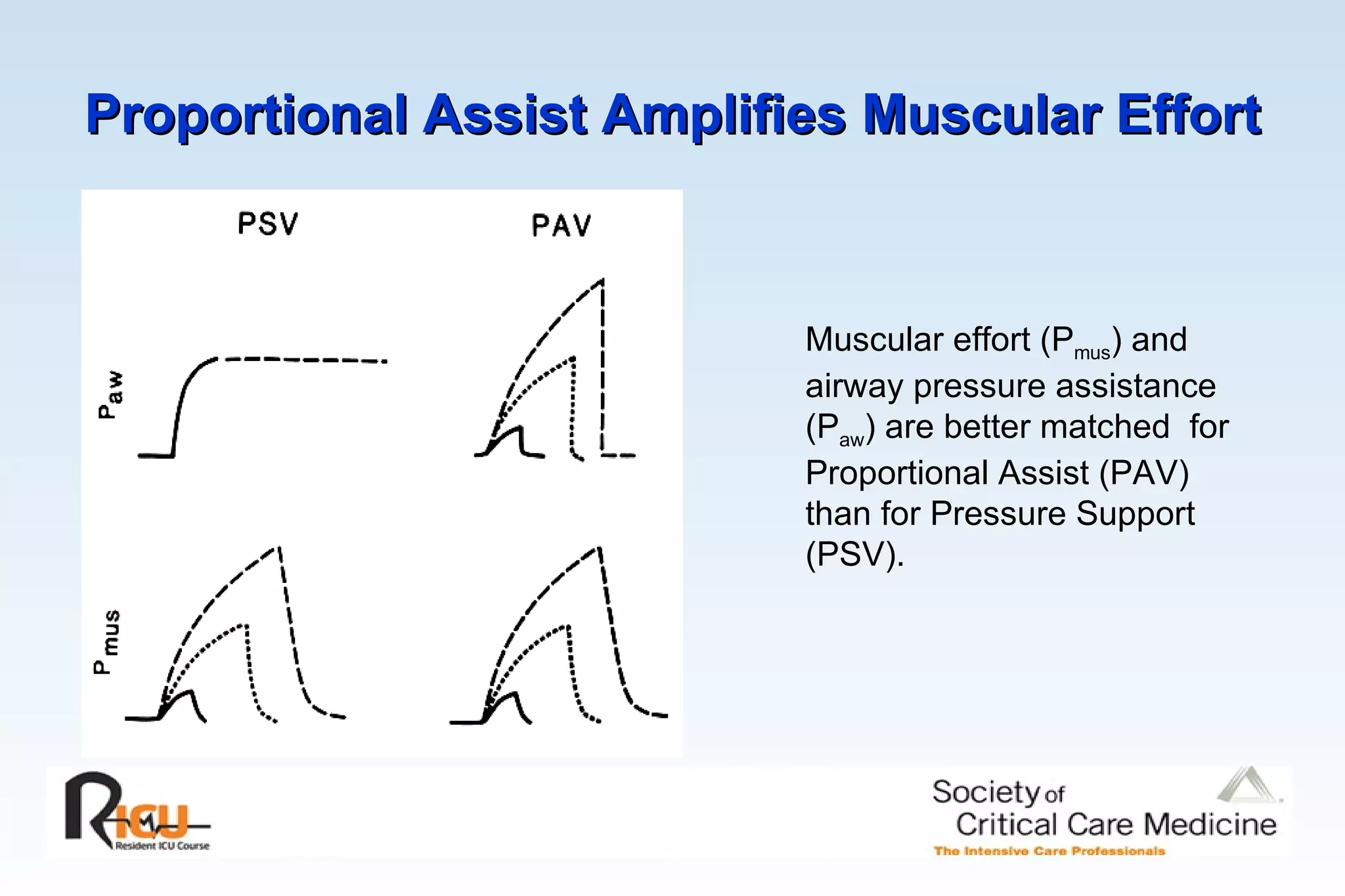
Proportional Assist Ventilation (PAV) Proportional assist ventilation attempts to regulate the pressure output of the ventilator moment by moment  in accord with the patient’s demands for flow and volume. Thus, when the patient wants more, (s)he gets more help; when less, (s)he gets less. The timing and power synchrony are therefore nearly optimal—at least in concept. To regulate pressure, PAV uses the monitored flow and a calculated assessment of the mechanical properties of the respiratory system as inputs into the equation of motion of the respiratory system. More than with any other currently available mode, PAV acts as an auxiliary muscle whose strength is regulated by the proportionality constant determined by the clinician. At present, PAV cannot account for auto-PEEP, and there is a small chance for inappropriate support to be applied.
Proportional Assist Amplifies Muscular Effort Muscular effort (P mus ) and  airway pressure assistance  (P aw ) are better matched  for  Proportional Assist (PAV) than for Pressure Support  (PSV).
Goals of Adaptive Support Ventilation Reduce Dead-space Ventilation Avoid Auto-PEEP Discourage Rapid Shallow Breathing Mirror Changing Patient Activity
Adaptive Lung Ventilation Synchronized Intermittent Pressure Control Rate Inspiratory Pressure PSV cycling characteristics Physician Settings   Ideal body weight % Minute Volume Maximal Allowed Pressure
 
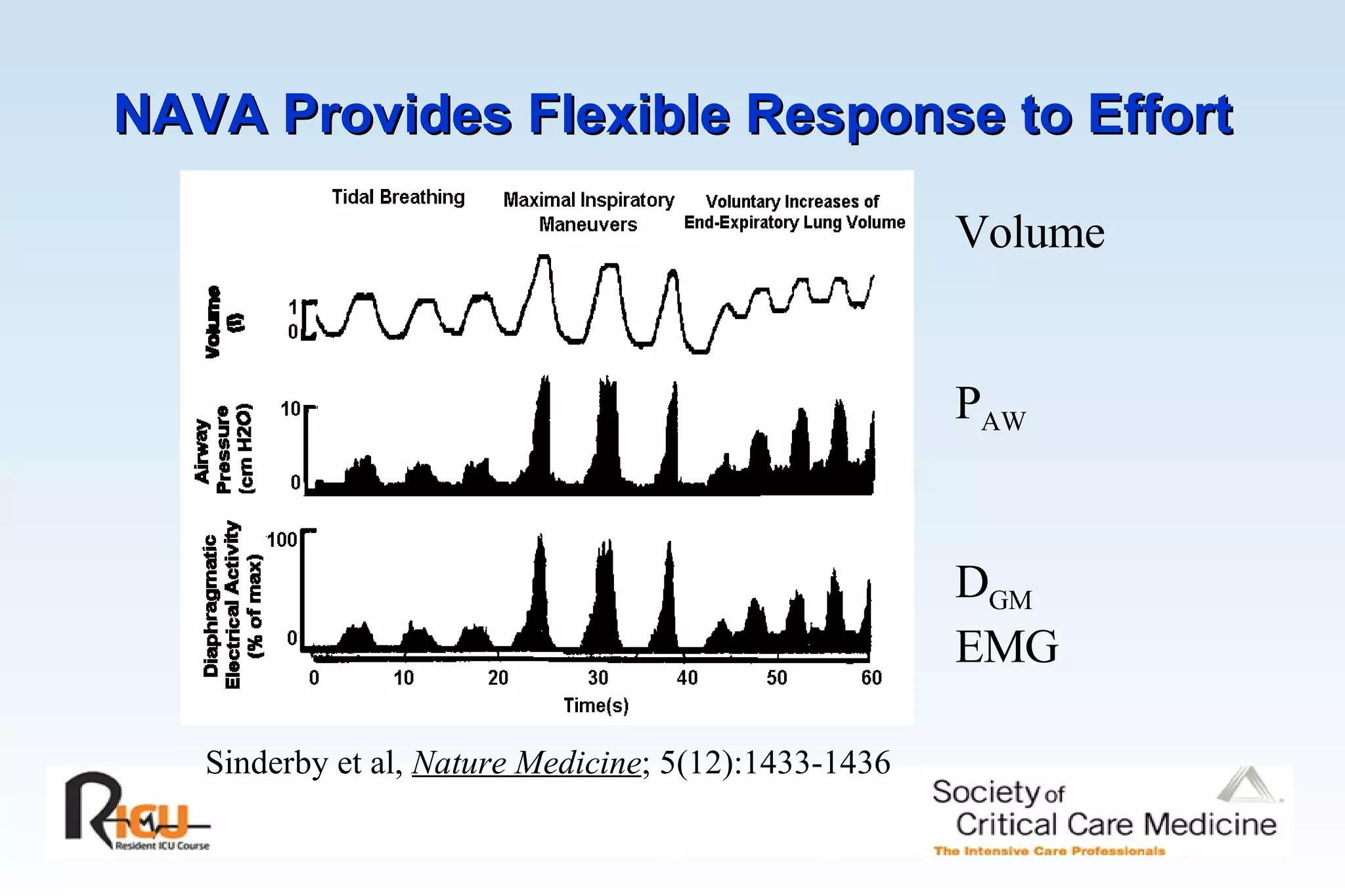
Neural Control of Ventilatory Assist (NAVA) Although still in its development phase, the possibility of controlling ventilator output by sensing the neural traffic flowing to the diaphragm promises to further enhance synchrony. NAVA senses the desired assist using an array of esophageal EMG electrodes positioned to detect the diaphragm’s contraction signal. The reliability of neurally-controlled ventilator assistance needs to be determined before its deployment in the clinical setting.
Neural Control of Ventilatory Assist (NAVA) Neuro-Ventilatory Coupling Central Nervous System  Phrenic Nerve  Diaphragm Excitation  Diaphragm Contraction  Chest Wall and Lung Expansion  Airway Pressure, Flow and Volume New Technology Ideal Technology Current Technology Ventilator Unit
Electrode Array in Neurally Adjusted Ventilatory Assist (NAVA) Sinderby et al,  Nature Medicine ; 5(12):1433-1436
NAVA Provides Flexible Response to Effort Volume P AW D GM  EMG Sinderby et al,  Nature Medicine ; 5(12):1433-1436
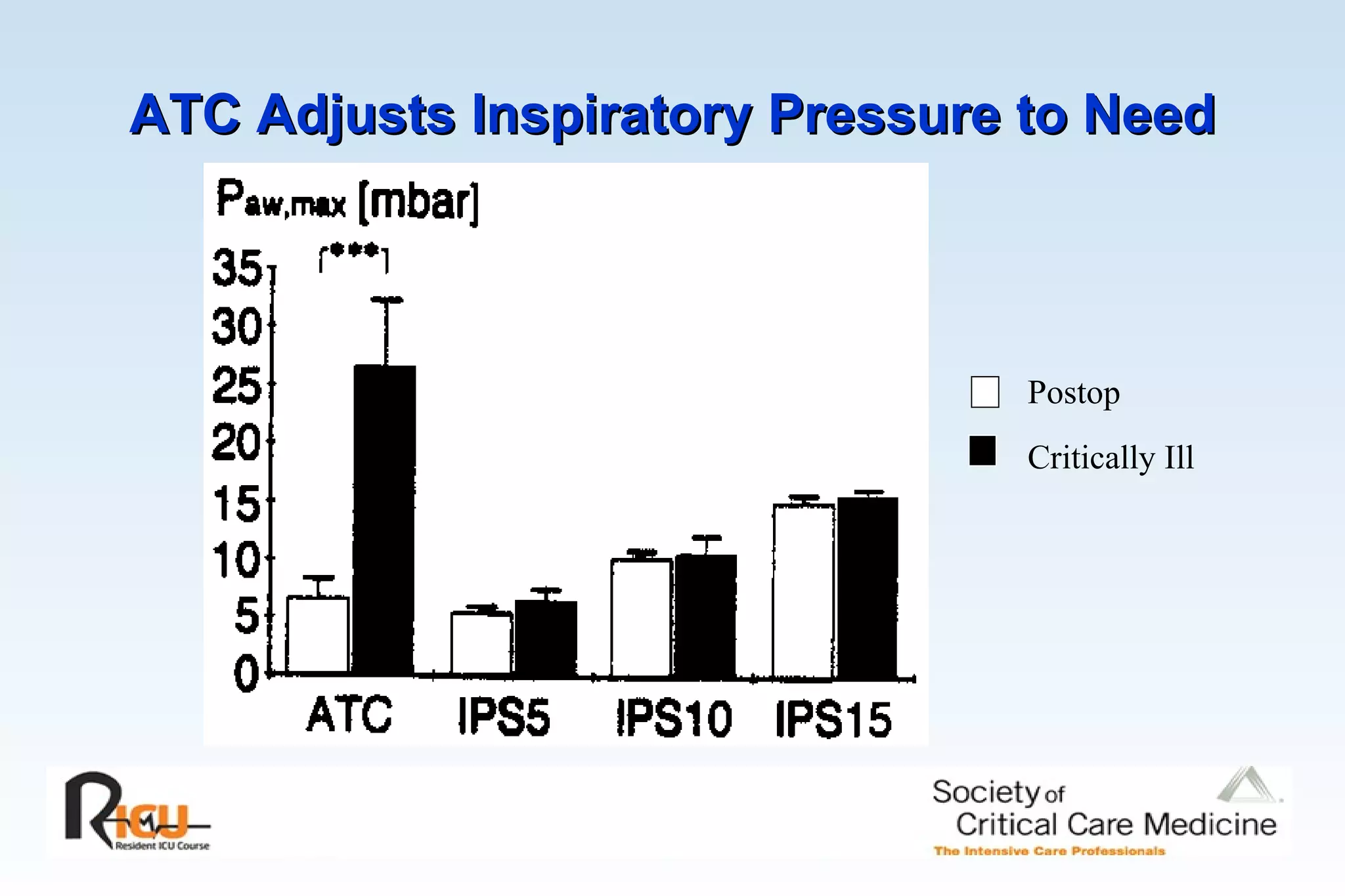
Automatic Tube Compensation The endotracheal tube offers resistance to ventilation both on inspiration and on expiration. A low level of pressure support can help overcome this pressure cost, but its effect varies with flow rate. Automatic tube compensation (ATC) adjusts its pressure output in accordance with flow, theoretically giving an appropriate amount of pressure support as needed as the cycle proceeds and flow demands vary within and between subsequent breaths. Some variants of ATC drop airway pressure in the early portion of expiration to help speed expiration. Supplemental pressure support can be provided to assist in tidal breath delivery.
External and Tracheal Pressures Differ Because of Tube Resistance ATC offsets a fraction of tube resistance
Valve Control Maintains  Tracheal  Pressure During ATC Pressure Support Pressure Support ATC ATC Fabry et al, ICM 1997;23:545-552
ATC Adjusts Inspiratory Pressure to Need Postop Critically Ill
Discontinuation of Mechanical Ventilation To discontinue mechanical ventilation requires: Patient preparation Assessment of readiness For independent breathing For extubation A brief trial of minimally assisted breathing An assessment of probable upper airway patency after extubation Either abrupt or gradual withdrawal of positive pressure, depending on the patient’s readiness
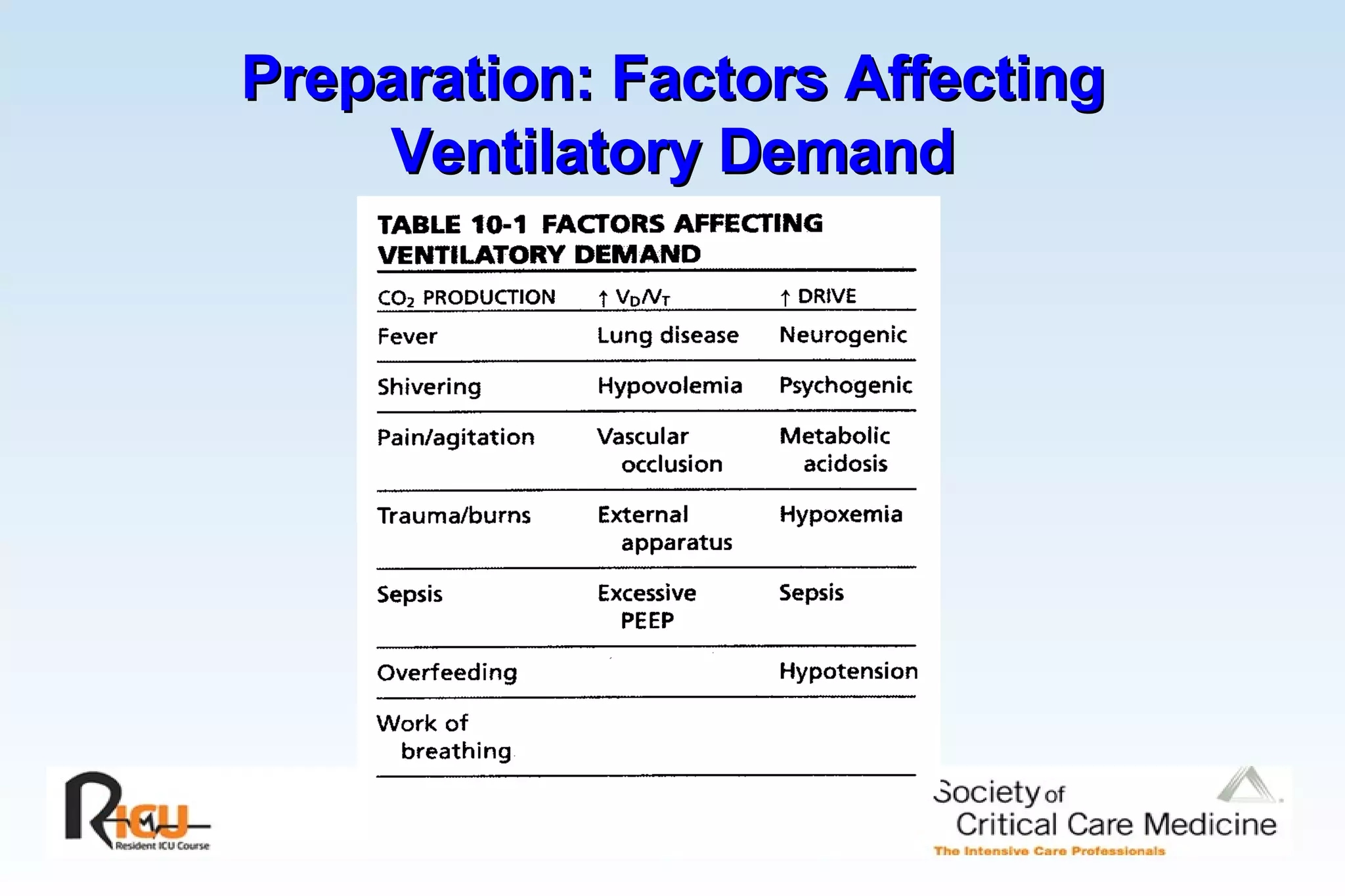
Preparation: Factors Affecting Ventilatory Demand
 
The frequency to tidal volume ratio (or rapid shallow breathing index, RSBI) is a simple and useful integrative indicator of the balance between power supply and power demand. A rapid shallow breathing index < 100 generally indicates adequate power reserve. In this instance, the RSBI indicated that spontaneous breathing without pressure support was  not   tolerable, likely due in part to the development of gas trapping. Even when the mechanical requirements of the respiratory system can be met by adequate ventilation reserve, congestive heart failure, arrhythmia or ischemia may cause failure of spontaneous breathing.
Integrative Indices Predicting Success
Measured Indices Must Be Combined With Clinical Observations
Three Methods for Gradually Withdrawing Ventilator Support Although the majority of patients do not require gradual withdrawal of ventilation, those that do tend to do better with graded pressure supported weaning than with abrupt transitions from Assist/Control to CPAP or with SIMV used with only minimal pressure support.
Extubation Criteria Ability to protect upper airway Effective cough Alertness Improving clinical condition Adequate lumen of trachea and larynx “Leak test” during airway pressurization with the cuff deflated

Advanced Mechanical Ventilation

  • 1.
    John J. MariniAlain F. Broccard University of Minnesota Regions Hospital Minneapolis / St. Paul USA Advanced Mechanical Ventilation
  • 2.
    Advanced Mechanical VentilationOutline Consequences of Elevated Alveolar Pressure Implications of Heterogeneous Lung Unit Inflation Adjuncts to Ventilation Prone Positioning Recruitment Maneuvers Difficult Management Problems Acute Lung Injury Severe Airflow Obstruction An Approach to Withdrawing Ventilator Support Advanced Modes for Implementing Ventilation Case Scenarios
  • 3.
    Consequences of ElevatedAlveolar Pressure--1 Mechanical ventilation expands the lungs and chest wall by pressurizing the airway during inflation. The stretched lungs and chest wall develop recoil tension that drives expiration. Positive pressure developed in the pleural space may have adverse effects on venous return, cardiac output and dead space creation. Stretching the lung refreshes the alveolar gas, but excessive stretch subjects the tissue to tensile stresses which may exceed the structural tolerance limits of this delicate membrane. Disrupted alveolar membranes allow gas to seep into the interstitial compartment, where it collects, and migrates toward regions with lower tissue pressures. Interstitial, mediastinal, and subcutaneous emphysema are frequently the consequences. Less commonly, pneumoperitoneum, pneumothorax, and tension cysts may form. Rarely, a communication between the high pressure gas pocket and the pulmonary veins generates systemic gas emboli.
  • 4.
    Partitioning of AlveolarPressure is a Function of Lung and Chest Wall Compliances Lungs are smaller and pleural pressures are higher when the chest wall is stiff.
  • 5.
    Hemodynamic Effects ofLung Inflation Lung inflation by positive pressure causes Increased pleural pressure and impeded venous return Increased pulmonary vascular resistance Compression of the inferior vena cava Retardation of heart rate increases These effects are much less obvious in the presence of Adequate circulating volume Adequate vascular tone Spontaneous breathing efforts Preserved adrenergic responsiveness
  • 6.
    Hemodynamic Effects ofLung Inflation With Low Lung Compliance, High Levels of PEEP are Generally Well Tolerated.
  • 7.
    Effect of lungexpansion on pulmonary vasculature . Capillaries that are embedded in the alveolar walls undergo compression even as interstitial vessels dilate. The net result is usually an increase in pulmonary vascular resistance, unless recruitment of collapsed units occurs.
  • 8.
    Conflicting Actions ofHigher Airway Pressure Lung Unit Recruitment and Maintenance of Aerated Volume Gas exchange Improved Oxygenation Distribution of Ventilation Lung protection Parenchymal Damage Airway trauma Increased Lung Distention Impaired Hemodynamics Increased Dead Space Potential to Increase Tissue Stress … Only If Plateau Pressure Rises
  • 9.
  • 10.
    Diseased Lungs Do Not Fully Collapse, Despite Tension Pneumothorax … and They cannot always be fully “opened” Dimensions of a fully Collapsed Normal Lung
  • 11.
  • 12.
    Tidally Phasic SystemicGas Embolism End-Expiration End-Inspiration
  • 13.
    Consequences of ElevatedAlveolar Pressure--2 In recent years there has been intense interest in another and perhaps common consequence of excessive inflation pressure--Ventilator-Induced Lung Injury (VILI). VILI appears to develop either as a result of structural breakdown of the tissue by mechanical forces or by mechano-signaling of inflammation due to repeated application of excessive tensile forces. Although still controversial, it is generally agreed that damage can result from overstretching of lung units that are already open or from shearing forces generated at the junction of open and collapsed tissue. Tidally recurrent opening and closure of small airways under high pressure is thought to be important in the generation of VILI. Prevention of VILI is among the highest priorities of the ICU clinician caring for the ventilated patient and is the purpose motivating adoption of “Lung Protective” ventilation strategies. Translocation of inflammatory products, bacteria, and even gas may contribute to remote damage in systemic organs and help explain why lung protective strategies are associated with lower risk for morbidity and death.
  • 14.
    Recognized Mechanisms ofAirspace Injury “ Stretch” “ Shear” Airway Trauma
  • 15.
    Mechanisms of Ventilator-InducedLung Injury (VILI) High airway pressures may injure the lungs by repeated overstretching of open alveoli, by exposing delicate terminal airways to high pressure, or by generating shearing forces that tear fragile tissues. These latter shearing forces tend to occur as small lung units open and close with each tidal cycle and are amplified when the unit opens only after high pressures are reached. To avoid VILI, end-inspiratory lung pressure (“plateau”) should be kept from rising too high, and when high plateau pressures are required, sufficient PEEP should be applied to keep unstable lung units from opening and closing with each tidal cycle. Independent of opening and closure, tissue strain is dramatically amplified at the junctions of open and closed lung units when high alveolar pressures are reached. Extremely high tissue strains may rip the alveolar gas-blood interface. Repeated application of more moderate strains incite inflammation. Such factors as breath frequency, micro-vascular pressure, temperature, and body position modify VILI expression.
  • 16.
    End-Expiration Tidal Forces (Transpulmonary and Microvascular Pressures) Extreme Stress/Strain Moderate Stress/Strain Mechano signaling via integrins, cytoskeleton, ion channels inflammatory cascade Cellular Infiltration and Inflammation Rupture Signaling Marini / Gattinoni CCM 2004 Pathways to VILI
  • 17.
    Microvascular Fracture inARDS A Portal for Gas & Bacteria? Hotchkiss et al Crit Care Med 2002; 1 
  • 18.
    The Problem ofHeterogeneity The heterogeneous nature of regional mechanical properties presents major difficulty for the clinician, who must apply only a single pressure or flow profile to the airway opening. Heterogeneity means that some lung units may be overstretched while others remain airless at the same measured airway pressure. Finding just the right balance of tidal volume and PEEP to keep the lung as open as possible without generating excessive regional tissue stresses is a major goal of modern practice. Prone positioning tends to reduce the regional gradients of pleural and trans-pulmonary pressure.
  • 19.
    Spectrum of RegionalOpening Pressures (Supine Position) Superimposed Pressure ( from Gattinoni ) Lung Units at Risk for Tidal Opening & Closure = Inflated 0 Alveolar Collapse (Reabsorption) 20-60 cmH 2 O Small Airway Collapse 10-20 cmH 2 O Consolidation  Opening Pressure
  • 20.
    Different lung regionsmay be overstretched or underinflated, even as measures of total lung mechanics appear within normal limits. Alveolar Pressure Lung Volume UPPER LUNG TOTAL LUNG LOWER LUNG
  • 21.
    Recruitment Parallels VolumeAs A Function of Airway Pressure Recruitment and Inflation (%) Frequency Distribution of Opening Pressures (%) Airway Pressure (cmH2O)
  • 22.
    % Opening andClosing Pressures in ARDS 50 High pressures may be needed to open some lung units, but once open, many units stay open at lower pressure. Paw [cmH 2 O] 0 5 10 15 20 25 30 35 40 45 50 0 10 20 30 40 Opening pressure Closing pressure From Crotti et al AJRCCM 2001.
  • 23.
  • 24.
    Dependent to Non-dependent Progression of Injury
  • 25.
    Histopathology of VILI Belperio et al, J Clin Invest Dec 2002; 110(11):1703-1716
  • 26.
    Links Between VILIand MSOF Biotrauma and Mediator De-compartmentalization Slutsky, Chest 116(1):9S-16S
  • 27.
    Airway Orientation inSupine Position
  • 28.
  • 29.
    Prone Positioning EvensThe Distribution of Pleural & Transpulmonary Pressures
  • 30.
    Prone Positioning RelievesLung Compression by the Heart Supine Prone
  • 31.
    Proning May Benefitthe Most Seriously Ill ARDS Subset SAPS II Mortality Rate > 49 40- 49 31- 40 0 - 31 0.0 0.1 0.2 0.3 0.4 0.5 Quartiles of SAPS II Supine * p<0.05 vs Supine Prone *
  • 32.
    Proning Helped Mostin High V T Subgroup At Risk For VILI V T /Kg < 8.2 8.2- 9.7 9.7- 12 > 12 0.0 0.1 0.2 0.3 0.4 0.5 Mortality Rate Quartiles of V T /Predicted body weight Supine * p<0.05 vs Supine Prone *
  • 33.
    How Much CollapseIs Dangerous Depends on the Plateau R = 100% 20 60 100 Pressure [cmH 2 O] 20 40 60 Total Lung Capacity [%] R = 22% R = 81% R = 93% 0 0 R = 0% R = 59% From Pelosi et al AJRCCM 2001 Some potentially recruitable units open only at high pressure More Extensive Collapse But Lower P PLAT Less Extensive Collapse But Greater P PLAT
  • 34.
    Recruiting Maneuvers inARDS The purpose of a recruiting maneuver is to open collapsed lung tissue so it can remain open during tidal ventilation with lower pressures and PEEP, thereby improving gas exchange and helping to eliminate high stress interfaces. Although applying high pressure is fundamental to recruitment, sustaining high pressure is also important. Methods of performing a recruiting maneuver include single sustained inflations and ventilation with high PEEP .
  • 35.
    Theoretical Effect of Sustained Inflation on Tidal Cycling Rimensberger ICM 2000 VOLUME (% TLC) Benefit from a recruiting maneuver is usually transient if PEEP remains unchanged afterward.
  • 36.
    Three Types ofRecruitment Maneuvers S-C Lim, et al Crit Care Med 2004
  • 37.
    How is theInjured Lung Best Recruited? Prone positioning Adequate PEEP Adequate tidal volume (and/or intermittent ‘sighs’?) Recruiting maneuvers Minimize edema (?) Lowest acceptable FiO2 (?) Spontaneous breathing efforts (?)
  • 38.
    Severe Airflow Obstruction A major objective of ventilating patients with severe airflow obstruction is to relieve the work of breathing and to minimize auto-PEEP. Reducing minute ventilation requirements will help impressively in reducing gas trapping. When auto-PEEP is present, it has important consequences for hemodynamics, triggering effort and work of breathing. In patients whose expiratory flows are flow limited during tidal breathing, offsetting auto-PEEP with external PEEP may even the gas distribution and reduce breathing effort.
  • 39.
    Auto-PEEP Adds Tothe Breathing Workload The pressure-volume areas correspond to the inspiratory mechanical workloads of auto-PEEP (AP) flow resistance and tidal elastance.
  • 40.
    Gas Trapping inSevere Airflow Obstruction Disadvantages the respiratory muscles and increases the work of tidal breathing Often causes hemodynamic compromise, especially during passive inflation Raises plateau and mean airway pressures, predisposing to barotrauma Varies with body position and from site to site within the lung
  • 41.
  • 42.
    Volume Losses inRecumbent Positions Note that COPD patients lose much less lung volume than normals do, due to gas trapping and need to keep the lungs more inflated to minimize the severity of obstruction. Orthopnea may result.
  • 43.
    PEEP in AirflowObstruction Effects Depend on Type and Severity of Airflow Obstruction Generally Helpful if PEEP  Original Auto-PEEP Potential Benefits Decreased Work of Breathing Increased VT During PSV or PCV (?) Improved Distribution of Ventilation (?) Decreased Dyspnea
  • 44.
    Inhalation Lung Scansin the Lateral Decubitus Position for a Normal Subject and COPD Patient Normal COPD No PEEP PEEP 10 Addition of 10 cm H 2 O PEEP re-opens dependent airways in COPD
  • 45.
    PEEP Flow Limitation“Waterfall”
  • 46.
    Adding PEEP thatapproximates auto-PEEP may reduce the difference in pressure between alveolus (Palv) and airway opening, thereby lowering the negative pleural (Pes) pressure needed to begin inspiration and trigger ventilation.
  • 47.
    Adding PEEP Lessensthe Heterogeneity of End-expiratory Alveolar Pressures and Even the Distribution of Subsequent Inspiratory Flow.
  • 48.
    PEEP may offset (COPD) or add to auto-PEEP (Asthma), depending on flow limitation. Note that adding 8 cmH2O PEEP to 10 cmH2O of intrinsic PEEP may either reduce effort (Pes, solid arrow) or cause further hyper-inflation (dashed arrow). Ranieri et al, Clinics in Chest Medicine 1996; 17(3):379-94 ASTHMA COPD
  • 49.
    Conventional Modes ofVentilatory Support The traditional modes of mechanical ventilation—Flow-regulated volume Assist Control (“Volume Control”, AMV, AC)) or Pressure-Targeted Assist Control (“Pressure Control”), Synchronized Intermittent Mandatory Ventilation (SIMV)—with flow or pressure targeted mandatory cycles), Continuously Positive Airway Pressure (CPAP) and Pressure Support can be used to manage virtually any patient when accompanied by adequate sedation and settings well adjusted for the patient’s needs. Their properties are discussed in the “Basic Mechanical Ventilation” unit of this series.
  • 50.
    Positive Airway PressureCan Be Either Pressure or Flow Controlled—But Not Both Simultaneously Dependent Variable Dependent Variable Set Variable Set Variable
  • 51.
    Decelerating flow profileis an option in flow controlled ventilation but a dependent variable in pressure control. Decelerating Flow Pressure Control Peak pressure is a function of flow; plateau pressure is not
  • 52.
    Patient-Ventilator Interactions Coordination of the patient’s needs for flow, power, and cycle timing with outputs of the machine determine how well the ventilator simulates an auxiliary muscle under the patient’s control. Flow controlled, volume cycled ventilator modes offer almost unlimited power but specify the cycle timing and flow profile. Traditional pressure targeted modes (Pressure Control (PCV) and Pressure support (PSV)) provide no greater power amplitude than that set by the clinician but do not limit flow. PCV has a cycle time fixed by the clinician, and in that sense is as inflexible as VCV. Pressure Support (PSV) allows the patient to determine both flow and, within certain limits, cycle length as well. Because flow is determined by respiratory mechanics as well as by effort, adjustments may be needed to the inspiratory flow offswitch criterion of PSV so as to coordinate with the patient’s needs. Modification of the rate at which the pressure target is reached at the beginning of inspiration (the ramp or ‘attack’ rate) may be needed to help ensure comfort
  • 53.
    Pressure Support ‘off-switch’is a set flow value or a set % of peak inspiratory flow. The patient with airflow obstruction may need to put on the brake with muscular effort to slow flow quickly enough to satisfy his intrinsic neural timing.
  • 54.
    Tapered inspiratory ‘attack’rate and a higher percentage of peak flow off switch criterion are often more appropriate in airflow obstruction than are the default values in PSV. Airflow Obstruction
  • 55.
    Although early flowsare adequate, mid-cycle efforts may not be matched by Decelerating Flow Control (VCV). Pressure Controlled breaths (PCV) do not restrict flow. Since the flow demands of severely obstructed patients may be nearly unchanging in severe airflow obstruction , decelerating VCV may not be the best choice.
  • 56.
    Interactions Between PressureControlled Ventilation and Lung Mechanics The gradient of pressure that determines tidal volume is the difference between end-inspiratory (Plateau) and end-expiratory alveolar pressure (total PEEP). In PCV, tidal volume can be reduced if the inspiratory time or the expiratory time is too brief to allow the airway and alveolar pressures to equilibrate. The development of auto-PEEP reduces the gradient for inspiratory flow and curtails the potential tidal volume available with any given set inspiratory airway pressure. These conditions are most likely to arise in the setting of severe airflow obstruction. Therefore, modifications of the breathing frequency and inspiratory cycle period (‘duty cycle’) may powerfully impact ventilation efficiency.
  • 57.
    Alveolar PressureAirway Pressure Residual Flows
  • 58.
  • 59.
    P aw Reflects Effort and Dys-Synchrony During Constant Flow Ventilation Deformed Airway Pressure Waveforms
  • 60.
    High Pressure AlarmVariable Tidal Volume or Pressure Limit Alarm During Pressure Control
  • 61.
    What to DoWhen the Patent and Ventilator are “Out of Synch”? Frequent pressure alarms during Volume Assist Control or Tidal Volume alarms during Pressure Control both mean that the patient is not receiving the desired tidal volume. If not explained by an important underlying change in the circuit properties (e.g., disconnection or plug) or in the impedance of the respiratory system, this often arises from a timing “collision” between the patient and ventilator’s cycling rhythms. To quickly regain smooth control without deep sedation, the patient must be given back some degree of control over cycle timing. This timing control is conferred by introducing flow off-switched cycles in the form of high level pressure support. Pressure Support alone, or SIMV at a relatively low mandated rate together with PSV, are the logical choices to provide adequate power, achieve flow synchrony and yield cycle timing to the patient. Pressure Controlled SIMV, where the inspiratory time of the PCV cycle is set to be a bit shorter than the observed PSV cycle, is a good strategy for this purpose.
  • 62.
    Advanced Interactive Modesof Mechanical Ventilation Airway pressure release/BiPAP/Bi-Level Combination or “Dual control” modes Proportional assist ventilation Adaptive support ventilation Automatic ET tube compensation
  • 63.
    Combination “Dual Control”Modes Combination or “dual control” modes combine features of pressure and volume targeting to accomplish ventilatory objectives which might remain unmet by either used independently. Combination modes are pressure targeted Partial support is generally provided by pressure support Full support is provided by Pressure Control
  • 64.
    Combination “Dual Control”Modes Volume Assured Pressure Support (Pressure Augmentation) Volume Support (Variable Pressure Support) Pressure Regulated Volume Control (Variable Pressure Control, or Autoflow) Airway Pressure Release (Bi-Level, Bi-PAP)
  • 65.
    Pressure Regulated VolumeControl Characteristics Guaranteed tidal volume using “pressure control” waveform Pressure target is adjusted to least value that satisfies the targeted tidal volume minimum Settings : Minimum V E Minimum Frequency Inspiratory Time per Cycle
  • 66.
    Compliance Changes DuringPressure Controlled Ventilation
  • 67.
    PRVC Automatically AdjustsTo Compliance Changes
  • 68.
    Several modes allowthe physician to allow for variability in patient efforts while achieving a targeted goal. Volume support monitors minute ventilation and tidal volume , changing the level of pressure support to achieve a volume target. Volume assured pressure support allows the patient to breathe with pressure support, supplementing the breath with constant flow when needed to achieve the targeted tidal volume within an allocated time. Proportional assist (see later) varies pressure output in direct relation to patient effort.
  • 69.
    Airway Pressure Releaseand Bi-Level Airway Pressure Over the past 20 years, modes of ventilation that move the airway pressure baseline around which spontaneous breaths occur between two levels have been employed in a variety of clinical settings. Although the machine’s contribution to ventilation may resemble inverse ratio ventilation, patient breathing cycles occur through an open (as opposed to closed) circuit, so that airway pressure never exceeds that value desired by the clinician. Transpulmonary pressure—the pressure across the lung—can approach dangerous levels, however, and mean airway pressure is relatively high.
  • 70.
    Inverse Ratio AirwayPressure Release (APRV), and Bi-Level (Bi-PAP)
  • 71.
    Bi-Pap &Airway PressureRelease Characteristics Allow spontaneous breaths superimposed on a set number of “pressure controlled” ventilator cycles Reduce peak airway pressures “ Open” circuit / enhanced synchrony between patient effort and machine response Settings : P insp and P exp (P high and P low ) T high and T low
  • 72.
    Unlike PCV, BiPAPAllows Spontaneous Breathing During Both Phases of Machine’s Cycle
  • 73.
  • 74.
    Bi-Level Ventilation WithPressure Support
  • 75.
    Modes That VaryTheir Output to Maintain Appropriate Physiology Proportional Assist Ventilation (Proportional Pressure Support) - Support pressure parallels patient effort Adaptive Support Ventilation - Adjusts Pinsp and PC-SIMV rate to meet “optimum” breathing pattern target Neurally Adjusted Ventilatory Assist - Ventilator output is keyed to neural signal
  • 76.
    Proportional Assist Ventilation(PAV) Proportional assist ventilation attempts to regulate the pressure output of the ventilator moment by moment in accord with the patient’s demands for flow and volume. Thus, when the patient wants more, (s)he gets more help; when less, (s)he gets less. The timing and power synchrony are therefore nearly optimal—at least in concept. To regulate pressure, PAV uses the monitored flow and a calculated assessment of the mechanical properties of the respiratory system as inputs into the equation of motion of the respiratory system. More than with any other currently available mode, PAV acts as an auxiliary muscle whose strength is regulated by the proportionality constant determined by the clinician. At present, PAV cannot account for auto-PEEP, and there is a small chance for inappropriate support to be applied.
  • 77.
    Proportional Assist AmplifiesMuscular Effort Muscular effort (P mus ) and airway pressure assistance (P aw ) are better matched for Proportional Assist (PAV) than for Pressure Support (PSV).
  • 78.
    Goals of AdaptiveSupport Ventilation Reduce Dead-space Ventilation Avoid Auto-PEEP Discourage Rapid Shallow Breathing Mirror Changing Patient Activity
  • 79.
    Adaptive Lung VentilationSynchronized Intermittent Pressure Control Rate Inspiratory Pressure PSV cycling characteristics Physician Settings Ideal body weight % Minute Volume Maximal Allowed Pressure
  • 80.
  • 81.
    Neural Control ofVentilatory Assist (NAVA) Although still in its development phase, the possibility of controlling ventilator output by sensing the neural traffic flowing to the diaphragm promises to further enhance synchrony. NAVA senses the desired assist using an array of esophageal EMG electrodes positioned to detect the diaphragm’s contraction signal. The reliability of neurally-controlled ventilator assistance needs to be determined before its deployment in the clinical setting.
  • 82.
    Neural Control ofVentilatory Assist (NAVA) Neuro-Ventilatory Coupling Central Nervous System  Phrenic Nerve  Diaphragm Excitation  Diaphragm Contraction  Chest Wall and Lung Expansion  Airway Pressure, Flow and Volume New Technology Ideal Technology Current Technology Ventilator Unit
  • 83.
    Electrode Array inNeurally Adjusted Ventilatory Assist (NAVA) Sinderby et al, Nature Medicine ; 5(12):1433-1436
  • 84.
    NAVA Provides FlexibleResponse to Effort Volume P AW D GM EMG Sinderby et al, Nature Medicine ; 5(12):1433-1436
  • 85.
    Automatic Tube CompensationThe endotracheal tube offers resistance to ventilation both on inspiration and on expiration. A low level of pressure support can help overcome this pressure cost, but its effect varies with flow rate. Automatic tube compensation (ATC) adjusts its pressure output in accordance with flow, theoretically giving an appropriate amount of pressure support as needed as the cycle proceeds and flow demands vary within and between subsequent breaths. Some variants of ATC drop airway pressure in the early portion of expiration to help speed expiration. Supplemental pressure support can be provided to assist in tidal breath delivery.
  • 86.
    External and TrachealPressures Differ Because of Tube Resistance ATC offsets a fraction of tube resistance
  • 87.
    Valve Control Maintains Tracheal Pressure During ATC Pressure Support Pressure Support ATC ATC Fabry et al, ICM 1997;23:545-552
  • 88.
    ATC Adjusts InspiratoryPressure to Need Postop Critically Ill
  • 89.
    Discontinuation of MechanicalVentilation To discontinue mechanical ventilation requires: Patient preparation Assessment of readiness For independent breathing For extubation A brief trial of minimally assisted breathing An assessment of probable upper airway patency after extubation Either abrupt or gradual withdrawal of positive pressure, depending on the patient’s readiness
  • 90.
  • 91.
  • 92.
    The frequency totidal volume ratio (or rapid shallow breathing index, RSBI) is a simple and useful integrative indicator of the balance between power supply and power demand. A rapid shallow breathing index < 100 generally indicates adequate power reserve. In this instance, the RSBI indicated that spontaneous breathing without pressure support was not tolerable, likely due in part to the development of gas trapping. Even when the mechanical requirements of the respiratory system can be met by adequate ventilation reserve, congestive heart failure, arrhythmia or ischemia may cause failure of spontaneous breathing.
  • 93.
  • 94.
    Measured Indices MustBe Combined With Clinical Observations
  • 95.
    Three Methods forGradually Withdrawing Ventilator Support Although the majority of patients do not require gradual withdrawal of ventilation, those that do tend to do better with graded pressure supported weaning than with abrupt transitions from Assist/Control to CPAP or with SIMV used with only minimal pressure support.
  • 96.
    Extubation Criteria Abilityto protect upper airway Effective cough Alertness Improving clinical condition Adequate lumen of trachea and larynx “Leak test” during airway pressurization with the cuff deflated