Identification of Shock States  Caralee Brommé, RN, MSN, CCRN
Identification of Shock States Types of shock Hypovolemic Distributive/ Vasogenic Anaphylactic Neurogenic Septic Cardiogenic  Clinical manifestations Compensated/Progressive Decompensated/ Nonprogressive Irreversible Diagnosis& treatment History Physical Case study
Identification of Shock States Shock, or circulatory failure is a complex clinical syndrome characterized by  inadequate tissue perfusion to meet the metabolic demands of the body , which results in cellular dysfunction and eventual organ failure and death The causes are different, but the physiologic consequences are the same Hypotension,tissue hypoxia, and metabolic acidosis
Identification of Shock States Hypovolemic shock  Characterized by a reduction in circulating volume or extra cellular loss Blood loss - trauma , GI bleeding, intracranial hemorrhage Plasma loss  - increased capillary permeability associated with sepsis and acidosis, burns,peritonitis Extra cellular loss - vomiting diarrhea, glycosuric diuresis, and sunstroke
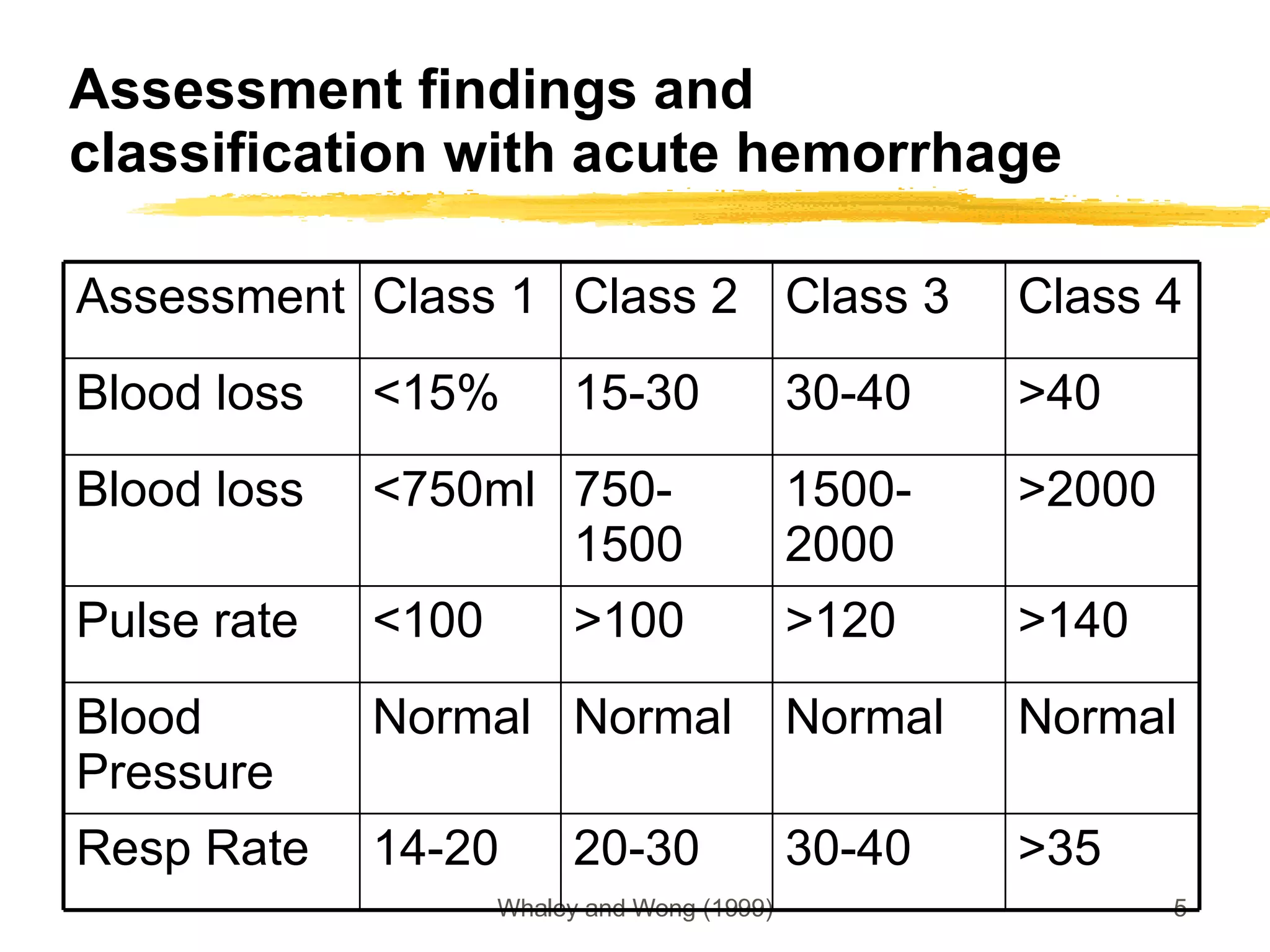
Assessment findings and classification with acute hemorrhage >35 30-40 20-30 14-20 Resp Rate Normal Normal Normal Normal Blood Pressure >140 >120 >100 <100 Pulse rate >2000 1500-2000 750-1500 <750ml Blood loss >40 30-40 15-30 <15% Blood loss Class 4 Class 3 Class 2 Class 1 Assessment
Identification of Shock States Distributive shock  Characterized by systemic vasodilatation  Vasogenic Anaphylaxis - allergen mediated Sepsis - overwhelming sepsis with circulating bacterial toxins Myocardial depression and peripheral dilation Neurogenic Spinal cord injury
Identification of Shock States Cardiogenic shock Results from impaired cardiac function resulting in reduced cardiac output Myocardial Infarction Primary pump failure- myocarditis, trauma, congestive heart failure Dysrhythmias-  Paroxysmal atrial tachycardia, Ventricular dysrhythmias Obstructive Conditions Large Pulmonary emboli Tension Pneumothorax Pericardial Tamponade
Identification of Shock States Clinical manifestations Compensated/ progressive Increased heart rate/ tachycardia Vasoconstriction Decreased perfusion of the hands and feet Irritability Thirsty Decrease urinary output -  Normal BP with narrowing pulse pressure Example moderate dehydration
Identification of Shock States Decompensated shock Pronounced tachycardia Tachypnea Very lethargic, confused, apathetic Cool pale extremities with decreased capillary refill and skin turgor vasodilatation of the microcirculation BP might be maintained, but increasingly narrow in pulse pressure Moderate metabolic acidosis lactic acidosis from anaerobic metabolism Will progress to tissue hypoxia,metabolic acidosis and eventually organ dysfunction
Identification of Shock States Irreversible shock Pronounced vasoconstriction Severe tachycardia with progression to bradycardia- thready weak pulse Hypotension Coma Apnea Irreversibly organ damage Kidneys, brain, heart
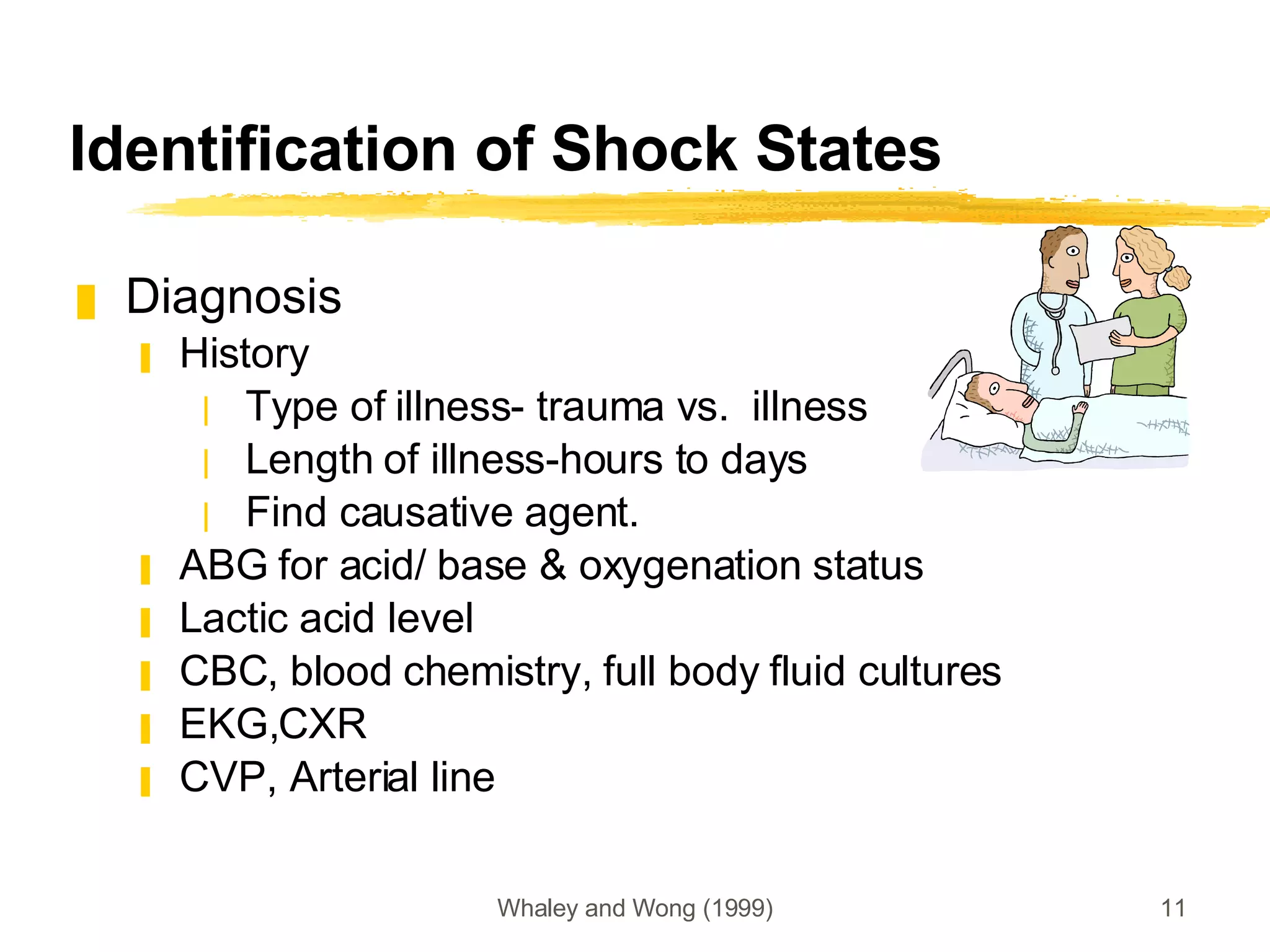
Identification of Shock States Diagnosis History Type of illness- trauma vs.  illness Length of illness-hours to days Find causative agent. ABG for acid/ base & oxygenation status Lactic acid level CBC, blood chemistry, full body fluid cultures EKG,CXR CVP, Arterial line
Identification of Shock States Physical exam Level of consciousness Heart rate/ Respiratory rate O2sat (difficult d/t perfusion) Capillary refill (perfusion) BP (Art/ Doppler) Urinary output Cardiac monitoring Temperature monitoring Full hemodynamic  monitoring in sever cases
Identification of Shock States Therapeutic Management Ventilation Establish airway- prep for intubation Administer O2 by mask Replace fluids Establish IV/ IO access Restore volume with fluid boluses 20cc/kg isotonic solution Improve pump action Administer vasopressors Epinephrine .01mg/ kg Dopamine 2-20 mcg/kg/min
Identification of Shock States General support Keep pt flat with leg raised above level of heart Keep pt warm and dry Septic Shock Administer broad-spectrum antibiotics Anaphylaxis Remove allergen Tourniquet above injection  site
Identification of Shock States in Infants and Children Children have an intense vasoconstrictor response: Systolic blood pressure will be maintained at the expense of peripheral perfusion Observe poor peripheral perfusion and narrow pulse pressure before hypotension is evident A decrease in heart rate below normal range will cause a significant fall in cardiac output
Identification of Shock Type and degree of shock? Initial intervention? What signs of improvement will you see with treatment?
Identification of Shock States Summary The type and degree of shock must be diagnosed early and treatment started immediately. In infants and children, hypotension is a very late manifestation. Heart and respiratory rate, level of consciousness and capillary refill are essential parts of the physical exam.

NurseReview.Org - Identification of Shock

  • 1.
    Identification of ShockStates Caralee Brommé, RN, MSN, CCRN
  • 2.
    Identification of ShockStates Types of shock Hypovolemic Distributive/ Vasogenic Anaphylactic Neurogenic Septic Cardiogenic Clinical manifestations Compensated/Progressive Decompensated/ Nonprogressive Irreversible Diagnosis& treatment History Physical Case study
  • 3.
    Identification of ShockStates Shock, or circulatory failure is a complex clinical syndrome characterized by inadequate tissue perfusion to meet the metabolic demands of the body , which results in cellular dysfunction and eventual organ failure and death The causes are different, but the physiologic consequences are the same Hypotension,tissue hypoxia, and metabolic acidosis
  • 4.
    Identification of ShockStates Hypovolemic shock Characterized by a reduction in circulating volume or extra cellular loss Blood loss - trauma , GI bleeding, intracranial hemorrhage Plasma loss - increased capillary permeability associated with sepsis and acidosis, burns,peritonitis Extra cellular loss - vomiting diarrhea, glycosuric diuresis, and sunstroke
  • 5.
    Assessment findings andclassification with acute hemorrhage >35 30-40 20-30 14-20 Resp Rate Normal Normal Normal Normal Blood Pressure >140 >120 >100 <100 Pulse rate >2000 1500-2000 750-1500 <750ml Blood loss >40 30-40 15-30 <15% Blood loss Class 4 Class 3 Class 2 Class 1 Assessment
  • 6.
    Identification of ShockStates Distributive shock Characterized by systemic vasodilatation Vasogenic Anaphylaxis - allergen mediated Sepsis - overwhelming sepsis with circulating bacterial toxins Myocardial depression and peripheral dilation Neurogenic Spinal cord injury
  • 7.
    Identification of ShockStates Cardiogenic shock Results from impaired cardiac function resulting in reduced cardiac output Myocardial Infarction Primary pump failure- myocarditis, trauma, congestive heart failure Dysrhythmias- Paroxysmal atrial tachycardia, Ventricular dysrhythmias Obstructive Conditions Large Pulmonary emboli Tension Pneumothorax Pericardial Tamponade
  • 8.
    Identification of ShockStates Clinical manifestations Compensated/ progressive Increased heart rate/ tachycardia Vasoconstriction Decreased perfusion of the hands and feet Irritability Thirsty Decrease urinary output - Normal BP with narrowing pulse pressure Example moderate dehydration
  • 9.
    Identification of ShockStates Decompensated shock Pronounced tachycardia Tachypnea Very lethargic, confused, apathetic Cool pale extremities with decreased capillary refill and skin turgor vasodilatation of the microcirculation BP might be maintained, but increasingly narrow in pulse pressure Moderate metabolic acidosis lactic acidosis from anaerobic metabolism Will progress to tissue hypoxia,metabolic acidosis and eventually organ dysfunction
  • 10.
    Identification of ShockStates Irreversible shock Pronounced vasoconstriction Severe tachycardia with progression to bradycardia- thready weak pulse Hypotension Coma Apnea Irreversibly organ damage Kidneys, brain, heart
  • 11.
    Identification of ShockStates Diagnosis History Type of illness- trauma vs. illness Length of illness-hours to days Find causative agent. ABG for acid/ base & oxygenation status Lactic acid level CBC, blood chemistry, full body fluid cultures EKG,CXR CVP, Arterial line
  • 12.
    Identification of ShockStates Physical exam Level of consciousness Heart rate/ Respiratory rate O2sat (difficult d/t perfusion) Capillary refill (perfusion) BP (Art/ Doppler) Urinary output Cardiac monitoring Temperature monitoring Full hemodynamic monitoring in sever cases
  • 13.
    Identification of ShockStates Therapeutic Management Ventilation Establish airway- prep for intubation Administer O2 by mask Replace fluids Establish IV/ IO access Restore volume with fluid boluses 20cc/kg isotonic solution Improve pump action Administer vasopressors Epinephrine .01mg/ kg Dopamine 2-20 mcg/kg/min
  • 14.
    Identification of ShockStates General support Keep pt flat with leg raised above level of heart Keep pt warm and dry Septic Shock Administer broad-spectrum antibiotics Anaphylaxis Remove allergen Tourniquet above injection site
  • 15.
    Identification of ShockStates in Infants and Children Children have an intense vasoconstrictor response: Systolic blood pressure will be maintained at the expense of peripheral perfusion Observe poor peripheral perfusion and narrow pulse pressure before hypotension is evident A decrease in heart rate below normal range will cause a significant fall in cardiac output
  • 16.
    Identification of ShockType and degree of shock? Initial intervention? What signs of improvement will you see with treatment?
  • 17.
    Identification of ShockStates Summary The type and degree of shock must be diagnosed early and treatment started immediately. In infants and children, hypotension is a very late manifestation. Heart and respiratory rate, level of consciousness and capillary refill are essential parts of the physical exam.