Basic Ventilatory Parameters
Dr. Ankit Gajjar
Primary goal
• Achieve a desired minute ventilation that
matches the patient's metabolic needs
• Adequate gas exchange
• Minimal lung injury
Basic parameters
• Tidal volume
• Respiratory rate
• Minute ventilation
• Lung Pressures
– Peak Pressure
– Platue pressure
• Flow / Inspiratory time / I:E ratio
• Flow pattern
• Trigger
• FiO2
• PEEP
Tidal Volume
• Amount of air delivered with each breath
• 8 ml/kg (IBW)
• ARDS – 6 ml/kg
• PC variable
• VC fixed
• Avoid very high tidal volumes to prevent
volume trauma
Respiratory Rate
• Neuro, post operative patients – 14-18
• ARDS – 28-34
• OAD – 12-14 prevention of air trapping
• Septic, Acidotic patients – 28-34
• Monitor
– pH
– PCO2
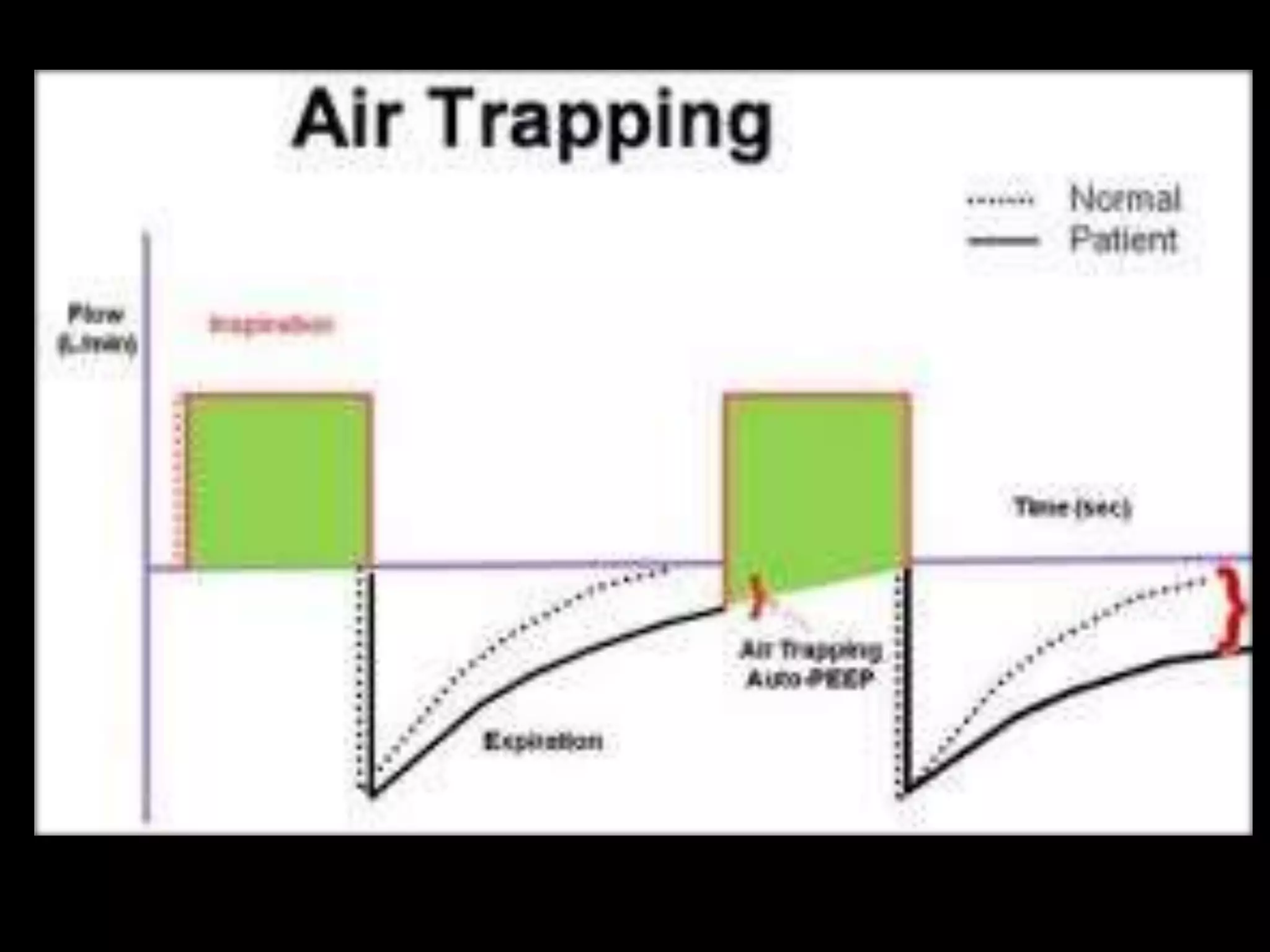
– Air trapping
Minute ventilation
• Monitor
• Normal – 6-8 LPM
• Achieve desired
– pH
– PO2
Pressures
• PC – Set driving pressure Pi
– To achieve desired tidal volume
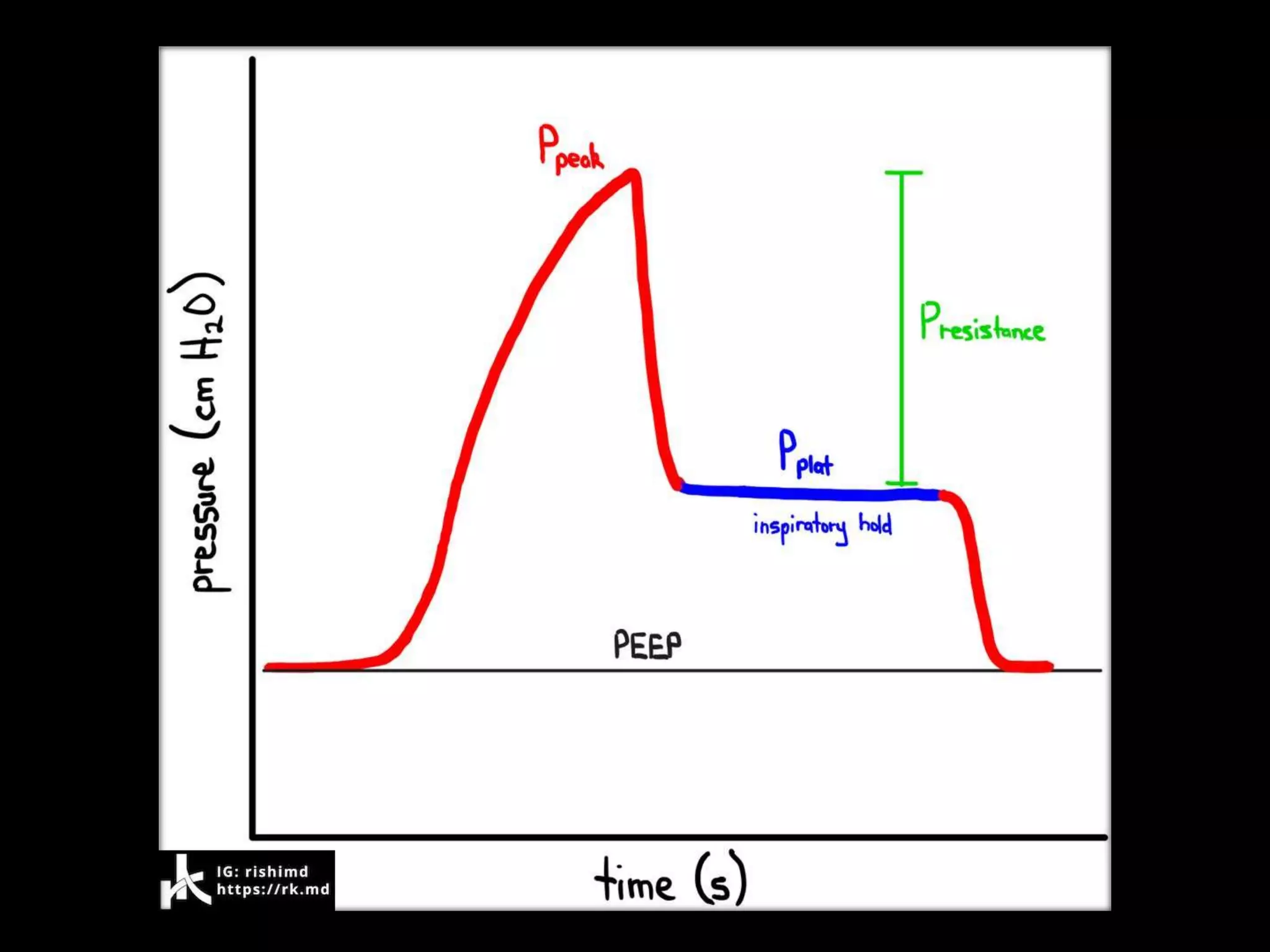
• VC – monitor Ppeak, Pplatue
– Ppeak – peak inspiratory pressure
• Function of resistance and compliance
– Pplatue – inspiratory pressure during inspiratory hold
• Function of lung comliance
• Target <30 cm H2O
• Important in prevention of Barotrauma
Peak flow
• Maximum flow delivered by the ventilator during
inspiration
• Normal Peak flow rate - 60 L per minute
• Higher rates are frequently necessary
– Acidotic patient
– OAD
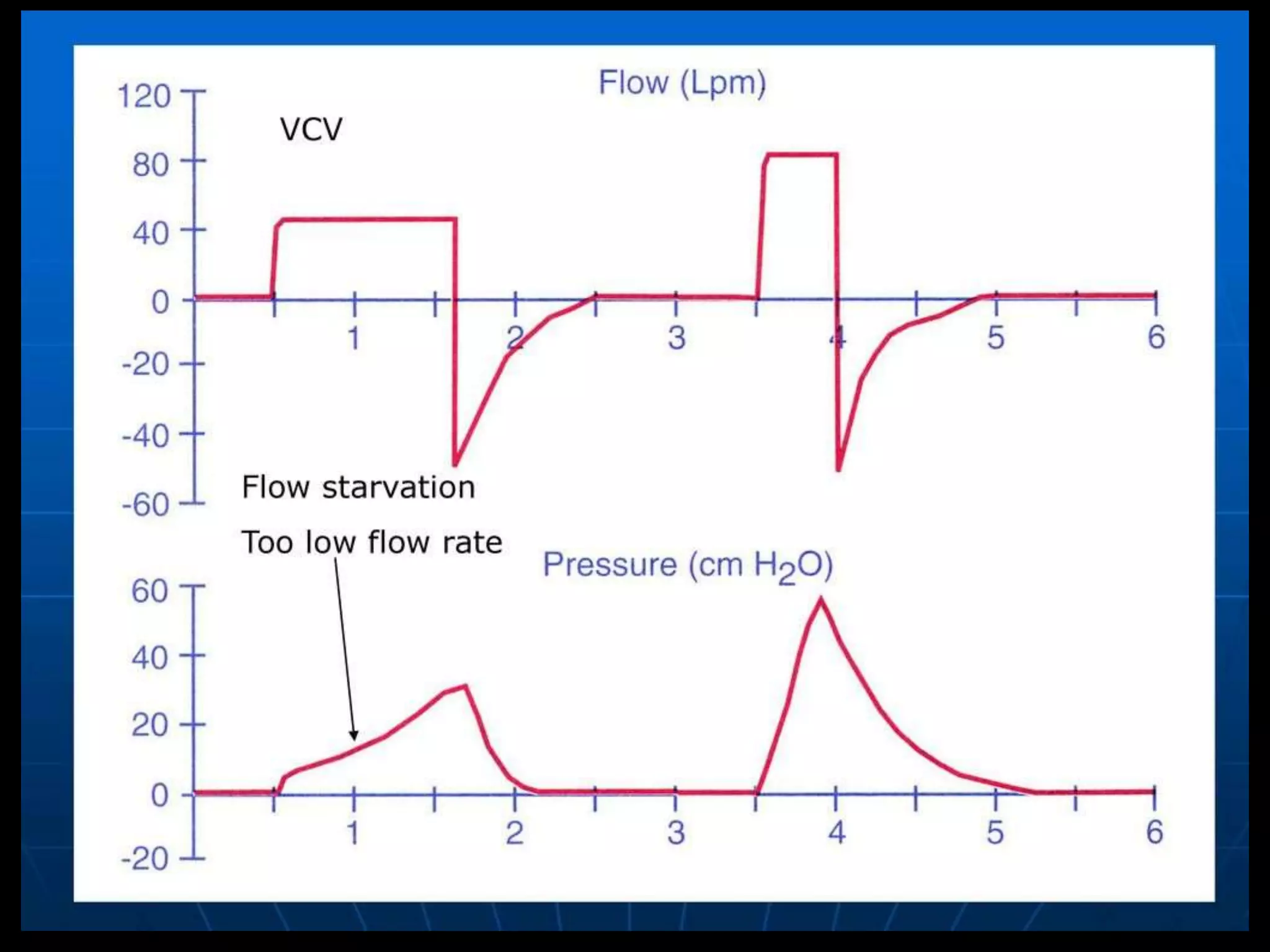
• Insufficient peak flow rate is
– Dyspnea
– Spuriously low peak inspiratory pressures, and
scalloping
Flow pattern
• Can be chosen in VCV
• In PCV always ramp wave
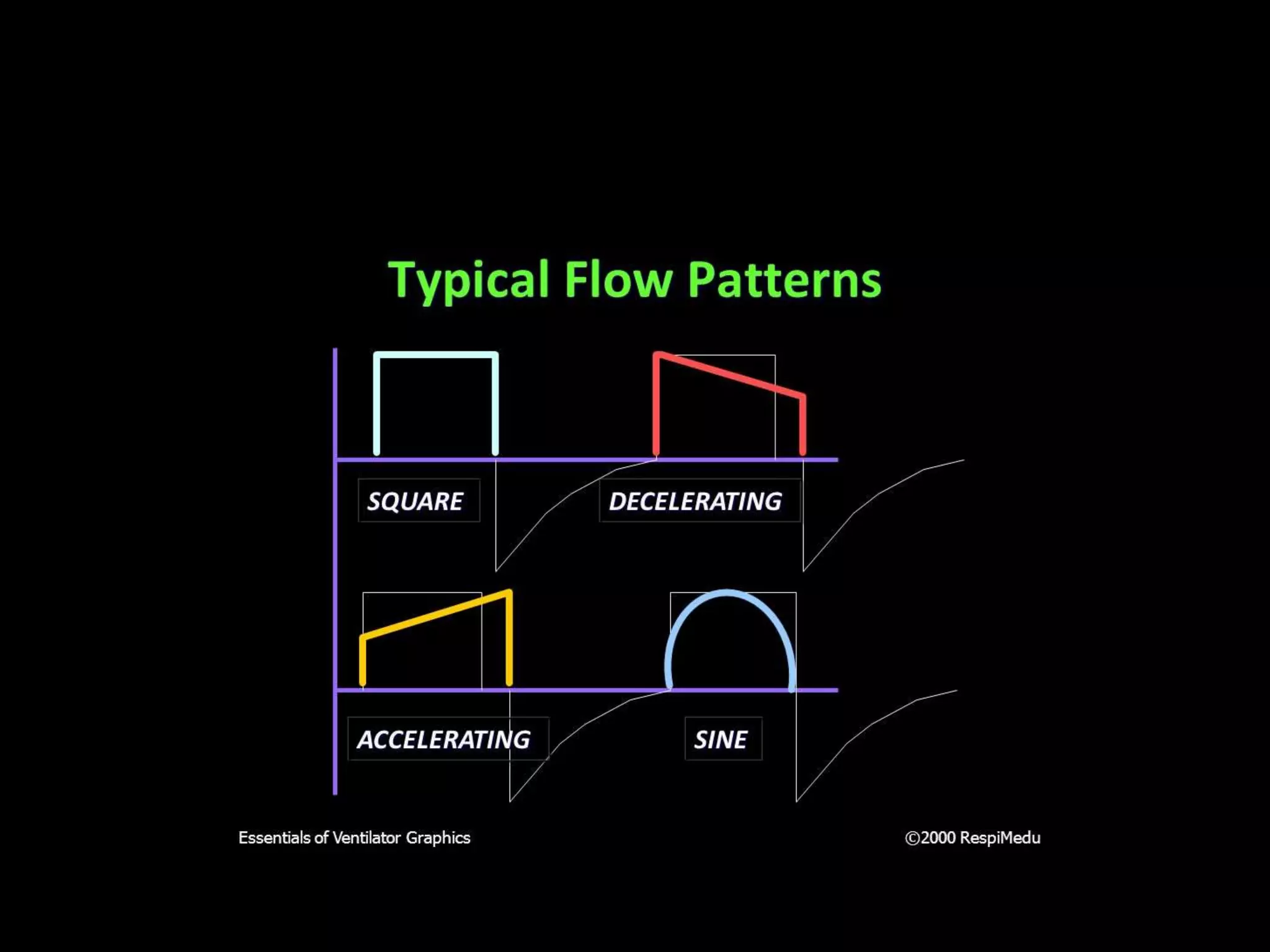
• square wave (constant flow)
• ramp wave (decelerating flow)
• The ramp wave is preferred
– distribute ventilation more evenly particularly in
OAD
– decreases peak airway pressure, physiologic dead
space, and PaCO2
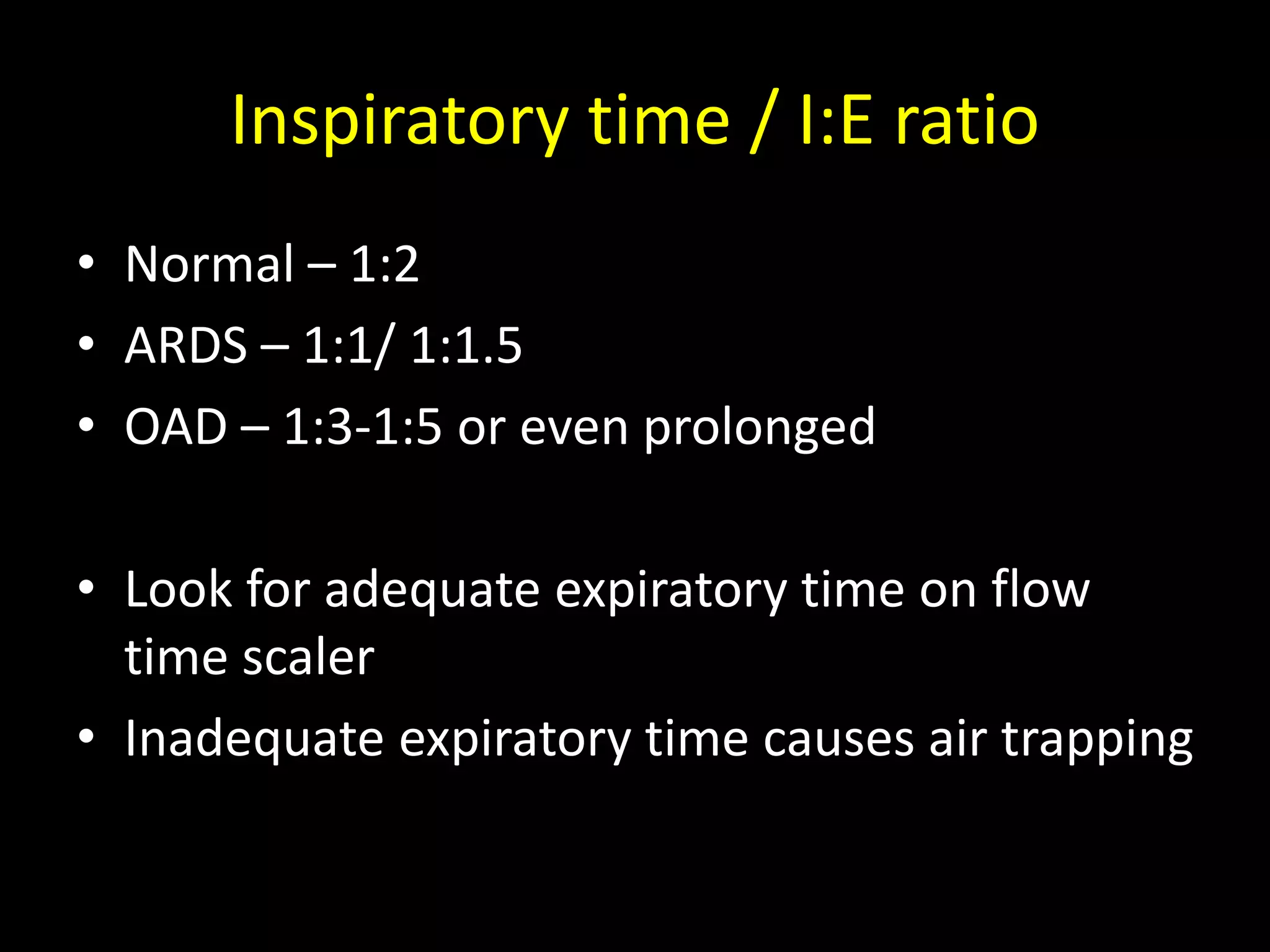
Inspiratory time / I:E ratio
• Normal – 1:2
• ARDS – 1:1/ 1:1.5
• OAD – 1:3-1:5 or even prolonged
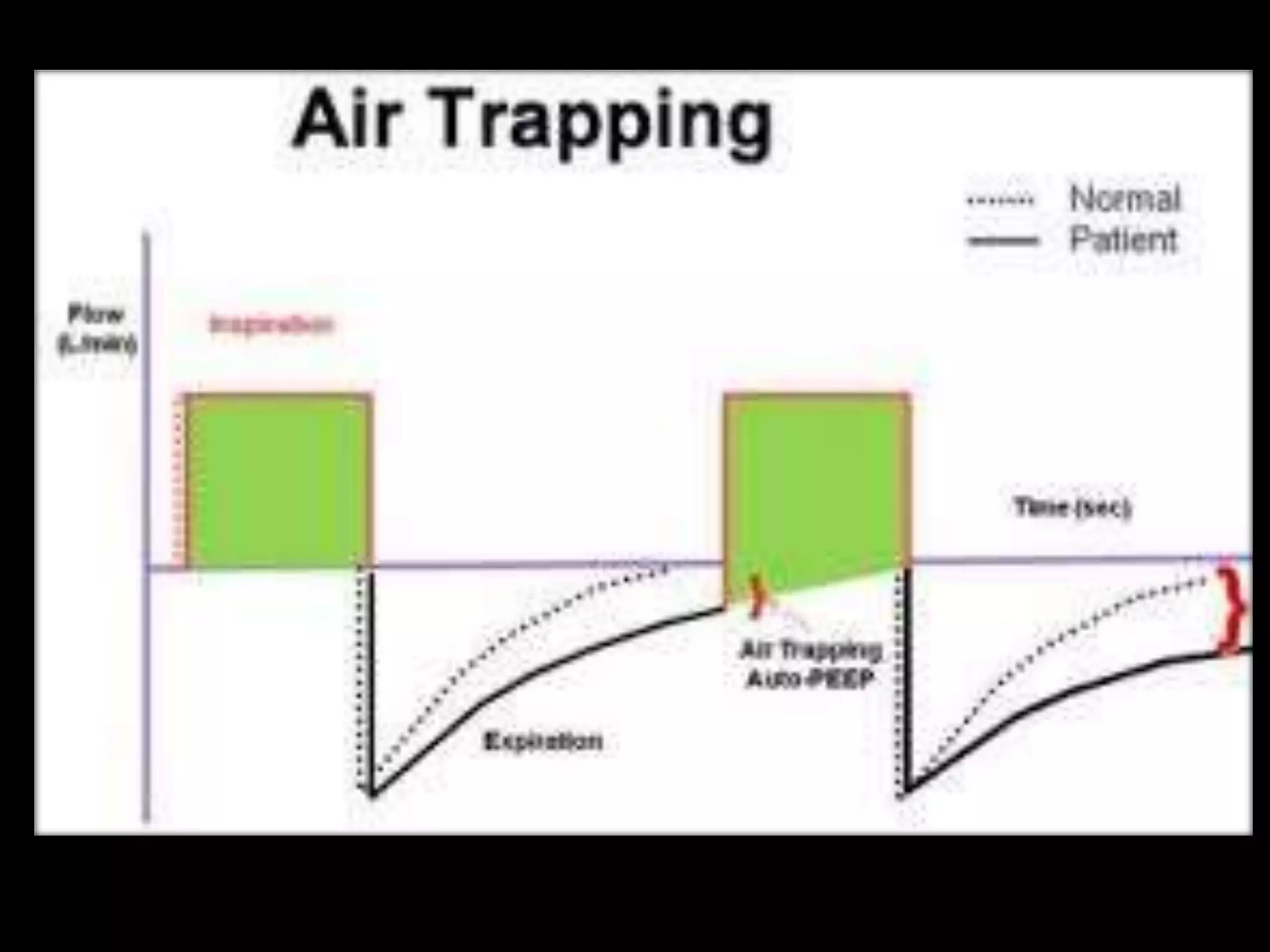
• Look for adequate expiratory time on flow
time scaler
• Inadequate expiratory time causes air trapping
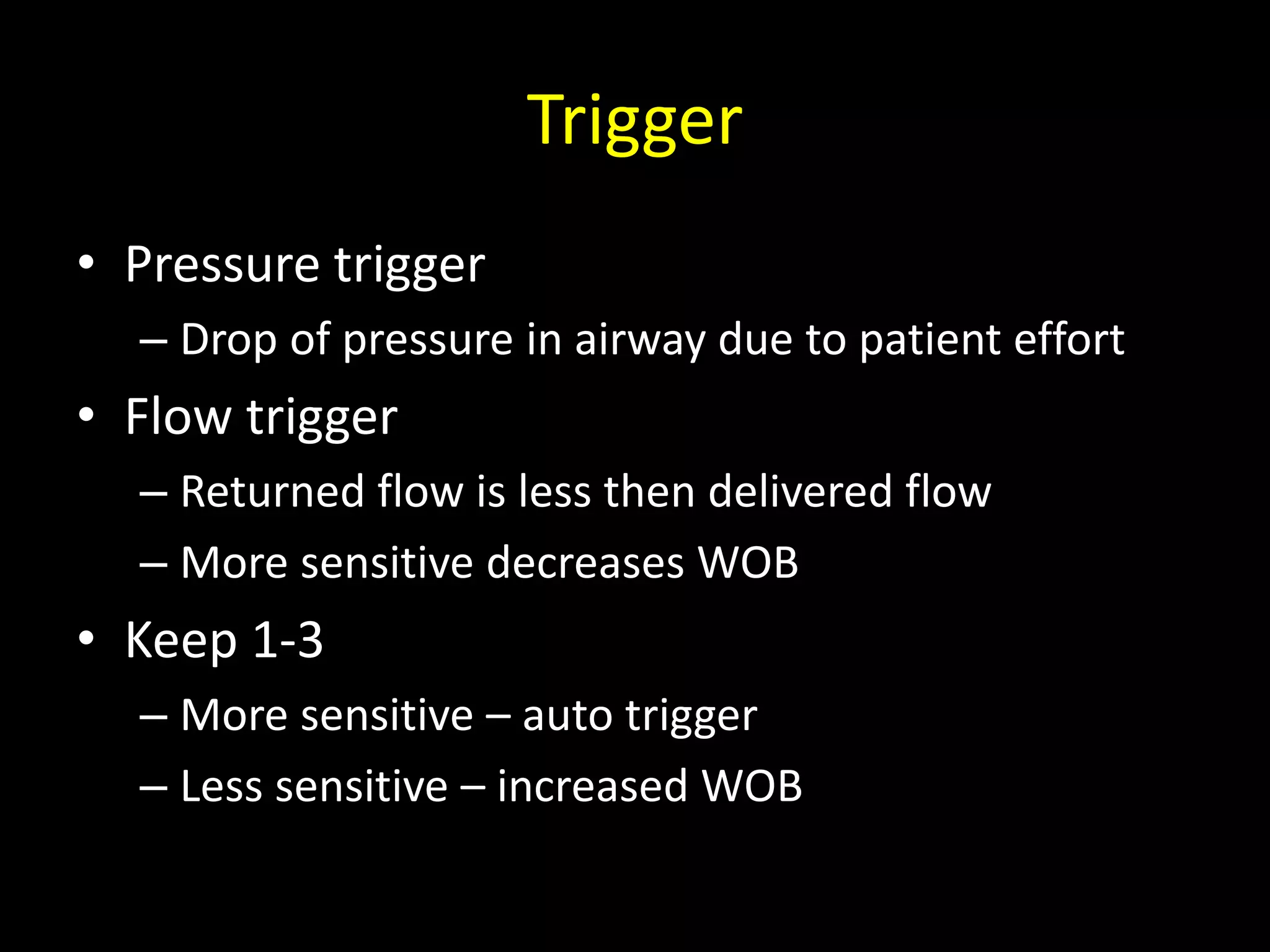
Trigger
• Pressure trigger
– Drop of pressure in airway due to patient effort
• Flow trigger
– Returned flow is less then delivered flow
– More sensitive decreases WOB
• Keep 1-3
– More sensitive – auto trigger
– Less sensitive – increased WOB
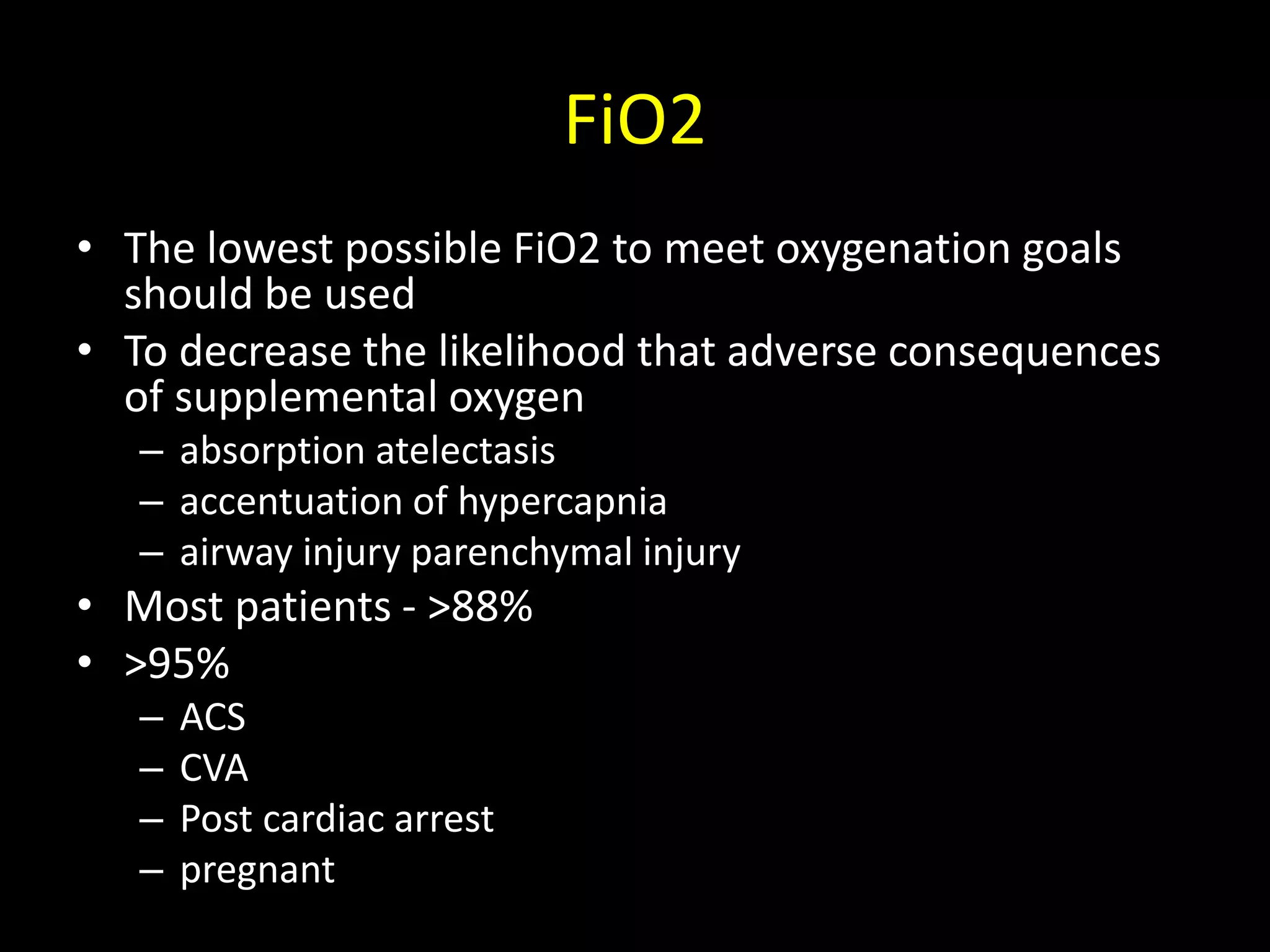
FiO2
• The lowest possible FiO2 to meet oxygenation goals
should be used
• To decrease the likelihood that adverse consequences
of supplemental oxygen
– absorption atelectasis
– accentuation of hypercapnia
– airway injury parenchymal injury
• Most patients - >88%
• >95%
– ACS
– CVA
– Post cardiac arrest
– pregnant
PEEP
• Avoid end expiratory alveolar collapse
• Usual – 5
• Lesser
– OAD???
– BPF
• Higher
– ARDS
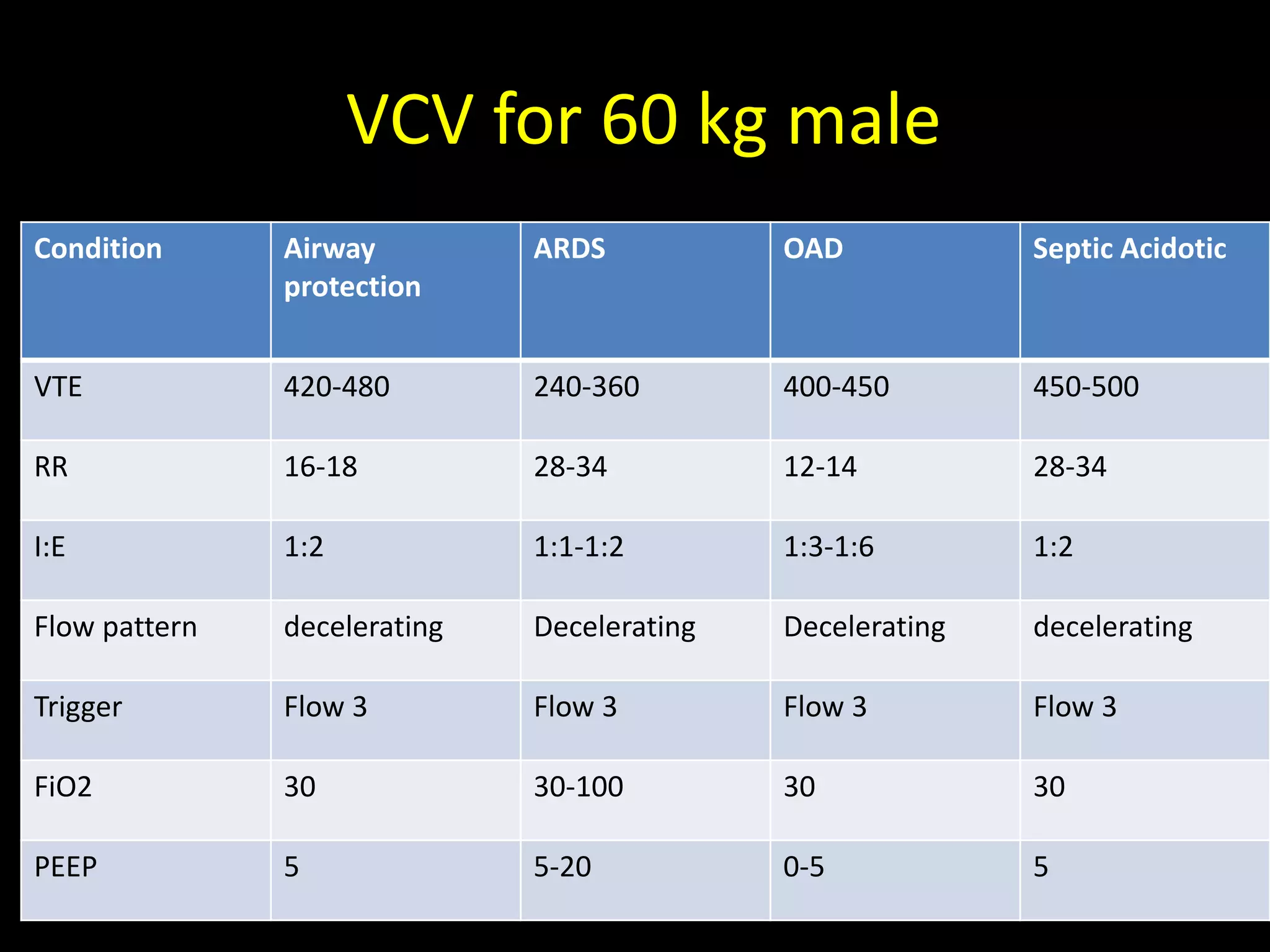
VCV for 60 kg male
Condition Airway
protection
ARDS OAD Septic Acidotic
VTE 420-480 240-360 400-450 450-500
RR 16-18 28-34 12-14 28-34
I:E 1:2 1:1-1:2 1:3-1:6 1:2
Flow pattern decelerating Decelerating Decelerating decelerating
Trigger Flow 3 Flow 3 Flow 3 Flow 3
FiO2 30 30-100 30 30
PEEP 5 5-20 0-5 5
Monitor
• Pplat
• MV
• SPO2
• PCO2
• pH
THANK YOU

Basic ventilatory parameters

  • 1.
  • 2.
    Primary goal • Achievea desired minute ventilation that matches the patient's metabolic needs • Adequate gas exchange • Minimal lung injury
  • 3.
    Basic parameters • Tidalvolume • Respiratory rate • Minute ventilation • Lung Pressures – Peak Pressure – Platue pressure • Flow / Inspiratory time / I:E ratio • Flow pattern • Trigger • FiO2 • PEEP
  • 4.
    Tidal Volume • Amountof air delivered with each breath • 8 ml/kg (IBW) • ARDS – 6 ml/kg • PC variable • VC fixed • Avoid very high tidal volumes to prevent volume trauma
  • 5.
    Respiratory Rate • Neuro,post operative patients – 14-18 • ARDS – 28-34 • OAD – 12-14 prevention of air trapping • Septic, Acidotic patients – 28-34 • Monitor – pH – PCO2 – Air trapping
  • 7.
    Minute ventilation • Monitor •Normal – 6-8 LPM • Achieve desired – pH – PO2
  • 8.
    Pressures • PC –Set driving pressure Pi – To achieve desired tidal volume • VC – monitor Ppeak, Pplatue – Ppeak – peak inspiratory pressure • Function of resistance and compliance – Pplatue – inspiratory pressure during inspiratory hold • Function of lung comliance • Target <30 cm H2O • Important in prevention of Barotrauma
  • 10.
    Peak flow • Maximumflow delivered by the ventilator during inspiration • Normal Peak flow rate - 60 L per minute • Higher rates are frequently necessary – Acidotic patient – OAD • Insufficient peak flow rate is – Dyspnea – Spuriously low peak inspiratory pressures, and scalloping
  • 12.
    Flow pattern • Canbe chosen in VCV • In PCV always ramp wave • square wave (constant flow) • ramp wave (decelerating flow) • The ramp wave is preferred – distribute ventilation more evenly particularly in OAD – decreases peak airway pressure, physiologic dead space, and PaCO2
  • 14.
    Inspiratory time /I:E ratio • Normal – 1:2 • ARDS – 1:1/ 1:1.5 • OAD – 1:3-1:5 or even prolonged • Look for adequate expiratory time on flow time scaler • Inadequate expiratory time causes air trapping
  • 16.
    Trigger • Pressure trigger –Drop of pressure in airway due to patient effort • Flow trigger – Returned flow is less then delivered flow – More sensitive decreases WOB • Keep 1-3 – More sensitive – auto trigger – Less sensitive – increased WOB
  • 17.
    FiO2 • The lowestpossible FiO2 to meet oxygenation goals should be used • To decrease the likelihood that adverse consequences of supplemental oxygen – absorption atelectasis – accentuation of hypercapnia – airway injury parenchymal injury • Most patients - >88% • >95% – ACS – CVA – Post cardiac arrest – pregnant
  • 18.
    PEEP • Avoid endexpiratory alveolar collapse • Usual – 5 • Lesser – OAD??? – BPF • Higher – ARDS
  • 19.
    VCV for 60kg male Condition Airway protection ARDS OAD Septic Acidotic VTE 420-480 240-360 400-450 450-500 RR 16-18 28-34 12-14 28-34 I:E 1:2 1:1-1:2 1:3-1:6 1:2 Flow pattern decelerating Decelerating Decelerating decelerating Trigger Flow 3 Flow 3 Flow 3 Flow 3 FiO2 30 30-100 30 30 PEEP 5 5-20 0-5 5
  • 20.
    Monitor • Pplat • MV •SPO2 • PCO2 • pH
  • 21.