Mechanical Ventilation – 01
Fakhir Raza Haidri
SIUT
23-September-2020
Ventilation
• In and Out of Air
Spontaneous Breathing
• Movement of air into and out of the lungs as a result of work done by
an individual’s respiratory muscles.
Positive pressure ventilation
• The movement of air into the lungs by the application of positive
pressure to the airway through an endotracheal tube, tracheostomy
tube, or noninvasive mask.
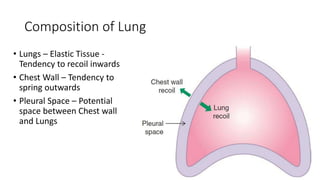
Composition of Lung
• Lungs – Elastic Tissue -
Tendency to recoil inwards
• Chest Wall – Tendency to
spring outwards
• Pleural Space – Potential
space between Chest wall
and Lungs
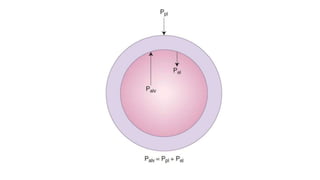
Pleural Pressure (Ppl)
• At the end of the expiration it is negative (less then atmospheric
pressure)
• It prevents the lungs from collapsing and Keeps the Chest wall at its
position
Key Concept
• Balance between lung recoil inward and chest wall recoil outward
determines lung volume at end of expiration
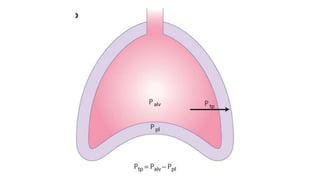
Transpulmonary Pressure (PAlv)
• The difference
between alveolar
pressure and
pleural pressure,
known as
transpulmonary
pressure (Ptp)
• equal and opposite
to lung elastic recoil
pressure for a given
lung volume
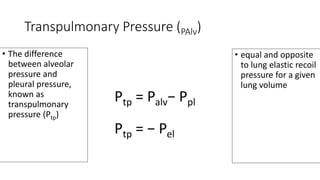
Ptp = Palv− Ppl
Ptp = − Pel
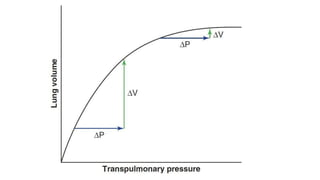
Ptp = Lung Volume
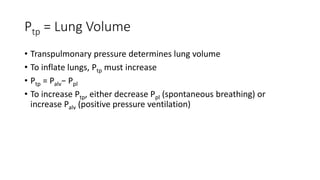
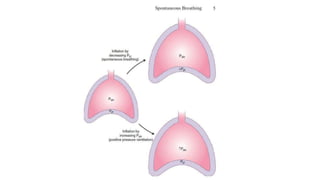
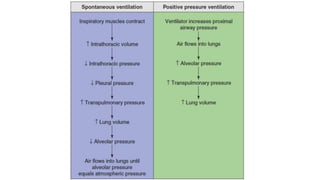
• Transpulmonary pressure determines lung volume
• To inflate lungs, Ptp must increase
• Ptp = Palv− Ppl
• To increase Ptp, either decrease Ppl (spontaneous breathing) or
increase Palv (positive pressure ventilation)
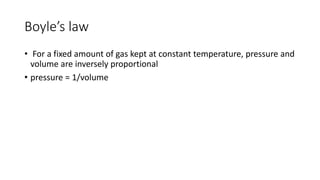
Boyle’s law
• For a fixed amount of gas kept at constant temperature, pressure and
volume are inversely proportional
• pressure = 1/volume
How Does Boyle’s Law Explains Breathing
• Inspiration
Increase Thoracic Volume – Lower Pleural Pressure – Lower Alveolar Pressure
(below atm pressure) – Inward Movement of Air from Atmosphere
Expiration
• Expiration
• Passive Recoil – Diaphragm and Inspiratory muscles relax – Abdominal
contents returns to previous position – Chest wall recoils – Decreased
intrathoracic volume – increase intrathoracic pressure – increased pleural
pressure – decrease in Ptp – Alveolar pressure more then atm Pressure – Air
moves out of lungs
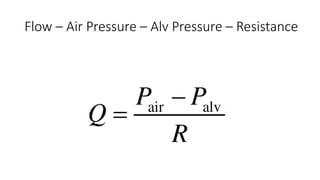
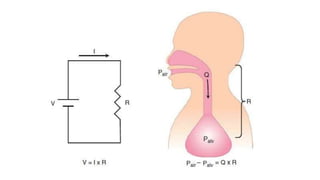
Flow – Air Pressure – Alv Pressure – Resistance
Mechanical ventilation 1

Mechanical ventilation 1

  • 1.
    Mechanical Ventilation –01 Fakhir Raza Haidri SIUT 23-September-2020
  • 2.
  • 3.
    Spontaneous Breathing • Movementof air into and out of the lungs as a result of work done by an individual’s respiratory muscles.
  • 4.
    Positive pressure ventilation •The movement of air into the lungs by the application of positive pressure to the airway through an endotracheal tube, tracheostomy tube, or noninvasive mask.
  • 5.
    Composition of Lung •Lungs – Elastic Tissue - Tendency to recoil inwards • Chest Wall – Tendency to spring outwards • Pleural Space – Potential space between Chest wall and Lungs
  • 6.
    Pleural Pressure (Ppl) •At the end of the expiration it is negative (less then atmospheric pressure) • It prevents the lungs from collapsing and Keeps the Chest wall at its position
  • 7.
    Key Concept • Balancebetween lung recoil inward and chest wall recoil outward determines lung volume at end of expiration
  • 8.
    Transpulmonary Pressure (PAlv) •The difference between alveolar pressure and pleural pressure, known as transpulmonary pressure (Ptp) • equal and opposite to lung elastic recoil pressure for a given lung volume Ptp = Palv− Ppl Ptp = − Pel
  • 9.
    Ptp = LungVolume • Transpulmonary pressure determines lung volume • To inflate lungs, Ptp must increase • Ptp = Palv− Ppl • To increase Ptp, either decrease Ppl (spontaneous breathing) or increase Palv (positive pressure ventilation)
  • 14.
    Boyle’s law • Fora fixed amount of gas kept at constant temperature, pressure and volume are inversely proportional • pressure = 1/volume
  • 15.
    How Does Boyle’sLaw Explains Breathing • Inspiration Increase Thoracic Volume – Lower Pleural Pressure – Lower Alveolar Pressure (below atm pressure) – Inward Movement of Air from Atmosphere Expiration • Expiration • Passive Recoil – Diaphragm and Inspiratory muscles relax – Abdominal contents returns to previous position – Chest wall recoils – Decreased intrathoracic volume – increase intrathoracic pressure – increased pleural pressure – decrease in Ptp – Alveolar pressure more then atm Pressure – Air moves out of lungs
  • 16.
    Flow – AirPressure – Alv Pressure – Resistance