Mechanics of Breathing
(Pulmonary Ventilation)


     Lecture-2


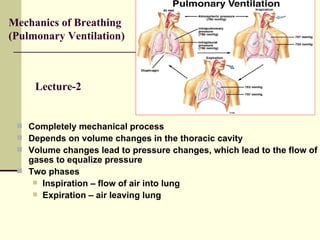
  Completely mechanical process
  Depends on volume changes in the thoracic cavity
  Volume changes lead to pressure changes, which lead to the flow of
   gases to equalize pressure
  Two phases
     Inspiration – flow of air into lung
     Expiration – air leaving lung
Pressure Relationships in the
Thoracic Cavity
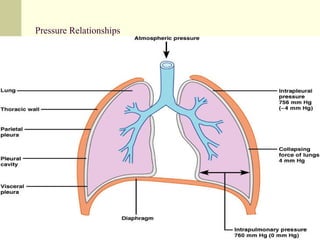
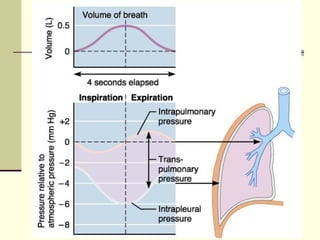
 Intrapulmonary pressure (Ppul) – pressure
  within the alveoli
 Intrapleural pressure (Pip) – pressure within
  the pleural cavity
Pressure Relationships
 Intrapulmonary pressure and intrapleural
  pressure fluctuate with the phases of
  breathing
 Intrapulmonary pressure always eventually
  equalizes itself with atmospheric pressure
 Intrapleural pressure is always less than
  intrapulmonary pressure and atmospheric
  pressure
Causes of negativity of Intrapleural
    pressure
 
 Lymphatic system drains the pleural fluid, generating a
  negative intra pleural pressure (- 2 mm Hg)

   Elasticity of lungs causes them to assume smallest
    possible size. But opposing force – elasticity of the chest
    wall pulls the thorax outward to enlarge the lungs.
Measurement of Intrapleural pressure
 Directly by introducing a needle to pleural
  cavity
 Indirect method: by introducing the
  esophageal balloon into esophagus
Significance of Intrapleural pressure
 Prevent the collapsing tendency of lungs
 Increases the venous return
Pressure Relationships
Intra-Alveolar pressure/Intra-
Pulmonary pressure
 Measurement: Plethysmograph
 Significance :
     1. It causes flow of air in and out of
  alveoli.
     2. Helps in the exchange of gases
  between alveolar air and blood.
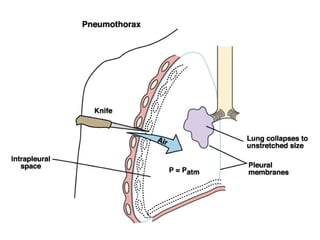
Lung Collapse
 Caused by equalization of the intrapleural
  pressure with the intrapulmonary pressure
 Transpulmonary pressure keeps the airways
  open
     Transpulmonary pressure – difference
      between the intrapulmonary and intrapleural
      pressures
      (Ppul – Pip)
Pulmonary Ventilation

 A mechanical process that depends on volume
  changes in the thoracic cavity
 Volume changes lead to pressure changes, which
  lead to the flow of gases to equalize pressure
Boyle’s Law
 Boyle’s law – the relationship between the
  pressure and volume of gases
                    P1V1 = P2V2
     P = pressure of a gas in mm Hg
     V = volume of a gas in cubic millimeters
     Subscripts 1 and 2 represent the initial and
      resulting conditions, respectively
Inspiration
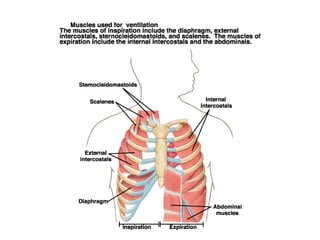
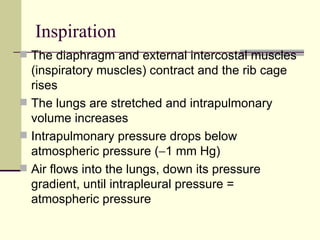
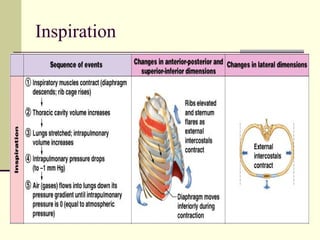
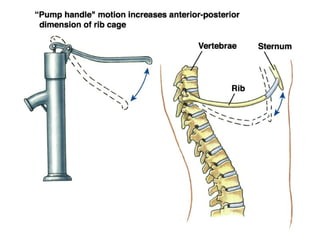
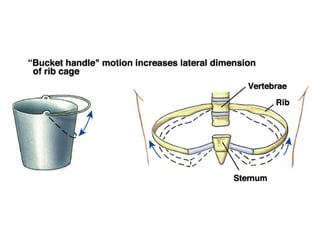
 The diaphragm and external intercostal muscles
  (inspiratory muscles) contract and the rib cage
  rises
 The lungs are stretched and intrapulmonary
  volume increases
 Intrapulmonary pressure drops below
  atmospheric pressure (−1 mm Hg)
 Air flows into the lungs, down its pressure
  gradient, until intrapleural pressure =
  atmospheric pressure
Inspiration
Expiration
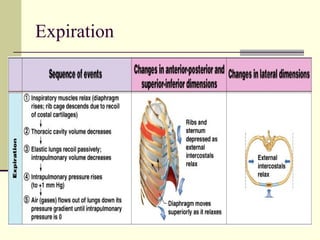
 Inspiratory muscles relax and the rib cage
  descends due to gravity
 Thoracic cavity volume decreases
 Elastic lungs recoil passively and intrapulmonary
  volume decreases
 Intrapulmonary pressure rises above
  atmospheric pressure (+1 mm Hg)
 Gases flow out of the lungs down the pressure
  gradient until intrapulmonary pressure is 0
Expiration
Forced Expiration
 Forced expiration is an active process due to contraction of
  oblique and transverse abdominal muscles, internal intercostals,
  and the latissimus dorsi.
 The larynx is closed during coughing, sneezing, and Valsalva’s
  maneuver
 Valsalva’s maneuver-Forced expiration against closed glottis .
    Air is temporarily held in the lower respiratory tract by
      closing the glottis
    Causes intra-abdominal pressure to rise when abdominal
      muscles contract.
    Helps to empty the rectum.
    Child birth .
Factors causing collapsing tendency of
lungs

   Elasticity of lungs causes them to assume smallest
    possible size
   Surface tension of alveolar fluid draws alveoli to their
    smallest possible size
  The intrapleural pressure – it is always
  negative
 Surfactant – secreted by the type 2 alveolar
  cells, which reduces surface tension.

Respiration

  • 1.
    Mechanics of Breathing (PulmonaryVentilation) Lecture-2  Completely mechanical process  Depends on volume changes in the thoracic cavity  Volume changes lead to pressure changes, which lead to the flow of gases to equalize pressure  Two phases  Inspiration – flow of air into lung  Expiration – air leaving lung
  • 3.
    Pressure Relationships inthe Thoracic Cavity  Intrapulmonary pressure (Ppul) – pressure within the alveoli  Intrapleural pressure (Pip) – pressure within the pleural cavity
  • 4.
    Pressure Relationships  Intrapulmonarypressure and intrapleural pressure fluctuate with the phases of breathing  Intrapulmonary pressure always eventually equalizes itself with atmospheric pressure  Intrapleural pressure is always less than intrapulmonary pressure and atmospheric pressure
  • 5.
    Causes of negativityof Intrapleural pressure   Lymphatic system drains the pleural fluid, generating a negative intra pleural pressure (- 2 mm Hg)  Elasticity of lungs causes them to assume smallest possible size. But opposing force – elasticity of the chest wall pulls the thorax outward to enlarge the lungs.
  • 6.
    Measurement of Intrapleuralpressure  Directly by introducing a needle to pleural cavity  Indirect method: by introducing the esophageal balloon into esophagus
  • 7.
    Significance of Intrapleuralpressure  Prevent the collapsing tendency of lungs  Increases the venous return
  • 8.
  • 9.
    Intra-Alveolar pressure/Intra- Pulmonary pressure Measurement: Plethysmograph  Significance : 1. It causes flow of air in and out of alveoli. 2. Helps in the exchange of gases between alveolar air and blood.
  • 10.
    Lung Collapse  Causedby equalization of the intrapleural pressure with the intrapulmonary pressure  Transpulmonary pressure keeps the airways open  Transpulmonary pressure – difference between the intrapulmonary and intrapleural pressures (Ppul – Pip)
  • 11.
    Pulmonary Ventilation  Amechanical process that depends on volume changes in the thoracic cavity  Volume changes lead to pressure changes, which lead to the flow of gases to equalize pressure
  • 12.
    Boyle’s Law  Boyle’slaw – the relationship between the pressure and volume of gases P1V1 = P2V2  P = pressure of a gas in mm Hg  V = volume of a gas in cubic millimeters  Subscripts 1 and 2 represent the initial and resulting conditions, respectively
  • 13.
    Inspiration  The diaphragmand external intercostal muscles (inspiratory muscles) contract and the rib cage rises  The lungs are stretched and intrapulmonary volume increases  Intrapulmonary pressure drops below atmospheric pressure (−1 mm Hg)  Air flows into the lungs, down its pressure gradient, until intrapleural pressure = atmospheric pressure
  • 14.
  • 17.
    Expiration  Inspiratory musclesrelax and the rib cage descends due to gravity  Thoracic cavity volume decreases  Elastic lungs recoil passively and intrapulmonary volume decreases  Intrapulmonary pressure rises above atmospheric pressure (+1 mm Hg)  Gases flow out of the lungs down the pressure gradient until intrapulmonary pressure is 0
  • 18.
  • 19.
    Forced Expiration  Forcedexpiration is an active process due to contraction of oblique and transverse abdominal muscles, internal intercostals, and the latissimus dorsi.  The larynx is closed during coughing, sneezing, and Valsalva’s maneuver  Valsalva’s maneuver-Forced expiration against closed glottis .  Air is temporarily held in the lower respiratory tract by closing the glottis  Causes intra-abdominal pressure to rise when abdominal muscles contract.  Helps to empty the rectum.  Child birth .
  • 22.
    Factors causing collapsingtendency of lungs  Elasticity of lungs causes them to assume smallest possible size  Surface tension of alveolar fluid draws alveoli to their smallest possible size
  • 23.
     Theintrapleural pressure – it is always negative  Surfactant – secreted by the type 2 alveolar cells, which reduces surface tension.