Specific Organ Support in ICU
Fakhir Raza
SIUT
Specific Organ Support
• We need to support following organs
• Brain
• Heart
• Lungs
• Kidneys
• Liver
• Hematology & Coagulation
• Skin and soft tissue
• Endocrine
Brain
• No parenteral non-ionic fluid must be given
• Keep plasma sodium concentration >140 mmol/l. A fall produces an
osmotic gradient across the blood-brain barrier and aggravates cerebral
oedema
• Avoid hyperglycaemia and hypoglycaemia. Hyperglycaemia may aggravate
ischaemic brain injury by increasing cerebral lactic acidosis. Blood glucose
levels >11 mmol/l should be treated
• Feed through an orogastric tube. Gastric motility drugs can be given as
required
• Anti-thromboembolism stockings; avoid low dose heparin
• 15-30° head up tilt with the head kept in a neutral position may improve
cerebral perfusion pressure
ICP management
• Hypertonic saline
• Mannitol
• Hyperventilation
• Sedation and paralysis
• EVD
• Craniectomy
• Non invasive and invasive monitoring of ICP
Brain Perfusion
• Perfusion pressure depends upon ICP and MAP
• Increasing Mean Arterial pressure or decreasing Intracranial pressure
Heart support
• Hemodynamic support – Already discussed in general organ support
• Arrythmias
• Myocardial infarction
• Pericardial tamponade
Arrythmias
• All unstable tachyarrythmias should be treated with shock
• Broad complex tachycardia with shock should be treated as
ventricular fibrillation
• Amiodarone is drug of choice in ICU in most supraventricular and
ventricular tachyarrythmias
• Electrolytes should be corrected to prevent recurrent arrythmias
• Potassium, Magnesium and calcium are important
Myocardial infarction
• Mostly in ICU, MI is due to systemic illness and can’t be treated with
PCI or thrombolysis
• Supportive treatment and anticoagulation is indicated along with
antiplatelet therapy (if no contraindications exist)
Pericardial temponade
• It is treated with symptomatic and causing right heart dysfunction
Respiratory support
• Mechanical Ventilation
• Oxygenation
• How much oxygen to be given
• Ventilation
Respiratory Support
• Oxygenation:
• Nasal canulla
• Venturi mask
• Non rebreathing mask
• Mechanical ventilation
• PEEP
• I:E ratio
• FiO2
• Proning
• ECMO /ELS
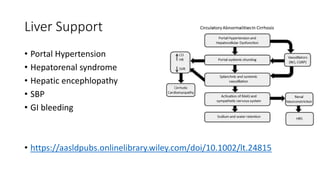
Liver Support
• Portal Hypertension
• Hepatorenal syndrome
• Hepatic encephlopathy
• SBP
• GI bleeding
• https://aasldpubs.onlinelibrary.wiley.com/doi/10.1002/lt.24815
Liver support
• ABC
• Maintaining sugar
• Making sure that patient moves bowel
• Medicines for decreasing portal hypertension
• Antibiotics for SBP
• Terlipressin when indicated
• GI clearance
• Coagulopathy
Kidney Support
• Fluid balance
• Electrolyte balance
• Acid base balance
• Solute balance (urea)
• Renal replacement therapy
Indication of RRT in ICU
• Acute kidney failure
• Acute on chronic kidney failure
• On going dialysis for End stage kidney failure patients admitted for
any other reason
Indications of dialysis
• Without RRT mortality from the complications of fluid overload,
refractory hyperkalaemia, and metabolic derangement would be far
higher
Hematologic support
• Packed RBC transfusion
• Platelet transfusion
• FFP transfusion
• Clotting factors replacement
• Plasmapheresis
Transfusion of blood products
• Most critically ill patients do not need RBC transfusions when Hgb is
greater than 7 g/dL
• Hb target may be above 8 g/dL for those with non-STEMIs and
perhaps as high as 10 g/dL for patients with STEMIs
• Although FFP often is transfused to correct coagulopathy and prevent
bleeding in a nonbleeding coagulopathic critically ill patient, there is
no evidence to support its use
• little evidence exists to support the prophylactic transfusion of
platelet concentrates in nonbleeding thrombocytopenic patients
Skin and soft tissue
• Turning the patient with care is the best way of preventing bed sores
in ICU patients
• Soft tissue infections and DVT should be actively searched with the
help of ultrasound and treated promptly
• These two conditions are confusing and may be overlapping
• Any breach in skin should be taken seriously as it can progress quickly
• General measures like good nutrition, moisturizing the skin and
regular washing can prevent bed sores
Endocrine
• Blood sugar control is important as a general measure in all ICU
patients
• The target is less then 10 mmoles or less then 180mg% in all patients
• IV insulin infusion is needed in ICU patients especially in the presence
of shock
• Hydrocortisone is indicated in refractory septic shock patients (need
of vasopressors despite of adequate fluid resuscitation)
• Thyroid disease should be suspected in unexplained hyponatremia,
somnolence and hypothermia
Blood components
• Function of RBC _______________________
• Function of Platelet ____________________
• Function of Plasma ____________________
What precautions should be taken while
transferring patient from one bed to another
• A team should take care of patient
• Airway should be protected
• All lines should be secured
• Monitoring should be continued

Specific organ support in icu

  • 1.
    Specific Organ Supportin ICU Fakhir Raza SIUT
  • 2.
    Specific Organ Support •We need to support following organs • Brain • Heart • Lungs • Kidneys • Liver • Hematology & Coagulation • Skin and soft tissue • Endocrine
  • 3.
    Brain • No parenteralnon-ionic fluid must be given • Keep plasma sodium concentration >140 mmol/l. A fall produces an osmotic gradient across the blood-brain barrier and aggravates cerebral oedema • Avoid hyperglycaemia and hypoglycaemia. Hyperglycaemia may aggravate ischaemic brain injury by increasing cerebral lactic acidosis. Blood glucose levels >11 mmol/l should be treated • Feed through an orogastric tube. Gastric motility drugs can be given as required • Anti-thromboembolism stockings; avoid low dose heparin • 15-30° head up tilt with the head kept in a neutral position may improve cerebral perfusion pressure
  • 4.
    ICP management • Hypertonicsaline • Mannitol • Hyperventilation • Sedation and paralysis • EVD • Craniectomy • Non invasive and invasive monitoring of ICP
  • 5.
    Brain Perfusion • Perfusionpressure depends upon ICP and MAP • Increasing Mean Arterial pressure or decreasing Intracranial pressure
  • 6.
    Heart support • Hemodynamicsupport – Already discussed in general organ support • Arrythmias • Myocardial infarction • Pericardial tamponade
  • 7.
    Arrythmias • All unstabletachyarrythmias should be treated with shock • Broad complex tachycardia with shock should be treated as ventricular fibrillation • Amiodarone is drug of choice in ICU in most supraventricular and ventricular tachyarrythmias • Electrolytes should be corrected to prevent recurrent arrythmias • Potassium, Magnesium and calcium are important
  • 8.
    Myocardial infarction • Mostlyin ICU, MI is due to systemic illness and can’t be treated with PCI or thrombolysis • Supportive treatment and anticoagulation is indicated along with antiplatelet therapy (if no contraindications exist)
  • 9.
    Pericardial temponade • Itis treated with symptomatic and causing right heart dysfunction
  • 10.
    Respiratory support • MechanicalVentilation • Oxygenation • How much oxygen to be given • Ventilation
  • 11.
    Respiratory Support • Oxygenation: •Nasal canulla • Venturi mask • Non rebreathing mask • Mechanical ventilation • PEEP • I:E ratio • FiO2 • Proning • ECMO /ELS
  • 12.
    Liver Support • PortalHypertension • Hepatorenal syndrome • Hepatic encephlopathy • SBP • GI bleeding • https://aasldpubs.onlinelibrary.wiley.com/doi/10.1002/lt.24815
  • 13.
    Liver support • ABC •Maintaining sugar • Making sure that patient moves bowel • Medicines for decreasing portal hypertension • Antibiotics for SBP • Terlipressin when indicated • GI clearance • Coagulopathy
  • 14.
    Kidney Support • Fluidbalance • Electrolyte balance • Acid base balance • Solute balance (urea) • Renal replacement therapy
  • 15.
    Indication of RRTin ICU • Acute kidney failure • Acute on chronic kidney failure • On going dialysis for End stage kidney failure patients admitted for any other reason
  • 16.
    Indications of dialysis •Without RRT mortality from the complications of fluid overload, refractory hyperkalaemia, and metabolic derangement would be far higher
  • 17.
    Hematologic support • PackedRBC transfusion • Platelet transfusion • FFP transfusion • Clotting factors replacement • Plasmapheresis
  • 18.
    Transfusion of bloodproducts • Most critically ill patients do not need RBC transfusions when Hgb is greater than 7 g/dL • Hb target may be above 8 g/dL for those with non-STEMIs and perhaps as high as 10 g/dL for patients with STEMIs • Although FFP often is transfused to correct coagulopathy and prevent bleeding in a nonbleeding coagulopathic critically ill patient, there is no evidence to support its use • little evidence exists to support the prophylactic transfusion of platelet concentrates in nonbleeding thrombocytopenic patients
  • 19.
    Skin and softtissue • Turning the patient with care is the best way of preventing bed sores in ICU patients • Soft tissue infections and DVT should be actively searched with the help of ultrasound and treated promptly • These two conditions are confusing and may be overlapping • Any breach in skin should be taken seriously as it can progress quickly • General measures like good nutrition, moisturizing the skin and regular washing can prevent bed sores
  • 20.
    Endocrine • Blood sugarcontrol is important as a general measure in all ICU patients • The target is less then 10 mmoles or less then 180mg% in all patients • IV insulin infusion is needed in ICU patients especially in the presence of shock • Hydrocortisone is indicated in refractory septic shock patients (need of vasopressors despite of adequate fluid resuscitation) • Thyroid disease should be suspected in unexplained hyponatremia, somnolence and hypothermia
  • 21.
    Blood components • Functionof RBC _______________________ • Function of Platelet ____________________ • Function of Plasma ____________________
  • 22.
    What precautions shouldbe taken while transferring patient from one bed to another • A team should take care of patient • Airway should be protected • All lines should be secured • Monitoring should be continued