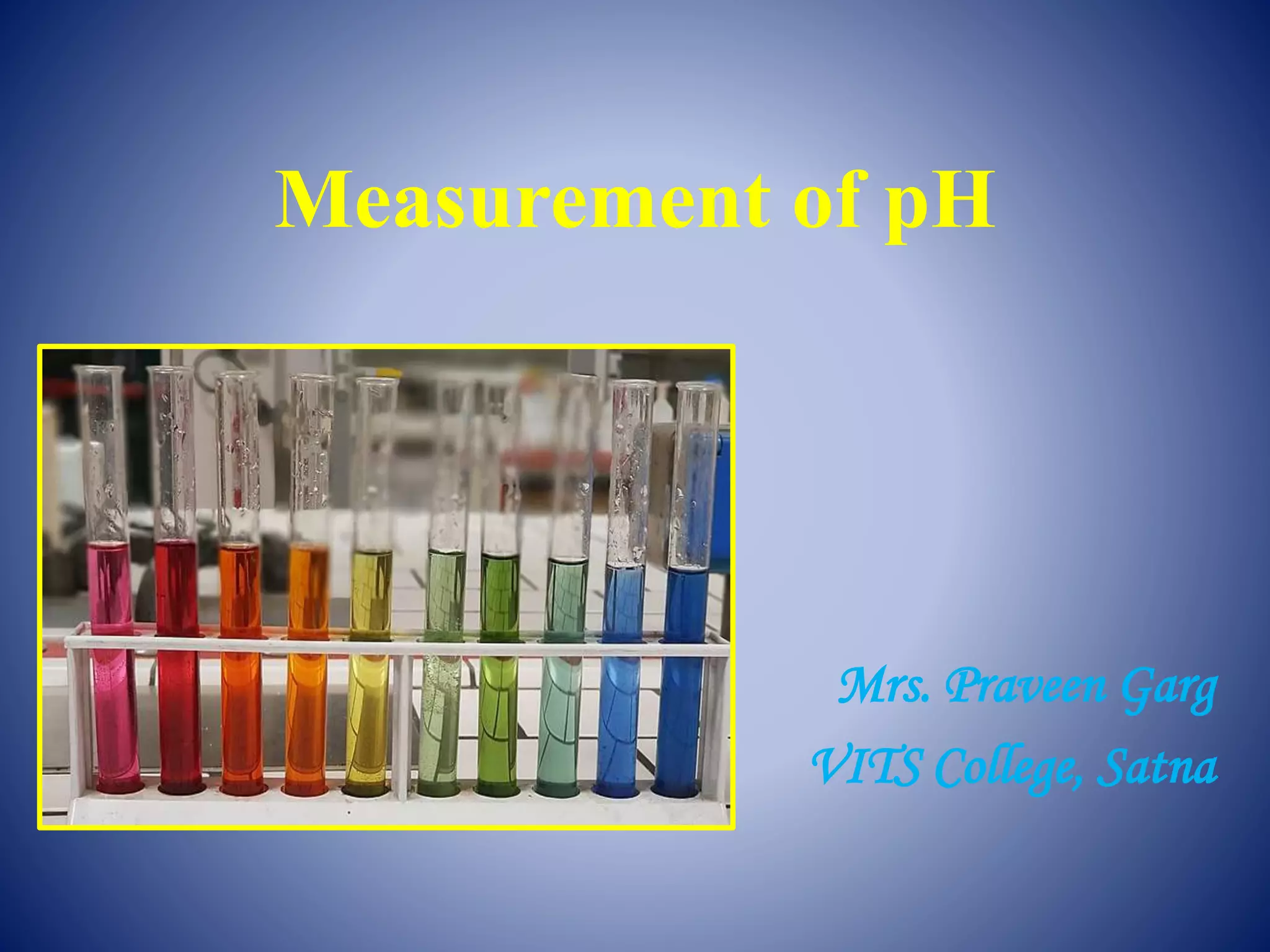
Measurement of pH
Mrs. Praveen Garg
VITS College, Satna
Introduction
 The measurement of pH is a biophysical method to
determine the properties and function of
biomolecules at atomic and molecular level.
 The biophysical techniques provide information
about the electronic structure, size, shape
dynamics, polarity and mode of interaction of
biological molecules.
Definition
 The term pH value is introduced by Danish chemist
Sorenson in 1909.
 pH term is to express hydrogen ion concentration in
aqueous solution.
 pH value is defined as “the negative logarithm of
hydronium ion concentration in moles per litre”.
pH = -log[H+]
 pH is a scale used to specify the acidity or basicity of
an aqueous solution.
 Acidic solutions (with higher concentrations of H+ ions)
are measured to have lower pH values than basic
or alkaline solutions.
 The pH scale is logarithmic and inversely indicates
the concentration of hydrogen ions in the solution.
 The pH of aqueous solutions can be measured with
a glass electrode and a pH meter, or a color-
changing indicator.
pH Scale
pH indicators
 Indicators may be used to measure pH, by making use
of the fact that their color changes with pH.
 Universal indicator consists of a mixture of indicators
such that there is a continuous color change from
about pH 2-10.
 Universal indicator paper is made from absorbent
paper that has been impregnated with universal
indicator.
 Another method of measuring pH is using an
electronic pH meter with the help of electrode.
pH meter
 A pH meter is an instrument used to measure acidity
or alkalinity of a solution.
 pH is the unit of measure that describes the degree of
acidity or alkalinity.
 Measuring pH involves comparing the potential of
solutions with unknown [H+] to a known reference
potential.
 In acidic or alkaline solutions, the voltage on the
outer membrane surface changes proportionally to
changes in [H+].
 The pH meter detects the change in potential and
determines [H+] of the unknown.
Digital pH meter
pH electrode
 The most common approach
for measuring pH value is the
use of a specially-prepared two
electrode.
 It is designed to allow
hydrogen ions in the solution to
migrate through a selective
barrier.
 It produce a measurable
potential (voltage) difference,
directly proportional to the
solution’s pH.
 At a pH of 7 (neutral), the electrodes will produce
0 volts between them.
 At a low pH (acid) a voltage will be developed of
one polarity, and at a high pH (caustic) a voltage
will be developed of the opposite polarity.
 There are two types of electrodes:
 Measurement electrode-
 Reference electrode
Measurement electrode
 It is constructed of special glass to create the ion-
selective barrier needed to screen out hydrogen ions
from all the other ions floating around in the solution.
 This glass is chemically doped with lithium ions, which
is what makes it react electrochemically to hydrogen
ions. Glass is an extremely good insulator.
 This presents a major problem if our intent is to
measure the voltage between the two electrodes.
 The circuit path from one electrode contact, through
the glass barrier, through the solution, to the other
electrode, and back through the other electrode’s
contact, is one of extremely high resistance.
The thin, lithium-doped glass membrane
across which the pH voltage is generated
The measurement
electrode’s purpose is to
generate the voltage
used to measure the
solution’s pH.
This voltage appears
across the thickness of
the glass, placing the
silver wire on one side of
the voltage and the
liquid solution on the
other.
Reference
elecrode
The reference
electrode’s purpose is
to provide the stable,
zero-voltage
connection to the
liquid solution so that
a complete circuit can
be made to measure
the glass electrode’s
voltage.
Reference electrode
• The reference electrode is made from a chemical
solution of neutral (7) pH buffer solution (usually
potassium chloride).
• It allowed to exchange ions with the process solution
through a porous separator, forming a relatively low
resistance connection to the test liquid.
• The porous junction shown at the bottom of the
electrode is where the potassium chloride buffer and
process liquid interface with each other.
pOH
• pOH is sometimes used as a measure of the
concentration of hydroxide ions, OH−.
• pOH values are derived from pH measurements.
• The concentration of hydroxide ions in water is
related to the concentration of hydrogen ions.
pOH = pKw-pH
where KW is the self-ionisation constant of water.
Relation between p[OH] and p[H] (red = acidic
region, blue = basic region)
Measurements of pH are important in
chemistry, agronomy, medicine, water treatment, and
many other applications.
Pharmaceutical and chemical industry
Quality control
Controlling of chemical reactions
Food production: quality characteristics, storage life
(reproduction of harmful bacteria depends on pH value),
control and monitoring of micro biotical food production
Quality control at dairies: fresh milk has a pH-value of
6.6 - 6.8. Storing: pH value decreases, milk becomes
sour, coagulation at a pH value of 4.7
Quality control and efficient production in bakeries:
Application to measure pH value
THANK YOU

Measurement of p h

  • 1.
    Measurement of pH Mrs.Praveen Garg VITS College, Satna
  • 2.
    Introduction  The measurementof pH is a biophysical method to determine the properties and function of biomolecules at atomic and molecular level.  The biophysical techniques provide information about the electronic structure, size, shape dynamics, polarity and mode of interaction of biological molecules.
  • 3.
    Definition  The termpH value is introduced by Danish chemist Sorenson in 1909.  pH term is to express hydrogen ion concentration in aqueous solution.  pH value is defined as “the negative logarithm of hydronium ion concentration in moles per litre”. pH = -log[H+]
  • 4.
     pH isa scale used to specify the acidity or basicity of an aqueous solution.  Acidic solutions (with higher concentrations of H+ ions) are measured to have lower pH values than basic or alkaline solutions.  The pH scale is logarithmic and inversely indicates the concentration of hydrogen ions in the solution.  The pH of aqueous solutions can be measured with a glass electrode and a pH meter, or a color- changing indicator. pH Scale
  • 6.
    pH indicators  Indicatorsmay be used to measure pH, by making use of the fact that their color changes with pH.  Universal indicator consists of a mixture of indicators such that there is a continuous color change from about pH 2-10.  Universal indicator paper is made from absorbent paper that has been impregnated with universal indicator.  Another method of measuring pH is using an electronic pH meter with the help of electrode.
  • 7.
    pH meter  ApH meter is an instrument used to measure acidity or alkalinity of a solution.  pH is the unit of measure that describes the degree of acidity or alkalinity.  Measuring pH involves comparing the potential of solutions with unknown [H+] to a known reference potential.  In acidic or alkaline solutions, the voltage on the outer membrane surface changes proportionally to changes in [H+].  The pH meter detects the change in potential and determines [H+] of the unknown.
  • 8.
  • 9.
    pH electrode  Themost common approach for measuring pH value is the use of a specially-prepared two electrode.  It is designed to allow hydrogen ions in the solution to migrate through a selective barrier.  It produce a measurable potential (voltage) difference, directly proportional to the solution’s pH.
  • 10.
     At apH of 7 (neutral), the electrodes will produce 0 volts between them.  At a low pH (acid) a voltage will be developed of one polarity, and at a high pH (caustic) a voltage will be developed of the opposite polarity.  There are two types of electrodes:  Measurement electrode-  Reference electrode
  • 11.
    Measurement electrode  Itis constructed of special glass to create the ion- selective barrier needed to screen out hydrogen ions from all the other ions floating around in the solution.  This glass is chemically doped with lithium ions, which is what makes it react electrochemically to hydrogen ions. Glass is an extremely good insulator.  This presents a major problem if our intent is to measure the voltage between the two electrodes.  The circuit path from one electrode contact, through the glass barrier, through the solution, to the other electrode, and back through the other electrode’s contact, is one of extremely high resistance.
  • 12.
    The thin, lithium-dopedglass membrane across which the pH voltage is generated The measurement electrode’s purpose is to generate the voltage used to measure the solution’s pH. This voltage appears across the thickness of the glass, placing the silver wire on one side of the voltage and the liquid solution on the other.
  • 13.
    Reference elecrode The reference electrode’s purposeis to provide the stable, zero-voltage connection to the liquid solution so that a complete circuit can be made to measure the glass electrode’s voltage.
  • 14.
    Reference electrode • Thereference electrode is made from a chemical solution of neutral (7) pH buffer solution (usually potassium chloride). • It allowed to exchange ions with the process solution through a porous separator, forming a relatively low resistance connection to the test liquid. • The porous junction shown at the bottom of the electrode is where the potassium chloride buffer and process liquid interface with each other.
  • 15.
    pOH • pOH issometimes used as a measure of the concentration of hydroxide ions, OH−. • pOH values are derived from pH measurements. • The concentration of hydroxide ions in water is related to the concentration of hydrogen ions. pOH = pKw-pH where KW is the self-ionisation constant of water.
  • 16.
    Relation between p[OH]and p[H] (red = acidic region, blue = basic region)
  • 17.
    Measurements of pHare important in chemistry, agronomy, medicine, water treatment, and many other applications. Pharmaceutical and chemical industry Quality control Controlling of chemical reactions Food production: quality characteristics, storage life (reproduction of harmful bacteria depends on pH value), control and monitoring of micro biotical food production Quality control at dairies: fresh milk has a pH-value of 6.6 - 6.8. Storing: pH value decreases, milk becomes sour, coagulation at a pH value of 4.7 Quality control and efficient production in bakeries: Application to measure pH value
  • 18.