pH & itsMeasurement 
Dr Prasenjit Mitra 
Department of Biochemistry 
Sikkim ManipalInstitute of Medical Sciences
Origin of pH 
SørenP. L. Sörenson 
(1868-1939) 
H+ 
H+ 
H+ 
H+ 
Number of Hydrogen ions (H+) determine acidity or alkalinity 
•Number of Hydrogen ions (H+) in water = 0.0000001 mol/L 
•Logarithm of H+Concentration 
•Log (0.0000001) = log (10-7) = -7 
•Negative Logarithm of H+Concentration 
•-[Log (0.0000001)] = -log (10-7) = -(-7) = 7 
0 
1 
2 
3 
4 
5 
6 
7 
8 
9 
10 
11 
12 
13 
14 
pH Scale 
Alkaline 
Acidic 
Power of Hydrogen 
p 
H
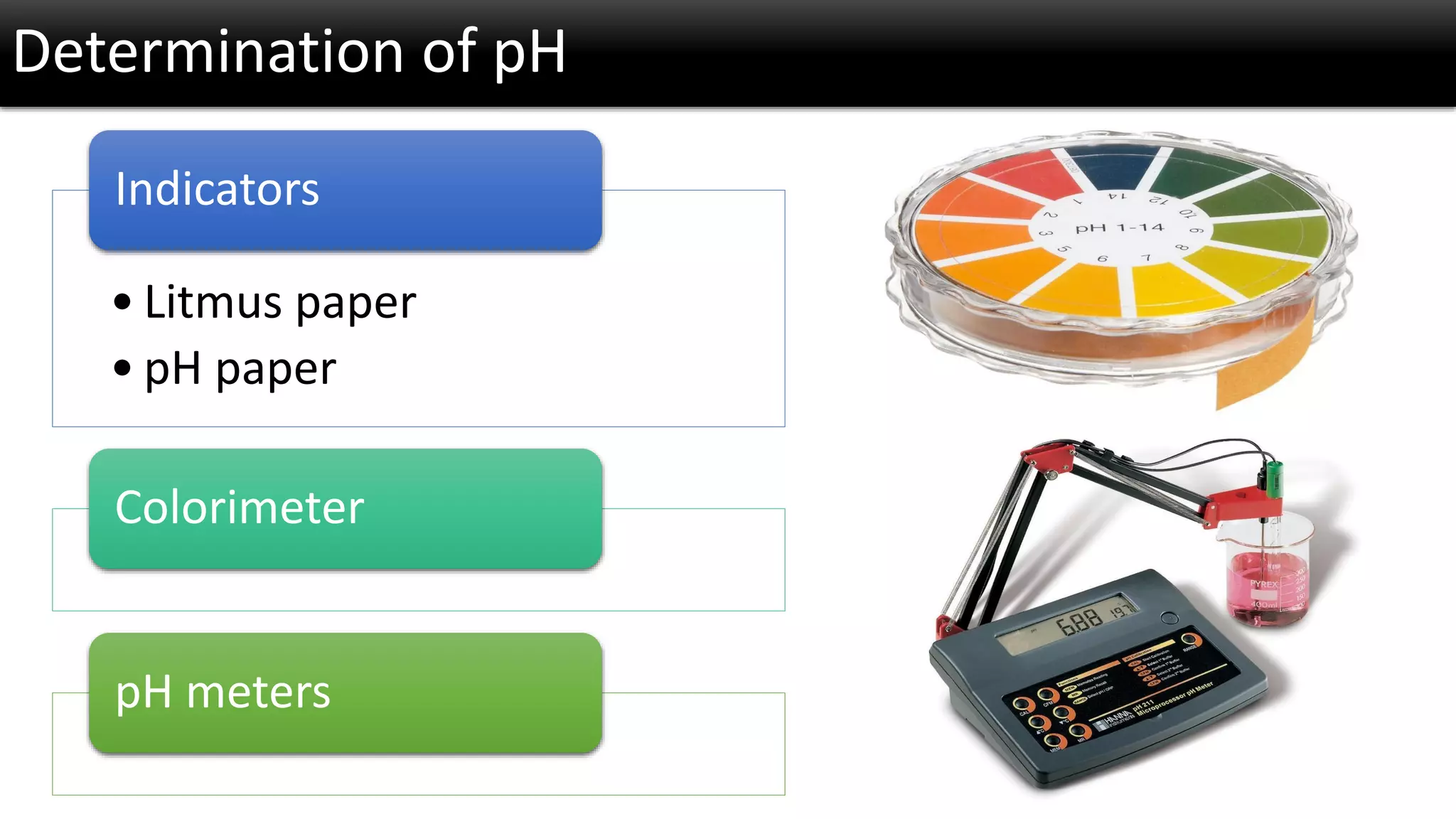
Determination of pH 
•Litmus paper 
•pH paper 
Indicators 
Colorimeter 
pH meters
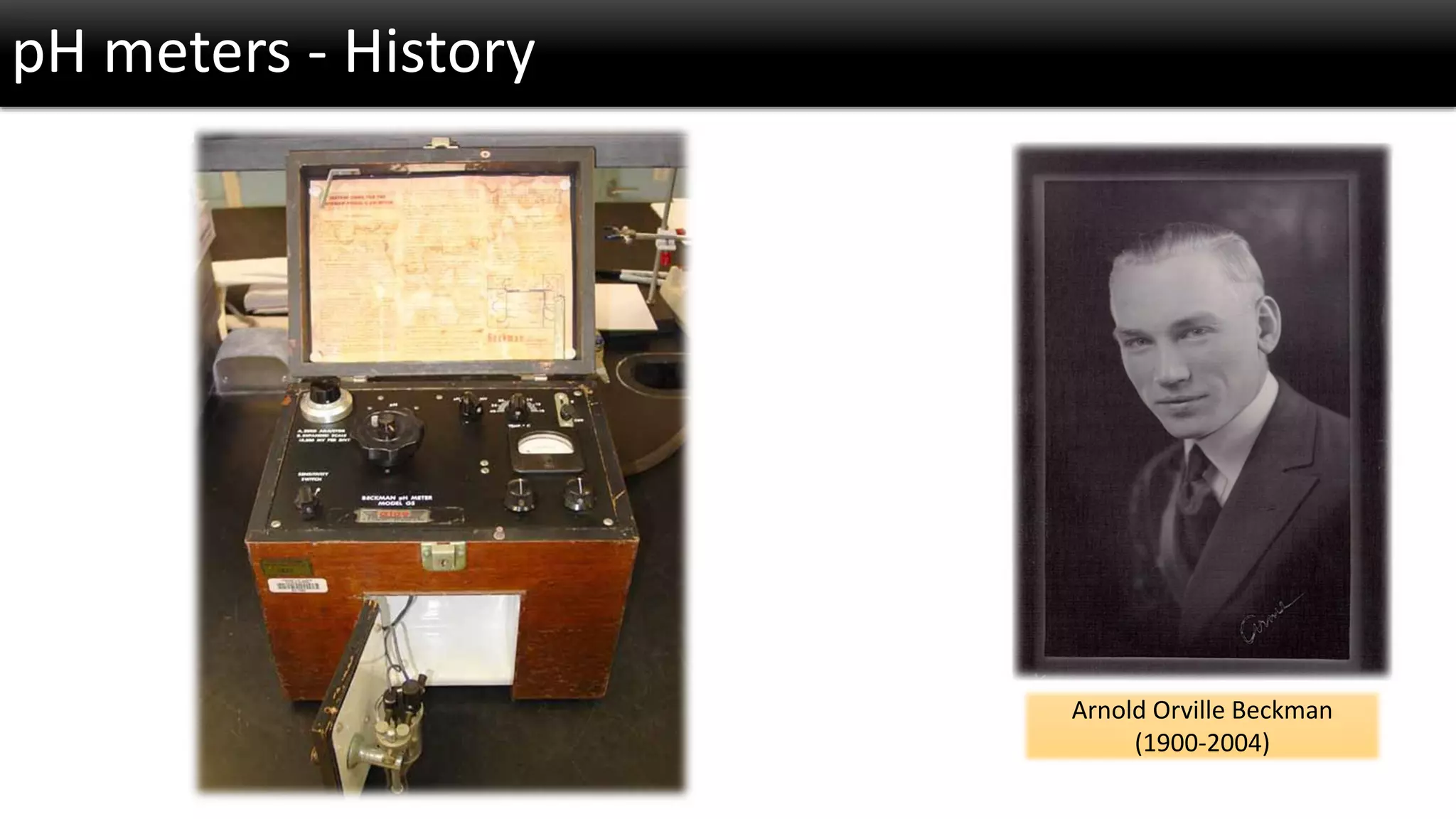
pH meters -History 
Arnold Orville Beckman 
(1900-2004)
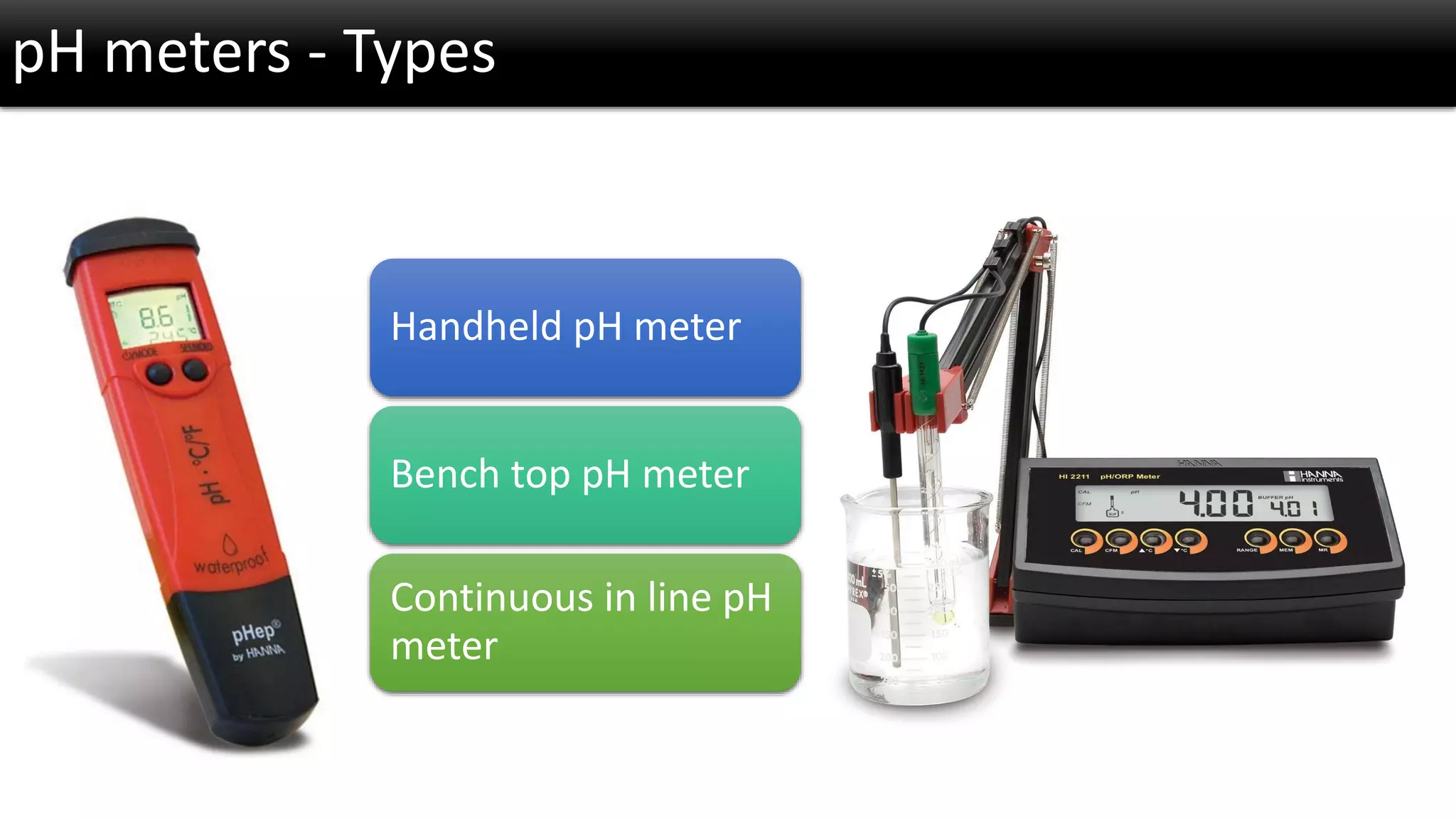
pH meters -Types 
Handheld pH meter 
Bench top pH meter 
Continuous in line pH meter
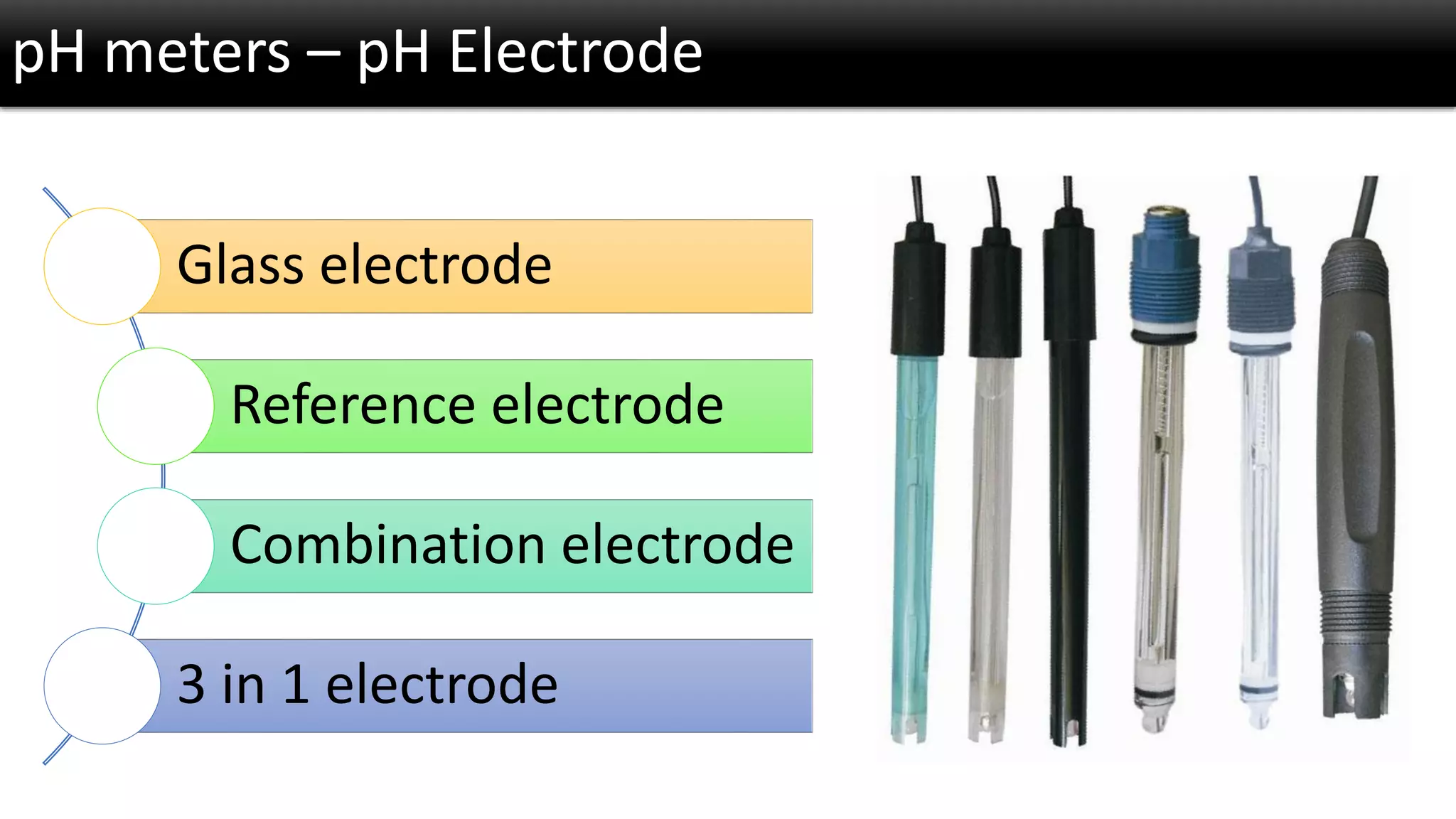
pH meters –pH Electrode 
Glass electrode 
Reference electrode 
Combination electrode 
3 in 1 electrode
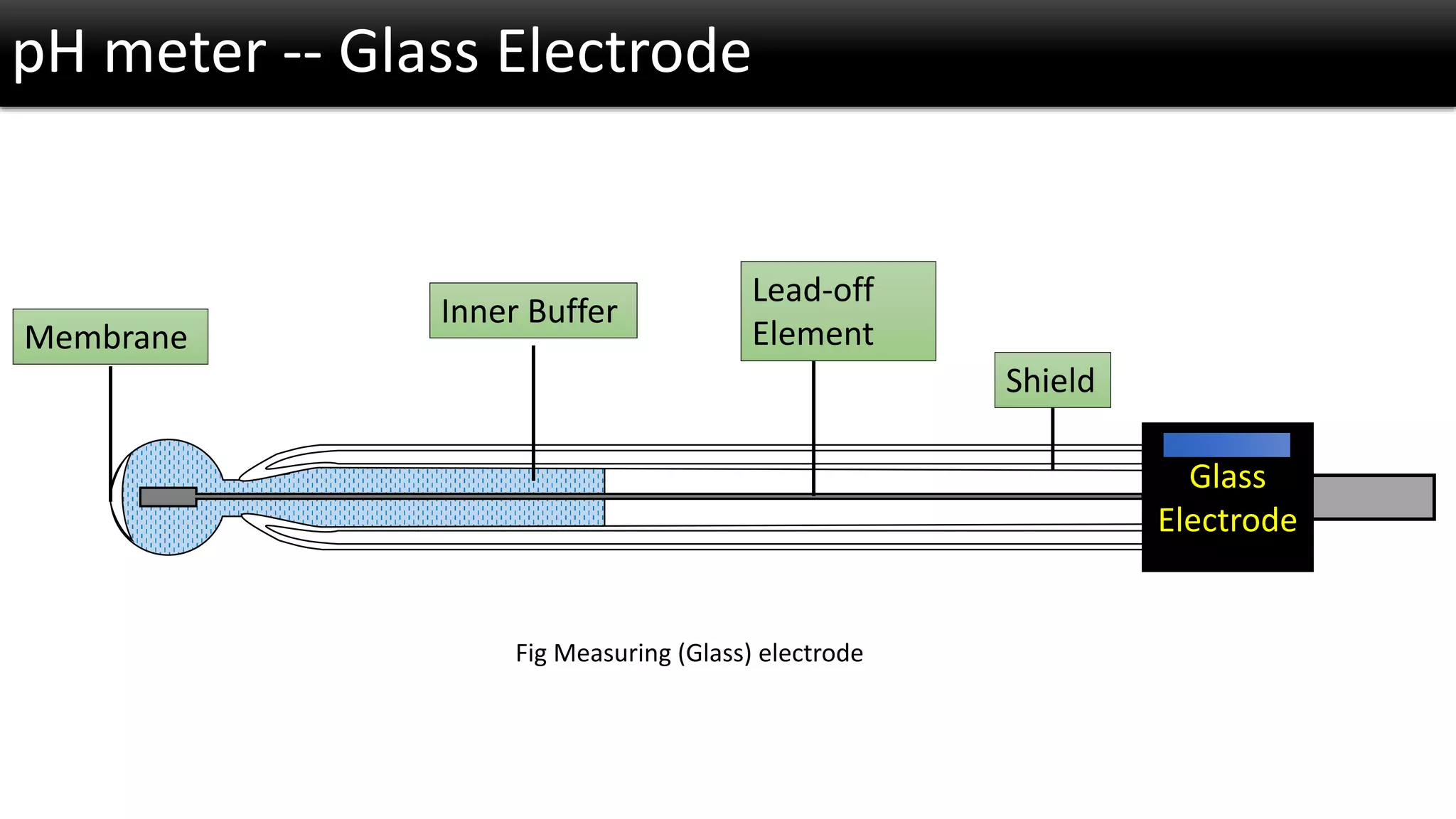
pH meter --Glass Electrode 
Glass Electrode 
Membrane 
Inner Buffer 
Lead-off Element 
Shield 
Fig Measuring (Glass) electrode
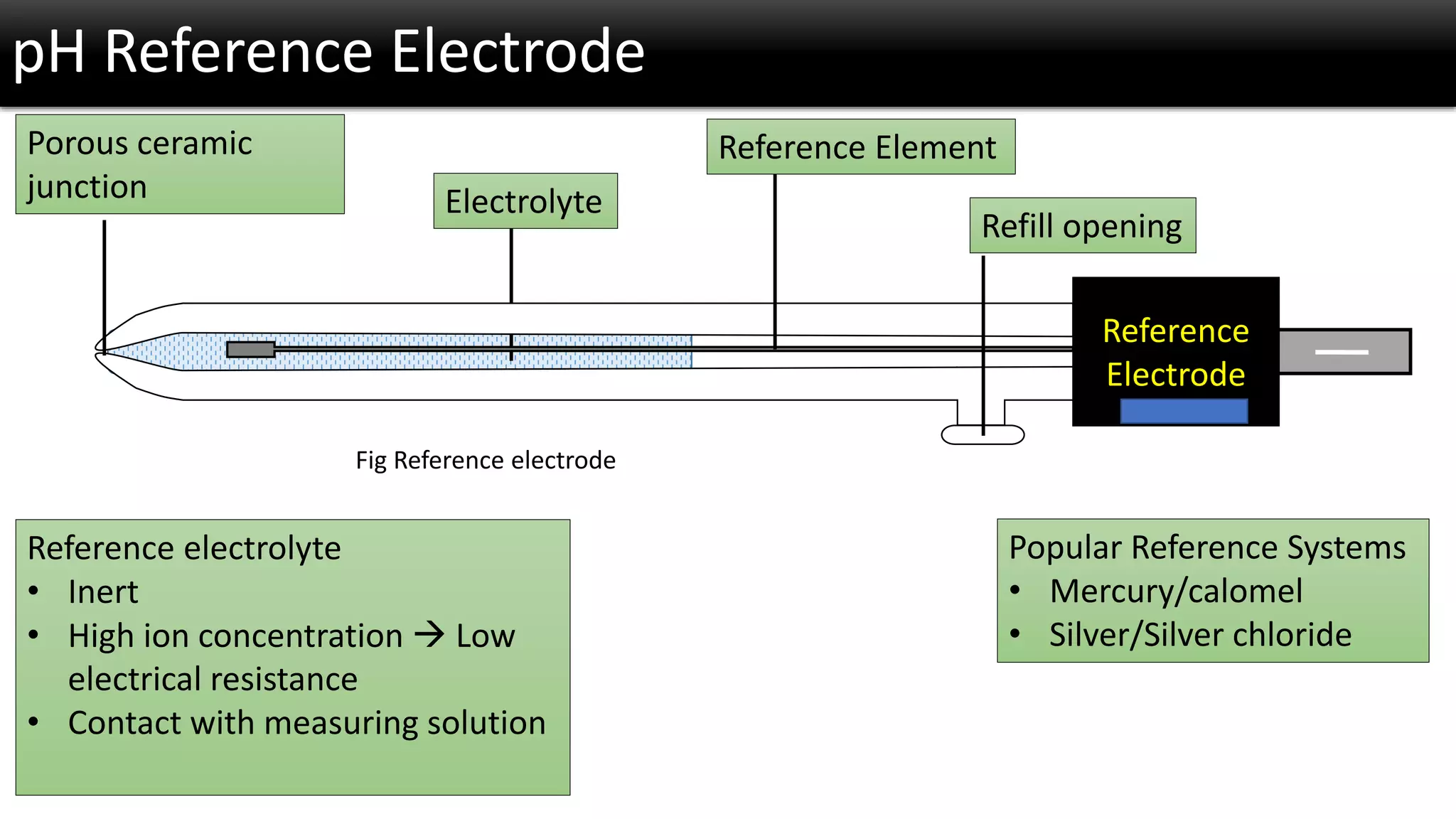
pH Reference Electrode 
Porous ceramic junction 
Electrolyte 
Reference Element 
Refill opening 
Reference Electrode 
Reference electrolyte 
•Inert 
•High ion concentration Low electrical resistance 
•Contact with measuring solution 
Popular Reference Systems 
•Mercury/calomel 
•Silver/Silver chloride 
Fig Reference electrode
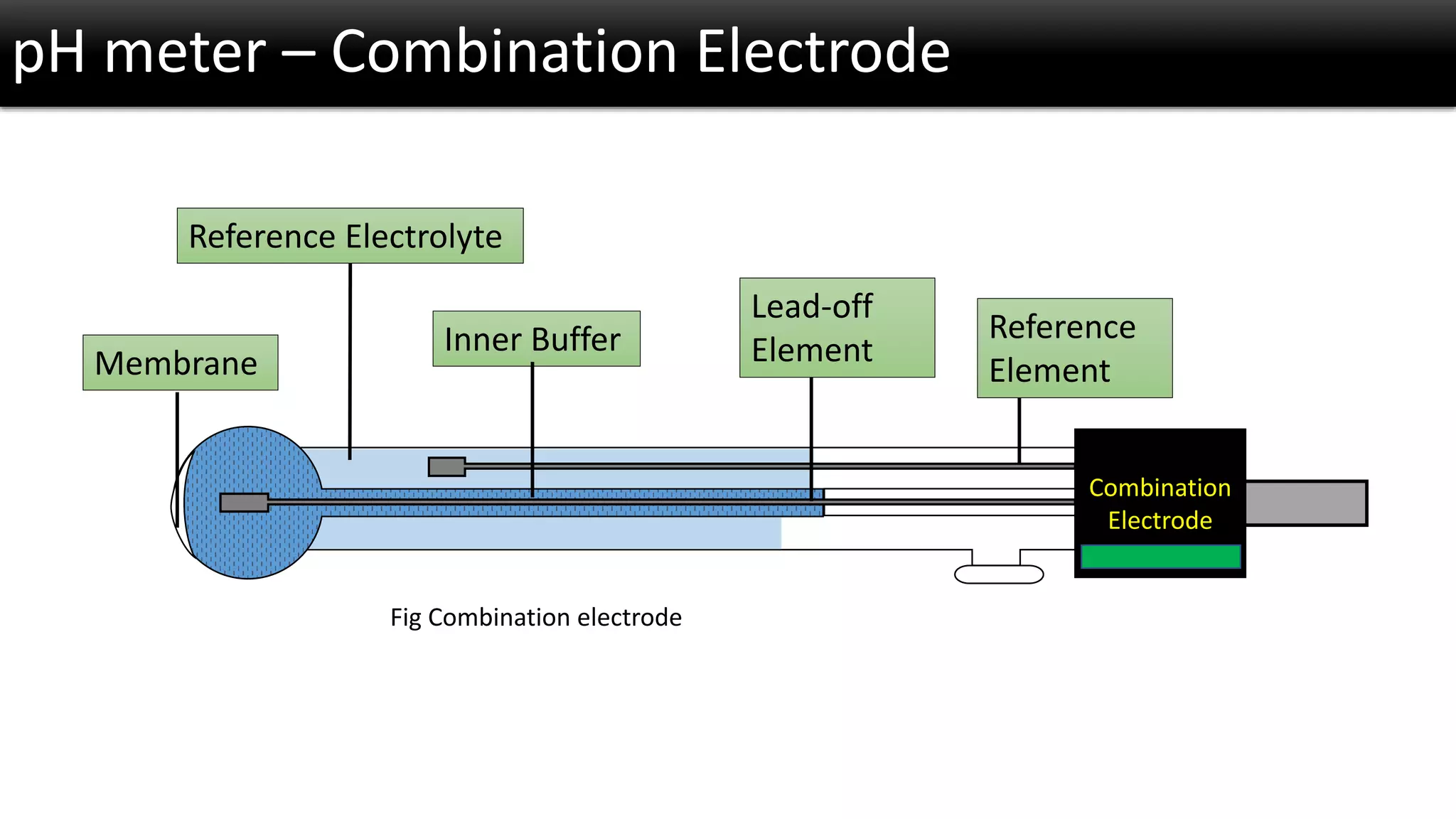
pH meter –Combination Electrode 
Membrane 
Inner Buffer 
Combination Electrode 
Lead-off Element 
Reference Element 
Reference Electrolyte 
Fig Combination electrode
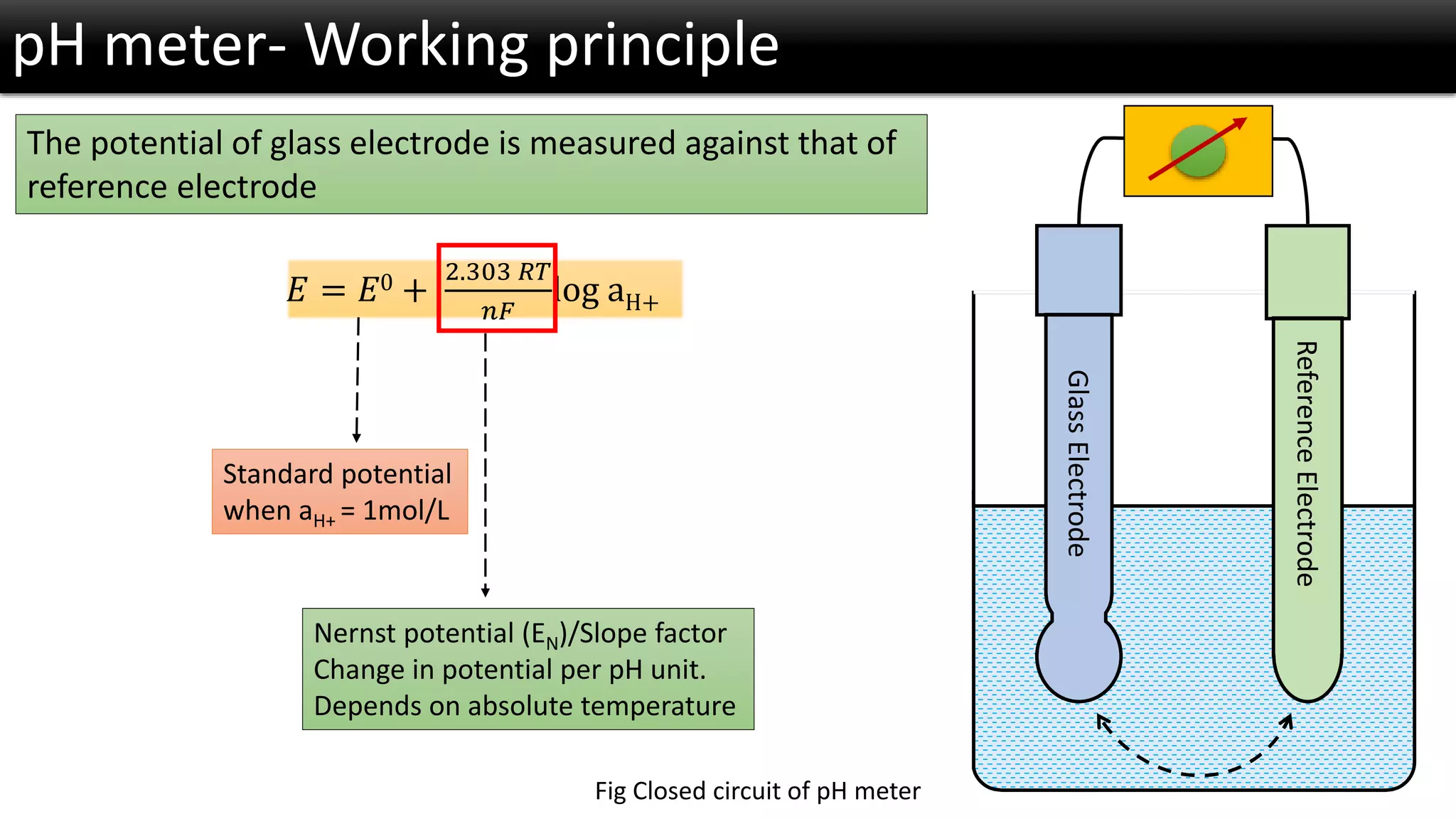
pH meter-Working principle 
Glass Electrode 
Reference Electrode 
The potential of glass electrode is measured against that of reference electrode 
퐸=퐸0+ 2.303푅푇 푛퐹 log aH+ 
Standard potential 
when aH+ = 1mol/L 
Nernst potential (EN)/Slope factor 
Change in potential per pH unit. 
Depends on absolute temperature 
Fig Closed circuit of pH meter
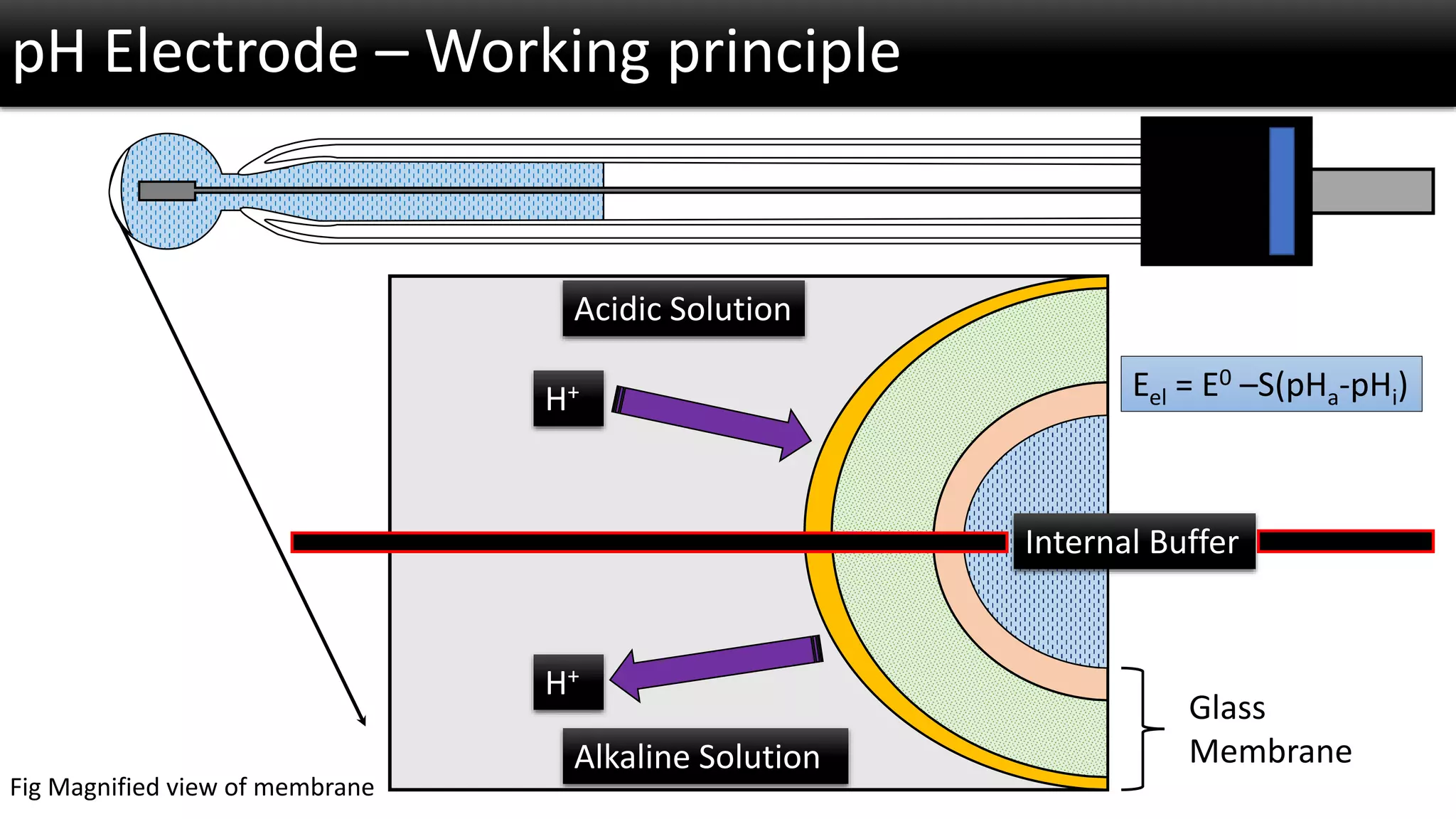
pH Electrode –Working principle 
Glass Membrane 
Internal Buffer 
Acidic Solution 
Alkaline Solution 
Eel= E0–S(pHa-pHi) 
H+ 
H+ 
Fig Magnified view of membrane
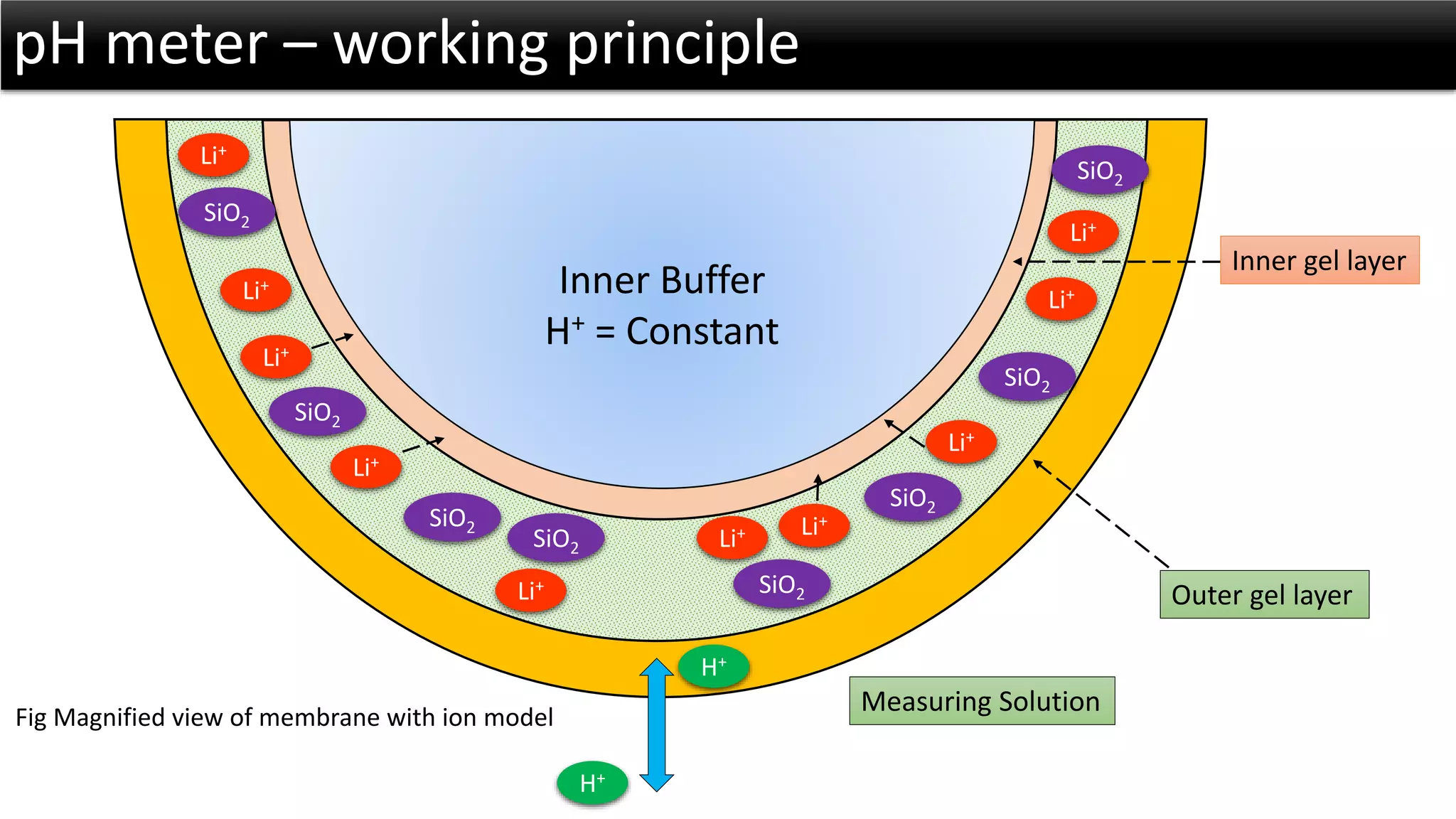
Inner Buffer 
H+= Constant 
Li+ 
SiO2 
SiO2 
SiO2 
SiO2 
SiO2 
SiO2 
SiO2 
Li+ 
Li+ 
Li+ 
Li+ 
Li+ 
Li+ 
Li+ 
Li+ 
Li+ 
SiO2 
pH meter –working principle 
Inner gel layer 
Outer gel layer 
Measuring Solution 
H+ 
H+ 
Fig Magnified view of membrane with ion model
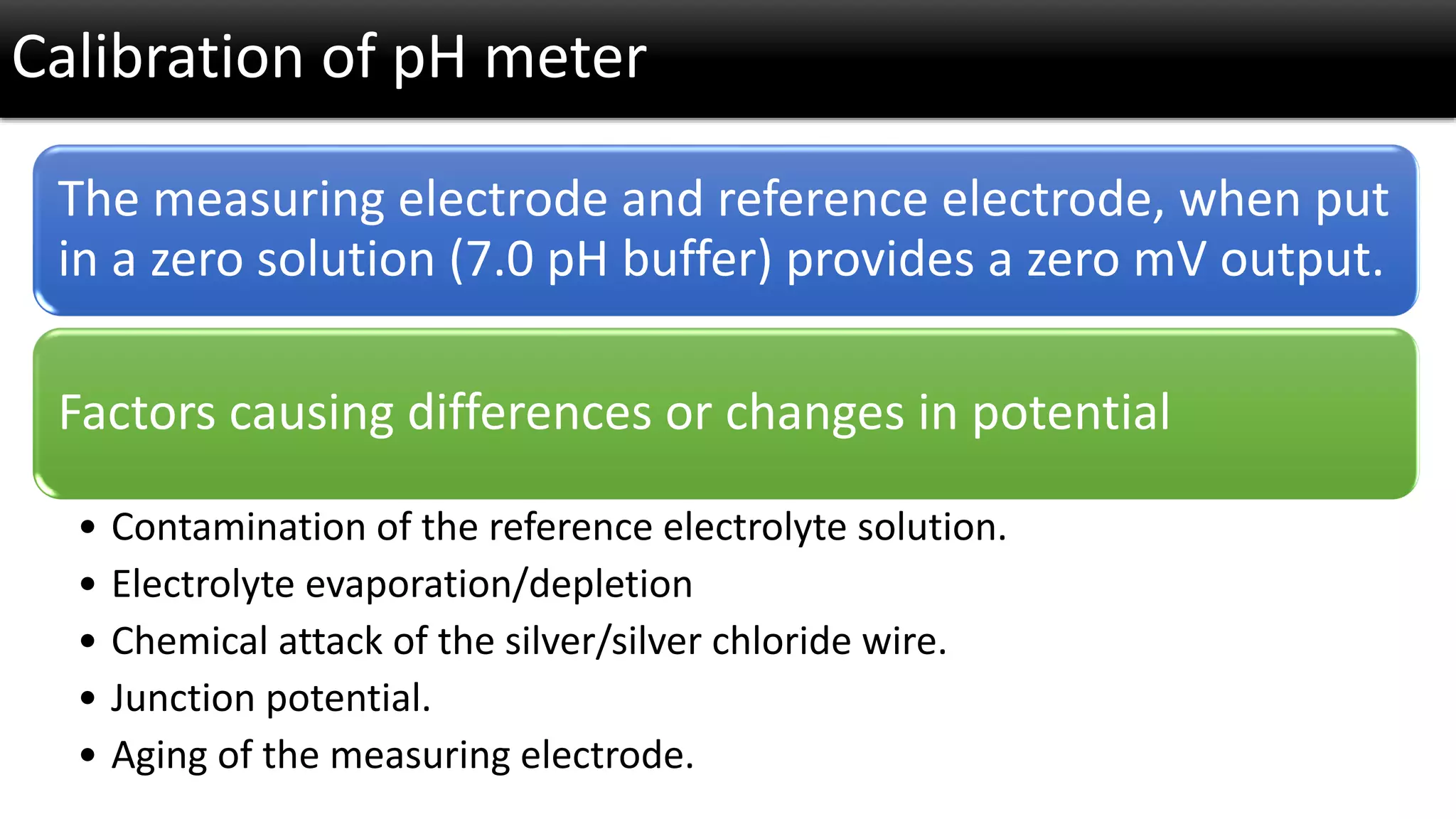
Calibration of pH meter 
The measuring electrode and reference electrode, when put in a zero solution (7.0 pH buffer) provides a zero mV output. 
Factors causing differences or changes in potential 
•Contamination of the reference electrolyte solution. 
•Electrolyte evaporation/depletion 
•Chemical attack of the silver/silver chloride wire. 
•Junction potential. 
•Aging of the measuring electrode.
Calibration of pH meter 
+mv 
pH 
-mv 
0 
Before calibration 
7 
After calibration 
14 
+mv 
pH 
-mv 
0 
56.0 
Before calibration 
7 
After calibration 
14 
59.2
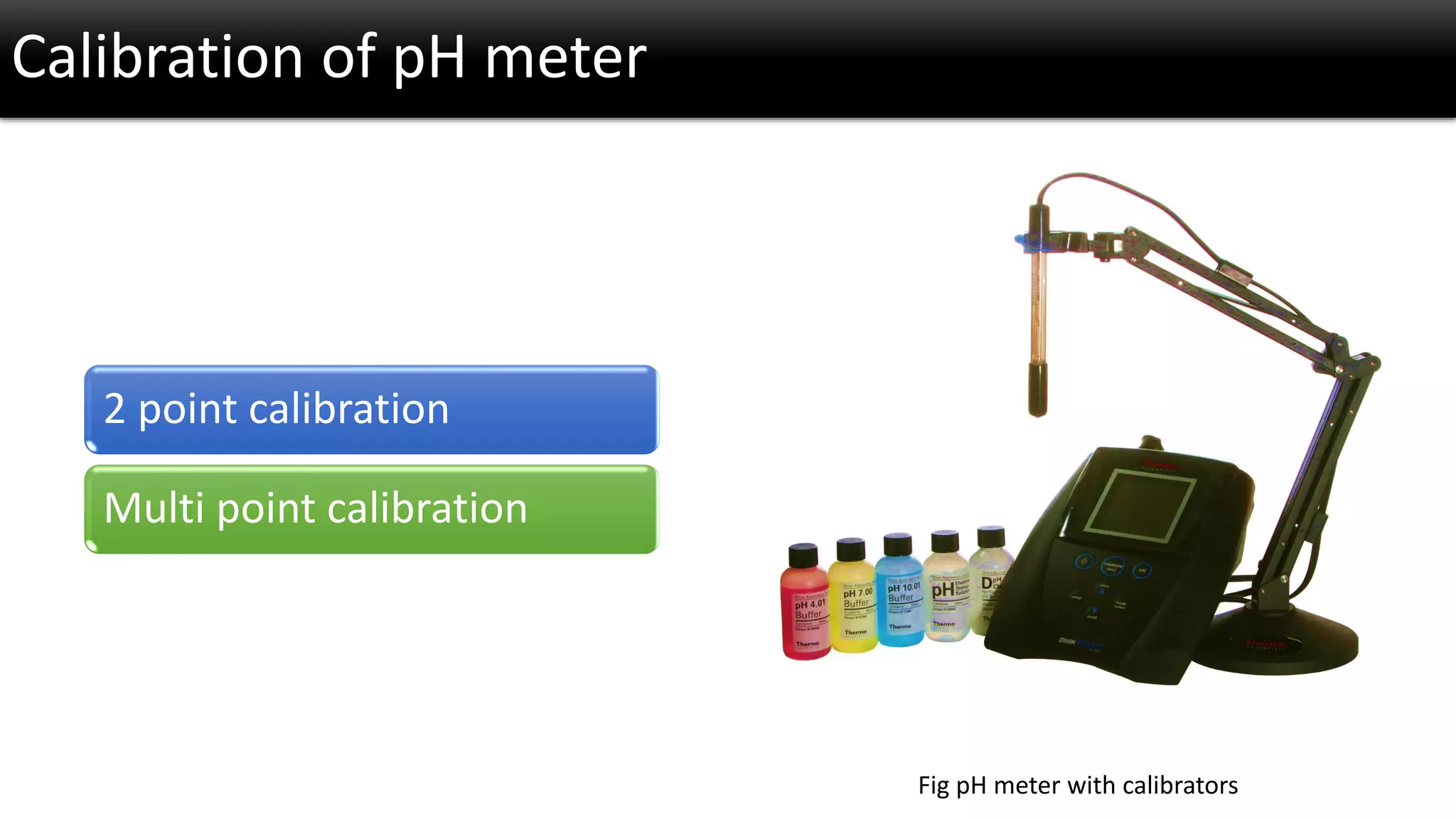
Calibration of pH meter 
2 point calibration 
Multi point calibration 
Fig pH meter with calibrators
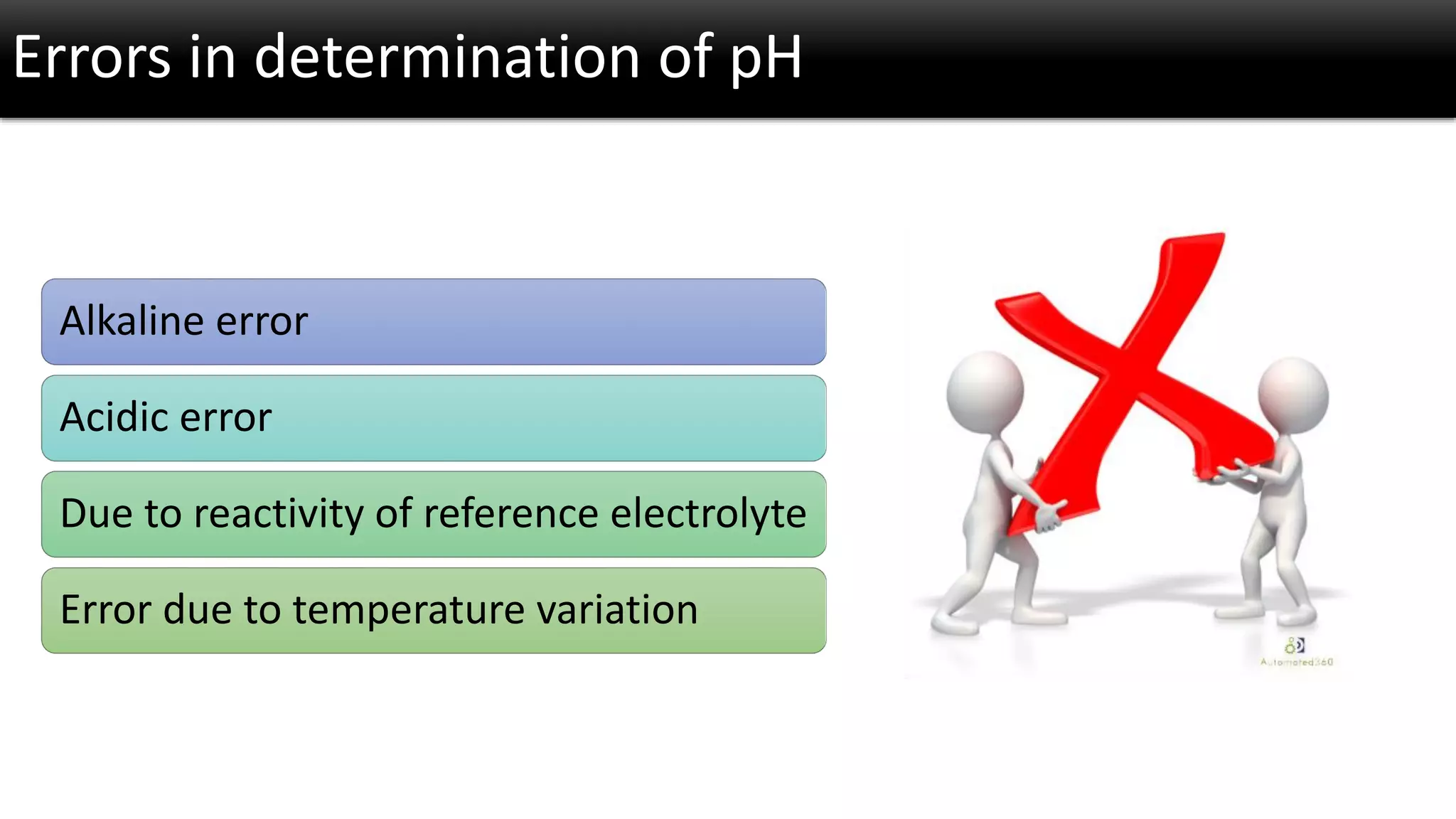
Errors in determination of pH 
Alkaline error 
Acidic error 
Due to reactivity of reference electrolyte 
Error due to temperature variation
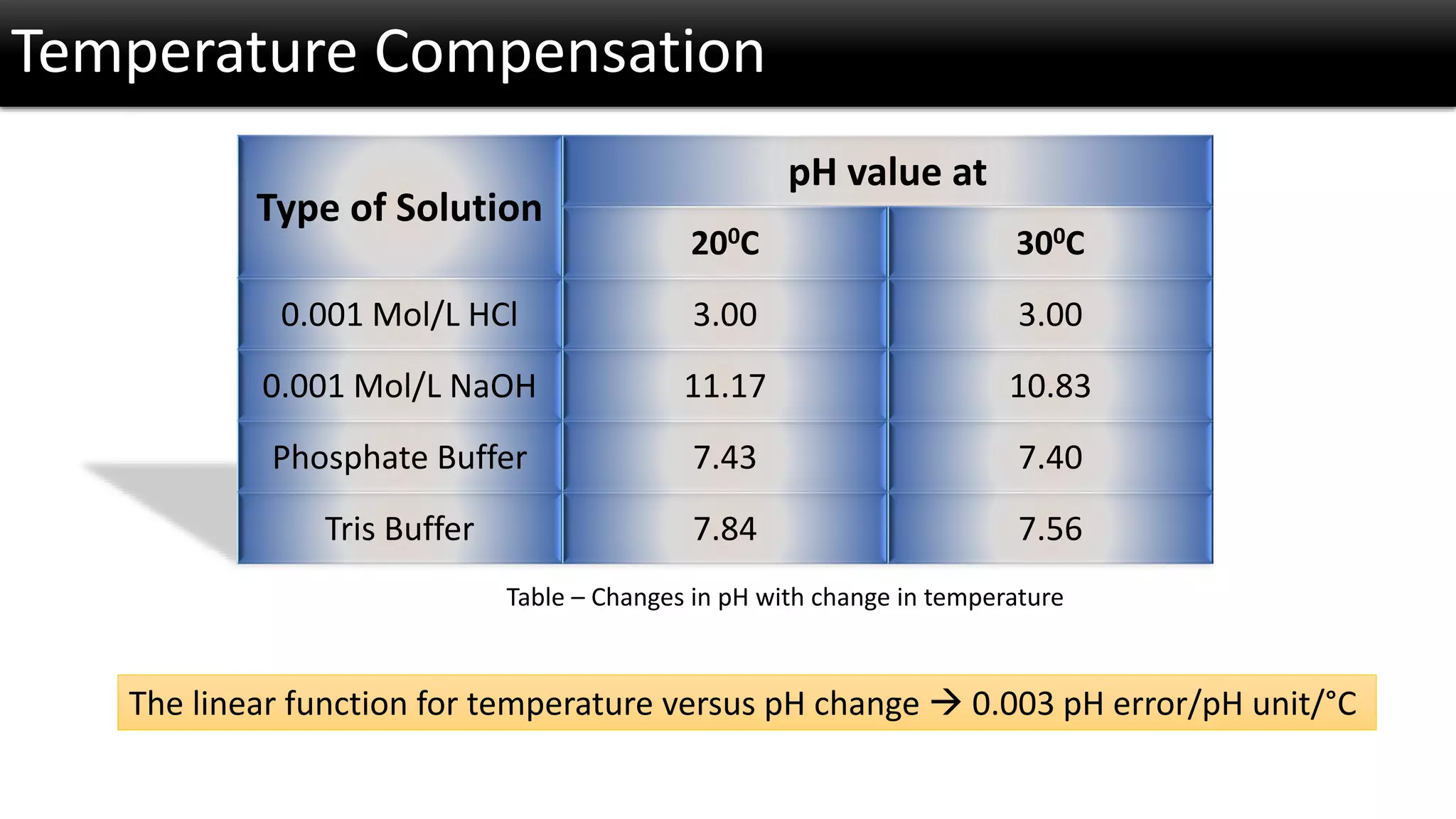
Temperature Compensation 
Typeof Solution 
pH value at 
200C 
300C 
0.001Mol/L HCl 
3.00 
3.00 
0.001 Mol/L NaOH 
11.17 
10.83 
PhosphateBuffer 
7.43 
7.40 
TrisBuffer 
7.84 
7.56 
Table –Changes in pH with change in temperature 
The linear function for temperature versus pH change 0.003 pH error/pH unit/°C
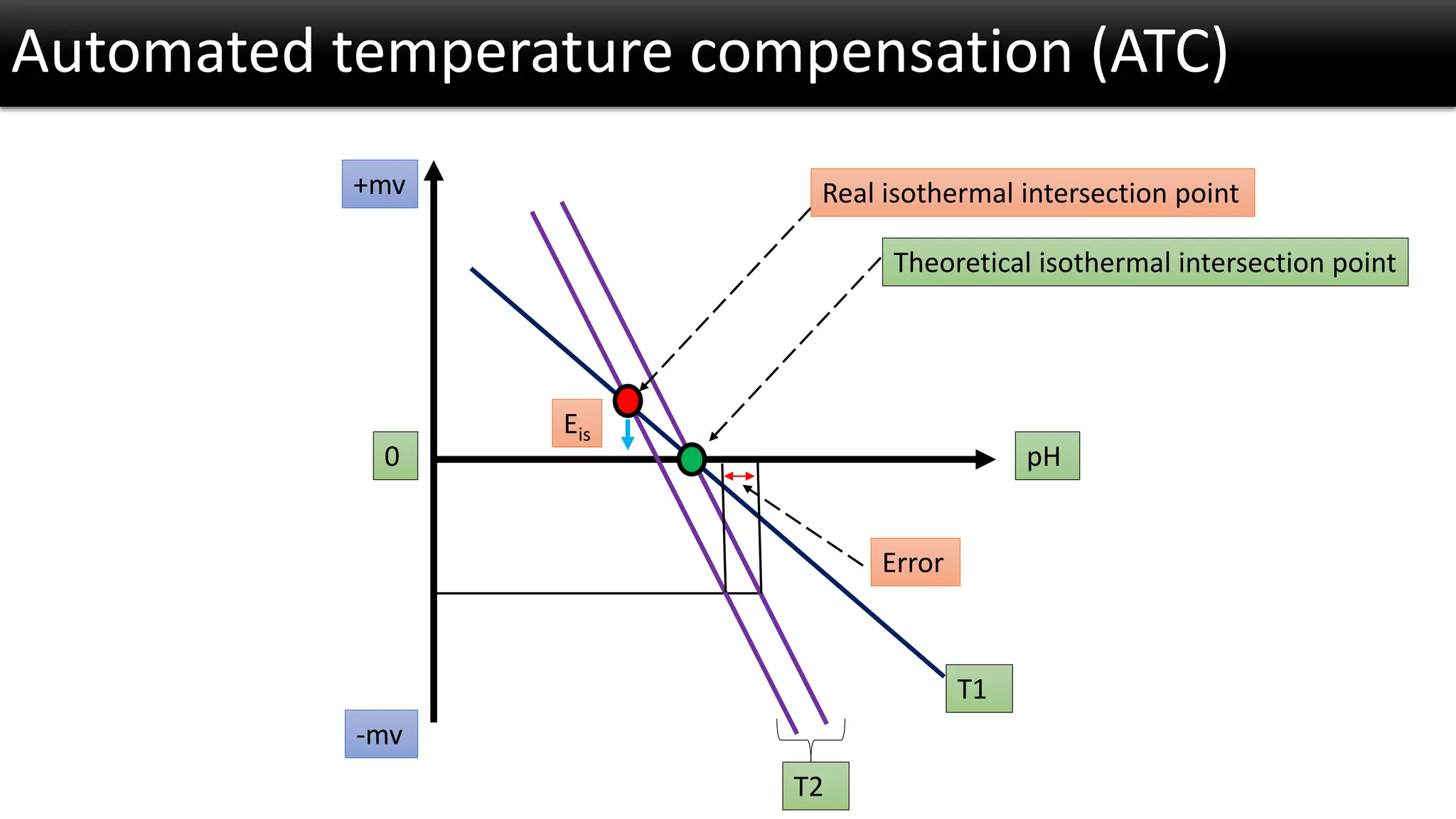
Automated temperature compensation (ATC) 
+mv 
pH 
-mv 
0 
Real isothermal intersection point 
Theoretical isothermal intersection point 
Error 
Eis 
T2 
T1
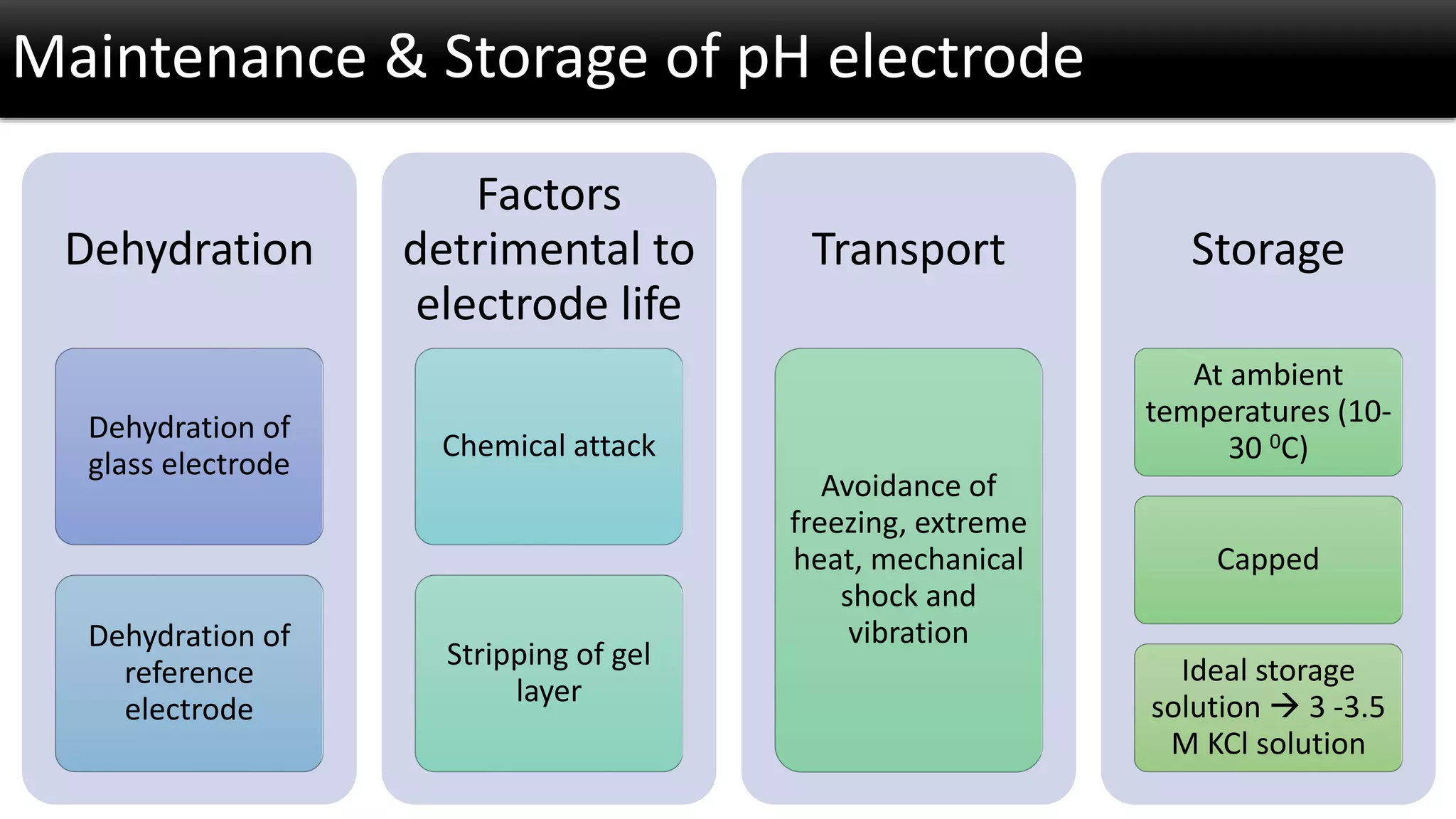
Maintenance & Storage of pH electrode 
Dehydration 
Dehydration of glass electrode 
Dehydration of reference electrode 
Factors detrimental to electrode life 
Chemical attack 
Stripping of gel layer 
Transport 
Avoidance of freezing, extreme heat, mechanical shock and vibration 
Storage 
At ambient temperatures (10- 30 0C) 
Capped 
Ideal storage solution 3 -3.5 M KCl solution
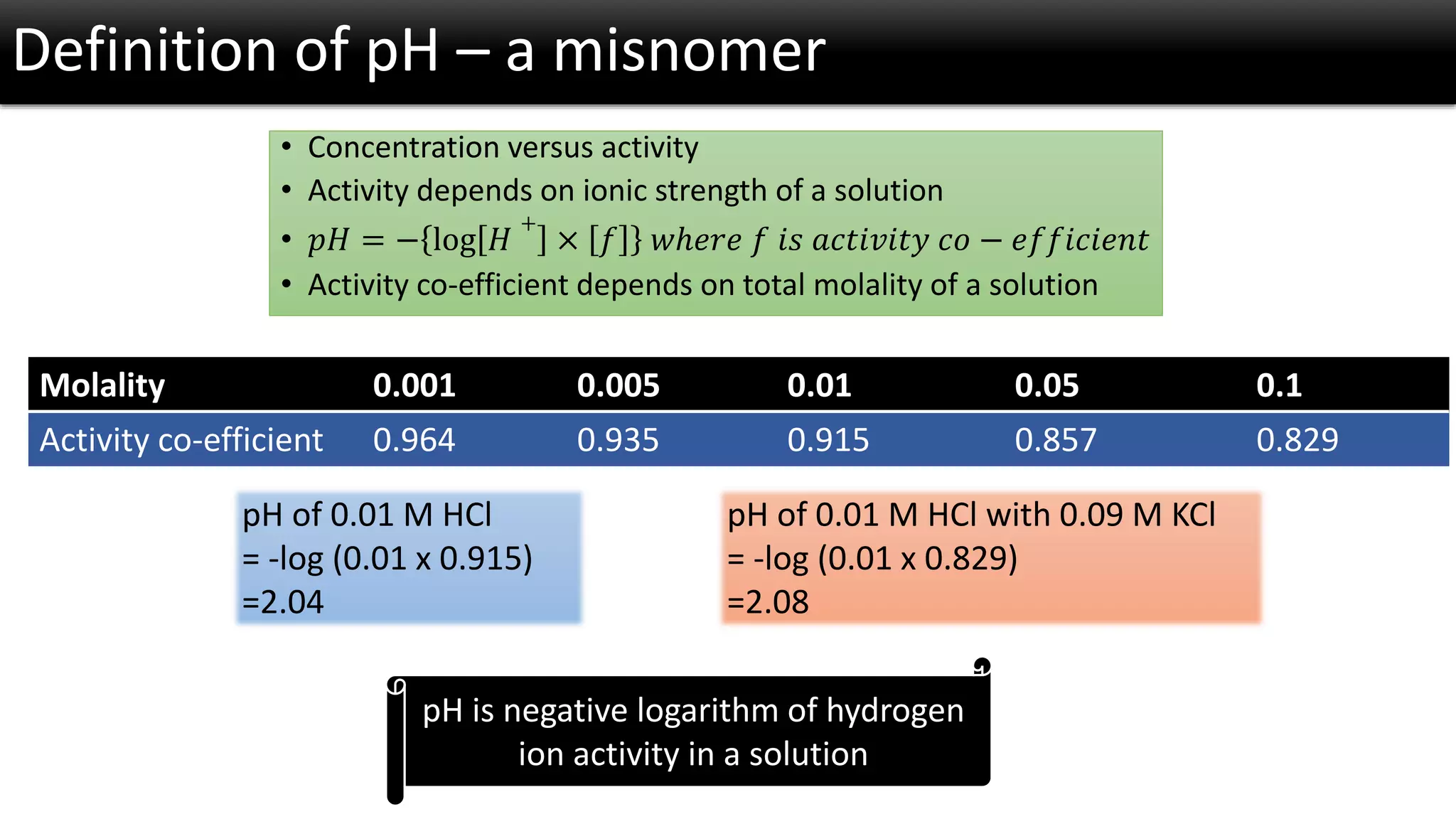
Definition of pH –a misnomer 
•Concentration versus activity 
•Activity depends on ionic strength of a solution 
•푝퐻=−log퐻 + ×푓푤ℎ푒푟푒푓푖푠푎푐푡푖푣푖푡푦푐표−푒푓푓푖푐푖푒푛푡 
•Activity co-efficient depends on total molality of a solution 
Molality 
0.001 
0.005 
0.01 
0.05 
0.1 
Activity co-efficient 
0.964 
0.935 
0.915 
0.857 
0.829 
pH of 0.01 M HCl 
= -log (0.01 x 0.915) 
=2.04 
pH of 0.01 M HClwith 0.09 M KCl 
= -log (0.01 x 0.829) 
=2.08 
pH is negative logarithm of hydrogen ion activity in a solution
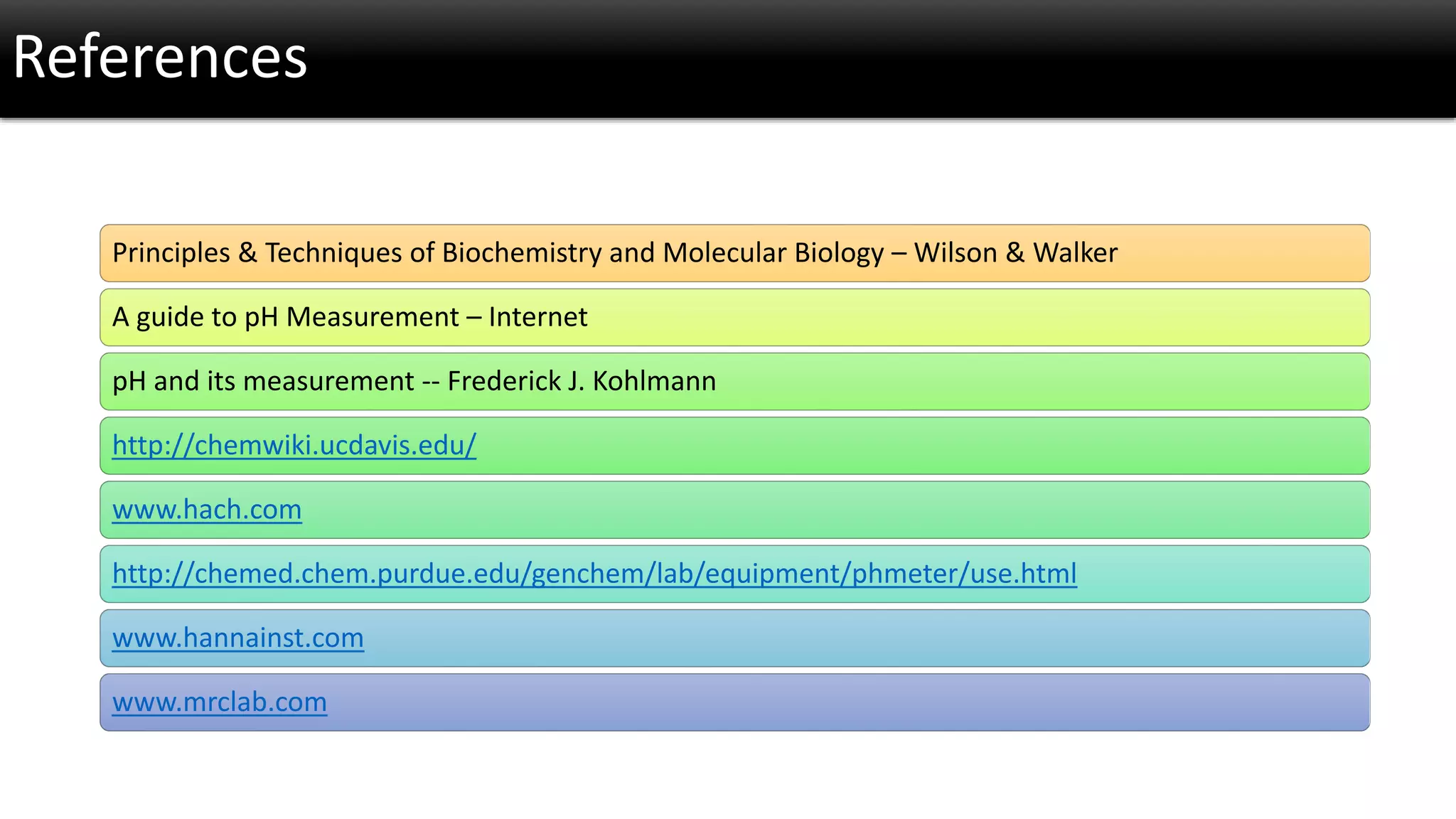
References 
Principles & Techniques of Biochemistry and Molecular Biology –Wilson & Walker 
A guide to pH Measurement –Internet 
pH and its measurement --Frederick J. Kohlmann 
http://chemwiki.ucdavis.edu/ 
www.hach.com 
http://chemed.chem.purdue.edu/genchem/lab/equipment/phmeter/use.html 
www.hannainst.com 
www.mrclab.com
Thank you ….

pH & its measurement

  • 1.
    pH & itsMeasurement Dr Prasenjit Mitra Department of Biochemistry Sikkim ManipalInstitute of Medical Sciences
  • 2.
    Origin of pH SørenP. L. Sörenson (1868-1939) H+ H+ H+ H+ Number of Hydrogen ions (H+) determine acidity or alkalinity •Number of Hydrogen ions (H+) in water = 0.0000001 mol/L •Logarithm of H+Concentration •Log (0.0000001) = log (10-7) = -7 •Negative Logarithm of H+Concentration •-[Log (0.0000001)] = -log (10-7) = -(-7) = 7 0 1 2 3 4 5 6 7 8 9 10 11 12 13 14 pH Scale Alkaline Acidic Power of Hydrogen p H
  • 3.
    Determination of pH •Litmus paper •pH paper Indicators Colorimeter pH meters
  • 4.
    pH meters -History Arnold Orville Beckman (1900-2004)
  • 5.
    pH meters -Types Handheld pH meter Bench top pH meter Continuous in line pH meter
  • 6.
    pH meters –pHElectrode Glass electrode Reference electrode Combination electrode 3 in 1 electrode
  • 7.
    pH meter --GlassElectrode Glass Electrode Membrane Inner Buffer Lead-off Element Shield Fig Measuring (Glass) electrode
  • 8.
    pH Reference Electrode Porous ceramic junction Electrolyte Reference Element Refill opening Reference Electrode Reference electrolyte •Inert •High ion concentration Low electrical resistance •Contact with measuring solution Popular Reference Systems •Mercury/calomel •Silver/Silver chloride Fig Reference electrode
  • 9.
    pH meter –CombinationElectrode Membrane Inner Buffer Combination Electrode Lead-off Element Reference Element Reference Electrolyte Fig Combination electrode
  • 10.
    pH meter-Working principle Glass Electrode Reference Electrode The potential of glass electrode is measured against that of reference electrode 퐸=퐸0+ 2.303푅푇 푛퐹 log aH+ Standard potential when aH+ = 1mol/L Nernst potential (EN)/Slope factor Change in potential per pH unit. Depends on absolute temperature Fig Closed circuit of pH meter
  • 11.
    pH Electrode –Workingprinciple Glass Membrane Internal Buffer Acidic Solution Alkaline Solution Eel= E0–S(pHa-pHi) H+ H+ Fig Magnified view of membrane
  • 12.
    Inner Buffer H+=Constant Li+ SiO2 SiO2 SiO2 SiO2 SiO2 SiO2 SiO2 Li+ Li+ Li+ Li+ Li+ Li+ Li+ Li+ Li+ SiO2 pH meter –working principle Inner gel layer Outer gel layer Measuring Solution H+ H+ Fig Magnified view of membrane with ion model
  • 13.
    Calibration of pHmeter The measuring electrode and reference electrode, when put in a zero solution (7.0 pH buffer) provides a zero mV output. Factors causing differences or changes in potential •Contamination of the reference electrolyte solution. •Electrolyte evaporation/depletion •Chemical attack of the silver/silver chloride wire. •Junction potential. •Aging of the measuring electrode.
  • 14.
    Calibration of pHmeter +mv pH -mv 0 Before calibration 7 After calibration 14 +mv pH -mv 0 56.0 Before calibration 7 After calibration 14 59.2
  • 15.
    Calibration of pHmeter 2 point calibration Multi point calibration Fig pH meter with calibrators
  • 16.
    Errors in determinationof pH Alkaline error Acidic error Due to reactivity of reference electrolyte Error due to temperature variation
  • 17.
    Temperature Compensation TypeofSolution pH value at 200C 300C 0.001Mol/L HCl 3.00 3.00 0.001 Mol/L NaOH 11.17 10.83 PhosphateBuffer 7.43 7.40 TrisBuffer 7.84 7.56 Table –Changes in pH with change in temperature The linear function for temperature versus pH change 0.003 pH error/pH unit/°C
  • 18.
    Automated temperature compensation(ATC) +mv pH -mv 0 Real isothermal intersection point Theoretical isothermal intersection point Error Eis T2 T1
  • 19.
    Maintenance & Storageof pH electrode Dehydration Dehydration of glass electrode Dehydration of reference electrode Factors detrimental to electrode life Chemical attack Stripping of gel layer Transport Avoidance of freezing, extreme heat, mechanical shock and vibration Storage At ambient temperatures (10- 30 0C) Capped Ideal storage solution 3 -3.5 M KCl solution
  • 20.
    Definition of pH–a misnomer •Concentration versus activity •Activity depends on ionic strength of a solution •푝퐻=−log퐻 + ×푓푤ℎ푒푟푒푓푖푠푎푐푡푖푣푖푡푦푐표−푒푓푓푖푐푖푒푛푡 •Activity co-efficient depends on total molality of a solution Molality 0.001 0.005 0.01 0.05 0.1 Activity co-efficient 0.964 0.935 0.915 0.857 0.829 pH of 0.01 M HCl = -log (0.01 x 0.915) =2.04 pH of 0.01 M HClwith 0.09 M KCl = -log (0.01 x 0.829) =2.08 pH is negative logarithm of hydrogen ion activity in a solution
  • 21.
    References Principles &Techniques of Biochemistry and Molecular Biology –Wilson & Walker A guide to pH Measurement –Internet pH and its measurement --Frederick J. Kohlmann http://chemwiki.ucdavis.edu/ www.hach.com http://chemed.chem.purdue.edu/genchem/lab/equipment/phmeter/use.html www.hannainst.com www.mrclab.com
  • 22.