Downloaded 463 times
- 1 / 21
- 2 / 21
- 3 / 21
- 4 / 21
- 5 / 21
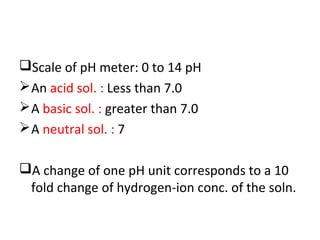
- 6 / 21
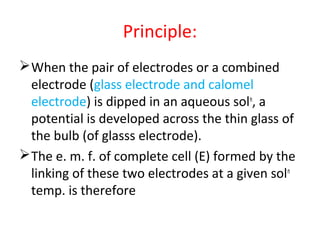 Most read
- 7 / 21
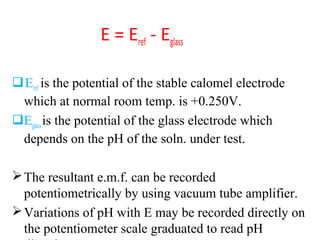
- 8 / 21
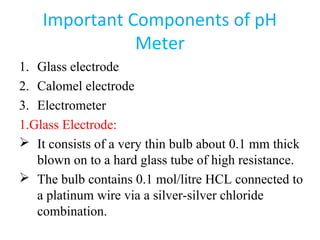
- 9 / 21
 Most read
- 10 / 21
- 11 / 21
- 12 / 21
- 13 / 21
- 14 / 21
- 15 / 21
- 16 / 21
- 17 / 21
- 18 / 21
- 19 / 21
- 20 / 21
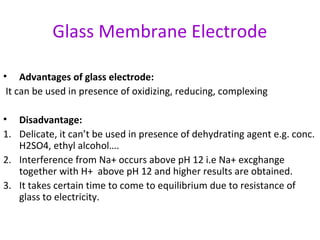

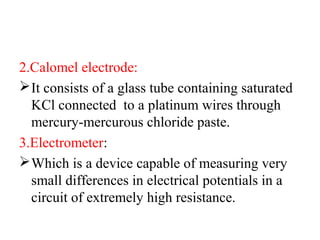
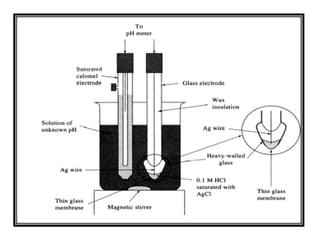
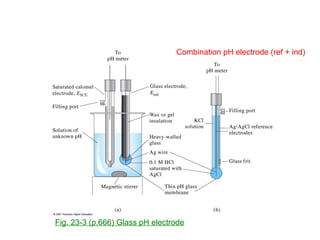
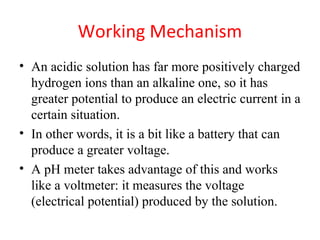
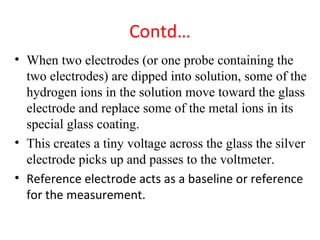
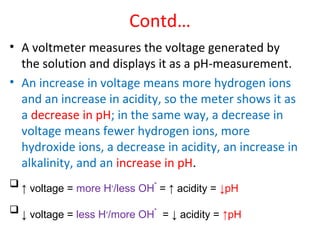
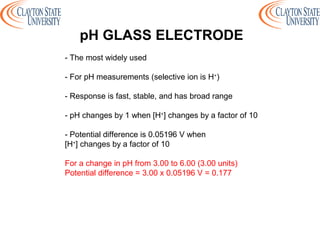
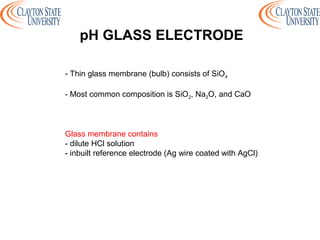
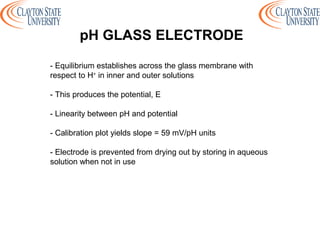
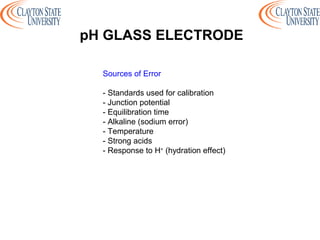
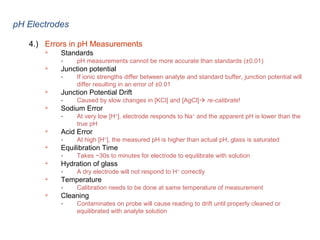
The document discusses pH electrodes and how pH meters work. It contains the following key points: 1. pH meters measure the voltage generated by a solution, which indicates the concentration of hydrogen ions and allows the measurement of pH. 2. A pH meter contains a glass electrode that interacts with hydrogen ions in the solution and a reference electrode to provide a baseline measurement. 3. The voltage measured corresponds to pH - a higher voltage means more hydrogen ions and lower pH, while a lower voltage means fewer hydrogen ions and higher pH. 4. Factors like the calibration standards used, junction potentials, temperature, and contaminants on the probe can introduce errors in pH measurements. Regular calibration and cleaning of electrodes


