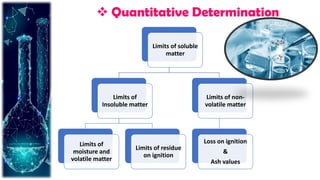
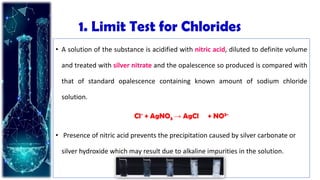
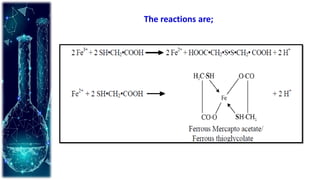
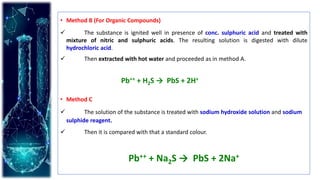
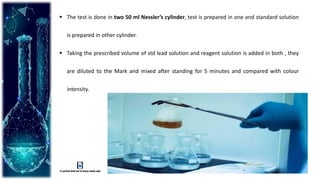
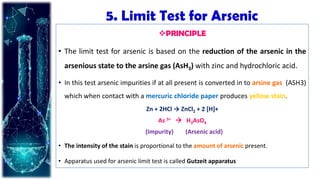
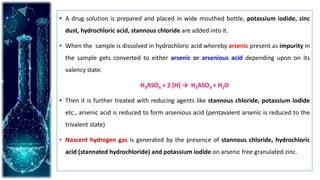
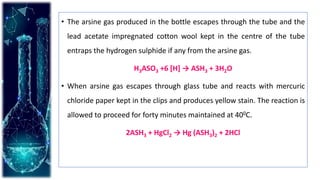
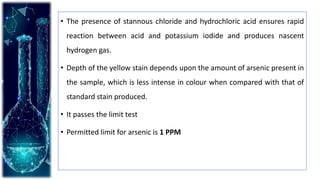
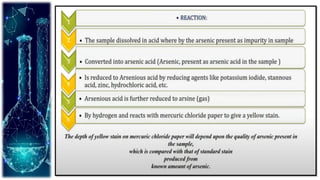
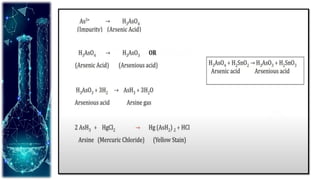
Limit tests are quantitative or semi-quantitative tests used to detect and limit small amounts of impurities in substances. They involve comparing the color or turbidity produced by the sample to a standard with a known concentration of impurities. Common limit tests include those for chlorides, sulfates, iron, heavy metals, and arsenic. These tests use chemical reactions to form precipitates or colors whose intensity indicates the concentration of impurities, allowing comparison to a standardized level. Limit tests provide a simple way to check if levels of harmful impurities meet defined specifications.