LIMIT TEST
Definition
Limit test is semi quantitative
test designed to identify and
control small amounts of
impurity which is likely to be
present in pharmaceuticals.
In these tests, the test opalescence /
turbidity / color/ stain produced by
the reaction of specified amount of
impurity in the test sample with the
reagent is compared with the
standard opalescence / turbidity /
color/ stain produced by the reaction
of known amount of impurity
[standard] with the reagent.
LIMIT TEST FOR CHLORIDE
AIM
To perform the limit test for
chloride on a given sample as
per Indian pharmacopoeia and
report on its standard.
Apparatus required:
Nessler’s cylinder
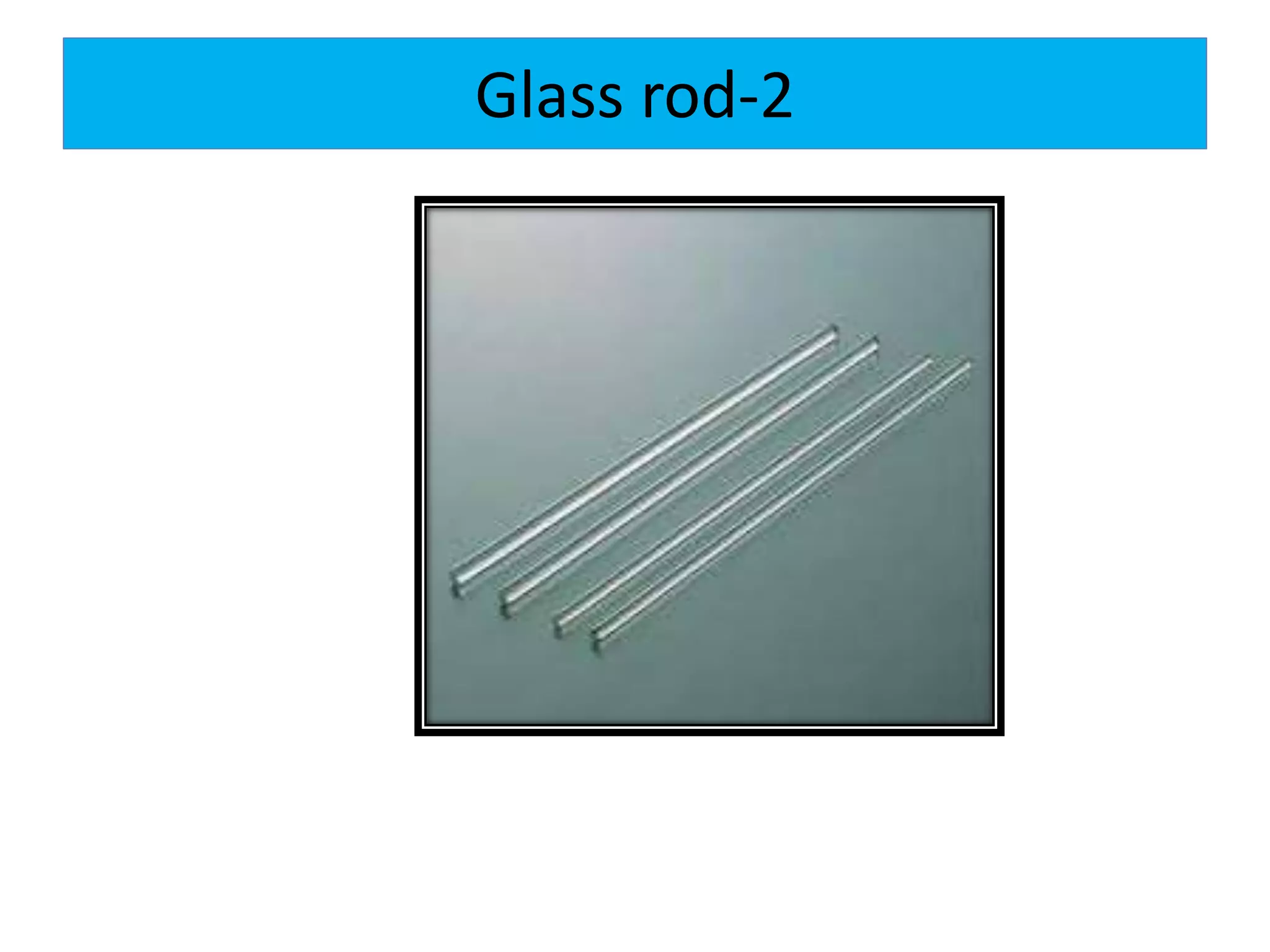
Glass rod-2
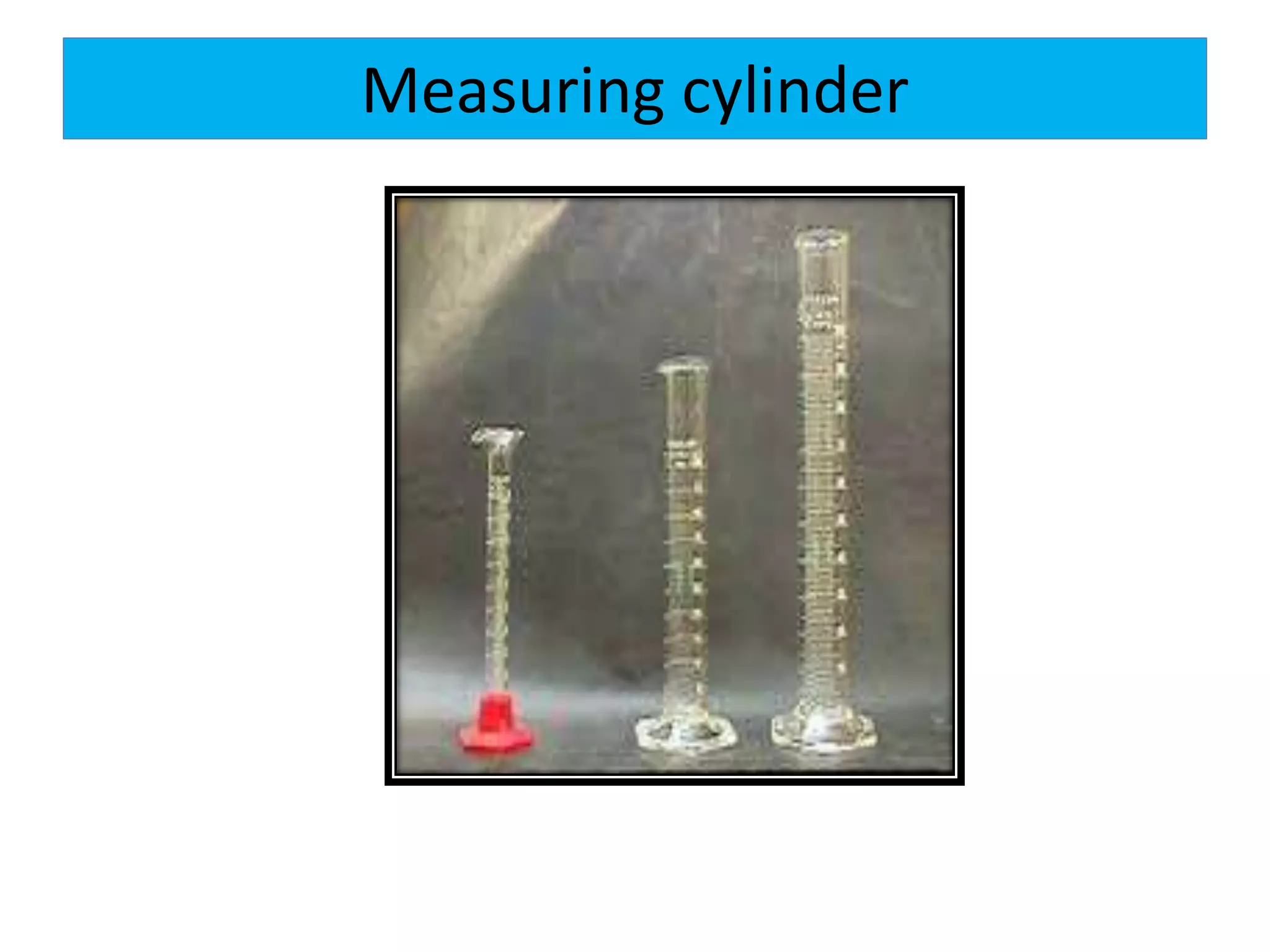
Measuring cylinder
Pipette
Dropper
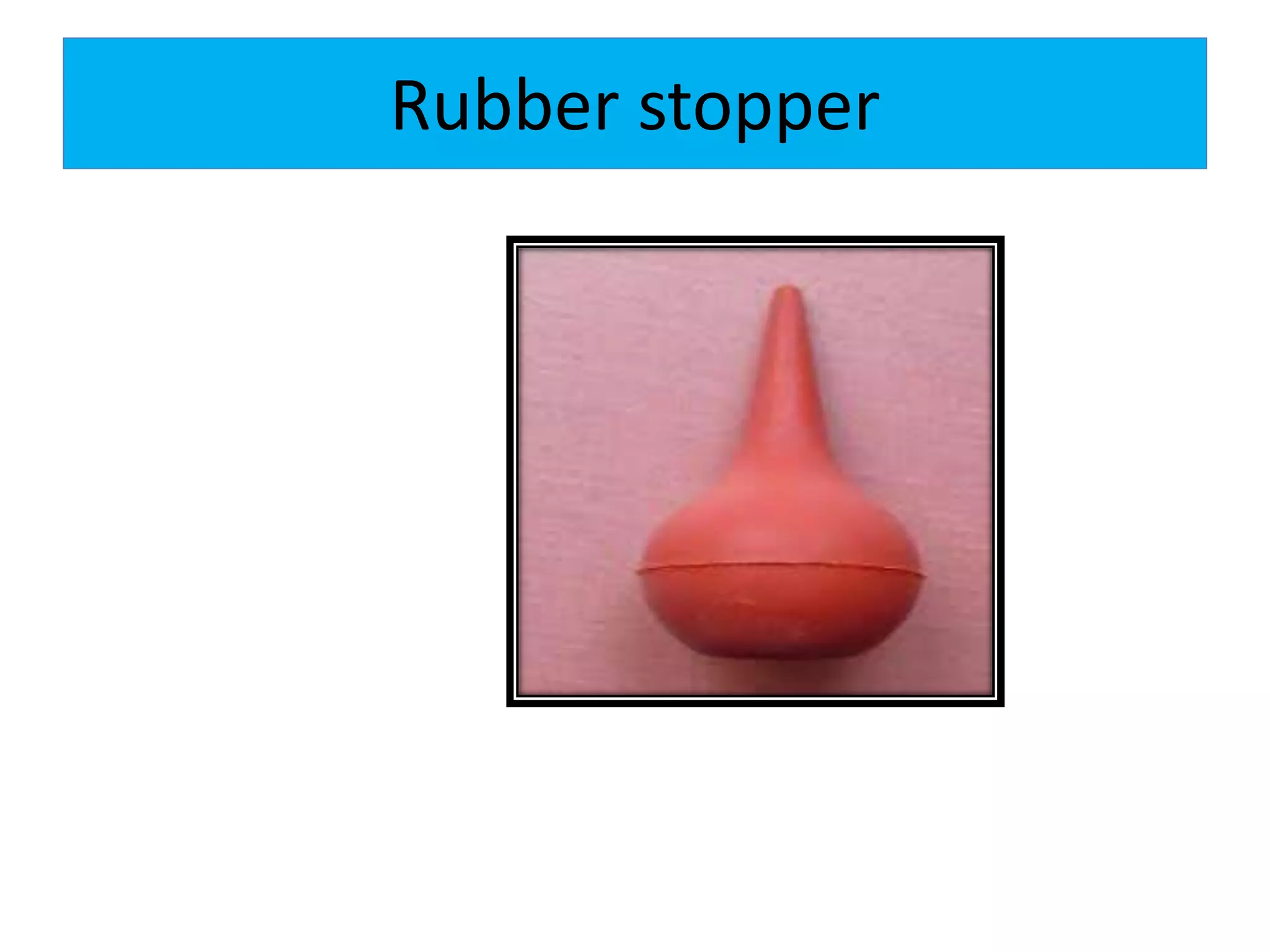
Rubber stopper
ChemicalsRequired
Dilute nitric acid:
Dissolve 106 ml of
concentrated Nitric
acid in 1000 ml of
water.
5 % w/v Silver nitrate solution:
Dissolve 5 g of silver
nitrate in 100 ml of
distilled water.
Standard sodium chloride solution:
0.05845%
Dissolve 0.05845 g of
sodium chloride in 100ml of
distilled water.
Principle -Reaction Standard:
Reaction Test :
Nitric acid - why
• It extracts a common ion effect by
furnishing nitrate ions and thereby
suppression of dissociation of silver
chloride.
• Dilute nitric acid is used to dissolve
other impurities if present.
Common ion effect:
It is defined as the suppression
of the degree of dissociation of
a weak electrolyte containing
a common ion.
ProcedureStandard Test
Pipette out 1 ml of
standard sodium
chloride solution into
the Nessler's cylinder
marked as standard
Dissolve the specified
quantity of given
sample in distilled
water in Nessler's
cylinder marked as test
Add 10 ml of dilute
nitric acid
Add 10 ml of dilute
nitric acid
Dilute it with distilled
water to 50 ml
Dilute it with distilled
water to 50 ml
Finally add 1ml of
silver nitrate
solution
Finally add 1ml of
silver nitrate
solution
Immediately stir with
a glass rod and allow
it to stand for five
minutes
Immediately stir with
a glass rod and allow
it to stand for five
minutes
Observe it under
black back ground
Observe it under
black back ground
Precaution:
• Distilled water must be used
because chloride present in the tap
water will interfere the result.
• Same glass rod should not be used
because it will affect your
observation.
• Silver nitrate is photosensitive store
it in amber colour bottle.
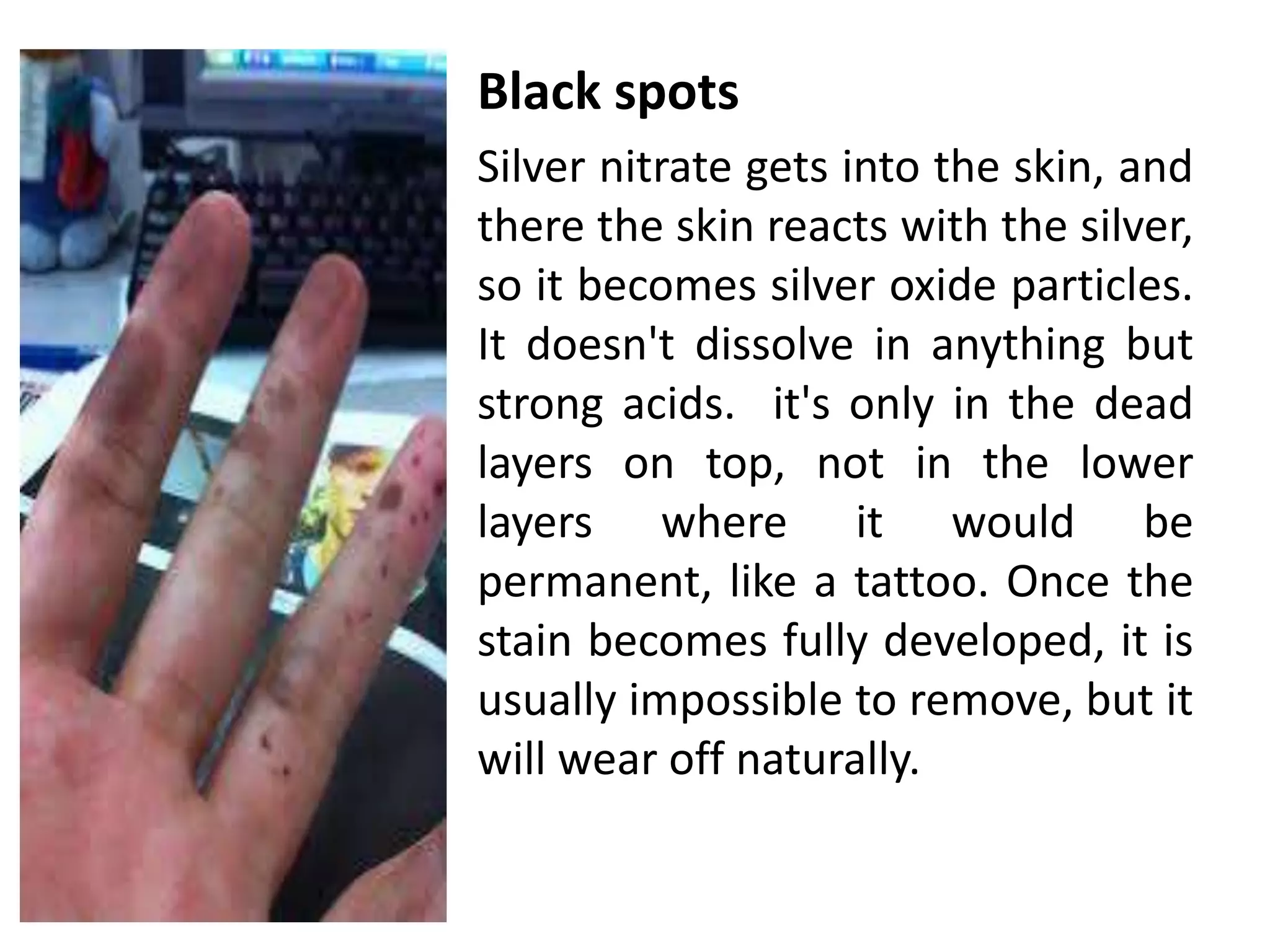
Black dots will be produced if silver
nitrate is in contact with skin.
• Black spots
• Silver nitrate gets into the skin, and
there the skin reacts with the silver,
so it becomes silver oxide particles.
It doesn't dissolve in anything but
strong acids. it's only in the dead
layers on top, not in the lower
layers where it would be
permanent, like a tattoo. Once the
stain becomes fully developed, it is
usually impossible to remove, but it
will wear off naturally.
• Sample I [ Pass Sample ] :
• Observation:
• The opalescence produced in the test
solution is lesser than standard solution.
• Inference:
• The given substance passes the limit
test for chloride as per Indian
pharmacopoeia when compared with
that of a standard substance.
• Sample II [ Fail Sample ] :
• Observation:
• The opalescence produced in the
test solution is more than standard
solution.
• Inference:
• The given substance fails the limit
test for chloride as per Indian
pharmacopoeia when compared
with that of a standard substance.
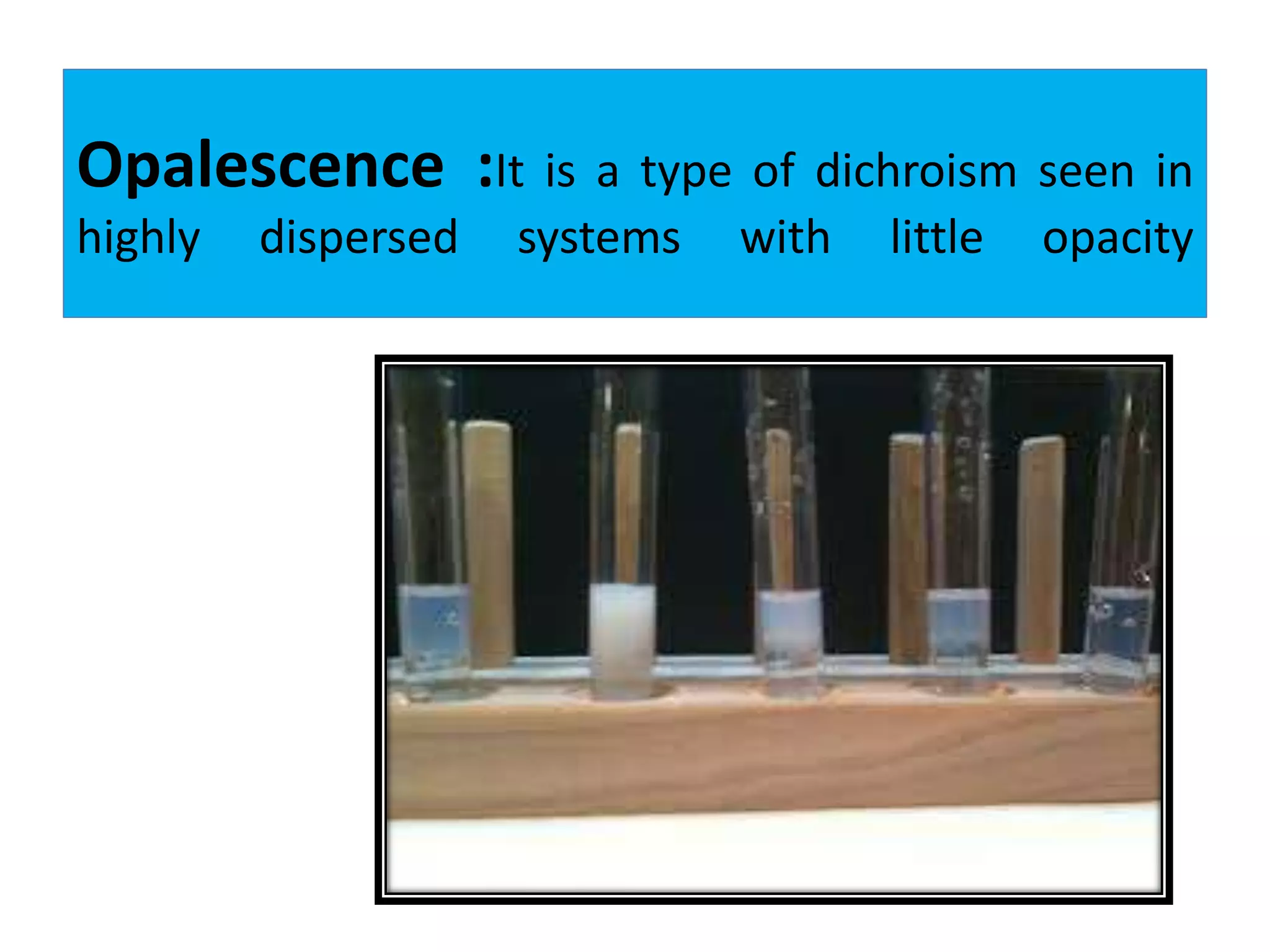
Opalescence :It is a type of dichroism seen in
highly dispersed systems with little opacity
THANK YOU

Limit test for chloride

  • 1.
  • 2.
    Definition Limit test issemi quantitative test designed to identify and control small amounts of impurity which is likely to be present in pharmaceuticals.
  • 3.
    In these tests,the test opalescence / turbidity / color/ stain produced by the reaction of specified amount of impurity in the test sample with the reagent is compared with the standard opalescence / turbidity / color/ stain produced by the reaction of known amount of impurity [standard] with the reagent.
  • 4.
  • 5.
    AIM To perform thelimit test for chloride on a given sample as per Indian pharmacopoeia and report on its standard.
  • 6.
  • 7.
  • 8.
  • 9.
  • 10.
  • 11.
  • 12.
    ChemicalsRequired Dilute nitric acid: Dissolve106 ml of concentrated Nitric acid in 1000 ml of water.
  • 13.
    5 % w/vSilver nitrate solution: Dissolve 5 g of silver nitrate in 100 ml of distilled water.
  • 14.
    Standard sodium chloridesolution: 0.05845% Dissolve 0.05845 g of sodium chloride in 100ml of distilled water.
  • 15.
  • 16.
  • 17.
    Nitric acid -why • It extracts a common ion effect by furnishing nitrate ions and thereby suppression of dissociation of silver chloride. • Dilute nitric acid is used to dissolve other impurities if present.
  • 18.
    Common ion effect: Itis defined as the suppression of the degree of dissociation of a weak electrolyte containing a common ion.
  • 19.
    ProcedureStandard Test Pipette out1 ml of standard sodium chloride solution into the Nessler's cylinder marked as standard Dissolve the specified quantity of given sample in distilled water in Nessler's cylinder marked as test Add 10 ml of dilute nitric acid Add 10 ml of dilute nitric acid Dilute it with distilled water to 50 ml Dilute it with distilled water to 50 ml
  • 20.
    Finally add 1mlof silver nitrate solution Finally add 1ml of silver nitrate solution Immediately stir with a glass rod and allow it to stand for five minutes Immediately stir with a glass rod and allow it to stand for five minutes Observe it under black back ground Observe it under black back ground
  • 21.
    Precaution: • Distilled watermust be used because chloride present in the tap water will interfere the result. • Same glass rod should not be used because it will affect your observation. • Silver nitrate is photosensitive store it in amber colour bottle.
  • 22.
    Black dots willbe produced if silver nitrate is in contact with skin.
  • 23.
    • Black spots •Silver nitrate gets into the skin, and there the skin reacts with the silver, so it becomes silver oxide particles. It doesn't dissolve in anything but strong acids. it's only in the dead layers on top, not in the lower layers where it would be permanent, like a tattoo. Once the stain becomes fully developed, it is usually impossible to remove, but it will wear off naturally.
  • 24.
    • Sample I[ Pass Sample ] : • Observation: • The opalescence produced in the test solution is lesser than standard solution. • Inference: • The given substance passes the limit test for chloride as per Indian pharmacopoeia when compared with that of a standard substance.
  • 25.
    • Sample II[ Fail Sample ] : • Observation: • The opalescence produced in the test solution is more than standard solution. • Inference: • The given substance fails the limit test for chloride as per Indian pharmacopoeia when compared with that of a standard substance.
  • 26.
    Opalescence :It isa type of dichroism seen in highly dispersed systems with little opacity
  • 27.