LIMIT TEST FOR LEAD
PRINCIPLE
• The limit test for lead is based on the reaction between lead and
diphenylthiocarbazone (dithizone) in an alkaline medium to form lead–
dithizonate complex.
• The lead present as an impurity in the substance is separated by
extracting an alkaline solution of substance with dithizone chloroform
solution.
• The original colour of dithizone in chloroform is green while the lead-
dithizonate complex is violet in colour.
• The interference by other metal ions is eliminated by adjusting the
optimum pH for the extraction by using reagents like ammonium
citrate, potassium cyanide and hydroxylamine hydrochloride.
PRINCIPLE
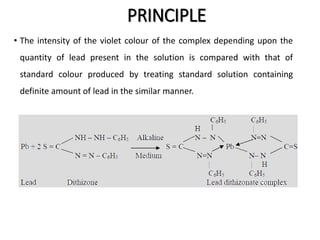
• The intensity of the violet colour of the complex depending upon the
quantity of lead present in the solution is compared with that of
standard colour produced by treating standard solution containing
definite amount of lead in the similar manner.
METHOD
Method (I.P. 1996): Prepare the sample as directed in the monograph and transfer
to a separator. Unless otherwise directed in the monograph, add 6 ml of
ammonium nitrate solution and 2 mlhydroxylamine hydrochloride solution.
To this, add two drops of phenol red solution and the make the solution alkaline
(red in colour) by adding strong ammonia solution. If necessary, cool the solution
and add 2 ml of potassium cyanide solution.
• Immediately extract the solution with 5 ml portions of dithizone extraction
solution, until it retains green colour.
• Combine the dithizone extracts and transfer to a second separator. Shake the
combined dithizone extracts for 30 seconds with 30 ml of 1% v/v nitric acid
solution and discard the chloroform layer.
METHOD
• To the nitric acid solution, add exactly 5 ml of dithizone standard solution and
shake for 30 seconds. The violet colour of the chloroform layer should not be
more intense than that obtained by comparing a volume of standard lead solution
(1 ppm Pb) equivalent to the amount of lead permitted in the substance being
examined in the same manner as that of solution being examined.
• Preparation of standard lead solution (1 ppm Pb): Dissolve 0.400 g of lead nitrate
in water containing 2 ml of dilute nitric acid and add sufficient water to produce
250.0 ml. This gives standard lead solution (1% Pb). Standard lead solution (1 ppm
Pb) is prepared by diluting 1 volume of standard lead solution (1% Pb) to 1000
volumes with water.
METHOD
• Preparation of dithizone extraction solution: Dissolve 30 mg of dithizone in 1000
ml of chloroform and add 5 ml of ethanol (95%). The solution is stored in
refrigerator. Before use, the solution is shaken with about half of its volume of 1%
v/v nitric acid solution and acid is discarded.
• Preparation of Dithizone standard solution: Dissolve 10 mg of dithizone in 1000 ml
of chloroform.

Limit test for lead

  • 1.
  • 2.
    PRINCIPLE • The limittest for lead is based on the reaction between lead and diphenylthiocarbazone (dithizone) in an alkaline medium to form lead– dithizonate complex. • The lead present as an impurity in the substance is separated by extracting an alkaline solution of substance with dithizone chloroform solution. • The original colour of dithizone in chloroform is green while the lead- dithizonate complex is violet in colour. • The interference by other metal ions is eliminated by adjusting the optimum pH for the extraction by using reagents like ammonium citrate, potassium cyanide and hydroxylamine hydrochloride.
  • 3.
    PRINCIPLE • The intensityof the violet colour of the complex depending upon the quantity of lead present in the solution is compared with that of standard colour produced by treating standard solution containing definite amount of lead in the similar manner.
  • 4.
    METHOD Method (I.P. 1996):Prepare the sample as directed in the monograph and transfer to a separator. Unless otherwise directed in the monograph, add 6 ml of ammonium nitrate solution and 2 mlhydroxylamine hydrochloride solution. To this, add two drops of phenol red solution and the make the solution alkaline (red in colour) by adding strong ammonia solution. If necessary, cool the solution and add 2 ml of potassium cyanide solution. • Immediately extract the solution with 5 ml portions of dithizone extraction solution, until it retains green colour. • Combine the dithizone extracts and transfer to a second separator. Shake the combined dithizone extracts for 30 seconds with 30 ml of 1% v/v nitric acid solution and discard the chloroform layer.
  • 5.
    METHOD • To thenitric acid solution, add exactly 5 ml of dithizone standard solution and shake for 30 seconds. The violet colour of the chloroform layer should not be more intense than that obtained by comparing a volume of standard lead solution (1 ppm Pb) equivalent to the amount of lead permitted in the substance being examined in the same manner as that of solution being examined. • Preparation of standard lead solution (1 ppm Pb): Dissolve 0.400 g of lead nitrate in water containing 2 ml of dilute nitric acid and add sufficient water to produce 250.0 ml. This gives standard lead solution (1% Pb). Standard lead solution (1 ppm Pb) is prepared by diluting 1 volume of standard lead solution (1% Pb) to 1000 volumes with water.
  • 6.
    METHOD • Preparation ofdithizone extraction solution: Dissolve 30 mg of dithizone in 1000 ml of chloroform and add 5 ml of ethanol (95%). The solution is stored in refrigerator. Before use, the solution is shaken with about half of its volume of 1% v/v nitric acid solution and acid is discarded. • Preparation of Dithizone standard solution: Dissolve 10 mg of dithizone in 1000 ml of chloroform.