IT ENTERS A
NEW LEARNING
ENVIRONMENT
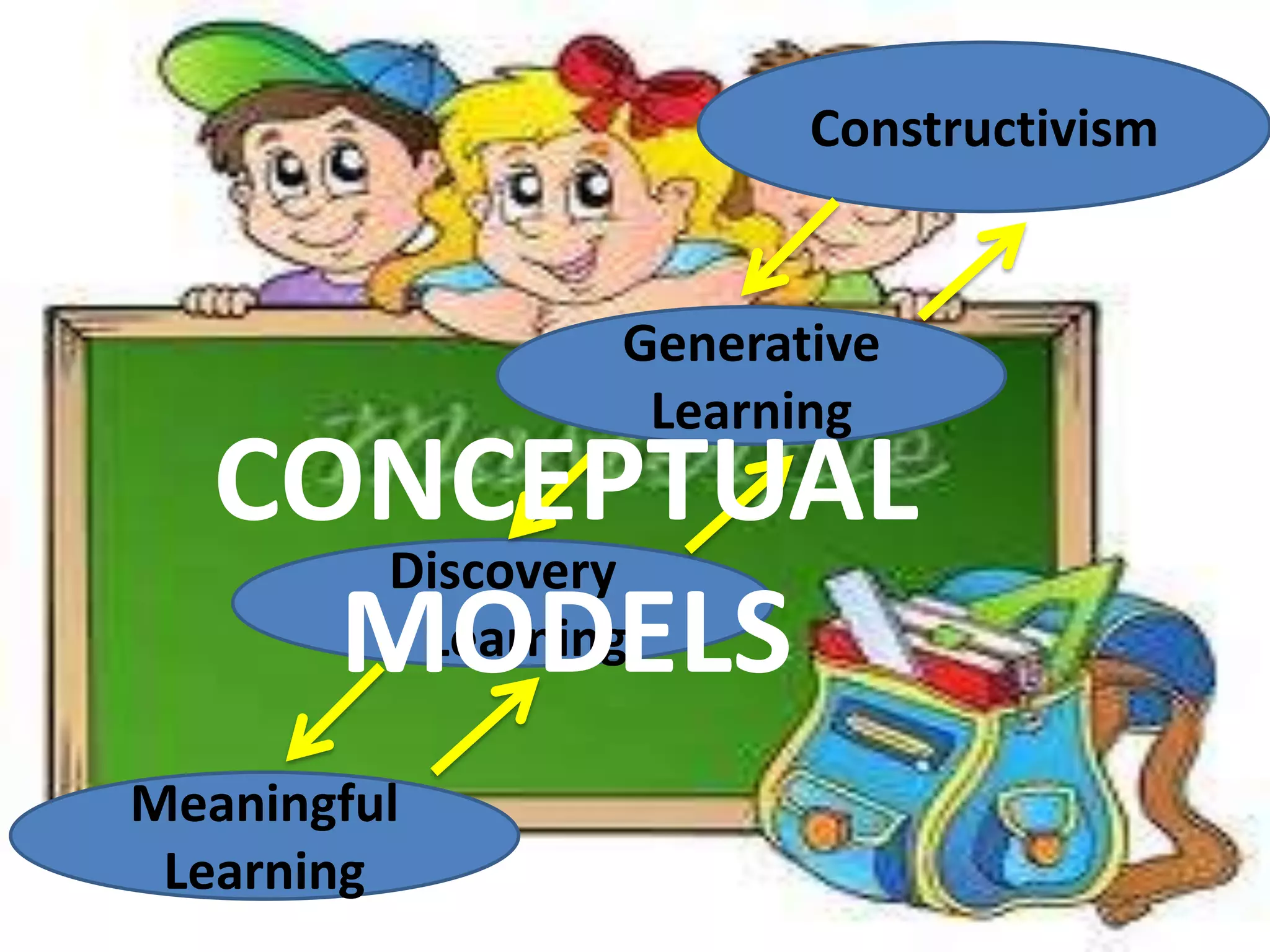
Meaningful
Learning
Discovery
Learning
Generative
Learning
Constructivism
CONCEPTUAL
MODELS
MEANINGFUL
LEARNING
Meaningful Learning
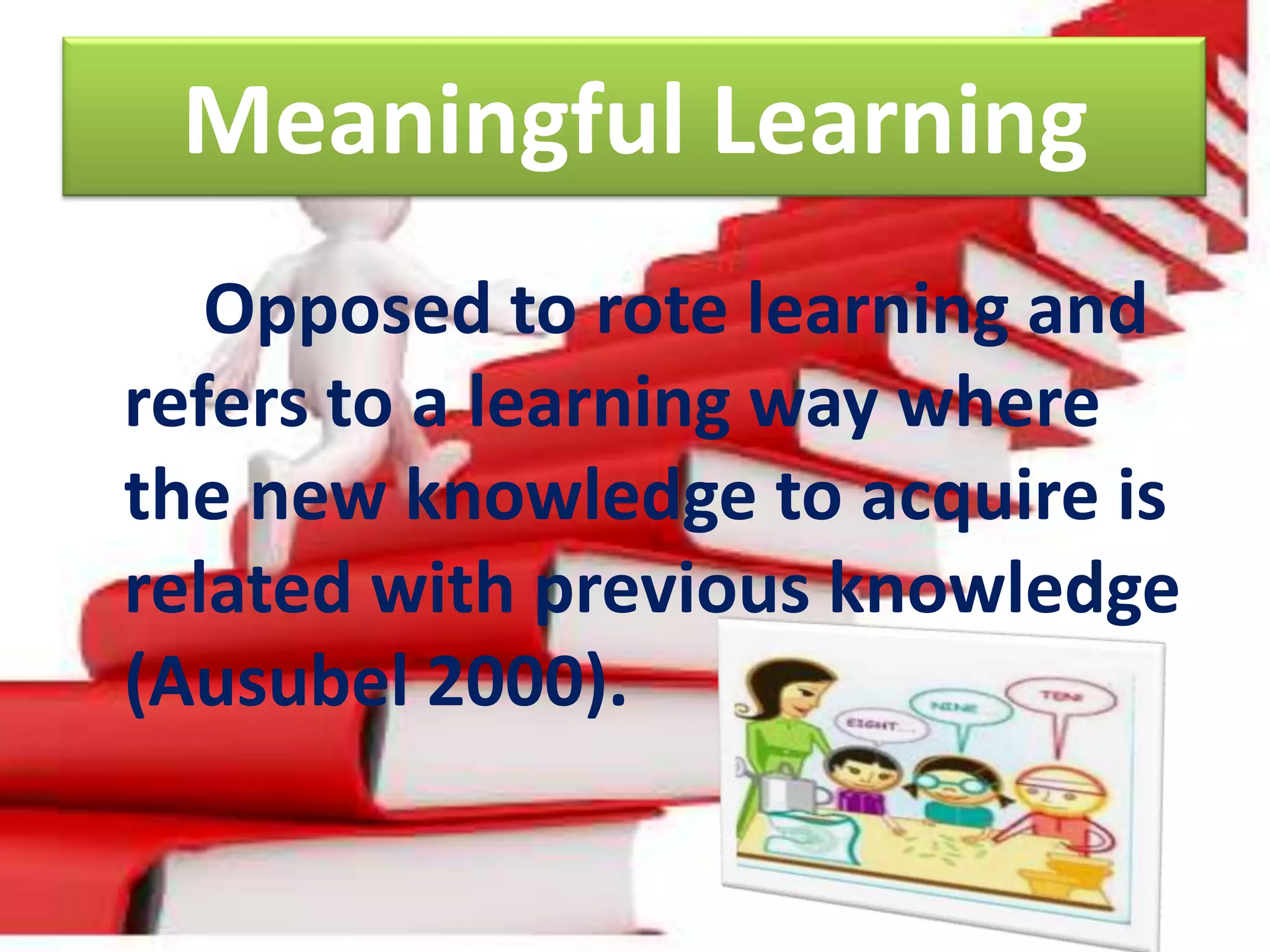
Opposed to rote learning and
refers to a learning way where
the new knowledge to acquire is
related with previous knowledge
(Ausubel 2000).
It assumes that:
 Students already have some knowledge
that is relevant to new learning.
 Students are willing to perform class work
to find connections between what they
already know and what they can learn.
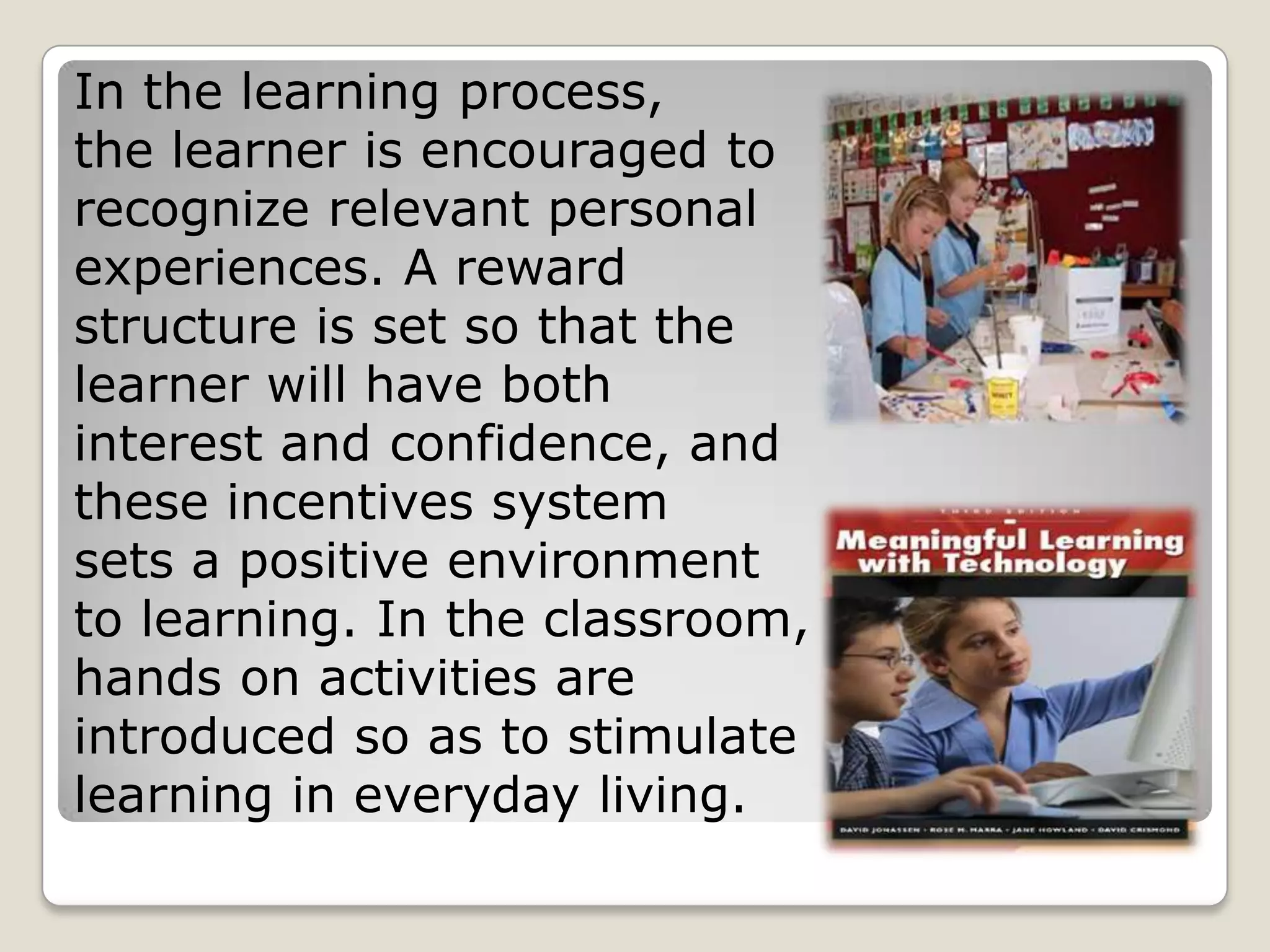
In the learning process,
the learner is encouraged to
recognize relevant personal
experiences. A reward
structure is set so that the
learner will have both
interest and confidence, and
these incentives system
sets a positive environment
to learning. In the classroom,
hands on activities are
introduced so as to stimulate
learning in everyday living.
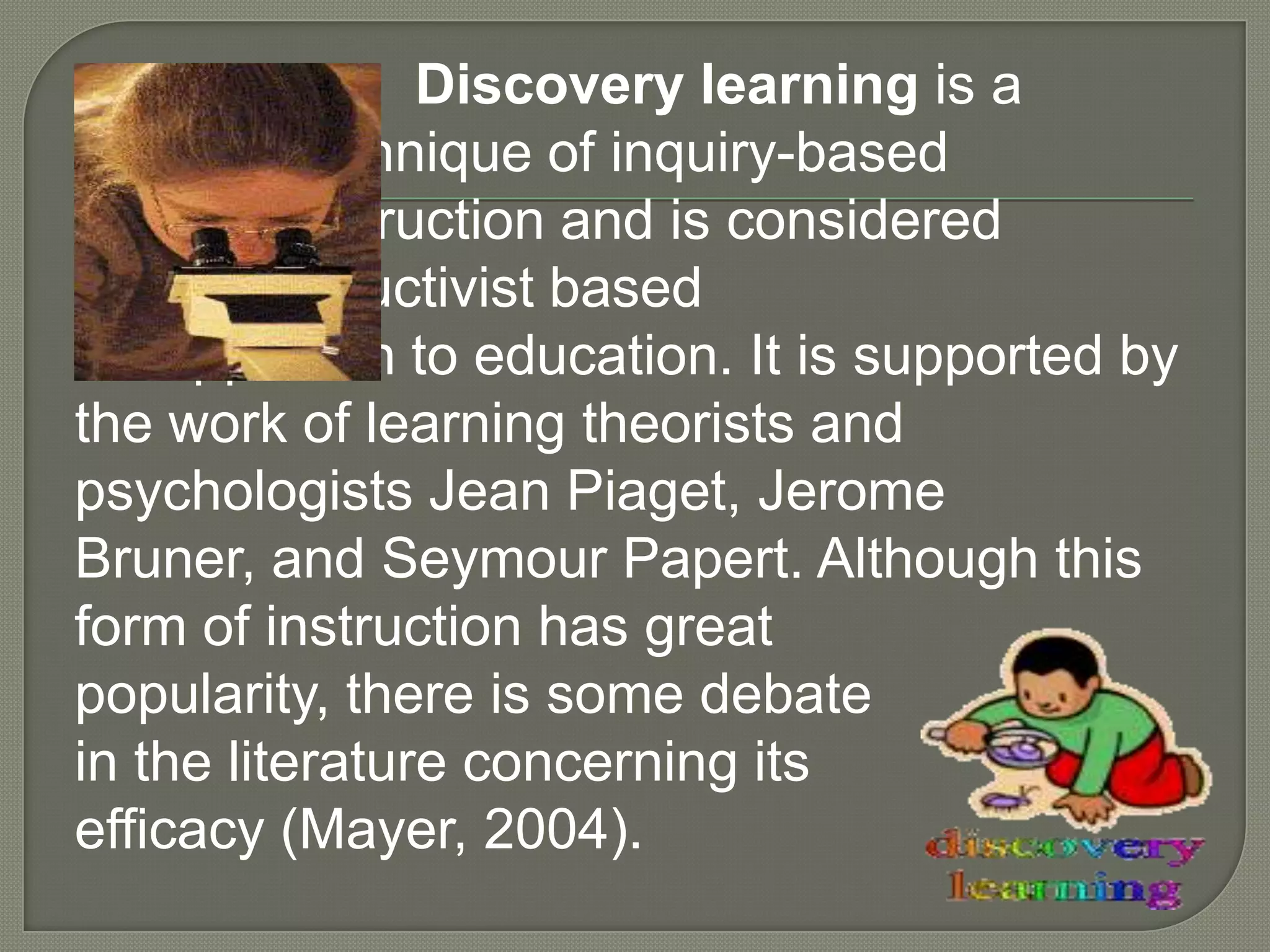
Discovery learning is a
technique of inquiry-based
instruction and is considered
a constructivist based
approach to education. It is supported by
the work of learning theorists and
psychologists Jean Piaget, Jerome
Bruner, and Seymour Papert. Although this
form of instruction has great
popularity, there is some debate
in the literature concerning its
efficacy (Mayer, 2004).
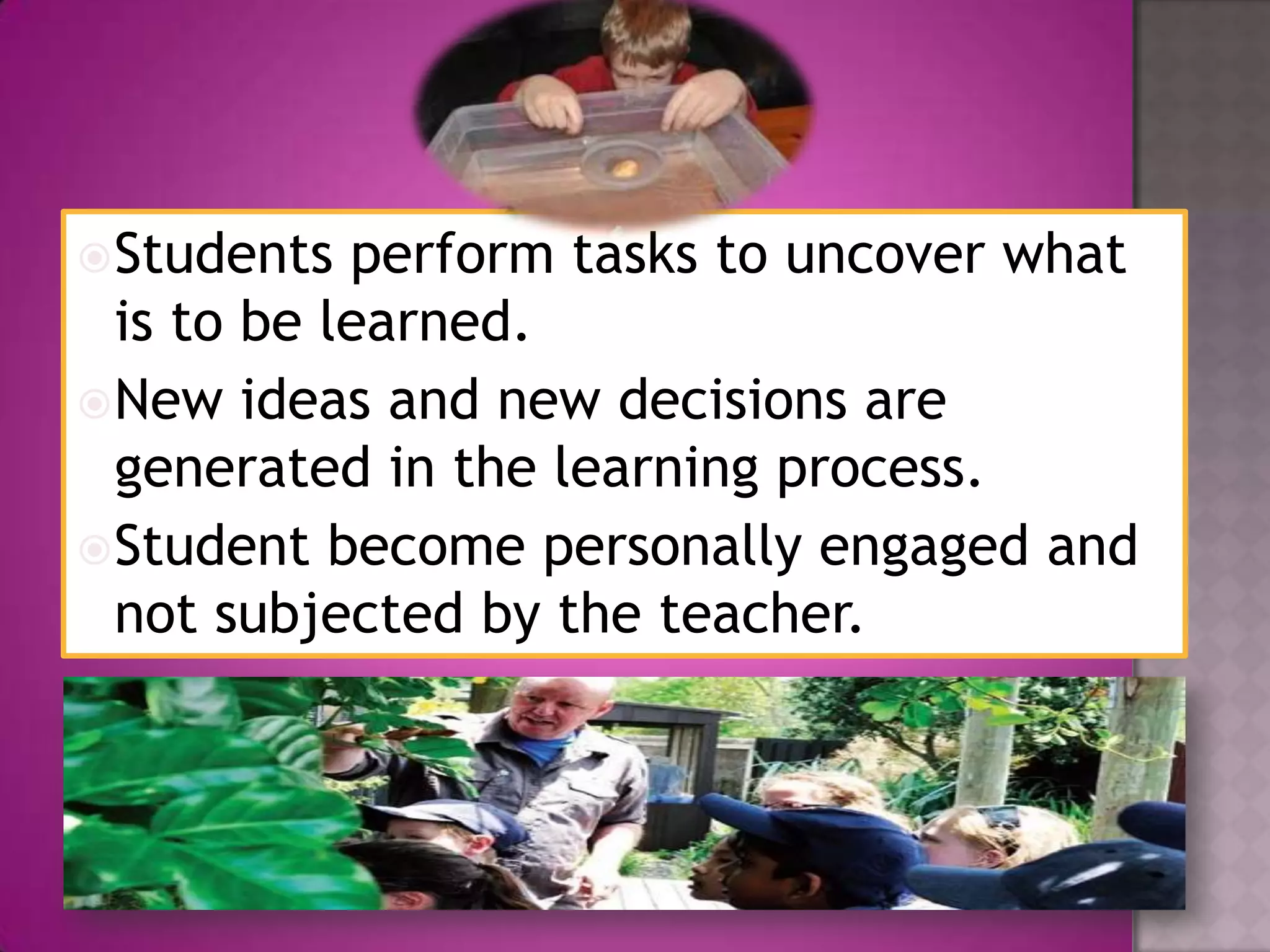
Students perform tasks to uncover what
is to be learned.
New ideas and new decisions are
generated in the learning process.
Student become personally engaged and
not subjected by the teacher.
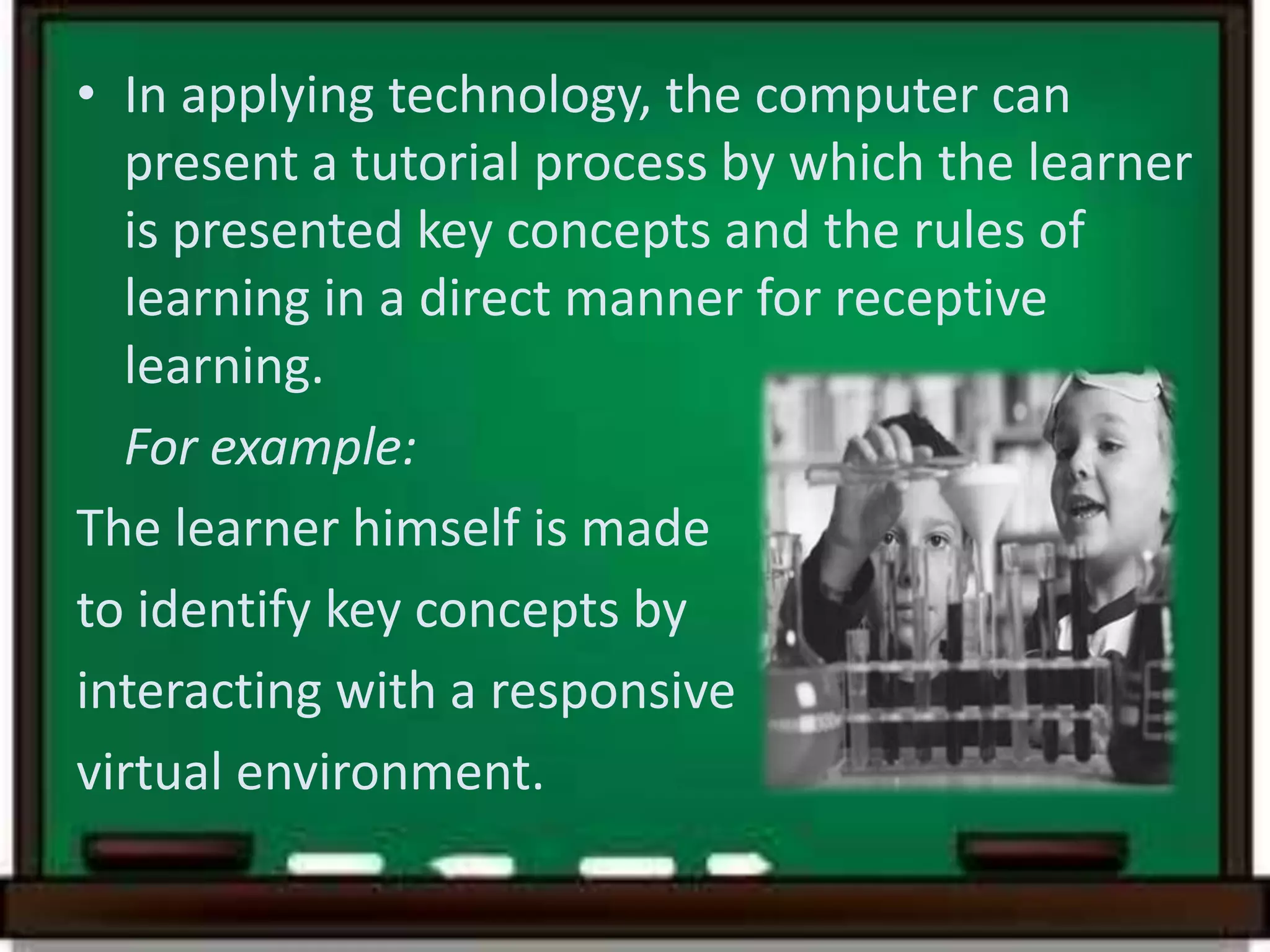
• In applying technology, the computer can
present a tutorial process by which the learner
is presented key concepts and the rules of
learning in a direct manner for receptive
learning.
For example:
The learner himself is made
to identify key concepts by
interacting with a responsive
virtual environment.
Generative
Learning
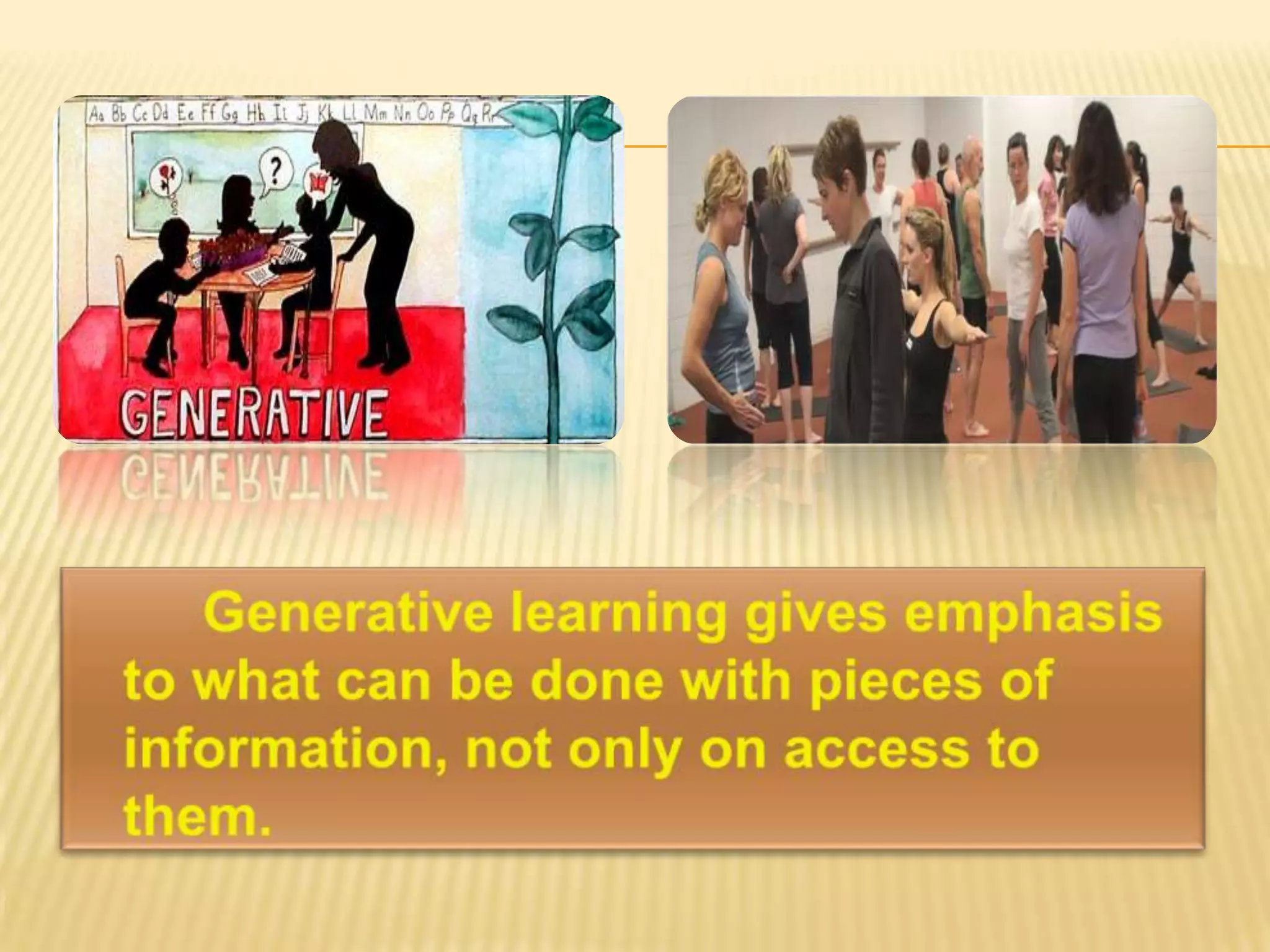
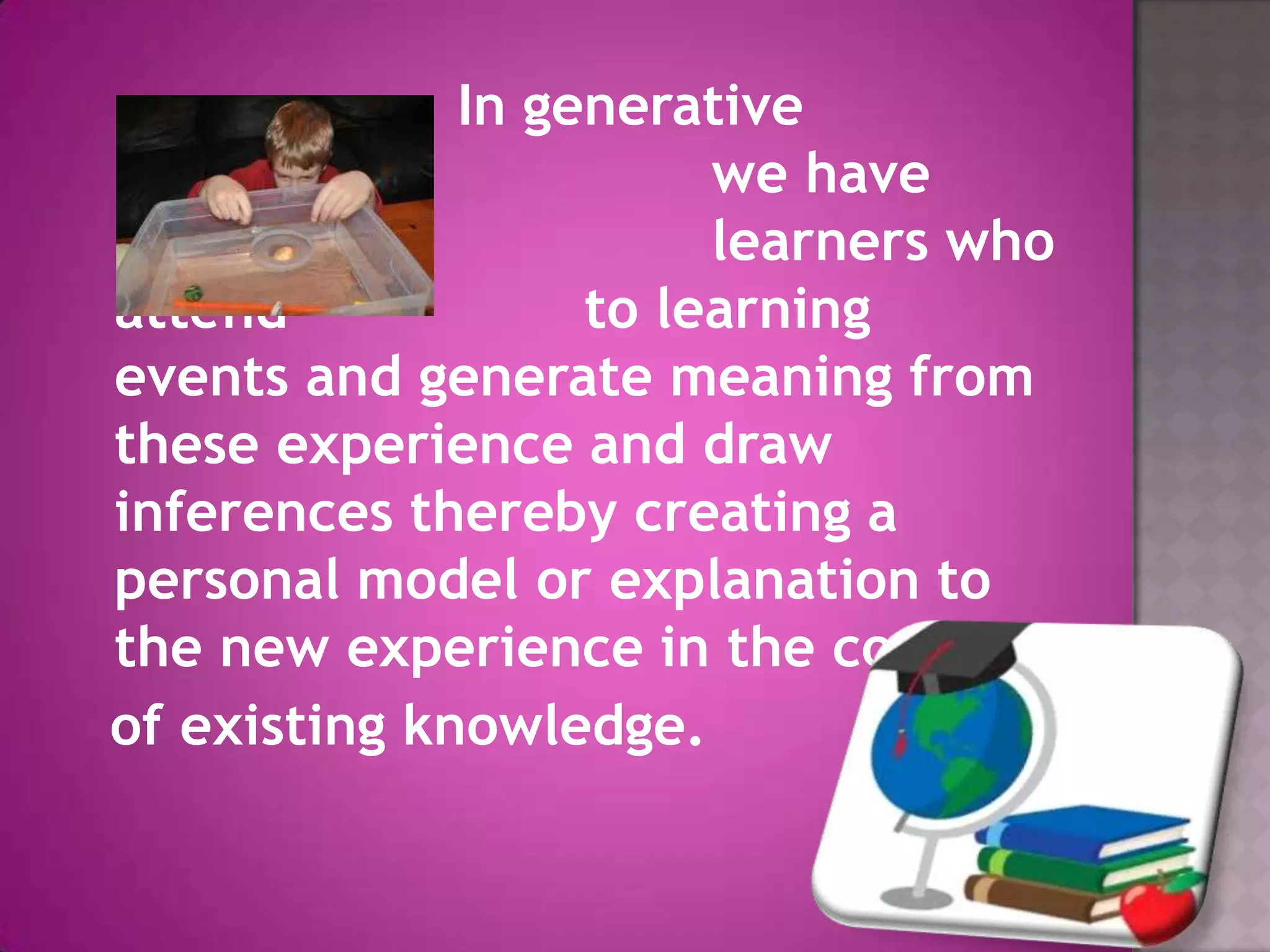
In generative
learning, we have
active learners who
attend to learning
events and generate meaning from
these experience and draw
inferences thereby creating a
personal model or explanation to
the new experience in the context
of existing knowledge.
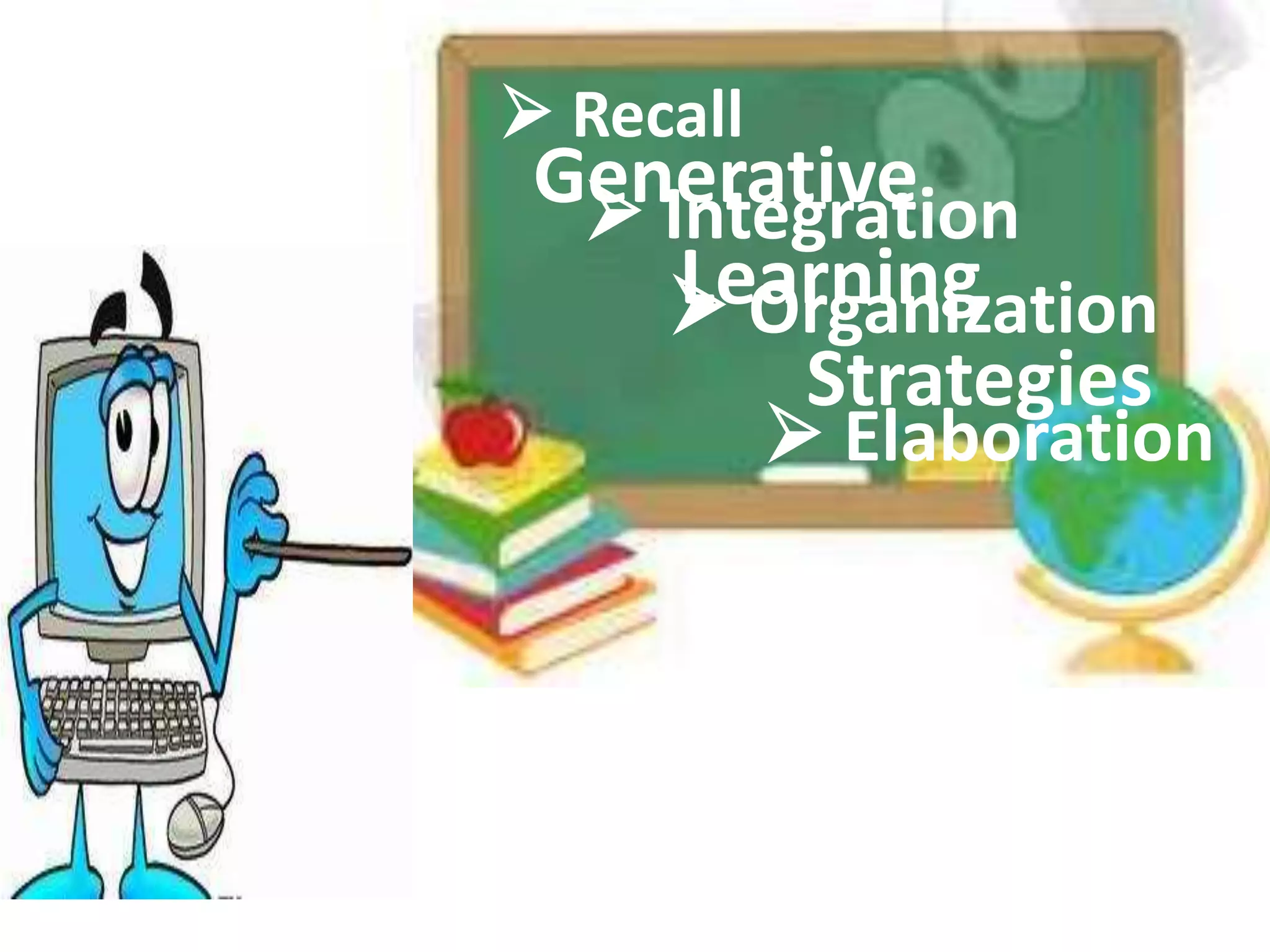
Generative
Learning
Strategies
 Recall
 Integration
 Organization
 Elaboration
 Recall
It involves the learner
pulling information from
long term memory.
 Integration
It involves the learner
to integrating new
knowledge with prior
knowledge.
 Organization
Involves the learner
relating prior knowledge
to new ideas and concept
in meaningful ways.
 Elaboration
Involves the connection of
new materials to
information or ideas
already in the learner’s
mind.
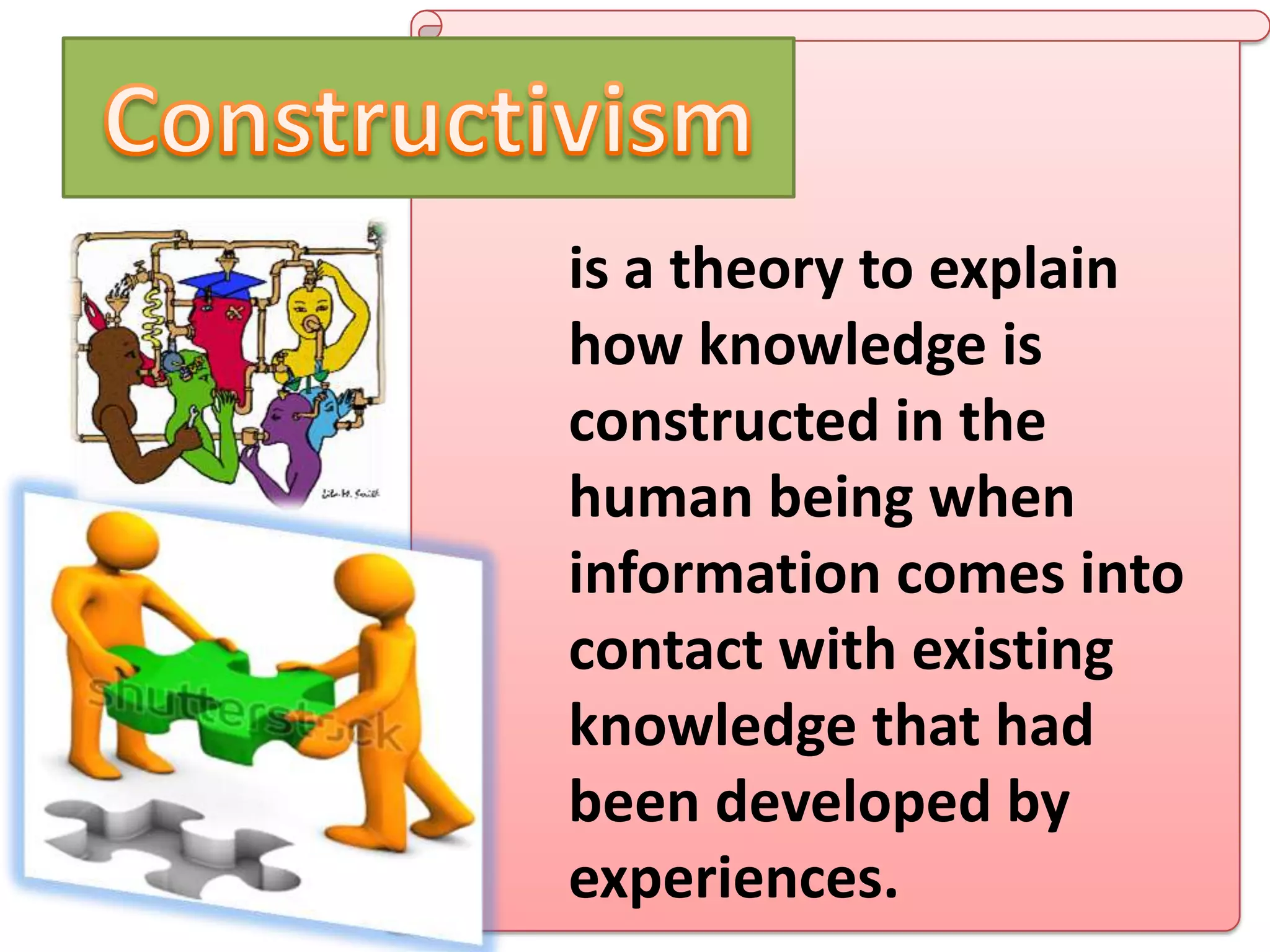
is a theory to explain
how knowledge is
constructed in the
human being when
information comes into
contact with existing
knowledge that had
been developed by
experiences.
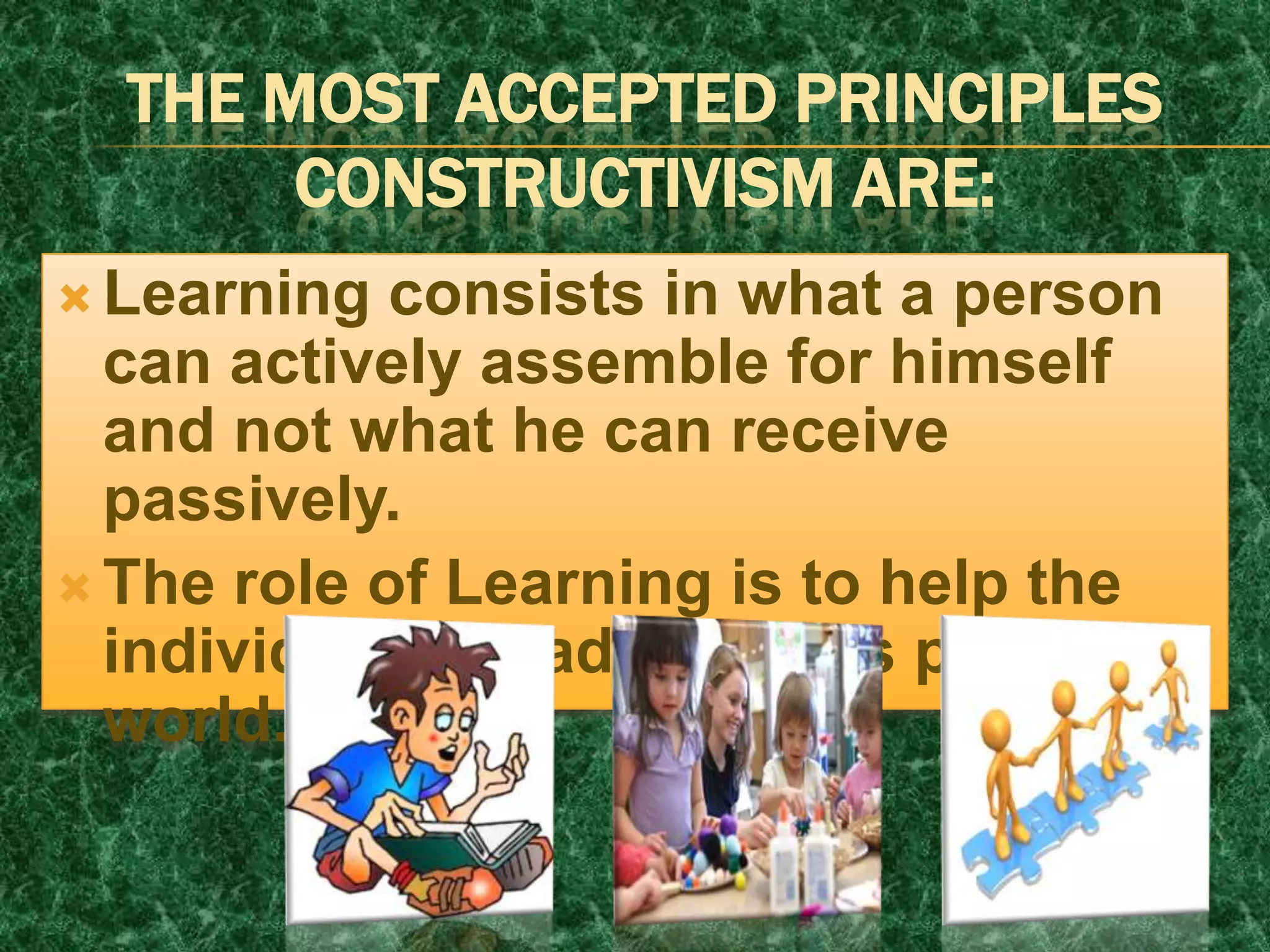
THE MOST ACCEPTED PRINCIPLES
CONSTRUCTIVISM ARE:
 Learning consists in what a person
can actively assemble for himself
and not what he can receive
passively.
 The role of Learning is to help the
individual live/adapt to his personal
world.
These two principles in turn
lead to three implications:
• The learner is directly responsible for learning.
• The context of meaningful learning consists in
the learner “ connecting “ his school activity
with real life.
• The purpose of education is the acquisition of
practical and personal knowledge, not
abstract or universal truths.
Summary
To review, there are common themes to these four learning
domains. They are given below:
Learners
 are active, purposeful learners.
 set personal goals and strategies to
achieve these goals.
 make their learning experience meaningful
and relevant to their lives.
 seek to build an understanding of their personal worlds so
they can work/live productively.
 build on what they already know in order to interpret and
respond to new experiences.
IT enters a new Learning Environment

IT enters a new Learning Environment

  • 1.
    IT ENTERS A NEWLEARNING ENVIRONMENT
  • 2.
  • 3.
  • 4.
    Meaningful Learning Opposed torote learning and refers to a learning way where the new knowledge to acquire is related with previous knowledge (Ausubel 2000).
  • 5.
    It assumes that: Students already have some knowledge that is relevant to new learning.  Students are willing to perform class work to find connections between what they already know and what they can learn.
  • 6.
    In the learningprocess, the learner is encouraged to recognize relevant personal experiences. A reward structure is set so that the learner will have both interest and confidence, and these incentives system sets a positive environment to learning. In the classroom, hands on activities are introduced so as to stimulate learning in everyday living.
  • 8.
    Discovery learning isa technique of inquiry-based instruction and is considered a constructivist based approach to education. It is supported by the work of learning theorists and psychologists Jean Piaget, Jerome Bruner, and Seymour Papert. Although this form of instruction has great popularity, there is some debate in the literature concerning its efficacy (Mayer, 2004).
  • 9.
    Students perform tasksto uncover what is to be learned. New ideas and new decisions are generated in the learning process. Student become personally engaged and not subjected by the teacher.
  • 10.
    • In applyingtechnology, the computer can present a tutorial process by which the learner is presented key concepts and the rules of learning in a direct manner for receptive learning. For example: The learner himself is made to identify key concepts by interacting with a responsive virtual environment.
  • 11.
  • 13.
    In generative learning, wehave active learners who attend to learning events and generate meaning from these experience and draw inferences thereby creating a personal model or explanation to the new experience in the context of existing knowledge.
  • 14.
  • 15.
     Recall It involvesthe learner pulling information from long term memory.
  • 16.
     Integration It involvesthe learner to integrating new knowledge with prior knowledge.
  • 17.
     Organization Involves thelearner relating prior knowledge to new ideas and concept in meaningful ways.
  • 18.
     Elaboration Involves theconnection of new materials to information or ideas already in the learner’s mind.
  • 19.
    is a theoryto explain how knowledge is constructed in the human being when information comes into contact with existing knowledge that had been developed by experiences.
  • 20.
    THE MOST ACCEPTEDPRINCIPLES CONSTRUCTIVISM ARE:  Learning consists in what a person can actively assemble for himself and not what he can receive passively.  The role of Learning is to help the individual live/adapt to his personal world.
  • 21.
    These two principlesin turn lead to three implications: • The learner is directly responsible for learning. • The context of meaningful learning consists in the learner “ connecting “ his school activity with real life. • The purpose of education is the acquisition of practical and personal knowledge, not abstract or universal truths.
  • 22.
    Summary To review, thereare common themes to these four learning domains. They are given below: Learners  are active, purposeful learners.  set personal goals and strategies to achieve these goals.  make their learning experience meaningful and relevant to their lives.  seek to build an understanding of their personal worlds so they can work/live productively.  build on what they already know in order to interpret and respond to new experiences.