LESSON 8: HIGHER THINKING
SKILLS THROUGH IT-BASED
PROJECTS
OVERVIEW…
We shall discuss four types of IT-based
projects which can effectively be used in order
to engage students in activities of a higher
plane of thinking.
KEY ELEMENTS OF A
CONSTRUCTIVIST
APPROACH TO
INSTRUCTION:
a.The teacher creating the learning
environment
b. The teacher giving students the
tools and facilities, and
c. The teacher facilitating learning
…it is the students themselves who
demonstrate higher thinking skills and
creativity through such activities
searching for information, organizing
and synthesizing ideas, creating
presentation, and the like.
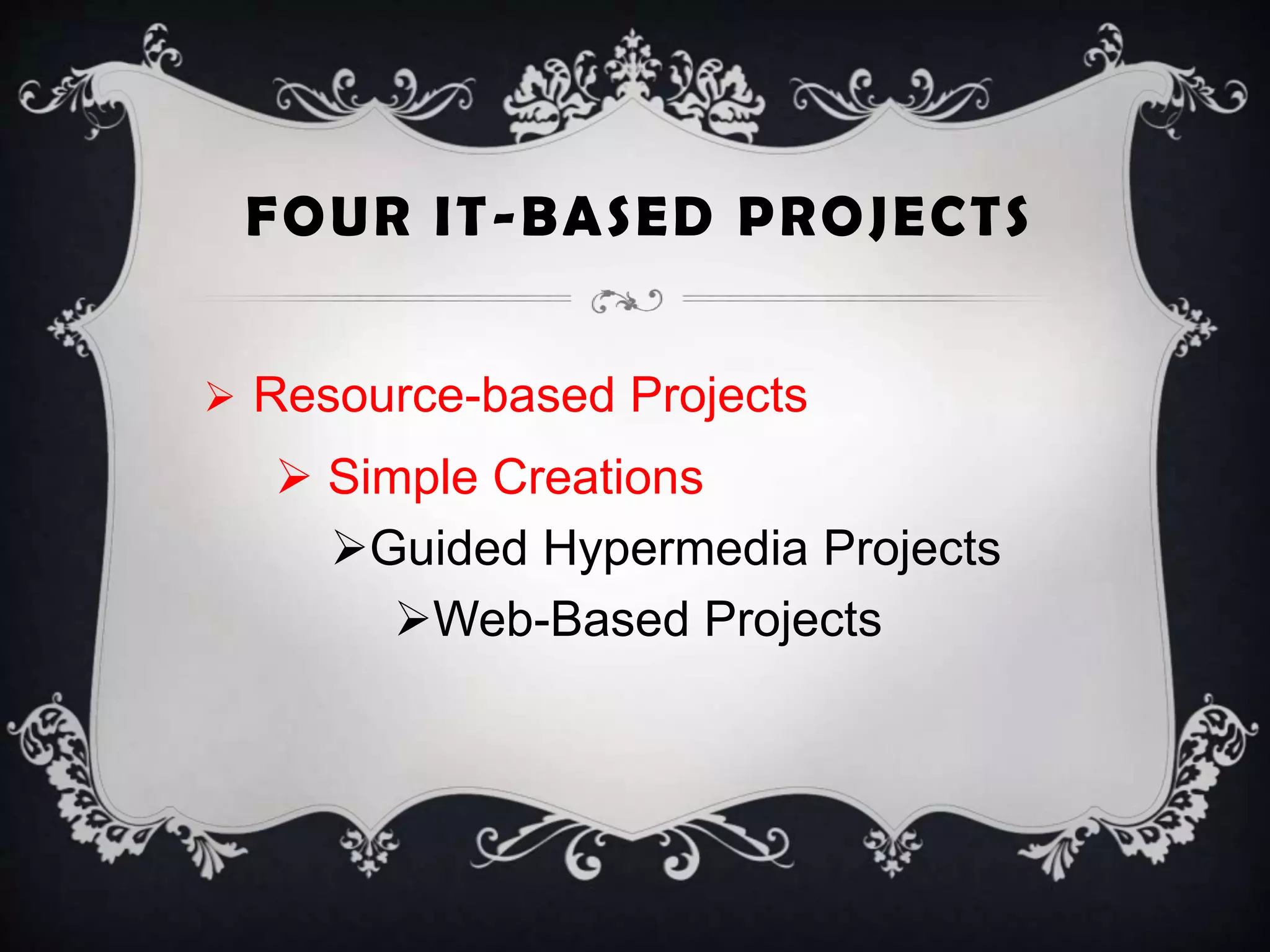
FOUR IT-BASED PROJECTS
 Resource-based Projects
 Simple Creations
Guided Hypermedia Projects
Web-Based Projects
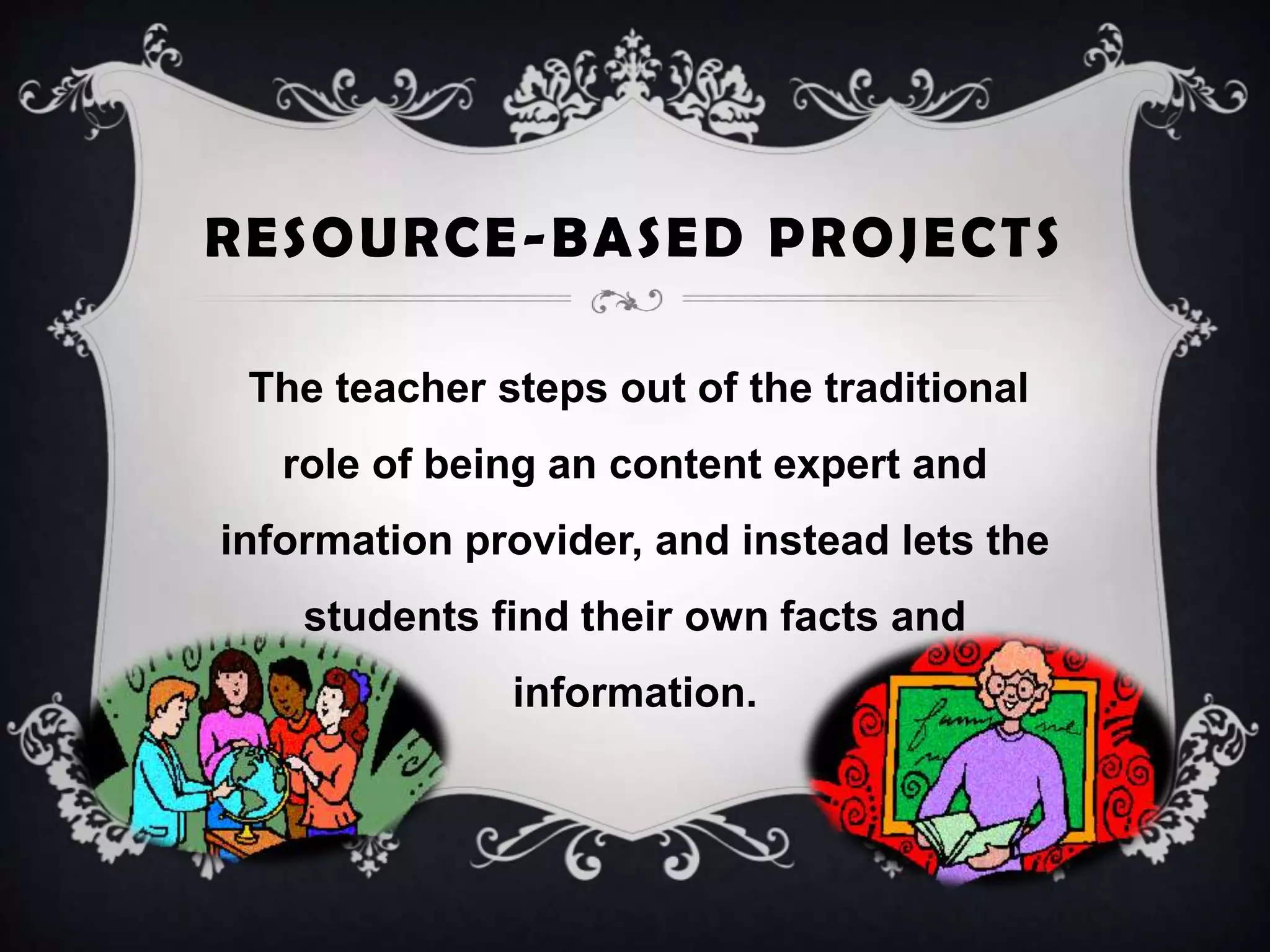
RESOURCE-BASED PROJECTS
The teacher steps out of the traditional
role of being an content expert and
information provider, and instead lets the
students find their own facts and
information.
GENERAL FLOW OF EVENTS
1. The teacher determines the topic for the examination of
the class
2. The teacher presents the problem to the class
3. The students find information on the problem/questions
4. Students organize their information in response to the
problem/questions
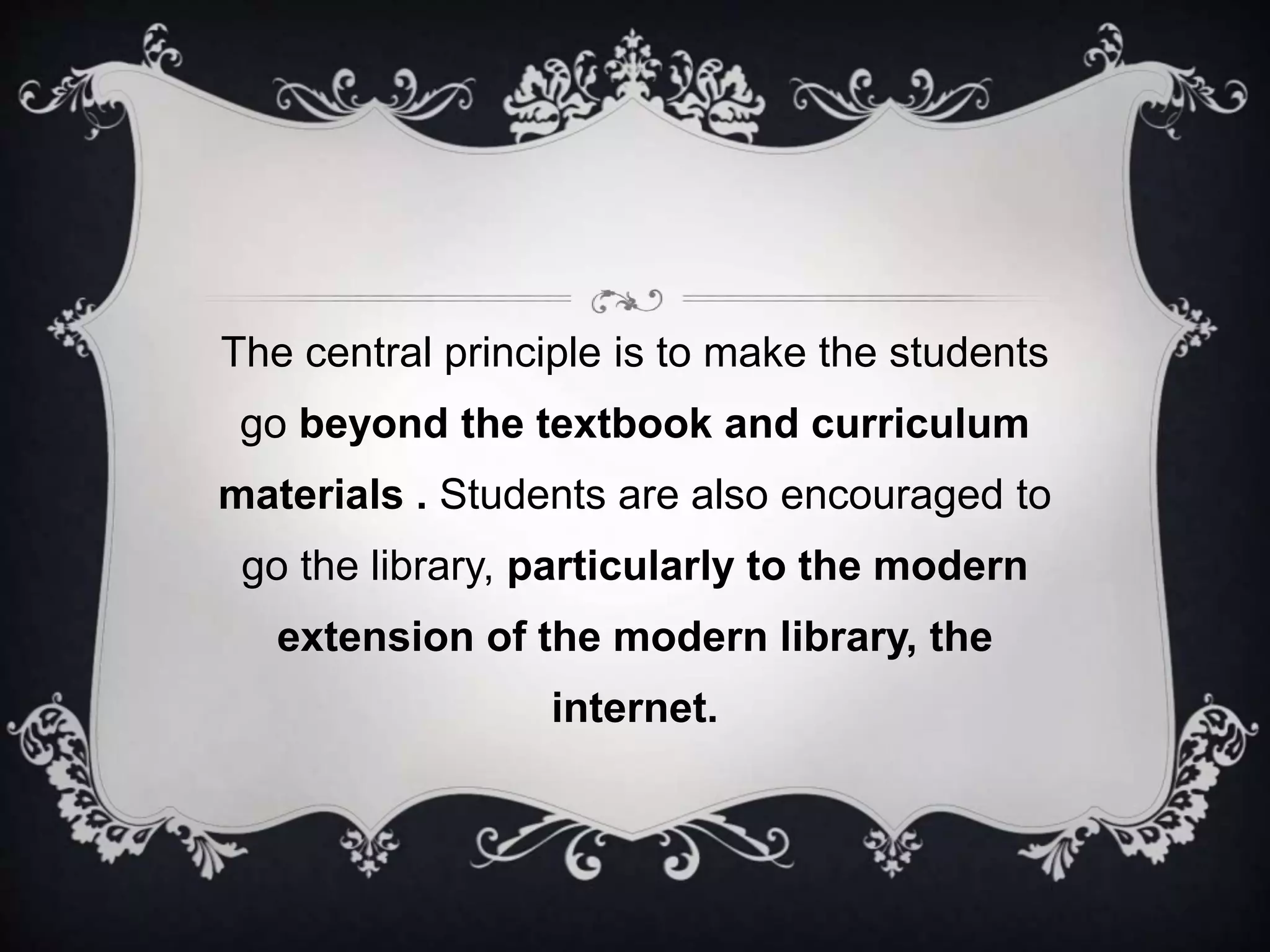
The central principle is to make the students
go beyond the textbook and curriculum
materials . Students are also encouraged to
go the library, particularly to the modern
extension of the modern library, the
internet.
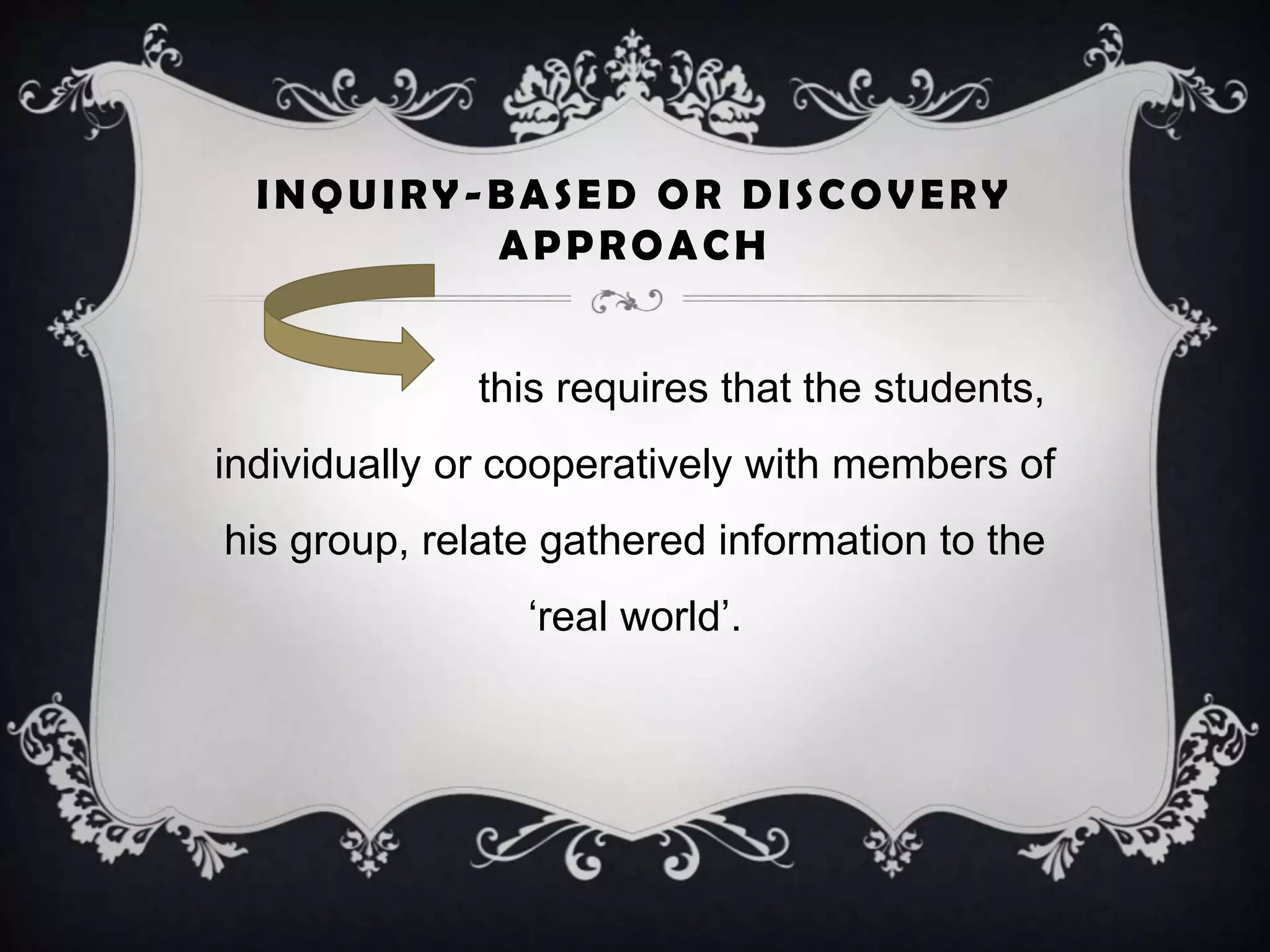
INQUIRY-BASED OR DISCOVERY
APPROACH
this requires that the students,
individually or cooperatively with members of
his group, relate gathered information to the
‘real world’.
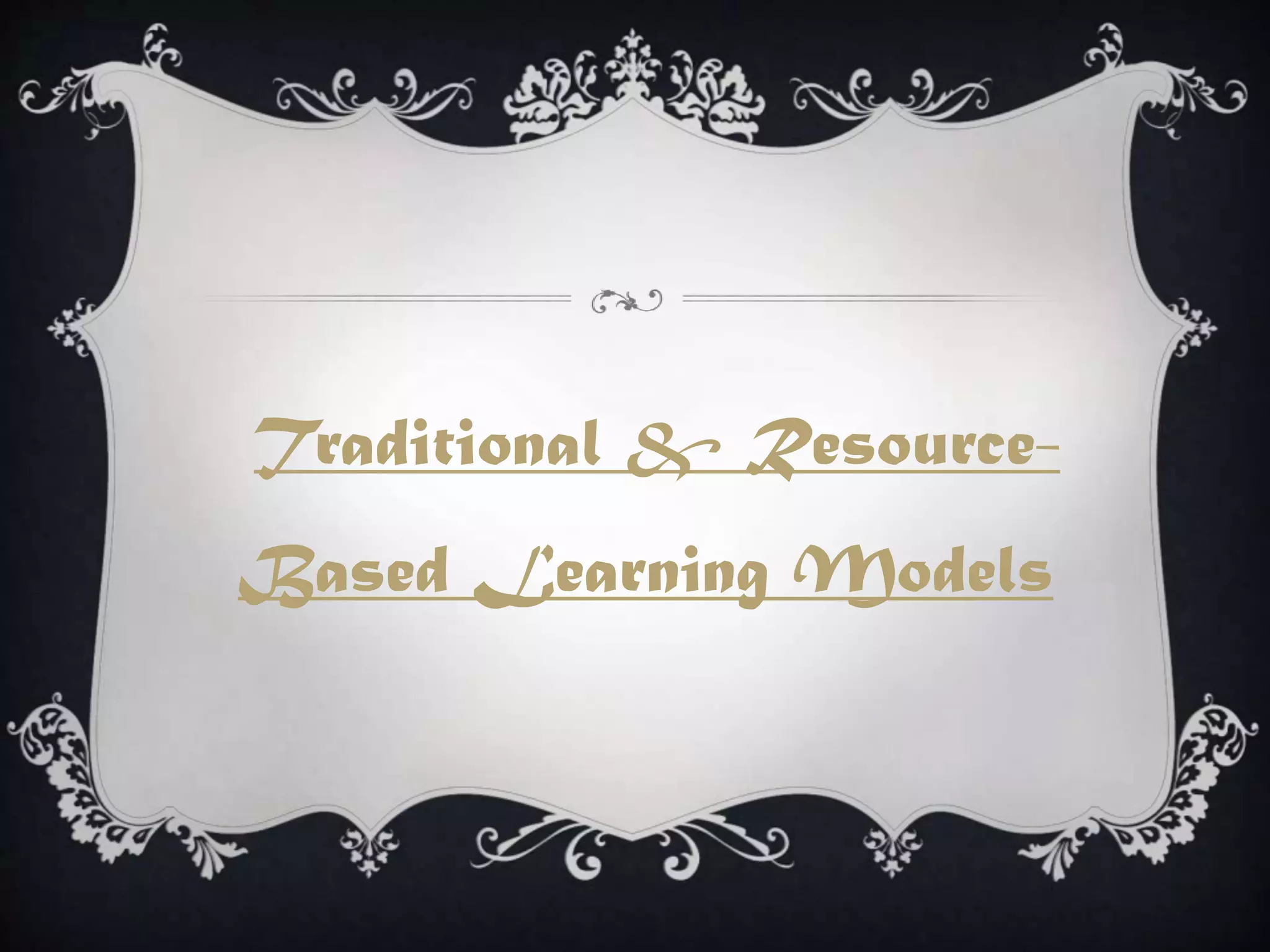
Traditional & Resource-
Based Learning Models
FOUR IT-BASED PROJECTS
 Resource-based Projects
 Simple Creations
Guided Hypermedia Projects
Web-Based Projects
SIMPLE CREATIONS
In developing software, creativity as an
outcome should not be equated with ingenuity
or high intelligence. Creating is more consonant
with planning, making, assembling, designing,
or building.
Five Key Tasks to
Develop Creativity:
1.Define the task.
2. Brainstorm
3. Judge the ideas.
4. Act.
5. Adopt flexibility.
FOUR IT-BASED PROJECTS
 Resource-based Projects
 Simple Creations
Guided Hypermedia Projects
Web-Based Projects
GUIDED HYPERMEDIA
PROJECTS
 As an instructive tool
As a communication tool
FOUR IT-BASED PROJECTS
 Resource-based Projects
 Simple Creations
Guided Hypermedia Projects
Web-Based Projects
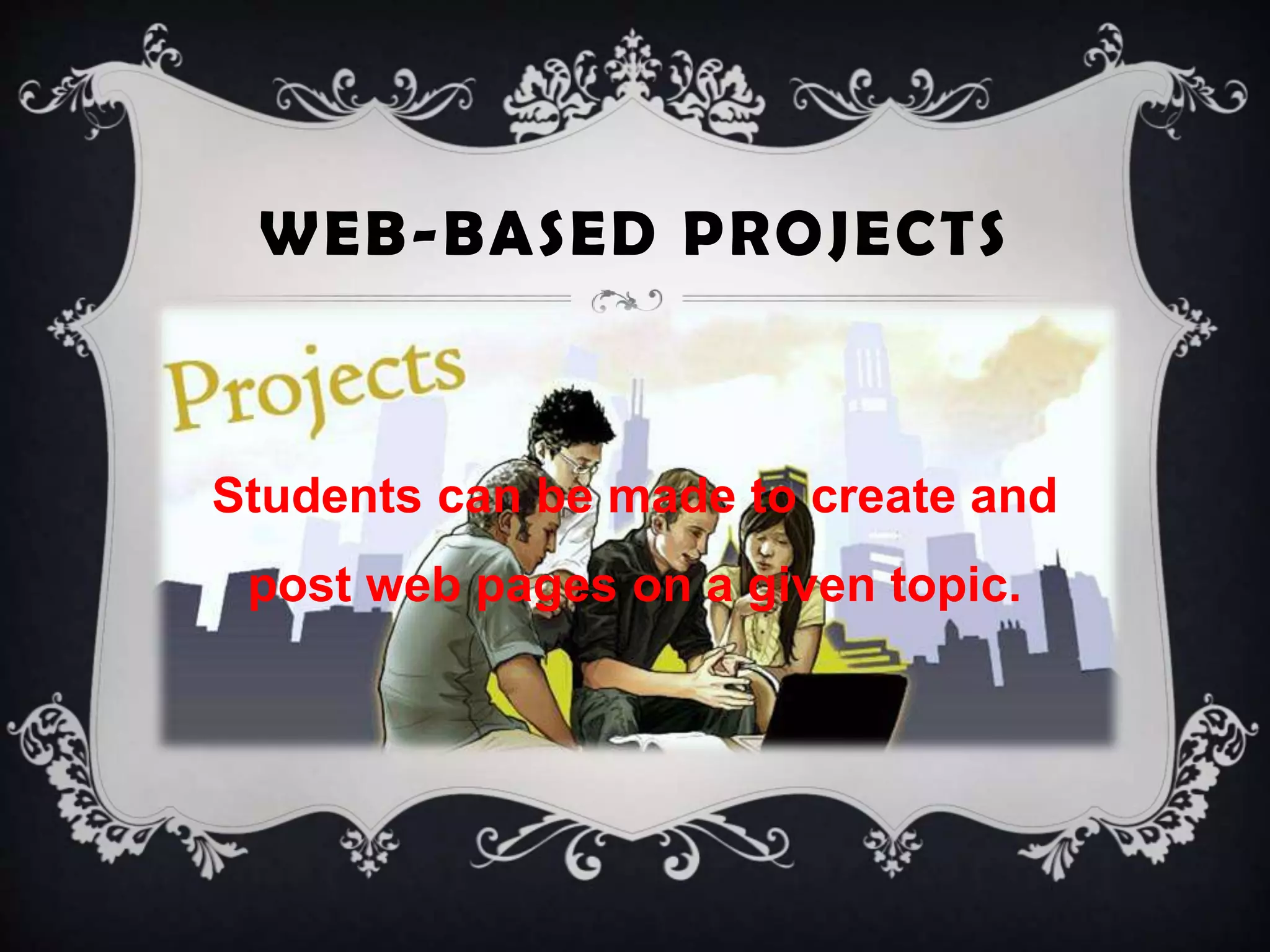
WEB-BASED PROJECTS
Students can be made to create and
post web pages on a given topic.
PANGILINAN, CARREN A.
BS EDUCATION3/MAPEH
PREPAREDBY:

lesson 8:higher thinking skills through it based projects (EDUCtech2).part1

  • 1.
    LESSON 8: HIGHERTHINKING SKILLS THROUGH IT-BASED PROJECTS
  • 2.
    OVERVIEW… We shall discussfour types of IT-based projects which can effectively be used in order to engage students in activities of a higher plane of thinking.
  • 3.
    KEY ELEMENTS OFA CONSTRUCTIVIST APPROACH TO INSTRUCTION:
  • 4.
    a.The teacher creatingthe learning environment b. The teacher giving students the tools and facilities, and c. The teacher facilitating learning
  • 5.
    …it is thestudents themselves who demonstrate higher thinking skills and creativity through such activities searching for information, organizing and synthesizing ideas, creating presentation, and the like.
  • 6.
    FOUR IT-BASED PROJECTS Resource-based Projects  Simple Creations Guided Hypermedia Projects Web-Based Projects
  • 7.
    RESOURCE-BASED PROJECTS The teachersteps out of the traditional role of being an content expert and information provider, and instead lets the students find their own facts and information.
  • 8.
    GENERAL FLOW OFEVENTS 1. The teacher determines the topic for the examination of the class 2. The teacher presents the problem to the class 3. The students find information on the problem/questions 4. Students organize their information in response to the problem/questions
  • 9.
    The central principleis to make the students go beyond the textbook and curriculum materials . Students are also encouraged to go the library, particularly to the modern extension of the modern library, the internet.
  • 10.
    INQUIRY-BASED OR DISCOVERY APPROACH thisrequires that the students, individually or cooperatively with members of his group, relate gathered information to the ‘real world’.
  • 11.
  • 12.
    FOUR IT-BASED PROJECTS Resource-based Projects  Simple Creations Guided Hypermedia Projects Web-Based Projects
  • 13.
    SIMPLE CREATIONS In developingsoftware, creativity as an outcome should not be equated with ingenuity or high intelligence. Creating is more consonant with planning, making, assembling, designing, or building.
  • 14.
    Five Key Tasksto Develop Creativity:
  • 15.
    1.Define the task. 2.Brainstorm 3. Judge the ideas. 4. Act. 5. Adopt flexibility.
  • 16.
    FOUR IT-BASED PROJECTS Resource-based Projects  Simple Creations Guided Hypermedia Projects Web-Based Projects
  • 17.
    GUIDED HYPERMEDIA PROJECTS  Asan instructive tool As a communication tool
  • 18.
    FOUR IT-BASED PROJECTS Resource-based Projects  Simple Creations Guided Hypermedia Projects Web-Based Projects
  • 19.
    WEB-BASED PROJECTS Students canbe made to create and post web pages on a given topic.
  • 20.
    PANGILINAN, CARREN A. BSEDUCATION3/MAPEH PREPAREDBY: