M.EDK SATHISH KUMAR 1 YEAR
LECTURE
CUM
DEMONSTRATION
METHOD
LECTURE
METHOD
+
DEMONSTRATION
METHOD
=
LECTURE – CUM-
DEMONSTRATION
METHOD
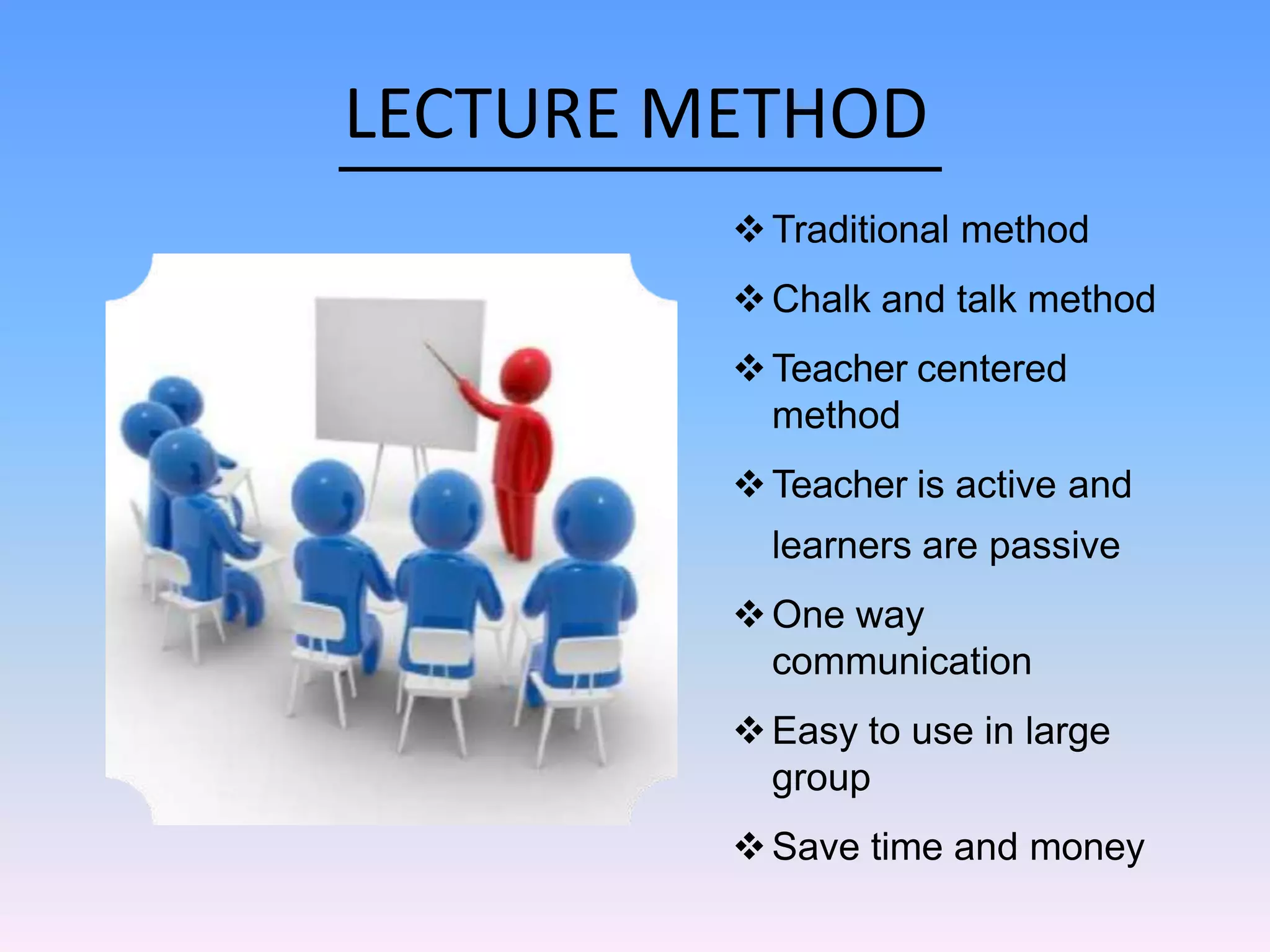
LECTURE METHOD
Traditional method
Chalk and talk method
Teacher centered
method
Teacher is active and
learners are passive
One way
communication
Easy to use in large
group
Save time and money
DEMOSTRATION
METHOD
 Doing method
 Pre plan
 Learner can see and hear
 More sense organs involve
 Easy to understand
 Develop psychomotor and
Cognitve domain
 Lead experiences from
concrete to abstract
DEMO AIDS
LECTURE-CUM-DEMONSTRATION
PURPOSE OF LECTURE
-CUM –
DEMONSTRATION METHOD
 Gaining learning
 Problem solving
 Verify the facts
 Develop scientific skill
STEPS
(A)PLANNING
 Identifies the concepts to be explained
 Formulate objectives
 Rehearsal of the experiment
 Questions framing
 Collection and arrangement of materials
 Introduces the lesson by motivating the
students
 Students personal experiences or real life
situations
 Students environment
 Telling story
 Simple and interesting experiment
(B) INTRODUCTION OF THE
LESSON
 Consideration the interest of students
 While demonstration questions should be
asked which help the students to understand
 Provide illustration (explanation)
 Language should be clear and simple
 All material related to demonstration should be
clean
 All material should not be display at once
 Demonstration would be clearly visible to all
learner
(C) PRESENTATION OF THE CONTENT
Summarize the
principles,
facts and important
points
(D) BLACK BOARD WORK
T I P S D U R I N GD E M
O S T RAT I O N
Know your
audience
Set yours
objective
Be
organize
d
Follow
safety
preventio
n
Plan your preparation time
Class room arrangement
MERITS
Save money and time
Useful for all students of varying ability (different)
Provide more information in less time
Leads the students from concrete experiences to abstract concept
Active students
Trained mental facilities
DEMERITS
 Lack of opportunity for practical ability
 Learners only observe the demonstration
 Instructor may follow their own pace (speed)
while demonstration
 Not possible to teach all topic
Tutorial Teaching Method
• Tutorial teaching method is follow up
study of lectures. It is highly
individualized remedial teaching.
1) The student prepares an essay
2) The assignment is submitted
before/after the tutorial
3) The assignment is graded
4)Presentation of the essay by the
student, followed up by discussion
5)Informal atmosphere
6) No content delivery by the tutor
7) Small group and personal
interaction
Principle
To provide remedial help for the learners and
develop their cognitive and affective domains of
behaviors.
This strategy is based on following principles:
1. Principle of individual differences
2. Remedial teaching
STEPS
• If talk about its structure, involves the following steps:
1. Diagnosis: After delivering the lecture in the general
class, the teacher tries to find out those students who
have some problems in understanding the content.
These students are divided into particular groups on
the basis of similar problems.
2. Prescription: The teacher tries to generate teaching
relating to the needs, abilities and capabilities of teach
group of students. These classes are known as tutorial
classes.
3. Follow-up: The teacher tried to evaluate his teaching in
terms of learning outcomes of the learner.
Tutorial types:
1.Supervision tutorials:
The teacher select those student who are above
average intelligence.
Teacher assigns a problem to the student and he is
asked to present a paper on this problem.
The teacher observes and supervises his paper
presentation.
These audience may put questions and he has to
answer them.
2.Group Tutorials:
These steps of tutorials are arranged for students
of low intelligence. Those students who have
difficulties in classroom teaching, are grouped together
on the basis of nature of the problem.
Teacher provides them remedial teaching .
Designing Tutorial Sessions
 Developing learning outcomes of tutorial sessions
 Aligning theory sessions with tutorials
 Working out tutorial activities
 Aligning learning outcomes with tutorial activities
 Mapping out learning outcomes and assessment activities
 Crafting strategies for the learning of each student
 Using ICT for tutorials
Tutorial
Activities Solving problems
 Discussing different perspectives
 Asking questions
 Answering questions
 Working out different approaches to
problems
 Engaging students in debates
 Feedback on student work
Characteristics of Effective Tutors
 Facilitators of tutorial activities
 Designer of problems/exercises and assignments
 Moderator of group discussion
 Architect of collaborative learning
 Provider of SMART feedback
 User of ICT to supplement tutorial activities
 Empathetic and supportive
DEMERITS
 It is very difficult for the tutor to solve the
problems of each student and in each and every
subject.
 The schedule allotted for teaching is so tight that
remedial teaching is not possible to teach every
step.
 Feeling of jealousy inculcates in the tutorial
groups.
 Even in tutorial groups, equal opportunities are not
provided to all the students.
 Teacher, sometimes lack interest towards all the
group members.
Introduction to teacher education

Introduction to teacher education

  • 2.
  • 3.
  • 4.
  • 5.
    LECTURE METHOD Traditional method Chalkand talk method Teacher centered method Teacher is active and learners are passive One way communication Easy to use in large group Save time and money
  • 6.
    DEMOSTRATION METHOD  Doing method Pre plan  Learner can see and hear  More sense organs involve  Easy to understand  Develop psychomotor and Cognitve domain  Lead experiences from concrete to abstract
  • 7.
  • 8.
  • 9.
    PURPOSE OF LECTURE -CUM– DEMONSTRATION METHOD  Gaining learning  Problem solving  Verify the facts  Develop scientific skill
  • 10.
    STEPS (A)PLANNING  Identifies theconcepts to be explained  Formulate objectives  Rehearsal of the experiment  Questions framing  Collection and arrangement of materials
  • 11.
     Introduces thelesson by motivating the students  Students personal experiences or real life situations  Students environment  Telling story  Simple and interesting experiment (B) INTRODUCTION OF THE LESSON
  • 12.
     Consideration theinterest of students  While demonstration questions should be asked which help the students to understand  Provide illustration (explanation)  Language should be clear and simple  All material related to demonstration should be clean  All material should not be display at once  Demonstration would be clearly visible to all learner (C) PRESENTATION OF THE CONTENT
  • 13.
    Summarize the principles, facts andimportant points (D) BLACK BOARD WORK
  • 14.
    T I PS D U R I N GD E M O S T RAT I O N Know your audience Set yours objective Be organize d Follow safety preventio n Plan your preparation time Class room arrangement
  • 15.
    MERITS Save money andtime Useful for all students of varying ability (different) Provide more information in less time Leads the students from concrete experiences to abstract concept Active students Trained mental facilities
  • 16.
    DEMERITS  Lack ofopportunity for practical ability  Learners only observe the demonstration  Instructor may follow their own pace (speed) while demonstration  Not possible to teach all topic
  • 18.
    Tutorial Teaching Method •Tutorial teaching method is follow up study of lectures. It is highly individualized remedial teaching. 1) The student prepares an essay 2) The assignment is submitted before/after the tutorial 3) The assignment is graded 4)Presentation of the essay by the student, followed up by discussion 5)Informal atmosphere 6) No content delivery by the tutor 7) Small group and personal interaction
  • 19.
    Principle To provide remedialhelp for the learners and develop their cognitive and affective domains of behaviors. This strategy is based on following principles: 1. Principle of individual differences 2. Remedial teaching
  • 20.
    STEPS • If talkabout its structure, involves the following steps: 1. Diagnosis: After delivering the lecture in the general class, the teacher tries to find out those students who have some problems in understanding the content. These students are divided into particular groups on the basis of similar problems. 2. Prescription: The teacher tries to generate teaching relating to the needs, abilities and capabilities of teach group of students. These classes are known as tutorial classes. 3. Follow-up: The teacher tried to evaluate his teaching in terms of learning outcomes of the learner.
  • 21.
    Tutorial types: 1.Supervision tutorials: Theteacher select those student who are above average intelligence. Teacher assigns a problem to the student and he is asked to present a paper on this problem. The teacher observes and supervises his paper presentation. These audience may put questions and he has to answer them. 2.Group Tutorials: These steps of tutorials are arranged for students of low intelligence. Those students who have difficulties in classroom teaching, are grouped together on the basis of nature of the problem. Teacher provides them remedial teaching .
  • 22.
    Designing Tutorial Sessions Developing learning outcomes of tutorial sessions  Aligning theory sessions with tutorials  Working out tutorial activities  Aligning learning outcomes with tutorial activities  Mapping out learning outcomes and assessment activities  Crafting strategies for the learning of each student  Using ICT for tutorials
  • 23.
    Tutorial Activities Solving problems Discussing different perspectives  Asking questions  Answering questions  Working out different approaches to problems  Engaging students in debates  Feedback on student work
  • 24.
    Characteristics of EffectiveTutors  Facilitators of tutorial activities  Designer of problems/exercises and assignments  Moderator of group discussion  Architect of collaborative learning  Provider of SMART feedback  User of ICT to supplement tutorial activities  Empathetic and supportive
  • 26.
    DEMERITS  It isvery difficult for the tutor to solve the problems of each student and in each and every subject.  The schedule allotted for teaching is so tight that remedial teaching is not possible to teach every step.  Feeling of jealousy inculcates in the tutorial groups.  Even in tutorial groups, equal opportunities are not provided to all the students.  Teacher, sometimes lack interest towards all the group members.