Mr.Vikas Anil Ghadge
RJS College of Nursing
Introduction
 Teaching learning processes is mean whereby society
trains its young ones in a selected environment as quickly
as possible to adjust themselves to the world in which they
live.
 Education is modification of behavior,teaching learning
processes enhance education teaching is one of the
instrument of education and it is special function is to
impart understanding and skills.
 The three focal points in education are:-
1. The teacher
2. The child
3. The subject
 Definition
1. Teaching is an art and science in which the content is
structured and the processes used enable student
learning.(Bevis,1989)
2. Teaching is the stimulation, guidance ,direction and
encouragement of learning.(Burton)
1. definite aim for every lesson ,it is a goal for teacher.
2. activity or learning by doing.
3. planning.
4. interest or motivation.
5. flexibility and cooperation.
6. diagnostic and remedial teaching.
7. creativity.
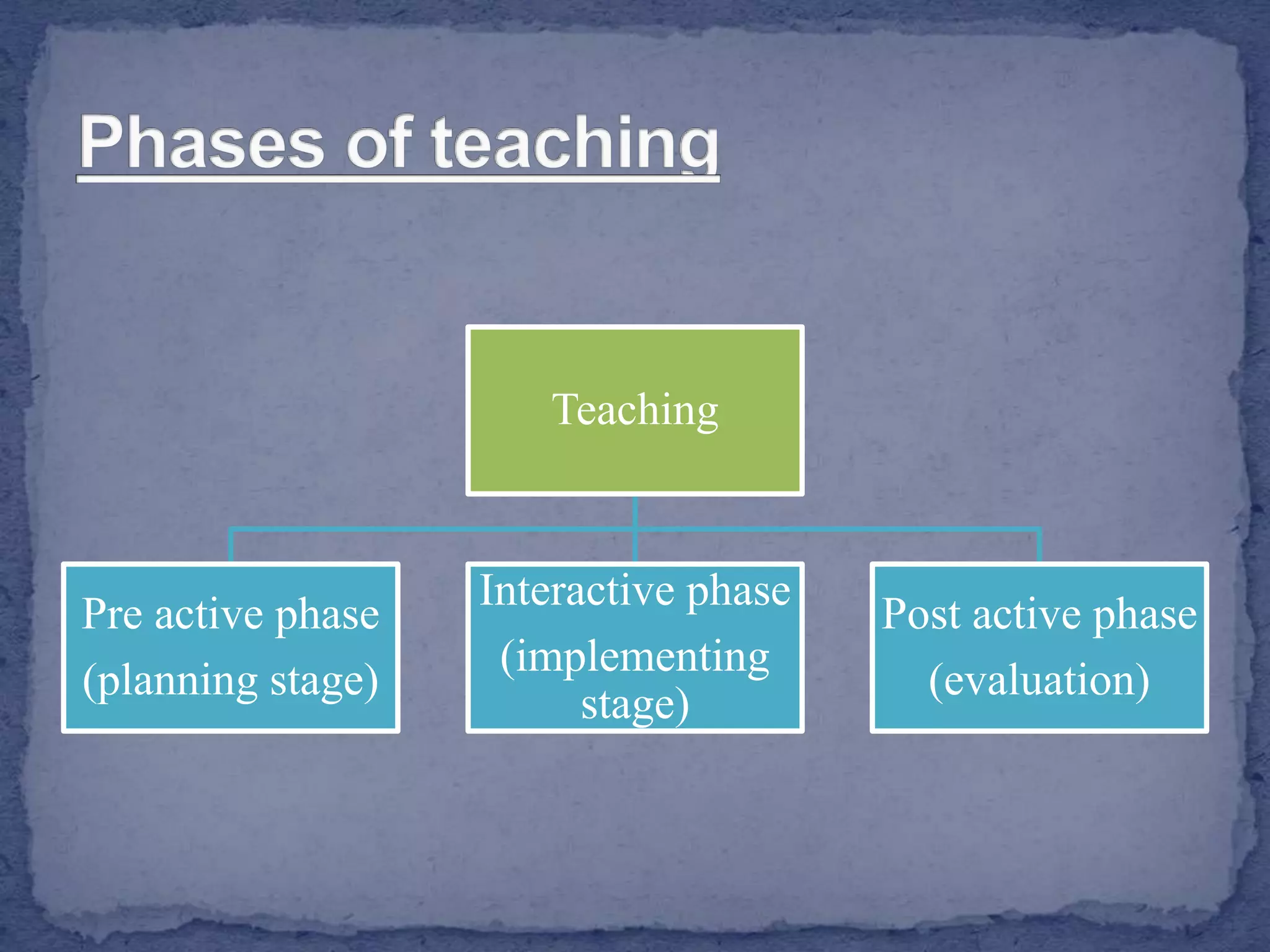
Teaching
Pre active phase
(planning stage)
Interactive phase
(implementing
stage)
Post active phase
(evaluation)
 Giving structured information
 Quality and pacing of instruction
 Teacher expectations.
 Teacher enthusiasm.
 Teacher clarity.
 Teacher feedback.
 Emotional climate.
 Teacher observational skills.
 Handling assignments.
 Definition
 Learning is “Any relatively permanent change or
modification of behavior that result of practice or
experience.”-murthy and others.
 It is an episode in which a motivated individual attempts
to adopted his behavior so as to succeed in a situation
which he perceives as requiring action to attain a goal”-
pressy.
 Learning is unitary.
 Learning is individual.
 Learning is social.
 Learning is self active.
 Learning is creative.
 Learning is transferable.
 Learning is growth.
 Learning is adjustment.
 Learning is intelligent.
 Conditioning
 Role learning
 Problem learning
 Skill learning
 Problem solving
 Learning experience and behavioral objective
 Motivation towards objective
 Individual differences
 Association of concept
 The learning preparation
 Teaching is what teacher do
 Learning is while learning what student do
 Teaching means imparting knowledge or skills, while
learning refers to acquiring new information.
 A teacher is someone who has accquired knowledge ,and
is working to share that knowledge with learner.
 Lecture method
 Demonstration
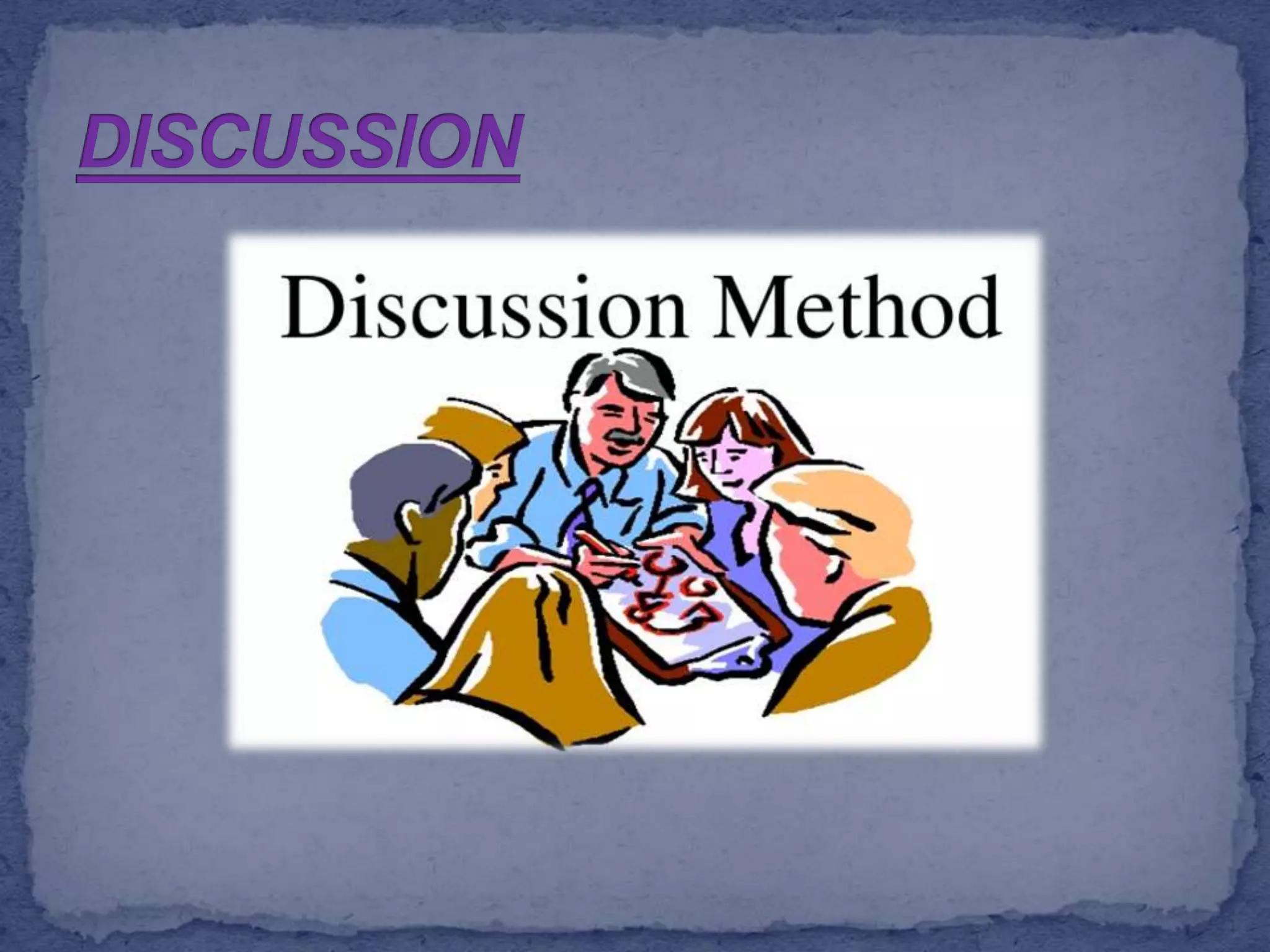
 Discussion
 Seminar
 Symposium
 Micro teaching
 Laboratory method
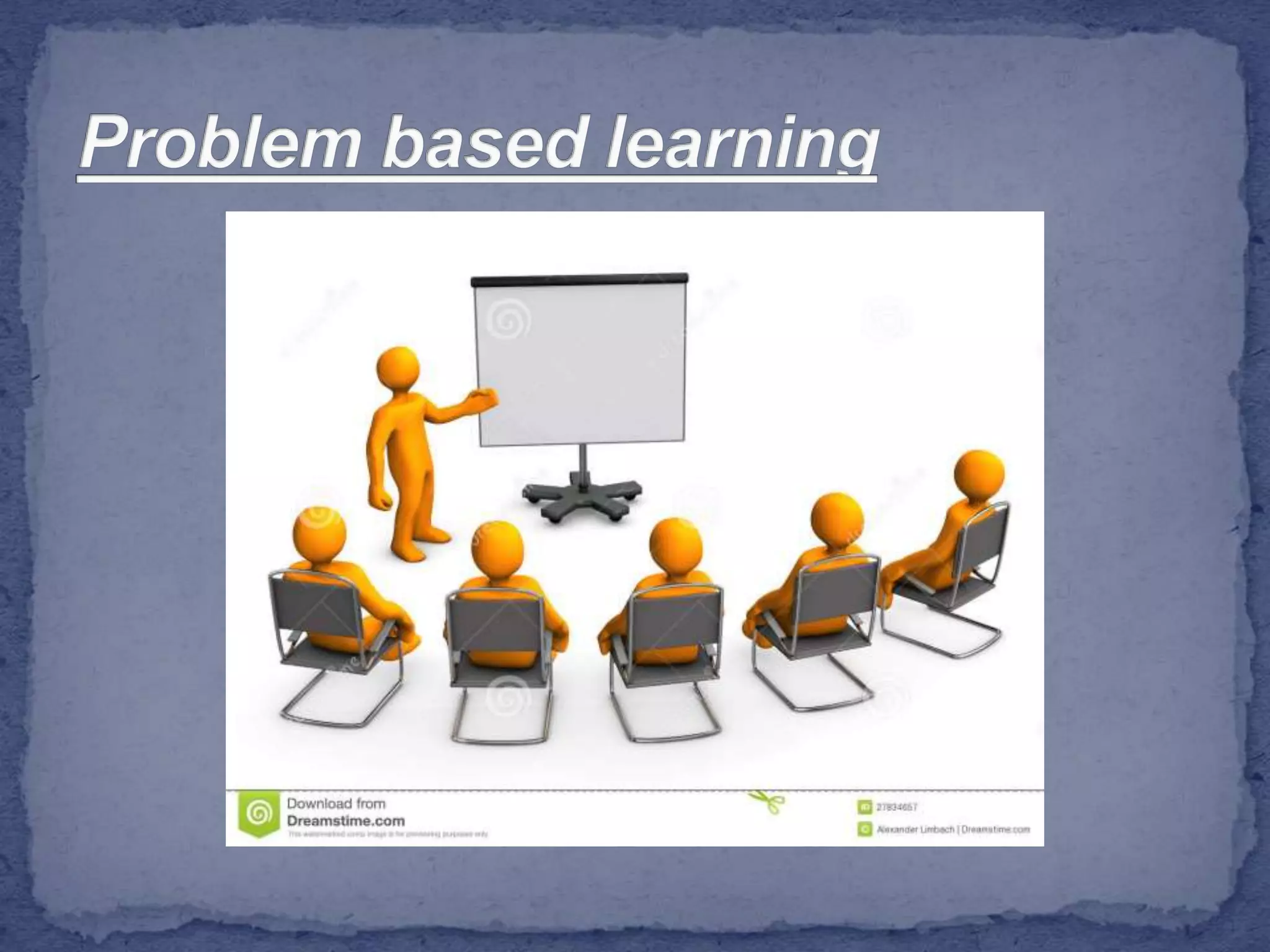
 Problem based learning
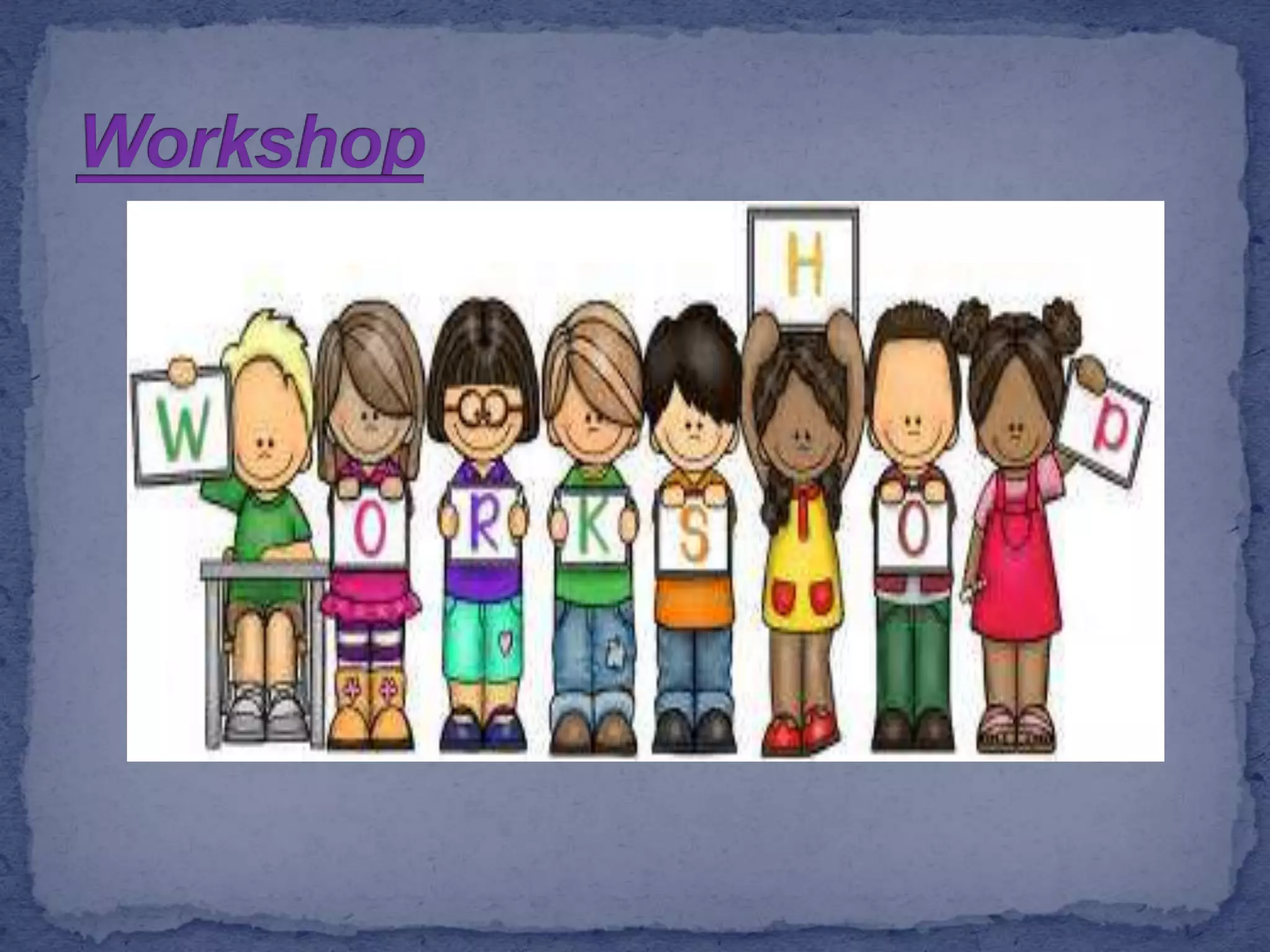
 Workshop
 Project role play
 Computer assisted learning
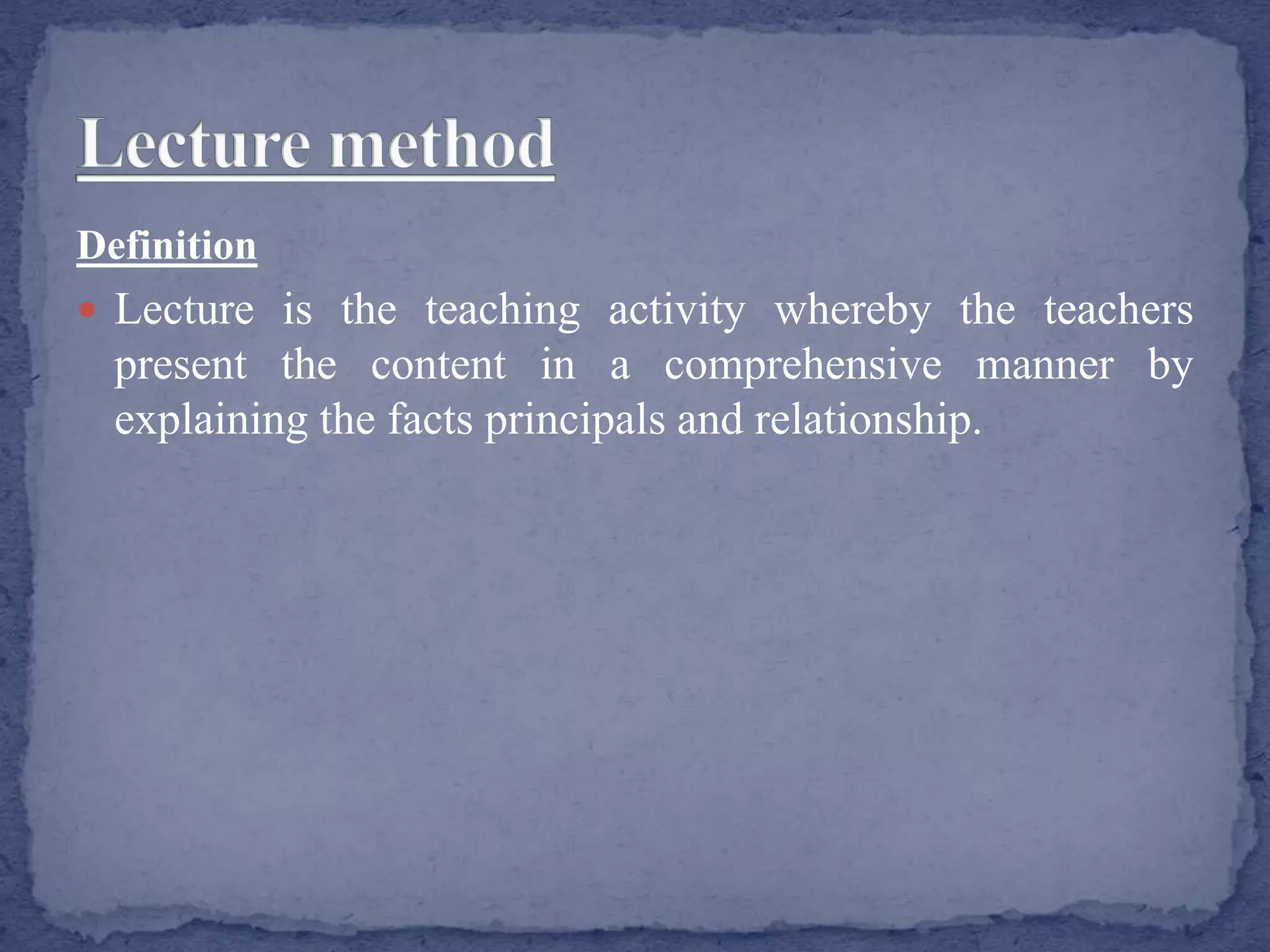
Definition
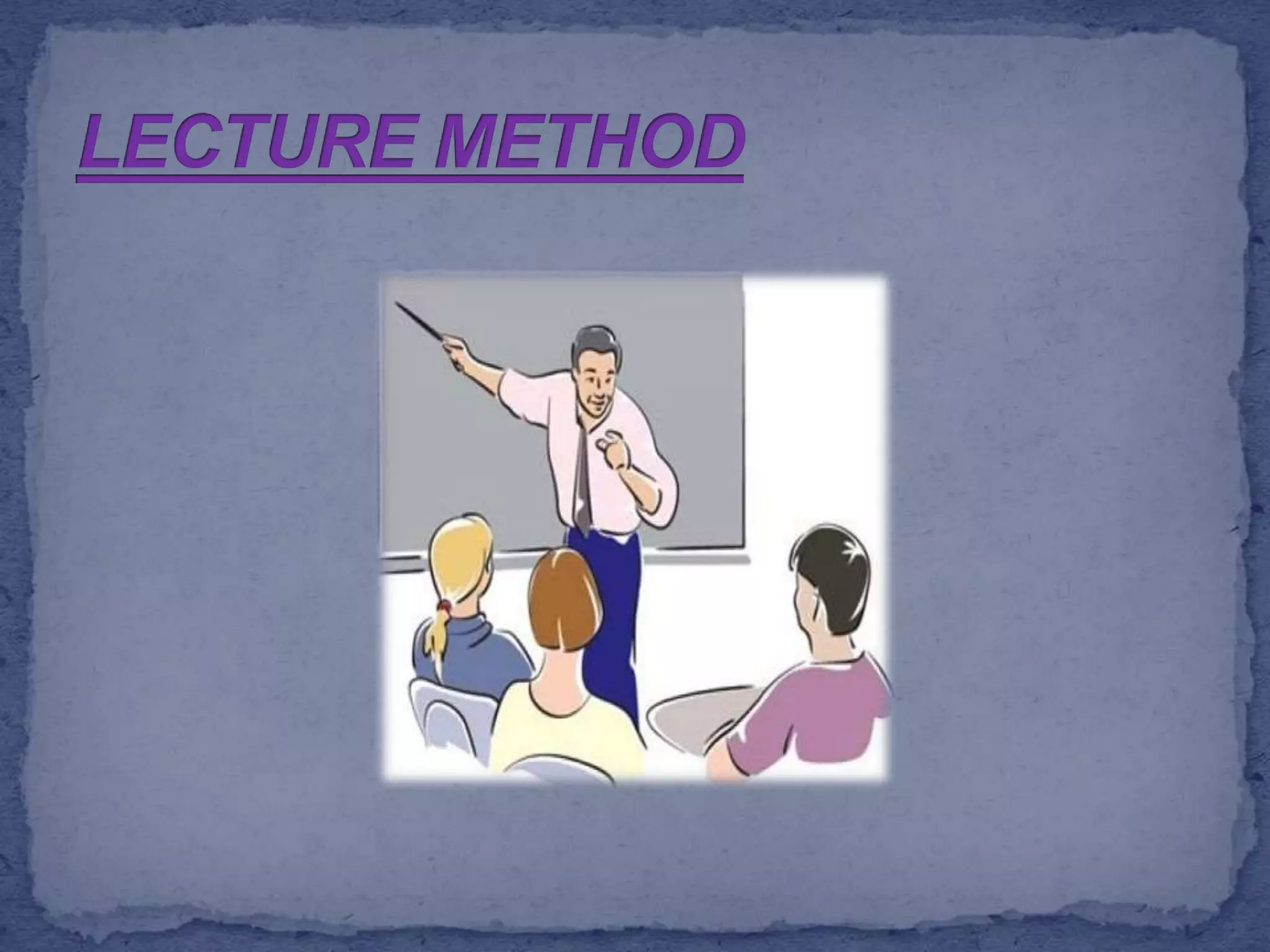
 Lecture is the teaching activity whereby the teachers
present the content in a comprehensive manner by
explaining the facts principals and relationship.
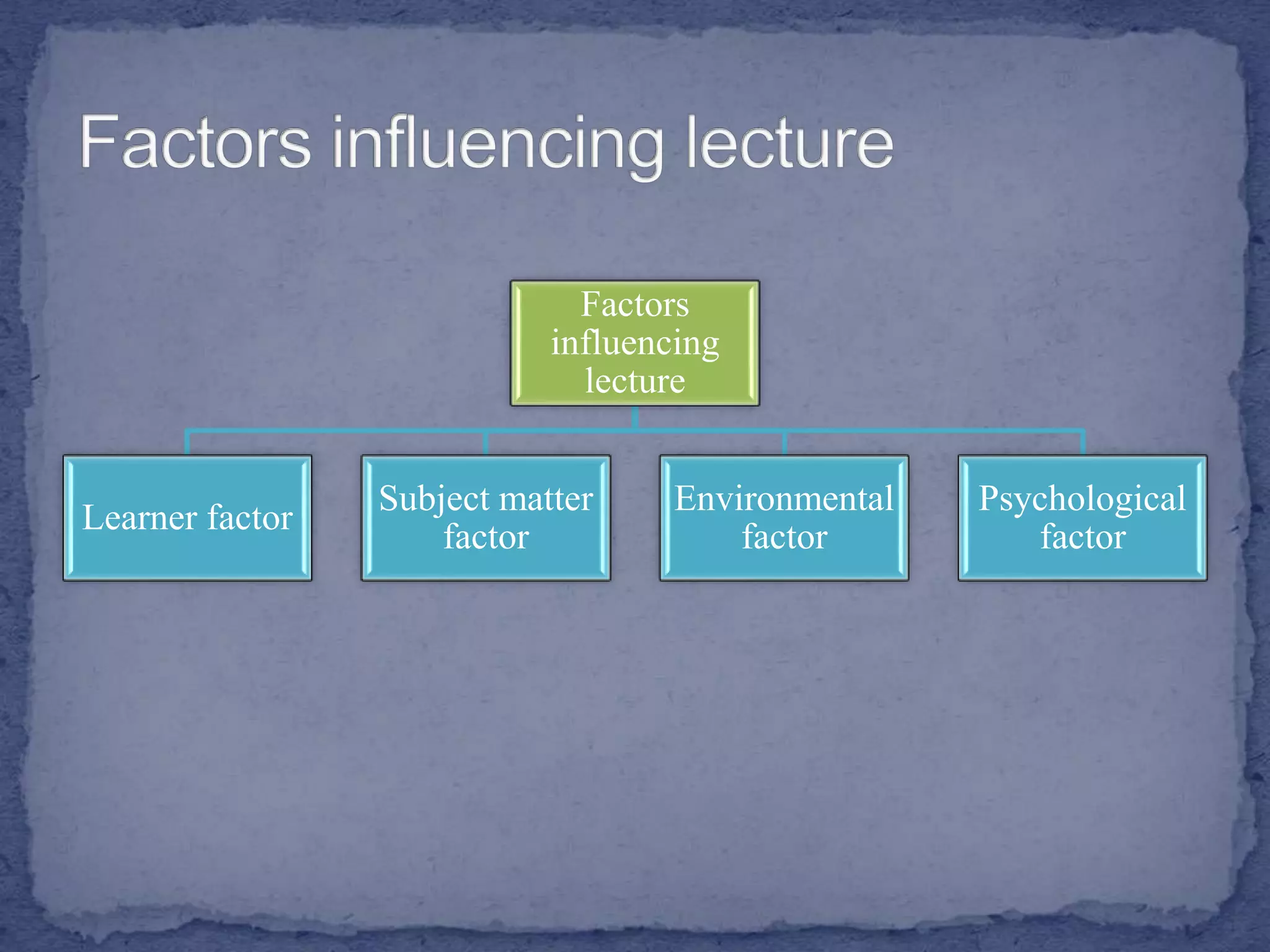
Factors
influencing
lecture
Learner factor
Subject matter
factor
Environmental
factor
Psychological
factor
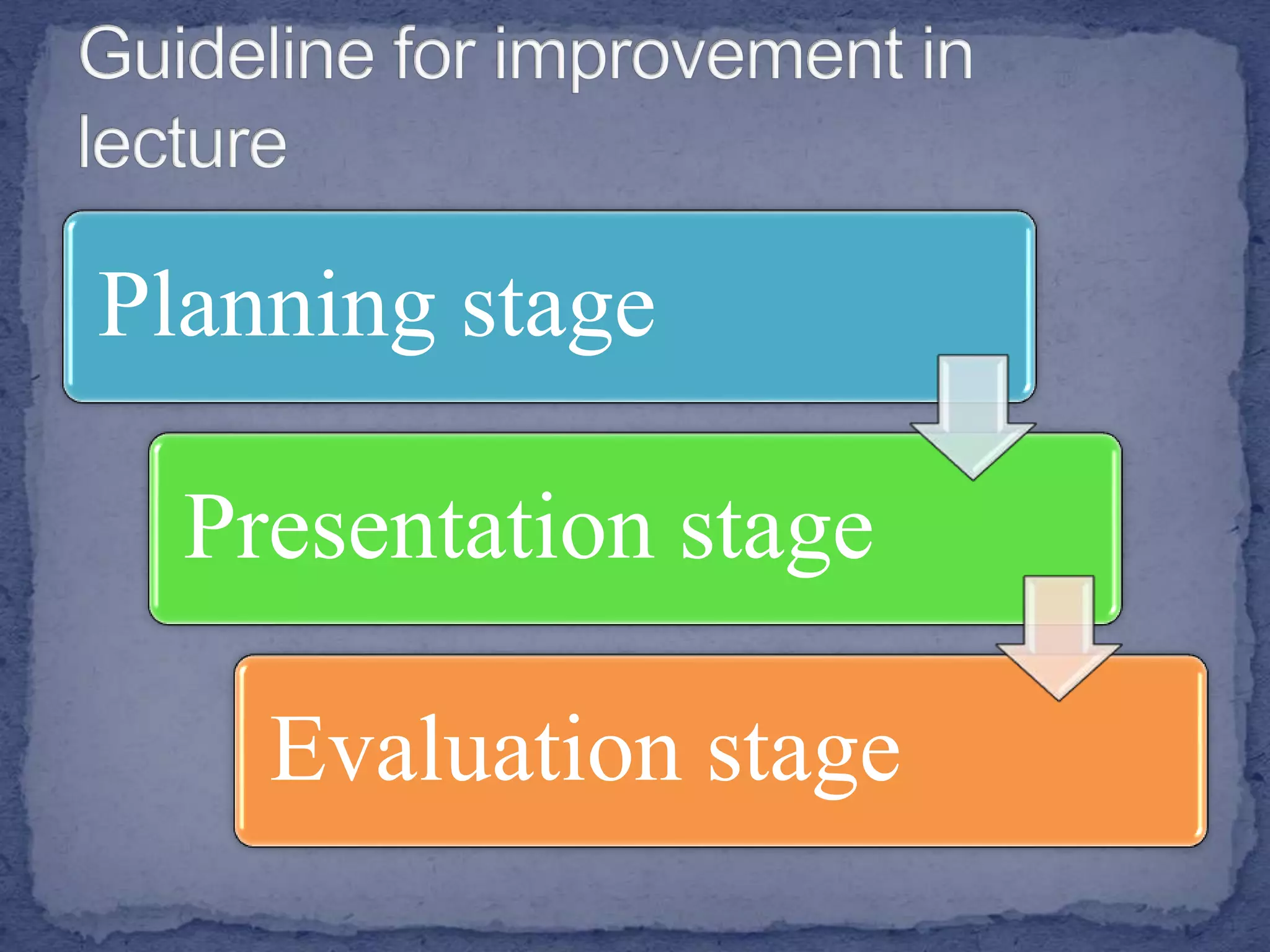
Planning stage
Presentation stage
Evaluation stage
 Apparent saving of time and resources.
 Presence of the teacher.
 Covers a large group of students.
 Gives a feeling of security.
 Lecture is a economical method of teaching as it require
very lass resources.
 Keep the student in passive situations.
 Does not facilities learning how to solve problems.
 Offer hardly any possibilities of checking learning
progress.
 Does not allow for individual pace of learning.
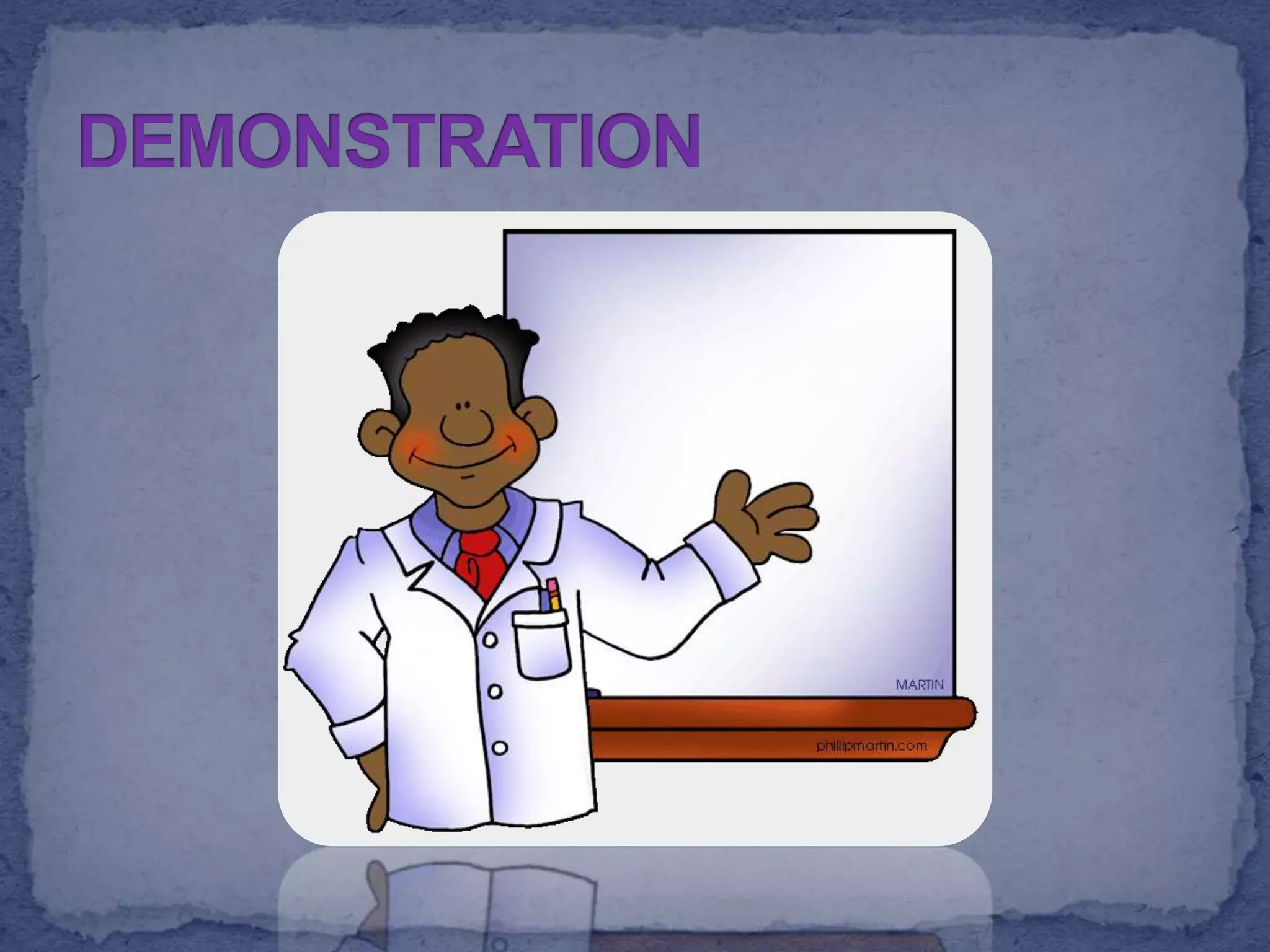
 Definition
 Demonstration can be defined as an accurate portrayal of a
procedure, techniques or operation.(laird 1986).
 Demonstration is a method of teaching, by exhibition and
combined to illustrate a procedure or experiments.-
guallibert.
 The demonstrator should understand the entire procedure
before attempting the procedure.
 All equipment needed should be assemble and pretested before
demonstration.
 Knowledge about the procedure should be given to the student
before starting procedure/demonstration.
 A positive approach should be used.
 Everybody should have a good view of demonstration.
 A decision period should always follow the demonstration.
 The student should be provided with opportunities for promote
practice of the demonstration.
 Before demonstration
 Formulate behavior objective.
 Perform a skill analysis and determine the sequence.
 Asses entry behavior of learner and determine
prerequisites
During the demonstration
 State the objective to learner.
 Motivate them by explaining why the skill at normal
speed.
 Demonstrate the total skill at normal speed.
 Write the sequence step by step.
 Obtain feedback by questioning.
After demonstration
 Provide immediate supervised practice
 Provide verbal guidance.
 Make the environment psychologically safe.
 Discuss.
 To demonstrate experiments or procedures and the use of
experimental equipment in the laboratory, classroom and
the ward.
 To review or revise procedure to meet special situation or
to introduce a new procedure.
 To reach the patient a procedure or treatment which he
must carry out in the home.
 To demonstrate a procedure at the beside or in the ward
conference room.
 To demonstrate different approaches in establishing
support with client.
 The teacher is present.
 Give a feeling of security.
 Develops the quality of observation.
 Ensures closer contact problems.
 Demonstration trains the learner in the art of careful
observation
 Number of students is limited.
 Keeps the students in passive situation.
 Offers little possibility of checking the learning
 Facilitates acquisition of practical, intellectual and
communication skills.
 Present reality, not substitutes.
 Enables logical step by presentation Process.
 Does not allow for individual paces of learning.
 Meaning
 Discussion is an interchange of opinions and reactions,
sharing of ideas and information regarding the solution of
a problem or issue.
 Define: discussion may be defined as a problem solving
activity which seeks consensus of the group regarding the
solution of a problem rather than a decision by the
majority.
 To promote cooperative decision making.
 To develop skill in problem and decision making.
 To develop communication and verbal skills.
 To develop knowledge.
 To promote group dynamics.
 To share information.
 Effective learning
 Emphasis on student experience.
 Development of critical thinking. participation by
everybody.
 Self expression.
 Peer learning is one of the most direct benefits resulting
from the discussion method.
 Discussion is time consuming.
 Both student and teacher are to be well prepared for the
session otherwise discussion may not be productive.
 Many dominate with personal feeling
 Chances of deviation from topic.
 Dominance by one person.
 Definition
 Seminar is an instructional technique where the teacher
take less of a leadership role as students meet under the
teacher direction to discuss topic that are generally related
to a particular subject.
 A seminar can be defined as an exchange of ideas of some
particular area, guided discussion of concept.
 Teacher is a leader
 10-15 members are participations
 The topic is presented by the students in 15-2-0 min
 Duration is 1-2 hour
 Leader should keep the discussion within the limits of the
problem discussed.
 Care should be taken to avoid stereotype.
 All the member take part in discussion in a informal way.
 The chairman should be skilled in encouraging the timid
participations.
 A student secretary should record the problem which arise and
the solution given.
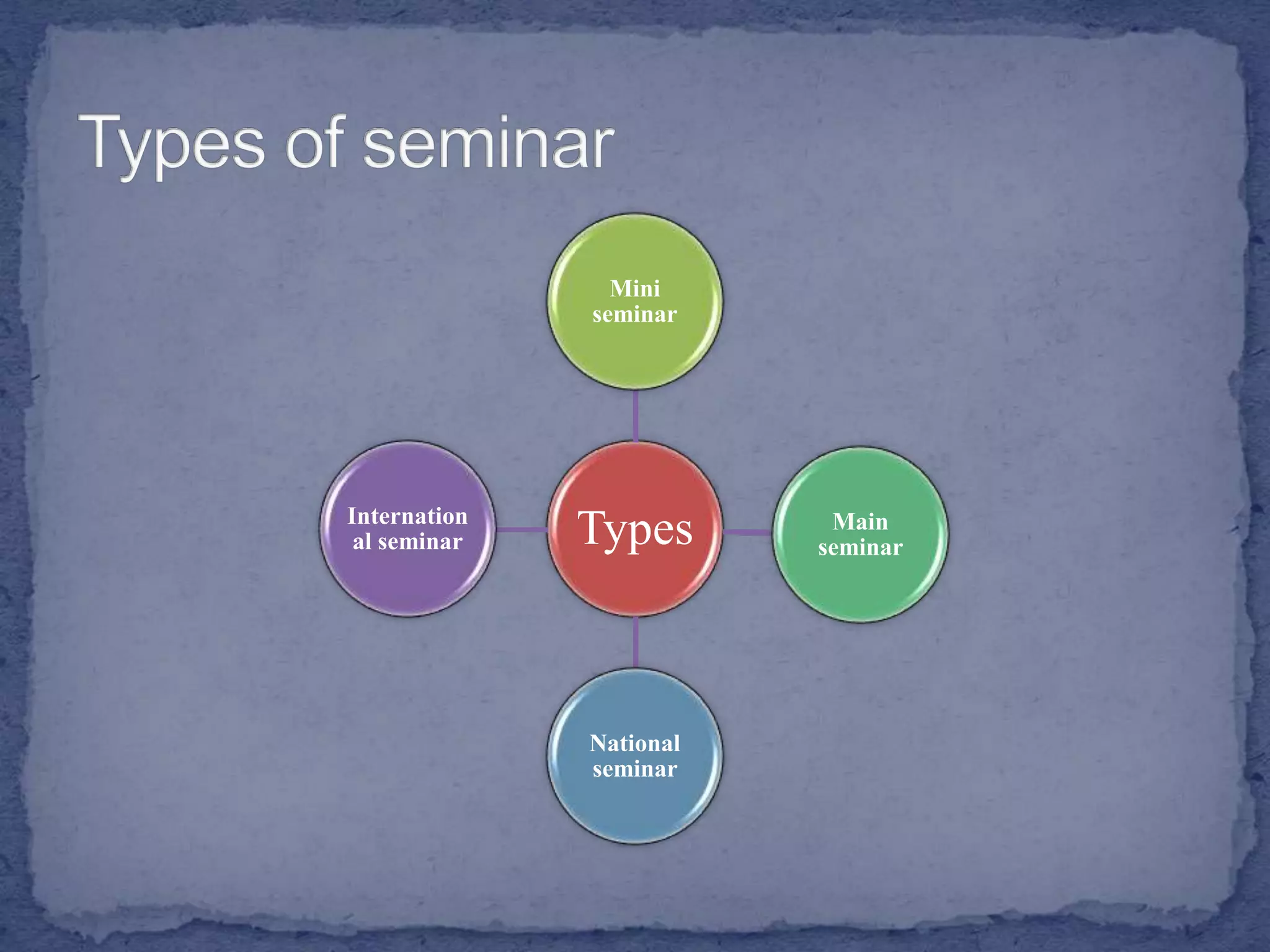
Types
Mini
seminar
Main
seminar
National
seminar
Internation
al seminar
 Stimulation of things.
 Tolerance of other view develops.
 Openness of ideas occur.
 Represent the norms of behavior.
 It has great instructional values.
 Natural way
 Time consuming
 Cannot be applied to new students
 Timid students cannot improve
 If subject knowledge is poor, unnecessary discussion
arises.
 The approach to problem extends to their professional and
personal activates.
 Selecting topic.
 Remaining in the background of the seminar
 Being prepare to help out in the initial stage of using
method
 See that all have a share in discussion student ability to
solve problems by rational thinking.
Definition
The symposium can be defined as a method of group
discussion in which two or more person under the
direction of chairman present separate speeches which
give answer to several aspects of one question.
(Controversial issue are discussed)
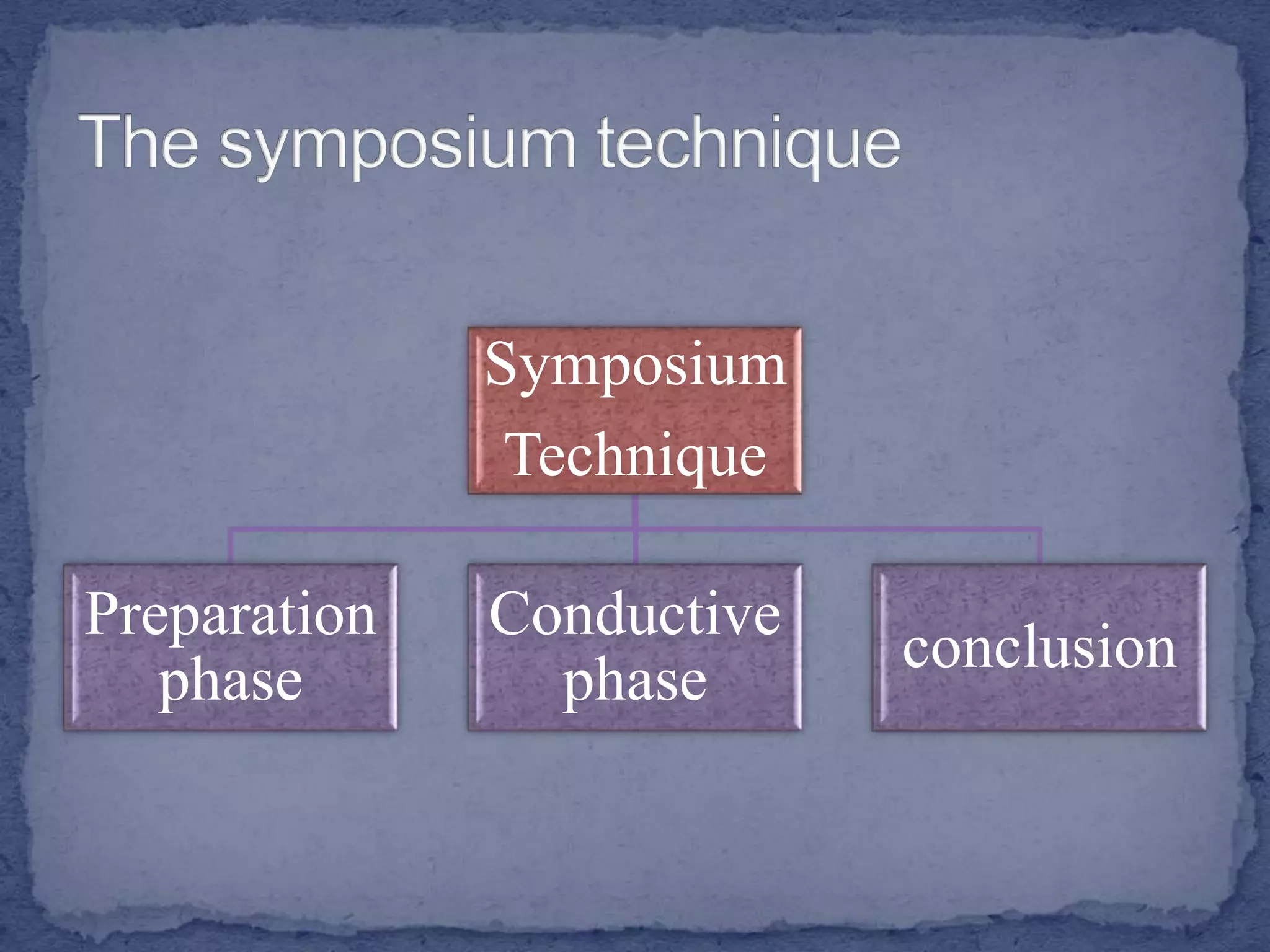
Symposium
Technique
Preparation
phase
Conductive
phase
conclusion
 The main purpose of symposium is to analysis problem
from several different points of view.
 To relive the students from the boredoms monotonous
lecture method.
 To make student active and alert as opposed to lecture
method in which student are more or less Listeners.
 Promotes collaborative cooperative learning and peer
sharing.
 Facilities Comprehension and practical application of
concept.
 Improves the capability of students to approach a problem
through various facts.
 Improve articulation in discussion and communication
 It does not require any additional supplies such as
handouts or audio visual
 Students can learn group problem solving technique.
 Require extensive preparation and planning on the part of
students.
 Time consuming.
 Require that student possess adequate knowledge for
active discussion and comprehension.
 Inadequate opportunity for practice actively for all the
students.
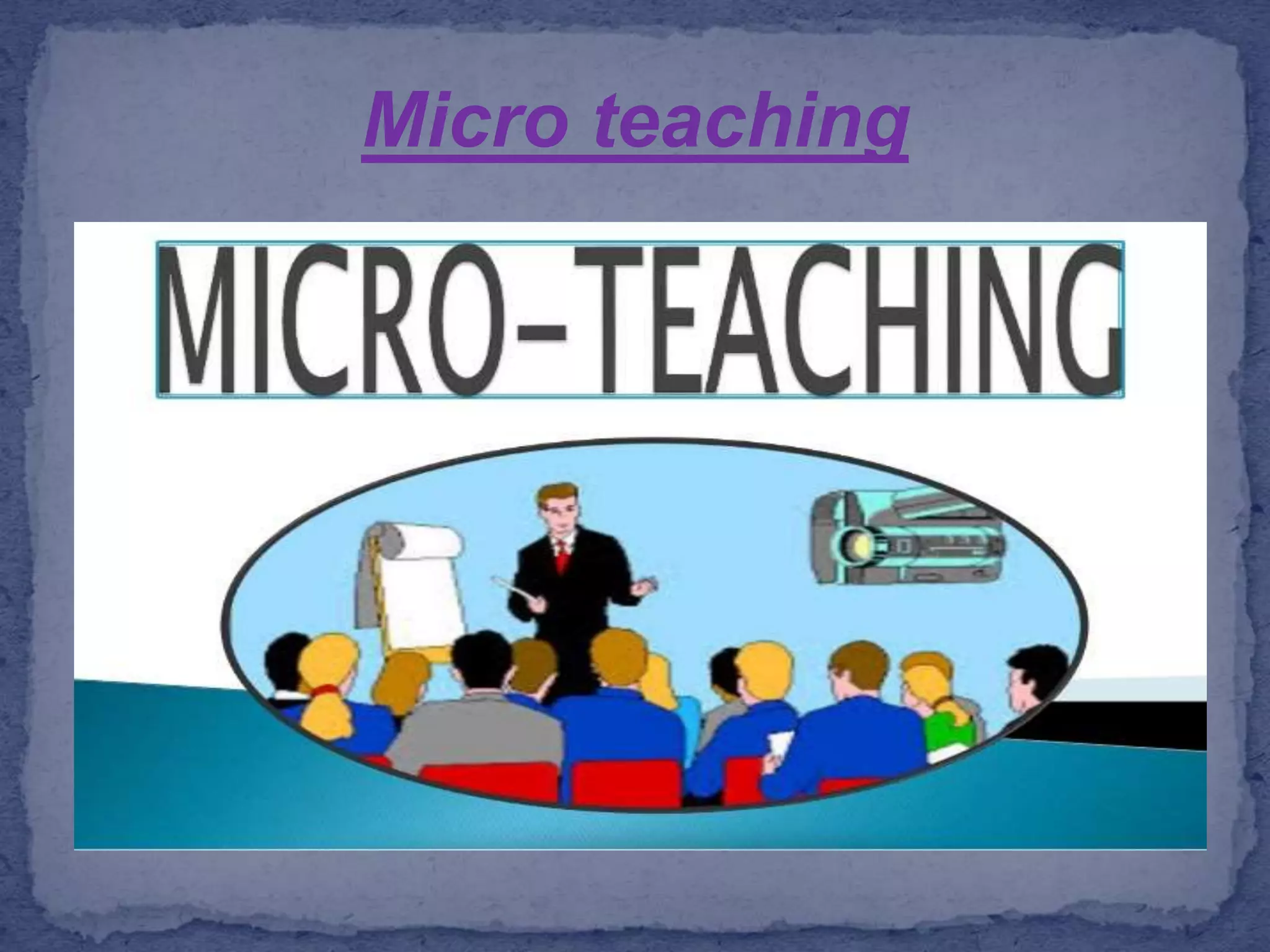
Micro teaching
Definition
 Micro teaching is a procedure which reducing the
teaching situations to simpler and more controlled
encounter achieved by limiting the practice teaching time
and class size.
 No of students to be thought.
 Duration of lesson.
 Subject matter to be thought.
 Safe practice ground.
 Availability of teaching models.
 Feedback.
 1. Enforcement: feedback re-teaching makes teaching perfect,.
 2. Practice and drill: teaching is a complex skill which needs
constant drill and practice.
 3. Continuity: micro teaching is continuous process teaching
feedback re teaching feedback till perfection is attained.
 4. Microscopic presentation: supervisor has an observational;
schedule which he fills up while supervising and makes assessment
at a rating scale.
 Five “r” of micro teaching
 Recording
 Reviewing
 Responding
 Refining
 Re-doing
 Micro teaching help student teacher to perfect their
performance and improve it to superior level.
 Since micro teaching focus on a particular skill at a time
student teacher can attain proficiency in teaching skills in
a phased manner.
 Provision of immediate feedback makes micro teaching
more interesting and reliable
 Science main role is played by the student teacher it is
regarded as a student centered method.
 Beyond everything microteaching increases the self
confidence of the student and teacher.
 Micro teaching is skill oriented rather than content
oriented.
 Because of modeling there is a simply imitating a teaching
skills by the student teachers.
 Micro teaching is highly time consuming.
 Micro teaching have very narrow space.
 Even though micro teaching can be successfully employed
in classroom teaching situations more research is needed
to ascertain its usefulness in other teaching situations.
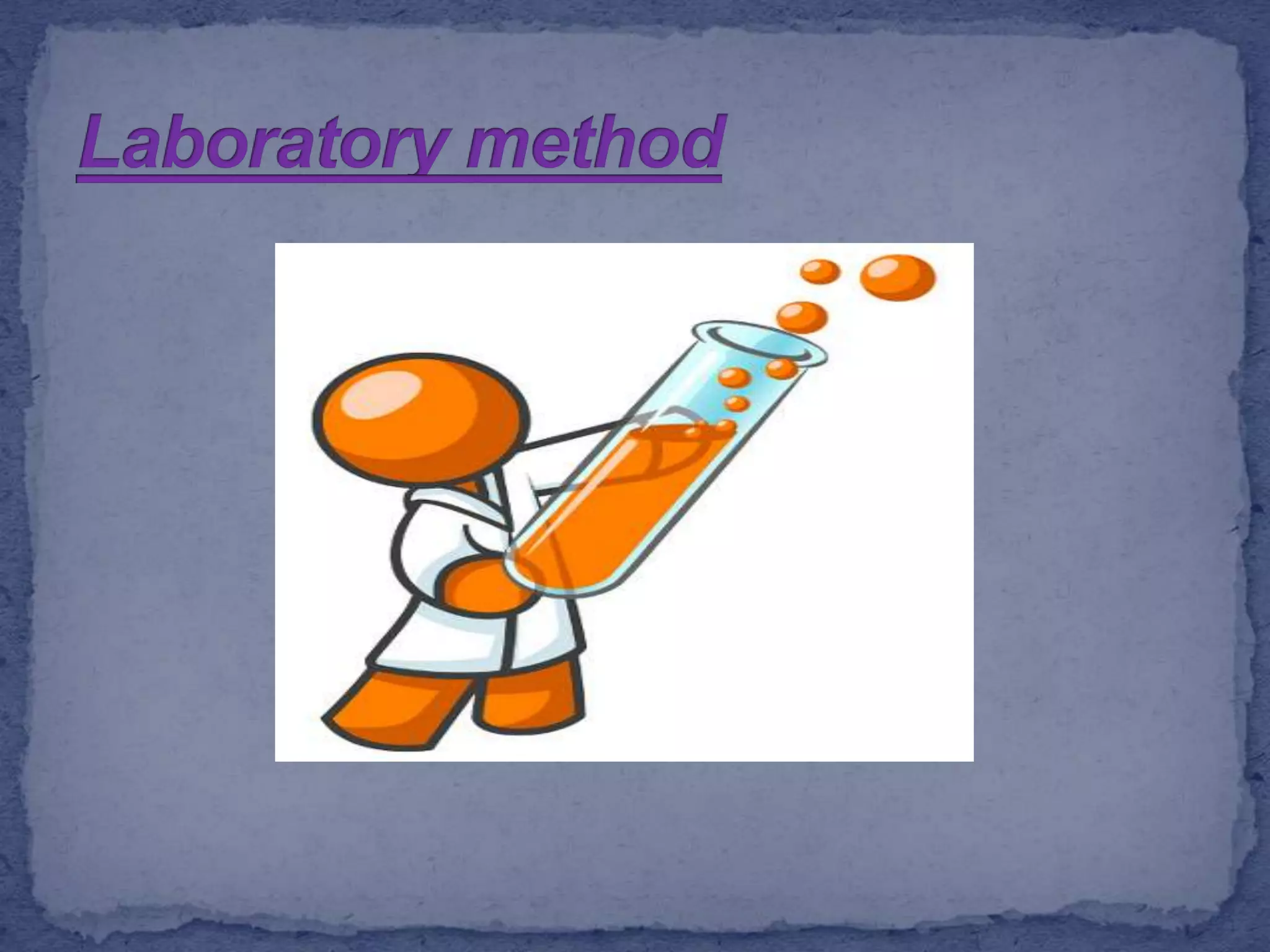
 Meaning
 Laboratory procedure is considered as planned learning
activity dealing with original or raw data in the solution of
problems.
 Preparation
 It require establishment of objective and plan of work.
 It motivates the student by presenting problem together
with effective method for its solution.
 Teachers prepare plan with cooperation of the student
considering objective not wasting time.
 Work period
 It refers to the period when demonstration
experimentation or practice for a skill in nursing
procedure.
 To ensure an effective work.
 There must be adequate supply of specimens and
laboratory.
 There should be sufficient light ventilation .
 Evaluation
 Group discussion
 Individual report finding
 Evaluation tool
 Poor planning and lack of direction of teacher may result
in student wasting time use of complicated approach and
consumes time.
 Lack of budget in getting qualitative laboratory equipment
create insecurity in teachers to operate them.
 The student to master the subject.
 To participation of student
 To provide concrete and first hand knowledge
 To make provision for purposeful student activity
 To develop laboratory technique.
 To provide opportunity to work out experience guidance.
 Definition
 Is that which result from the process of working towards
the understanding or resolution of the problem (barrows
and tamblyn(1980)
 The student is the focus of the educational program not the
teacher the curriculum or the curriculum contents.
 The development of his or her learning capacities is
emphasized
 Cooperation with others and the important of communication is
emphasized.
 Working on the inters disciolpanary problems or project is part
of any curriculum.
 Much attention ids paid to the development of any analytical
and creative thinking skills
 The development of self direct learning ability and the
integrated application of knowledge and skills within practice
and encouraged.
 The problem method fosters active and cooperative learning the
ability to think critically and clinical reasoning.
 It stimulates the students to use skills of inquiry and critical thinking
peer teaching and peer evaluation
 It increase ability to apply knowledge in clinical situations
 It increases student responsibility for self directed peer learning.
 It helps in developing flexible knowledge that can be applied to
different contexts.
 The learning method helps in developing lifelong learning skills
 It encourage student to work in teams and group thereby faciliting
group dynamics.
 It promotes the development of an effective and efficient clinical
reasoning processes and increase retention of data.
 The BPL method involves faculty time in developing the
problem situations and in learning to use the method.
 Student require orientation to perform the rolr of a learner
in in pbl setting.
 It is very difficult and expensive to use as a teaching
technique when the class size is large
 Evaluation is quite difficult and sometime may be
subjective.
 Resource expensive.
 Measurement of learning outcome is difficult.
 Definition
 A workshop is a period of discussion or practical work on
a particular subject in which a group of people share their
knowledge or experience.
 To develop the proficiency for planning and organizing.
 Teaching and learning activities.
 To develop the skills to perform a task independently.
 To determine and use of teaching strategies effectively.
 To train the person for using different approaches of
teaching.
 Workshops are participative.
 Participants identify their interest and need and the learning
situations are also based on them..
 Large member can be accomonded.
 Workshop are flexible.
 Emphasis is placed on improving individual understanding and
proficiency.
 Theory and practice can be combined.
 It develop the feeling cooperation and group work.
 The new practice and innovation are introduced to in-service
teachers.
 The workshop on education is seminar cum workshop on
any theme.
 The workshop cannot be organized for large group.
 The in-service education teachers do not take interest to
understand and use the new practice in their classroom.
 The effectiveness of a workshop technique depends on
the follow up program.
 Some participants may find it more difficult to follow with
the format.
 Workshop may be overused.
 Selection of resource person may be difficult.
 Definition
 Project methods are one of the modern methods of
teaching in which the students’ point of view is given
importance in designing the curricula and content of
studies. It is one of those methods which illustrate the use
of problem solving attitude.
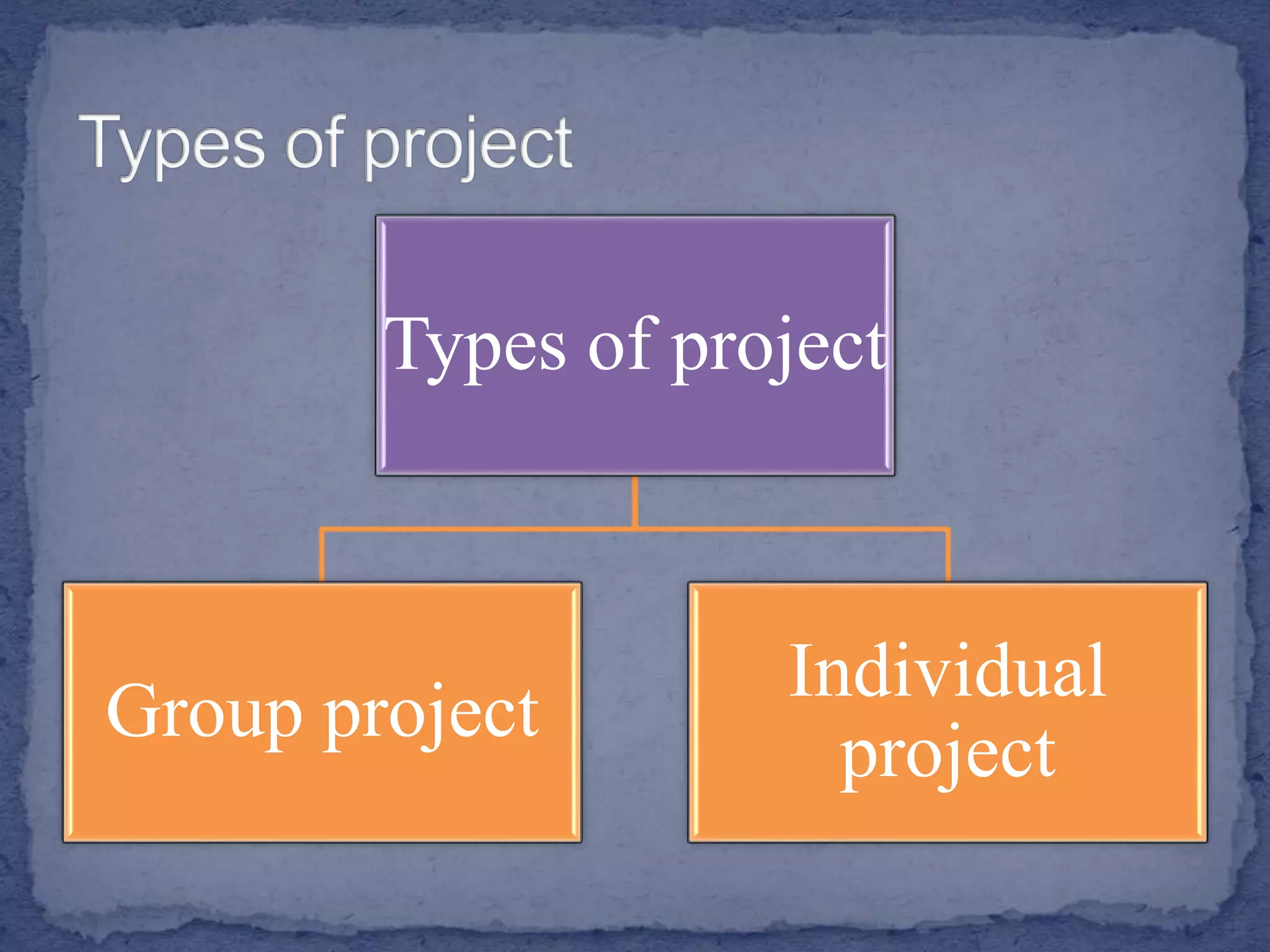
Types of project
Group project
Individual
project
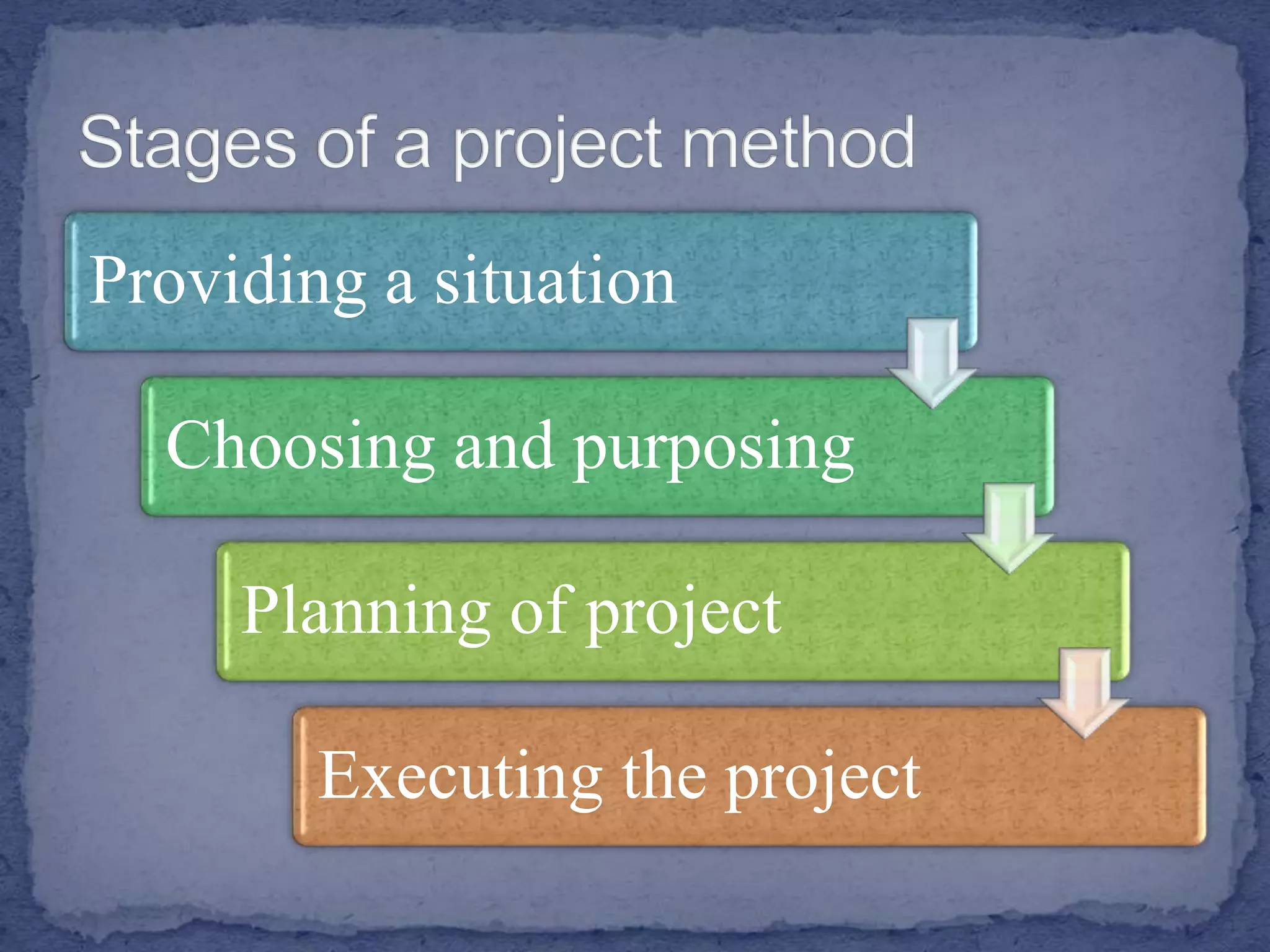
Providing a situation
Choosing and purposing
Planning of project
Executing the project
Definition
 A role play can be defined as “a dramatic approach in
which individual students assume the role of others.”
 Role playing is a relatively new educational technique in
which people spontaneously act out problem of human
relation and analyze the enactment with the help of others
role players and observers.
 Role playing is flexible.
 The role play should be stimulation to think and not an
escape from the discipline of learning.
 There is no singer best method of selecting the character
the group may do the assigning.
 Role play should never be rehearsed .
 Role play should be brief.
 Define the problem to be considered and the nursing situations
in a meaning full manner all students in the class.
 Identify the character in the situations and ask for volunteers to
play these roles.
 Ask the participants to try to place themselves in the position of
the character.
 Caution the participants against the desire to express their own
ideas and opinions.
 Never rehearse for the role playing.
 At any point during dramatization participants may hold a short
conference to clarify the problems under study.
 At the end of the activity time should be given for a discussion.
 Role play places undue emphasis on the dramatic aspects.
 It cannot be successfully till the group understand and
accept is as a method of learning.
Meaning
 computer-assisted learning (CAL) Any use of computers
to aid or support the education or training of people. CAL
can test attainment at any point, provide faster or slower
routes through the material for people of different
aptitudes, and can maintain a progress record for the
instructor.
 Dense storage of data in an organized form large textbook
could be stored in a classified manner on a 9 cm disk.
 Quick asses to the data base in milli seconds
 Multimedia capability the new generation of multimedia
computer add sound animations 3 dimensions and video to
text.
 Ability to keep track of the learner performance, award
marks and give instant feedback of evaluation.
 Choose a relevant topic.
 Develop cal sequence in the forms of frames.
 I frame or introductory frame gives directions to the
learner
 L frame of learning frame presents the matter to be learnt
 T frame of the test the learner and gives appropriate
feedback.
 Cal can be done at the individual convenience and pace.
 Highly visual content.
 Cal can additionally utilize multimedia capabilities.
 Cal can be designed to incorporate not only text images
but also video to enhance student learning.
 Inherent limitations: cal could be very effective in
developing cognitive domain alone especially problem
solving skills and has a very limited applications to the
other two domains.
 Content: all topics and subject are not suited for CAL.
 Program development: developing a cal module is tedious
and time consuming processes.
 Cost effectiveness: it involves high cost to develop and
utilize a program.
Methods of teaching and learning

Methods of teaching and learning

  • 1.
    Mr.Vikas Anil Ghadge RJSCollege of Nursing
  • 2.
    Introduction  Teaching learningprocesses is mean whereby society trains its young ones in a selected environment as quickly as possible to adjust themselves to the world in which they live.  Education is modification of behavior,teaching learning processes enhance education teaching is one of the instrument of education and it is special function is to impart understanding and skills.
  • 3.
     The threefocal points in education are:- 1. The teacher 2. The child 3. The subject
  • 4.
     Definition 1. Teachingis an art and science in which the content is structured and the processes used enable student learning.(Bevis,1989) 2. Teaching is the stimulation, guidance ,direction and encouragement of learning.(Burton)
  • 5.
    1. definite aimfor every lesson ,it is a goal for teacher. 2. activity or learning by doing. 3. planning. 4. interest or motivation. 5. flexibility and cooperation. 6. diagnostic and remedial teaching. 7. creativity.
  • 6.
    Teaching Pre active phase (planningstage) Interactive phase (implementing stage) Post active phase (evaluation)
  • 7.
     Giving structuredinformation  Quality and pacing of instruction  Teacher expectations.  Teacher enthusiasm.  Teacher clarity.  Teacher feedback.  Emotional climate.  Teacher observational skills.  Handling assignments.
  • 8.
     Definition  Learningis “Any relatively permanent change or modification of behavior that result of practice or experience.”-murthy and others.  It is an episode in which a motivated individual attempts to adopted his behavior so as to succeed in a situation which he perceives as requiring action to attain a goal”- pressy.
  • 9.
     Learning isunitary.  Learning is individual.  Learning is social.  Learning is self active.  Learning is creative.  Learning is transferable.  Learning is growth.  Learning is adjustment.  Learning is intelligent.
  • 10.
     Conditioning  Rolelearning  Problem learning  Skill learning  Problem solving
  • 11.
     Learning experienceand behavioral objective  Motivation towards objective  Individual differences  Association of concept  The learning preparation
  • 12.
     Teaching iswhat teacher do  Learning is while learning what student do  Teaching means imparting knowledge or skills, while learning refers to acquiring new information.  A teacher is someone who has accquired knowledge ,and is working to share that knowledge with learner.
  • 13.
     Lecture method Demonstration  Discussion  Seminar  Symposium  Micro teaching  Laboratory method  Problem based learning  Workshop  Project role play  Computer assisted learning
  • 15.
    Definition  Lecture isthe teaching activity whereby the teachers present the content in a comprehensive manner by explaining the facts principals and relationship.
  • 16.
  • 17.
  • 18.
     Apparent savingof time and resources.  Presence of the teacher.  Covers a large group of students.  Gives a feeling of security.  Lecture is a economical method of teaching as it require very lass resources.
  • 19.
     Keep thestudent in passive situations.  Does not facilities learning how to solve problems.  Offer hardly any possibilities of checking learning progress.  Does not allow for individual pace of learning.
  • 21.
     Definition  Demonstrationcan be defined as an accurate portrayal of a procedure, techniques or operation.(laird 1986).  Demonstration is a method of teaching, by exhibition and combined to illustrate a procedure or experiments.- guallibert.
  • 22.
     The demonstratorshould understand the entire procedure before attempting the procedure.  All equipment needed should be assemble and pretested before demonstration.  Knowledge about the procedure should be given to the student before starting procedure/demonstration.  A positive approach should be used.  Everybody should have a good view of demonstration.  A decision period should always follow the demonstration.  The student should be provided with opportunities for promote practice of the demonstration.
  • 23.
     Before demonstration Formulate behavior objective.  Perform a skill analysis and determine the sequence.  Asses entry behavior of learner and determine prerequisites
  • 24.
    During the demonstration State the objective to learner.  Motivate them by explaining why the skill at normal speed.  Demonstrate the total skill at normal speed.  Write the sequence step by step.  Obtain feedback by questioning.
  • 25.
    After demonstration  Provideimmediate supervised practice  Provide verbal guidance.  Make the environment psychologically safe.  Discuss.
  • 26.
     To demonstrateexperiments or procedures and the use of experimental equipment in the laboratory, classroom and the ward.  To review or revise procedure to meet special situation or to introduce a new procedure.  To reach the patient a procedure or treatment which he must carry out in the home.  To demonstrate a procedure at the beside or in the ward conference room.  To demonstrate different approaches in establishing support with client.
  • 27.
     The teacheris present.  Give a feeling of security.  Develops the quality of observation.  Ensures closer contact problems.  Demonstration trains the learner in the art of careful observation
  • 28.
     Number ofstudents is limited.  Keeps the students in passive situation.  Offers little possibility of checking the learning  Facilitates acquisition of practical, intellectual and communication skills.  Present reality, not substitutes.  Enables logical step by presentation Process.  Does not allow for individual paces of learning.
  • 30.
     Meaning  Discussionis an interchange of opinions and reactions, sharing of ideas and information regarding the solution of a problem or issue.  Define: discussion may be defined as a problem solving activity which seeks consensus of the group regarding the solution of a problem rather than a decision by the majority.
  • 31.
     To promotecooperative decision making.  To develop skill in problem and decision making.  To develop communication and verbal skills.  To develop knowledge.  To promote group dynamics.  To share information.
  • 32.
     Effective learning Emphasis on student experience.  Development of critical thinking. participation by everybody.  Self expression.  Peer learning is one of the most direct benefits resulting from the discussion method.
  • 33.
     Discussion istime consuming.  Both student and teacher are to be well prepared for the session otherwise discussion may not be productive.  Many dominate with personal feeling  Chances of deviation from topic.  Dominance by one person.
  • 35.
     Definition  Seminaris an instructional technique where the teacher take less of a leadership role as students meet under the teacher direction to discuss topic that are generally related to a particular subject.  A seminar can be defined as an exchange of ideas of some particular area, guided discussion of concept.
  • 36.
     Teacher isa leader  10-15 members are participations  The topic is presented by the students in 15-2-0 min  Duration is 1-2 hour  Leader should keep the discussion within the limits of the problem discussed.  Care should be taken to avoid stereotype.  All the member take part in discussion in a informal way.  The chairman should be skilled in encouraging the timid participations.  A student secretary should record the problem which arise and the solution given.
  • 37.
  • 38.
     Stimulation ofthings.  Tolerance of other view develops.  Openness of ideas occur.  Represent the norms of behavior.  It has great instructional values.  Natural way
  • 39.
     Time consuming Cannot be applied to new students  Timid students cannot improve  If subject knowledge is poor, unnecessary discussion arises.  The approach to problem extends to their professional and personal activates.
  • 40.
     Selecting topic. Remaining in the background of the seminar  Being prepare to help out in the initial stage of using method  See that all have a share in discussion student ability to solve problems by rational thinking.
  • 42.
    Definition The symposium canbe defined as a method of group discussion in which two or more person under the direction of chairman present separate speeches which give answer to several aspects of one question. (Controversial issue are discussed)
  • 43.
  • 44.
     The mainpurpose of symposium is to analysis problem from several different points of view.  To relive the students from the boredoms monotonous lecture method.  To make student active and alert as opposed to lecture method in which student are more or less Listeners.
  • 45.
     Promotes collaborativecooperative learning and peer sharing.  Facilities Comprehension and practical application of concept.  Improves the capability of students to approach a problem through various facts.  Improve articulation in discussion and communication  It does not require any additional supplies such as handouts or audio visual  Students can learn group problem solving technique.
  • 46.
     Require extensivepreparation and planning on the part of students.  Time consuming.  Require that student possess adequate knowledge for active discussion and comprehension.  Inadequate opportunity for practice actively for all the students.
  • 47.
  • 48.
    Definition  Micro teachingis a procedure which reducing the teaching situations to simpler and more controlled encounter achieved by limiting the practice teaching time and class size.
  • 49.
     No ofstudents to be thought.  Duration of lesson.  Subject matter to be thought.  Safe practice ground.  Availability of teaching models.  Feedback.
  • 50.
     1. Enforcement:feedback re-teaching makes teaching perfect,.  2. Practice and drill: teaching is a complex skill which needs constant drill and practice.  3. Continuity: micro teaching is continuous process teaching feedback re teaching feedback till perfection is attained.  4. Microscopic presentation: supervisor has an observational; schedule which he fills up while supervising and makes assessment at a rating scale.  Five “r” of micro teaching  Recording  Reviewing  Responding  Refining  Re-doing
  • 51.
     Micro teachinghelp student teacher to perfect their performance and improve it to superior level.  Since micro teaching focus on a particular skill at a time student teacher can attain proficiency in teaching skills in a phased manner.  Provision of immediate feedback makes micro teaching more interesting and reliable  Science main role is played by the student teacher it is regarded as a student centered method.  Beyond everything microteaching increases the self confidence of the student and teacher.
  • 52.
     Micro teachingis skill oriented rather than content oriented.  Because of modeling there is a simply imitating a teaching skills by the student teachers.  Micro teaching is highly time consuming.  Micro teaching have very narrow space.  Even though micro teaching can be successfully employed in classroom teaching situations more research is needed to ascertain its usefulness in other teaching situations.
  • 54.
     Meaning  Laboratoryprocedure is considered as planned learning activity dealing with original or raw data in the solution of problems.
  • 55.
     Preparation  Itrequire establishment of objective and plan of work.  It motivates the student by presenting problem together with effective method for its solution.  Teachers prepare plan with cooperation of the student considering objective not wasting time.
  • 56.
     Work period It refers to the period when demonstration experimentation or practice for a skill in nursing procedure.  To ensure an effective work.  There must be adequate supply of specimens and laboratory.  There should be sufficient light ventilation .
  • 57.
     Evaluation  Groupdiscussion  Individual report finding  Evaluation tool
  • 58.
     Poor planningand lack of direction of teacher may result in student wasting time use of complicated approach and consumes time.  Lack of budget in getting qualitative laboratory equipment create insecurity in teachers to operate them.
  • 59.
     The studentto master the subject.  To participation of student  To provide concrete and first hand knowledge  To make provision for purposeful student activity  To develop laboratory technique.  To provide opportunity to work out experience guidance.
  • 61.
     Definition  Isthat which result from the process of working towards the understanding or resolution of the problem (barrows and tamblyn(1980)
  • 62.
     The studentis the focus of the educational program not the teacher the curriculum or the curriculum contents.  The development of his or her learning capacities is emphasized  Cooperation with others and the important of communication is emphasized.  Working on the inters disciolpanary problems or project is part of any curriculum.  Much attention ids paid to the development of any analytical and creative thinking skills  The development of self direct learning ability and the integrated application of knowledge and skills within practice and encouraged.
  • 63.
     The problemmethod fosters active and cooperative learning the ability to think critically and clinical reasoning.  It stimulates the students to use skills of inquiry and critical thinking peer teaching and peer evaluation  It increase ability to apply knowledge in clinical situations  It increases student responsibility for self directed peer learning.  It helps in developing flexible knowledge that can be applied to different contexts.  The learning method helps in developing lifelong learning skills  It encourage student to work in teams and group thereby faciliting group dynamics.  It promotes the development of an effective and efficient clinical reasoning processes and increase retention of data.
  • 64.
     The BPLmethod involves faculty time in developing the problem situations and in learning to use the method.  Student require orientation to perform the rolr of a learner in in pbl setting.  It is very difficult and expensive to use as a teaching technique when the class size is large  Evaluation is quite difficult and sometime may be subjective.  Resource expensive.  Measurement of learning outcome is difficult.
  • 66.
     Definition  Aworkshop is a period of discussion or practical work on a particular subject in which a group of people share their knowledge or experience.
  • 67.
     To developthe proficiency for planning and organizing.  Teaching and learning activities.  To develop the skills to perform a task independently.  To determine and use of teaching strategies effectively.  To train the person for using different approaches of teaching.
  • 68.
     Workshops areparticipative.  Participants identify their interest and need and the learning situations are also based on them..  Large member can be accomonded.  Workshop are flexible.  Emphasis is placed on improving individual understanding and proficiency.  Theory and practice can be combined.  It develop the feeling cooperation and group work.  The new practice and innovation are introduced to in-service teachers.
  • 69.
     The workshopon education is seminar cum workshop on any theme.  The workshop cannot be organized for large group.  The in-service education teachers do not take interest to understand and use the new practice in their classroom.  The effectiveness of a workshop technique depends on the follow up program.  Some participants may find it more difficult to follow with the format.  Workshop may be overused.  Selection of resource person may be difficult.
  • 71.
     Definition  Projectmethods are one of the modern methods of teaching in which the students’ point of view is given importance in designing the curricula and content of studies. It is one of those methods which illustrate the use of problem solving attitude.
  • 72.
    Types of project Groupproject Individual project
  • 73.
    Providing a situation Choosingand purposing Planning of project Executing the project
  • 74.
    Definition  A roleplay can be defined as “a dramatic approach in which individual students assume the role of others.”  Role playing is a relatively new educational technique in which people spontaneously act out problem of human relation and analyze the enactment with the help of others role players and observers.
  • 75.
     Role playingis flexible.  The role play should be stimulation to think and not an escape from the discipline of learning.  There is no singer best method of selecting the character the group may do the assigning.  Role play should never be rehearsed .  Role play should be brief.
  • 76.
     Define theproblem to be considered and the nursing situations in a meaning full manner all students in the class.  Identify the character in the situations and ask for volunteers to play these roles.  Ask the participants to try to place themselves in the position of the character.  Caution the participants against the desire to express their own ideas and opinions.  Never rehearse for the role playing.  At any point during dramatization participants may hold a short conference to clarify the problems under study.  At the end of the activity time should be given for a discussion.
  • 77.
     Role playplaces undue emphasis on the dramatic aspects.  It cannot be successfully till the group understand and accept is as a method of learning.
  • 79.
    Meaning  computer-assisted learning(CAL) Any use of computers to aid or support the education or training of people. CAL can test attainment at any point, provide faster or slower routes through the material for people of different aptitudes, and can maintain a progress record for the instructor.
  • 80.
     Dense storageof data in an organized form large textbook could be stored in a classified manner on a 9 cm disk.  Quick asses to the data base in milli seconds  Multimedia capability the new generation of multimedia computer add sound animations 3 dimensions and video to text.  Ability to keep track of the learner performance, award marks and give instant feedback of evaluation.
  • 81.
     Choose arelevant topic.  Develop cal sequence in the forms of frames.  I frame or introductory frame gives directions to the learner  L frame of learning frame presents the matter to be learnt  T frame of the test the learner and gives appropriate feedback.
  • 82.
     Cal canbe done at the individual convenience and pace.  Highly visual content.  Cal can additionally utilize multimedia capabilities.  Cal can be designed to incorporate not only text images but also video to enhance student learning.
  • 83.
     Inherent limitations:cal could be very effective in developing cognitive domain alone especially problem solving skills and has a very limited applications to the other two domains.  Content: all topics and subject are not suited for CAL.  Program development: developing a cal module is tedious and time consuming processes.  Cost effectiveness: it involves high cost to develop and utilize a program.