By- Dr. Roma Smart Joseph
Teacher Educator
Lucknow, UP, India
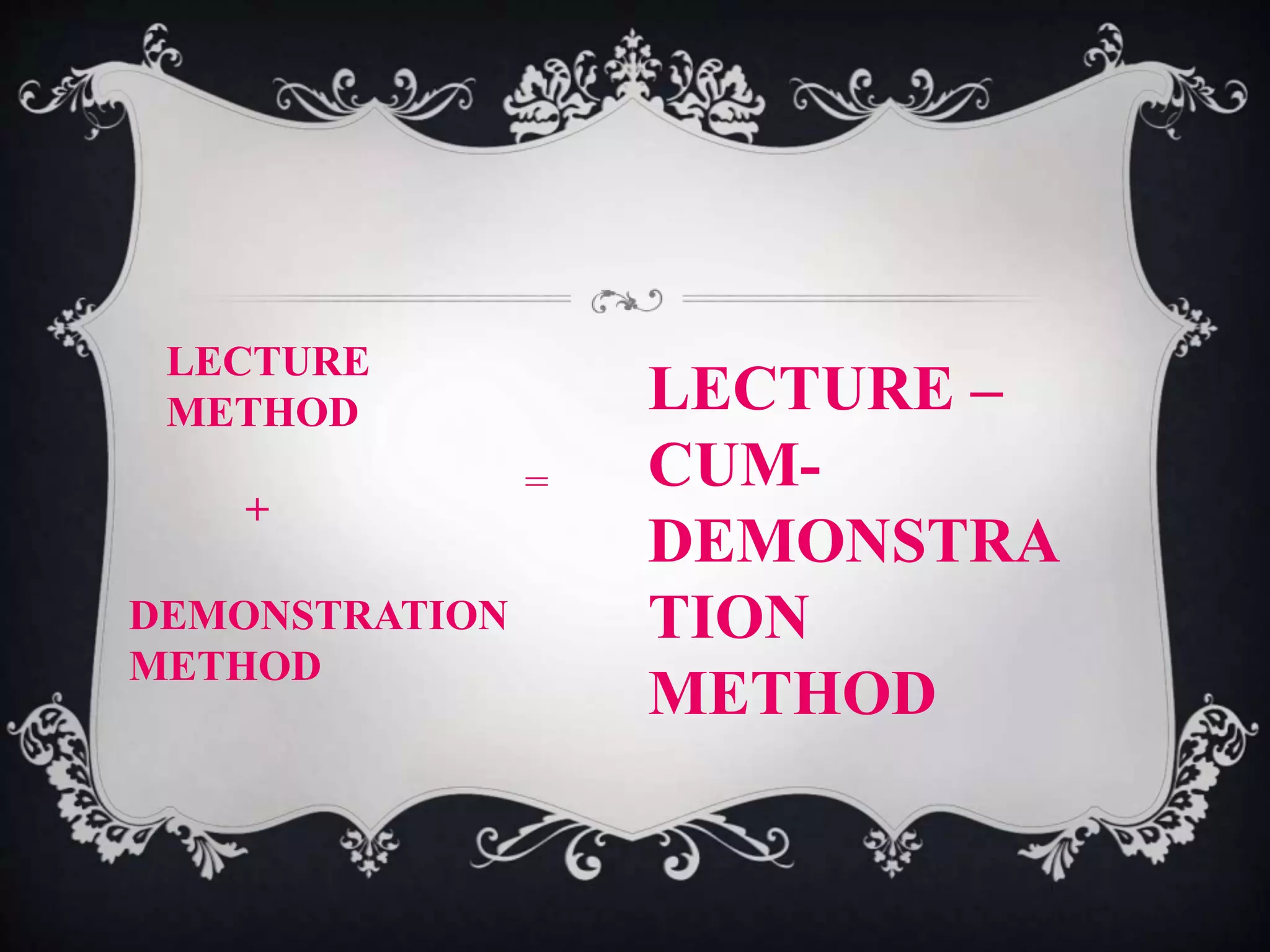
LECTURE
METHOD
+
DEMONSTRATION
METHOD
=
LECTURE –
CUM-
DEMONSTRA
TION
METHOD
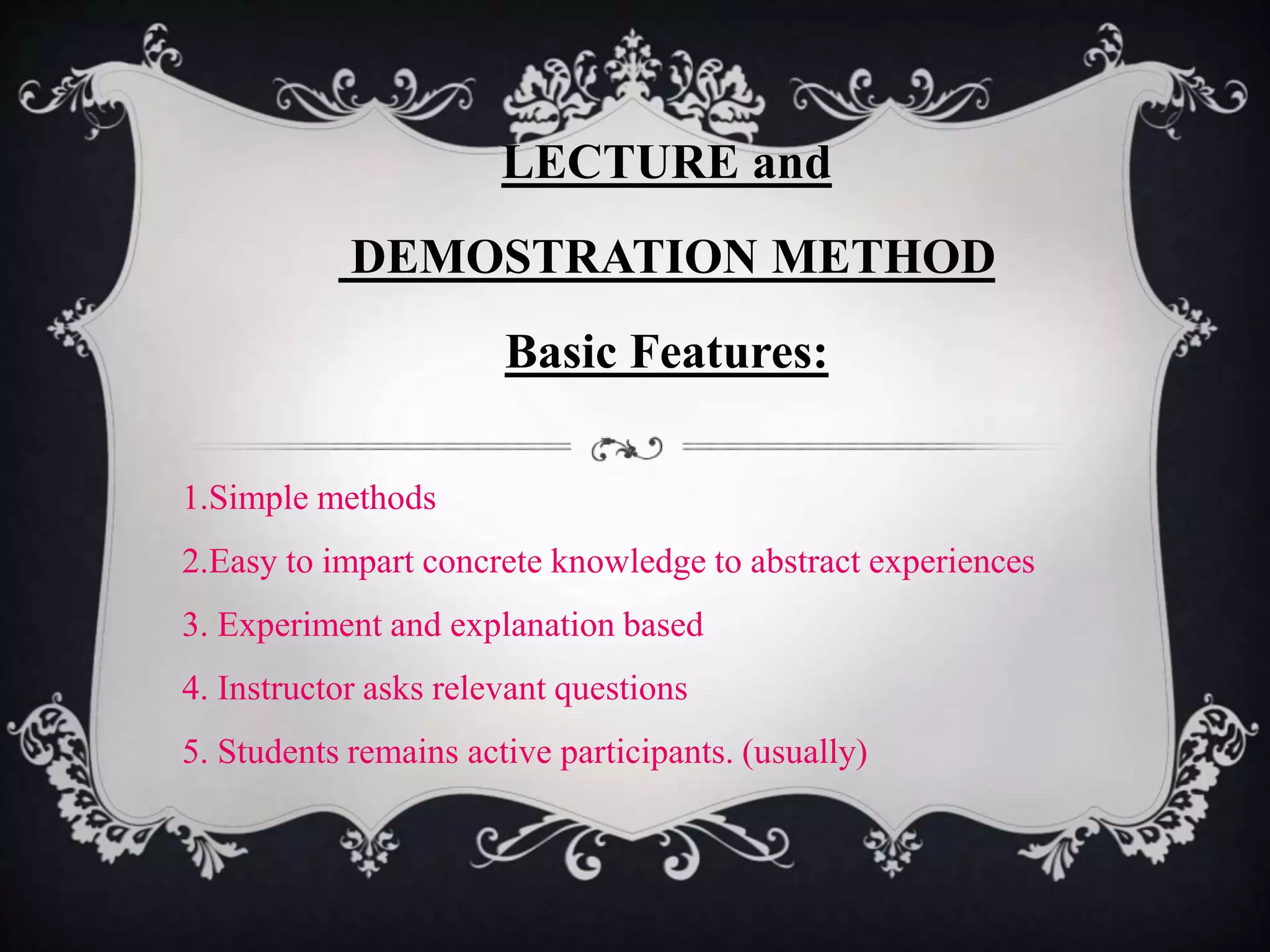
LECTURE and
DEMOSTRATION METHOD
Basic Features:
1.Simple methods
2.Easy to impart concrete knowledge to abstract experiences
3. Experiment and explanation based
4. Instructor asks relevant questions
5. Students remains active participants. (usually)
LECTURE METHOD Traditional method
Chalk and talk method
Teacher centered method
Teacher is active and
learners are passive
One way communication
Easy to use in large group
Save time and money
DEMOSTRATION
METHOD
 “Doing” method
 Pre planed
 Learner can see and hear
 More sense organs involved
 Easy to understand
 Develope psychomotor and
Cognitive domains
 Lead experiences from
concrete to abstract
DEMO
PURPOSE OF LECTURE AND
DEMONSTRATION METHOD
 Gaining, learning
 Problem solving
 Verification of the facts
 Development of skill
STEPS INVOLVED
(A)PLANNING
 Identifies the concepts to be explained
 Formulate objectives
 Questions framing –> BOTH METHODS
 Rehearsal of the experiment
 Collection and arrangement of materials
Lecture Method
Demonstration Method
 Introduces the lesson by motivating the students
 Students personal experiences or real life situations
 Students environment
 Telling story
 Simple and interesting experiment
(B) INTRODUCTION OF THE
LESSON
 Consideration the interest of students
 While demonstration questions should be asked
which help the students to understand
 Provide illustration
 Language should be clear and simple
 All material related to demonstration should be clean
 All material should not be display at once
 Demonstration would be clearly visible to all learner
(C) PRESENTATION OF THE CONTENT
 Summarize the principles, facts and important points
(D) BLACK BOARD WORK
MERITS
 Saves money and time
 Useful for all students of varying ability
 Provide more information in less time
 Leads the students from concrete experiences to abstract
concepts
 Activates student’s attention
 Trains mental facilities
DEMERITS
 Lack of opportunity for practical ability
 Learners only observe the demonstration- No
active Participation- Students: One Way Observers
 Instructor may follow their own pace while
demonstration
 Not possible to teach all topics via these methods
ROLE OF THE
TEACHER
 Possess knowledge of both
theoretical and practical skills
 Should be enthusiastic and
motivating
 Related theoretical principles
with practical demonstration
 Students participate in the session(s)
by conducting question answer
session while or after the use of
these methods.
WHILE USING THESE METHODS
REMEMBER:
 Know your audience
 Set yours objective
 Plan your preparation time
 Class room arrangement
 Be organized
 Follow safety precautions.
Lecture and demonstration method

Lecture and demonstration method

  • 1.
    By- Dr. RomaSmart Joseph Teacher Educator Lucknow, UP, India
  • 2.
  • 3.
    LECTURE and DEMOSTRATION METHOD BasicFeatures: 1.Simple methods 2.Easy to impart concrete knowledge to abstract experiences 3. Experiment and explanation based 4. Instructor asks relevant questions 5. Students remains active participants. (usually)
  • 4.
    LECTURE METHOD Traditionalmethod Chalk and talk method Teacher centered method Teacher is active and learners are passive One way communication Easy to use in large group Save time and money
  • 5.
    DEMOSTRATION METHOD  “Doing” method Pre planed  Learner can see and hear  More sense organs involved  Easy to understand  Develope psychomotor and Cognitive domains  Lead experiences from concrete to abstract
  • 6.
  • 10.
    PURPOSE OF LECTUREAND DEMONSTRATION METHOD  Gaining, learning  Problem solving  Verification of the facts  Development of skill
  • 11.
    STEPS INVOLVED (A)PLANNING  Identifiesthe concepts to be explained  Formulate objectives  Questions framing –> BOTH METHODS  Rehearsal of the experiment  Collection and arrangement of materials Lecture Method Demonstration Method
  • 12.
     Introduces thelesson by motivating the students  Students personal experiences or real life situations  Students environment  Telling story  Simple and interesting experiment (B) INTRODUCTION OF THE LESSON
  • 13.
     Consideration theinterest of students  While demonstration questions should be asked which help the students to understand  Provide illustration  Language should be clear and simple  All material related to demonstration should be clean  All material should not be display at once  Demonstration would be clearly visible to all learner (C) PRESENTATION OF THE CONTENT
  • 14.
     Summarize theprinciples, facts and important points (D) BLACK BOARD WORK
  • 15.
    MERITS  Saves moneyand time  Useful for all students of varying ability  Provide more information in less time  Leads the students from concrete experiences to abstract concepts  Activates student’s attention  Trains mental facilities
  • 16.
    DEMERITS  Lack ofopportunity for practical ability  Learners only observe the demonstration- No active Participation- Students: One Way Observers  Instructor may follow their own pace while demonstration  Not possible to teach all topics via these methods
  • 17.
    ROLE OF THE TEACHER Possess knowledge of both theoretical and practical skills  Should be enthusiastic and motivating  Related theoretical principles with practical demonstration  Students participate in the session(s) by conducting question answer session while or after the use of these methods.
  • 18.
    WHILE USING THESEMETHODS REMEMBER:  Know your audience  Set yours objective  Plan your preparation time  Class room arrangement  Be organized  Follow safety precautions.