Presentation Skills
Presented by
Amna Naveed
CONTENTS
1. Planning and
Preparation
2. Structure of
Presentation
 Introduction
 Body
 Conclusion
3. Presentation
 Body Language
4. Sample Presentations
5. Observation Skills
6. Conclusion
1. PLANNING AND PREPARATION
W’s & H
Questions to ask yourself:
 What is the aim?
 What is the topic of my presentation?
 Who am I speaking to?
 What are the main points I want to
make?
 How to convince the audience of my
point of view?
 What do I want my listeners to do after
listening to my presentation?
2. Structure of Presentation
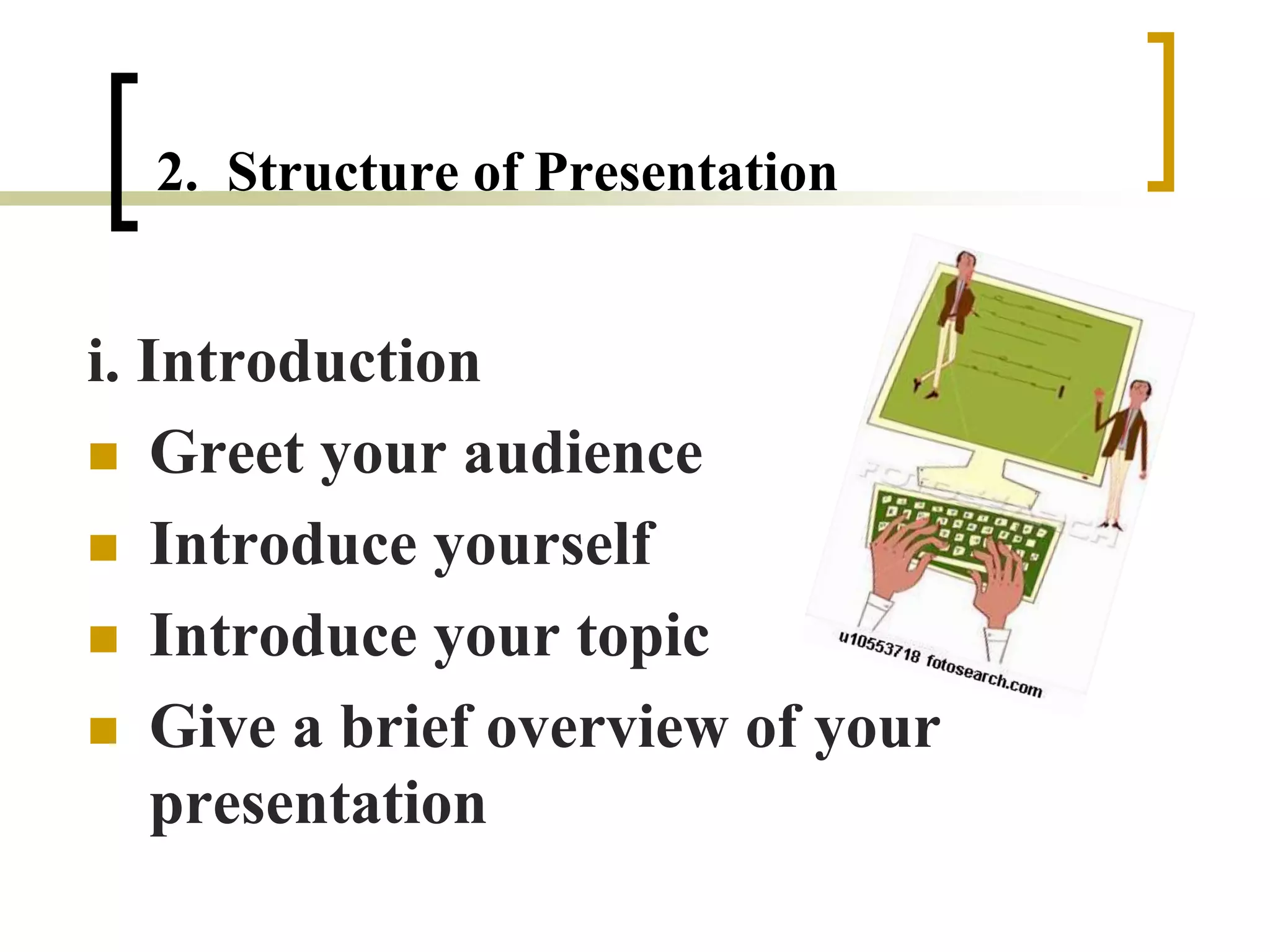
i. Introduction
 Greet your audience
 Introduce yourself
 Introduce your topic
 Give a brief overview of your
presentation
ii. Discussion Or Body
 Content.
 Quantity
 Sequencing your ideas.
 Keeping the audience's attention
 Signposting or signaling where you are.
 Visual aid
 Graphs
iii. Conclusion
 Reminder of what is said
 Conclusion
 Thanks
 Invite for questions
Presentation
Your BODY SPEAKS even when you are
quiet.
Body Language
 Appearance
 Facial expressions
 Eye contact
 Posture and Movement
 Gestures
 Voice and Vocal Quality
 Non-Words
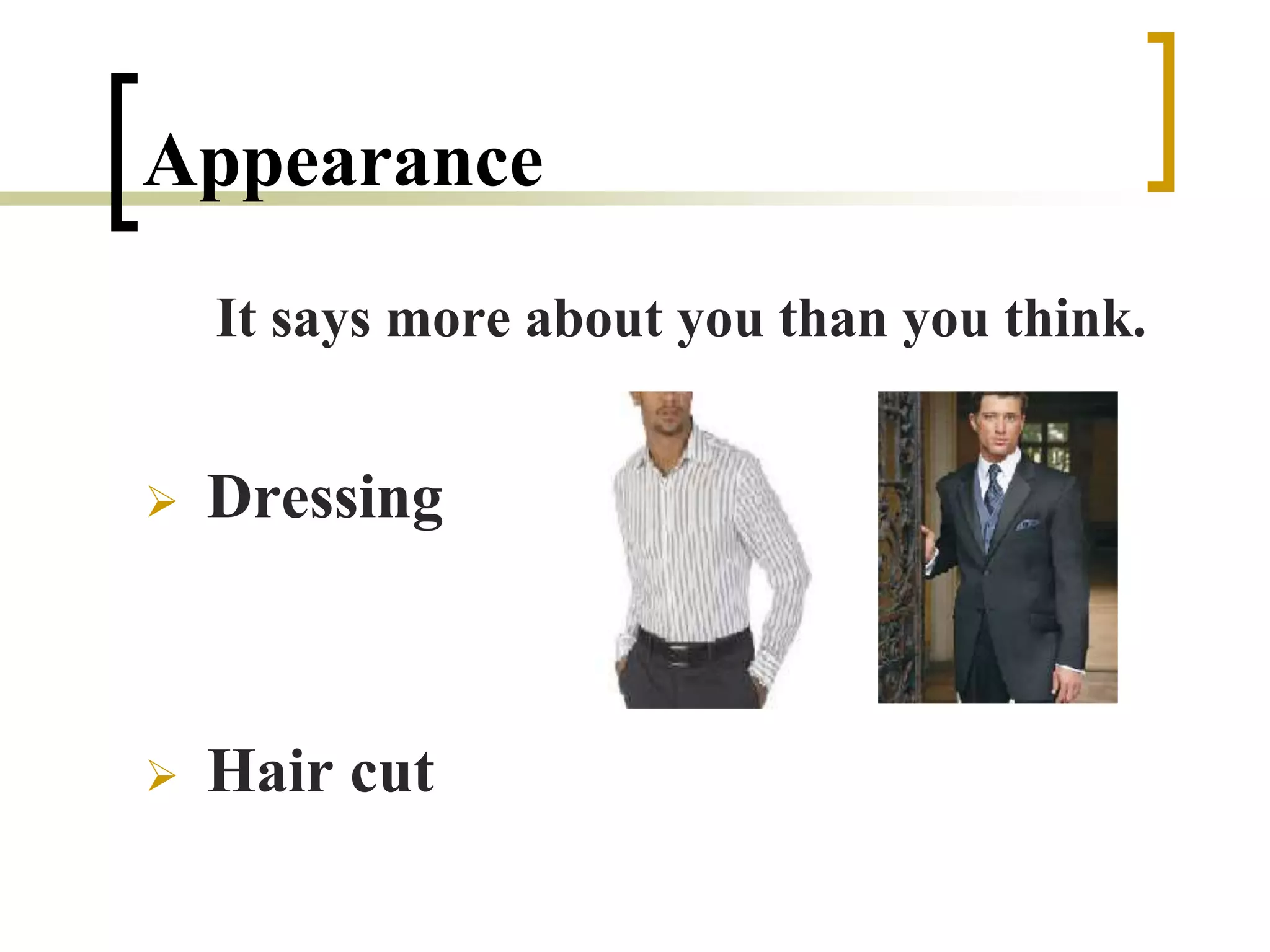
Appearance
It says more about you than you think.
 Dressing
 Hair cut
Facial Expressions
Face makes the things obvious even if you are hiding.
 Happiness
 Sadness
 Surprise
 Fear
 Anger
 Interest
 Boredom
 Nervousness
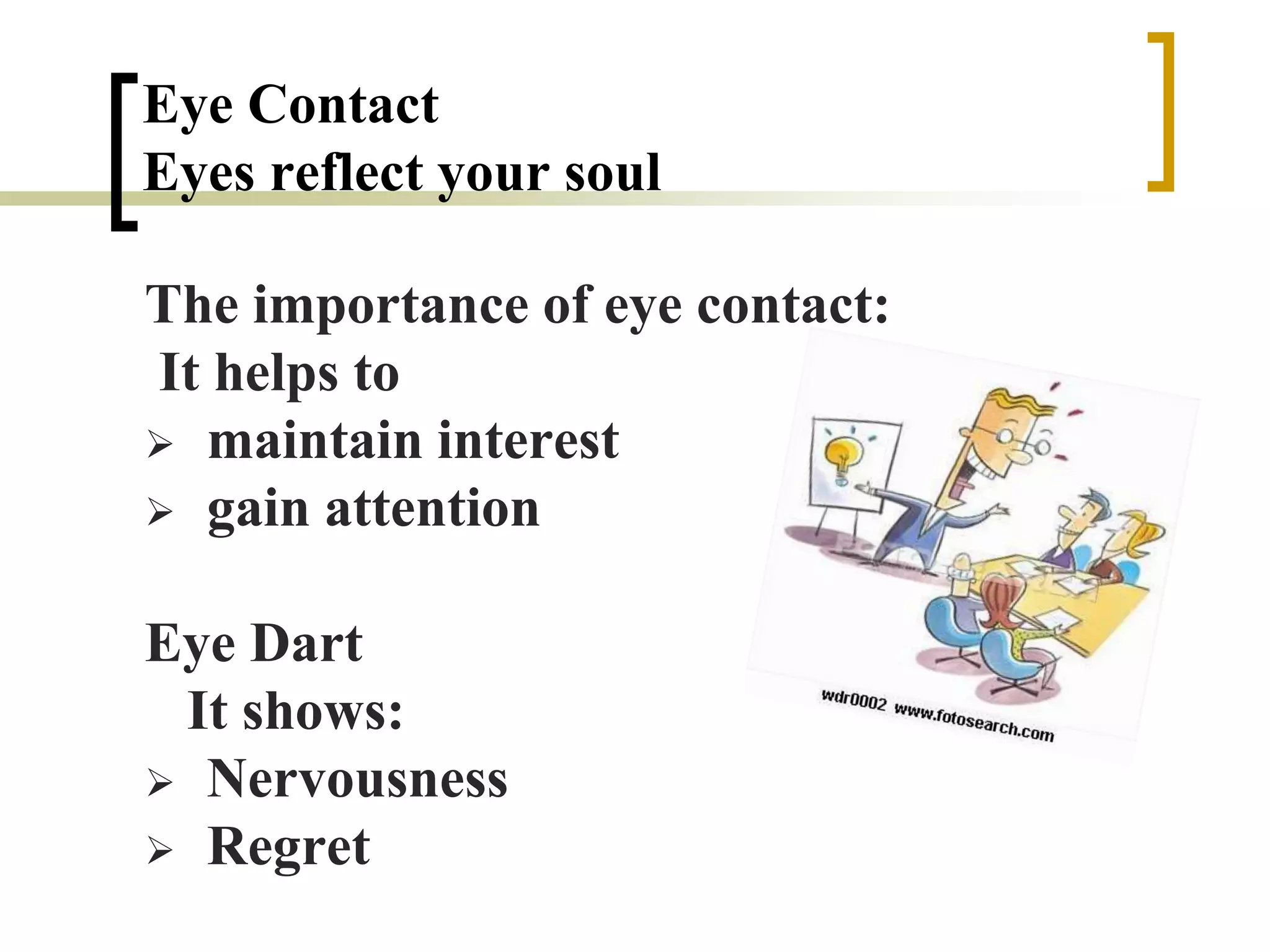
Eye Contact
Eyes reflect your soul
The importance of eye contact:
It helps to
 maintain interest
 gain attention
Eye Dart
It shows:
 Nervousness
 Regret
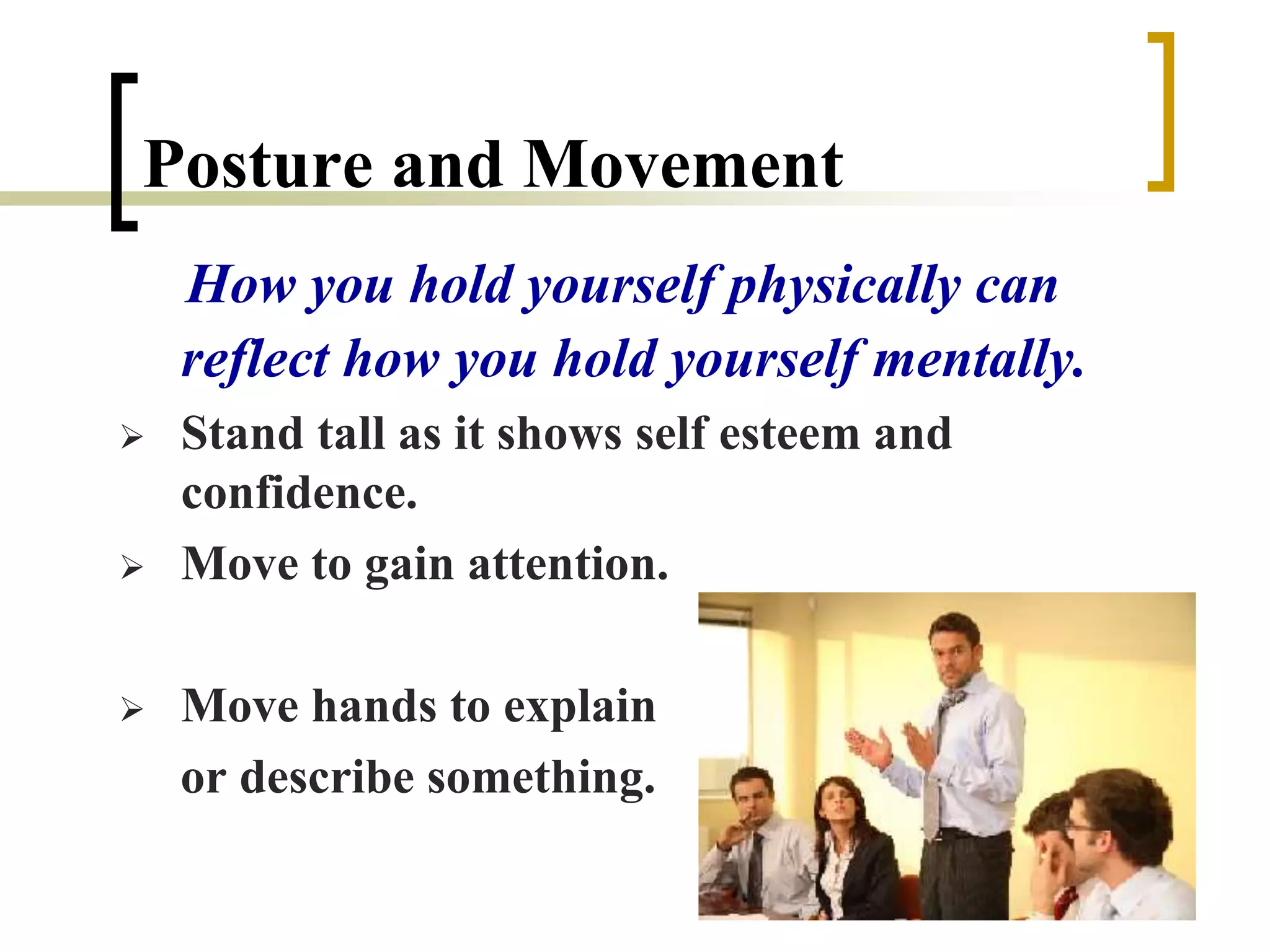
Posture and Movement
How you hold yourself physically can
reflect how you hold yourself mentally.
 Stand tall as it shows self esteem and
confidence.
 Move to gain attention.
 Move hands to explain
or describe something.
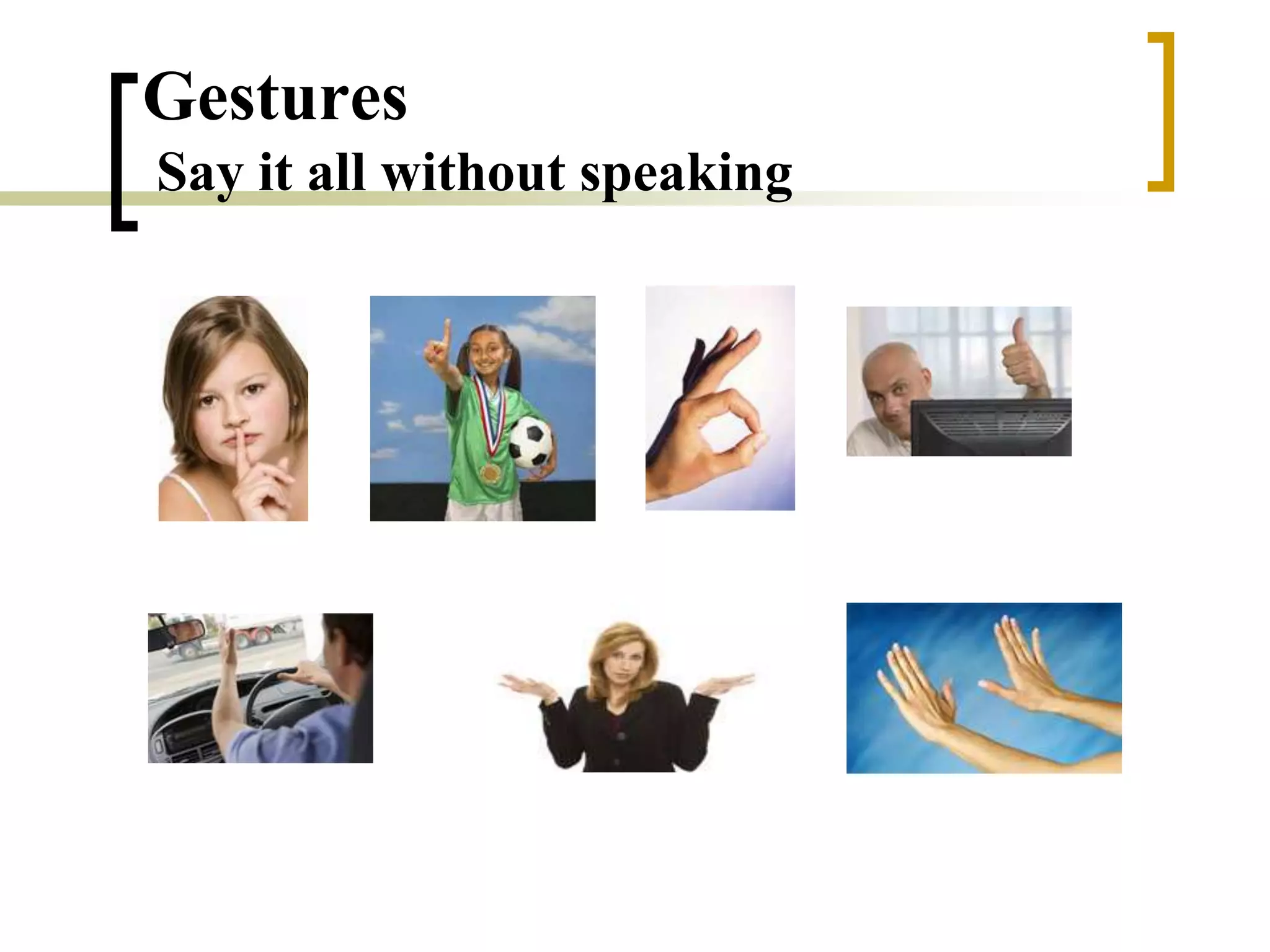
Gestures
Substitute of words
Gestures are used to:
 Emphasize
 Point out
 Describe
 O.k.
 No
 Wait
 Come here
 Keep on
 Well-done
Gestures
Say it all without speaking
Voice and Vocal Variety
It is like a vehicle.
A noisy old car or a finely tuned automobile.
Voice gives extra life to your message
Check:
 Pitch
 Speed
 Volume
 Vocal Quality
 Pronunciation
Non-Words
Barriers to clear communication
Eliminate:
 Umm’s
 Aaa
 You know
 Well
 Ok
Add:
 Pauses
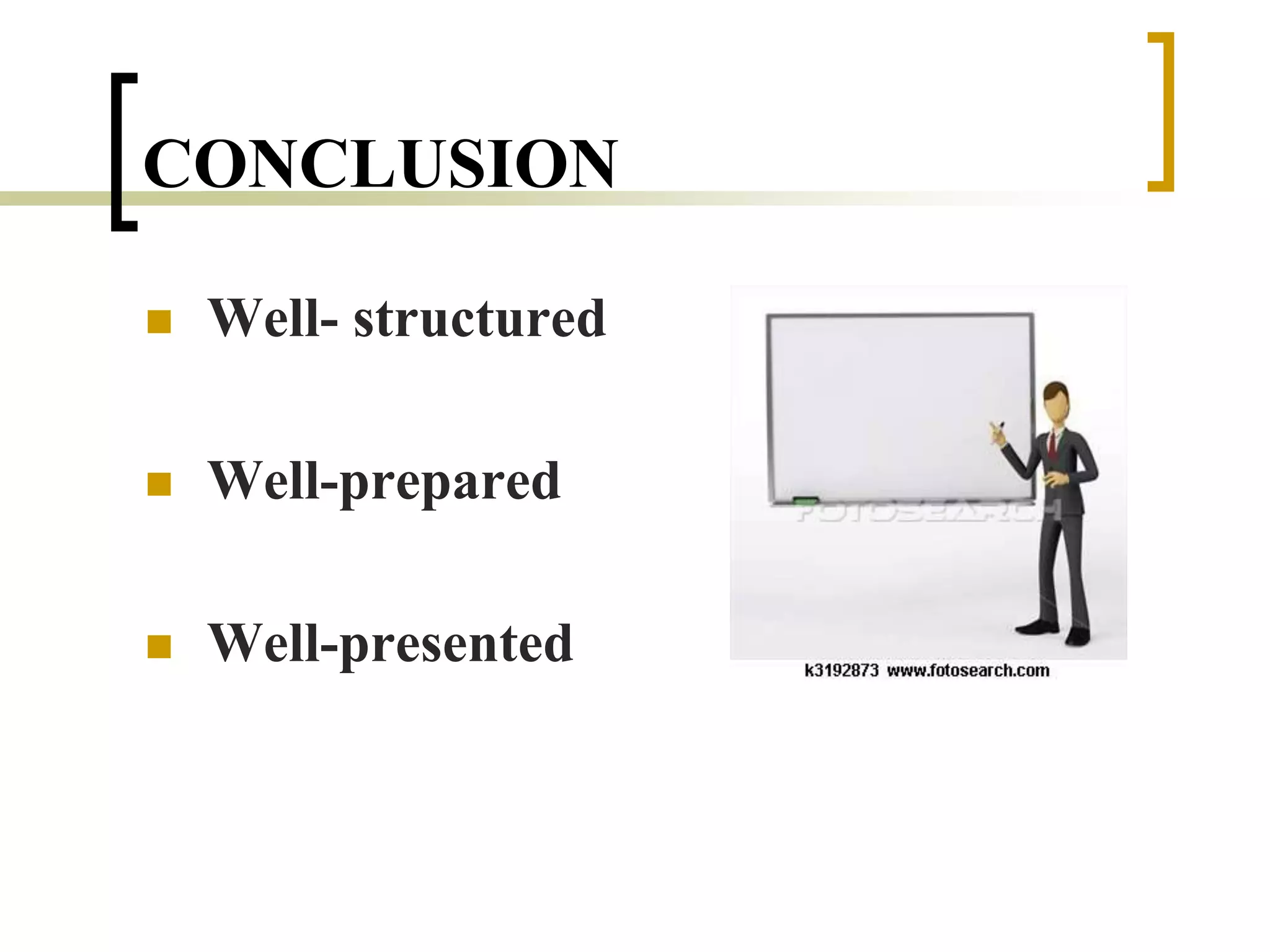
CONCLUSION
 Well- structured
 Well-prepared
 Well-presented

Introduction to Presentation Skills

  • 1.
  • 2.
    CONTENTS 1. Planning and Preparation 2.Structure of Presentation  Introduction  Body  Conclusion 3. Presentation  Body Language 4. Sample Presentations 5. Observation Skills 6. Conclusion
  • 3.
    1. PLANNING ANDPREPARATION W’s & H Questions to ask yourself:  What is the aim?  What is the topic of my presentation?  Who am I speaking to?  What are the main points I want to make?  How to convince the audience of my point of view?  What do I want my listeners to do after listening to my presentation?
  • 4.
    2. Structure ofPresentation i. Introduction  Greet your audience  Introduce yourself  Introduce your topic  Give a brief overview of your presentation
  • 5.
    ii. Discussion OrBody  Content.  Quantity  Sequencing your ideas.  Keeping the audience's attention  Signposting or signaling where you are.  Visual aid  Graphs
  • 6.
    iii. Conclusion  Reminderof what is said  Conclusion  Thanks  Invite for questions
  • 7.
    Presentation Your BODY SPEAKSeven when you are quiet.
  • 8.
    Body Language  Appearance Facial expressions  Eye contact  Posture and Movement  Gestures  Voice and Vocal Quality  Non-Words
  • 9.
    Appearance It says moreabout you than you think.  Dressing  Hair cut
  • 10.
    Facial Expressions Face makesthe things obvious even if you are hiding.  Happiness  Sadness  Surprise  Fear  Anger  Interest  Boredom  Nervousness
  • 11.
    Eye Contact Eyes reflectyour soul The importance of eye contact: It helps to  maintain interest  gain attention Eye Dart It shows:  Nervousness  Regret
  • 12.
    Posture and Movement Howyou hold yourself physically can reflect how you hold yourself mentally.  Stand tall as it shows self esteem and confidence.  Move to gain attention.  Move hands to explain or describe something.
  • 13.
    Gestures Substitute of words Gesturesare used to:  Emphasize  Point out  Describe  O.k.  No  Wait  Come here  Keep on  Well-done
  • 14.
    Gestures Say it allwithout speaking
  • 15.
    Voice and VocalVariety It is like a vehicle. A noisy old car or a finely tuned automobile. Voice gives extra life to your message Check:  Pitch  Speed  Volume  Vocal Quality  Pronunciation
  • 16.
    Non-Words Barriers to clearcommunication Eliminate:  Umm’s  Aaa  You know  Well  Ok Add:  Pauses
  • 17.
    CONCLUSION  Well- structured Well-prepared  Well-presented