PRESENTATION SKILLS
_Something you can never avoid
Represented By: Simal Rizwan
1ST Proff Pharmacy
PRESENTATION SKILLS
• Why do we need to know how to present
information?
• Public speaking is commonly feared by many people.
• It can be a nerve-racking experience, but anxiety can
be minimized.
• Skills to be a good presenter can be developed with
preparation and practice.
PRESENTATION SKILLS: PLAN
Preparation (planning) is the first step in giving a successful
presentation.
Aspects:
• Purpose
• Audience
• Structure
PREREQUISITES OF
PRESENTATION SKILLS
• Following are the questions concerning physical aspects
before presentation:
Who is the audience?
What to present?
How to present?
Where will it take place?
How big is the room?
Does the equipment that I need work?
Can the information be seen?
What time of day is it?
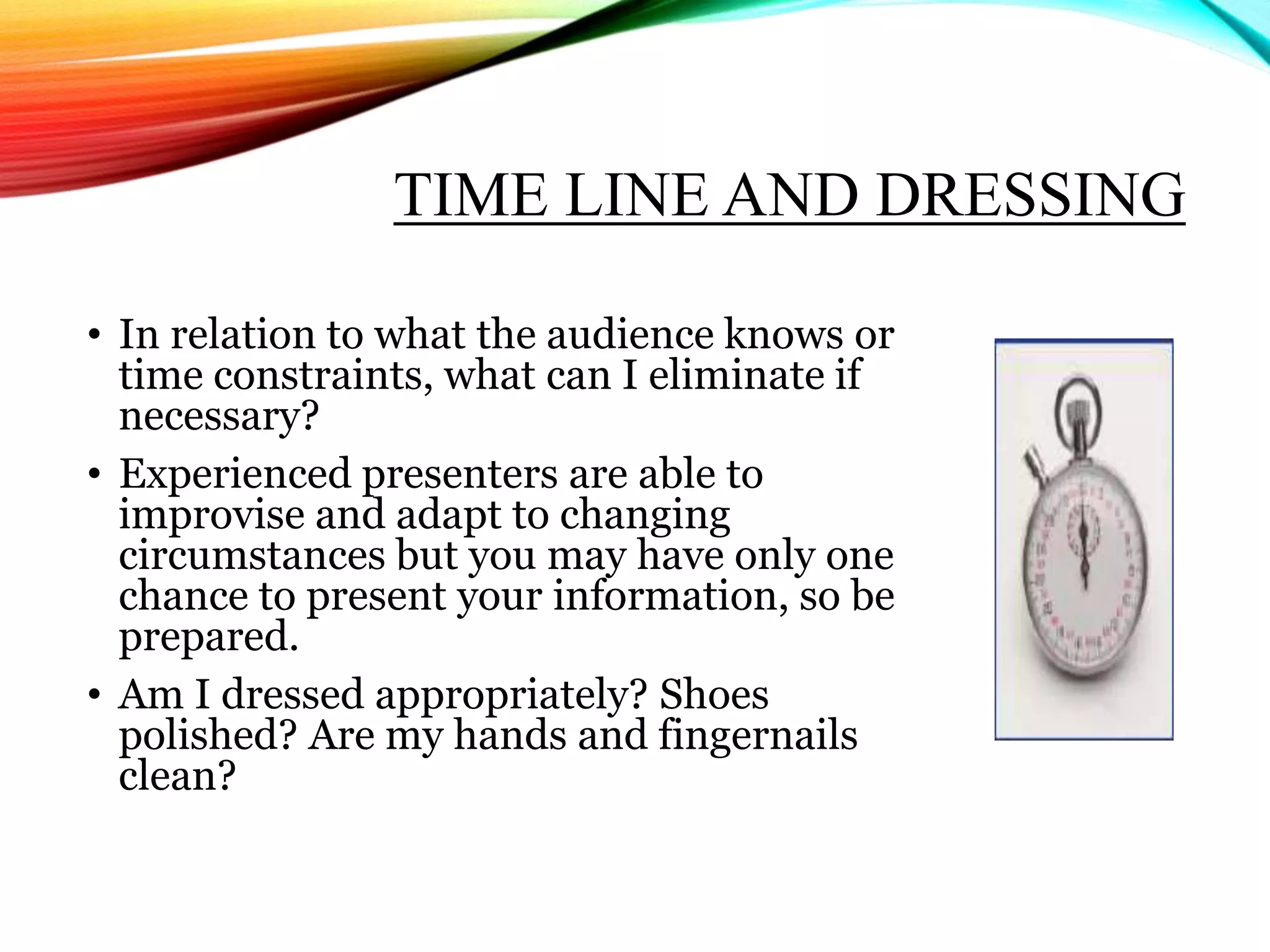
TIME LINE AND DRESSING
• In relation to what the audience knows or
time constraints, what can I eliminate if
necessary?
• Experienced presenters are able to
improvise and adapt to changing
circumstances but you may have only one
chance to present your information, so be
prepared.
• Am I dressed appropriately? Shoes
polished? Are my hands and fingernails
clean?
SECRETS OF SUCCESS
• Body Language
• Voice Clarity
• Text Clarity
• Pronunciation
• Serenity of environment
• Greet the audience
• Prepare handouts
• Eye Contact
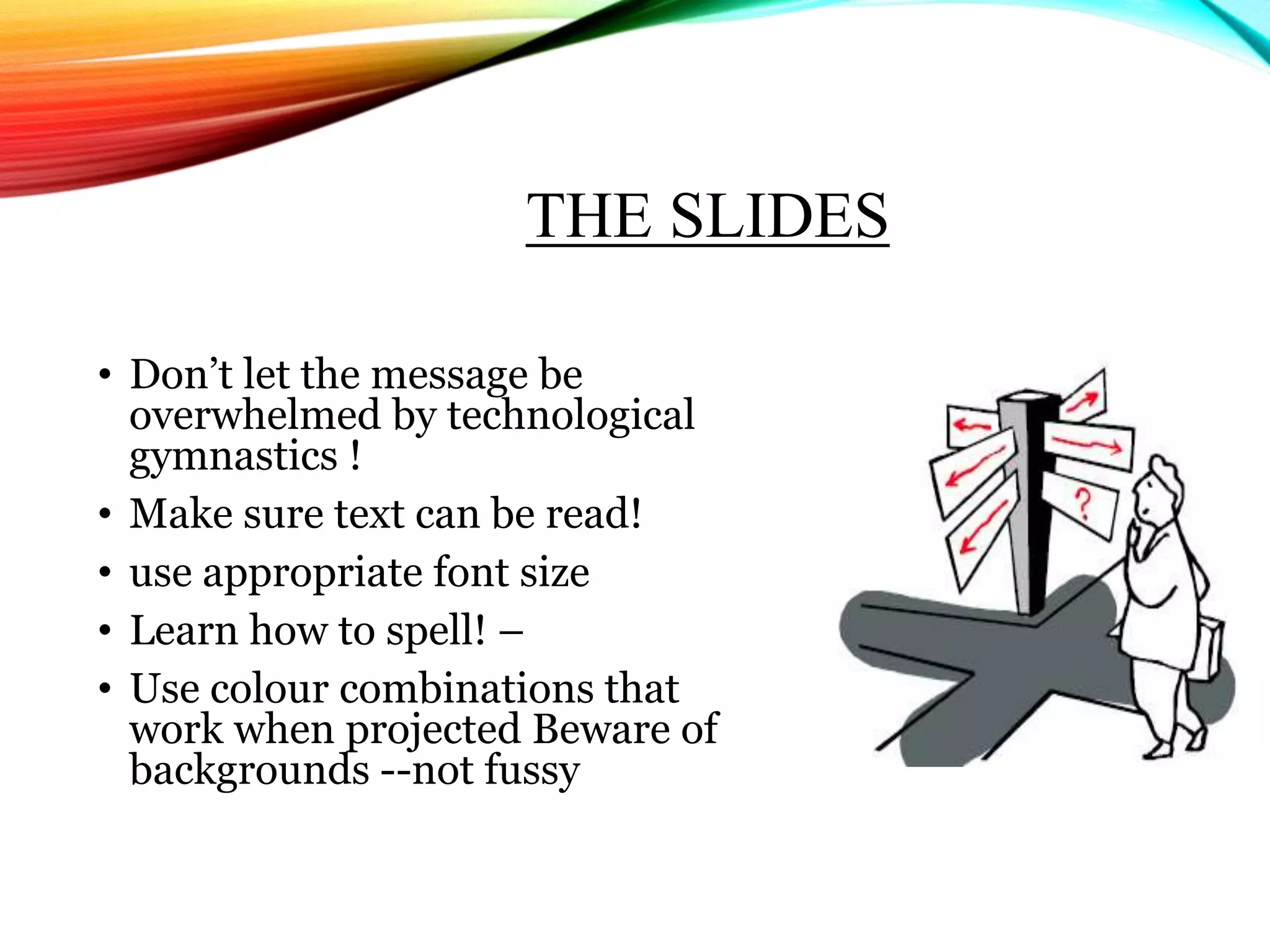
THE SLIDES
• Don’t let the message be
overwhelmed by technological
gymnastics !
• Make sure text can be read!
• use appropriate font size
• Learn how to spell! –
• Use colour combinations that
work when projected Beware of
backgrounds --not fussy
CONTD…
• Beware of animations/distractions
• (Beware of dual projection)(projection)
• Don’t change the background color frequently.
• Change the background when its extremely required
DO & DON’T
• use short sentences
• use short words
• use the active tense
• use lively language be
precise
• project your voice
• Write out exactly what
you are going to say and
learn it!
• use long complicated
sentences
• use long abstract words
• use passive tense
• use cliches
• Use monotone
• nervous ticks
• hands in pockets
ON THE DAY
• The person
• The talk
• The questions
Elements of Dynamic
THE PERSON
• Be on time
• Check out the hall and podium
• Know how the technology works
• Sit near the front at the edge of
a row
• Introduce yourself to the
chairperson
THE TALK
• Do relaxing exercises
beforehand
• Stand up
• Speak up
• Speak S L O W L Y
• Use pauses
• Use the pointer to point
• Say “thank you” at the end
RHETORICAL QUESTIONS
• A question that you ask without expecting it to be
answered.
• Have you ever seen/heard/experienced...?
• How can we explain this?
• What does that mean?
• What can be done about that?
• What does this imply for you, as a consumer?
FEAR
• Fear is a normal physiological response
• Everyone has a certain amount of stage fright
• Think positively (not negatively) about the event
• Don’t panic!
So first of all let me assert my firm belief that the only
thing we have to fear is fear itself
STAGES
Presentation Skills
PRESENTATION SKILLS
STAGES
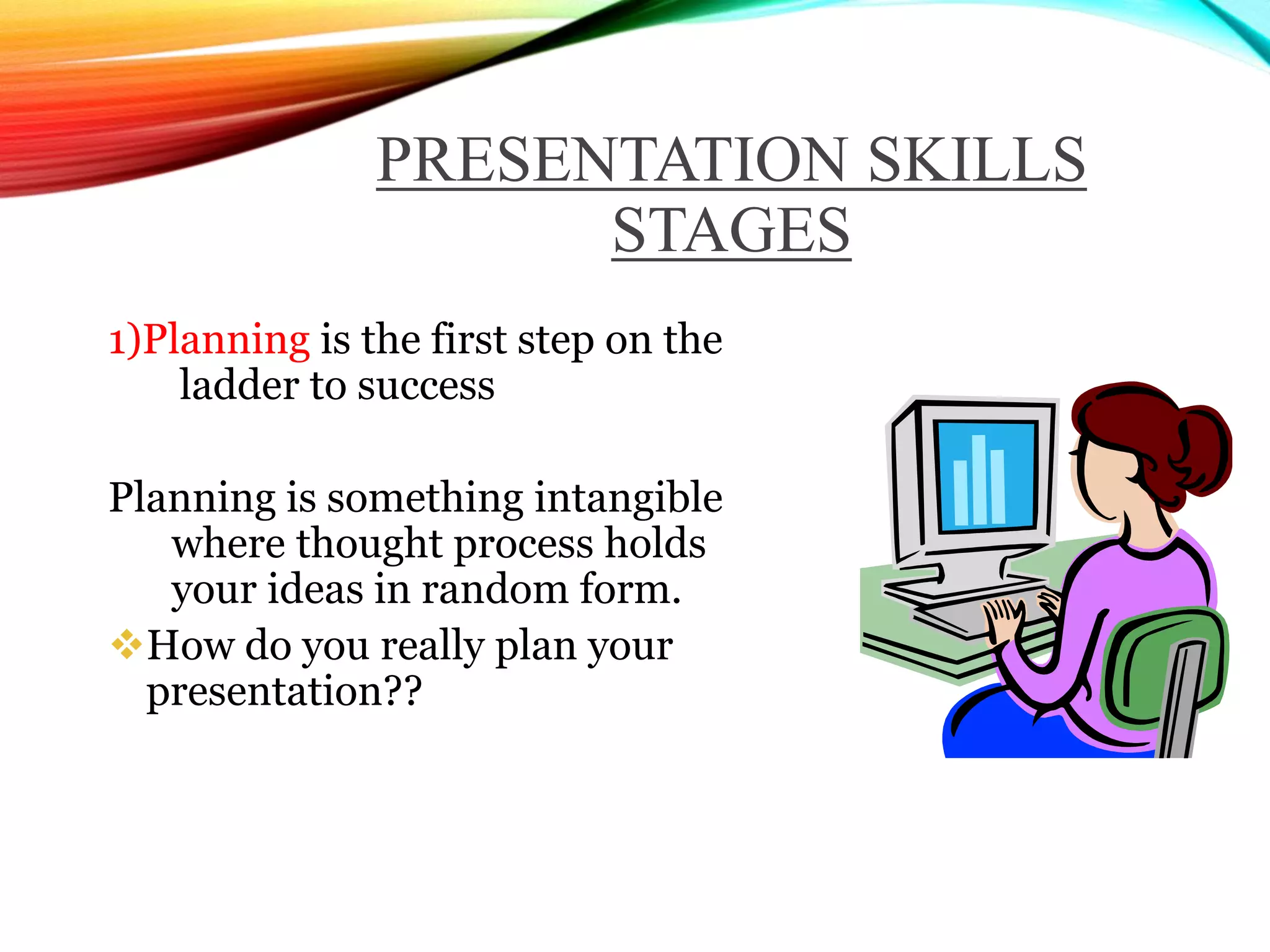
1)Planning is the first step on the
ladder to success
Planning is something intangible
where thought process holds
your ideas in random form.
How do you really plan your
presentation??
PRESENTATION SKILLS
Aspects in planning of a good presentation
 Subject Centered (Material)
 Audience Centered (Audience)
 Self Centered………means
(It should suit your temperament to define the topic with
command on its content)
2.Preparation:
Here to draft what was planned in stage Ist of the presentation.
This is a tangible effort and this well exercised preparation
bears fruit in the final presentation.
Remember one should not be getting ready to present on a
class room level rather he should prepare to face the real world
challenges.
This also includes rehearsal.
AUDIENCE ANALYSIS
• What is the audience interested in?
• What does the audience want?
• What does the audience already know and needs to
know?
• What are their needs, expectations from this
presentation?
PRESENTATION SKILLS
3.Presentation Time:
-. 2 to 2.5 mins--- opening/beginning
-.20 to 21 mins--- middle section
-.2 to 3 mins --- closing/end
-.5 mins --- questions
->Don’t change the background of the ppt
unless its extremely necessary for emphasize
4.Presentation
a) The Beginning
Should be carefully designed
Voice clarity can be judged from the last row of the audience.
Get attention
- shock, humor, question, story, facts &figures
- well rehearsed yet natural
Motivate audience to listen
- listen to their needs
b) Sequencing/Middle
Sequence should be logical & understandable
Interim summaries- Recaps
Value of visual aids-flip charts, handouts etc.
Use the 4 Ps
Position Possibilities
Problem Proposals(suggestions)
PRESENTATION SKILLS
c)Prepare Closing
Last 2 to 2.5 minutes are as critical as the first five minutes for
a successful presentation
Summarize- highlight important points
Don’t leave the audience in tension. In the middle part you can
araise tension to the utmost level but end presentation on a
soothing note/ suggestion to the issue.
VERBAL COMMUNICATION-
BARRIERS
Speaking too fast
Tone and content
Complicated or ambiguous language
Not questioning
Wrong pronunciation
Physical State of the audience (come in the
range of the audience)
PRESENTATION SKILLS
VISUALAIDS
While using an over head projector
face the audience while talking
Point with a pen
Appropriate lighting
Watch the colours
Ensure clear visibility
10 lines, 10 words per line
(Maximum)
 smile while seeing audience
PRSENTATION SKILLS
At the last :-
Question & Answers
Presentation Skills

Presentation Skills

  • 1.
  • 2.
    Represented By: SimalRizwan 1ST Proff Pharmacy
  • 3.
    PRESENTATION SKILLS • Whydo we need to know how to present information? • Public speaking is commonly feared by many people. • It can be a nerve-racking experience, but anxiety can be minimized. • Skills to be a good presenter can be developed with preparation and practice.
  • 4.
    PRESENTATION SKILLS: PLAN Preparation(planning) is the first step in giving a successful presentation. Aspects: • Purpose • Audience • Structure
  • 5.
    PREREQUISITES OF PRESENTATION SKILLS •Following are the questions concerning physical aspects before presentation: Who is the audience? What to present? How to present? Where will it take place? How big is the room? Does the equipment that I need work? Can the information be seen? What time of day is it?
  • 6.
    TIME LINE ANDDRESSING • In relation to what the audience knows or time constraints, what can I eliminate if necessary? • Experienced presenters are able to improvise and adapt to changing circumstances but you may have only one chance to present your information, so be prepared. • Am I dressed appropriately? Shoes polished? Are my hands and fingernails clean?
  • 7.
    SECRETS OF SUCCESS •Body Language • Voice Clarity • Text Clarity • Pronunciation • Serenity of environment • Greet the audience • Prepare handouts • Eye Contact
  • 8.
    THE SLIDES • Don’tlet the message be overwhelmed by technological gymnastics ! • Make sure text can be read! • use appropriate font size • Learn how to spell! – • Use colour combinations that work when projected Beware of backgrounds --not fussy
  • 9.
    CONTD… • Beware ofanimations/distractions • (Beware of dual projection)(projection) • Don’t change the background color frequently. • Change the background when its extremely required
  • 10.
    DO & DON’T •use short sentences • use short words • use the active tense • use lively language be precise • project your voice • Write out exactly what you are going to say and learn it! • use long complicated sentences • use long abstract words • use passive tense • use cliches • Use monotone • nervous ticks • hands in pockets
  • 11.
    ON THE DAY •The person • The talk • The questions Elements of Dynamic
  • 12.
    THE PERSON • Beon time • Check out the hall and podium • Know how the technology works • Sit near the front at the edge of a row • Introduce yourself to the chairperson
  • 13.
    THE TALK • Dorelaxing exercises beforehand • Stand up • Speak up • Speak S L O W L Y • Use pauses • Use the pointer to point • Say “thank you” at the end
  • 14.
    RHETORICAL QUESTIONS • Aquestion that you ask without expecting it to be answered. • Have you ever seen/heard/experienced...? • How can we explain this? • What does that mean? • What can be done about that? • What does this imply for you, as a consumer?
  • 15.
    FEAR • Fear isa normal physiological response • Everyone has a certain amount of stage fright • Think positively (not negatively) about the event • Don’t panic! So first of all let me assert my firm belief that the only thing we have to fear is fear itself
  • 16.
  • 17.
    PRESENTATION SKILLS STAGES 1)Planning isthe first step on the ladder to success Planning is something intangible where thought process holds your ideas in random form. How do you really plan your presentation??
  • 18.
    PRESENTATION SKILLS Aspects inplanning of a good presentation  Subject Centered (Material)  Audience Centered (Audience)  Self Centered………means (It should suit your temperament to define the topic with command on its content)
  • 19.
    2.Preparation: Here to draftwhat was planned in stage Ist of the presentation. This is a tangible effort and this well exercised preparation bears fruit in the final presentation. Remember one should not be getting ready to present on a class room level rather he should prepare to face the real world challenges. This also includes rehearsal.
  • 20.
    AUDIENCE ANALYSIS • Whatis the audience interested in? • What does the audience want? • What does the audience already know and needs to know? • What are their needs, expectations from this presentation?
  • 21.
    PRESENTATION SKILLS 3.Presentation Time: -.2 to 2.5 mins--- opening/beginning -.20 to 21 mins--- middle section -.2 to 3 mins --- closing/end -.5 mins --- questions ->Don’t change the background of the ppt unless its extremely necessary for emphasize
  • 22.
    4.Presentation a) The Beginning Shouldbe carefully designed Voice clarity can be judged from the last row of the audience. Get attention - shock, humor, question, story, facts &figures - well rehearsed yet natural Motivate audience to listen - listen to their needs
  • 23.
    b) Sequencing/Middle Sequence shouldbe logical & understandable Interim summaries- Recaps Value of visual aids-flip charts, handouts etc. Use the 4 Ps Position Possibilities Problem Proposals(suggestions)
  • 24.
    PRESENTATION SKILLS c)Prepare Closing Last2 to 2.5 minutes are as critical as the first five minutes for a successful presentation Summarize- highlight important points Don’t leave the audience in tension. In the middle part you can araise tension to the utmost level but end presentation on a soothing note/ suggestion to the issue.
  • 25.
    VERBAL COMMUNICATION- BARRIERS Speaking toofast Tone and content Complicated or ambiguous language Not questioning Wrong pronunciation Physical State of the audience (come in the range of the audience)
  • 26.
    PRESENTATION SKILLS VISUALAIDS While usingan over head projector face the audience while talking Point with a pen Appropriate lighting Watch the colours Ensure clear visibility 10 lines, 10 words per line (Maximum)  smile while seeing audience
  • 27.
    PRSENTATION SKILLS At thelast :- Question & Answers