
Process of Communication
Stages of Communication 
Communication is a dynamic interactive 
process. It consists of five steps which are as 
follows: 
 Ideation 
 Encoding 
 Transmission 
 Decoding 
 Response (Feedback)
Ideation 
 Formation of idea or selection of a message 
to be communicated. 
 Consists of “What” of communication------ 
content of the specific message. 
 Scope of ideation------determined by the 
sender’s knowledge, experiences and 
abilities as well as the purpose of 
communication and the context.
……Continued 
Types of Messages 
 Logical -----Factual information 
 Emotional------Feelings and emotions
Ideation in a Formal Communicative 
Situation 
 Finding and selecting a subject or general 
topic 
 Looking for ideas and thoughts 
 Deciding the type and sources of 
information.
Encoding 
 The process of changing the information into 
some form of logical and the coded message. 
 In a formal situation, encoding involves: 
 Selecting a language 
 Selecting a medium of communication 
 Selecting an appropriate communication 
form
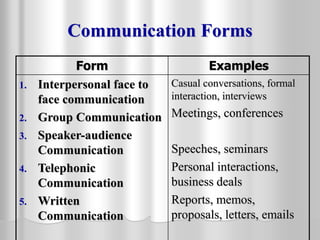
Communication Forms 
Form Examples 
1. Interpersonal face to 
face communication 
2. Group Communication 
3. Speaker-audience 
Communication 
4. Telephonic 
Communication 
5. Written 
Communication 
Casual conversations, formal 
interaction, interviews 
Meetings, conferences 
Speeches, seminars 
Personal interactions, 
business deals 
Reports, memos, 
proposals, letters, emails
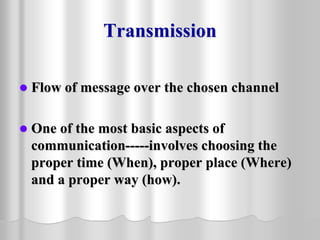
Transmission 
 Flow of message over the chosen channel 
 One of the most basic aspects of 
communication-----involves choosing the 
proper time (When), proper place (Where) 
and a proper way (how).
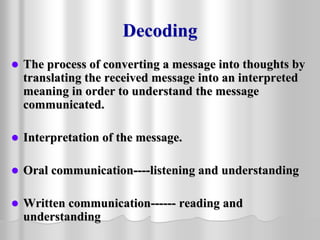
Decoding 
 The process of converting a message into thoughts by 
translating the received message into an interpreted 
meaning in order to understand the message 
communicated. 
 Interpretation of the message. 
 Oral communication----listening and understanding 
 Written communication------ reading and 
understanding
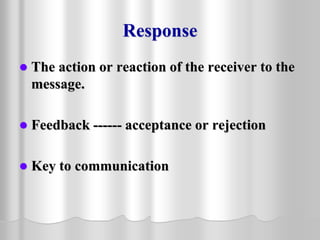
Response 
 The action or reaction of the receiver to the 
message. 
 Feedback ------ acceptance or rejection 
 Key to communication
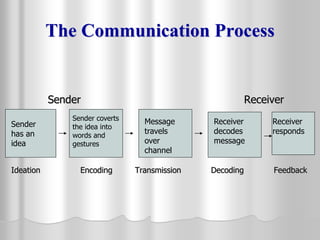
The Communication Process 
Sender Receiver 
Sender 
has an 
idea 
Sender coverts 
the idea into 
words and 
gestures 
Message 
travels 
over 
channel 
Receiver 
decodes 
message 
Receiver 
responds 
Ideation Encoding Transmission Decoding Feedback
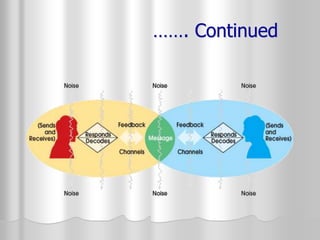
……. Continued
Some Basic Truths about 
Communication 
 Meanings sent are not always received 
 No two minds have identical filters, 
storehouses of words, gestures, facial 
expressions 
 They might not attach same meanings to all 
symbols
…………….Continued 
 Meaning is in the mind 
 Consider the communication abilities of 
the receivers 
 Receivers do not look at the meaning 
alone; they also look for the intended 
meaning
………………….Continued 
 The symbols of communication are 
imperfect 
 Words are crude substitutes for the real 
thing 
 Man, dog, house and run etc. 
 Communicators vary in their ability to 
communicate thoughts 
 Lack of equivalent words in various 
cultures
Resulting stress on 
adaptation 
 Adaptation of messages to the minds of 
receivers 
 Adaptation ---- fitting the message to the 
recipients
Differences between Written and 
Oral Communication 
 Written Communication--- usually involves 
creative effort 
 Oral face to face communication---- 
communication cycles occur fast 
 Written communication---- messages may 
communicate over extremely long time 
periods (e-mails and text messages are 
exceptions). 
 Limited number of communication cycles in 
written communication
Revised Process of Communication

Revised Process of Communication

  • 1.
  • 2.
    Stages of Communication Communication is a dynamic interactive process. It consists of five steps which are as follows:  Ideation  Encoding  Transmission  Decoding  Response (Feedback)
  • 3.
    Ideation  Formationof idea or selection of a message to be communicated.  Consists of “What” of communication------ content of the specific message.  Scope of ideation------determined by the sender’s knowledge, experiences and abilities as well as the purpose of communication and the context.
  • 4.
    ……Continued Types ofMessages  Logical -----Factual information  Emotional------Feelings and emotions
  • 5.
    Ideation in aFormal Communicative Situation  Finding and selecting a subject or general topic  Looking for ideas and thoughts  Deciding the type and sources of information.
  • 6.
    Encoding  Theprocess of changing the information into some form of logical and the coded message.  In a formal situation, encoding involves:  Selecting a language  Selecting a medium of communication  Selecting an appropriate communication form
  • 7.
    Communication Forms FormExamples 1. Interpersonal face to face communication 2. Group Communication 3. Speaker-audience Communication 4. Telephonic Communication 5. Written Communication Casual conversations, formal interaction, interviews Meetings, conferences Speeches, seminars Personal interactions, business deals Reports, memos, proposals, letters, emails
  • 8.
    Transmission  Flowof message over the chosen channel  One of the most basic aspects of communication-----involves choosing the proper time (When), proper place (Where) and a proper way (how).
  • 9.
    Decoding  Theprocess of converting a message into thoughts by translating the received message into an interpreted meaning in order to understand the message communicated.  Interpretation of the message.  Oral communication----listening and understanding  Written communication------ reading and understanding
  • 10.
    Response  Theaction or reaction of the receiver to the message.  Feedback ------ acceptance or rejection  Key to communication
  • 11.
    The Communication Process Sender Receiver Sender has an idea Sender coverts the idea into words and gestures Message travels over channel Receiver decodes message Receiver responds Ideation Encoding Transmission Decoding Feedback
  • 12.
  • 13.
    Some Basic Truthsabout Communication  Meanings sent are not always received  No two minds have identical filters, storehouses of words, gestures, facial expressions  They might not attach same meanings to all symbols
  • 14.
    …………….Continued  Meaningis in the mind  Consider the communication abilities of the receivers  Receivers do not look at the meaning alone; they also look for the intended meaning
  • 15.
    ………………….Continued  Thesymbols of communication are imperfect  Words are crude substitutes for the real thing  Man, dog, house and run etc.  Communicators vary in their ability to communicate thoughts  Lack of equivalent words in various cultures
  • 16.
    Resulting stress on adaptation  Adaptation of messages to the minds of receivers  Adaptation ---- fitting the message to the recipients
  • 17.
    Differences between Writtenand Oral Communication  Written Communication--- usually involves creative effort  Oral face to face communication---- communication cycles occur fast  Written communication---- messages may communicate over extremely long time periods (e-mails and text messages are exceptions).  Limited number of communication cycles in written communication