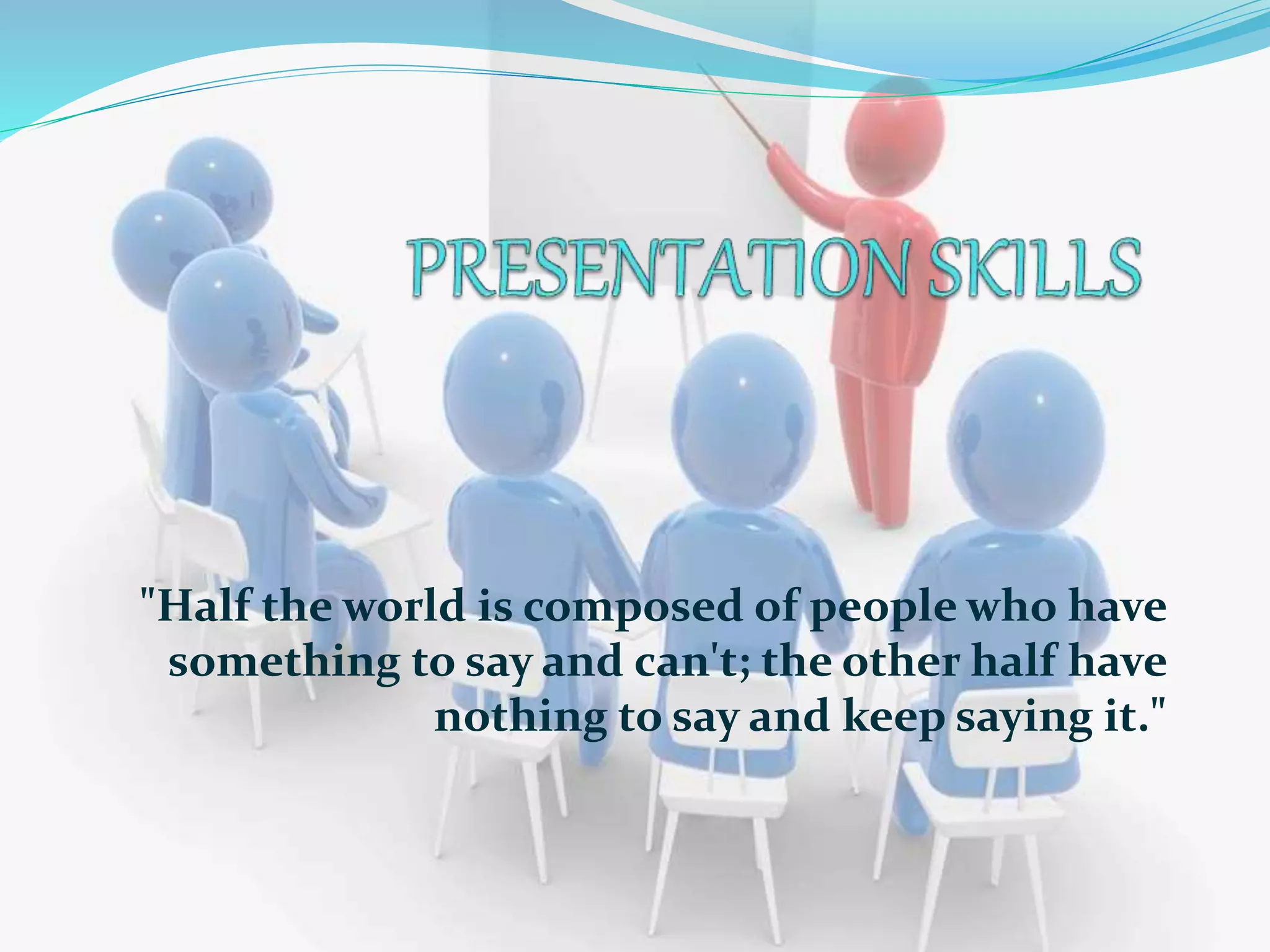
"Half the world is composed of people who have
something to say and can't; the other half have
nothing to say and keep saying it."
Do We Know?
 What is a presentation?
 What is difference between
presentation and speaking?
 Why do we need presentation skills?
What does a presentation include?
 Conveying skills : Presenter
 Listening skills : Audience
 Body Language : Presenter & Audience
ACTIVITY
story
Conveying Skills
 We don’t just speak but we convey…in-order to
convey…we have to speak differently and effectively
 Elements of effective speaking
 Accent
 Breath on voice
 Voice production
 Volume
 Clarity
 Variety
“There are always three speeches,
for every one . The one you
practiced, the one you gave, and the
one you wish you gave.”
ACTIVITY
Restaurant order
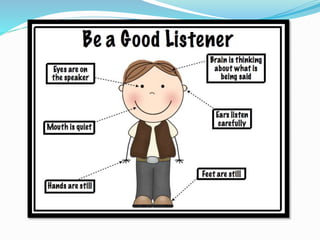
Listening Skills
 Attention
 Open mind
 Participation
 Ask questions….but don’t interrupt
 Feedback
“The success of your
presentation will be judged not
by the knowledge you send but
by what the listener receives”
ACTIVITY
Balloon
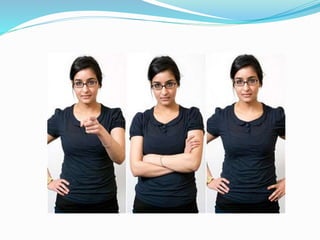
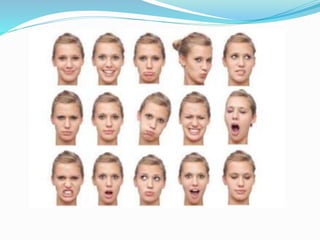
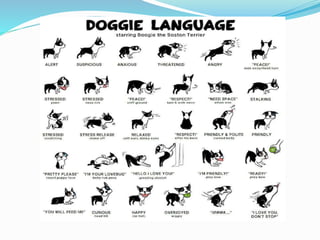
Body Language
 Body language is a kind of nonverbal communication,
where thoughts, intentions, or feelings are expressed by
physical behaviors, such as
 Facial expressions
 Body posture/gestures
 Eye movement
 Touch
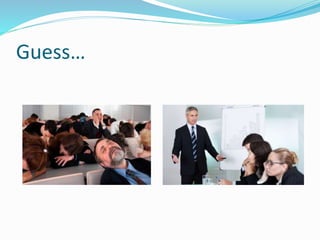
Guess…
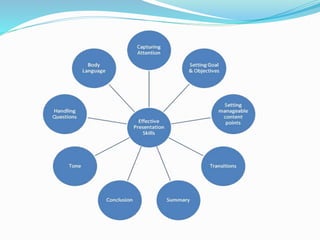
Effective presentation
Anyone can give a presentation,
Not everyone can give an
effective presentation
• Be Prepared
• Use examples
• Stay Relaxed
• Use Natural Humor
• Plan Your Body & Hand Positions
• Ask questions
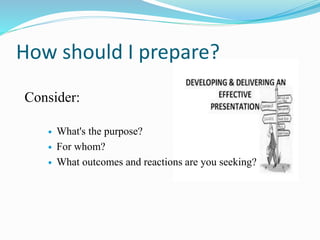
How should I prepare?
Consider:
 What's the purpose?
 For whom?
 What outcomes and reactions are you seeking?
How should I present?
 Open with a smile : )
 Be confident
 Eye contact
 Slow down
 Entertain
 Do apologize if you are wrong
 Acknowledge
 Summarize
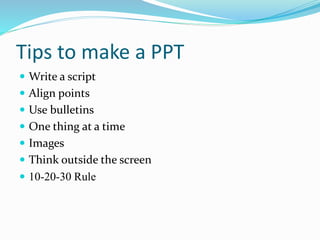
Tips to make a PPT
 Write a script
 Align points
 Use bulletins
 One thing at a time
 Images
 Think outside the screen
 10-20-30 Rule
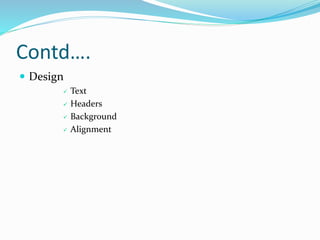
Contd….
 Design
 Text
 Headers
 Background
 Alignment
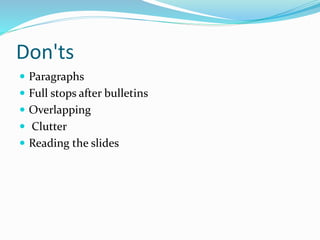
Don'ts
 Paragraphs
 Full stops after bulletins
 Overlapping
 Clutter
 Reading the slides
“Proper Planning and Preparation Prevents Poor
Performance”

Presentation skills

  • 1.
    "Half the worldis composed of people who have something to say and can't; the other half have nothing to say and keep saying it."
  • 2.
    Do We Know? What is a presentation?  What is difference between presentation and speaking?  Why do we need presentation skills?
  • 3.
    What does apresentation include?  Conveying skills : Presenter  Listening skills : Audience  Body Language : Presenter & Audience
  • 4.
  • 5.
    Conveying Skills  Wedon’t just speak but we convey…in-order to convey…we have to speak differently and effectively  Elements of effective speaking  Accent  Breath on voice  Voice production  Volume  Clarity  Variety
  • 6.
    “There are alwaysthree speeches, for every one . The one you practiced, the one you gave, and the one you wish you gave.”
  • 7.
  • 8.
    Listening Skills  Attention Open mind  Participation  Ask questions….but don’t interrupt  Feedback
  • 14.
    “The success ofyour presentation will be judged not by the knowledge you send but by what the listener receives”
  • 15.
  • 16.
    Body Language  Bodylanguage is a kind of nonverbal communication, where thoughts, intentions, or feelings are expressed by physical behaviors, such as  Facial expressions  Body posture/gestures  Eye movement  Touch
  • 17.
  • 21.
    Effective presentation Anyone cangive a presentation, Not everyone can give an effective presentation • Be Prepared • Use examples • Stay Relaxed • Use Natural Humor • Plan Your Body & Hand Positions • Ask questions
  • 22.
    How should Iprepare? Consider:  What's the purpose?  For whom?  What outcomes and reactions are you seeking?
  • 23.
    How should Ipresent?  Open with a smile : )  Be confident  Eye contact  Slow down  Entertain  Do apologize if you are wrong  Acknowledge  Summarize
  • 26.
    Tips to makea PPT  Write a script  Align points  Use bulletins  One thing at a time  Images  Think outside the screen  10-20-30 Rule
  • 27.
    Contd….  Design  Text Headers  Background  Alignment
  • 28.
    Don'ts  Paragraphs  Fullstops after bulletins  Overlapping  Clutter  Reading the slides
  • 29.
    “Proper Planning andPreparation Prevents Poor Performance”