Interpersonal Perception
Characteristics of perceiver and perceived
PRAVEEN C B
INTRODUCTION
 Interpersonal perception is a specific area of psychology related
to how people view one another.
 This theory of perception is considered an important part of
effective communication because it examines the various
judgments that people make about others based on both verbal
and non-verbal cues.
 Understanding these behaviors is often helpful for eliciting
favorable reactions from other people.
 Studying this type of perception requires an observation of at
least two people.
 Several sub-categories of social psychology, such as stereotyping
and accentuation, are also tied to this theory of perception.
 interpersonal perception also entails examining factors such
as bias and perceived personality.
 Many people tend to place others in certain categories upon
first meeting them.
 These labels can be "friendly" versus "hostile" or "reliable"
versus "untrustworthy" for instance.
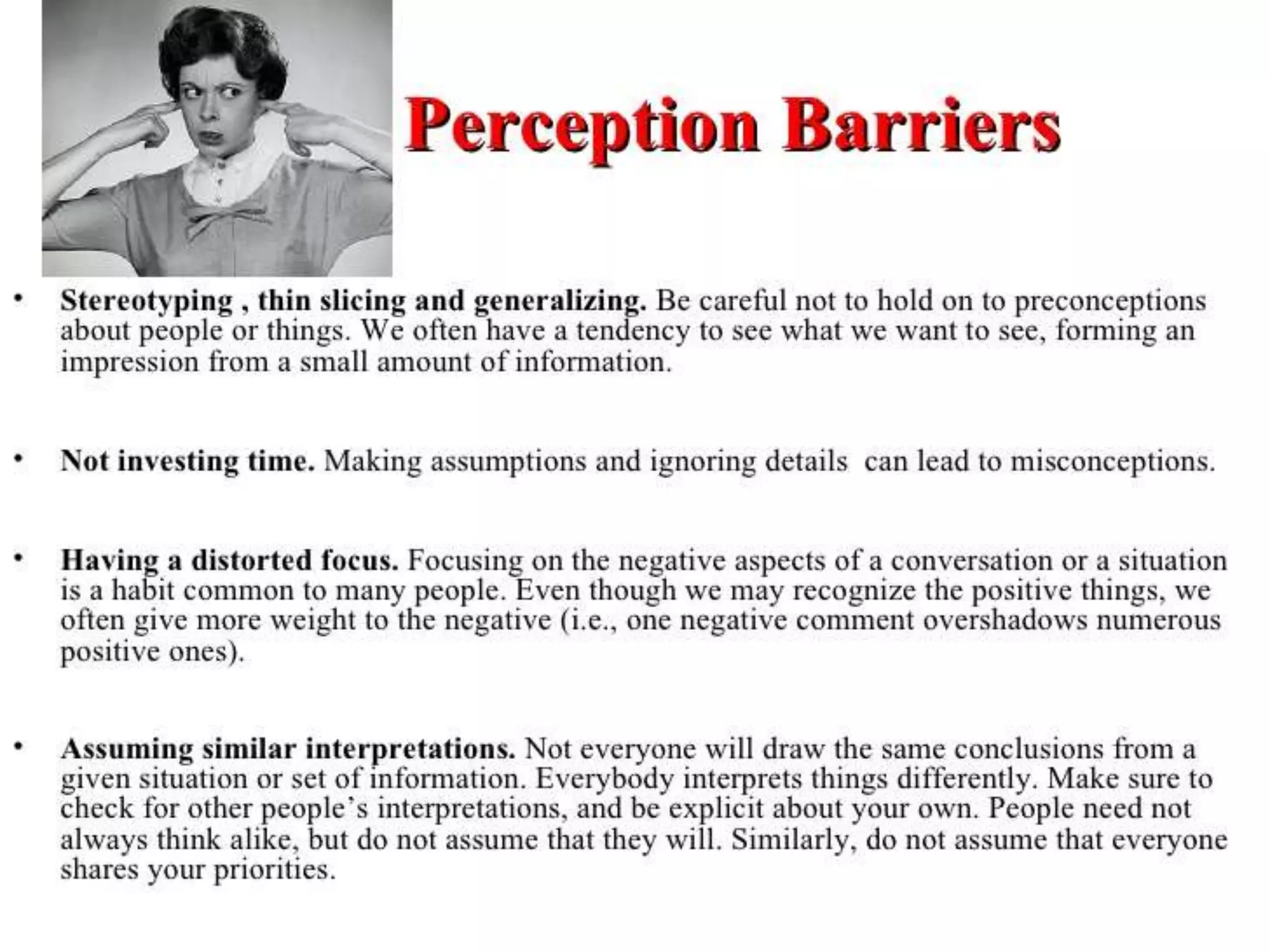
 Initial impressions may have a limited basis in reality, as
different people tend to make them according to their
backgrounds and personalities.
 A main area of interpersonal perception is the study of how
personalities shape these kinds of judgments.
 f
 Interpersonal skills
Studying facial expressions may be helpful when studying good interpersonal skills
interpersonal perception.
 People with social impairment tend to miss social
cues that others pick up on . Studying interpersonal perception requires an observation of at
least two people people
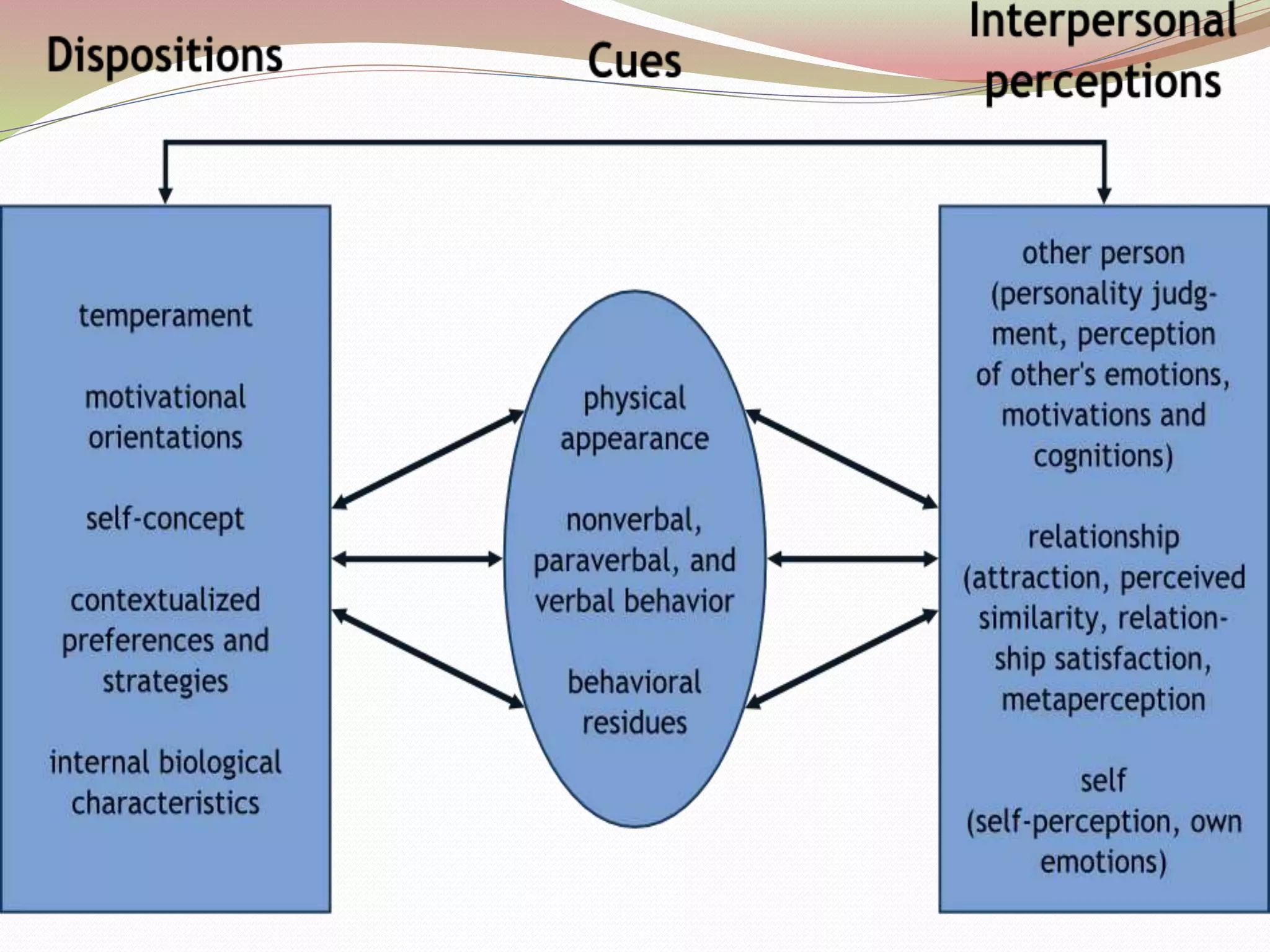
 The interplay of personality and social relationships is
influenced by three classes of variables:
1. Dispositions (as measured by self-report
questionnaires, indirect tests of personality or
biological measures)
2. Cues (appearances, behaviors, and behavioral
residues, as measured by direct observation), and
3. Interpersonal perceptions (as measured by other-
reports at zero, short-term, or long-term
acquaintance). Examples for types of main variables
for analyzing personality and social relationships are
depicted here:
 CHARACTERISTICS OF PERCEIVER
 Perceivers don’t have anywhere near the need for structure
or organization that Judgers do.
 A strong Perceiver would not find it strange at all when a
stockbroker suddenly chucked his whole career and moved
to the South Pacific to pursue painting and live off the land
and sea. But that’s the life choice Gaugin made—and never
looked back.
 Our Perceiver vacationer can truly only have fun "running
barefoot in the park." As you might imagine, many Perceivers
take up artistic and/or entrepreneurial careers, where
creativity, flexibility, and risk-taking are rewarded.
 Perceivers like to hang loose, roll around their options, look at
various perspectives on issues, and move spontaneously.
Conclusion
 Perceiving and Judging are both necessary and desirable
processes, but they can lead to a lot of self-fulfilling prophecies.
Perceivers may say "everything will work out in the end," while
Judgers retort "Yes, but it takes a bunch of us Judgers to work out
the mess you Perceivers have left for us to clean up!"
 As with all the other letters, any one process adopted to the
exclusion of its opposite balancing force will result in a lopsided
approach to communication, management, and just plain
successful living. Nobody can afford to follow one style exclusively,
especially "when the stakes are high." We need them all.
Interpersonal Perception Characteristics of perceiver and perceived

Interpersonal Perception Characteristics of perceiver and perceived

  • 1.
    Interpersonal Perception Characteristics ofperceiver and perceived PRAVEEN C B
  • 2.
    INTRODUCTION  Interpersonal perceptionis a specific area of psychology related to how people view one another.  This theory of perception is considered an important part of effective communication because it examines the various judgments that people make about others based on both verbal and non-verbal cues.  Understanding these behaviors is often helpful for eliciting favorable reactions from other people.  Studying this type of perception requires an observation of at least two people.  Several sub-categories of social psychology, such as stereotyping and accentuation, are also tied to this theory of perception.
  • 3.
     interpersonal perceptionalso entails examining factors such as bias and perceived personality.  Many people tend to place others in certain categories upon first meeting them.  These labels can be "friendly" versus "hostile" or "reliable" versus "untrustworthy" for instance.  Initial impressions may have a limited basis in reality, as different people tend to make them according to their backgrounds and personalities.  A main area of interpersonal perception is the study of how personalities shape these kinds of judgments.
  • 4.
     f  Interpersonalskills Studying facial expressions may be helpful when studying good interpersonal skills interpersonal perception.  People with social impairment tend to miss social cues that others pick up on . Studying interpersonal perception requires an observation of at least two people people
  • 5.
     The interplayof personality and social relationships is influenced by three classes of variables: 1. Dispositions (as measured by self-report questionnaires, indirect tests of personality or biological measures) 2. Cues (appearances, behaviors, and behavioral residues, as measured by direct observation), and 3. Interpersonal perceptions (as measured by other- reports at zero, short-term, or long-term acquaintance). Examples for types of main variables for analyzing personality and social relationships are depicted here:
  • 10.
     CHARACTERISTICS OFPERCEIVER  Perceivers don’t have anywhere near the need for structure or organization that Judgers do.  A strong Perceiver would not find it strange at all when a stockbroker suddenly chucked his whole career and moved to the South Pacific to pursue painting and live off the land and sea. But that’s the life choice Gaugin made—and never looked back.
  • 11.
     Our Perceivervacationer can truly only have fun "running barefoot in the park." As you might imagine, many Perceivers take up artistic and/or entrepreneurial careers, where creativity, flexibility, and risk-taking are rewarded.  Perceivers like to hang loose, roll around their options, look at various perspectives on issues, and move spontaneously.
  • 12.
    Conclusion  Perceiving andJudging are both necessary and desirable processes, but they can lead to a lot of self-fulfilling prophecies. Perceivers may say "everything will work out in the end," while Judgers retort "Yes, but it takes a bunch of us Judgers to work out the mess you Perceivers have left for us to clean up!"  As with all the other letters, any one process adopted to the exclusion of its opposite balancing force will result in a lopsided approach to communication, management, and just plain successful living. Nobody can afford to follow one style exclusively, especially "when the stakes are high." We need them all.