Leadership in Management – Styles
Approaches and theories
1
Objectives
2
• Haveknowledgeabout leadershipandits
responsibilities.
• Learn about the approaches &theories of
leadership.
• Knowabout functions and qualities ofleaders.
• Understand techniques of leadership.
• Understand the characteristics and leadership
styles
Introduction
3
• Successofabusinessconcern isdependent
upon the ability ofits leadership.
• Leadershipexistsin anytype of organization.
• Leadersare responsiblefor successofan
organization.
• Leadersare born &also made.
Definition
4
• KoontzandO’Donnel: The leadership isone
the art ofinfluencing people.
• Peter Drucker: The leadership isone liftingof
man’svisionto higher rights.
• AlfordandBeatty,Theleadershipisability to
secure desired actions
Need or Importance
of Leadership
5
• Perfect organization structure.
• Directing group activities
• Technological,economic &social changes
• Better utilization of manpower
• Avoidingimbalance
Need or Importance
of Leadership
6
• Sourceof motivation
• Reconciliation of goals
• Developinggoodhuman relationship
• Promoting the spirit ofco ordination
• Fulfillingsocial responsibilities
Approaches or theories
of Leadership
7
• Trait’s theory
• Extraversion ,Conscientiousness, Openness
• EmotionalIntelligence (Qualified)
• Trait means quality
• Theoriesthat consider personality, social,physical,or
intellectual traits to differentiate leadersfrom non-leaders
• WeaknessofTrait’s theory
– Nocommon equalities list
– Measurementof quality
– Noscopefor future development
– Noconsiderationfor situational factors
Approaches or theories
of Leadership
8
• Behavioralapproach theory
• Situational approach theory
• Follower’sor acceptance theory
• System theory
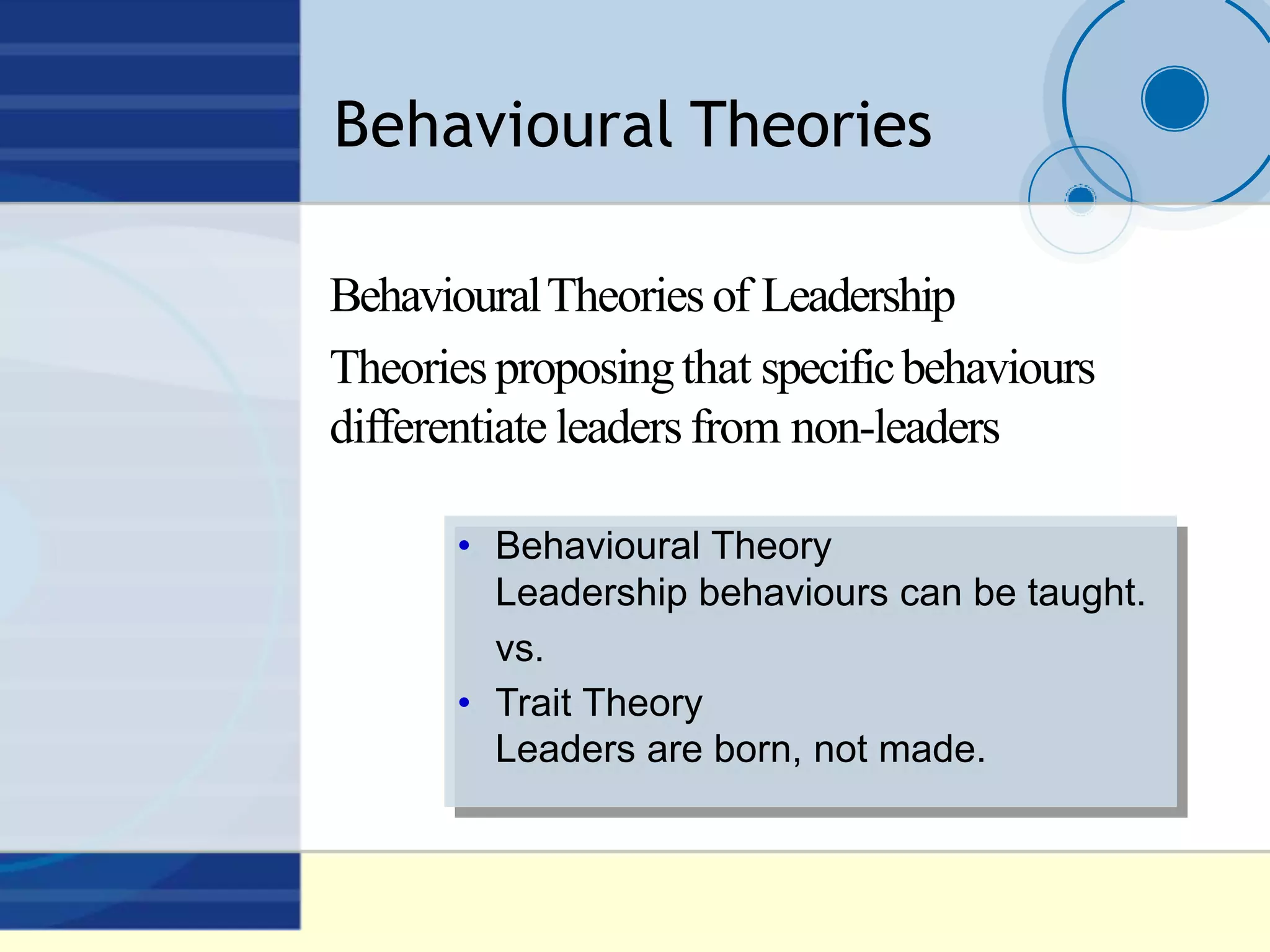
Behavioural Theories
BehaviouralTheoriesof Leadership
Theoriesproposingthat specificbehaviours
differentiate leaders from non-leaders
• Behavioural Theory
Leadership behaviours can be taught.
vs.
• Trait Theory
Leaders are born, not made.
• Behavioural Theory
Leadership behaviours can be taught.
vs.
• Trait Theory
Leaders are born, not made.
Functions of Leader
10
• Taking initiatives
• Representation
• Guide
• Encouragingothers
• Arbitrator andMediator
Functions of Leader
11
• Planner
• Rewards &punishment
• Integration
• Communication
• Production
Qualities of Leader
12
• Physicalappearance &strength
• Mental vigor
• Emotional stability
• Senseof judgment
• Goodwill
Qualities of Leader
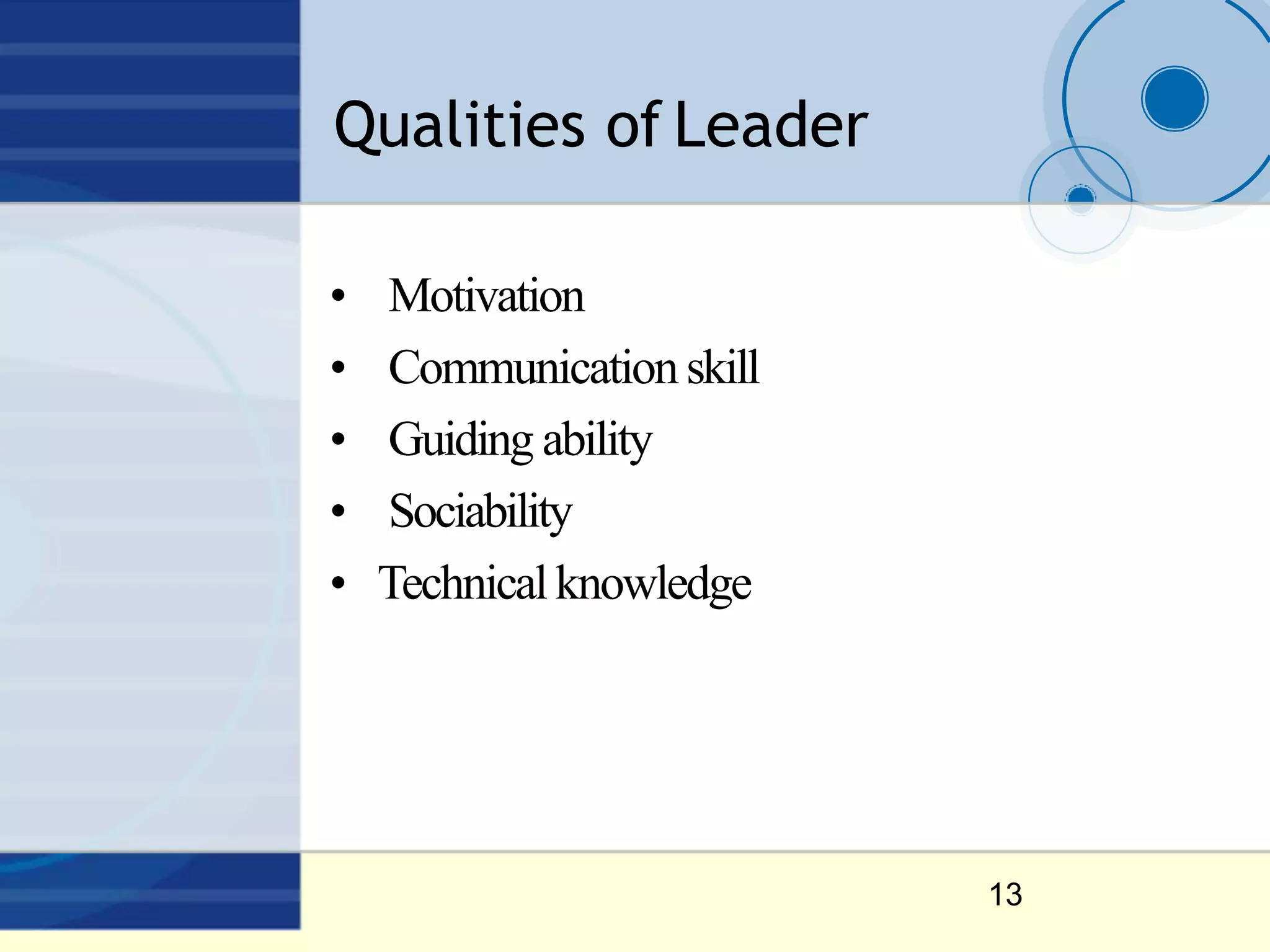
13
• Motivation
• Communicationskill
• Guiding ability
• Sociability
• Technicalknowledge
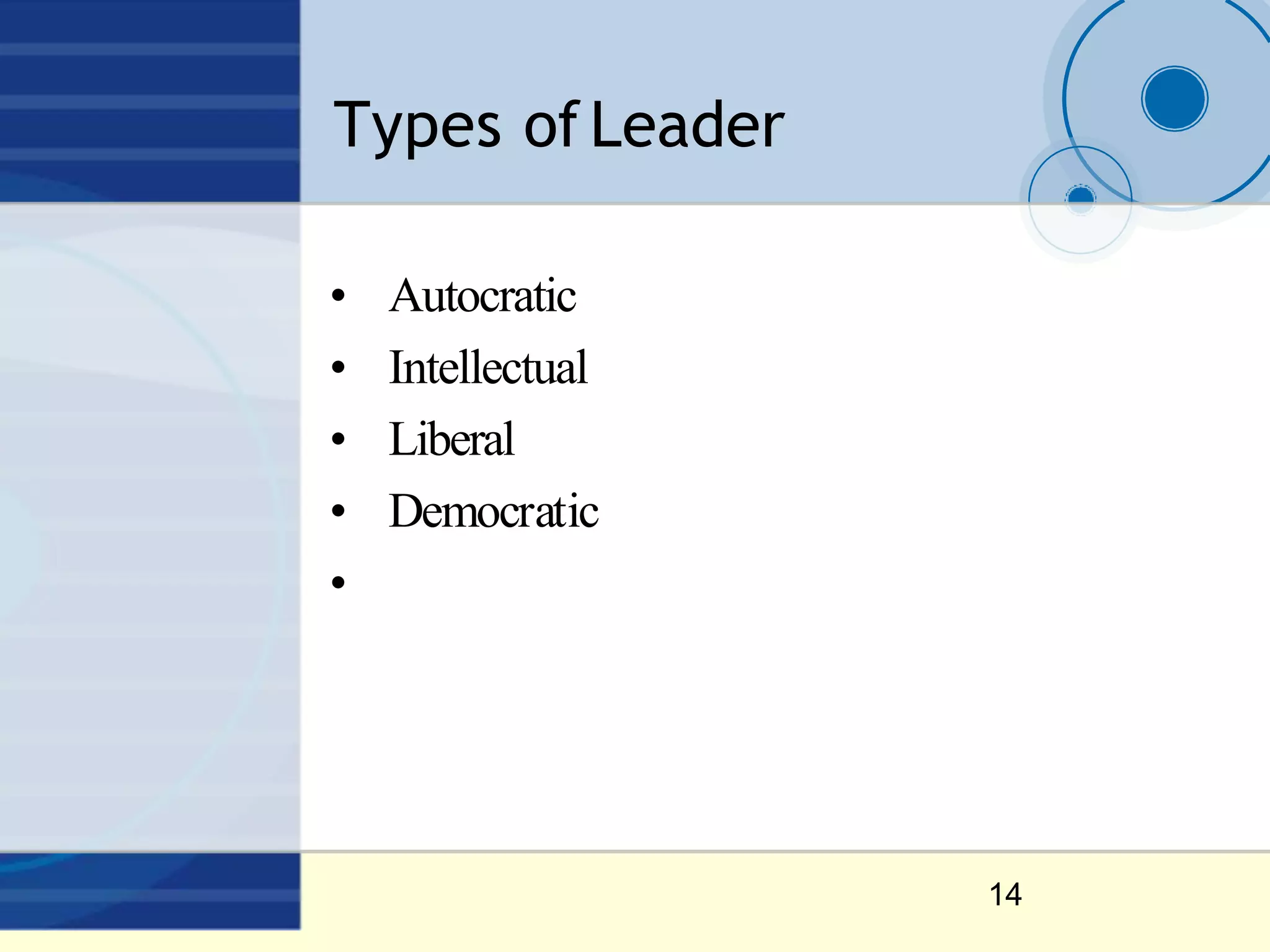
Types ofLeader
14
• Autocratic
• Intellectual
• Liberal
• Democratic
•
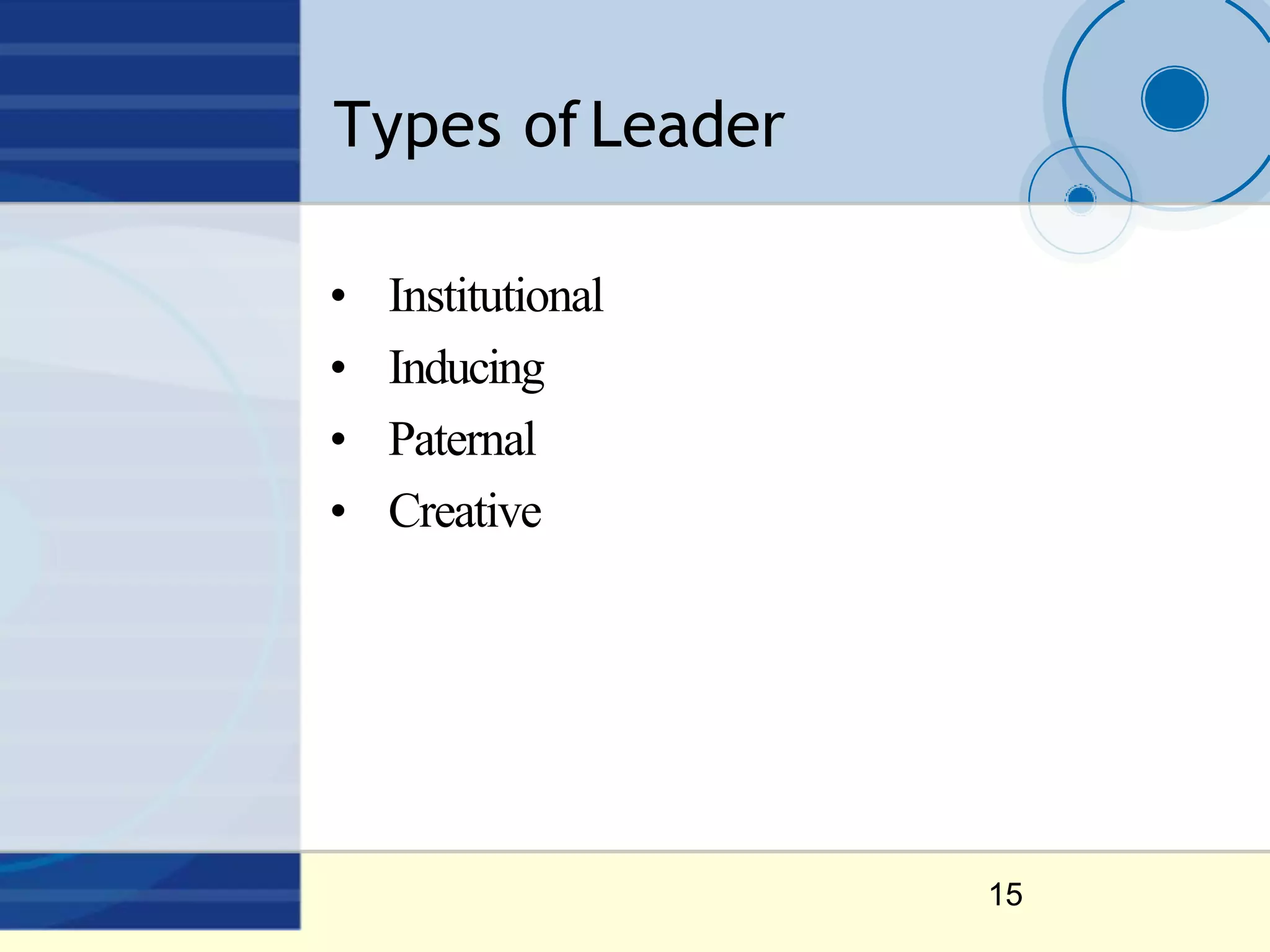
Types ofLeader
15
• Institutional
• Inducing
• Paternal
• Creative
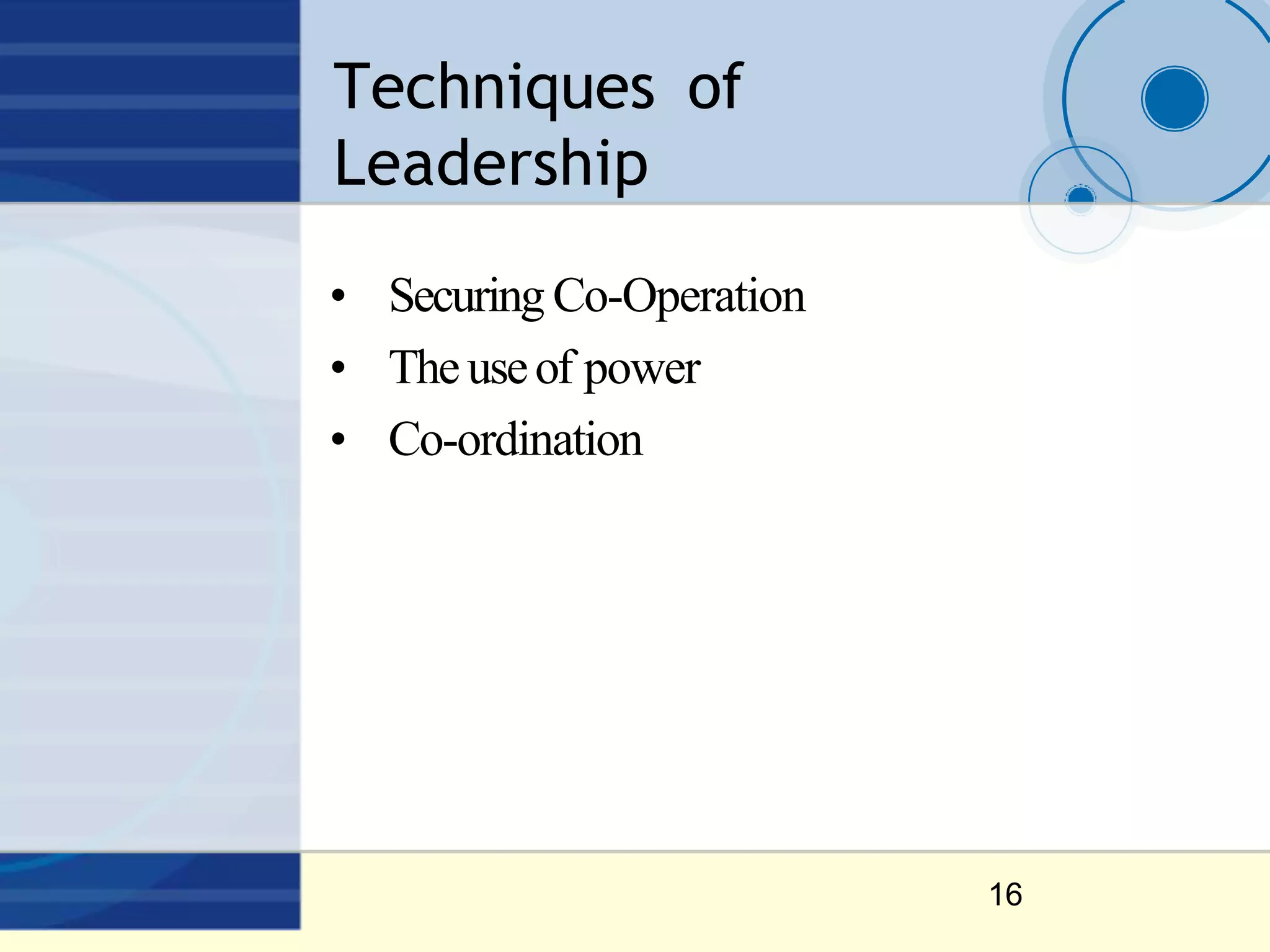
Techniques of
Leadership
16
• Securing Co-Operation
• Theuseof power
• Co-ordination
Techniques of
Leadership
17
• Discipline
• Morale
Characteristics of
Leadership
18
• There must be followers
• Workingrelationship between leader &
followers
• Personal Quality
• Reciprocal relationship
Characteristics of
Leadership
19
• Communityof interest
• Guidance
• Related to particular situation
• Shared function
• Power relationship
Leadership Styles
20
• Positive style
• Negative
• Autocraticor authoritarian
•
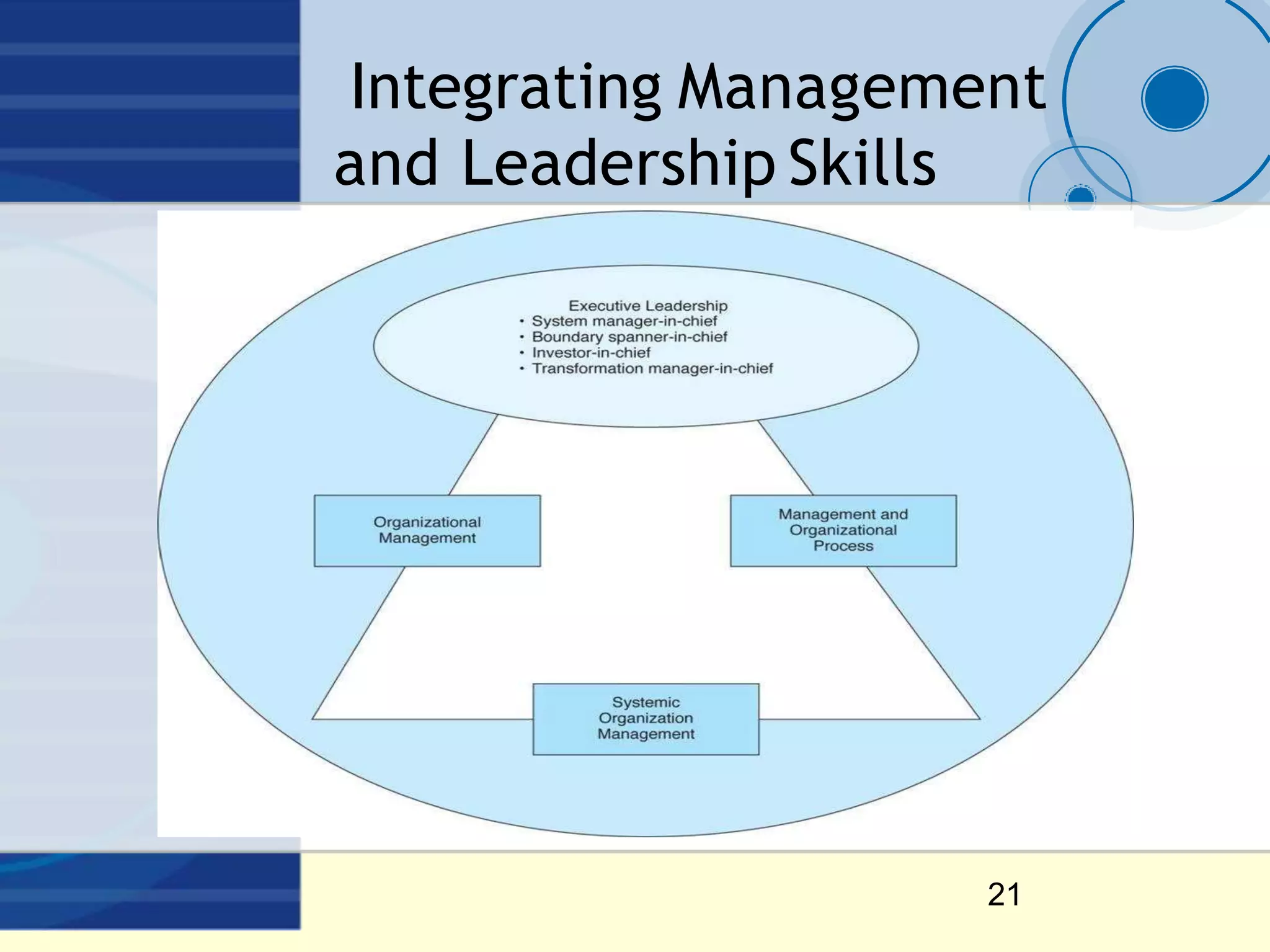
Integrating Management
and Leadership Skills
21
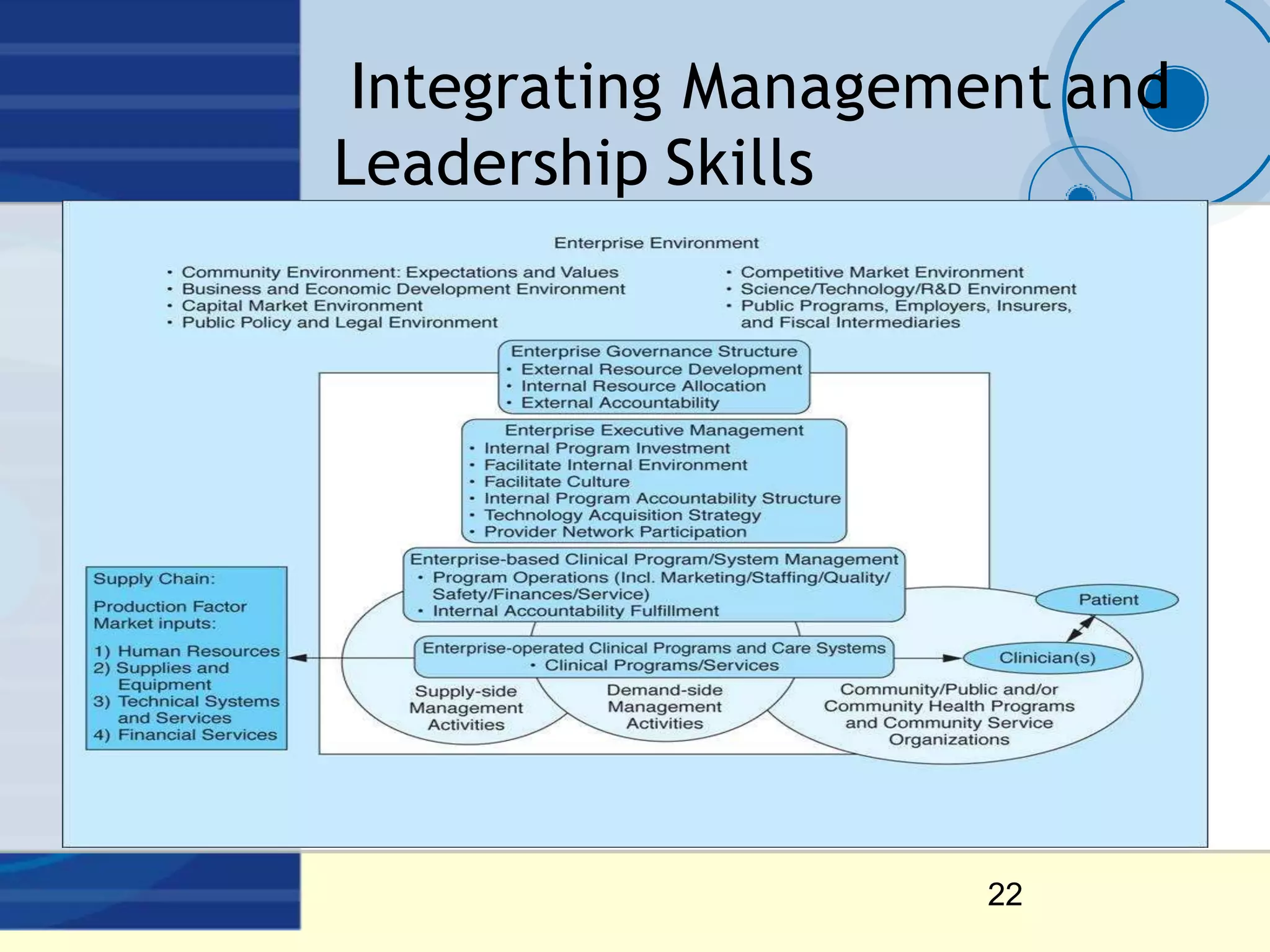
Integrating Management and
Leadership Skills
22
Autocratic style Leadership
Advantages
23
• Provides strong motivationto the followers.
• Quick decisionis possible.
• Lesstalented followerscanperform the job.
• Followersneed not take any decision.
Autocratic style Leadership
Disadvantages
24
• Negativemotivation approach
• Quick decisionisnot possible
• Frustration , low morale &conflictdevelop
• New ideasoffollowers will not have scope
Democratic style Leadership
Advantages
25
• Consultation givessatisfactionto the followers.
• Due recognition isgivento followers.
• Followersare aware ofactivities inthe
organization
• Aleader canimprovehisdecisionmaking
capacity.
Democratic style
Leadership Disadvantages
26
• Decentralization ofpower isusedonlywhen
Consultation ismadefor takingadecision.
Nothingmore that is done.
• Due recognition isgivento followers.
• Followerscandominatethe leader.
• Aleader caneasilyshifthisresponsibilityto
followers
•
Free‐rein style Leadership
Advantages‐Disadvantages
27
• Advantages
•
•
•
•
•
Morale&job satisfactionoffollowers.
The talent offollowersisproperly used
The followers get fullopportunity to use
talent.
• Disadvantages
• The leader doesnot care to motivate his
followers
The contribution ofaleader isnothing
The leader doesnot support the follower
Summary
28
• Leadershipisdefinedasthe art ofinfluencing
people.
• Leadershipexistsin anytype of organization.
• Leadersare responsiblefor successofan
organization.
• Theleader candecide whenthe work isto be
done. Theplanningwork isalsocompleted bya
leader
• Thefunctionofthe leader isto take initiative,
guide&plan

Leadership in Management - Styles, Approaches and Theories