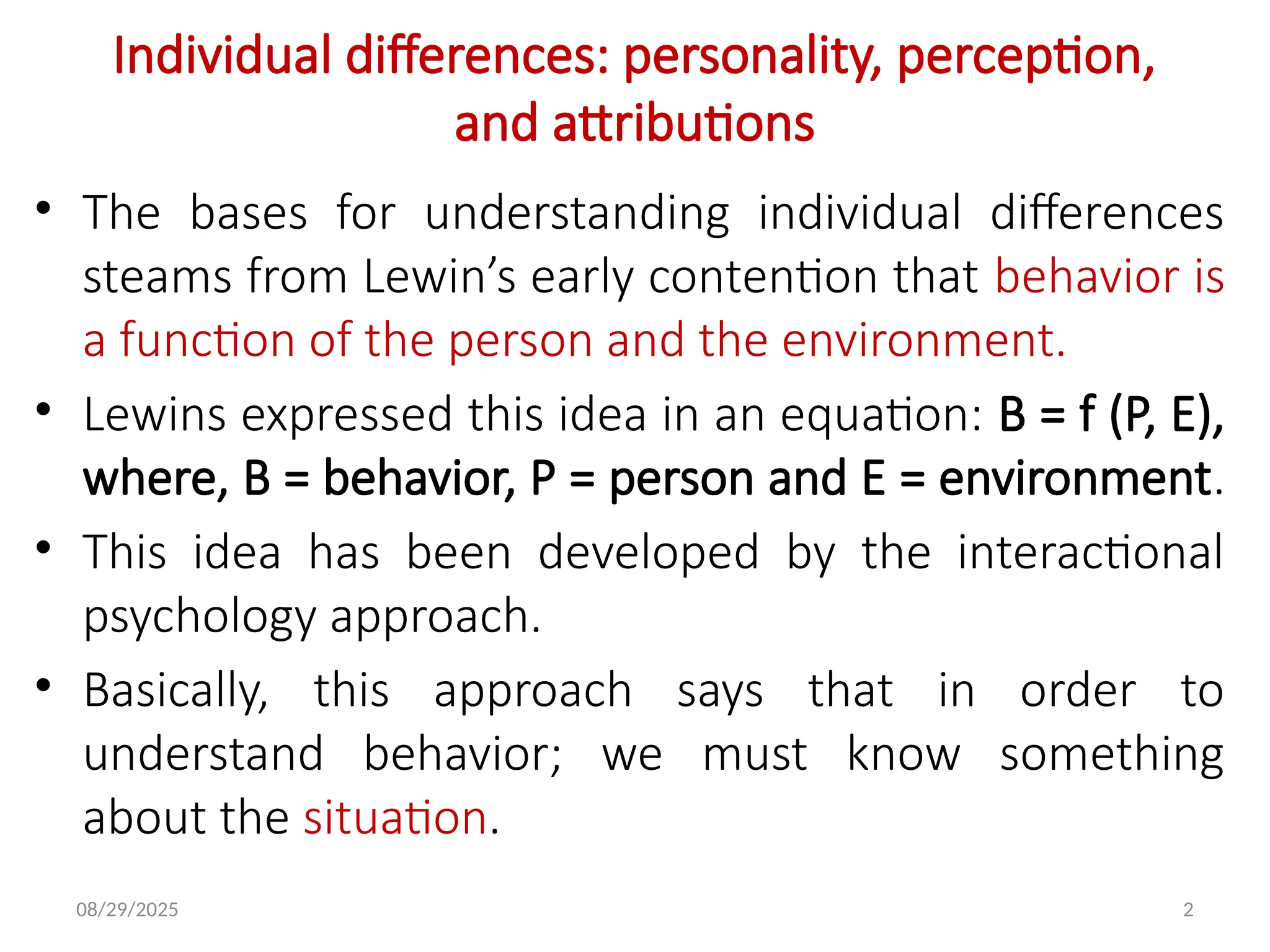
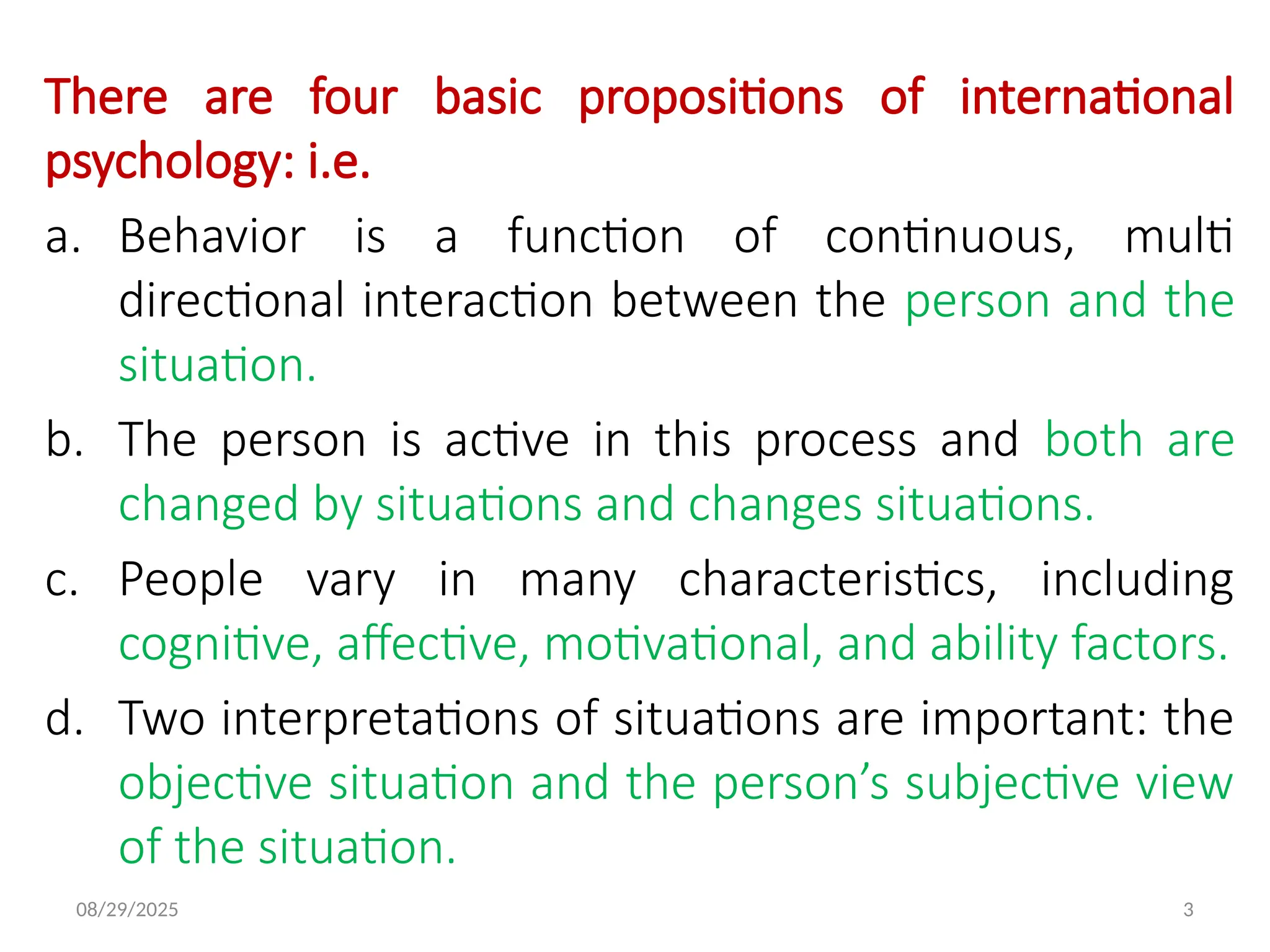
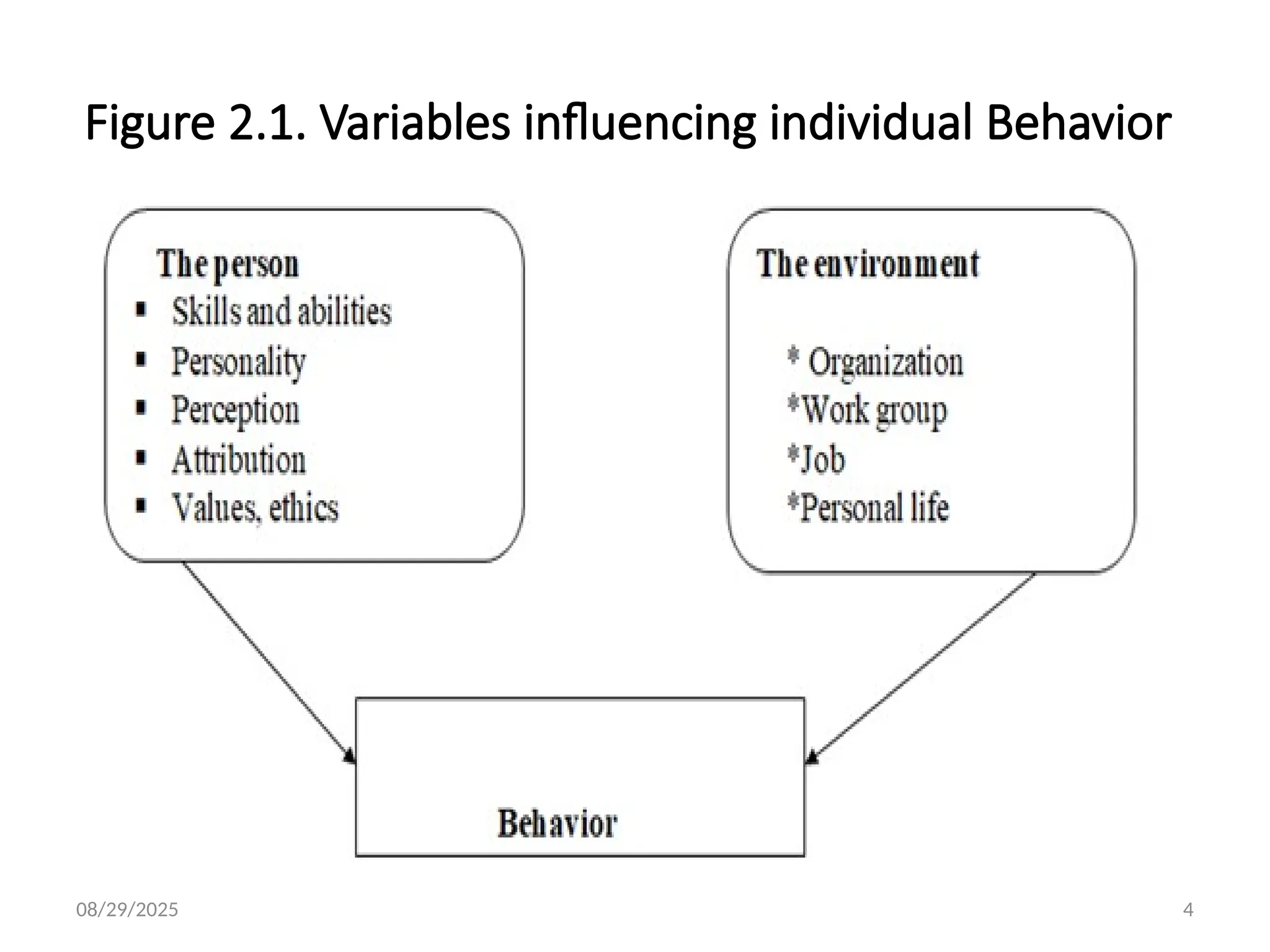
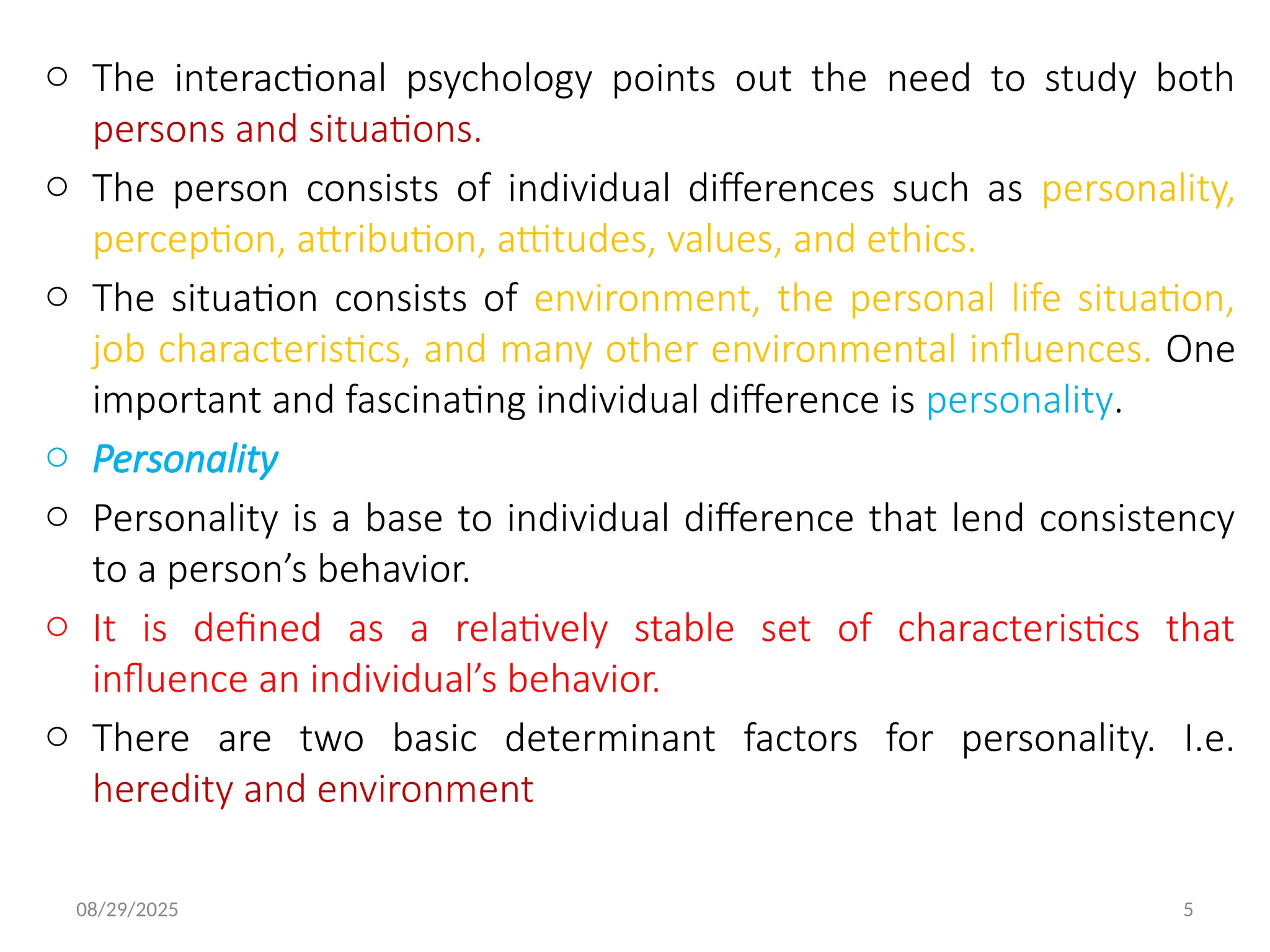
The interactional psychology points out the need to study both persons and situations.
The person consists of individual differences such as personality, perception, attribution, attitudes, values, and ethics.
The situation consists of environment, the personal life situation, job characteristics, and many other environmental influences. One important and fascinating individual difference is personality.
Personality
Personality is a base to individual difference that lend consistency to a person’s behavior.
It is defined as a relatively stable set of characteristics that influence an individual’s behavior.
There are two basic determinant factors for personality. I.e. heredity and environment
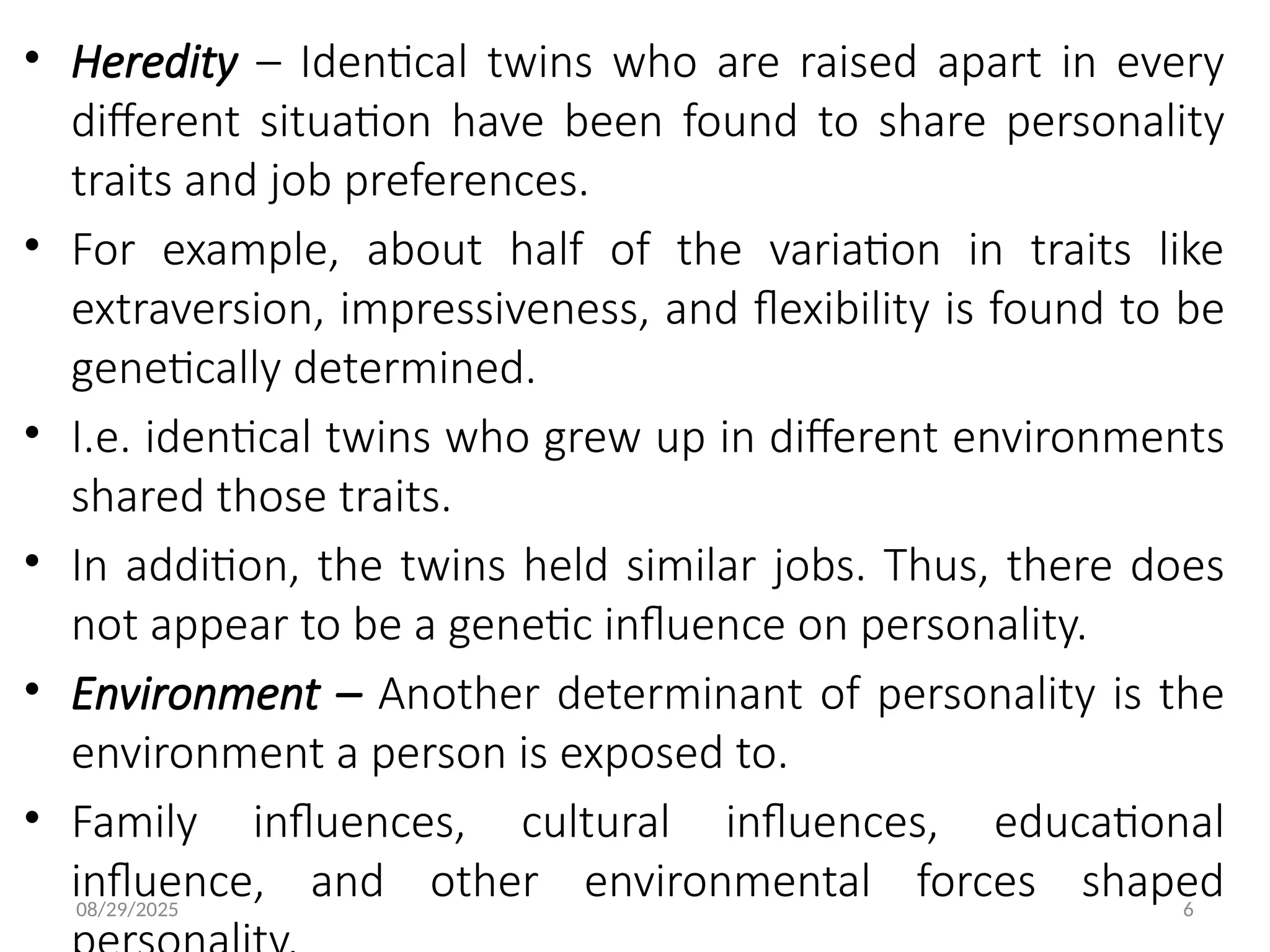
Heredity – Identical twins who are raised apart in every different situation have been found to share personality traits and job preferences.
For example, about half of the variation in traits like extraversion, impressiveness, and flexibility is found to be genetically determined.
I.e. identical twins who grew up in different environments shared those traits.
In addition, the twins held similar jobs. Thus, there does not appear to be a genetic influence on personality.
Environment – Another determinant of personality is the environment a person is exposed to.
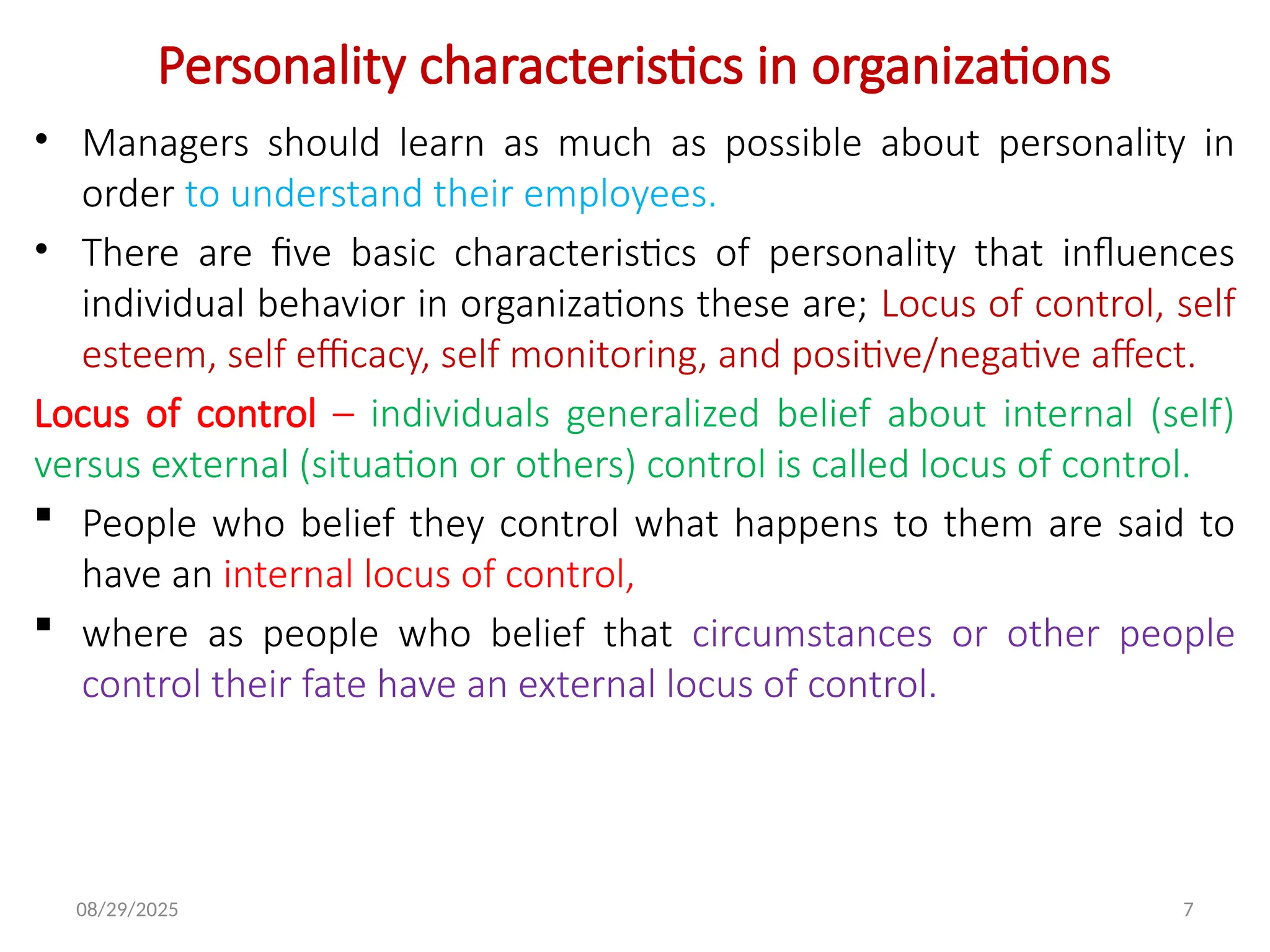
Family influences, cultural influences, educational influence, and other environmental forces shaped personality. Managers should learn as much as possible about personality in order to understand their employees.
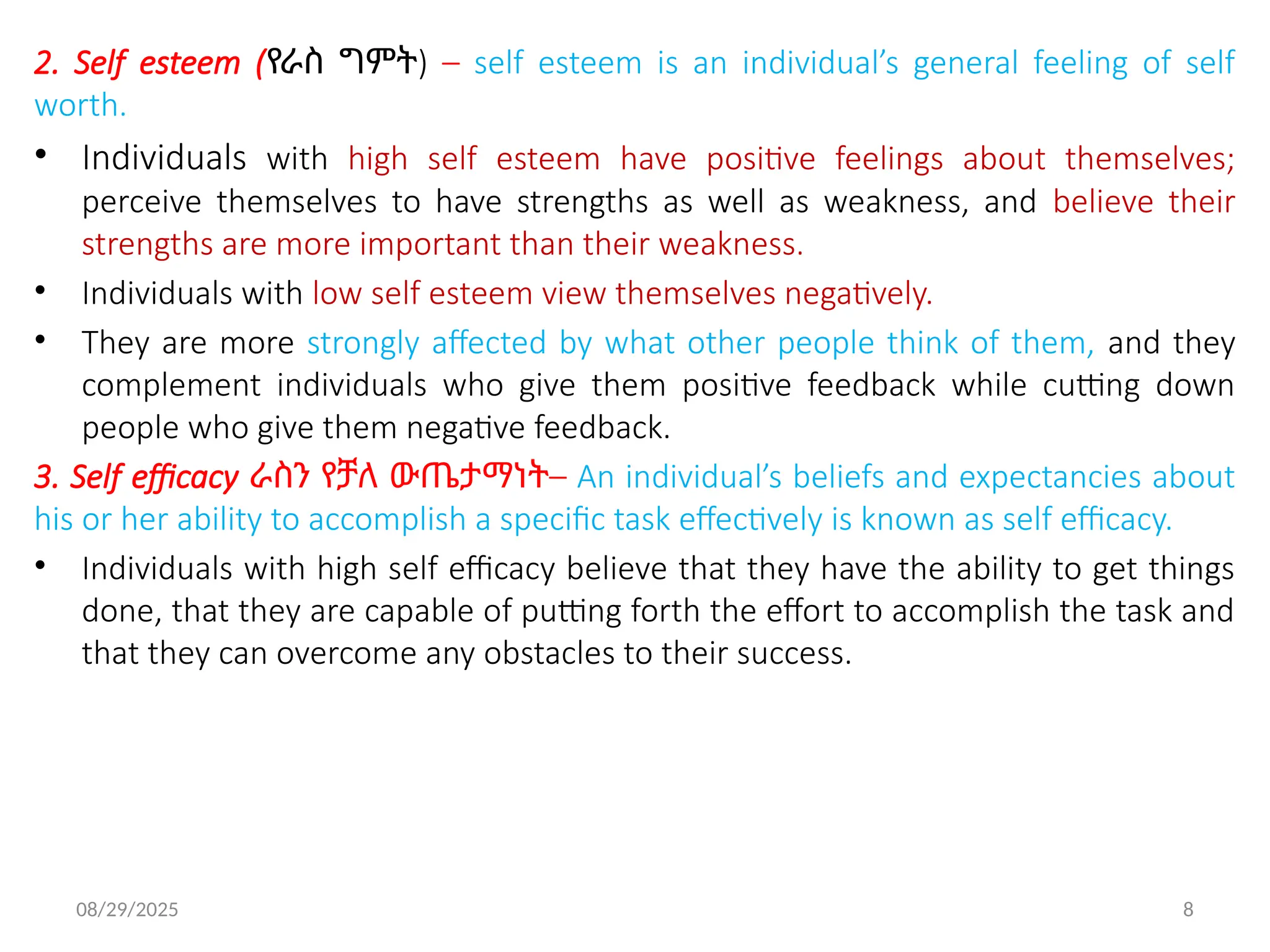
There are five basic characteristics of personality that influences individual behavior in organizations these are; Locus of control, self esteem, self efficacy, self monitoring, and positive/negative affect.
Locus of control – individuals generalized belief about internal (self) versus external (situation or others) control is called locus of control.
People who belief they control what happens to them are said to have an internal locus of control,
where as people who belief that circumstances or other people control their fate have an external locus of control.
Self monitoring - A characteristics with great potential for affecting behavior in an organizations is self monitoring – the extent to which people base their behavior on cues from people and situations.
High self monitors pay to what is appropriate in particular situations and to the behavior of other people, and they behave accordingly.
Low self monitors, in contrast, are not as vigilant/alert to situational cues/signals and act from internal states rather than paying attention to the situation.
As a result, the behavior follow self monitors is consistent across situations.
High self monitors, because their behavior varies with the situation, appear to be more un predictable and less consistent.
5. Positive /negative affect – Individuals who focus on the positive aspects of themselves, other people, and the world in general are said to have positive affect.