
Presented by
DEVI DURAIRAJ
 Definition
 Evolution
 Features
 Objectives
 Concepts of OB
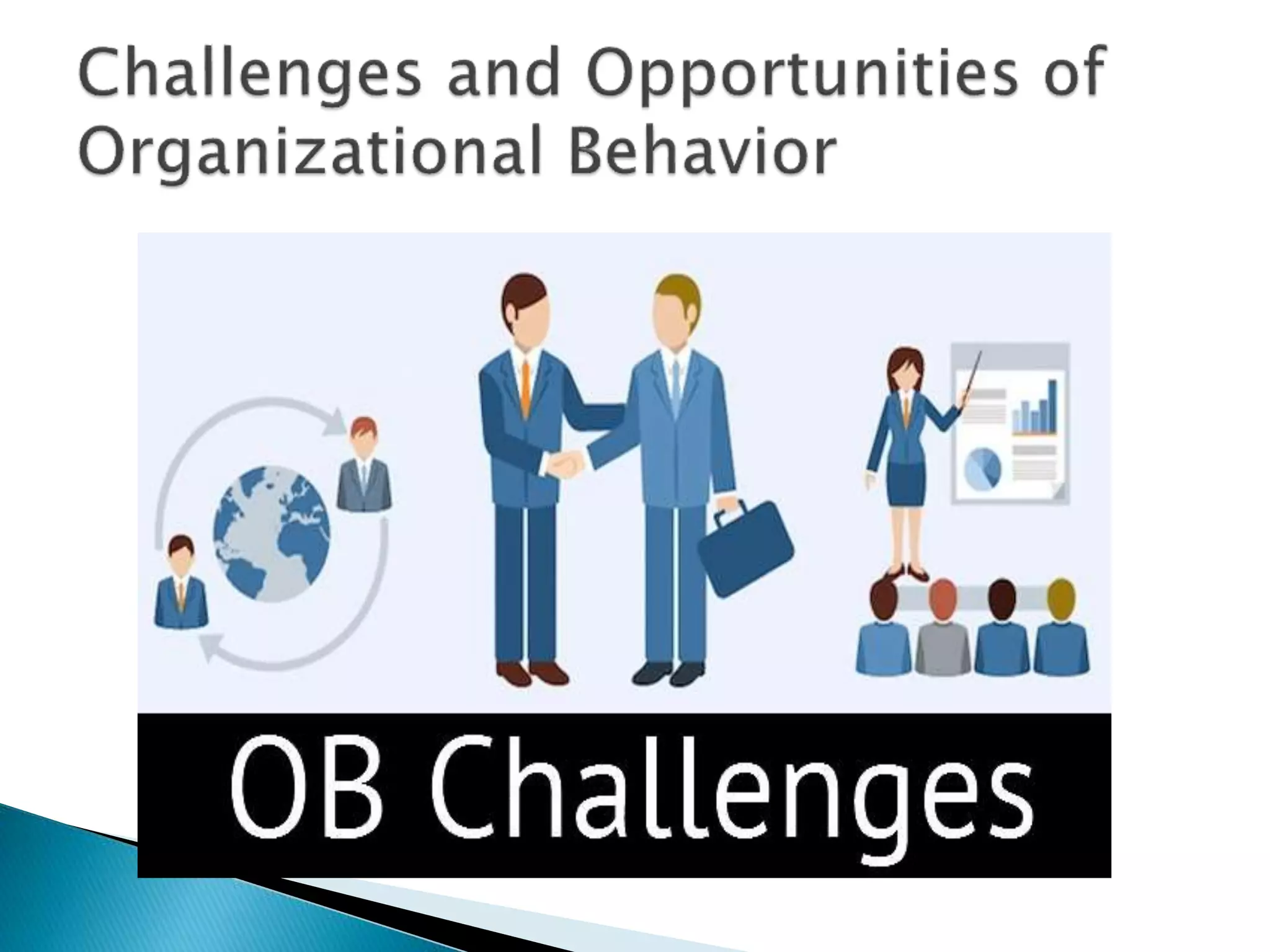
 Challenges and opportunities
 Limitations
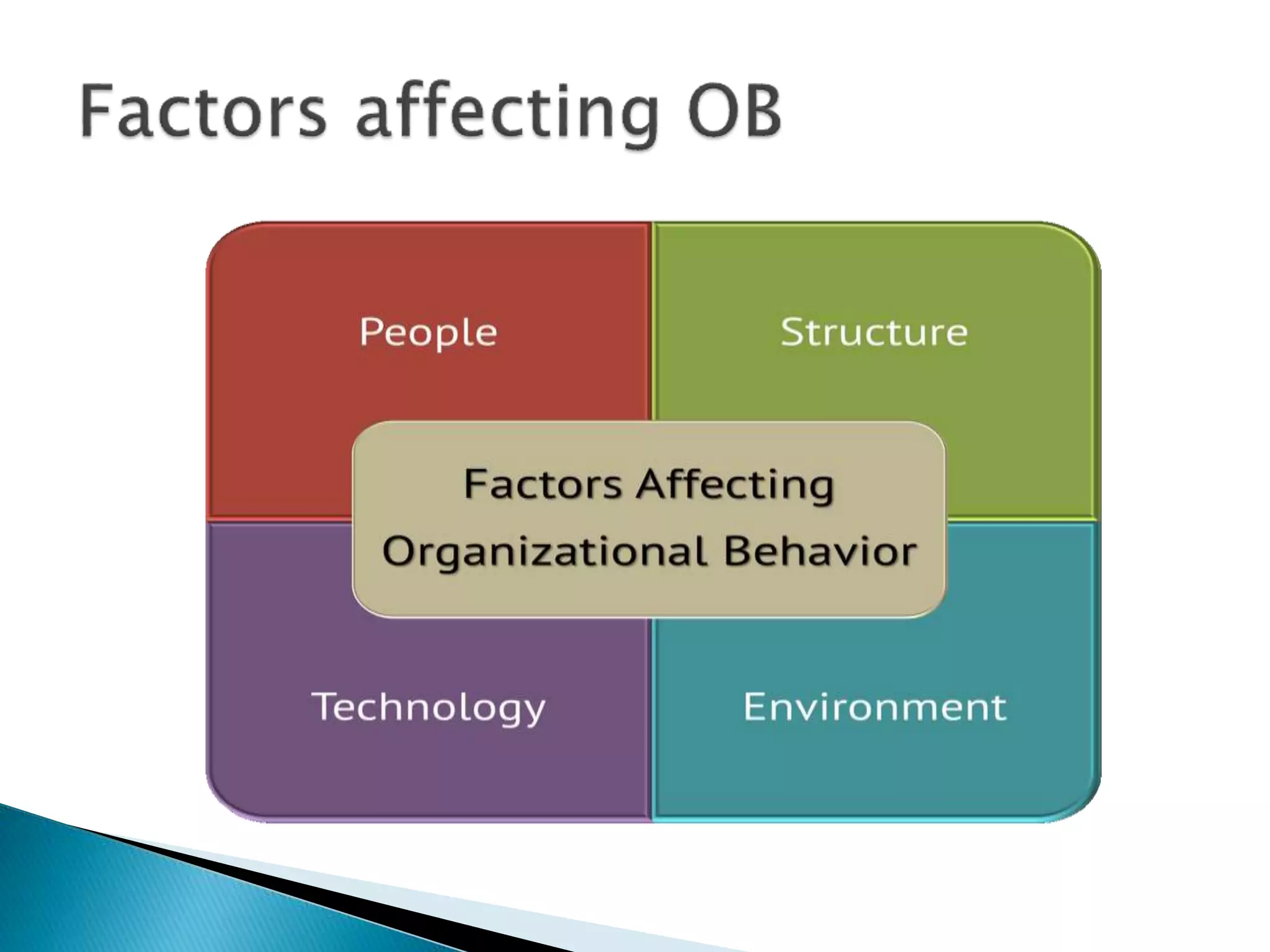
 Factors affection OB
 Organizational Behavior is directly concerned
with understanding , predictions and control
of human behavior in an organization
- Fred Luthans
It is the study of both group and individual
performance and activity within the
organization
 A Separate Field of Study and not a Discipline
Only.
 An Interdisciplinary Approach.
 Applied Science.
 Normative Science.
 A Humanistic and Optimistic Approach.
 A Total System Approach.
 Job Satisfaction.
 Finding the Right People.
 Organizational Culture.
 Leadership and Conflict Resolution.
 Understanding Employees Better.
 Understand how to Develop Good Leaders.
 Develop a Good Team.
 Higher Productivity.
Organization Behavior is based on a few fundamental
concepts which revolve around the nature of people and
organizations.
The fundamental concepts of organizational behavior are;
 Individual Differences.
 Perception.
 A Whole Person.
 Motivated Behavior.
 The desire for Involvement.
 The value of the Person.
 Human Dignity.
 Organizations are Social System.
 Mutuality of Interest.
 Holistic Concept.
 Individual Differences
The idea of the individual difference comes
originally from psychology. Each person is
unique, and personal experiences tend to
make people even more different.
 Perception
Employees see work differently for differ
in their personalities, needs, demographics
factors, past experiences, and social
surroundings.
 A Whole Person
An employee’s personal life is not
detached from his working life. As a result,
its impact falls on her concentration that
means her working life. So the manager
should treat an employee as a whole person
 Motivated Behavior
Some motivations are necessary to enrich
the quality of work. A path toward increased
need fulfillment is the better way to enhances
the quality of work.
 Desire for Involvement
The organization should provide employees
a chance to express their opinions, ideas, and
suggestions for the decision-making
problem. A meaningful involvement can bring
mutual benefit to both parties.
 Value of the Person
The employees want to be treated with
carrying respect, dignity and other things
from their employers.
 Human Dignity
People are to be treated differently from other
factors of production because they are of a
higher order in the universe.
It recognizes human dignity because people are
of a higher order; they want to be treated with
respect and dignity.
 Organizations are Social System
In fact, two types of social systems exist side
by side in organizations. One is a formal system,
and the other is the informal social system.
 Mutuality of Interest
Mutual interest is represented by the
statement that organizations need people
and people also need organizations. Mutual
interest provides a super-ordinate goal that
unites the variety of needs that people bring
to organizations.
 Holistic Concept
When the fundamental concepts of OB are
placed together, a holistic concept emerges.
Issues are analyzed in terms of the total
situation affecting them rather than in terms
of an isolated event or problems.
 Improving Peoples’ Skills.
 Improving Quality and Productivity.
 Total Quality Management (TQM).
 Managing Workforce Diversity.
 Responding to Globalization.
 Empowering People.
 Coping with Temporariness.
 Stimulating Innovation and Change.
 Emergence of E-Organization & E-Commerce.
 Improving Ethical Behavior.
 Improving Customer Service.
 Helping Employees Balance Work-Life Conflicts.
 Flattening World.
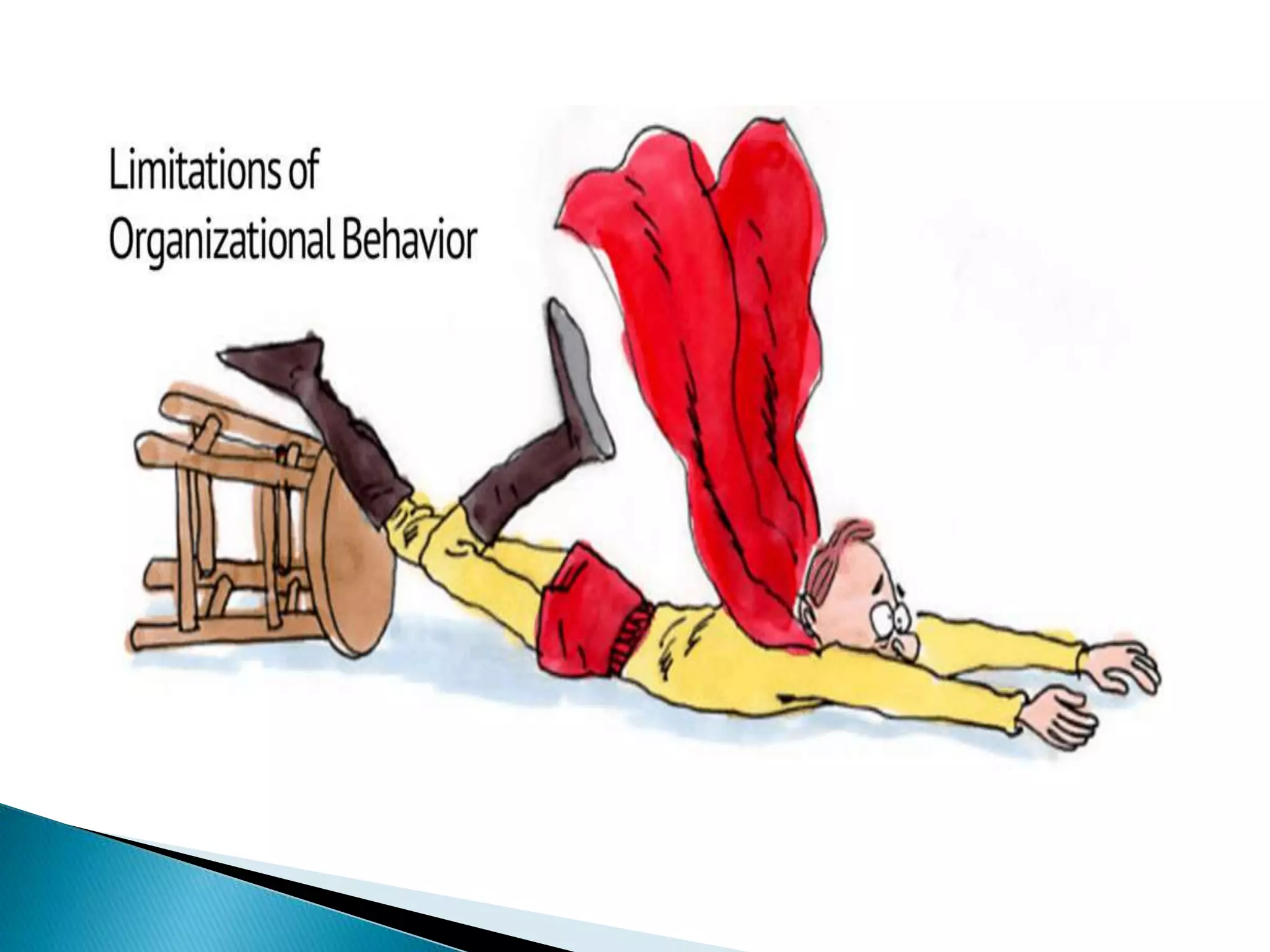
Organizational Behavior will not abolish
conflict and frustration; it can only reduce
them. It is a way to improve, not an absolute
answer to problems.
3 major limitations of OB are;
 Behavioral Bias.
 The Law of Diminishing Returns.
 Unethical Manipulation of People.
foundation and Background of Organizational Behaviour

foundation and Background of Organizational Behaviour

  • 1.
  • 2.
     Definition  Evolution Features  Objectives  Concepts of OB  Challenges and opportunities  Limitations  Factors affection OB
  • 3.
     Organizational Behavioris directly concerned with understanding , predictions and control of human behavior in an organization - Fred Luthans It is the study of both group and individual performance and activity within the organization
  • 6.
     A SeparateField of Study and not a Discipline Only.  An Interdisciplinary Approach.  Applied Science.  Normative Science.  A Humanistic and Optimistic Approach.  A Total System Approach.
  • 7.
     Job Satisfaction. Finding the Right People.  Organizational Culture.  Leadership and Conflict Resolution.  Understanding Employees Better.  Understand how to Develop Good Leaders.  Develop a Good Team.  Higher Productivity.
  • 8.
    Organization Behavior isbased on a few fundamental concepts which revolve around the nature of people and organizations. The fundamental concepts of organizational behavior are;  Individual Differences.  Perception.  A Whole Person.  Motivated Behavior.  The desire for Involvement.  The value of the Person.  Human Dignity.  Organizations are Social System.  Mutuality of Interest.  Holistic Concept.
  • 9.
     Individual Differences Theidea of the individual difference comes originally from psychology. Each person is unique, and personal experiences tend to make people even more different.  Perception Employees see work differently for differ in their personalities, needs, demographics factors, past experiences, and social surroundings.
  • 10.
     A WholePerson An employee’s personal life is not detached from his working life. As a result, its impact falls on her concentration that means her working life. So the manager should treat an employee as a whole person  Motivated Behavior Some motivations are necessary to enrich the quality of work. A path toward increased need fulfillment is the better way to enhances the quality of work.
  • 11.
     Desire forInvolvement The organization should provide employees a chance to express their opinions, ideas, and suggestions for the decision-making problem. A meaningful involvement can bring mutual benefit to both parties.  Value of the Person The employees want to be treated with carrying respect, dignity and other things from their employers.
  • 12.
     Human Dignity Peopleare to be treated differently from other factors of production because they are of a higher order in the universe. It recognizes human dignity because people are of a higher order; they want to be treated with respect and dignity.  Organizations are Social System In fact, two types of social systems exist side by side in organizations. One is a formal system, and the other is the informal social system.
  • 13.
     Mutuality ofInterest Mutual interest is represented by the statement that organizations need people and people also need organizations. Mutual interest provides a super-ordinate goal that unites the variety of needs that people bring to organizations.  Holistic Concept When the fundamental concepts of OB are placed together, a holistic concept emerges. Issues are analyzed in terms of the total situation affecting them rather than in terms of an isolated event or problems.
  • 15.
     Improving Peoples’Skills.  Improving Quality and Productivity.  Total Quality Management (TQM).  Managing Workforce Diversity.  Responding to Globalization.  Empowering People.  Coping with Temporariness.  Stimulating Innovation and Change.  Emergence of E-Organization & E-Commerce.  Improving Ethical Behavior.  Improving Customer Service.  Helping Employees Balance Work-Life Conflicts.  Flattening World.
  • 17.
    Organizational Behavior willnot abolish conflict and frustration; it can only reduce them. It is a way to improve, not an absolute answer to problems. 3 major limitations of OB are;  Behavioral Bias.  The Law of Diminishing Returns.  Unethical Manipulation of People.