Perception
“Perception refers to the interpretation of
what we take in through our senses”
“It is a process by which individuals organize and
interpret their sensory impressions in order to give
meaning to their environment.”-
Stephen P. Robbins
• It a process by which an individual selects, organizes and
interprets stimuli into a meaningful and coherent picture
of the environment.
• Differs from one person to another, depending on the
needs, values and expectations.
Social perception
• Social perception deals with how people think about and
make sense of other people—how they form impressions,
draw conclusions, and try to explain other people’s behavior.
• It focuses on factors that influence the ways in which people
understand other people and on how people process,
organize, and recall information about others.
Social perception influenced by the following
three factors:
• Characteristics of the Persons perceived
• Characteristics of the Perceiver
• Characteristics of the Situation or context in which
perception takes place
Perceiver
Perceiver is a person who makes perception regarding
others. Different characteristics in perceiver affects greatly
how an individual perceives others in the environmental
situation.
Characteristics of perceiver:
• Personality
• Motivation
• Learning
• Values and attitude
• Past Experience
Perceived
Perceived is the person or target upon which the perceiver has
made the perception.
Pleasing, sad, cooperation, etc. of employees helps to perceive
the managers that employees are satisfied.
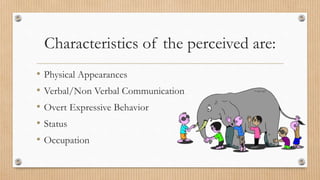
Characteristics of the perceived are:
• Physical Appearances
• Verbal/Non Verbal Communication
• Overt Expressive Behavior
• Status
• Occupation
In social setting like business organizations or social
organization, each individual makes perception regarding others.
• Managers makes perception of sub ordinates and vice
versa;
• Leaders perceives followers and vice versa;
• Business organization perceive consumers and vice versa
Though there might be numerous factors influencing the
perception, characteristic of perceiver and perceived are most
important.
Thank You!
F o r y o u r K i n d n e s s
Ramesh Panthi

Perceiver and perceived (perception)

  • 3.
    Perception “Perception refers tothe interpretation of what we take in through our senses”
  • 4.
    “It is aprocess by which individuals organize and interpret their sensory impressions in order to give meaning to their environment.”- Stephen P. Robbins
  • 5.
    • It aprocess by which an individual selects, organizes and interprets stimuli into a meaningful and coherent picture of the environment. • Differs from one person to another, depending on the needs, values and expectations.
  • 6.
    Social perception • Socialperception deals with how people think about and make sense of other people—how they form impressions, draw conclusions, and try to explain other people’s behavior. • It focuses on factors that influence the ways in which people understand other people and on how people process, organize, and recall information about others.
  • 7.
    Social perception influencedby the following three factors: • Characteristics of the Persons perceived • Characteristics of the Perceiver • Characteristics of the Situation or context in which perception takes place
  • 8.
    Perceiver Perceiver is aperson who makes perception regarding others. Different characteristics in perceiver affects greatly how an individual perceives others in the environmental situation.
  • 9.
    Characteristics of perceiver: •Personality • Motivation • Learning • Values and attitude • Past Experience
  • 10.
    Perceived Perceived is theperson or target upon which the perceiver has made the perception. Pleasing, sad, cooperation, etc. of employees helps to perceive the managers that employees are satisfied.
  • 11.
    Characteristics of theperceived are: • Physical Appearances • Verbal/Non Verbal Communication • Overt Expressive Behavior • Status • Occupation
  • 12.
    In social settinglike business organizations or social organization, each individual makes perception regarding others. • Managers makes perception of sub ordinates and vice versa; • Leaders perceives followers and vice versa; • Business organization perceive consumers and vice versa Though there might be numerous factors influencing the perception, characteristic of perceiver and perceived are most important.
  • 13.
    Thank You! F or y o u r K i n d n e s s Ramesh Panthi