A movement between regions within
 the same country and over relatively
 short distances

 Doesnot alter the total population of
 a country but will change population
 density and population distribution
 patterns within the country
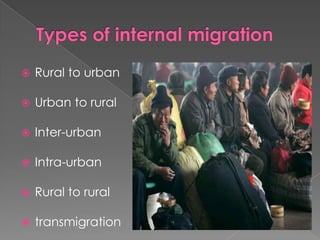
   Rural to urban

   Urban to rural

   Inter-urban

   Intra-urban

   Rural to rural

   transmigration
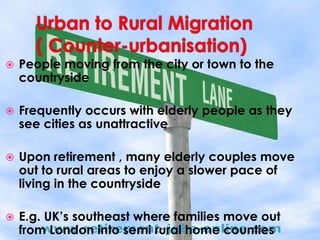
   People moving from the city or town to the
    countryside

   Frequently occurs with elderly people as they
    see cities as unattractive

   Upon retirement , many elderly couples move
    out to rural areas to enjoy a slower pace of
    living in the countryside

   E.g. UK’s southeast where families move out
    from London into semi rural home counties
   Push Factors (reasons for the movement away from cities)

    - higher rates of congestion and pollution

    - high land values making it harder for people to find
     affordable housing

    - higher crime rates
    Pull Factors (reasons for movements to the countryside)
    - perceived   better quality of life

    - believed to be a safer and more pleasant environment for
     children to grow up in less pollution and more open space

    - lower land-values and more affordable housing

    - more businesses locating on greenfield sites to make the
     most of room for expansion and the more pleasant
     environment.
 People  move from one town or
 city to another

 Common      reason:
 › due to changing work opportunities force
   people to relocate
   People moving within the same urban
    area or city

   Common reasons:

    › Increased transport result in high levels of
     residential mobility

    › E.g. post world war II, people moved to the
     edge of cities (suburbanisation)
   People moving from one area of the
    countryside to another

   Common in agricultural communities where
    there is a need to change farming location.

   E.g. Sheep shearers migrating between
    ranches in USA and Australia ; nomadic
    pastoralist, Northern Africa.
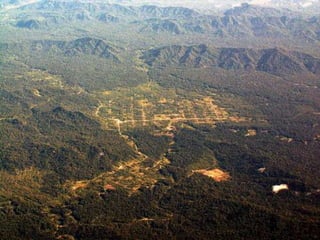
Transmigration is one method that a number
of governments have used to try and solve
population problems.

Indonesia is a vast archipelago of 13000
islands stretching over 5000km

Population – 205 million (4th most populous
                        country in the world)
    60% of Indonesia’s population live on
    Java itself- making the population
    density very high- especially in Jakarta.

 The   government needed to stop
    Jakarta’s urban growth.

 People  migrate to Jakarta in large
    numbers to find work.
 TheGovernment introduced a
 transmigration policy.

 aims- to move people from the
 core area (Java/Jakarta) to the
 periphery  to new farming areas
 set up by the government.
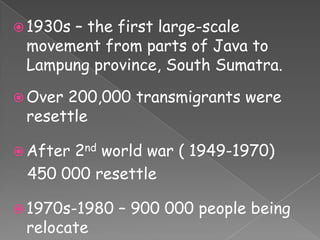
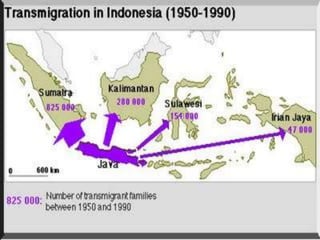
 1930s
      – the first large-scale
 movement from parts of Java to
 Lampung province, South Sumatra.

 Over200,000 transmigrants were
 resettle

 After
      2nd world war ( 1949-1970)
 450 000 resettle

 1970s-1980   – 900 000 people being
 relocate
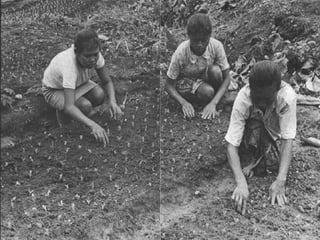
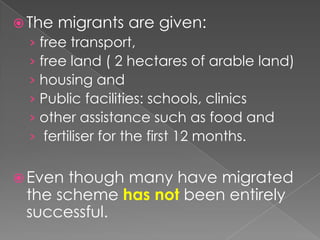
 The   migrants are given:
  › free transport,
  › free land ( 2 hectares of arable land)
  › housing and
  › Public facilities: schools, clinics
  › other assistance such as food and
  › fertiliser for the first 12 months.


 Even though many have migrated
 the scheme has not been entirely
 successful.
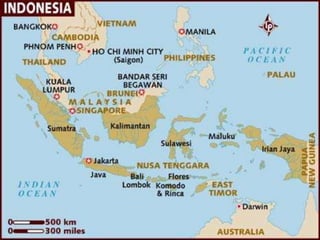
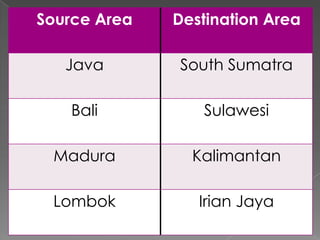
Source Area   Destination Area

   Java       South Sumatra

   Bali          Sulawesi

 Madura         Kalimantan

 Lombok          Irian Jaya
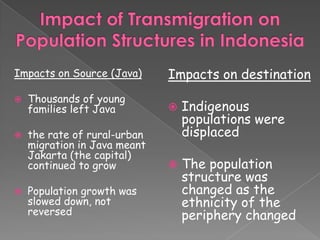
Impacts on Source (Java)      Impacts on destination
   Thousands of young
    families left Java           Indigenous
                                  populations were
   the rate of rural-urban       displaced
    migration in Java meant
    Jakarta (the capital)
    continued to grow            The population
                                  structure was
   Population growth was         changed as the
    slowed down, not              ethnicity of the
    reversed                      periphery changed

Internal migration lesson 5

  • 2.
    A movement betweenregions within the same country and over relatively short distances  Doesnot alter the total population of a country but will change population density and population distribution patterns within the country
  • 3.
    Rural to urban  Urban to rural  Inter-urban  Intra-urban  Rural to rural  transmigration
  • 4.
    People moving from the city or town to the countryside  Frequently occurs with elderly people as they see cities as unattractive  Upon retirement , many elderly couples move out to rural areas to enjoy a slower pace of living in the countryside  E.g. UK’s southeast where families move out from London into semi rural home counties
  • 5.
    Push Factors (reasons for the movement away from cities) - higher rates of congestion and pollution - high land values making it harder for people to find affordable housing - higher crime rates Pull Factors (reasons for movements to the countryside) - perceived better quality of life - believed to be a safer and more pleasant environment for children to grow up in less pollution and more open space - lower land-values and more affordable housing - more businesses locating on greenfield sites to make the most of room for expansion and the more pleasant environment.
  • 6.
     People move from one town or city to another  Common reason: › due to changing work opportunities force people to relocate
  • 7.
    People moving within the same urban area or city  Common reasons: › Increased transport result in high levels of residential mobility › E.g. post world war II, people moved to the edge of cities (suburbanisation)
  • 8.
    People moving from one area of the countryside to another  Common in agricultural communities where there is a need to change farming location.  E.g. Sheep shearers migrating between ranches in USA and Australia ; nomadic pastoralist, Northern Africa.
  • 10.
    Transmigration is onemethod that a number of governments have used to try and solve population problems. Indonesia is a vast archipelago of 13000 islands stretching over 5000km Population – 205 million (4th most populous country in the world)
  • 12.
    60% of Indonesia’s population live on Java itself- making the population density very high- especially in Jakarta.  The government needed to stop Jakarta’s urban growth.  People migrate to Jakarta in large numbers to find work.
  • 13.
     TheGovernment introduceda transmigration policy.  aims- to move people from the core area (Java/Jakarta) to the periphery  to new farming areas set up by the government.
  • 14.
     1930s – the first large-scale movement from parts of Java to Lampung province, South Sumatra.  Over200,000 transmigrants were resettle  After 2nd world war ( 1949-1970) 450 000 resettle  1970s-1980 – 900 000 people being relocate
  • 16.
     The migrants are given: › free transport, › free land ( 2 hectares of arable land) › housing and › Public facilities: schools, clinics › other assistance such as food and › fertiliser for the first 12 months.  Even though many have migrated the scheme has not been entirely successful.
  • 18.
    Source Area Destination Area Java South Sumatra Bali Sulawesi Madura Kalimantan Lombok Irian Jaya
  • 20.
    Impacts on Source(Java) Impacts on destination  Thousands of young families left Java  Indigenous populations were  the rate of rural-urban displaced migration in Java meant Jakarta (the capital) continued to grow  The population structure was  Population growth was changed as the slowed down, not ethnicity of the reversed periphery changed