DEVELOPMENT & USE OF HUMAN RESOURCES
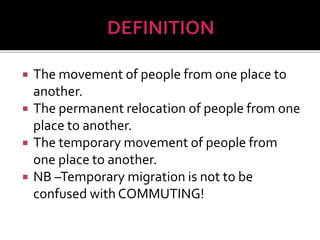
 The movement of people from one place to 
another. 
 The permanent relocation of people from one 
place to another. 
 The temporary movement of people from 
one place to another. 
 NB –Temporary migration is not to be 
confused with COMMUTING!
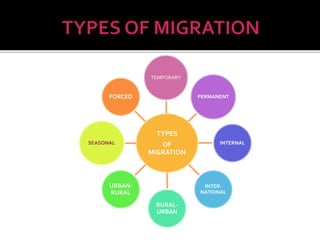
TEMPORARY 
TYPES 
OF 
MIGRATION 
PERMANENT 
INTERNAL 
INTER-NATIONAL 
RURAL-URBAN 
FORCED 
SEASONAL 
URBAN-RURAL
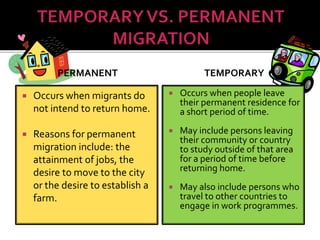
PERMANENT 
 Occurs when migrants do 
not intend to return home. 
 Reasons for permanent 
migration include: the 
attainment of jobs, the 
desire to move to the city 
or the desire to establish a 
farm. 
TEMPORARY 
 Occurs when people leave 
their permanent residence for 
a short period of time. 
 May include persons leaving 
their community or country 
to study outside of that area 
for a period of time before 
returning home. 
 May also include persons who 
travel to other countries to 
engage in work programmes.
 INTERNAL 
 This refers to the movement of people from 
one area to another within a country. 
 It may be either temporary or permanent 
 Usually characterized by movement from 
rural areas to urban areas. 
 Most likely consequence is urbanization
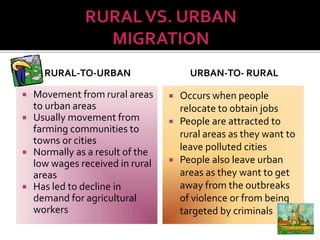
RURAL-TO-URBAN 
 Movement from rural areas 
to urban areas 
 Usually movement from 
farming communities to 
towns or cities 
 Normally as a result of the 
low wages received in rural 
areas 
 Has led to decline in 
demand for agricultural 
workers 
URBAN-TO- RURAL 
 Occurs when people 
relocate to obtain jobs 
 People are attracted to 
rural areas as they want to 
leave polluted cities 
 People also leave urban 
areas as they want to get 
away from the outbreaks 
of violence or from being 
targeted by criminals
 Rural-TO- RURAL 
 Occurs when people move from one rural area to 
another rural area in search of work . 
 If the land they are tending becomes unproductive. 
 If agricultural land is taken over for another land use 
such as mining or development
 External migration occurs when people move 
from one country to settle in another. 
 It may be either permanent or temporary. 
 Intra-regional migration- refers to movement 
within the Caribbean. 
 Usually occurs for employment opportunities 
and pursuit of higher education. 
 Most likely consequence is “brain drain”
SEASONAL 
 This is very common with 
agricultural cycles 
 In Jamaica, people usually 
migrate to North America 
to reap crops such as 
apples, oranges, tomatoes. 
This is referred to as the 
farm work programme. 
 Also, some people migrate 
seasonally to work in the 
hospitality industry. 
FORCED 
 Also called deracination 
 It is characterized by 
coerced movement of a 
person or persons from 
their home. 
 Sometimes it is 
accompanied by religious 
and political persecution 
 Example: Transatlantic 
Slave Trade
IMMIGRATION EMIGRATION 
 Also called in-migration 
 Describes movement into a 
country, island or region. 
 It is often controlled strictly 
by government. 
 It is usually permanent 
movement were the 
immigrant leaves the 
country of origin in order to 
find a new job. 
 Also called out-migration 
 Describes movement out 
of a country, island or 
region. 
 It is not usually restricted 
by governments. 
 It usually results in 
permanent settlement and 
application for citizenship 
in the new country.
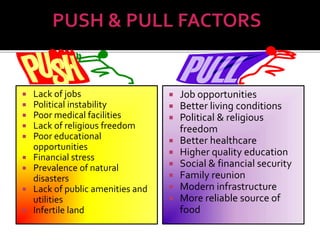
 The causes of migration may be attributed to 
push and pull factors. 
 A push factor is a forceful factor that exists 
in the country of origin. 
 A pull factor is an attractive factor that 
exists in the country of destination.
 Lack of jobs 
 Political instability 
 Poor medical facilities 
 Lack of religious freedom 
 Poor educational 
opportunities 
 Financial stress 
 Prevalence of natural 
disasters 
 Lack of public amenities and 
utilities 
 Infertile land 
 Job opportunities 
 Better living conditions 
 Political & religious 
freedom 
 Better healthcare 
 Higher quality education 
 Social & financial security 
 Family reunion 
 Modern infrastructure 
 More reliable source of 
food
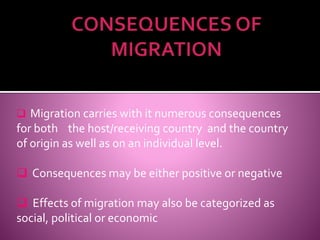
 Migration carries with it numerous consequences 
for both the host/receiving country and the country 
of origin as well as on an individual level. 
 Consequences may be either positive or negative 
 Effects of migration may also be categorized as 
social, political or economic
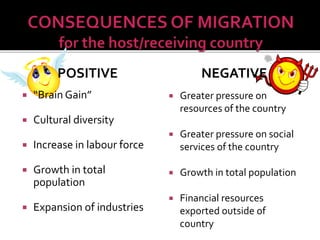
POSITIVE 
 “Brain Gain” 
 Cultural diversity 
 Increase in labour force 
 Growth in total 
population 
 Expansion of industries 
NEGATIVE 
 Greater pressure on 
resources of the country 
 Greater pressure on social 
services of the country 
 Growth in total population 
 Financial resources 
exported outside of 
country
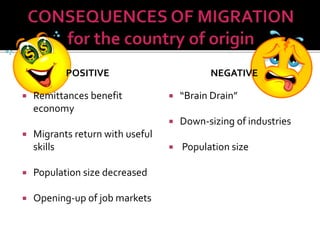
POSITIVE 
 Remittances benefit 
economy 
 Migrants return with useful 
skills 
 Population size decreased 
 Opening-up of job markets 
NEGATIVE 
 “Brain Drain” 
 Down-sizing of industries 
 Population size
POSITIVE 
 Increase in income 
 New cultural experience 
 Learning new skills 
 Better educational and 
health facilities 
 Greater access to 
recreational facilities 
NEGATIVE 
 Family instability 
 Burden of dependency 
 Culture shock
 This is usually as a result of rural to urban 
migration 
 Human movement to more central locations 
lead to expansion into the surrounding 
countryside 
 Such movement has a number of 
consequences
 Inadequate housing 
 Development of slums 
 Underemployment 
 increase in unemployment levels 
 Increase in social unrest and crime 
 Poor sanitation 
 Pests and diseases 
 Pollution

Migration

  • 1.
    DEVELOPMENT & USEOF HUMAN RESOURCES
  • 2.
     The movementof people from one place to another.  The permanent relocation of people from one place to another.  The temporary movement of people from one place to another.  NB –Temporary migration is not to be confused with COMMUTING!
  • 3.
    TEMPORARY TYPES OF MIGRATION PERMANENT INTERNAL INTER-NATIONAL RURAL-URBAN FORCED SEASONAL URBAN-RURAL
  • 4.
    PERMANENT  Occurswhen migrants do not intend to return home.  Reasons for permanent migration include: the attainment of jobs, the desire to move to the city or the desire to establish a farm. TEMPORARY  Occurs when people leave their permanent residence for a short period of time.  May include persons leaving their community or country to study outside of that area for a period of time before returning home.  May also include persons who travel to other countries to engage in work programmes.
  • 5.
     INTERNAL This refers to the movement of people from one area to another within a country.  It may be either temporary or permanent  Usually characterized by movement from rural areas to urban areas.  Most likely consequence is urbanization
  • 6.
    RURAL-TO-URBAN  Movementfrom rural areas to urban areas  Usually movement from farming communities to towns or cities  Normally as a result of the low wages received in rural areas  Has led to decline in demand for agricultural workers URBAN-TO- RURAL  Occurs when people relocate to obtain jobs  People are attracted to rural areas as they want to leave polluted cities  People also leave urban areas as they want to get away from the outbreaks of violence or from being targeted by criminals
  • 7.
     Rural-TO- RURAL  Occurs when people move from one rural area to another rural area in search of work .  If the land they are tending becomes unproductive.  If agricultural land is taken over for another land use such as mining or development
  • 8.
     External migrationoccurs when people move from one country to settle in another.  It may be either permanent or temporary.  Intra-regional migration- refers to movement within the Caribbean.  Usually occurs for employment opportunities and pursuit of higher education.  Most likely consequence is “brain drain”
  • 9.
    SEASONAL  Thisis very common with agricultural cycles  In Jamaica, people usually migrate to North America to reap crops such as apples, oranges, tomatoes. This is referred to as the farm work programme.  Also, some people migrate seasonally to work in the hospitality industry. FORCED  Also called deracination  It is characterized by coerced movement of a person or persons from their home.  Sometimes it is accompanied by religious and political persecution  Example: Transatlantic Slave Trade
  • 10.
    IMMIGRATION EMIGRATION Also called in-migration  Describes movement into a country, island or region.  It is often controlled strictly by government.  It is usually permanent movement were the immigrant leaves the country of origin in order to find a new job.  Also called out-migration  Describes movement out of a country, island or region.  It is not usually restricted by governments.  It usually results in permanent settlement and application for citizenship in the new country.
  • 11.
     The causesof migration may be attributed to push and pull factors.  A push factor is a forceful factor that exists in the country of origin.  A pull factor is an attractive factor that exists in the country of destination.
  • 12.
     Lack ofjobs  Political instability  Poor medical facilities  Lack of religious freedom  Poor educational opportunities  Financial stress  Prevalence of natural disasters  Lack of public amenities and utilities  Infertile land  Job opportunities  Better living conditions  Political & religious freedom  Better healthcare  Higher quality education  Social & financial security  Family reunion  Modern infrastructure  More reliable source of food
  • 13.
     Migration carrieswith it numerous consequences for both the host/receiving country and the country of origin as well as on an individual level.  Consequences may be either positive or negative  Effects of migration may also be categorized as social, political or economic
  • 14.
    POSITIVE  “BrainGain”  Cultural diversity  Increase in labour force  Growth in total population  Expansion of industries NEGATIVE  Greater pressure on resources of the country  Greater pressure on social services of the country  Growth in total population  Financial resources exported outside of country
  • 15.
    POSITIVE  Remittancesbenefit economy  Migrants return with useful skills  Population size decreased  Opening-up of job markets NEGATIVE  “Brain Drain”  Down-sizing of industries  Population size
  • 16.
    POSITIVE  Increasein income  New cultural experience  Learning new skills  Better educational and health facilities  Greater access to recreational facilities NEGATIVE  Family instability  Burden of dependency  Culture shock
  • 17.
     This isusually as a result of rural to urban migration  Human movement to more central locations lead to expansion into the surrounding countryside  Such movement has a number of consequences
  • 18.
     Inadequate housing  Development of slums  Underemployment  increase in unemployment levels  Increase in social unrest and crime  Poor sanitation  Pests and diseases  Pollution