SLOPE,
 PROCESSES &
DEVELOPMENT
  Lesson 8
SLOPE
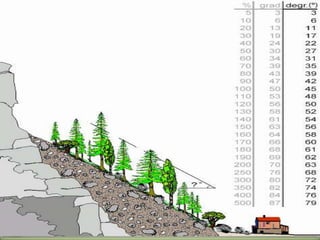
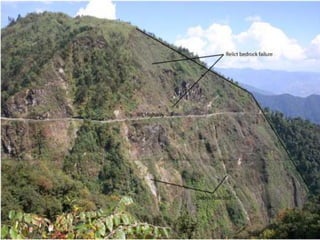
   A small strip or patch of the land surface
    that is inclined from the horizontal

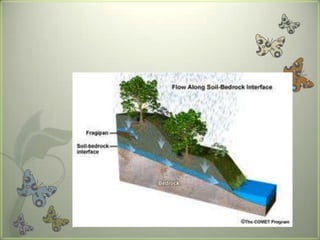
   is mantled with regolith, which grades down
    into, unaltered rock called bedrock

   Regolith provides the source f sediment,
    which consists of rocks and mineral particles

   Soil and regolith blanket the bedrock, except
    in a few places where bedrock is particularly
    hard projects in the form of outcrops
Slope Models

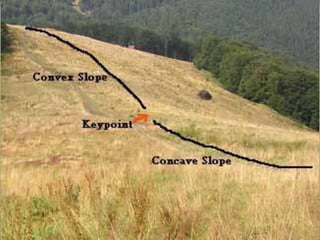
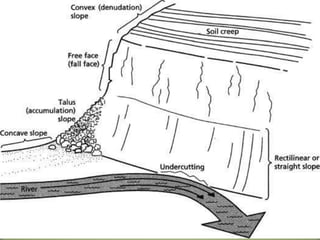
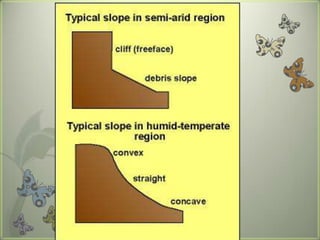
1.   Convex slope segments
2.   Concave slope segments
3.   Rectilinear slope segments
Convex slope segments
 Form   on the upper parts of slopes

 Inresponse to soil creep and rain
 splash

 When slopes are below the
 threshold for rapid mass wasting
Concave slope segments
 Slopesegments that form near the base
 of slopes

 Inthe absence of removal waste (e.g.
 river downcutting)

 With increasing run off
 downslope, velocity and sediment
 transport can be maintained over
 increasingly lower slope
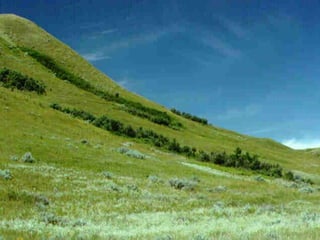
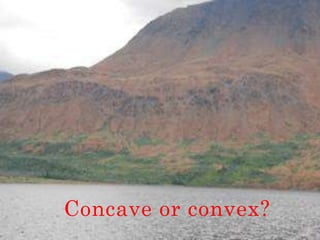
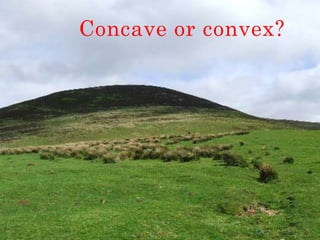
Concave or convex?
Concave or convex?
Rectilinear Slope segments

 Straight   section of a profile


 May  develop on uniform rock
  type where there is only very
  thin covering debris
Factors controlling slope
form and development
       1. Climate
       2. Geological   structure
       3. Nature   of regolith
       4. Vegetation
Climate
   Different processes operate in different climate
    zones and produce different slope forms and shapes

   Humid areas – slopes are frequently rounded due to
    chemical weathering

   Arid region – slopes are jagged or straight owing to
    mechanical weathering and sheetwash

   Heavy rain and meltwater both add volume and weight
    to the soil  increases erosive power  make slope
    less stable

   Heavy snowfall add weight  conducive to rapid
    movement (Avalanche)
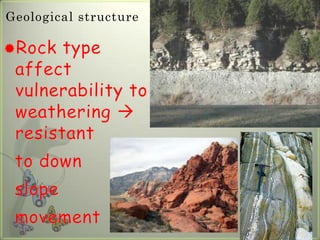
Geological structure

Rock  type
 affect
 vulnerability to
 weathering 
 resistant
 to down
 slope
 movement
Nature of the regolith
   Includes soil, scree, weathered bedrock and deposited
    material.

   Unconsolidated nature  prone to downslope movement

   Increase weight of deep regolith will increase the
    likelihood of instability

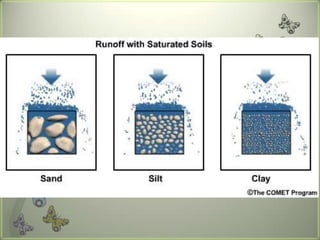
   Clay rich regoliths – unstable because the ability to retain
    water

   In a non saturated soil- increases cohesion and reduce
    soil movement

   In saturated soil – the pore water pressure forces the
    particle apart, causing soil movement
Vegetation
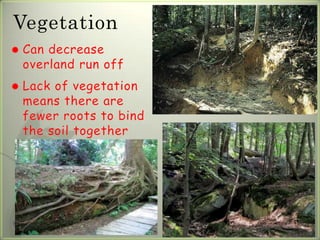
   Can decrease
    overland run off
   Lack of vegetation
    means there are
    fewer roots to bind
    the soil together
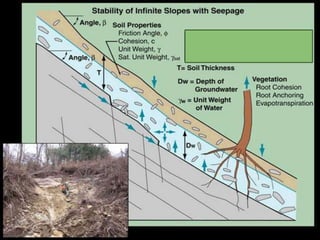
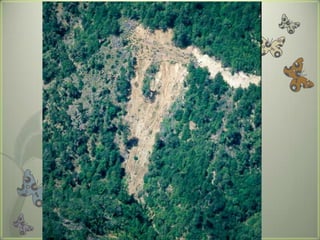
How do we get slope failure?
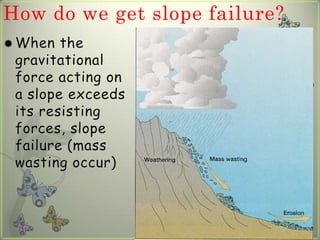
 When  the
 gravitational
 force acting on
 a slope exceeds
 its resisting
 forces, slope
 failure (mass
 wasting occur)
What is a shear strength?
   The resisting forces that help to
    maintain slope stability include the slope
    material’s strength and cohesion


   The amount of internal friction between
    grains and any external support of the
    slope known as shear strength
How does the force gravity
resulted in slope failure?
          Gravity operates vertically
           but has a component acting
           parallel to the slope causing
           instability


          The steeper the slope angle
           the greater the component of
           force acting parallel to the
           slope and greater the chances
           for mass wasting
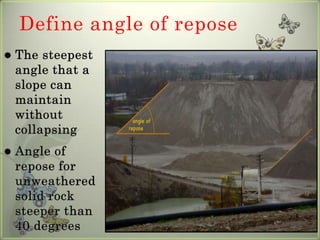
Define angle of repose
   The steepest
    angle that a
    slope can
    maintain
    without
    collapsing
   Angle of
    repose for
    unweathered
    solid rock
    steeper than
    40 degrees
What does it mean by “when a
slope is in a constant state of
dynamic equilibrium”?

      Means   that they
       are constantly
       adjusting to new
       conditions

Slope, processes & development lesson 8

  • 1.
  • 2.
    SLOPE  A small strip or patch of the land surface that is inclined from the horizontal  is mantled with regolith, which grades down into, unaltered rock called bedrock  Regolith provides the source f sediment, which consists of rocks and mineral particles  Soil and regolith blanket the bedrock, except in a few places where bedrock is particularly hard projects in the form of outcrops
  • 5.
    Slope Models 1. Convex slope segments 2. Concave slope segments 3. Rectilinear slope segments
  • 6.
    Convex slope segments Form on the upper parts of slopes  Inresponse to soil creep and rain splash  When slopes are below the threshold for rapid mass wasting
  • 8.
    Concave slope segments Slopesegments that form near the base of slopes  Inthe absence of removal waste (e.g. river downcutting)  With increasing run off downslope, velocity and sediment transport can be maintained over increasingly lower slope
  • 11.
  • 12.
  • 13.
    Rectilinear Slope segments Straight section of a profile May develop on uniform rock type where there is only very thin covering debris
  • 15.
    Factors controlling slope formand development 1. Climate 2. Geological structure 3. Nature of regolith 4. Vegetation
  • 16.
    Climate  Different processes operate in different climate zones and produce different slope forms and shapes  Humid areas – slopes are frequently rounded due to chemical weathering  Arid region – slopes are jagged or straight owing to mechanical weathering and sheetwash  Heavy rain and meltwater both add volume and weight to the soil  increases erosive power  make slope less stable  Heavy snowfall add weight  conducive to rapid movement (Avalanche)
  • 19.
    Geological structure Rock type affect vulnerability to weathering  resistant to down slope movement
  • 20.
    Nature of theregolith  Includes soil, scree, weathered bedrock and deposited material.  Unconsolidated nature  prone to downslope movement  Increase weight of deep regolith will increase the likelihood of instability  Clay rich regoliths – unstable because the ability to retain water  In a non saturated soil- increases cohesion and reduce soil movement  In saturated soil – the pore water pressure forces the particle apart, causing soil movement
  • 24.
    Vegetation  Can decrease overland run off  Lack of vegetation means there are fewer roots to bind the soil together
  • 25.
    How do weget slope failure?  When the gravitational force acting on a slope exceeds its resisting forces, slope failure (mass wasting occur)
  • 26.
    What is ashear strength?  The resisting forces that help to maintain slope stability include the slope material’s strength and cohesion  The amount of internal friction between grains and any external support of the slope known as shear strength
  • 28.
    How does theforce gravity resulted in slope failure?  Gravity operates vertically but has a component acting parallel to the slope causing instability  The steeper the slope angle the greater the component of force acting parallel to the slope and greater the chances for mass wasting
  • 30.
    Define angle ofrepose  The steepest angle that a slope can maintain without collapsing  Angle of repose for unweathered solid rock steeper than 40 degrees
  • 31.
    What does itmean by “when a slope is in a constant state of dynamic equilibrium”? Means that they are constantly adjusting to new conditions