RURAL URBAN MIGRATIONRuchi Gupta09137
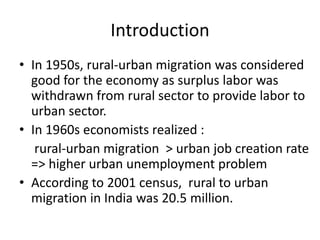
IntroductionIn 1950s, rural-urban migration was considered good for the economy as surplus labor was withdrawn from rural sector to provide labor to urban sector.In 1960s economists realized : rural-urban migration  > urban job creation rate => higher urban unemployment problemAccording to 2001 census,  rural to urban migration in India was 20.5 million.
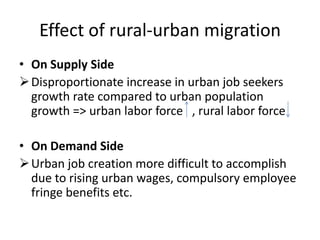
Effect of rural-urban migrationOn Supply SideDisproportionate increase in urban job seekers growth rate compared to urban population growth => urban labor force   , rural labor force   On Demand SideUrban job creation more difficult to accomplish due to rising urban wages, compulsory employee fringe benefits etc.Effect of rural-urban migrationShort Run Effect: Resource imbalanceLong Run Effect: Rising urban surplus labor
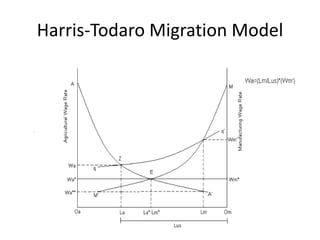
Harris-Todaro Migration Model
ConclusionMigration is stimulated by rational economic considerations of relative benefits and costs.The decision to migrate depends on expected rather than actual urban-rural wage differentials.The probability of obtaining an urban job is directly related to urban employment rate.High rates in excess of urban job opportunity growth rates are possible and likely. This is due to imbalance of economic opportunities between urban and rural areas in most developing countries.
Thank You
Rural Urban Migration

Rural Urban Migration

  • 1.
  • 2.
    IntroductionIn 1950s, rural-urbanmigration was considered good for the economy as surplus labor was withdrawn from rural sector to provide labor to urban sector.In 1960s economists realized : rural-urban migration > urban job creation rate => higher urban unemployment problemAccording to 2001 census, rural to urban migration in India was 20.5 million.
  • 3.
    Effect of rural-urbanmigrationOn Supply SideDisproportionate increase in urban job seekers growth rate compared to urban population growth => urban labor force , rural labor force On Demand SideUrban job creation more difficult to accomplish due to rising urban wages, compulsory employee fringe benefits etc.Effect of rural-urban migrationShort Run Effect: Resource imbalanceLong Run Effect: Rising urban surplus labor
  • 4.
  • 5.
    ConclusionMigration is stimulatedby rational economic considerations of relative benefits and costs.The decision to migrate depends on expected rather than actual urban-rural wage differentials.The probability of obtaining an urban job is directly related to urban employment rate.High rates in excess of urban job opportunity growth rates are possible and likely. This is due to imbalance of economic opportunities between urban and rural areas in most developing countries.
  • 6.